Home » Articles posted by Lou Agosta (Page 9)
Author Archives: Lou Agosta

Empathy and the True Believer
Empathy is going to do what it always reliably does: listen. So when empathy encounters the True Believer, empathy is going provide a gracious listening.
As empathic listeners, we start with an extreme case. We are listening to a narrative about how the space ship was supposed to arrive from Alpha Centauri to take the members of the group (or cult) to the Promised Land; but it did not arrive. As empathic listeners, we find ourselves listening to a narrative about how an election was stolen. However, so far, the recounts fail to surface the theft. We are listening to a narrative of how some racial or ethnic minority stabbed the nation of citizens in the back; but the supposed perpetrators are noticeably without power or influence consistent with such an action or result. We are listening to a discourse about how prayer makes us whole and faith fulfills our aspirations; but we experience prayers as unanswered (as if no one was listening) and faith as indistinguishable from the outcome of our own persistent efforts in a probabilistic universe of random events.
It does no good – it makes no difference – to take the belief system away from the True Believer. No marshaling of facts, no amount of logical argument, whether overwhelming or debatable, makes a difference. The True Believer is not engaging any alternative point of view. Why not?
The answer is direct: the belief system is what is holding the True Believer’s self, his or her personality, together. Take away the belief system and the personality falls apart. The person experiences emotional fragmentation, anxiety, and stress. This is why the True Believer becomes angry, starts to shout, escalates to rage in the face of countervailing arguments and facts. He experiences a narcissistic injury that threatens the coherence of his personality.
The work of empathy in the face of the True Believer consists in standing for an inquiry into one’s belief systems. If empathy is a belief system, then we inquire into that system too. Such a belief system – if we may tentatively call it that – opens out into a space of acceptance and tolerance. It is a belief system which is skeptical about belief systems. It is a belief system committed to inquiry. Key term: inquiry. Never stop questioning. Never stop listening.
Empathy creates a commitment to acceptance, toleration, and the ability to walk in the other person’s shoes. The True Believer is committed to a belief system, conformity, and marching together in step.
Since it would require an entire book to define The True Believer, I will just give a definition by example. It is a high probability you are dealing with a True Believer when, in the face of a setback to the Belief System (whether religion, political party, social movement, or spiritual cause) the adherent to the cause Doubles Down. Key term: double down.
For example, the end of the world does not arrive on the predicted date as predicted by the leader, the prophet, and the belief system. The space ship does not arrive from Alpha Centauri to take the True Believers to the promised land. You know the authentic True Believer when he experiences a set back to the movement, cause, and belief system to which he is devoted. Do the adherents of the belief system say: Oops, we might have overlooked something – some facts or alternative point of view; we might have made a miscalculation; or some of our assumptions require improvement? We might have made a mistake or two or overlooked a crucial detail? No! The True Believers double down.
What went wrong? Sometimes the fault is internal. The faith of the True Believer was not strong enough. We must confess our sins. Preferably, we must confess our failings in a public show trial and be martyred. However, preferably the fault is external. Outside agitators, the unwashed masses from a foreign land, a racial or ethnic minority stabbed us in the back.
Alternative facts, dangerous half-truths, and total nonsense are marshaled to account for the setback. “We was robbed!” “Betrayal!” The vote count shows we lost by five million votes; but those votes were invalid votes, stolen votes, non-existent votes, and, therefore, irrelevant. Anything except the simple fact, we screwed up (but how?) or our game plan did not survive the encounter with the real world situation at a given time and place. Thus, the definition by example of the True Believer.
You, dear reader, can see where this is going. How does empathy or an empathic person engage with the True Believer? If the True Believer takes a position that rules out an inquiry into the advantages and disadvantages, the benefits and draw backs, of one’s own or competing belief systems, then the conversation does not get going. How to get the conversation going?
Rarely is empathy irrelevant but there are some situations in which empathy is less (or more) useful than other situations. For example, if someone is throwing rocks, then understanding the rock throwing person is expressing his sense of grievance in a bad way is less useful than stopping them from throwing rocks.
Things such as self-defense, security, safety, basic well being are necessary aspects of the situation for empathy to make a difference. The True Believer is different from the bully, the psychopathic, the psychotic, or the fanatic, whether religious or political – but sometimes not that much different.
The guidance from empathy in the face of bullying, psychopathic manipulations, or rock throwing is to set limits. Likewise, with the True Believer. Key term: limit setting. Empathy is useful in deescalating aggression, hostility, violence, and other forms of acting out; but once the first rock flies through the air, the situation is no longer one about empathy. It is about reestablishing safety, security, and a space of acceptance and tolerance where empathy can actually make a difference. As noted, empathy is going to give the True Believer a good listening.
It is sometimes said that there is a little bit of larceny in all of us. That little bit of larceny is useful in empathizing with the bad boy or girl. That little bit of larceny is useful in figuring out what might have motivated a given individual’s antisocial behavior.
The same idea applies to empathizing with the True Believer. If you can relate to your own inner True Believer, then you might be able to engage with the True Believer’s in the community to understand what makes them tick.
The challenge is that in relating to your inner True Believer, you are not really relating to an individual, you are relating to a belief system, some of the principles of which may be useful and sensible, others less so.
The secret of empathic relating to the True Believer is not agreeing or disagreeing, undercutting or side-stepping, antidepressants or antipsychotics, the secret is the relationship the empath has to his own inner True Believer. If you can find an area in which you really are a True Believer, then it is likely you can relate to a True Believer in a conversation for possibility in which both individuals are left in integrity, whole and complete.
How shall I put it delicately? An authentic patriot can be willing to die for his [or her] country and yet not be a True Believer. But can he be willing to kill for his country without being a true believer? This is hard to finesse. When challenged, True Believers escalate in the direction of a fanaticism of hostility and aggression, even if they stop short of the death penalty.
I hasten to add that national defense is a valid function of the national armed forces, and I honor service men and women, first responders, and those committed to homeland security. Following orders to shoot the enemy on command of the commanding officer does not make one a True Believer. But it does make one a cog in a mechanism of defense, which in most cases requires a therapeutic recovery process to regain lost aspects of one’s humanity upon discharge from the armed forces.
Is the True Believer like the bully, the psychopath, or the perpetrator of domestic violence, for whom the more expanded empathy you give the person, the more ways the True Believer has to manipulate and abuse you? Some of the best parts of empathy – reduced stress, emotional regulation, self soothing – do not get deployed because empathy must put all its energy into setting limits to the boundary issues and violations.
The fall back position of empathy – which paradoxically ceases to be empathy – is to have compassion or even pity for the misguided soul who needs such a delusional system to feel or maintain a grip on reality. Absent successful boundary setting using empathy, the recommendation is to dial 911 and summon emergency services to restore order and tranquility (a desperate measure indeed, given that the police may arrive with guns out – how is that serving and protecting?).
I anticipate an objection at this point. The devil’s advocate says: But, Lou, are you not a True Believer in empathy? The answer is direct: No. I am committed to undertaking an inquiry into empathy. Empathy has strengths and weaknesses. It can misfire or it can succeed. It is susceptible of improvement in many situations. I hasten to add that I am also committed to using empathy to benefit people and organizations in the community. I am a shameless and unabashed promoter of the value of empathy. I will go to the matt on this one.
However, even if you do not believe in empathy, are persuaded that empathy is over-rated, or prefer rational compassion, I will still try my best to give you a good listening and to use empathy to make a positive difference in our relationship. No doubt more needs to be written about empathy and the True Believer. The politics of empathy is deep and complicated. There is a lot at stake. Literally.
This may indeed be a “love the sinner but hate the sin” moment. But such a moment is the positive part of empathic spirituality without which fanaticism causes spirituality to go off the rails and burn people at the stake. So if you find yourself or your neighbor gathering kindling for a bonfire, make sure it is to roast one’s own idols, pretensions, and vanities, not your neighbor.
Bibliography
Eric Hoffer. (1951). The True Believer: Thoughts on the Nature of Mass Movements. New York: Harper Perennial.
(c) Lou Agosta PhD and the Chicago Empathy Project

Noted in passing: Arnold Goldberg, MD, Innovator in Self Psychology (1929-2020)
The passing of Arnold I. Goldberg, MD, on September 24, 2020 is a “for whom the bell tolls” moment. No doubt his family, students, friends, and colleagues feel the loss most acutely; however, the community is diminished, though in another sense irreversibly enriched by his contributions and innovations in expanding empathy.
Our loss is great, yet we breath easier thanks his lessons in empathy, which is oxygen to our souls.
Arnold I. Goldberg was an innovator in psychoanalysis and self psychology, a prolific author (really prolific!), an inspiring educator, and simply a wonderful human being.
My personal recollections are of Dr Goldberg inspiring my younger, graduate student self to pursue and complete a dissertation on empathy and interpretation at the

Arnold Goldberg, MD, enjoying Labor Day September 09, 2010 at his vacation home at the Indiana Dunes, illustration by artist Alex ZonisUniversity of Chicago Philosophy Department. I fondly recall introducing Arnold to one of my dissertation advisors, Paul Ricoeur, over a wine-enriched dinner at the middle eastern restaurant that used to be on Diversey Avenue (the Kasbah?). I was also lucky enough to take a year long case conference at Rush Medical that he taught to the psychiatric residents as part of the Committee on Research and Special Projects sponsored by the Chicago Institute for Psychoanalysis. Notwithstanding a multiyear gap during which our paths diverged, I have known him and his wife Connie (herself a Self Psychology power) since I was a twenty-something; and I still have in my possession a couple of his hand written letters to me regarding hermeneutics that I used to good purpose when “roasting” him at a retirement event at Rush Medical. What a privilege: I experienced Arnie’s deep listening, incisive and penetrating wit, the humor, the humanity, the remarkable learning and even-handedness in disagreement, and above all – his empathy.
I choose to republish this book review from June 23, 2013 precisely because its provocative title best encapsulates the validity of Goldberg’s contribution to psychoanalysis and self psychology while subtly and humorously “sending up” some of his less flexible colleagues. Arnie, thank you for being you!
Read the complete review in the International Journal of Psychoanalytic Self Psychology: click here: GoldbergAnalyticFailureReview2014
The power of Arnold Goldberg’s approach in The Analysis of Failure: An Analysis of Failed Cases in Psychotherapy and Psychoanalysis (Routledge) is twofold. First, if a practice or method cannot fail, then can it really succeed? If a practice such as psychoanalysis or dynamic therapy can fail and confront and integrate its failures, then it can also succeed and flourish.
Such is the point of Karl Popper’s approach to the philosophy of science in Conjectures and Refutations. For those who have not heard of hermeneutics, narrative, and deconstruction, and who are still suffering from physics envy, the natural science have advanced most dramatically by formulating and disproving hypotheses. Natural science is avowedly finite, fallible, and subject to revision, advancing most spectacularly within the paradigm of hypothesis and refutation by failing and picking itself up and pulling itself forward.
The Analysis of failure is inspired by this lesson without engaging in most of the messy details of the history of science. Second, for a discipline such as psychoanalysis (and psychodynamic therapy) that prides itself on the courageous exploration of self-deceptions, blind spots, self-defeating behavior, and the partially analyzed grandiosity of its practitioners (and patients), the well worn but apt saying “physician heal thyself” comes to mind.
The professional ambivalence about taking a dose of one’s own medicine upfront is a central focus not only in psychoanalysis (in its many forms) but in related area of psychiatry, psychopharmacology, cognitive behavioral therapy (CBT), social work, clinical psychology, and so on. Goldberg’s openness to alternative conceptions and frameworks along with his exceptional knowledge of and commitment to psychoanalysis (and self psychology) is an obvious strong point.
As a former colleague of the late Heinz Kohut, Goldberg studiously avoids (and indeed fights against) adopting the paranoid position with respect to failed analytic and psychotherapy cases – what’s wrong here? When a therapy case fails (the determination of which is a substantial part of the work) a series of blame-oriented questions arise: What’s wrong with the patient? What’s wrong with the therapist? What’s wrong with the treatment method(s)? What’s wrong!? And, yes, these questions must be engaged; but, Goldberg demonstrates, they must be put in perspective and engaged in the context of a broader question What is missing the presence of which would have made a difference? The answer will often, but not exclusively, turn in the direction of a Kohut-inspired interpretation of sustained empathy.
This leads to the part of Goldberg’s argument that is explicitly humorous. Having announced a case conference on failure and invited all levels of colleagues, Goldberg reports the casual laughter of many colleagues as they announced that they had no failed cases and so could not be helpful. “One person agreed to present but the following day he yelled across a long hall that he could not and quickly walked away (p. 41).
The list of excuses goes on and on, producing a humorous narrative that is definitely a defense against just how confronting the whole issue really is. Less humorous and more problematic is what happens when a case comes to grief and the candidate reportedly does exactly what the supervisor recommends. How one would know what is the “exact recommendation” is hard to determine, but relations of power loom large in such a triangular dynamic. Even Isaac Newton acknowledged that the “three body problem” of the (gravitational) relations between any three bodies is theoretically computable but practically intractable. The number of variables changing simultaneously is such that we are dealing with expert judgment rather than algorithmic results.
For my part I cannot help but think of the process for airline pilot reporting of errors in procedures, operations, and maintenance. Yes, pilots are part of a complex system and “pilot error” does occur – pulling back on the stick to get lift rather than pushing down – yet they are usually given more training and rarely blamed or faulted, absent illegal or blatantly unethical conduct (e.g., drinking on the job).
Goldberg calls for an ongoing case conference inquiring into failed cases, and thereby implicitly calls for taking our thinking to a new level of professional rigor, encompassing scientific objectivity that is consistent with talk therapy being a hermeneutic discipline. One might call it looking at the entire system, but not in the sense of family therapy –rather in the sense of the total professional-cultural-scientific milieu.
However, Goldberg’s approach differs decisively from a Check List Manifesto (a distinction not in Goldberg (he does not need it) but abroad in the land and by a celebrity MD, Atul Gawande) in that individual chemistry looms large between the therapist and the patient. In analysis or therapy, the number of unknown variables in fitting a prospective patient to a prospective treatment (whether analysis, therapy, psychoparm, CBT, etc.) is so large as to be nearly intractable. These are areas where we simply lack the super-shrink who has mastered the basics of all these methods and can make an objective, upfront call of what just might have the best odds of a favorable outcome without the usual trial and error. For the foreseeable future, mental health professionals can be expected to continue to “sell what they got.” If a person knows Talk Therapy, then that is most often what is initially recommended. If that does not work, try CBT or medication – and vice versa.
This reviewer does not agree that the crashes in the mental health area are usually not so spectacular – and they do make the papers in the form of suicides and inexplicable violence – though the track record is no where near the five-nines (one error in a million) that characterizes the airline industry. Goldberg’s subtext for mental health professionals is that we are still learning to live with uncertainty even as we organize case conference, postmortems, and the equivalent of crash investigations that strive to look objectively at outcomes without blame and without omniscient rescue fantasies in the service of healing and professional (“scientific”) development.
In some thirty cases that were reviewed by Goldberg, using the method of expert evaluation and feedback by the participants in the local case conference, the definition of failure included cases that never get off the ground; cases that are interrupted and so felt to be unfinished by the therapist or analyst; cases that suddenly go bad, characterized by a negative eruption whereas previously therapy was perceived to be going well; cases that go on-and-on without improvement; cases that disappoint whether due to the initial goal not being attained or being modified and not attained or endless pondering of what might have been.
Since this is not a “soft ball” review, one category of failure that is conceivable but missing from The Analysis of Failure is the example where treatment arguably left the person worse off (other than in terms of wasted time and money, which itself is not trivial). What about someone who did not experience impotence, writer’s block, or (say) hysterical sneezing until they tried psychoanalysis (psychotherapy)? What about compliance and placating behavior, reportedly a significant risk in the case of candidates for analytic training? What about regression in service of treatment that was initiated within the empathic context of the therapeutic alliance, but something happened and the regression got out of control and a breakdown or fragmentation occurred? Work was required to contain the fragmentation that was minimally successful, prior to an untimely termination that was a flight from fragmentation, a flight into health or a statement that in effect said “Let me otta here for my own good!” To his credit, Goldberg identifies “a patient who was getting worse off” (p. 162), but leaves the matter unconnected to regression mishandled or any other psychodynamic explanation. It is possible that such a scenario is already encompassed in the category of “cases that go bad,” at least implicitly, but in an otherwise through review of possibilities, this one was conspicuous by its absence.
The book itself is Goldberg’s answer to the question, given that failure occurs, what do we do about it? We inquire, define our terms, organize the rich clinical data, identify candidate variables, take the risk of making judgments about possible, probable, and nearly certain reasons, causes, and learn from our failures, pulling ourselves up by our boot straps in an operation that seems impossible until it succeeds. The role of lack of sustained empathy, counter-transference, rescue fantasies, disappointments, uncontrolled hopes or fears, partially analyzed grandiosity (on the part of the therapist), lack of knowledge of alternative approaches to therapy, are towards the top of a long (and growing) list of issues to be engaged in the classification of causes for failure.
The turning point of Goldberg’s argument occurs in his chapter on “How Does Analysis Fail”? This is an obvious allusion to Kohut’s celebrated work on How Does Analysis Cure? Once again, failure is a deeply ambiguous term, and the ironic edge is that in contrast to an analysis gone bad where the patient leaves in a huff with symptoms unresolved, a successful self psychology analysis proceeds step-by-step by tactical, nontraumatic failures of empathy that are interpreted and used to promote the development of self structure. The short answer is that analysis cures through stepwise, incremental, nontraumatic breakdowns – i.e. failures – of empathy, which are interpreted in the analytic context and result in the restarting of the building and firming of psychic structure of the self. In turn, these transformations of the self promote integration of the self resulting in enhanced character traits such as creativity, humor, and expanded empathy in the analysand.
The entertaining and even heartwarming reflections on Goldberg’s relationships with his teachers Max Gitelson and Charles Kligerman, betrayed (at least to this reader) a significant critique of the “old guard,” resolutely defended against the possibility of any failure, thanks to a position that avoided any risk – analysis is about improving self-understanding. According to this position, the reduction of suffering and symptoms relief is a “nice to have” but not essential component. Analysis is a rite of passage into an exclusive club, where you are just plain different than the untransformed masses.
Though Goldberg does not emphasize the debunking approach, the reduction to absurdity of the description of the old guard makes psychoanalysis sound a tad like the est training from the late 1970s. You just “get it” or you don’t – in which case here is your money back and now go be miserable and unenlightened (only analysis does not give you your money back). In both cases failure is not an option, though not in the sense initially intended by the slogan, namely, that risk is analyzed and mitigated through interpretation. Failure is not an option because it is excluded by definition from the system of variables at the onset, thus, also excluding many meaningful forms of success. In short, many things are missing including sustained empathy, which, in turn, becomes the target of the analysis of failure in the remainder of the book
The net result of the compelling chapters on Empathy and Failure, Rethinking Empathy, and Self Psychology and Failure, is to challenge the analyst and psychotherapist to deploy sustained empathy in the service of structural transformation. While I personally believe that agreement and disagreement are over-valued in terms of creating authentic understanding, the section on Empathy and Agreement raises a significant distinction between the two terms. It is insufficiently appreciated by many clinicians how agreement becomes a smoke screen – and defense against – basic inquiry and exposure to the other’s affects in all their messiness and ambivalence. It remains unclear how sustained empathy undercuts agreement (or disagreement).For example, Dr. E. wants his analyst to agree with him that it is okay to sleep with his patient(s). For the sake of discussion, the analyst mouths the form of words, “Okay, given your marriage, okay, I agree.” But Dr. E. then asserts that he can tell the analyst does not really mean it (an accurate observation). So why not raise the question what is agreement doing here other than disguising Dr. E.’s own unacknowledged commitment to “being righteous and justified”. There is nothing wrong with being righteous, everyone does it. However, is it workable?
The resistance has to be engaged and interpreted at some point in order to make a difference in treatment. Agreement (or disagreement) remains a conversation with the superego, even in the mode of denying there is amoral issue. It may stop a tad short of moral justification, but it is on the slippery slope to it. There are many cases along a spectrum of engagements but the really tough one is empathizing with behaviors that are ethically and legally suspect such as doctors sleeping with their patients and other relations of power where one individual uses his or her position to dominate the other as a mere means not an end in him- or herself. This is a high bar in the case of empathizing with the child molester or Nazi who have used a form of empathy (arguably a deviant one) to increase his domination of the victim. This remains a challenge to our empathy as well as to our commitment to treating a spectrum of behavior disorders (where Goldberg has made a life-long contribution) that are significantly upsetting to large parts of the mental healthcare market. Keeping in mind the scriptures and the sayings of Jesus(the rabbi), which Goldberg does not mention but arguably is the subtext, we are still challenged to love the sinner but hate the sin.
In a concluding rhetorical flourish, Goldberg claims that the book is a failure. The prospective reader – a very wide audience as I am any judge of the matter – may see the many complimentary remarks that properly disagree with this rhetoric printed on the back cover (which this review endorses and agrees). In a further ironic and richly semantic double reverse in the title of the final chapter, failure has a great future. This is especially so when failure is scaled down from a global narcissistic blind-spot on the psyche of the therapist (where failure remains a valid research commitment) to an expanded tactical approach in the form of “optimal frustration … disappointment being real, tolerable, and structure building” (p. 200).
The concluding message is an admirably nuanced clarion cry for further study rather than condemnation, finger pointing, or blame of some particular therapeutic modality such as Talk Therapy versus CBT. The concluding message is a sustained reflection on de-idealization, the difficult process of taking responsibility for the inevitability of one’s parents’ lack of omnipotence. Failure is part of the development process in analysis and psychotherapy, and, by implication (and taken up a level), the study of failure in broad terms will be part of the development of the profession going forward. The analyst and therapist must give up the rescue fantasy, give up being right and justified, give up misplaced ambition, but also give up guilt, self-blame, disappointment, and embrace an approach that interpretation of the pathogenic situation of early childhood in which traumatic deidealization of the parent occurred, becomes inherently transformative. It reactivates the process of structure-building internalization. Learning to live within one’s limitations invites a process of risk taking that sometimes results in failure, sometimes results in success, and always results in – redefining one’s limitations outwards towards an endless horizon of progress in satisfaction and meaning making. Our thanks to Arnold Goldberg both for the journey and the end result.
Chicago Tribune Obit, Sept 29, 2020: https://www.legacy.com/obituaries/chicagotribune/obituary.aspx?n=arnold-i-goldberg&pid=196869091
(c) Lou Agosta, PhD and the Chicago Empathy Project

A Rumor of Empathy is now a podcast (series)
Got to Empathy Lessons on Spotify: https://open.spotify.com/episode/1OvEwkDD9b3IH66erzehnM?si=MeQ6C1uTQDyYGuAUGbegBw ] [more episodes coming soon]
Go to all A Rumor of Empathy podcast(s) on Audible by clicking here: [https://www.audible.com/pd/A-Rumor-of-Empathy-Podcast/B08K58LM19]
A rumor of empathy (the podcast) hears of a report of an alleged example of empathy in the work, action, or conversation of a person or organization. I then reach out to the person and talk to them in detail about the work they are doing try to get the facts and confirm or disconfirm the validity of the rumor. Makes sense?
A Rumor of Empathy is committed to providing a gracious and generous listening, empathy, in conversation with its guests and listeners. Join the host in chasing

down and confirming or debunking an unsubstantiated report of empathy in the community and engaging in an on the air conversation in transforming human struggle and suffering into meaningful relationships, satisfying results and contribution to the community. When one is really listened to empathically and heard in one’s struggle and effort, then something shifts. Possibilities open up that were hidden in plain view. Action that makes a difference occurs so that empathy becomes less of a rumor and an expanded reality in your life and in the community. When all the philosophical arguments and psychological back-and-forth are over and done, in empathy, one is quite simply in the presence of another human being. Join Dr Lou for an empowering conversation in which empathy is made present.
Go to all A Rumor of Empathy podcast(s) on Audible by clicking here: [https://www.audible.com/pd/A-Rumor-of-Empathy-Podcast/B08K58LM19]

Empathy and humor – resistance to empathy?
Humor and empathy are closely related. We start with an example that includes both. Caution: Nothing escapes debunking, including empathy. My apologies in advance about any ads associated with the video.
Both empathy and humor create and expand community. Both empathy and humor cross the boundary between self and other. Both empathy and humor relieve stress and reduce tension.
However, empathy crosses the boundary between self and other with respect, recognition, care, finesse, artistry, affinity, delicacy, appreciation, and acknowledgement, whereas humor crosses the boundary between individuals with aggression, sexuality, or a testing of community standards.
If you have to explain the joke, it is not funny – nevertheless, here goes.
The community standard made the target of satire in the SNL skit is that people are supposed to be empathic. The husband claims he wants to understand social justice issues but when given a chance to improve his understanding – drinking the empathy drink by pitched by the voice over – he resists. He pushes back. He pretends to drink, but does not even take off the bottle cap. When pressured, he even jumps out the window rather than drink the drink.
The wife does not do much better. She resists expanding her empathy too, by pretending that, as a woman, she already has all the empathy needed. Perhaps, but perhaps not. People give lip service to empathy – and social justice – but do not want to do the hard word to create a community that is empathic and works for all.
The satire surfaces our resistance to empathy, our double standard, and our tendency to be fake about doing the tough work – including a fake empathy drink. If only it were so easy!
Therefore, be careful. Caution! The mechanism of humor presents sex or aggression in such a way that it creates tension by violating social standards, morals, or conventions. This occurs to a degree that causes stress in the listener just short of eliciting a counter-aggression against the teller of the story or joke. Then the “punch line” relieves the tension all at once in a laugh.
Another sample joke? This one is totally non controversial, so enables one to appreciate the structure of the joke.
A man is driving a truck in the back of which are a group of penguins. The man gets stopped for speeding by a police officer. Upon consideration, the officer says: “I will let you off with a warning this time, but be sure to take those penguins to the zoo.” The next day the same man is driving the same truck with the exact same penguins. Only this time, the penguins are wearing sunglasses. The same police officer pulls the driver over again and says: “I thought I told you to take those penguins to the zoo!” The man replies: “I did. Yesterday we went to the zoo. Today we are going to the beach!” Pause for laugh.
The point is that humor, among many things, is a way in which one speaks truth to power—and gets away with it. In this case, one disobeys the police officer. One is technically in the wrong, though vindicated. Penguins in sunglasses are funny. More specifically, the mechanism of the joke is the ambiguous meaning of “takes someone to the zoo.” One can go to the zoo as a visitor to look at the animals or one can be incarcerated there, as are the animals on display.
Instead of a breakdown in relating such as “you are under arrest!” the relationship is enhanced. The driver is following the officer’s guidance after all, granted the interpretation was ambiguous.
You get a good laugh—and a vicarious trip to the beach added to the bargain. Empathy is the foundation of community in a deep way, for without empathy we would be unable to relate to other people. Humor and jokes also create a community between the audience and storyteller as the tension is dispelled in the laughter (see also Ted Cohen on Joking Matters (1999)).
The story creates a kind of verbal optical illusion, a verbal ambiguity that gets expressed in laughter. In empathy perhaps one gets a vicarious hand shake, hug, “high five,” pat on the back, or tissue to dry a tear, expressing itself in recognition of our related humanity, while affirming and validating the self-other distinction.
Featured image of laughing carrousel horses (c) Alex Zonis
(c) Lou Agosta, PhD and the Chicago Empathy Project

Empathy and Architecture: On Foundations
Empathy is about relationships. Architecture is about building things that last. Building lasting relationships? A marriage made in heaven?
When you are building something – whether a bridge, house, or a relationship – the challenge is to get the fundamentals just right. The foundation is what connects the structure to the earth. This is the case especially with bridges that span vast chasms.

The architect building a structure knows that the structure has to go down to bedrock. You have to go down to what is stable and abides or the structure can be magnificent, beautiful, and elegant; but it will crack, lean over like the leaning Tower of Pisa, and then fall over due to design flaws. Or like the Tacoma Narrows bridge, it will start resonating in the wind and tear itself loos from its foundation and collapse. [Granted, the Leaning Tower was “fixed” by those ingenious Japanese engineers who hollowed out a space on the higher side enabling the Tower to “fall up.”]
Therefore, to explore the bedrock for the structure of empathy we have to ask what is bedrock in human relations? But wait. I thought the foundation of human relations was – empathy. The bedrock is empathy.
But what is the bedrock of the bedrock? On what is empathy itself founded? How do we get access to the foundation of the foundation? Isn’t the foundation just the foundation? Not exactly. Read on.
The way to get access to the question of what is the foundation of the foundation is to ask what can go wrong. Imagine empathy was a bicycle – it can get a flat tire, the handle bars can fall off, the chain can break, or the rim can get bent, and so on. A square wheel won’t roll. In each case, something is missing – wholeness. The bike as a bike is incomplete and, therefore, does not work.
Likewise with empathy. Empathy can break down. When we engage with the break downs, we get access to the foundation.
Empathy can break down as emotional contagion, conformity, projection, or get lost in translation. In each case, something is missing – wholeness.
The foundation of the foundation is integrity. The Roman Stoic politician and philosopher Cicero defined “insanity” (insanitas) as lack of wholeness, incompleteness, or being fragmented (see Cicero’s Tusculan Disputations a Roman “psychiatry”). Here “integrity” is not meant in the narrow ethical sense of right/wrong, but rather “integrity” in the sense of being authentic. In the case of empathy integrity means being present with the other person without anything else added or missing.
Therefore, the foundation of empathy is working on one’s own integrity and authenticity in being related. Without such a foundation, one is building on a mud pie.
You know how when things go wrong, the tendency is to find someone to blame and point the finger in someone’s direction? The word “responsibility” can hardly be uttered and our listening is “bad and wrong” and “who’s to blame,” you know? You did it! He did it! She did it! Now in the course of this work on empathy that finger has a tendency to change direction – and it points to oneself.

“I say I am committed to keeping my agreements but I am actually committed to not rocking boat” “I say I am committed to freedom of expression but I am in fact actually committed to being liked, being popular.” “I say that I am generous in my relationships but I am actually attached to holding onto grudges and grievances.” “I say that I am committed to being faithful in my relationship but the only reason I am faithful is that in fact I lack opportunity to betray my partner.” “I say I am honest but cut corners and cheat on my business expenses or taxes.” “I say that I am committed to telling the truth but I am actually committed to looking good.” You can provide examples of your own. This list goes on.
Therefore, clean up your own messes first. I have to work on myself – and you, dear reader, have to work on yourself – and we have to clean up our own acts prior to taking the empathy game to the street and coaching others.
The foundation is cleaning up one’s own integrity outages. Acknowledging the cost and impact and, where possible, making restitution and repair. The ultimate path to authenticity is cleaning up one’s inauthenticities.
Because a bridge falls down does not mean that bridge building is a failed science; because a tower leans over does not mean that the physics of building towers is in error. It means human beings on occasion misapply the practices of bridge building and tower making. Likewise with the practice of empathy. It’s the practice that counts.
Without consistent, enduring practice, the results you get will be a roll of the dice; and getting lucky is not a viable plan when anything important is at stake. That is the bad news and also the good news in expanding empathy in the individual and the community. It’s all about the practice.
Three recommendations: practice, practice, practice – and be sure to get a second opinion – a coach – to provide feedback on your practice (so the bridge doesn’t fall down!),
So, back to the architectural metaphor: a lot of site preparation is needed. The structure is multi-unit and multi-person. The site of empathy includes receptivity of the other’s feelings, understanding of the other as a possibility, talking a walk in the other’s shoes (the folk definition of empathy), and translating the other’s experience into one’s own and vice versa. Heating and cooling include emotional regulation and distress tolerance shows up as weather proofing and lightening rods.
From another point of view, empathy is not a standalone structure. It is a bridge connecting individuals and communities. It is a bridge over troubled waters on a stormy day and a source of satisfying relatedness on a sunny one.
Okay, I have read enough I want to get the book, Empathy: A Lazy Person’s Guide, a light-hearted look at empathy, containing some two dozen illustrations by artist Alex Zonis and including the one minute empathy training plus numerous tips and techniques for taking your empathy to the next level: click here (https://tinyurl.com/y8mof57f)
(c) Lou Agosta, PhD, and the Chicago Empathy Project

Empathy and Vulnerability
One of the misunderstandings of empathy is that “empathy means weakness.” Not so. Why not?
Empathy means being firm but flexible about boundaries. The most empathic people that I know are also the strongest and most assertive regarding respect for boundaries. Being empathic does not mean being a push over. You wouldn’t want to mess with them. Where such people show up, empathy lives—shame and bullying have no place. (For a working definition of empathy, see the note at the bottom of this post.)
Empathy thus solves the dilemma of how to deal with a bully without becoming a bully oneself. Bullies are notoriously causal about violating the boundaries of other people, because it is easier to cause pain than to feel pain. Bullies are taking their pain and working it out on other people. Bullies do not acknowledge their own vulnerabilities, and they work out their issues – I almost said “shxt” –on other people. Bullies are offloading their distress on other people. But what to do about it from an empathic perspective?
I am going to answer that question directly, but first take a short step back: Once the stones start flying back-and-forth, there is nothing to do but defend oneself or try to escape if outnumbered – retreat. If it is a school year brawl, hit ‘em back in self-defense if one is able. If the corporate boss is a bully, document and escalate – and update your resume just in case. If the bully is a politician, speak truth to power like Malcolm-X did: “You did not land on Plymouth Rock; Plymouth Rock landed on you” – use humor to bring down arrogance and privilege.
Once the stones start flying, the conversation is no longer about empathy or vulnerability. It is about who has the biggest cudgel or stone. Empathy did not work – empathy is in breakdown along with common courtesy and decency – call for backup! However, if things are still at the stage of name calling, remember what to my secular ears the ultimate empath of the spirit, Jesus of Nazareth, said and did. He was outnumbered with the woman “taken in adultery” confronting an angry mob of scribes, elders, and Pharisees, armed with large stones: “Let he who is without sin cast the first stone” (John 7:53 – 8:11). Nothing happened. No one dared be the first to assert his perfection. While the originality of this passage may be debated – did John really write it and who the heck is John, anyway – the pasage’s psychological power is beyond question.
In the face of loss of power, authority escalates to violence. Jesus dared to make himself vulnerable by aligning with the woman who had violated the community’s standards, which were so rigid that a case of infidelity threatened to below up the entire fabric of civilization. Otherwise, why would the authorities need to stone her to death? (And it really was all men who were about to do the stoning – so you can see there were many problems here!)
Always the astute practitioner of empathy, Jesus got inside their heads. He knew the authorities wanted to look good and claiming to be better than everyone else would make them look bad. Instead of shaming the woman Jesus turned the tables and put the authorities to shame. To get power over shame one has to allow oneself to be exposed and vulnerable to it. Be proud!
Thus, Brené Brown makes a parallel observation about vulnerability – she does research on vulnerability and shame – and asserts that it is a myth that “vulnerability is weakness.” Thus her project is to expand our appreciation of the power of vulnerability.
As Brené Brown uses the distinction “vulnerability,” she means living with uncertainty, living with risk, and living with emotional exposure. She understands vulnerability to mean letting go of “looking good” or fear of being ashamed. She means it to go in harm’s way emotionally or even physically and spiritually by having difficult conversations and taking actions about the things that make a difference – relationships, finances, careers, values, fairness, and so on. The inner game of vulnerability is different than the behavioral vulnerability that consists in leaving the password to your bank account on a yellow sticky pasted to your computer.
Brené Brown’s coaching is to expand vulnerability in the sense that I have my vulnerabilities; not my vulnerabilities have me. Her lesson “no courage without vulnerability” means that the courageous person goes forth into risk and danger in spite of being afraid. The person who imagines he is without fear is precisely the one who behaves in a foolhardy way, for example, Colonel Custer at the Little Bighorn, about to be wiped out, saying “We’ve got them now!” completely unaware of the risks he was taking. He did not have his vulnerability; his vulnerability had him – and did him in along with his regiment.
I hasten to add that empathy and vulnerability are different phenomena, not to be confused with one another. They are not either/or – the world needs more of each one – expanded empathy as well as the power conferred by expanded vulnerability.
You cannot do empathy alone. I get my empathy from the other individual. The other individual expands my empathy by giving me his; and I acknowledge the other individual’s humanity by giving him my empathy. The baby brings forth the parent’s empathy and is socialized by it – brought into the human community. The student brings forth the teacher’s empathy and is educated through it – brought into the educated community. The customer arouses the businessperson’s empathy and is served by it – brought into the community of the market. The list goes on.
Likewise, you cannot do vulnerability alone. The more armored up and defensive a person becomes, the less vulnerably, the less uncertainty, risk, and emotional exposure the person incurs. However, without uncertainty, risk, or exposure, such essential results as innovation, productivity, courage, relatedness, satisfaction, and, yes, empathy, get lost.
Even though empathy and vulnerability are distinct phenomena, when they occasionally breakdown and fail, the component fragments are remarkably similar. Empathic receptivity breaks down as emotional contagion; likewise, in vulnerability a person is overwhelmed by the emotions of the moment.
Empathic understanding breaks down as conformity. Instead of relating to the other person as an authentic possibility, one conforms to the crowd and what “one does.” Likewise with vulnerability, risk is replaced with playing it safe, not rocking the boat, and remaining as invisible as possible.
Empathic interpretation breaks down as projection. Instead of taking a walk in the other person’s shoes to appreciate where they pinch the other person, one projects one’s own reactions and responses onto the other. Likewise with vulnerability, uncertainty is replaced with being right, making the other person wrong, and shutting down inquiry and innovation in the interest of not rocking the boat.
Empathic responsiveness breaks down in getting lost in translation. Instead of acknowledging the other person’s struggle as disclosing aspects of one’s shared humanity, one tries to “cap the rap,” get the last word in, and win the argument. Likewise with vulnerability, one talks about the other person instead of talking to them. Free speech is alive and well; but what has gone missing is listening. People are [mostly] speaking freely – no one is listening. It doesn’t work.
In each of the breakdowns of empathy, I do not have empathy – rather my break down in empathy has me. Instead of asking, what is wrong? Rather ask, what is missing? And, in this case, what is missing, the presence of which would make a difference, is a radical acceptance that empathy requires emotional exposure to the uncertainty and risk taking of related. That is precisely vulnerability.
When vulnerability is added to empathy the result is community. Since we are on a roll with our secular but empathic interpretation of spiritual readings, in the defining parable of community, empathy is what enables the Good Samaritan (Luke 10: 25–37) to be vulnerable to a vicarious experience of what the survivor of the assault and robbery is experiencing.
In contrast, the priest and Levi experience empathic distress – are armored up and defensive in the face of vulnerability – and have to cross the road. The Samaritan’s empathy tells him what the survivor is experiencing; and it is the Samaritan’s vulnerability and ethics that tell him what to do about it. The two are distinct. Yet empathy expands the boundary of who is one’s neighbor to be more-and-more inclusive, extending especially to those whose humanity has been put at risk by the vicissitudes of vulnerability. Be inclusive.
Note: the short definition of empathy is that it is a multi-phase way of relating to people individually and in community with receptivity to the other’s affects, understanding of the other as an authentic possibility, an appreciation of the other’s perspective, and responsiveness in acknowledgement of the other’s humanity in the other’s communication.
Bibliography
Brené Brown. (2012). Daring Greatly: How the Courage to Be Vulnerable Transforms the Way We Live, Love, Parent, and Lead. New York: Avery, a Division of Random House Penguin.
Lou Agosta. (2010). Empathy in the Context of Philosophy. London: PalgraveMacmillan.
_________. (2014). A Rumor of Empathy: Rewriting Empathy in the Context of Philosophy. New York: Palgrave Pivot.
________. (2015). A Rumor of Empathy: Resistance, Narrative, and Recovery in Psychoanalysis and Psychotherapy. London: Routledge.
_________. (2018). Top Seven Lessons on Empathy For Leadership (webcast): Chicago: 2018: https://youtu.be/GrgDWDt4uqg
________. (2018). Empathy Lessons. Chicago: Two Pears Press.
_______. (2018). A Critical Review of a Philosophy of Empathy. Chicago: Two Pears Press.
Lou Agosta and Alex Zonis (Illustrator). (2020). Empathy: A Lazy Person’s Guide. Chicago: Two Pears Press.
For further details and additional tips and techniques see Lou’s light-hearted look at the topic, Empathy: A Lazy Person’s Guide or one of his peer-reviewed publications see: Lou Agosta’s publications: click here (https://tinyurl.com/y8mof57f)
© Lou Agosta, PhD and The Chicago Empathy Project

The trouble with the trouble with empathy (this is not a typo)
Empathy flourishes in a space of acceptance and tolerance. But acceptance and tolerance have their dark side, too. People can be intolerant and unaccepting. Be accepting of what? Be accepting of intolerance? Be tolerant of intolerance? Yes, be tolerant, but set limits. But how to do that given that we may still have free speech in the USA, but many people have just stopped listening.
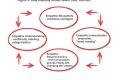
“The Trouble With Empathy” is an article by Molly Worthen published in The New York Times on September 04, 2020. The author gets many things just right in an impressive engagement with the complexities of empathy, but in other areas, including the citations of certain academics, I have an alternative point of view. Hence, the trouble with the trouble with empathy is not a typo. The reply is summarized in the diagram (note that it is labeled “Figure 2,” but it is the only diagram – page down, please). For those interested in more detail, read on.
Babies are not born knowing the names of the color spectrum. Children are taught these names and how to use them in (pre)Kindergarten; likewise, with the names of the emotions such as sadness, fear, anger, and high spirits. However, there is a lot more to empathy than naming one’s feelings and getting in touch with our mammalian ability to resonate with one another in empathic receptivity and understanding.
As an adult, the fact that you failed to be empathic does not mean that your commitment to empathy is any less strong; just that you did not succeed this time; and you need to keep trying. Stay the course. It takes practice. The practice is precisely the empathy training.
Often understanding emerges out of misunderstanding. My description of the other person’s experience as they lived it is clumsy and creates a misunderstanding. But when the misunderstanding is clarified and cleaned up, then empathy occurs. Thus, break throughs in empathy emerge out of breakdowns. So whenever a breakdown in empathy shows up, do not be discouraged, but rather be glad, for a break through is near.

Evidence from the past rarely demonstrates what innovations are possible in the future. Just because people are not born with wings does not mean people cannot fly. If the Wright Brothers had accepted the evidence, we would all still be taking the train. I hasten to add there is nothing wrong with taking the train. People can be intolerant, and I too am people. Work on oneself is constantly needed.
I open my mouth to be empathic and respond empathically—but instead of an empathic response, out jumps a frog: “I feel your pain.” What a fake! If I really felt your pain, then I would say “Ouch!” not “I feel your pain.” I find that I do frequently say “Ouch!” Or just shake my head and provide acknowledgement and recognition: “You’ve really been dealing with some tough stuff.” “Sounds like use could use some empathy.”
The point is not to devalue the attempted empathic response, clumsy though it may be. The point is to acknowledge that the lazy person expands his empathy in a practice filled with examples of not getting it quite right. If empathy were a sport, it would be filled with strikeouts, fumbles, off sides, failures, and incomplete plays. There would even perhaps be examples of “unsportsman-like conduct.”
Each of the four phases of empathy has characteristic breakdowns. This is not new news. The news is that if engaged with a rigorous and critical empathy, these breakdowns readily become breakthroughs in empathy.
Breakthroughs in empathy arise from working through the breakdowns of empathy. The Big Four breakdowns of empathy are noted: emotional contagion, conformity, projection, and getting lost in translation. These are not the only breakdowns of empathy, which are many and diverse, but these are the most frequent ones.
In the example of emotional contagion, one anxious person is telling the other person about all the reasons in the world that he is feeling out of sorts. Pretty soon, the person who is listening is starting to feel anxious too. The person’s receptivity—openness and availability—to the other individual’s emotions is working overtime and his empathic receptivity misfires, becoming: Emotional contagion. Emotional infection strikes again!
Often it is not so obvious. Often people are caught up in the emotion of the moment. The emotion itself is so powerful that it just sweeps over everyone present like a tidal wave—an emotional tsunami. The person is flooded—emotionally.
If the listener realizes that listening to anxiety-inspiring stories causes his own anxiety to spike, then that is already going beyond emotional contagion and the start of an empathic processing of the emotion.
If one stops in the analysis of empathy with the mere communication of feelings, then empathy collapses into emotional contagion. Empathic receptivity breaks down into emotional contagion, suggestibility, being over-stimulated by the inbound flood of the other person’s strong feelings.
Emotional contagion—basically the communication of emotions, feelings, affects, and experiences—can be redescribed as input to further down stream empathic processing. Then emotional contagion (communicability of affect) gets “normalized” and can very well make a contribution to empathic understanding.
Overcoming the breakdown of empathy into emotional contagion results in the breakthrough to vicarious experience. A vicarious experience is what a person has in going to the theatre, the movies, or a single-person player video game. I experience the fears and hopes of the character in the film, but I do so vicariously. Theatre, film, and the novel were “virtual reality” (VR) long before computers, special VR goggles, and social networking were invented.
Vicarious experience is not empathy. It is input to the process of empathy. Vicarious experience is the grain of truth in the fake-sounding empathy meme, “I feel your pain.” I feel your pain—vicariously. I experience an after-image of your pain—like the visual after-image of the American flag that results from starring at a vivid depiction of the off-color image of the stars and stripes. I repeat: we gat an after-image of another person’s feelings and emotions.
I am amazed that no one has as yet explicitly pointed out that we get after-images of other people’s feelings when we are exposed to those feelings for a sustained duration. A vicarious experience of emotion differs from emotional contagion in that one explicitly recognizes and knows that the other person is the source of the emotion.
You feel anxious or sad or high spirits, because you are with another person who is having such an experience. You “pick it up” from him. You can then process the vicarious experience, unpacking it for what is so and what is possible in the relationship. This returns empathy to the positive path of empathic understanding, enabling a breakthrough in “getting” what the other person is experiencing. Then you can contribute to the other person regulating and mastering the experience by being there for him and responding with soothing words and acknowledgement of the situation.
The next breakdown of empathy is settling for conformity instead of striving for possibility. We might also say: settling for agreement instead of striving for possibility.
People live and flourish in possibilities. Empathic understanding breaks down as “no possibility,” “stuckness,” and the suffering of “no exit” (the definition of Hell in a famous play of the same name by Jean Paul Sartre). You follow the crowd in responding to the other person; you do what “one does”; you validate feelings and attitudes according to what “they say”; you conform and express agreement; and, with apologies to Henry David Thoreau, you live the life of quiet desperation of the “modern mass of men.”
When someone is stuck, experiencing shame, guilt, rage, upset, emotional disequilibrium, and so on, the person is fooling himself—has a blind spot—about what is possible. This does not mean that it is easy to be in the person’s situation or for the person to see what is missing. Far from it. We live in possibilities that we allow to define our constraints and limitations—for example, see the example of the friend who was married and divorced three times. This expresses a strong commitment to marriage, though empathy and husbanding skills are seemingly limited.
If you acknowledge that the things that get in the way of your relatedness are the very rules you make up about what is possible in your relationships, then you get the freedom to relate to the rules and possibilities precisely as possibilities, not absolute “shoulds.” You stop “shoulding” on yourself. This brings us to the next break down—the break down in empathic interpretation.
Taking a walk in the other person’s shoes—the folk definition of empathy—breaks down if you take that walk using an inaccurate shoe size. You then know where your shoe pinches, not hers. This is also called “projection.” The recommendation?
Take back the projections of your own inner conflicts onto other people. Take back your projections. Own them. You get your power back along with your projections. Stop making up meaning about what is going on with the other person; or, since you probably cannot stop making up meaning, at least distinguish the meaning—split it off, quarantine it, take distance from it, so that its influence is limited.
Having worked through your vicarious experiences, worked through possibilities for overcoming conformity and stuckness, and taken back your projections, you are ready to engage in communicating to the other person your sense of the other individual’s experience. You are going to try to say to the other what you got from what they told you, describing back to the other your sense of their experience. And what happens? Sometimes it works; sometimes you “get it” and the other “gets” that you “get it”; but other times the description gets “lost in translation.”
This breakdown of empathic responsiveness occurs within language. You fail to express yourself satisfactorily. I believed that I empathized perfectly with the other person’s struggle, but my description of her experience failed significantly to communicate to the other person what I got from listening to her.
My empathy remains a tree in the forest that falls without anyone being there. My empathy remains silent, inarticulate, and uncommunicative. I get credit for a nice empathic try; but the relatedness between the persons is not an empathic one. If the other person is willing, then go back to the start and try again. Iterate. Learn from one’s mistakes and incomplete gestures.
The fact that you failed does not mean that your commitment to empathy is any less strong; just that you did not succeed this time; and you need to keep trying. Stay the course. It takes practice. The practice is precisely the empathy training.
Often understanding emerges out of misunderstanding. My description of the other person’s experience as they lived it is clumsy and creates a misunderstanding. But when the misunderstanding is clarified and cleaned up, then empathy occurs. As that notorious bad boy of a certain 18th century enlightenment, Voltaire, is supposed to have said: Let not perfection be the enemy of the good. Thus, break throughs in empathy emerge out of breakdowns. So whenever a breakdown in empathy shows up, do not be discouraged, but rather be glad, for a break through is near.
Knowing Professor Worthen’s [the author of the NYT article that provoked this reply] interest in religious studies, I conclude with a reflection on empathy and the Good Samaritan. The Parable of the Good Samaritan speaks volumes (Luke 10: 25–37). The first two people, who passed by the survivor by crossing the road, experienced empathic distress. They were prevented from helping out by a breakdown of their empathic receptivity. They were overwhelmed by the suffering and crossed the road. In contrast, the Good Samaritan had a vicarious experience of the suffering. His empathic receptivity gave him access to the survivor’s pain. His empathy told him what the other person was experiencing and his compassion told him what to do about it.
To get Lou’s light-hearted look at the topic, Empathy: A Lazy Person’s Guide or one of his peer-reviewed publications see: Lou Agosta’s publications: https://tinyurl.com/y8mof57f
(c) Lou Agosta, PhD and the Chicago Empathy Project
Empathy and Hermeneutics
Empathy has been given a bad rap in hermeneutic circles by being degraded to a psychological mechanism whereas empathy is rather a way of being in relatedness to individuals and community. Key term: being in relatedness. (For those who may not be tuned into “hermeneutic circles” the short definition is: theory of interpretation. When we open our mouths and speak, a lot of what comes out is interpretation.)
The power of empathy – like that of hermeneutics at large – occurs in cleaning up misunderstandings, breakdowns, and miscommunications. A single diagram on p 35 of Empathy: A Lazy Person’s Guide says it all, reproduced here for your convenience.

Enter the hermeneutic circle of empathy and create a breakthrough – success – in relatedness out of the breakdown(s). The empathy lesson is that, when handled with empathy, breakdowns often lead to breakthroughs.
If empathic relatedness misfires in emotional contagion, conformity, projections, or getting lost in translation, then one approach is to abandon empathy and become angry, resigned and cynical. An alternative and better approach would be to expand empathic receptivity, empathic understanding, empathic interpretation, and empathic responsiveness.
For example, if one is experiencing emotional contagion in relating to another person, then one can respond with what I call the favorite indoor sport of academics – over-intellectualization. Go into your head. Nothing wrong with that as such, but it does not expand empathy. A different approach is to take the vicarious experience – the feeling of the feeling of the other – that has been communicated in emotional contagion like an after image of the other’s experience. Use this vicarious experience to be receptive to the other’s experience. Use it as input to understanding what the other person is experiencing.
In another example, empathy can break down in conformity – pressure to conform to social standards or practices that actually empty one’s experience of satisfaction and even be destructive of community. One follows the crowd. One does what “they say.” With apologies to Henry David Thoreau, one leads the life of quiet desperation of the modern mass of men. Instead of promoting conformity – or even a superficial nonconformity – one can use empathic understanding and ask: Who is this other person as a possibility?
If you look at the rules you make up about what is possible in your relationships, then you get the freedom to relate to the rules precisely as possibilities, not absolute “shoulds.” You stop “shoulding” on yourself. You have a breakthrough in what is possible through empathic understanding. Satisfaction in relatedness expands. Relationships become satisfying in ways not previously envisioned. Empathy grows and life is enriched.
So far, this is “bottom up” – so-called affective empathy. Yes, even the empathic understanding is understanding of the possibilities in which we live. Strictly speaking, that is not affective, but neither is it cognitive. It is precognitive. However, when I truly get stuck in trying to understand the other individual and her situation, then I make use of “top down” empathy. This is the folk aspect of empathy: I take a walk in their shoes. I think about – try to grasp in fundamental thinking – what it may be like being in their predicament. I “jump start” my relatedness through interpretation.
Taking a walk in the other person’s shoes—the folk definition of empathy—breaks down if you take that walk using an inaccurate shoe size. You then know where your shoe pinches, not hers. This is also called “projection.” The recommendation?
Take back the projections of your own inner conflicts onto other people. Take back your projections. Own them. You get your power back along with your projections. Stop making up meaning about what is going on with the other person; or, since you probably cannot stop making up meaning, at least distinguish the meaning—split it off, quarantine it, take distance from it, so that its influence is limited.
Having worked through your vicarious experiences, worked through possibilities for overcoming conformity and stuckness, and taken back your projections, you are ready to engage in communicating to the other person your sense of the other individual’s experience. You are going to try to say to the other what you got from what they told you, describing back to the other your sense of their experience. And what happens? Sometimes it works; sometimes you “get it” and the other “gets” that you “get it”; but other times the description gets “lost in translation.”
This breakdown of empathic responsiveness occurs within language. You fail to express yourself satisfactorily. I believed that I empathized perfectly with the other person’s struggle, but my description of her experience failed significantly to communicate to the other person what I got from listening to her.
Without empathic responsiveness, my empathy remains a tree in the forest that falls without anyone being there. My empathy remains silent, inarticulate, and uncommunicative. I get credit for a nice empathic try; but the relatedness between the persons is not an empathic one. If the other person is willing, then go back to the start and try again. Iterate. Learn from one’s mistakes and incomplete gestures.
Many additional examples of empathy successes and empathy breakdowns are available in the light-hearted look at the subject: Empathy: A Lazy Person’s Guide, including some twenty-eight full color illustrations by that celebrated artist Alex Zonis. If you only read one non-academic book on empathy, this is the one. Check it out here: Empathy: A Lazy Person’s Guide.
(c) Lou Agosta and the Chicago Empathy Project
See Lou Agosta’s other books on empathy – academic and popular here: https://tinyurl.com/y8mof57f

Empathy and Freud: Lost in translation
Freud is explicit about his commitment to empathy. He writes and publishes the following:
It is certainly possible to forfeit this first success [in therapy] if one takes up any standpoint other than one of empathy such as moralizing (“Further recommendations: On beginning the treatment.” Standard Edition of the Complete Psychological Works of Sigmund Freud, Volume 12: 121-144. : 140).
Unfortunately no one knows that Freud wrote that, because it is literally lost in translation. In translating “empathy [“Einfühlung”] from the original German, Alix Strachey writes to James Strachey: “In any case, it’s a vile word [“empathy”], elephantine, for a subtle process.” The words “sympathetic understanding” were chosen as the translation in this case. The rest, as they say, is history; except that it is like Russian history when Stalin had Trotsky’s photos literally cut out of the history books of the Russian Revolution. Talk about repression!
[Note: This post is an excerpt from Chapter Four of my book A Rumor of Empathy: Rewriting Empathy (Palgrave Publishing): to buy the book or have your local library order a copy go here: get A Rumor of Empathy: Rewriting Empathy [https://tinyurl.com/y24ps876]]
Freud’s method was an empathic one, and the dispute, if any, is not that Freud did not use or value empathy. He did. Freud applies empathy in his clinical practice, even when he does not use the word “Einfühlung.” Freud balances his commitment to empathic methods even in the face of the boundary issues of C. G. Jung and S. Ferenczi with their women patients, where Freud took the moral high ground, counseled the need to be dispassionate and “like a surgeon” in neutrality, anonymity, and (above all) abstinence. However, that may all be well and good in practice, but how does that work in theory?
In theory Freud limited his explicit mentions of “empathy.” The reason is Freud’s definition of “introspection.” Introspection is distinct from empathy, but closely connected to it. One dominant modern definition of empathy is “vicarious introspection” (Kohut 1959), where introspection is the royal road to empathy. Introspection is an anchor, making available the spontaneously arising vicarious feelings that are further processed by empathic understanding and interpretation into an empathic response. Yet Freud did not make such a distinction. Rather Freud defines “introspection” in terms of the self-observation of the conscience (one aspect of the superego), that is, as a form of self-criticism and censorship.
In this quotation, empathy is distinguished from “moralizing.” This is a casual reference but a potentially revealing one. By “moralizing” one understands Freud to mean the use of “approval” or “blame” as means of influencing the course of treatment. The exclusion of an ethics of empathy does not rule out the use of empathy for recognition of the humanity of the other person. In this sense, empathy implies a respect for the autonomy of the other which is inconsistent with any attempts to manipulate him by means of approbation and punishment. It is important to keep open a space for the ethical implications of empathy without indulging in “moralizing” in the narrow sense.
As noted,, this is also the text in which “Einfühlung[empathy]” is mistranslated by Strachey as “sympathetic understanding,” thus further obscuring the critical role that it takes in Freud’s practice. Contrary to Strachey, Freud takes significant effort to distinguish “empathy” from “sympathy.”
The effort to distinguish “empathy” from “sympathy” continues in Freud’s “Preface to Aichhorn’s Wayward Youth”(1925: 273). Sadly, so does the mistranslation. Freud acknowledges the contribution of August Aichhorn in working with troubled adolescents: “His [Aichhorn’s] attitude to his charges sprang from a warm sympathy with the fate of those unfortunates and was correctly guided by an intuitive perception [“intuitive Einfühlung” = “intuitive empathy”] of their mental needs.”
The use of “intuition” here is not the over-intellectualization about which Kohut cautioned (e.g., Kohut The Analysis of the Self: 302-305), but rather the recommendation to be guided in relating to the troubled adolescent by one’s perceptive personal reaction, a skill in which Aichhorn excelled.
Freud typically finds a model taken from everyday life for pathological phenomena. Examples include: mourning (normal) and melancholy (depression); dreams (normal) and hallucinatory psychosis (waking dream); religious practices (normal) and obsessional rituals (pathological); love (normal) and hypnosis (abnormal): all present parallels between the everyday and the pathological. Thus, Freud notes the continuum between the pathological state of paranoia and the self-observations of the scrupulously moral conscience:
. . . The self-criticism of conscience is identical with, and based upon, self-observation. That activity of mind, which took over the function of conscience, has also enlisted itself in the service of introspection, which, in turn, furnishes philosophy with the material for its intellectual operations. This must have something to do with the characteristic tendency of paranoiacs to form speculative systems.
It will certainly be of importance to us if we can see in other fields evidence of the activity of this critically watching faculty, which becomes heightened into conscience and philosophic introspection (Recommendations for physicians beginning psychoanalysis, 1914: 96-97).
This definition of introspection as critical self-observation is far from the kind of introspection actually practiced by both the analyst and analysand. The latter’s free associations cannot be generated so long as the conscience is actively censoring one’s thoughts and discourse. The analyst does not deliberately concentrate his attention or listen for anything specific in the analysand’s free associations.
The analyst maintains an attitude of evenly-hovering attention, in which his tendency to “moralize”—approve or blame—is suspended. In this way, introspection on the part of the analyst can disclose vicarious feelings as well as memories analogous to those told by the analysand. In both cases, we have a kind of introspection without inspection (to coin a phrase), which conditions the arousal of empathic receptivity towards the latent content of the analysand’s unstudied associations.

Rehabilitating introspection without inspection is based on an account of empathic receptivity. In so far as empathy is a kind of vicarious introspection, Freud’s ambivalence towards introspection constrains his use of empathy. Having a limited conception of the uses of introspection as “moralistic,” critical self-observation in philosophy constrained Freud’s explicitly using empathy as a means of empathic receptivity towards the introspective accounts of the analysand and the analyst’s own vicarious feelings thus aroused.
In short, Freud’s methods and listening were highly empathic, and if one’s experience today is otherwise, it is only because something has been lost in translation – empathy.
“Okay, I’ve read enough; I want further details”: to buy the book or have your local library order a copy of this book or another of Lou’s empathy books go here: get A Rumor of Empathy: Rewriting Empathy [https://tinyurl.com/y24ps876]

Freud’s empathy: Freud depicted in front of the empathy control panel: Empathy is a dial, not an on-off switch
(c) Lou Agosta, PhD and the Chicago Empathy Project

Empathy and Gender
Biology is not destiny. As Simone de Beauvoir noted in The Second Sex, woman is not a mere womb. Likewise, I note: man is not mere testosterone. [Note: This post is an excerpt from the final section of Chapter Seven on my book: A Critical Review of a Philosophy of Empathy, available here: click here to examine complete book.]

Biology is important, but biology is not destiny. That was one of the key points of the feminist revolution. Raising children is a job – a big job; and so is being the CEO of IBM as was Virginia Rometty until earlier this year.
The matter is delicate. These human beings – we human beings – are an aggressive species. It is usually the men that are doing the aggressing. That is indeed a function of testosterone – as well as upbringing [child rearing practices], enculturation, and the evaluation of the species.
Common sense suggests that woman is the more nurturing gender, given her role in giving birth and keeping the home fires burning in agricultural, hunting, and traditional indigenous cultures. Women are keeping the home fires burning, so what are the men doing? Men are out systematically doing battle with saber-toothed tigers and hostile neighbors. If this seems like an over-simplification, it is. Yet it is a compelling one, given the evolution and history of the species.
This issue of empathy and gender becomes controversial. Claims have been made that a man’s brain is different than a woman’s. In particular, men are “wired” for systematizing; and women are “wired” for empathy – for relating, especially relating to children and other human beings in general. This research – usually credited to neuropsychologist Simon Baron Cohen but also to Frans de Waal – has for sometime now been debunked – shown to be limited, distorted, and flat out wrong.
When one looks at the methods and the data in detail, no consistent gender difference in empathy have been observed – read on!
I provide the reference point upfront. As noted, the research by Simon Baron Cohen that men’s brains are “wired” for systematizing and women’s for relating and relationships are questioned and indeed debunked in Robyn Blum’s article in Heidi L. Maibom, ed. (2017). (For Bluhm’s original article see The Routledge Handbook of the Philosophy of Empathy. London/New York: Routledge (Taylor and Francis): 396 pp. )
Robyn Bluhm’s article probes the research on the evidential basis of this nurturing role and inquires: does it extend to empathy and how far?
Early gender-empathy studies were vulnerable to self-report biases and gender stereotyping that pervasively depicted females in a biased way as the more empathic gender. According to Bluhm, these early studies simply do not stand up to critical scrutiny. Case closed on them. Dismissed. Enter Simon Baron-Cohen and his innovative research, renewing the debate and shifting it in the direction of neural science as opposed to social roles and their self-fulfilling stereotypes.
Bluhm points out in detail that as Baron-Cohen’s work gained exposure and traction in the academic market place of ideas subtle shifts occurred in his presentation of the results. At first Baron-Cohen highlighted measures that were supposed to assess both cognitive and affective empathy, but later the affective dimension fell out of the equation (and the research) and only cognitive empathy was the target of inquiry and was engaged (p. 381).
Though Baron-Cohen’s initial research described the “male brain” as having “spatial skills,” his later publications, once he became a celebrity academic (once again, my term, not Bluhm’s), redescribe the male brain as “hardwired for systematizing”; likewise, the “female-type” brain, initially credited with being better at “linguistic skills,” was redescribed as “hardwired for empathy.” The language shifts from being about “social skills.” Baron-Cohen speaks of “empathy” rather than “social skills,” so that the two distinctions are virtually synonymous (p. 384).
As the honest broker, Bluhm notes that, as with the earlier research in gender differences, Baron-Cohen’s research has been influential but controversial. Men and women have different routes to accessing and activating their empathy; they respond to different pressures to conform to (or rebel against) what the community defines as gender-appropriate behavior; and men and women even have different incentives for empathic performance.
For example, “…[M]en’s scores on an empathy task equaled women’s when a monetary reward for good performance was offered” (p. 384). Monetary rewards up; empathy up? Though Bluhm does not say so, I came away with the distinct impression of a much needed debunking of the neurohype—what we would now call “fake news”—a job well done.
Bluhm’s work is especially pertinent in constraining celebrity, executive consultants (once again, my term), running with the neuro-spin, and publishing in the Harvard Business Review, who assert that brain science shows we need more women executives on corporate boards to expand empathy.
I hasten to add that we do indeed need more women executives, but that is not something demonstrated by brain science, at least as of this date (Q2 2020). We need more women executives because it is demonstrated by statistics (just one of many sources of reasons other than brain science) that to devalue the contributions to innovation, service, and productivity of slightly more than half the population is bad business practice—foolish, inefficient, and wasteful. The challenge is that the practices that make one good at business—beating the competition, engaging technology problems, solving legal disputes—do not necessarily expand one’s empathy, regardless of gender.
[In a separate, informal email conversation (dated July 2, 2018), Bluhm calls out Cordelia Fine’s fine takedown of “The Myth of the Lehman Sisters” in the last chapter of Fine’s book (not otherwise a part of Bluhm’s review): Cordelia Fine, (2017), Testosterone Rex: Myths of Sex, Science and Society. New York: W. W. Norton. It is a bold statement of the obvious – that the part of basic anatomy that differs between men and women is definitely NOT the brain. But that is missed due to lack of empathy which is committed to responding to the whole person – not just the brain or the sex organs.]
In an expression of insightful and thunderous understatement, Bluhm concludes: “With the exception of studies that rely on participants’ self-reports or on other’s reports of their behavior [which are invalid for other reasons], no consistent gender differences in empathy have been observed. This raises the possibility that gender differences in empathy are in the eye of the beholder, and that the beholder is influenced by gender stereotypes…” (p. 386). Just so.
Okay, having debunked the myth that men’s brains are different – and in particular less empathic – what to do about the situation that many men (and women?) struggle to expand their empathy? The recommendation is not to treat empathy and an on-off switch. Empathy is rather a dial – to be tuned up or down based on the situation. That takes practice.
Some men – many men – may start out with an empathic disadvantage in experiencing their feelings after having been taught such stuff as “big boys don’t cry.” But if people, including men, practice getting in touch with their experience, then they get better at it – experiencing their experience. Likewise, with empathy. If you practice, you get better at it. For those interested in practicing, but not working too hard, may I recommend: Empathy: A Lazy Person’s Guide: click here to examine (and buy!) the book.
Further Reading
Ickes, William & Gesn, Paul & GRAHAM, TIFFANY. (2000). Gender differences in empathic accuracy: Differential ability or differential motivation?. Personal Relationships. 7. 95 – 109. 10.1111/j.1475-6811.2000.tb00006.x.

(c) Lou Agosta, PhD and The Chicago Empathy Project


