Home » Posts tagged 'soft empathy'
Tag Archives: soft empathy

Registration now open: Empathy Lessons Training Seminar (ELTS) Registration, Syllabus, Agreements
Empathy is oxygen for the soul. Short of breath? Maybe one needs expanded empathy. Get some empathy and expand yours in this seminar. A rigorous and critical empathy says: I know what you feel because I feel it, too, as a vicarious experience, not a merger. It is not as if parents, teachers, doctors, therapists, friends, and neighbors, needed an expert to tell them what empathy is. Ask any parent, teacher, behavioral health professional, and they practice empathy every day, even if they may not always be able to say it out loud. This seminar brings forth what you already know about empathy – what you have already learned since you could not survive without empathy – and expands it with abundant tips, techniques, and real-world transformation in exercising empathy as a power and practice.
A detailed outline (syllabus) of the seminar, benefits you will obtain by participating, and agreements for participants follow inline.
Here is how to register: click below (ELTS):
Empathy Lessons Training Seminar Syllabus Outline – this is the outline of the seminar
Empathy Lessons Training Seminar (ELTS)
Empathy is oxygen for the soul. Short of breath? Maybe one needs expanded empathy. Get some in this seminar: I know what you feel because I feel it, too, as a vicarious experience, not a merger. It is not as if parents, teachers, doctors, therapists, friends, and neighbors, needed an expert to tell them what empathy is. Ask any parent, teacher, behavioral health professional, and they practice empathy every day, even if they may work on how explicitly to bring forth what they know. This seminar brings forth what you already know about empathy – and expands it with abundant tips, techniques, and real-world transformation in exercising empathy as a power and practice.
Schedule: Every Saturday for ten weeks Sept 12, 2026 thru Nov 21, 2026 at 11 am CDT – starts after Labor Day (USA) and ends before Thanksgiving (USA) via Zoom
Seminar Syllabus Outline:
Session One: The one-minute empathy training.
Talking points:
- Personal note: The beginning of my empathy training
- The multi-dimensional definition of empathy
- Empathic receptivity and vicarious experience
- Empathic understanding—understanding of possibility
- Where there is “mind reading” there is “mind misreading”
- The folk interpretation of empathy: Top-down empathy
- There is enough empathy to go around, even though it does not seem that way on most days. Why is that?
Session Two: Empathy and brain science – this is your brain on empathy
Talking points:
- Mirror neurons – what are those?
- Stress and inflammation: Some is good, too much is not
- Social stress enters the body through the immune system
- Connecting the dots: stress and inflammation
- Connecting the dots: anti-inflammation and empathy
- Empathy as a “Miracle drug”
- Empathy is a spa treatment for the soul
Session Three: Empathy breakdowns and introspection
Talking points:
- Emotional contagion is failed empathy
- The analogy of optical illusions with empathy breakdowns
- Empathic receptivity breaks down as emotional contagion
- Empathic understanding breaks down as conformity
- Empathic interpretation breaks down as projection
- Empathic response breaks down and gets “lost in translation”
- Introspection is the royal road to empathy; be introspective
Session Four: Resistance to empathy
Talking points:
- Overcome resistance to empathy, and empathy expands
- Train and develop empathy by overcoming the obstacles to empathy
- “Listen from possibility” rather than listening from a “position X”:
- Distinguish between what happened and what one made it mean
- Empathy is a tuner or dial, not an “on-off” switch
- Empathy is a method of data gathering about the other person:
- Be generous with acknowledgement
Session Five: The Secret underground history of empathy
Talking points:
The distinction “empathy” was a part of sympathy, fellow feeling, vicarious feeling, communicability of affect in aesthetics and art history, and storytelling is discussed through different methods of inquiry. The session includes short selections from the philosophers, phenomenologists, and psychoanalysts
- David Hume,
- Immanuel Kant,
- Theodor Lipps,
- Sigmund Freud,
- Heinz Kohut,
- Husserl/Edith Stein,
- Max Scheler
Session Six: Empathy and story telling
Talking points:
And, yes, we are going to tell some stories.
- The “Natural Empath”: Caught between nature and nurture
- The Good Samaritan meets the Natural Empath
Examples of empathy from World Literature including
- Toni Morrison
- George Eliot (Marion Evans)
- Thomas Mann
- Albert Camus
- Goethe
Session Seven: Empathy and boundary setting
Talking points:
- Get your power back through empathy
- Establish and maintain firm boundaries between the self and the Other in relating empathically – but do not forget to practice being inclusive
- Empathy deescalates anger and rage
- Empathy is the ultimate anti-bullying anti-dote –
- When (why) empathy doesn’t work with bullies, psychopaths, and the criminally insane – and what to do about it
- Empathy is closely related to humor
- Empathy lessons are everywhere
Session Eight: Review of the literature that empathy is good for one’s health and well being
Talking points:
- Empathy is trainable – practice, you get better at it
- The empathy exams
- What counts as evidence that empathy works?
- Evidence-based empathy
- Jumping out of an airplane – be sure to wear a parachute
- Common factor, empathy, in social healing practices
Session Nine: Speaking truth to power – rhetorical empathy in politics
Talking points:
- Truth versus politics
- The first instance of fake news—ever
- Empathic receptivity soothes anger and rage
- Empathic understanding discloses political vision
- Empathic interpretation engages intractable problems
- Rhetorical empathy: Empathic responsiveness
- Malcolm-X’s rhetorical empathy
- John Stuart Mill’s rhetorical empathy
- Governor Altgeld’s rhetorical empathy
- Ronald Regan’s rhetorical empathy
- Lincoln’s rhetorical empathy
Session Ten: Empathy is the new love – examining love through the lens of empathy
Talking points: So If empathy is the new love, what then was the old love?
- Defining Our Terms: Love and Empathy
- Empathy and love have characteristic breakdowns
- The unbearable lightness of empathy
- Design defects of the male brain
- Women and men want the same things—but differ in priority
- The desire of desire
- The Positive Aspects of Love as Empathic Relatedness
- From Death in Venice (a story) to Empathy in Venice
- Love as a boundary issue: Empathy as a soothing balm
Top Benefits of the Empathy Lessons Training Seminar – these are the benefits –
The answer is empathy – so what’s the question? Stress pushes people down into survival. People stress other people, being difficult to deal with at home, on the job, in school, or at leisure with friends. In the Empathy Lessons Training Seminar (ELTS) the participants get an opportunity to engage directly the obstacles that stopping them from getting the empathy. Participants acquire the empathic responsiveness needed to experience satisfaction in relationships of all kinds, personal and professional. Participants overcome the obstacles to effective relationships and shift out of survival mode and into empathic responsiveness in which fulfillment and satisfaction occur that did not previously seem possible.
The top benefits of the empathy lessons training seminar that the participant will receive include expanded empathy and –
1. reduced conflict in one’s life and one’s organization, reducing dignity violations, shame, and related anger and rage
2. expanded power and freedom in the face of resistance, no agreement, or bullying
3. reduced time to results in personal and professional projects, expanding teamwork
4. expanded listening one other individuals and to oneself
5. expanded results in personal relationships
6. reduced compassion fatigue, burnout, professional cynicism or denial
7. expanded cooperation in one’s personal and professional relations, increasing satisfaction with one’s individual and organizational goals
8. the ability to be with another person no matter how difficult an individual
9. the ability to distinguish what happened from what one made it mean
10. ability to like people and be with people regardless of background
11. distinguishing empathy effectively from compassion, altruism, and charity (they are not the same!)
12. the ability to recognize and acknowledge the humanness in oneself and others even in extreme situations
13. the ability to set boundaries in relatedness and navigate boundaries with finesse and skill – for example, in dealing with bullies
14. the ability to shift your empathy from being an “on off” switch to being a rheostat that dials empathy up and down as a filter
15. expanded humor, creativity, appreciation of art, and wisdom – all closely related to empathy – relationships, teamwork, and leadership
Also note:
Participants will get the most value from attending all the sessions. However, for those with scheduling challenges, it is not required to attend every session because every session (except the first) contains a short upfront review of terms and what the participant needs to know to get value from the work.
The Empathy Lessons Training Seminar [ELTS] may be delivered as a stand-alone ten session class for participants who register individually. Alternatively, the ELTS may be delivered as part of an empathy consulting engagement. The organization’s team members are separately interviewed, confidential feedback aggregated anonymously and presented to the leadership, and group work on problem solving, conflict resolutions, issue handling, proceeds in parallel with large group work and small group breakout sessions under the guidance of the organization’s leadership.
The benefits of the ELTS are most available to participants who attend all the sessions. People may selectively attend one or more session and still obtain significant benefit. Naturally, attending more sessions will result in expanded benefits. Whatever you do you are going to get empathy, and, no surprises here, you get out of it what you put into it.
Empathy Lessons Training Seminar (ELTS) Agreements
The Empathy Training Seminar (ELTS) is delivered through Alleingang, Inc., an Illinois Chapter C corporation, Lou Agosta, PhD, President, responsible for providing diverse services in education, consulting, and publishing. The trainer is Lou Agosta. The participants are the individuals who sign up, pay the fee, agreement to these agreements (hereafter: Agreements) and attend the training.
The ELTS is a ten session, structured conversation designed to expand empathy in the participant and in the community. The ELTS occurs as a two-hour session for ten weeks for a total of some twenty hours.
The ELTS training material distributed to the participants is copy-righted material and the conversations that occurs in the seminar are confidential and for the personal use of the participants. It may not be recorded, copied, taped or otherwise captured to electronic media. Any notes taken by the participants are only for the personal use of the participants and may not be published, sold, or otherwise redistributed under any circumstances.
The ELTS is committed to creating an environment where people have the freedom to express themselves and participate without restrictions. Therefore, the ELTS requests that you keep the names and details of what people say in the ELTS confidential. Participants will be separately asked to sign a document in which the person agrees to keep the names and details of what people say in the ELTS confidential, and such signature is a requirement for participating in the ELTS.
Further detailed agreements and background are specified in the online agreement document. The person considering participating is asked to review all these additional agreements carefully, let the trainer (LouAgosta@gmail.com) know of any questions or concerns, and agree to the agreements in completing the registration process.
Consistent with good business practices and current law, Alleingang, Inc. does not tolerate sexual harassment or other forms of harassment in any of our training programs or events. If you have any questions about our policies regarding sexual or other forms of harassment, please contact Lou Agosta (773-203-0269).
The participant hereby agrees to (in the following “I” – “my” – and so on refer to the participant):
- To be on time for my sessions as scheduled
- To discuss and say what is on my mind and what is going on in my life without editing or holding back – to just tell the truth
- Same idea as above – to be straight about what I am thinking and feeling – regardless of its significance or lack of significance to me or even if seems embarrassing or trivial
- If I have an emergency (for example, serious illness, life event, two feet of snow), then I will communicate as soon as I know about it
- If I have a complaint, concern, or issue with the empathy consultant or with the process of training, then I will come into my session and talk about it to resolve it
- I understand that on occasion empathy consulting requires me to consider and discuss confronting and difficult personal matters, including but not limited to my own behavior, blind spots, and thoughts
- To pay the fee agreed upon for the ELTS with the understanding that it is nonrefundable
- To pay the fee agreed upon for the ELTS with the understanding that it is nonrefundable, though in the event of an authentic emergency a reasonable effort will be made to include the participant in a similar (“substitute”) future session
- To be responsible for my health and well-being at all times, in participating in this work
I acknowledge that our conversation and the ELTS are confidential and have received this written statement of confidentiality. Exceptions to confidentiality include [but are not limited to] if the trainer believes the participant is hurting or plans to hurt her- or himself or another person, for example, requiring summoning emergency [911] services. Then confidentiality would not apply.
By entering one’s name and date and related identifying data on the separately published ELTS form, the participant agrees to the Agreements
Here is how to register: click below (ELTS):
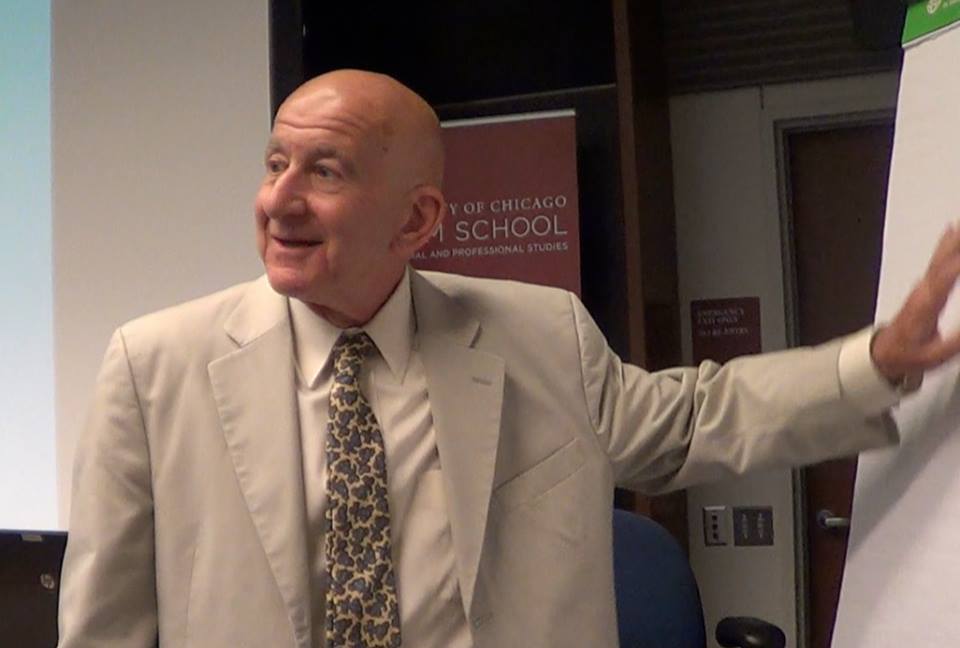
Image Credit: photo by Alex Zonis of Lou Agosta, PhD making a presentation on the Secret Underground History of Empathy on November 13, 2015 at a local Chicago adult education program.
(c) Lou Agosta, PhD and the Chicago Empathy Project

“Empathy is hard” is different than hard empathy
If you start a conversation by saying, “I am committed to expanding empathy in the individual and community,” then some people think you are a pushover. Weak. Vulnerable to bullying. Nothing could be further from the truth. Hard empathy (sometimes also called “radical empathy”) is different than “empathy is hard.” A lack of attention to hard empathy is another reason that being empathic is harder than it needs to be. And this post explains why by distinguishing hard empathy from soft empathy.
Listen to this post as a podCast on Spotify: https://open.spotify.com/episode/2NA04JeYNJUlOS5EOKxZYF?si=b355bf82b05d4bc7
The innovation proposed here is to think of empathy, like so many things these days, as existing on a spectrum between empathy as “empathic listening” and empathy as “tough love.” A rigorous and critical empathy includes both options, which maps to the difference between “soft empathy” and “hard empathy,” and a sliding scale of possibilities in-between.
Thus, the stereotype of standard empathy is described accurately as “soft empathy.” After giving the other person a good listening, one responds: “I get it, man, you are really dealing with some tough stuff there.” “I get you, man, it sounds like a lot of things are going wrong at once – that can’t be easy.” “No use sugar coating things or pretending things could be worse when they are already sooo bad.” One validates the other person’s struggle and effort, which in itself can trigger a shift in the other person’s experience and attitude. Never underestimate the power of empathy of any kind to shift the other person out of stuckness and into an emotional equilibrium that enables the person to take action on their own behalf to improve their situation. However, usually when one talks about “empathy,” one means a version of “soft empathy.”
The short folk definition of empathy is used here. Empathy is taking a walk in the other person’s shoes (after having first taken off one’s own to avoid projection). Different aspects of empathy encompass having a vicarious experience of the other person’s experience; appreciating who the other person is as a possibility; taking the alternative point of view of the other person (the folk definition); and formulating an empathic response that communicates that the listener “gets” what the other person (the speaker) has told to the listener. Note that in an empathic response, the listener has become the speaker and is sharing in a form of words, communicating back to the other person what the listener has “gotten” in listening to the other person.
The challenge is that soft empathy does not work in dealing with bullies, aggressors, psychopaths, antisocial personality disorder, corrupt politicians, gangsters selling fire insurance, and bad actors of diverse kinds too numerous to list here (and so this list is not complete). This has led anti-empathy proponents to assert that empathy is a kind of suicide. For example, in a famine, one gives away one’s last morsel of food to a hungry person, and both starve to death. In an overcrowded life boat, one keeps taking on survivors treading water in the shark infested area around the life boat until the boat is swamped and all end up perishing.
Such thought experiments are useful in provoking debate and thinking about tough cases. However, in so far as such thought experiments set up a narrative that already robs the participants of agency, such stories are not so much about empathy as about moral dilemmas and tragic circumstances. Do not overlook that if you are in a life boat, it is because your ship sank. You do not need more empathy; you need rescue. If you are in a famine, do not forget that there is demonstrably enough food to feed everyone on the planet, but food is used as a weapon by bad actors pursuing problematic political agendas; and the breakdown in empathy occurs upstream in the interrupted supply chain, not in desperate sharing among starving survivors. (Regarding Suicidal Empathy see: https://louagosta.com/2026/05/22/suicidal-empathy-is-in-the-news-what-you-need-to-know-to-debunk-the-anti-empathy-skeptics/)
Responding empathically leaves the empathizing individual vulnerable to the would-be bad actor’s manipulations, deceptions, and interrogations. This is so even if the listener sticks to mirroring responses, giving back the other person what one gets from them, and validation. Without employing a rigorous and critical empathy, one is not on the slippery slope of dancing with the devil, one is already going steady with him.
In dealing with such tough cases and difficult individuals, one can indeed engage from a position of empathy, but the recommendation is to hit the pause button on the softer aspect of empathy, one may usefully temporarily dial down the aspects of empathy such as kindness, niceness, generosity, and so on, and establish boundaries, set limits, push back, and think like one’s opponent by using “top down,” cognitive empathy. In situations where conflict is occurring empathy includes “war gaming” different scenarios in such a way that risks, vulnerabilities, simulations, and alternative points of view are included.
This is sometimes called “Red Teaming,” because the “home team” splits into sides – red and blue (plus a referee) – and simulates the problem and “games” different outcomes. Red Team is an entire fascinating study in itself and the interested reader may usefully consult Micah Zenko, 2015, Red Team: How to Succeed by Thinking Like the Enemy (New York: Basic Books). See also the blog post on Red Team: https://empathylessons.com/2022/02/27/empathy-in-time-of-war-red-team-red-team/
I hasten to add that it is highly improbable that anyone committed to empathy is going to become hard-hearted or cruel, but rather exercise expanded thoughtfulness in considering the consequences of gratitude and generosity, etc. Thus, the image of Lou Gossett Jr as Drill Sgt Emil Foley from the film An Officer and a Gentleman, which accompanies this post, should not be taken literally. This post prefers the description “tough love” to “boot camp,” but it must be acknowledged there is an aspect of boot camp to tough love.

Regarding empathy of all kinds in all kinds of situations, the fallacy is to try to force a choice between the softer aspects of empathy such as kindness, generosity, or gratitude and survival. Sometimes kindness helps one to survive, sometimes not so much. Likewise, such is the case with empathy.
What then is this “hard empathy” about which we have heard so little? “Hard empathy” is where a rigorous and critical empathy comes into its own. Hard empathy has its source in “Don’t hurt yourself! (Or anyone else.)” For example, consider the empathic response after listening to a person describe his or her unhealthy relationship with alcoholic beverages. This goes from “I get you, man, alcohol is a ‘solution’ that reduces stress after a hard day of work” to “Alcohol is a solution [and not a good one] – you need a better solution – can you think of better solution?” It’s up to the client to come up with one such as – go to the gym, call a friend (and meet for coffee), practice yoga, Tai Chi, or meditative breathing, and so on. That’s the tough love – if you keep drinking like this, you are going to hurt yourself or someone you love. That’s the hard empathy.
Soft empathy does not work (or at least does not work well) with bullies or a short list of difficult individuals including psychopaths and the criminally insane. How does hard empathy apply? If a bully is attempting to bully you, the empathic response is “de-escalation.” That includes saying something like “This does not work for me” and leaving, departing, escaping. However, suppose the person is the boss or a romantic partner who is throwing a temper tantrum. The best response may still be de-escalation: “I declare a breakdown in communication and am taking a ten minute [or one hour or one day] time out.” Ultimately the solution may require updating one’s resume or finding a calmer partner, but we are talking here about dealing with the moment of crisis and upset.
Taking a step back, what if walking away is not workable? Making the thought experiment even more confrontational, suppose one cannot leave or escape. Then the empathic response consists in several further steps to de-escalate empathically.
(1) Take steps to ensure one’s own safety. Key term: safety. Maintain physical, social distance. Reduce external stimuli such as loud background noises, TV, bright lights. If there is a kitchen, where there may be knives or sharp objects, stay or get out of it.
(2) Focus on keeping yourself calm as best you can. Breathe in and out.
(3) If the other person is verbally abusive or name-calling, do not respond in kind. Do not say anything to make a difficult, bad situation worse. You may consider responding in that way to provocative questions: “I am not going to say anything to make a difficult situation worse.” Then proceed to the next step.
(4) In fact, empathy shows that someone who is bullying and/or having a temper tantrum is in an altered state of consciousness. They have not been drinking alcohol or tripping, but it is almost as if they had been doing so. Whatever you say to them does not get through and sounds like “Blah, blah, blah!” You may have to repeat yourself: “Let’s talk when we are both calmer.”
(5) In the follow up, be consistent, do not confess to something you did not do, do not walk on eggshells, and do not retaliate. These are all easier said than done, of course, but they must both be said and done. Note that “do not retaliate” does not mean there is no cost and impact to the temper tantrum. If the bully smashes the key board in a fit of temper, the bully is liable to replace it. The cost and impact are a part of the consequences and may include criminal damage to property.
(6) In instances where there are significant differences in power and the available means of force, for example, the boss is a bully, one is trapped in the life boat with the bully, consider placating, including pretending agreement where none may actually exist in order to escape from a violent outcome. I know an example in which lying with reckless abandon saved a person’s life from an attempt on it, and gave the survivor time to call law enforcement. These are extreme situations where soft empathy is useless and hard empathy can make a positive difference. Nor does this mean that empathy advocates are promoting lying. Any priest, rabbi, imam, or spiritual guide will tell one that one must considering lying in order to save a life when no other options are workable.
Hard empathy includes the standard aspects of empathy such as the communication of feeling based on an active listening to the other; an understanding of the other person based on who the other is as the possibility of power, self-expression, and freedom; appreciating the point of view of the other based on their perspective, not the listener’s; and responsiveness that give back to the other person their own experience in a form of words that expresses what the other communicated to the listener. This empathic responsiveness is where hard empathy comes into its own by “speaking truth to power.”
This expression was coined by Bayard Rustin (1912–1987; the principal organizer of the 1963 March on Washington at which Martin Luther King gave his celebrated “I have a dream” speech) to describ the non-violent but assertive behavior on the part of leaders such as Mahama Gandhi, Martin Luther King, Nelson Mandela, Desmond Tutu, the Dalai Lama, and many more. The empathic aspect lives in the assumption that the authorities perpetrating the social injustice (or other problematic behavior) are human beings like oneself capable of reforming their ways. If this assumption is not valid – one is dealing with Nazis with machine guns – all bets are off. However, do not be too hasty in jumping to the misguided conclusion and self-fulfilling prophecy that anyone who disagrees with you is a Nazis with a machine gun. For example, when Terri Givens writes about “radical empathy” I assert that what this post is calling “hard empathy” is included. This is what is required to engage with “wicked” problems such as racial prejudice (e.g., see Terri E. Givens, 2021, Radical Empathy: Finding a Path to Bridging Racial Divides, Bristol, UK: Policy Press).
This does not complete the conversation about hard empathy, but gets it off to a good start. A different aspect of hard empathy comes forth in the face of life circumstances with which it is hard to empathize. This includes the standard complaint about soft empathy in the helping professions. Regular exposure to other people’s trauma leaves the would-be empathizer experiencing burn out, compassion fatigue, and empathic distress. This is empathy the hard way, which is not so different from hard empathy. Hard empathy is committed to empathizing in the face of the breakdown of soft empathy due to the in-bound traumatic load being just too much to bear on the part of the would-be empathizer.
Extreme situations—that threaten death or grave injury to innocent people—call forth hard empathy. Standard (soft) empathy is challenged by extreme situations out of remote, hard-to-grasp experiences to become hard empathy. Someone protests: “You can’t possibly know what I’ve been through!” Tue enough, but when you are hanging from the cliff above the abyss by a frayed line that is about to break, every rock face looks pretty much alike.
The following is not the truth with a capital “T,” but consider the possibilities: Either one has lost a child or not lost a child; either one has survived a dreaded disease or not survived a dreaded disease; either one has given birth or not given birth; either one has been incarcerated in a concentration camp or one has not (e.g., Keen 2022: 43; Bettelheim 1943/1960).
The word “empathy” is inscribed over the gate in the fence between self and Other. That is precisely one description of hard empathy—the gate does not open, but one is committed to getting over the fence in any case. One climbs over the fence or digs under it or straps on a hang glider or like Steve McQueen in The Great Escape, one finds a ramp for one’s motor cycle and launches oneself Evel-Knievel style on a wing and a prayer into thin air.
Empathy is always empathy and hard empathy applies the same four aspects of relatedness—receptivity, understanding, interpretation, and responsiveness. Hard empathy emerges from standard, soft empathy, when standard empathy breaks down, misfires, and/or fails in the face of empathic distress (including “burn out” or “compassion fatigue”).
Empathic distress is itself a function of physical trauma, moral trauma, double binds, soul murder, and tragic circumstances that act to destroy possibilities of human flourishing, strength, aliveness, energy, and/or vitality. As a matter of definition, “soul murder” is defined by Henrik Ibsen’s John Gabriel Borkman (1896), as destroying (through emotional or physical abuse) the possibility of love, but is generalized here to include destroying the possibility of generating new possibilities (Shengold 1989).
Hard empathy is attained when standard empathy honors the commitment to empathize in the face of empathic distress. This is empathy the “hard way,” and it is rare. No other way exists of attaining hard empathy than through empathy pure-and-simple—“standard empathy”—and much of the work accomplished here engages with the break downs of standard empathy as emotional contagion, projection, pressure to conform, and communications getting “lost in translation.” The repairs of these misfirings—and, it must be acknowledged, failures—of standard empathy lead the way to radical empathy.
A person is asked to make a decision that no one should have to make. Join the “revolution” or I will kill your family. Sophie’s choice. Fall on the hand grenade. It doesn’t go off. A person is asked to make a decision that no one is able to make—and yet the person makes the decision anyway, even if the person does nothing, because doing nothing is making a decision. A person is asked to make a decision that no one is entitled to make, which include most decisions about who should live or die (or be gravely injured). The result is moral trauma—the person is both a perpetrator and a survivor. Now empathize with that. No one said it would be easy. Many questions open up here about hard empathy and its relationship to soft empathy as standardly defined. For further reading see the blog post in which “radical empathy” covers most of what is discussed here as “hard empathy”: A concise talk on trauma and radical empathy: https://empathylessons.com/2025/08/22/a-concise-talk-on-trauma-and-radical-empathy/↗
Whether or not to mention “empathy” and when to do so is now a question similar to whether or not to talk about politics or religion at the job or with the in-laws. It is risky. People have always wanted to hear other people agree with them. Who wants to encounter disagreement? However, the wide spread distribution of social media has made worse the “echo chamber” effect of encountering little else except agreement. Nuance and fine-grained distinctions are out. Conformity and uniformity are in. Indeed, conformity is on the short list of the ways that empathy (whether hard or soft) breaks down, including emotional contagion, projection, and communications “lost in translation” (to call out the name of a now classic movie about breakdowns in communication).
A final concern. The number of conversations about empathy that do not even mention an active, dedicated listening committed to responsiveness is really shocking. If the would-be critic of empathy as such does not first acknowledge the need to listen, then the critique is talking about something else (whether pity, compassion, kindness, etc.), not empathy. I hasten to add that since empathy is practiced by error-prone, fallible humans, empathy requires constant practice and improvement. The concise advice on how to do that – whether in hard or soft form – is to clean up the breakdowns of empathy. Clean up emotional contagion, projection, conformity, communications lost in translations and empathy naturally comes forth and expands. The vast majority of people want to be empathy, even if they do not get enough empathy, and will embrace the opportunity to relate empathically.
Thus, the final recommendation is don’t talk about “empathy,” rather make empathy the source of your talk and actions. Okay, please say more about that. Consider the possibility that whether or not one drops the word “empathy” into the conversation, it will be perfectly obvious after about two minutes of talking whether one or more of the participants are “coming from” empathy. Nine times out of ten, you don’t need to say it. As Bob Dylan famously noted in another context, people may try to relate to you and me in a lot of different ways: “block you up / Shock or knock or lock you up / Analyze you, categorize you / Finalize you or advertise you”.[1] The lyrics go on like that for a while. If someone is trying to shock you, sell you something, inform you of their point of view, get you to do or not do something, enroll you in their program, “make you spin or do you in,” then you are in a different world than being appreciated you for who you are as a possibility and as a human being. As Dylan finally says, “All I really wanna do, baby, is be friends with you,” which is itself a statement that calls forth the growing cynicism of people presenting as your “friend.” Friends don’t spam one another. The same kind of thing can be said about a short-list of closely related attitudes, actions, and approaches to empathic human relations such as dignity, respect, kindness, generosity, gratitude, and, yes, friendship.
Finally, these admittedly sometimes rambling reflections point to a further type of empathy that may need to be rolled up into basic empathy, cognitive empathy, affective empathy and sustained empathy, namely, hard empathy (sometimes also called “radical empathy”). Hard empathy is precisely that which the trauma survivors are implicitly and indirectly discussing when they assert that having survived and worked through the trauma (whether in therapy, mediation, yoga, or other intervention) has enhanced their empathic ability. Hard empathy is the commitment to empathy in the face of compassion fatigue, burnout, and empathic distress, which are the risks to empathy (causing empathy’s breakdown) that come forth in the face of trauma. For example, hard empathy is what is required to engage with “wicked” problems such as racial prejudice (e.g., see Terri E. Givens, 2021, Radical Empathy: Finding a Path to Bridging Racial Divides, Bristol, UK: Policy Press.
Admittedly there are not a lot of publications on empathy and trauma, much less radical empathy and trauma, which is precisely why this discussion (and debate) is so important. There has been significant progress in the uses and definitions of empathy since Davis published his work in 1980 (and David Hume his, in 1736 when it was still called “sympathy”). For a short overview of radical empathy and trauma see Lou Agosta, 2025, A short “Ted Talk” trauma and radical empathy, in Radical Empathy in the Context of Literature, New York: Palgrave Macmillan: pp. 203 – 211 (admirably concise!). Just as sustained empathy builds on basic empathy, affective empathy and cognitive empathy, so too does “hard empathy” build on all the former as an emergent function that makes possible non-incremental results in recovery from trauma and related life challenges. Regardless of how one designates the distinction of non-standard empathy, one is not going to get far in engaging with trauma without a radical form of hard empathy.
References
Lou Agosta. 2025. A short “Ted Talk” trauma and radical empathy, in Radical Empathy in the Context of Literature, New York: Palgrave Macmillan: pp. 203 – 211.
Lou Agosta. (2018). Empathy Lessons, 2n Edition. Chicago: Two Pears Press.
Bruno Bettelheim. (1943). Individual and mass behavior in extreme situations. Journal of Abnormal and Social Psychology, Vol. 38: 416-452. Anthologized in various collections including, Bettelheim. (1960). The Informed Heart: Autonomy in a Mass Age. New York: Free Press.
Mark H. Davis. (1980). A Mulitdimensional Approach to Individual Differences in Empathy. JSAS [Journal Supplement Abstract Service] Catalog of Selected Documents in Psychology, 10, 85–100.
Bob Dylan. 1964. All I really want do song lyrics]. Bob Dylan: The Lyrics: 1961–2012. New York: Simon and Schuster, 2004: p. 113.
Terri E. Givens, 2021, Radical Empathy: Finding a Path to Bridging Racial Divides, Bristol, UK: Policy Press.
David Hume. 1736. A Treatise of Human Nature. Indianapolis: Bobby-Merrill Press.
Henrik Ibsen. (1896). John Gabriel Borkman, tr W. Archer (tr.). New York: Project Gutenburg e-Book, 2006.
Suzanne Keen. (2022). Reading and Empathy. London: Routledge.
Bayard Rustin. (1912–1987). Biographical report on: https://en.wikipedia.org/wiki/Bayard_Rustin
Leonard Shengold. (1999). Soul murder revisited. [URL checked on 2023/11/11] https://archive.nytimes.com/www.nytimes.com/books/first/s/shengold-soul.html.
Micah Zenko. (2015). Red Team: How to Succeed by Thinking Like the Enemy. New York: Basic Books.
Image Credit: Lou Gossett Jr as Drill Sargent Emil Foley, with acknowledgement to Paramount Pictures and Screen Daley
No generative AI was used in the preparation of this post. None.
© Lou Agosta, PhD and the Chicago Empathy Project
[1] Bob Dylan, 1964, “All I really want do,” Bob Dylan: The Lyrics: 1961–2012. New York: Simon and Schuster, 2004: p. 113.

