Home » empathy training (Page 2)
Category Archives: empathy training

Resistance to Empathy and How to Overcome it (Part 2): Individual Provider and Receiver (of Empathy)

Overcoming Individual resistance to empathy (provider)
Empathy is trending. As we engage with provider empathy, the pendulum has swung far enough for a backlash against empathy to be emerging.
Empathy with negative emotions and suffering is difficult. From a purely selfish perspective, empathic data gathering about the negative experiences endured and survived by other persons can be, well, negative. Negative experiences such as loss, hostility, intense rage, sexual danger, sadness, sleep deprivation, fear, and so on, are not welcome by anyone even as a less intense vicarious experiences. One fears getting the full-blown experience, not merely vicariously experiencing a sample or trace. The would-be empathizer is at risk of being overwhelmed, inundated, or flooded by emotional upset. The person’s empathy is on the slippery slope of empathic distress; and the empathy is at risk of breakdown.
The language is telling. If one is hit by a tidal wave, then one is going to be “under water.” Kick your feet, make swimming motions with the arms, and rise to the surface to try to catch your breath. While an empathic response is easier said than done, expressing the suffering of the survivor in a simple and factually accurate statement can open the way to containing the suffering and getting unstuck. Dial down empathic receptivity and dial up empathic interpretation and understanding.
People committed to providing empathy to other people resist their own commitment to empathy for several reasons. As soon as a person makes a commitment—in this case, a commitment to practice empathy—then all the reasons why the commitment is a bad idea, unworkable, unreasonable, or just plain absurd, show up. There is no time. It is too expensive. No one is interested. What seemed like a good idea yesterday, now seems a lot more challenging and like a lot more work. Yet empathy is never needed more than when it seems there is no possibility of it.
The would-be empathizer is vulnerable to a vicarious experience of the other person’s suffering. Indeed if one’s empathic data filter is not granular enough, one is at risk of being inundated by emotional contagion. This does not mean that the provider of empathy has to be a masochist, stuck on suffering. However, it does mean being vulnerable to a sample of the suffering. It does mean opening oneself up to a sample of the other person’s upsetting experience. It does mean being receptive to that which the other finds so upsetting, but doing so in a regulated and limited way. Hence, the need for training.
The training consists in interrupting and accepting one’s own feelings and letting them be. Practice is required in order to increase one’s tolerance and learn to be with uncomfortable feelings.
One key to forming a humane relationship with anyone who is upset: Vicariously getting a taste of the upset, experiencing vicariously the other’s fear or anger. Acknowledge the experience as valid. Accept the experience, not as good or fair, but as what one has indeed experienced.
One celebrity academic claims that in empathy the better part of emotion is reducible to emotional contagion. What the world needs to practice is not empathy, but rational compassion. As if one had to choose between the two! The world needs expanded empathy and more compassion of all kinds.[i]
A vicarious experience is essential data as to what the other person is experiencing; but if one is distressed to the point of upset by the other’s upset, then one is not going to be able to make a difference. Paradoxically one is not going to be able to experience one’s experience due to being distracted by one’s own upset. One’s empathy has misfired, gone off the rails, failed.
Empathy is in breakdown. One has to regroup. Take a time out. Acknowledge that one is human. One does not always get it right, but that does not mean that one is less committed to empathy or helping the other. It is worth repeating that the empathizer may expect to suffer, but not too much—just a little bit.
The good news is that empathy, when properly implemented, serves as an antidote to burnout or “compassion fatigue.” Note the language here. Unregulated empathy supposedly results in “compassion fatigue.” However, this work has repeatedly distinguished empathy from compassion.
Could it be that when one tries to be empathic and experiences compassion fatigue, then one is actually being compassionate instead of empathic? Consider the possibility. The language is a clue. Strictly speaking, one’s empathy is in breakdown. Instead of being empathic, one is being compassionate, and, in this case, the result is compassion fatigue without the quotation marks. It is no accident that the word “compassion” occurs in “compassion fatigue,” which is a nuance rarely noted by the advocates of “rational compassion.”
No one is saying, do not be compassionate. Compassion has its time and place—as does empathy. We may usefully work to expand both; but we are saying do not confuse the two. Empathy is a method of data gathering about the experiences of the other person; compassion tells one what to do about it, based on one’s ethics and values.
Most providers of empathy find that with a modest amount of training, they can adjust their empathic receptivity up or down to maintain their own emotional equilibrium. In the face of a series of sequential samples of suffering, the empathic person is able to maintain his emotional equilibrium thanks to a properly adjusted empathic receptivity. No one is saying that the other’s suffering or pain should be minimized in any way or invalidated. One is saying that, with practice, regulating empathy becomes a best practice.
However, the good news is sometimes also the less good news.
The other person’s suffering reminds one of one’s own suffering.
The other person’s anger reminds one of one’s own anger.
The other’s failures evoke one’s own setbacks.
The other’s self-defeating behavior is plainly evident to any third party, but one’s own self-defeating behavior seems to continue with regularity in tripping up oneself.
Rarely does a person say, “I want to be empathic in order to confront my own personal demons.” Rarely does one say it, but that is what is needed. That is the work of expanding one’s empathy. As in the fairy tale, one must spend three nights in the haunted castle, fighting the ghosts of one’s past and confronting the illusive specter of one’s blind spots.
Anxiety, depression, fragmentation, and the dehumanization dwelling in the dark side of human nature loom large before discovering the buried treasure of one’s own emotional resources in the face of upsets.
The thinking and practices that created empathy breakdowns are insufficient to overcome them. The thinking and practices that created resistances to empathy are insufficient to transform them. To get one’s power back in the face of resistance to empathy, something extra is required.
Expanding one’s empathy in the face of one’s own resistance to empathy requires something extra. Expanding empathy requires expanding authenticity, so the person who would practice empathy has to confront and clean up his own emotional contagion, conformity, projection, egocentrism, devaluing judgments and opinions, and the tendency of communications to get lost in translation. This clean up requires acting to repair disruptions in relatedness and repairing misunderstandings and miscommunications with other people by acknowledging one’s own contribution to the breakdown. It requires picking up the phone or requesting a meeting. It requires showing up, engaging, and acknowledging how one acted to cause the upset or breakdown.
Instead of emotional contagion, conformity, projection, and mistranslation, one enters the empathic cycle, engaging with openness towards the other person in receptivity, understanding of possibilities, taking ownership of one’s meaning making so that the other person is left free to be self-expressed, and responding in such a way that the other person is left whole and complete.
This means accepting the consequences of one’s deeds and mis-deeds. That is the first step—and every step—in recovering one’s power in relation to empathy. One might not get what one wants. However, what one is going to get is unstuck—and the freedom to be empathic in relationships going forward.
Overcoming individual resistance to empathy (recipient)
Everyone wants to get empathy, don’t they? Speaking of a recipient’s resistance to empathy sounds like resisting rainbows and colored balloons. What’s not to like? Empathy is what everyone really wants, isn’t it? Well, not always. Resistance to empathy—that it exists—is the basic empathy lesson of this chapter.
Emotional closeness leaves a person vulnerable to disappointment. The would-be recipient of empathy is ambivalent and vulnerable about being intimate with the other person, inhibiting the recipient’s empathic relatedness. The result is resistance to empathy.
People want approval from other people. People want approval for their opinions and behavior. People want agreement. Life is definitely easier, at least in the short run, if one is surrounded by people who agree with one rather than disagree.
People especially want agreement when they have something to be disagreeable about. They want agreement when they have a complaint. However, empathy does not lead off with approval and agreement.
Empathy leads off by being quiet and listening. In the face of chronic complaints and self-defeating behavior, being empathic often takes an open and inquiring stance that the other person may usefully take a look at any responsibility or potential blind spots he may be holding onto as the source of the complaint. It seems like “mission impossible,” since the blind spot is precisely that which, by definition, one does not know and that to which one can get access only through sustained self-inquiry. Doing the hard work of undertaking an inquiry into one’s own issues is, well, hard work. That results in resistance to empathy.
Resistant or not, people want to be understood. People want to be gotten for who they authentically are. People want other people to know how they have struggled to succeed and overcome adversity.
Yet, in hoping to be understood for who they really are, people are asking, not so much for agreement as for empathy.
People assert that they want to be understood; yet they do not want to be understood too well.
People do not want to take too close a look at how they have contributed to their own struggle and effort. People do not want to face directly how they have contributed in self-defeating ways to their own frustration and stuckness about which they so loudly complain.
People want the recognition of their humanity that comes with empathy; but not the unmasking of their own blind spots, which requires getting out of their comfort zone.
Let’s face it. People can be difficult. People are disagreeable. People are contrary. People are ornery. People are rude and discourteous. People push and shove. People often forget to honor their agreements. People lie. People are overly aggressive. People are overly sexed. People are under-sexed. People smell bad. Is it any wonder that people do not want to get close to other people? Is it any surprise that people develop resistance to being empathic towards other people?
This is a case of you can’t live with them and you can’t live without them. People, that is. Yet there is no such thing as a person in isolation. A person by himself is not a survivable entity. That is true of newborn babies. That is true of children of tender age, who require years of guidance and education. Likewise, that is true of adults, though in more nuanced ways.
The “I” is a part of the “we,” and the “we” a part of the “I”
Early prehistoric humans needed a companion to tend the campfire and stand guard against predators (or hostile neighbors) while the other(s) rested. The basic male and female pair was an inseparable requirement for procreative success.
Propagating the species to build a community against the ravages of infant mortality was a priority requiring skills to cooperate with one another socially. For most of recorded history (and before) children were the equivalent of a pension plan for aging parents; and in many parts of the world today that continues to be the case.
Domination and control of individuals in community based on physical strength and violence coexisted alongside (and contended against) forms of cooperation, leadership, and community-building based on the skillful use of language and symbols to exercise power based on motivation, persuasion, inspiration, inclusion, and enlightened self-interest.
The point is not to tell a “just so” story about the origins of civilization, but rather to acknowledge that, not only is the individual a part of the community, the community is also a part of the individual. This bears repeating. The “I” does not only belong to the “we”; but the “we” is a part of the “I.” We carry within ourselves a readiness for community, a readiness for relatedness, a sense of inclusion in community; and if there is no one else to talk to, we talk to ourselves.
The empathy lesson? Empathy is the foundation of relatedness, and resistance to empathy is resistance to relatedness. People are born into “relatedness.” Empathy is about participation with others. Empathy is about relatedness with other people and who these others authentically are in their strengths and weaknesses, in their possibilities and limitations. Even when a person is a hermit, all alone, he is alone in such a way that his aloneness depends on the basic condition of his being a creature designed for relatedness. Being unrelated is a privative form of relatedness; and being alone is a deficient form of relatedness. Paradoxically, nonrelatedness becomes a way of relating for some.
Given that resistance to empathy on the part of the would-be recipient of empathy is pervasive, what is the recommendation? Ask yourself: What is coming between myself and the other person who is offering empathy? Perhaps fear of being misunderstood is a factor. Fear of being let down is another factor. Fear of being vulnerable gets in the way. Fear of disappointment is a consideration.
What do all these factors have in common? Fear. Fear is front and center. However, there is something else further back behind the fear. Less obvious but highly significant. What would a person have to give up in order to be receptive to the gracious and generous listening being offered? Behind the fear is attachment—attachment to suffering.
Suffering is sticky
For people who are survivors, whether of the college of hard knocks or significant trauma, allowing themselves to experience another’s empathy takes something extra. Many people who fall short of a clinical label of “post traumatic stress disorder” (PTSD) have an area in their lives in which they are engaged with their suffering in an intimate way. You know the saying: “Keep your friends close, but your enemies even closer”? So it is also with suffering. In order to survive suffering, many people have decided to keep it close to them. They are attached to it. Overly attached? One thing is for sure. Suffering is sticky.[ii] Letting go of the suffering through the soothing experience of empathy seems like a risky proposition to people who feel fragile and vulnerable.
Consider PTSD. (We define our terms.) In an attempt to master the consequences of the life threatening experience of trauma, the organism (the human mind/body) keeps the fear, anxiety, and pain split off from being experienced as one’s own. Yes, one was present when the assault happened, the violence was perpetrated, or the train wreck occurred.
Yet in another sense, one was not present. One was not there, at least not as a conscious being. In being overwhelmed in the moment, one immediately took oneself out of the experience as an immediate reaction and survival mechanism. The traumatic experience remains unintegrated with one’s other life experiences, spinning in a tight circle of repetition.
The circle of repetition is split off from the person’s awareness and everyday life, remaining isolated—“sequestered” is the technical term for it.[iii] Suffering lives. The pain is real. Suffering itself becomes a kind of “comfort zone,” but only in the limited sense that it is isolated and separated from the awareness of the person trying to live his life.
This in no way diminishes the struggle or suffering of the survivor. Yet letting go of the suffering through the soothing balm of empathy shows up like a risky encounter with the unknown. For most people, the unknown itself is fear inspiring. The unknown is as fear inspiring as the suffering itself.
One keeps coming back to the suffering in the hope that it might be magically shifted. One keeps coming back to it like an exposed nerve in a toothache. Yes, it still hurts—ouch! The suffering starts to dominate one’s whole life, and one builds one’s life around the suffering, trying to manage and contain the uncontainable. One says, “I know my own dear little suffering up close, and it is a comfort to me in its own way—it gives me all these secondary gains—even though the impact and cost is staggering in the long term—yet I cannot let it go.”
We cycle back to empathy and its many dimensions in the context of suffering as an uncomfortable comfort zone.
How to be empathically responsive to the struggling individual and his “dear little suffering” requires an empathic listening of remarkable finesse and timeliness.
Empathy can help people get out of their comfort zone, in this case a place of suffering, in a safe and liberating way. When empathy gets an opening, empathy shrinks the trauma the way interferon is supposed to shrink tumors. Empathy sooths the accompanying suffering and reduces the stress.
The survivor is able to let go of the attachment to suffering, and engage with new possibilities. No guarantee exists that the outcome of the new possibilities will be favorable; many risks await; but the individual is no longer stuck.
In summary, we have engaged with resistance to empathy from three perspectives. We have explored overcoming resistance to empathy in the organization, in the individual providing empathy, and in the individual receiving empathy. In each case the empathy training consists in driving out obstacles to empathy, reducing or eliminating the resistance, so empathy can spontaneously grow and develop.
The organization drives out empathy by enforcing conformity to an extensive and contradictory set of rules, whose complexity is such that at any give time, the individual is technically (though unwittingly) in violation of one of them.
Speaking truth to power can be hazardous to one’s career; and humor is closely related to empathy; so humor becomes a powerful way of regulating empathy, expanding and contracting empathy in such challenging organizational contexts. Humor is a powerful tool against the arrogance of authoritarian domination. Both empathy and humor require crossing the boundary between self and other with integrity and respect, but humor offers additional opportunities for questioning the status quo, speaking truth to power, and creating the stress, suddenly relaxed by laughter, caused by expressing what’s so.
Empathy has a key role to play in organizations in reducing conflict, overcoming “stuckness,” eliminating self-defeating behavior, building teams, fostering innovation, developing leadership, and enhancing productivity. The empathy lesson is to use humor (and empathy) to undercut resistance to empathy in the organization. The lesson is that empathy is a source of creating possibilities, overcoming conformity through innovation, and leading from a future of possibilities.
Resistance to empathy on the part of those who provide empathy shows up as “compassion fatigue” and burnout. The word is a clue: compassion, not empathy, causes “compassion fatigue.” So much compassion, so little empathy. I hasten to repeat that the world needs both more compassion and more empathy. Peer group dynamics, collegial support, and self-care are required to recharge the emotional resources of those routinely providing empathy to others.
Regular self-care, including exercise, nutrition, quality time with family/friends, is on the critical path to survival and flourishing, managing the risk of experiencing empathic distress.
This makes the case for self-care and self-monitoring on the part of professionals of all kinds and first responders in health care, education, sales, leadership, public safety, customer service, and so on, whose empathy is a significant part of their role. Professionals take breaks and are on top of their empathy game; amateurs try to be empathic all the time (whatever that would mean), experience empathic distress, make it mean they lack empathy, and quit. Those who do not take care of themselves, then blaming empathy when they get burned out, are committing a kind of malpractice of empathic engagement (in the literal, not pejorative sense of the word). Like a helicopter, empathy is powerful and complex, so it requires regularly scheduled maintenance lest something go wrong at an inconvenient time.
For those individuals who want empathy or think that they want empathy, but then change their minds, resistance to empathy confronts readiness for empathy. Some people simply would rather not be understood. For them, being understood has resulted in bad outcomes. They have been manipulated, used, even abused.
In such cases, the would-be empathizer has to “dial down” empathic receptivity, in which the communication of affect looms large, and “tune up” empathic interpretation, in which one cognitively processes what it might be like to take the other’s point of view. Once a person feels safe, the person will be willing to risk exposing and exploring the vulnerabilities that got the person stuck in the first place and need working through to get the person moving again into a flourishing future of possibilities.
In conclusion, empathy is supposed to be like motherhood, apple pie, and puppies. What’s not to like? A lot. People can be difficult—very difficult—why should empathizing with them be easy? Yet most of the things that are cited as reasons for criticizing and dismissing empathy—emotional contagion, projection, misinterpretation, gossip, messages lost in translation and devaluing language—are actually breakdowns of empathy. With practice and training, one’s empathy expands to shift breakdowns in empathy to breakthroughs in understanding, possibilities of flourishing, enhanced humanity, relatedness, and building community.
[i] Empathy is now a major publishing event. There is a wave of books on empathy—popular, scientific, political, and scholarly. For example, Frans de Waal’s The Age of Empathy explores empathy between humans and higher animals; J.D. Trout’s The Empathy Gap considers empathy and social justice from the perspective of Ignatian Humanism; Jeremy Rifkin’s The Empathic Civilization, 800 pages long in hardcover (don’t drop it on your foot!) channels Teilhard de Chardin’s idea of a global consciousness, now including the politics of empathy; Jean Decety’s Social Neuroscience establishes correlations between sensations, affects, and emotions using functional magnetic resonance imaging technology (fMRI) as a kind of x-ray for the soul, exploring the relation between empathy and psychopathy (with his colleague Kent Kiehl); Simon Baron-Cohen’s Zero Degrees of Empathy considers the role of empathy in cruelty and disorders of empathy such as psychopathy and autism. Thomas Farrow’s (ed.) Empathy in Mental Illness drills down scientifically on the disorders of empathy in all their profound differences. See also: Susan Lanzoni, Empathy: A History (Yale 2018); any collectioin on social neuroscience by Jean Decety; William R.Miller, Listening Well: The Art of Empathic Understanding (WIPF and Stock, 2018); Cris Beam, I feel You: The Surprising Power of Extreme Empathy (Houghton Mifflin, 2018); Jodi Halpern, From Detached Concern to Empathy: Humanizing Medical Practice, (Oxford, 2001); David Howe, Empathy: What It Is and Why It Matters (Palgrave Macmillan, 2013); Leslie Jamisom, The Empathy Exams (Essays) (Graywolf, 2014); Thomas Kohut, Empathy and the Historical Understanding of the Human Past (Routledge 2021).
[ii] I discuss this proposition in detail in Lou Agosta. (2015). A Rumor of Empathy: Resistance, Narrative Recovery in Psychoanalysis and Psychotherapy. London: Routledge (Taylor and Francis): 53, 55, 117, 190.
[iii] Bessel van der Kolk. (2014). The Body Keeps the Score: Mind, Brain and Body in the Transformation of Trauma. New York: Penguin Books.

The Natural Empath Meets the Good Samaritan
A person can regulate his or her empathy up or down by crossing the street. The empathy lesson is that if you can cross the street to avoid the beggar, regulating your empathy down, then you can cross the street (as well as use other methods) to expand your empathy, regulating it upward. So don’t tell me that empathy cannot be dialed up or dialed down with practice. That’s the point: practice.
Crossing the street is what happened in another story with which many readers are already familiar. The story of the Good Samaritan, one of the parables of Jesus of Nazareth, tells of two people who crossed the street, and one who did not. In the story, a traveler was waylaid by robbers. He is left for dead by the side of the road. The first two persons—the Levite and the priest experienced empathic distress, and, crossed the street, passing by the victim.
The Samaritan, however, was not overwhelmed by the victim’s suffering. The Samaritan perceived the suffering; he had a vicarious experience of the suffering that did not over-stimulate him with suffering and cause empathic distress. The Samaritan saw a fellow human being; recognized the suffering humanity; and he decided to get involved.
Multiple empathy lessons are available here. First, to regulate one’s empathy, cross the street. This is an edgy and confrontational way of putting it, but it is literally accurate. Cross the street away from the neighbor to “down regulate” your empathy, and experience less empathic distress; and cross the street towards your neighbor to expand your empathy in the direction of creating an inclusive community of persons, who recognize the value of cooperation.
The empathy lesson is that the vicarious experience does not have to be overwhelming. Rather, with practice, one is able to shift one’s focus from suffering to neighborliness; one is able to shift one’s attention from suffering to making a difference and enhanced self-esteem, expanding community and shared humanity.
Crossing the street is not the only way to reduce one’s chance of empathic distress or responding empathically. One may imaginatively changes places with the survivor and reflect that one would want the other’s help if one were in a similar predicament. One may spontaneously and without thinking act impulsively to be helpful, because one’s upbringing has made such responsiveness a habitual practice. (I believe this was the case with the Samaritan.) One may reflect, “I am safe and the survivor is no danger to me and it is my turn to help out.”
Or, on the contrary, one may make a devaluing judgment such as “The guy deserved what he got.” Such a judgment would be inaccurate—and in this case it would literally add insult to injury—but such thoughts do occur among by-standers. The passers-by may have just been hard-hearted. One person’s empathy is another’s antipathy. The language speaks volumes.
The empathy lesson consists in distinguishing such a devaluing thought; acknowledging that thinking is profoundly different than acting and should not be confused with it. The empathy lessons is to take action coming from one’s authentic commitments to building community through empathy, not devaluing thoughts.
This story is an empathy lesson that also instructs us in the difference between empathy and compassion. The Samaritan’s empathy told him what the other person was experiencing; his compassion (and ethics) told him what to do about it.
This bears repeating: empathy tells one what the other person is experiencing; compassion (and ethics) tell one what to do about it.
We are usually taught to devalue the behavior of the Levite and the priest; and surely they do not win a prize. Yet in an alternative point of view, they were all-too-human. Seeing all that suffering embodied in the survivor, they just couldn’t take it. They succumbed to empathic distress.
They experienced a breakdown of their empathic receptivity, and were overwhelmed in a kind of instant empathy fatigue (not compassion fatigue).
In an alternative reading of the parable, the would-be rescuers dial down the granularity of their empathic receptivity, so as not to be too sensitive to the suffering, even as they get a sample of the suffering, which is needed to inform their humanity.
The Good Samaritan, who is a seemingly infinite source of insight, is called to his empathic neighborliness by the distress of the injured traveller. The traveller who had fallen among thieves and was beaten near to death creates the possibility of empathic community by his loss of human well-being. He has been reduced to a lump of suffering, broken, physical pain.
The Samaritan rescues the traveller; the traveller humanizes the Samaritan, calling him not just to the role of an altruist doing a good deed (though that occurs too), but to his possibility as a human being in relation to another fragile, suffering, dependent human being.
The stricken traveller, by his very being, gives the Samaritan his own humanness. This occurs precisely in making the Samaritan a neighbor in answering the question, “Who is one’s neighbor?” Such was the trick question that the Pharisees posed to Jesus, to which this parable is the response.
The Samaritan gives humanness to the distressed traveller in an intervention that defines them as part of the same community of fellow travellers—neighbors—on the road of life.
In an alternative retelling of the story suppose that the Levite and the priest were “natural empaths,” biologically predisposed to be sensitive to the pain and suffering of other people. They were endowed with a certain “delicacy of empathy,” and they feel the suffering of the world deeply. Perhaps too deeply. Some people report: “I am a natural empath—and I suffer because I feel the pain of others too acutely. I started out being empathic—but people took advantage of me—and even when they didn’t, I was just too empathic; I got overwhelmed with sensation and sucked dry—the result was burnout, compassion fatigue. Nice guys finish last—so do empathic ones.”
Thus, the lament of the natural empath.
Empathy becomes a burden, because the world is filled with so much suffering. Yet if the person uses avoidance to “down regulate” their empathy, the person feels guilty because the individual believes that what she is doing is unkind, thoughtless, lacking in fellow feeling, and—unempathic.
So the natural empath falls into a double bind, and her suffering seems inevitable. She is over-whelmed by too much openness to the suffering of the other person or over-whelmed by guilt at not living up to her own standards of fellow-feeling and ethics.
These statements imply that empathy cannot be regulated through training, albeit a training that goes in the opposite direction (from too much empathy in the moment to less empathy) than that required by the majority of people, who are out of touch with their feelings and need to “up regulate” their empathy. The empathy lesson for the natural empath is to be more flexible about her ethical standards, while attempting to tune down her empathic distress.
Some people are skeptical that “natural empaths” are all that they say they are. Natural empaths in their natural state assert that they feel overwhelmed and distressed by other people’s thoughts and feelings. I see no reason to doubt such statements. However, to some critics, a redescription of the natural empath asserts that the latter are “irritable” and “hypersensitive.”
Empathy is recognizing and understanding the other’s perspective and then communicating that understanding to the other person. Someone who is unwittingly, even helplessly, swept along by the other’s feelings is not really being empathic. Over-identification, not empathy?[i]
The way out of this apparent impasse is to consider that the natural empath does indeed get empathic receptivity right in empathic openness to the other’s distress, but then the person’s empathy misfires.
Whether the misfiring is over-identification, resulting in empathic distress, depends on the description and redescription. Standing on the sidelines and saying “Try harder!” is easy to do. Where is the training the person needs when they need it?
The recommendation regarding training? Most people need to expand their empathy; some people—natural empaths—need to contract (or inhibit) their empathy. Empathy regulation—learning to expand and contract empathy—is the imperative in either case.
Instead of complaining about being an overly sensitive natural empath (however accurate that may be) do the work of practicing empathy by “down regulating” one’s empathy in a given situation, transforming empathic distress into a vicarious experience. Instead of complaining about not being pre-disposed to empathy, get up and do the work of practicing empathy, which for most persons means “up regulating,” expanding their empathy.
[i] Lou Agosta, (2018). Empathy Lessons. Chicago: Two Pairs Press: Order empathy books click here: https://rb.gy/avwkb7

The Evidence: Empathy is Teachable, Trainable, Learnable
This essay is an excerpt from Chapter Four of the book Empathy Lessons. This essay is motivated by the need to debunk the position that the practice of empathy is vague and fuzzy and cannot be taught, that you either have it or you don’t. Bunk. I am addressing scientists, researchers, health care professionals who dismiss empathy as not scientific of evidence-based.
Substantial evidence is available that if you practice empathy, you get better at it. A bold statement of the obvious? Indeed. Yet the requirement to marshal the evidence is a significant one, even if it is often a function of resistance to practicing a rigorous and critical empathy. Key term: resistance to empathy. Overcome the resistance to empathy and the practice of empathy spontaneously and naturally comes forth. [See Empathy Lessons and other books by Lou Agosta on empathy: https://amzn.to/2S0ISPr.%5D
Evidence-based empathy
Even if one understands “evidence” in the most narrow and rigorous sense, substantial evidence is available from peer-reviewed research and publictions that empathy training is effective. The implications for evidence-based empathy training are direct. Empathy works. Some of this material may seem difficult or complex; but it is important to engage with it, because it undercuts the subtle resistances to empathy that dismiss empathy in the misguided belief that there are no evidence-based peer reviewed publications.
The first example is an empathy intervention so short that it passed the Institutional Review Board (IRB) criteria for the use of human subjects. The study was complete before people had a chance to drop out. An advertisement went out for people to receive a complimentary, free screening and short intervention for “problem drinking.” In fact, only problem drinkers responded.
The people were divided randomly into groups and given either an immediate check up with confrontational counseling that directed them to stop drinking; or the subjects were given a check up with motivational interviewing that used client-centered counseling and did not try counsel changing the client’s behavior, but in the manner of motivational interviewing explored the person’s motives with him or her. Motivational interviewing employs empathic methods of listening and questioning and, in this example, becomes a proxy for empathy.
Strictly speaking, the counselor facilitated a dicussion with the client of what might happen if the client either did or did not stop (reduce) drinking. A third group of clients was wait-listed, for control, without intervention. Motivational interviewing is a client-centered intervention that relies on empathic listening, questioning, and responding.
Both groups that received intervention resulted in a 57% reduction in drinking within six weeks, and the result was sustained at 1 year. However, there was one dramatic finding. The lead researcher and author (William Miller) reports: “Therapist styles did not differ in overal impact on drinking, but a single therapist behavior was predictive (r = .65) of 1-year outcome such that the more the therapist confronted, the more the client drank.”[i]
This bears repeating: the more confrontational the counselor, the more the client drank. If one starts with a confrontational approach rather than empathy, one is headed for trouble.
In another study, perspective taking was practiced in which the other person was imagined to be a neighbor or a member of one’s own community rather than a stranger.[ii] This examines empathic interpretation, though the study does not use that terminology. Practice perspective taking, it improves.
Other practitioners have developed exercises that focus on specific groups such as doctors of individuals with autism. This expands empathic understanding, though, once again, the terminology is different. Other experiments conduct explicit training in mentalizing, specifically, teaching participants in the training about associations between target facial expressions and emotions.[iii]
In a separate study, a large meta analysis by the Cochrane Library that reviewed fifty-nine peer-reviewed studies with 13,342 participants of a motivational interviewing intervention based on empathy for substance abuse over against other active interventions or no intervention and produced a similar result: motivational interviewing helped people cut down on drugs and alcohol.[iv]
Still, the debate goes on.
Is the empathic questioning, the back-and-forth conversation, in the motivational interview that causes something (attitude, hope, fear, and so on) in the client to shift? Or do people convince themselves? Or do they just get better informed? Or do they stop blaming themselves and feel better, and so they “self medicate” less with alcohol or street drugs?
Lots of questions. No easy answers. Yet when something is so effective across so many studies and researchers are still skeptical, then one has to say: “Okay, skepticism is proper and scientific. Yet nothing is wrong here; but there is something missing—empathy.”
Let’s do the numbers.
Evidence shows that those who train and practice being empathic succeed in expanding their empathy. Educational programs that target empathy have a demonstrably positive effect on empathy skills, according to peer reviewed studies.[v]
Another case in point: a meta analysis of 17 empathy nursing courses in an educational context indicated statistically significant improvement in empathy scores in 11 of the 17 studies (and non statistically significant improvements in the other 6). Similar positive outcomes were reported when medical students, training to be doctors, were included. When nurses and medical students work at practicing empathy; and they get better at it. How about that.[vi]
A disturbing factoid: The empathy of persons studying to become physicians peaks in the third year of medical school according to measures applied periodically (as reported by Dr. M. Hojat and his colleagues at Thomas Jefferson University).[vii] Empathy expands; but then it seems to contract. The suspicion is that the burnout occurs in the “college of hard knocks.”
Use it or lose it? The stereotype of the harried medical doctor, seeing twenty or thirty patients a day, is increasingly accurate. As the MD (or other health care professional) is pushed down into survival mode, empathy is not improved or expanded. Hear me say it, and not for the last time, the things that make us good at the corporate transformation of American medicine, improving productivity and efficiency, do not expand our empathy. This does not mean that empathy and efficiency are mutually exclusive. It means we have to get better at balancing quantity and quality in both business and empathy.
In another example, training sessions directed at aggressive adolescent girls in a residential treatment center showed the benefits of expanded affective empathy. Affective empathy is the automatic dimension of empathy (“empathic receptivity” in my definition) that is perhaps hardest to influence.[viii] Parental effectiveness training (PET) was demonstrated to move the participants from below facilitative on the Truax Accurate Empathy Scale up to or beyond the facilitative level. “Facilitative” means knowing how to get things done. That is, the outcome is that the parent’s empathic effectiveness was expanded.[ix]
The effectiveness of empathy training is not limited to the affective dimension. A team at the University of Toronto produced a meta analysis of twenty-nine articles, using seven different approaches to empathy training. All the studies except two (93%) had positive outcomes, improving the cognitive component of empathy (86%). These studies were distributed as follows: education (24%), nursing (14%), therapy (7%), medicine (21%), social work (3%), psychology (7%), human service (7%), couples (10%) and divorcees (3%). Regardless of the training method, individuals expand their empathy when they practice or engage in effortful training.[x]
In another study, some 42 couples involved in a romantic relationship completed a five week empathy training program. The change in empathy was assessed by measured analyses of variance. The assessment reproduced the positive results of earlier findings. The training produced reliably increased empathic interaction between the partners. Scores on three empathic measures improved over a follow up six month period.[xi]
Further evidence that empathy is trainable is available in “The Roots of Empathy” (ROE). This is a formal program developed by Mary Gordon and colleagues in Canada.
First started in 1996 and introduced into U.S. schools in 2007, the ROE program has been featured on the Public Broadcasting System (PBS) in the USA. ROE aims to build more peaceful and caring communities by expanding empathy in children.[xii]
The program targets elementary school classes, and consists of weekly visits to the class room by a new born baby and the baby’s mother for an entire school year. The group sits in a circle and the mom and baby interact, accompanied by a conversation about the life of the baby, biologically, psychologically, and socially.
The empathy lessons are elementary—unless you do not happen to have ever been exposed to a baby or the empathic care of one. Babies cry when they are hungry or wet or cold; they coo and gurgle and giggle when they are content and happy.
Some lessons are elementary; some, sophisticated, engaging with human development, of which the baby is Exhibit A, as the baby grows throughout the school year.
The roots of empathy are present in front of the class: the baby. The powerful presence of the baby calls forth the emotional resonance, natural curiosity, and wonder of the children. The baby provides the empathy lessons, in effect being the teacher. The baby provides the opening for conversations with the children about human development, socialization, and building a community. The vast majority of human beings are naturally inspired to care for a baby. Whether people know how to deliver such care effectively is a separate issue, requiring separate training. A complex species, these humans: human beings are naturally empathic just as they are also naturally aggressive.
At the heart of this kindergarten through 8th grade program is the goal of dialing down aggressive behavior patterns in children at an early age, in particular, curbing bullying (about which more in an entire chapter below). For example, roughly 160,000 children miss school every day “due to fear of an attack or intimidation by other students,” according to the National Education Association.
The program also documents an 11% improvement in standardized achievement tests for the class that is exposed to the Roots of Empathy intervention.[xiii] This is definitely not a predictable result. It should put us in touch with the humbling sense that there are many things that we do not even know we do not know.
When kids get the empathy to which they are entitled, they study harder and work smarter. When bullying is reduced, kids are less fearful, are less distracted, have more fun, and are able to study. When they study harder and smarter, they get improved scores.
The results of the program are “over the top” positive; and since this is the age of evidence-based everything, the program also spend a lot of cycles gathering key metrics on the results of the roots of empathy. A randomized control trial was conducted.
Findings indicated that children who had participated in the program compared to children who had not, were more advanced in their social and emotional understanding on all dimensions assessed. These included emotional understanding, perspective-taking, peer acceptance, classroom supportiveness, pro-social behavior and characteristics. Concomitant reductions in aggressive behaviors and increases in pro-social behaviors (e.g., helping, sharing, cooperating) were noted.
In particular, teachers rated three child (student) behavior outcomes (physical aggression, indirect aggression, and pro-social behavior). The Roots of Empathy program had statistically significant and replicated beneficial effects on all three child behavior outcomes.[xiv]
Peer reviewed research is compelling, but equally compelling are market dynamics: organizations are voting with their dollars that empathy is trainable.
People with chronic life style diseases such as hypertension (high blood pressure), type 2 diabetes, congestive heart failure, asthma, and so on, enjoy statistically favorable outcomes when their physicians show empathy—a fancy way of saying people “get better.”
Relying on such evidence, a company called “Empathetics” has been founded to train medical doctors in expanding their empathy.
Using intellectual property developed at Massachusetts General Hospital, affiliated with Harvard University, Empathetics, Inc. trains physicians in expanding their empathy through the use of biofeedback.
The CEO, Helen Riess, MD, delivered a Ted Talk about the value of empathy in health care.[xv] Dr. Riess and her colleagues at Mass General performed a meta analysis of the effects of empathy on all kinds of diseases.
Dr. Riess (and her colleagues) report on randomized controlled trials (RCTs) in adult patients, in which the patient-clinician relationship was systematically monitored and healthcare outcomes were either objective (e.g., blood pressure) or validated subjective measures (e.g., pain scores). Those doctors (and related professionals) that scored higher on the empathy screening tests had demonstrably better patient outcomes than those with lower empathy scores.
Three trials included patients with diabetes, two included patients with osteoarthritis. Other disorders included fibromyalgia, oncology, lower respiratory infection, osteoarthritis, hypertension, smoking, somatic complaints, and asthma. The median patient sample size was 279 (range: 85 to 7,557). That’s a lot of people.
In summary, empathic doctoring produces favorable results. Patients get better compared with those whose doctors who do not score as well on the applied empathy scale. A word of caution. Correlation points to a significant path to improved outcome through empathic relatedness, but, at least in the context of this study, correlation is not causation.
Using the language of evidence-based medicine is trending. The “effect size” of empathy is so large that it overwhelms any confounding variables that might be hiding beneath the surface of experience. Thus, empathy fits right in with the trend. The results are compelling. Applying empathy in interacting with the vast majority of people is like using penicillin to treat the vast majority of significant bacterial infections. Applying empathy in interacting with people is like using a parachute when jumping out of an airplane. If you don’t do it, you are headed for trouble.
Common factor, empathy, in social healing practices
Psychotherapy is regarded as an example of a social healing practice. Psychotherapy is a conversation for possibility between two persons, one of whom is dealing with difficult personal issues and emotions and another person who is committed to making a difference through empathy.
Experience shows that physical disorders, injuries, and lesions get elaborated psychosocially. This is not just hypochondria or imaginary disorders that are “in someone’s head.” This is lower back pain, migraines, life style disorders such as type 2 diabetes, asthma, and irritable bowel that are aggravated by job, family, and relationship issues (conflicts, stresses, upsets) in a person’s life. Nutrition and exercise are behavioral practices that positively affect health, but can be difficult to influence.
People have different ways of expressing their pain and suffering. When an investigation of the person’s life indicates that non-biological factors are contributing to the person’s decline or distress, then it is useful to engage an alternative point of view on pain and suffering. It is useful to undertake an inquiry without making too many assumptions that one knows what is actually going on. It is useful to have a conversation for possibility.
The first person to undertake such an inquiry of whom we have any record was named “Socrates.” His student, Plato, wrote down what Socrates had to say, the most famous statement of which was that he knew only one thing: “I know that I do not know.” Socratic’s approach was so powerful that he was able to undertake fundamental inquiries that challenged his own inauthenticities and those of the persons with whom he engaged in dialogue. His questioning led to insights about basic values of truth, right and wrong, pleasure and enjoyment, and the organization of the community. The example of Socrates inspired talk therapists of all kinds—not to mention religious leaders, politicians of integrity, and educators in diverse disciplines.
The word “empathy” does not occur in Plato’s dialogues with Socrates, who instead spoke of being a “midwife” of ideas. When a friend of mine read this account of Socrates as a midwife, he shared with me an anecdote from when he was a medical student. He was walking through the hospital maternity department one evening after class. As he passed an open door, one of the patient’s called out to him. She was in labor and she asked his help. As he told me candidly, at that time in his medical training, he knew nothing about childbirth. Thus, as far as he was concerned, the qualification of Socratic ignorance was satisfied.
My friend asked the woman how he could help. She asked to hold his hand. He thought to himself, “Now this I know how to do!” He held her hand for awhile. She pushed and pushed. The result was a healthy baby boy. How or why the woman was left alone, and what further help arrived was not specified.
My friend cited this as an example of empathic understanding that just shows up spontaneously. In his recollection this was an example of empathy at a moment of crisis to which no words were adequate. I would say the woman was training him in being empathic, and the empathy lesson worked just fine.
Socrates did not claim to produce original knowledge himself. But he acted as a midwife for others, who were trying to give birth to sustainable, viable knowledge. In terms of empathic understanding, Socrates exemplified the commitment to new possibilities as opposed to conformity. Socrates made the case for dwelling in the comfort-zone stretching, discomfort of open-ended inquiry in the face of “being right.” He helped his dialogue partners give birth to ideas of their own and distinguish those ideas that are viable from those that are still-born.
Socrates enjoyed a special relationship with his students and colleagues. He had a special rapport that was a combination ofidealization and affection that set him apart from many of the other teachers of his time, called “Sophists.” The latter were masters of argumentation and rhetoric for hire.
The sophists were perhaps the original purveyors of “alternative facts” and “fake news.” Socrates’ relationship with the sophists in the community was not positive. He spoke truth to power in such a way that those in power were deeply threatened. Some of those in authority came to fear and hate him.
Eventually Socrates was indicted and convicted, in a trial of questionable merit, of a crime against the state, corrupting the youth. For reasons that are still controversial today, Socrates decided to drink the hemlock instead of fleeing into exile, becoming a martyr to prejudice and political intrigue.
Nevertheless, the principles that Socrates espoused have become the basis for talk therapy—and overcoming resistance to empathy. To engage in therapy with human beings in their struggle with emotional pain and suffering requires: providing a gracious and generous listening and an authentic human response; inquiry into possibility and open-ended questioning; an alliance between the therapist and client against the disorder and suffering against which the client is struggling; and an understanding of cultural context and community.
Amid an alphabet soup of therapeutic approaches today, the Socratic method of inquiry stands out as a common factor. It is challenging to try to find something in common between cognitive behavioral therapy (CBT), dialectical behavioral therapy (DBT), eye movement desensitization routine (EMDR), rational emotive behavioral therapy (REBT), acceptance and commitment therapy (ACT), psychodynamic therapy, psychoanalysis, existential and humanistic psychotherapy, and so on.
“Common factor” is an idea given credibility by Jerome and Julia Frank in their book on Persuasion and Healing.[xvi] The Franks debunk not only psychoanalysis, but also many of the alternative therapeutic approaches. The Franks’ position is that the beneficial results of therapy are a function of persuasion and suggestion. The therapist is applying his or her own empathic and emotionally generous personality in the context of the trusted relationship, committed to healing, to persuade the client to alter his habitual life practices in the direction of behaviors that are adaptive, accommodating, and empowering. The hypnotists called it “the rapport”; modern practitioners, “the therapeutic alliance.”
However, the point here is not to back into an advertisement for empathy. Rather the point is to look at what actually happens in stage one of therapy whether it is CBT, DBT, or one of the diverse talk therapies. Each of these interventions, after establishing a framework around schedule and fee, takes steps to deepen and expand the client’s “in touchness with” his or her own experiences. In DBT this is called “mindfulness”; in psychoanalysis, “free association”; in CBT and REBT, identifying and “interrupting the pathogenic thought”; in existential-humanistic therapy and ACT, “radical acceptance” of what’s so.
This “getting in touch with” is also the first step in becoming more empathic, and so highly relevant to empathy training. One has to be in touch with one’s own experiences in order to appreciate how the other person shows up in one’s vicarious experiences of that other person. In short, empathy is a common factor shared by virtually all approaches to talk therapy.
The problem is that grouping empathy with “common factors” has become a way of dismissing empathy. All the interventions share empathy. It occurs on all sides of the multi-dimensional equation, and so empathy itself cancels out. Empathy falls out of the equation—and out of the discussion.
I suggest an alternative point of view.
What if empathy were the very process that was creating the benefit—and the very equation itself—for each of these supposedly distinct interventions? What if empathy were the very thing that was creating the clearing for EMDR, ACT, and so on, to be effective in the person’s shifting out of stuckness, attachment to suffering, emotional disregulation, self-defeating behavior, or repetitive enactment?
What if empathy was not the idle wheel, falling out of the equation, but the drive shaft? What if the techniques of CBT, DBT, ACT, EMDR, and so on, were themselves so much formal scaffolding, providing a ritual framework for the dynamics of the empathic relatedness to have its effect?
Following the baton or dancing light in EMDR would be something to keep the client distracted while he was verbally expressing his experience of the trauma into the gracious listening of the therapist.
Filling out the paperwork, the surveys, and the homework of CBT would be so much busy work designed to keep the client’s mind off of his anxiety and depression for long enough for the therapist’s empathic responses to the client’s issues to have an impact.
The breathing in and out of mindfulness, literally a metaphor for empathy as oxygen for the soul, would be a useful holding pattern enabling the client to get in touch with his experience so he can communicate it to the therapist and be “gotten” for who he is as the possibility of radical acceptance in empathic understanding.
The “tough love” of DBT and the group skills back-and-forth would be a useful distraction for the client’s intolerable emotions until the therapist was either able to get it right with his empathic interpretation or the client exhausted the payer’s twelve approved sessions. Then, in every case, the empathic exchange as it occurs in the conversation between therapist and the client would be what is making the difference.
More work is definitely needed on this hypothesis. Nor is it likely to be an “either/or” matter. CBT’s “trigger log,” “dysfunctional thinking report,” and “daily thought record,” are useful exercises. Highly useful. It is just that, absent empathy, the CBT process is indistinguishable from dental work—and then the client does not even do the “homework.” What would an evidence-based comparison between empathic and alternative interventions even look like?
The client comes in, and the therapist greets him with a standard human response, using all her abilities to understand and grasp that with which the other person is struggling. Is one supposed to compare being empathic with being rude? With being hard-hearted? With being confrontational? With misunderstanding the other person? With being stone-faced and unemotional? All of these are possibilities. The stone-faced option has actually been tried, but not with adults presenting for therapy. Presumably because it would be a short session. The adults would not stand for it, and most (possibly excepting the masochistic) would get up and walk out.
However, it has been tried with infants in the context of attachment studies. When infants are briefly presented with a “still face,” a blank face from which emotion has been removed on the part of care-takers, who are usually warm and welcoming, the infants become noticeably upset. Some start to fuss; others, to cry. So do most people, whether in personal or experimental situations such as being on “candid camera.” Babies and children of tender age are people, too, and I suggest that their response is an example of a standard human one, albeit without any grammatical use of language, and typical of what one might expect from adults.
What is clear is that an overwhelming number and diversity of psychotherapy approaches engage in the use of empathy. This is so even when these interventions allow empathy subsequently to fall out of the equation as a “common factor.”
Even if the approach in question devalues empathy as a narrow psychological mechanism, it has to endorse its use, because when empathy is absent, generally, positive outcomes are also absent. Those few interventions that devalue empathy—electro shock therapy (ECT), shaming, jail, capital punishment, collective shunning—begin by paying it rhetorical lip service. The result? The amount of aggregated experience that indicates that empathy is an effective intervention is vast and arguably sufficient to overcome any hidden, confounding variables.
Judgments based on clinical practice, tacit knowledge, and deep life experience will continue to have a essential role; however, these need to be qualified by the best available evidence. As noted, the issue is that there are some interventions such as penicillin and using a parachute when jumping out of an airplane that seem to limit or even defy the gold standard. It would be unethical not to give someone penicillin if they were infected with an infection serious enough to require such treatment, since it is a matter of historical accident that penicillin was invented prior to the “evidence based” paradigm shift. And, as regards using a parachute, that case is the reduction to absurdity of not using common sense as a criteria in deciding what counts as evidence. What is going on here? The answer bears repeating for emphasis: The effect size is so large that it outweights and overwhelms any hidden confounding factors and so rises to the level of evidence (without quotation marks). [xvii]
The “effect size” is a function of the facts—the evidence—that there are so many examples and so much experience that penicillin works—that parachutes work—that the risk of one’s over-looking some other confounding variable is vanishingly small. It really was the penicillin, not (say) the effects of the alignmnet of the planets hidden behind the penicillin.
Likewise, with empathy. The use of empathy in human relations is demonstrably so effective in the medical and behavioral health world in question that not to apply empathy would be like not prescribing antibiotics against a bacterial infection. Empathy has been effective in shifting the suffering and transforming the psychic pain throughout history. The criticism of empathy has usually been that it results in burnout and compassion fatigue. But penicillin, too, has to be properly dosed, and people allergic to it excluded, or the results will be unpredictable.
In conclusion, the critical path lies through empathy training: empathy is not an on-off switch but a dial/tuner that requires training to get it just right. Examples of peer-reviewed publications exist in which empathy was shown to be effective (in comparison with less empathy) in correlating with favorable outcomes in diabetes, cholesterol, and the common cold (?!) and are cited in the bibliography (and will be further engaged in Chapter Six of Empathy Lessons).[xviii] Expect this work to expand and gain traction in other areas such as psychiatry and cognitive behavioral therapy.
In short, not to begin with empathy would be like jumping out of the airplane without a parachute or not providing penicillin when the infection was bacterial. If you are jumping out of an airplane, use a parachute; if engaging with struggling, suffering humans, use empathy.
[i] W.R. Miller, R.G. Benefield, J.S. Tonigen. (1993). Enhancing motivation for change in problem drinking: a controlled comparison of two therapist styles, Journal of Consultative Clinical Psychology, June; 61 (3): 455-61: 455.
[ii] Jay S. Coke, Gregory Batson, Katherine McDavis. (1978). Empathic mediation of helping: A two-stage model, Journal of Personality and Social Psychology 36(7):752–766. DOI: 10.1037/0022-3514.36.7.752; Mark H. Davis, Laura Conklin, Amy Smith, Carol Luce. (1996). Effect of perspective taking on the cognitive representation of persons: A merging of self and other, Journal of Personality and Social Psychology, Vol 70(4), Apr 1996: 713–726.
[iii] Ofer Golan and Simon Baron-Cohen. (2006). Systemizing empathy: Teaching adults with Asperger syndrome or high-functioning autism to recognize complex emotions using interactive multimedia, Development and Psychopathology 18, 2006: 591–617. DOI: 10.10170S0954579406060305; J. Hadwin, S. Baron-Cohen, P. Howlin, and K. Hill. (1997). Does teaching theory of mind have an effect on the ability to develop conversation in children with autism? Journal of Autism and Developmental Disorders, 27: 519–537. DOI:10.1023/A:102582600 9731.
[iv] Geir Smedslund, Rigmor C. Berg, Karianne T. Hammerstrom, Asbjorn Steiro, Kari A Leiknes, Helene M Dahl, Kjetil Karlsen. (2011). Motivation interviewing for substance abuse, Cochrane Database of Systematic Reviews, May 11, 2011, Issue 5: CD 008063. DOI: 10.1002/12651858.CD008063.pub2.
[v] C.T. Ozcan, F. Oflaz, B. Bakir. (2012). The effect of a structured empathy course on the students of a medical and a nursing school, International Nursing Review, Vol. 59, Issue 4, December 2012: 532–538. DOI: 10.1111/j.1466-7657.2012.01019.x.
[vi] Scott Brunero, Scott Lamont, Melissa Coates. (2010). A Review of empathy education in nursing, Nursing Inquiry: Vol. 17, Issue 1, March 2010: 65–74.
[vii] M. Hojat, M. J. Vergate, K. Maxwell, G. Brainard, S. K. Herrine, G.A. Isenberg. (2009). The devil is in the third year: A Longitudinal study of erosion of empathy in medical school, Academic Medicine, Vol. 84 (9): 1182–1191.
[viii] E.V. Pecukonis. (1990). A cognitive/affective empathy training program as a function of ego development in aggressive adolescent females, Adolescence, Vol. 25: 59–76.
[ix] Mark E. Therrien. (1979). Evaluating empathy skill training for parents, Social Work, Vol. 24, no. 5 (Sep 1979): 417–19.
[x] Tony Chiu, Ming Lam, Klodiana Kolomitro, Flanny C. Alamparambil. (2011). Empathy training: Methods, evaluation practices, and validity, Journal of MultiDisciplinary Evaluation, Vol. 7, No. 16: 162–200.
[xi] J..J. Angera and E. Long. (2006). Qualitative and quantitative evaluations of an empathy training program for couples in marriage and romantic relationship, Journal of Couple & Relationship Therapy, Vol. 5(1): 1–26.
[xii] PBS staff reporter. (2013). Using babies to decrease aggression and prevent bullying. PBS News Hour: http://www.pbs.org/newshour/rundown/using-babies-to-decrease-aggression-prevent-bullying/
[xiii] PBS staff reporter 2013.
[xiv] Mary Gordon. (2005). The Roots of Empathy: Changing the World Child by Child. New York/Toronto: The Experiment (Thomas Allen Publishers): 250–256.
[xv] Helen Riess. (2013). The power of empathy, TEDxMiddlebury: https://www.youtube.com/ watch?v=baHrcC8B4WM [checked on March 23, 2017]. See also: John M. Kelley, Gordon Kraft-Todd, Lidia Schapira, Joe Kossowsky, Helen Riess. (2014). The influence of the patient-clinician relationship on healthcare outcomes: A systematic review and meta-analysis of randomized controlled trials, PLOS, Vol. 9, No. 4 | e94207: 1–7 Helen Riess, John M. Kelley, Robert W. Bailey, Emily J. Dunn, and Margot Phillips. (2012). Empathy training for resident physicians: A randomized controlled trial of a neuroscience-informed curriculum, Journal General Internal Medicine. 2012 Oct; Vol. 27(10): 1280–1286. DOI: 10.1007/s11606-012-2063-z.
[xvi] Jerome D. Frank and Julia B. Frank. (1981). Persuasion and Healing: A Comparative Study of Psychotherapy. 3rd ed. Baltimore: Johns Hopkins University Press; 1991. I express appreciation to Danny Levine, MD, for calling my attention to this outstanding contribution from the Franks. Also see my A Rumor of Empathy: Resistance, Narrative, and Recovery (2015) for a critique of the psychopharmacological (psychiatric) approach in chapter three “Plato, Not Prozac!” (a title that I borrow from Lou Marinoff (2000), who I hereby acknowledge for his contribution).
[xvii] Howick 2011: 5, 11.
[xviii] Howick 2011; M. Hojat et al, 2011; John M. Kelley, Helen Riess et al 2014); David P. Rakel, Theresa J. Hoeft, Bruce P. Barrett, Betty A. Chewning, Benjamin M. Craig, and Min Niu. (2009). Practitioner empathy and the Duration of the common cold, Family Medicine 41(7): 494–501.
(c) Lou Agosta, PhD and the Chicago Empathy Project

Empathy is good for your health and well-being (The evidence)
Empathy is good for your health and well-being: Empathy is on a short list of stress reduction practices including meditation (mindfulness), Tai Chi, and Yoga. Receiving empathy in the form of a gracious and generous listening is like getting a spa treatment for the soul. But do not settle for metaphors.
For evidence-based research on empathy, empathy and stress reduction, and empathy training you may start by googling: Antoni et al. 2011; Ciaramicoli 2016; Del Canale et al 2012; Farrow et al. 2007; Irwin et al. 2012; Maes 1995, 1999; Pollack et al. 2002; Rakel et al. 2009; Segerstrom and Miller 2004; Slavich et al. 2013 [this list is not complete].
You do not have to buy the book, Empathy Lessons, to get the research, but if you would like more detail see especially Chapters Four and Six in Empathy Lessons (click here to get book from Amazon).
[Also included are chapters on the Top 30 Tips and Techniques for Expanding Empathy, Overcoming Resistance to Empathy, Empathy Breakdowns, Empathy as the New Love, Empathy versus Bullying, and more.]
The healing powers of stress reduction are formidable. Expanding empathy reduces stress; and reducing stress expands empathy. A positive feedback loop is enacted. Expanding empathy expands well-being. Here empathy is both the end and the means.
A substantial body of evidence-based science indicates that empathy is good for a person’s health. This is not “breaking news” and was not just published yesterday. We don’t need more data, we need to start applying it: we need expanded empathy.
Evidence-based research demonstrates the correlation between health care providers who deliver empathy to their patients and favorable healthcare

outcomes. What is especially interesting is that some of these evidence-based studies specifically exclude psychiatric disorders and include mainline medical outcomes such as reduced cholesterol, improved type 2 diabetes, and improvement in related “life style” disorders.
Generalizing on this research, a small set of practices such as receiving empathy, meditation (mindfulness), yogic meditation, and Tai Chi, promote well-being by reducing inflammation. These practices are not reducible to empathy (or vice versa), but they all share a common factor: reduced inflammation. These anti-inflammatory interventions have been shown to make a difference in controlled experiments, evidence-based research, and peer-reviewed publications.
Using empathy in relating to people is a lot like using a parachute if you jump out of an airplane or getting a shot of penicillin if one has a bacterial infection. The evidence is overwhelming that such a practice is appropriate and useful in the vast majority of cases. The accumulated mass of decades of experience also counts as evidence in a strict sense. Any so-called hidden or confounding variables will be “washed out” by the massive amount of evidence that parachutes and penicillin produce the desired main effect.
Indeed it would be unethical to perform a double blind test of penicillin at this time, since if a person needed the drug and it were available it would be unethical not to give it to him. Yes, there are a few exceptions – some people are allergic to penicillin. But by far and in large, if you do not begin with empathy in relating to other people, you are headed for trouble.
Empathy is at the top of my list of stress reduction methods, but is not the only item on it. Empathy alongwith mindfulness (a form of meditation), Yoga, Tai Chi, spending time in a sensory deprivation tank (not otherwise discussed here), and certain naturally occurring steroids, need to be better known as interventions that reduce inflammation and restore homeostatic equilibrium to the body according to evidence based research.
Biology has got us humans in a bind, since the biology did not evolve at the same rate as our human social structures. When bacteria attack the human body, the body’s immune system mounts an inflammatory defense that sends macrophages to the site of the attack and causes “sickness behavior” in the person. The infected person takes to bed, sleeps either too much or too little, has no appetite (or too much appetite), experiences low energy, possibly has a fever, including the “blahs,” body aches, and flu-like symptoms. This response has evolved over millions of years, and is basically healthy as the body conserves its energy and fights off the infection using its natural immune response.
Now fast forward to modern times. This natural response did not envision the stresses of modern life back when we were short stature, proto-humanoids inhabiting the Serengeti Plain and defending ourselves against large predators. Basically, the body responds in the same way to the chronic stressors of modern life—the boss at work is a bully, the mortgage is over-due, the children are acting out, the spouse is having a midlife crisis—and the result is “sickness behavior”—many of the symptoms of which resemble clinical depression—but there is no infection, just inflammation.
The inflammation becomes chronic and the body loses its sensitivity to naturally occurring anti-inflammatory hormones, which would ordinarily kick in to “down regulate” the inflammation after a few days. Peer reviewed papers demonstrate that interventions such as empathy reduce biological markers of inflammation and restore equilibrium. This is also a metaphor. When an angry—“inflamed”—person is listened to empathically—is given a “good listening” as I like to say—the person frequently calms down and regains his equilibrium.
Empathy migrates onto the short list of inflammation reducing interventions. The compelling conclusion is that empathy is good for your well-being.
Bibliography, References, and Additional Reading
Adams, Tristam Vivian. (2016). The Psychopath Factory: How Capitalism Organises Empathy. London: Repeater Books.
Agosta, Lou. (1976). Intersecting languages in psychoanalysis and philosophy, International Journal of Psychoanalytic Psychotherapy, Vol. 5, 1976: 507–534.
____________. (1977). Empathy and Interpretation. Ph.D. Dissertation. Philosophy Department. University of Chicago.
____________. (1980). The recovery of feelings in a folktale, Journal of Religion and Health, Vol. 19, No. 4, Winter 1980: 287–297.
____________. (1984). Empathy and intersubjectivity in Empathy I, ed. J. Lichtenberg et al. Hillsdale, NJ: Lawrence Erlbaum Press.
____________. (2010). Empathy in the Context of Philosophy. London: PalgraveMacmillan.
_____________. (2011). Empathy and sympathy in ethics, The Internet Encyclopedia of Philosophy, a peer reviewed online resource: www.iep.utm.edu/emp-symp/[checked 01/19/2018].
_____________. (2013). A rumor of empathy in psychology (the movie): http://empathyinthe contextofphilosophy.com/2013/04/28/a-rumor-of-empathy-in-psychology/ [checked 2018-01-20 (caution: an extract space may be inserted due to line break(s))].
____________. (2014). A Rumor of Empathy: Rewriting Empathy in the Context of Philosophy. New York: Palgrave Pivot.
____________. (2014a). A delicacy of empathy: The many meanings of ‘sympathy’ in Hume, Psicologia em Pesquisa, 8 (1): 3–14. DOI: 10.5327/Z1982-12472014000 10002.
_____________. (2014b). A rumor of empathy: Reconstructing Heidegger’s contribution to empathy and empathic clinical practice, Medicine, Healthcare, and Philosophy, 17 (2): 281–292. DOI: 10.1007/s11019-013-9506-0.
______________. (2015). A Rumor of Empathy: Resistance, Narrative, Recovery in Psychoanalysis and Psychotherapy. London: Routledge.
____________ . (2016). Radio Empathy: Empathy: What It Is and Why It Is Important With David Howe: https://youtu.be/nUefHF2dt_Y [checked on 11/11/2017].
Angera, J. and E. Long. (2006). Qualitative and quantitative evaluations of an empathy training program for couples in marriage and romantic relationship. Journal of Couple & Relationship Therapy, 5(1): 1–26.
Antoni, M. H., Lutgendorf, S. K., Blomberg, B. (2011). Cognitive-behavioral stress management reverses anxiety-related leukocyte transcriptional dynamics, Biological Psychiatry, 2011, 15: 366–372.
Axelrod, David. (2015). Believer: My Forty Years in Politics. New York: Penguin Books.
Babiak, Paul and Robert D. Hare. (2006). Snakes in Suits: When Psychopaths Go To Work. New York: Harper Publishing.
Baron-Cohen, Simon. (1995). Mindblindness: An Essay on Autism and Theory of Mind. Cambridge, MA: MIT Press.
______________________. (2011). The Science of Evil: On Empathy and the Origins of Cruelty. New York: Basic Books (Perseus).
Basch, Michael Franz. (1983). Empathic understanding: a review of the concept and some theoretical considerations, Journal of the American Psychoanalytic Association, Vol. 31, No. 1: 101–126.
Batson, C. Daniel. (2012). The empathy-altruism hypothesis: Issues and implications in Jean Decety, ed. (2012). Empathy: From Bench to Bedside. Cambridge, MA: MIT Press: 41–54.
Battarbee, Katja and Jane Fulton Suri, and Suzanne Gibbs Howard. (2012). Empathy on the edge: Scaling and sustaining a human-centered approach in the evolving practice of design, IDEO: http://fliphtml5.com/gqbv/uknt/basic %5Bchecked on 11/31 /2017].
Bazelon, Emily. (2012). Sticks and Stones: Defeating the Culture of Bullying and Rediscovering the Power of Character and Empathy. New York: Random House.
Black, David S., Steve W. Cole, Michael R. Irwin, Elizabeth Breen, Natalie M. St. Cyr, Nora Nazarian, Dharma S. Khalsa, and Helen Lavretsky. (2013). Yogic meditation reverses NF-kB and IRF-related transcriptome dynamics in leukocytes of family dementia caregivers in a randomized controlled trial, Psychoneuroendocrinology, 2013 March 38(3): 348–355.
Boyd, Robyn. (2008). Do people only use 10% of their brains? Scientific American, Feb. 8, 2008: https://www.scientificamerican.com/article/do-people-only-use-10-percent-of-their-brains/ [checked on 12/14/2017].
Breggin, Peter R. (1991). Toxic Psychiatry: Why Therapy, Empathy, and Love Must Replace the Drugs, Electroshock, and Biochemical Theories of the ‘New Psychiatry.’ New York: St. Martin’s Press.
Brunero, Scott, Scott Lamont and Melissa Coates. (2010). A Review of empathy education in nursing, Nursing Inquiry: Vol. 17, No.1, March 2010: 65–74.
Canfield, Jack, Sally Burbank, Terri Elders, and Amy Newmark. (2003). Chicken Soup for the Soul. New York: Soul Publishing (Simon and Shuster).
Carnegie, Dale. (1936). How to Win Friends and Influence People. New York; Simon and Schuster, 1981.
Carruthers, Peter and Peter K. Smith, eds. (1996). Theories of Theories of Mind. Cambridge: Cambridge University Press
Chiu, Tony, Ming Lam, Klodiana Kolomitro, and Flanny C. Alamparambil. (2011). Empathy training: Methods, evaluation practices, and validity, Journal of MultiDisciplinary Evaluation, Vol. 7, No. 16: 162–200.
Ciaramicoli, Arthur. (2016). The Stress Solution. Novato, CA: New World Library.
Cohen, Ted. (1999). Jokes: Philosophical Thoughts on Joking Matters. Chicago: University of Chicago Press.
Coke, Jay S., Gregory Batson, and Katherine McDavis. (1978). Empathic mediation of helping: A two-stage model, Journal of Personality and Social Psychology36(7):752–766. DOI: 10.1037/ 0022-3514.36.7.752.
Davis, Mark H., Laura Conklin, Amy Smith, and Carol Luce. (1996). Effect of perspective taking on the cognitive representation of persons: A merging of self and other, Journal of Personality and Social Psychology, Vol. 70, No. 4, Apr 1996: 713–726.
Darwin, Charles. (1872). The Expression of the Emotions in Man and Animals. Chicago: University of Chicago Press, 1965.
Decety, Jean, ed. (2012). Empathy: From Bench to Bedside. Cambridge: MIT Press .
Decety, Jean and P.L. Jackson. (2004). The functional architecture of human empathy, Behavioral and Cognitive Neuroscience Reviews, Vol. 3, No. 2, June 2004, 71–100.
Decety, Jean, Chenyi Chen, Carla Harenski, and Kent A. Kiehl. (2013). An fMRI study of affective perspective taking in individuals with psychopathy: Imagining another in pain does not evoke empathy, Frontiers in Human Neuroscience, 2013; 7: 489; published online 2013 September 24. DOI: 10.3389/fnhum.2013.00489.
Dennett, Daniel. (1978). Beliefs about beliefs, Behavioral and Brain Sciences, 1, 568–570.
_________________. (1987). The Intentional Stance. Cambridge, MA: MIT Press.
de Waal, Frans B. M. (2009). The Age of Empathy. New York: Harmony Books (Random House).
Del Canale, Louis, V. Maio, X Wang, G Rossi, M. Hojat, and J.S. Gonnella. (2012). The relationship between physician empathy and disease complications: An empirical study of primary care physicians and their diabetic patients in Parma, Italy, Academic Medicine 2012, 87(9):1243–1249.
Dick, Philip K. (1968). Do Androids Dream of Electric Sheep? New York: Ballentine Books, 1981.
Doyle, Arthur Conan. (1890a). The Resident Patient in Sherlock Holmes: The Complete Novels and Stories: Volume I. New York: Bantam Books, 1986: 578–591.
__________________. (1890b). The Adventure of the Abbey Grange in Sherlock Holmes: The Complete Novels and Stories: Volume I. New York: Bantam Books, 1986: 881–890.
Dreger, Alice. (2016). Galileo’s Middle Finger: Heretics, Activists, and One Scholar’s Search for Social Justice. New York: Penguin Books.
Editors of the Encyclopaedia Britannica. (2013). Henry Havelock Ellis. Britannica On-Line: https://www.britannica.com/biography/Havelock-Ellis [checked on 11/-06/2017].
Ekman, Paul. (1985). Telling Lies: Clues to Deceit in the Marketplace, Politics, and Marriage, New York, W.W. Norton; (2003); (2003).
__________. (2003). Emotions Revealed: Recognizing Faces and Feelings to Improve Communi-cation and Emotional Life, New York: Henry Holt.
___________. (2008). Conversations With History: Paul Ekman. YouTube:
http://- http://www.youtube.com/watch?v=IA8nYZg4VnI %5Bchecked on 12/14/2017].
Ellenberger, Henri. (1970). The Discovery of the Unconscious. New York: Basic Books.
Ellis, Havelock. (1897/1915). Studies in the Psychology of Sex, Vol. II: Sexual Inversion, 3rd ed., Philadelphia, (1st Engl. ed., London, 1897).
Farrow, Tom and P. Woodruff, eds. (2007). Empathy and Mental Illness. Cambridge, UK: Cambridge University Press.
Forster, Michael N. (2010), After Herder: Philosophy of Language in the German Tradition. Oxford, UK: Oxford University Press.
Frank, Jerome D. and Julia B. Frank. (1961). Persuasion and Healing: A Comparative Study of Psychotherapy. 3rd ed. Baltimore: John Hopkins University Press, 1993.
Freud, S. The Standard Edition of the Complete Psychological Works of Sigmund Freud, XXIV Volumes. Translated under the guidance of James Strachey. Hereafter abbreviated as SE.
______. (1905). Three Essays on the Theory of Sexuality. SE, Vol. VII: 123–246.
______. (1912). On the universal tendency to debasement in the sphere of love (Contributions to the Psychology of Love II). SE, Vol. XI: 177–190.
______. (1912b). Recommendations to physicians practicing psycho-analysis: The dynamics of transference. SE, Vol. XII: 109–120.
______. (1913a). On beginning the treatment (further recommendations on the technique of psycho-analysis). SE, Vol. XII: 121–144.
______. (1913b). Zur Einleitung der Behandlung, Gesammelte Werke, VIII. London: Imago Press, 1955: 454–478.
Gallese, Vittorio. (2001). The ‘shared manifold’ hypothesis: From mirror neurons to empathy, Journal of Consciousness Studies, Vol. 8, No. 5-7, (2001): 30–50.
________________. (2007). The shared manifold hypothesis: Embodied simulation and its role in empathy and social cognition in Empathy and Mental Illness, eds. T. Farrow and P. Woodruff. UK, Cambridge University Press.
Gallese, Vittorio and Valentina Cuccio. (2015). The paradigmatic body: Embodied simulation, intersubjectivity, the bodily self, and language in Open MIND 14(T), T. Metzinger and J. M. Windt, eds. MIND Group. Frankfurt am Main: DOI: 10.15502/9783958570269.
Garbarino, James and Ellen deLara. (2002). And Words Can Hurt Forever: How to Protect Adolescents from Bullying, Harassment, and Emotional Violence. New York: the Free Press (Simon and Shuster).
Gentry, William. (2016). Rewards multiply with workplace empathy, Businessolver: http://www.washingtonpost.com/sf/brand-connect/businessolver/rewards-multiply-with-workplace-empathy/%5Bchecked 12/14/2017 ].
Gentry, William and Todd J. Weber, Golnaz Sadri. (2007). Empathy in the workplace: A tool for effective leadership, Washingtonpost.com: http:// http://www.ccl.org/wpcontent/uploads/ 2015/04/EmpathyInTheWorkplace.pdf [checked on 03/31/2017].
Gladwell, Malcolm. (2008). Outliers. New York: Little Brown.
Golan, Ofer and Simon Baron-Cohen. (2006). Systemizing empathy: Teaching adults with Asperger syndrome or high-functioning autism to recognize complex emotions using interactive multimedia, Development and Psychopathology 18, 2006: 591–617. DOI: 10.10170S0954579406060305.
Goldberg, Arnold. (2011). The enduring presence of Heinz Kohut: empathy and its vicissitudes, Journal of the American Psychoanalytic Association, Vol. 59, No. 2: 289–311.
Gordon, Mary. (2005). The Roots of Empathy: Changing the World Child by Child. New York/Toronto: The Experiment (Thomas Allen Publishers).
Grandin, Temple. (1995). Thinking in Pictures. New York: Viking Press, 2006.
Gregory, Richard. (1968). Visual illusions in Perception: Mechanisms and Models: Readings from Scientific American, eds. Richard Held and Whitman Richards. New York: W.H Freeman: 241–251.
Gropnik, Alison, Andrew Meltzhof, and Patricia Kuhl. (2000) The Scientist in the Crib: What Early Learning Tells Us About the Mind. New York: William Morrow Paperback.
Hacking, Ian. (1995). Rewriting the Soul: Multiple Personality and the Sciences of Memory. Princeton, NJ: Princeton University Press.
___________. (1999). The Social Construction of What? Cambridge, MA: Harvard University Press.
Hadwin, J., Simon Baron-Cohen, P. Howlin, and K. Hill. (1997). Does teaching theory of mind have an effect on the ability to develop conversation in children with autism? Journal of Autism and Developmental Disorders, 27: 519–537. DOI:10.1023/A:1025826009731.
Halpern, Jodi. (2001). From Detached Concern to Empathy: Humanizing Medical Practice. Oxford: Oxford University Press.
Harcourt, Bernard E. (2015). Exposed: Desire and Disobedience in the Digital Age. Cambridge, MA: Harvard University Press.
Harley, Willard J. (nd). Marriage Builders: http://marriagebuilders.com/index.html [checked on 11/02/2017]
Harlow, Harry F. (1958). The nature of love, American Psychologist, 13, 673–685.
Hatfield, E., J. Cacioppo, and R. Rapson. (1994). Emotional Contagion. Cambridge: Cambridge University Press.
Heidegger, Martin. (1927). Being and Time, trs. John Macquarrie and Edward Robinson, New York: Harper Row, 1962. [Note: “H” refers to pagination in the original Niemeyer German edition.]
Hickok, Gregory. (2014). The Myth of Mirror Neurons. New York: W.W. Norton.
Hobson, Peter. (2002). The Cradle of Thought: Exploring the Origins of Thinking. New York: Macmillan.
____________. (2005). What puts the jointness into joint attention? in Joint Attention: Communication and Other Minds: Issues in Philosophy and Psychology, N. Eilan, C. Hoerl, T. McCormack, and J. Roessler, eds. Oxford: Clarendon Press: 185–204.
Hojat, Mohammadreza, M. J. Vergate, K. Maxwell, G. Brainard, S.K. Herrine, and G. A. Isenberg. (2009). The devil is in the third year: A longitudinal study of erosion of empathy in medical school, Academic Medicine 84 (9): 1182–1191.
____________________, Daniel Z. Louis, Fred W. Markham, Richard Wender, Carol Rabinowitz, and Joseph S. Gonnella. (2011), Physicians empathy and clinical outcomes for diabetic patients, Academic Medicine Mar, 86(3): 359–64. DOI: 10.1097ACM.0b013e3182086fe1
Howe, David. (2012). Empathy: What It Is and Why It Is Important. London: Palgrave.
Howick, Jeremy. (2011). The Philosophy of Evidence-Based Medicine, Wiley-Blackwell, 2011.
Iacoboni, M. (2005). Understanding others: Imitation, language, and empathy in Perspectives on Imitation: From Neuroscience to Social Science, eds. S. Hurly and N. Chater, Vol. 1: 76–100. Cambridge, MA: MIT Press.
_________. (2007). Existential empathy: The intimacy of self and other in Empathy and Mental Illness, eds. Tom Farrow and Peter Woodruff. Cambridge, UK: Cambridge University Press.
Irwin, Michael R. and Richard Olmstead. (2012). Mitigating cellular inflammation in older adults: A randomized controlled trial of Tai Chi Chih, American Journal of Geriatric Psychiatry, 2012 September, 20(9): 764–722.
Isaac, Mike and Scott Shane. (2017). Facebook’s Russia-linked ads came in many disguises, The New York Times, Oct 2, 2017: https://www.nytimes.com/2017/10/02/technology/face book-russia-ads-.html [checked on Oct 15, 2017].
Jackson, Philip L., Andrew N. Meltzoff, and Jean Decety. (2005). How do we perceive the pain of others? A window into the neural processes involved in empathy, Neuroimage 24 (2005): 771–779.
Kahneman, Daniel. (2011). Thinking, Fast and Slow. New York: Farrar, Straus, and Giroux.
Kantor, Jodi and David Streitfeld. (2015). Inside Amazon: Wrestling big ideas in a bruising workplace: The company is conducting an experiment in how far it can push white-collar workers to get them to achieve its ever-expanding ambitions, The New York Times, August 15, 2015: https://nyti.ms/1TFqcOG [checked on 06/30/2017].
Katz, Jackson.(2013). Violence against women: It’s a men’s issue, YouTube: http://www.you tube.com/watch?v=KTvSfeCRxe8 [checked 01/23/2016].
Kaufman, David and Mark Milstein. (2013). Clinical Neurology for Psychiatrists, 7th ed. London: Elsevier.
Kohut, Heinz. (1959). Introspection, empathy, and psychoanalysis, The Journal of the American Psychoanalytic Association 7 (July 1959): 459–483.
___________. (1971). The Analysis of the Self. New York: International Universities Press. 1971.
___________. (1972). Thoughts on narcissism and narcissistic rage, Psychoanalytic Study of the Child, 27: 360–400.
___________. (1977). The Restoration of the Self. International Universities Press. 1977.
___________. (1982). Introspection, empathy, and the semi-circle of mental health, International Journal of Psycho-Analysis, 63: 395–407.
___________. (1984). How Does Analysis Cure? Chicago: University of Chicago Press.
Kramer, Peter. (1993). Listening to Prozac: The Landmark Book about Anti- depressants and the Remaking of the Self. Revised edition. New York: Penguin, 1997.
Krumie, Matt. (2016). Ten companies putting empathy into action, Cornerstone On Demand: https://www.cornerstoneondemand.com/rework/10-companies-putting -empathy-action [checked on 07/03/2017].
Krznaric, Roman. (2014). Empathy: Why It Matters, and How to Get It. New York: Perigree Book (Penguin).
Kundera, Milan. (1984). The Unbearable Lightness of Being, tr. Michael Henry Heim. New York: Harper Perennial.
Lear, Jonathan. (2006). Radical Hope: Ethics in the Face of Cultural Devastation. Cambridge, MA: Harvard University Press.
Lerner, Claire and Rebecca Parlakian. (2016). How to help your child develop empathy, Zero to Three: Early Connections Last a Lifetime: https://www.zerotothree- .org/resources/5-how-to-help-your-child-develop-empathy [checked on 06/26/20 17].
Levine, Madeline. (2012). Teach Your Children Well: Why Values and Coping Skills Matter More than Grades, Trophies, or ‘Fat Envelopes’. New York: Harper Perennial.
Maes, M. (1995). Evidence for an immune response in major depression: A review and hypothesis, Progress in Neuro-Psychopharmaclogy and Biological Psychiatry19: 11–38.
_______. (1999). Major depression and activation of the inflammatory response system, Advances in Experimental Medicine and Biology 461: 25–46.
Mann, Thomas. (1902). Buddenbrooks, tr. H.T. Lowe-Porter. New York: Vintage Books, 1961.
_______________. (1912). Der Tod in Venedig in Der Tod in Venedig und Andere Erzaehlungen. Frankfurt am Main: Fischer Bucherei.
______________. (1912a). Death in Venice, tr. Stanley Appelbaum. New York: Dover.
Marcopolos, Harry. (2010). No One Would Listen. New York: Wiley.
Marinoff, Lou. (2000). Plato, Not Prozac! New York: Quill.
McKee, Annie. (2016). If you can’t empathize with your employees, you’d better learn to, Harvard Business Review, November 16, 2016.
Milgram, Stanley. (1963). Behavioral study of obedience, Journal of Abnormal and Social Psychology. Vol. 67, No. 4: 371–378. DOI:10.1037/h0040525.
Miller, Geoffrey. (2000). The Mating Mind: How Sexual Choice Shaped the Evolution of Human Nature. New York: Anchor Books (Random House).
Morrison, James. (2014). DSM-5 Made Easy: The Clinician’s Guide to Diagnosis. New York: The Guilford Press.
National Geographic Staff. (2004). The Genographic Project, The National Geographic Society: https://genographic.nationalgeographic.com %5Bchecked 06/27/2017].
Nelson, Katherine, ed. (1989/2006). Narratives from the Crib. Cambridge, MA: Harvard University Press.
Olden, Christine. (1953). On adult empathy with children, Psychoanalytic Study of the Child, Vol. 8 [annual]: 111–126.
Olweus, Dan. (1973/1993). Bullying in School: What We Know and What We Can Do. London: Wiley/Blackwell.
Ozcan, C. T., F. Oflaz, and B. Bakir. (2012). The effect of a structured empathy course on the students of a medical and a nursing school, International Nursing Review, Vol. 59, Issue 4, December 2012: 532–538. DOI: 10.1111/j.1466-7657.2012.01019.x.
Pace, Thaddeus W.W., Lobsang Tenzin Negi, Daniel D. Adame, Steven P. Cole, Teresa I. Sivilli, Timothy D. Brown, Michael J. Issa, and Charles L. Raison. (2009). Effect of compassion meditation on neuroendocrine, innate immune and behavioral responses to psychosocial stress, Psychoendocrinology, 2009, Jan: 34(1): 87–98.
Kathleen Parker. (2017). Welcome to the year of the groper, The Washington Post, November 17, 2017.
Parmar, Belinda. (2014), The Empathy Era: Woman, Business and the New Pathway to Profit, London: Lady Geek Press.
_________________. (2016). The most empathetic companies: 2016. Harvard Business Review, December 20, 2016: https://hbr.org/2016/12/the-most-and-least-empathetic-companies-2016 [checked on 06/30/2017].
Pavel, Thomas. (1985). Fictional Worlds. Cambridge, MA: Harvard University Press.
PBS staff reporter. (2013). Using babies to decrease aggression and prevent bullying, PBS News Hour: http://www.pbs.org/newshour/rundown/using-babies-to-decrease-aggress- ion-prevent- bullying/ [checked 12/12/2017].
Pecukonis, E. V. (1990). A cognitive/affective empathy training program as a function of ego development in aggressive adolescent females, Adolescence, 25: 59–76.
Pigman, G.W. (1995). Freud and the history of empathy, International Journal of Psycho-Analysis, 76: 237–256.
Piper, Mary. (1994). Reviving Ophelia: Saving the Selves of Adolescent Girls. New York: Ballentine.
Plato. (no date (nd)).). Apology in Plato: The Collected Dialogues, ed. Edith Hamilton, Princeton: Princeton University Press (Bollingen Series): 3–26.
_____. (nd). Symposium in Plato: The Collected Dialogues, ed. Edith Hamilton, Princeton: Princeton University Press (Bollingen Series): 526–574.
_____. (nd). Theaetetus in Plato: The Collected Dialogues, ed. Edith Hamilton, Princeton: Princeton University Press (Bollingen Series): 845–919.
Prum, Richard O. (2017). The Evolution of Beauty: How Darwin’s Forgotten Theory of Mate Choice Shapes the Animal World – and Us. New York: Doubleday.
Prinz, W. (1990). A common coding approach to perception and action in O. Neuman and W. Prinz, eds., Relationships between Perception and Action: Current Approaches. Berlin: Springer-Verlag: 167–201.
Pollak, Yehuda and Raz Yirmiya. (2002). Cytokine-induced changes in mood and behaviour: Implications for ‘depression due to a general medical condition’, immunotherapy and antidepressive treatment, International Journal of Neuropsycho- pharmacology, (2002), 5: 389–399. DOI: 10.1017/S1461145702003152.
Rakel, David P., Theresa J. Hoeft, Bruce P. Barrett, Betty A. Chewning, Benjamin M. Craig, and Min Niu. (2009). Practitioner empathy and the duration of the common cold, Family Medicine , Vol. 41(7): 494–501.
Rasmus, Daniel W. with Rob Salkowitz. (2009). Listening to the Future, Hoboken, NJ: John Wiley Press.
Riess, Helen. (2013). The power of empathy, TEDxMiddlebury: https://www.youtube .com /watch?v=baHrcC8B4WM [checked on 03/23/2017].
____________, John M. Kelley, Gordon Kraft-Todd, Lidia Schapira, and Joe Kossowsky. (2014). The influence of the patient-clinician relationship on healthcare outcomes: A systematic review and meta-analysis of randomized controlled trials, PLOS, Vol. 9, No. 4 | e94207: 1–7: https://doi.org/10. 1371/journal.pone.0094207.
____________, John M. Kelley, Robert W. Bailey, Emily J. Dunn and Margot Phillips. (2012). Empathy training for resident physicians: A randomized controlled trial of a neuroscience-informed curriculum, Journal General Internal Medicine, 2012 Oct; 27(10): 1280–1286. DOI: 10.1007/s11606-012-2063-z.
Rizzolatti, G. and M. Gentilucci. (1998). Motor and visual-motor functions of the premotor cortex in P. Rakic and W. Singer, eds., in Neurobiology of Neocortex. New York, Wiley.
Sandler, J. (1960). The background of safety, International Journal of Psycho-Analysis, 41: 352–356.
Satel, Sally and Scott O. Lilienfeld. (2013). Brainwashed: The Seductive Appeal of Mindless Neuroscience. New York: Basic Books (Perseus).
Segerstrom, Suzanne C. and Gregory E. Miller. (2004). Psychological stress and the human immune system: A meta-analytic study of 30 years of inquiry, Psychol Bulletin. 2004 July; 130(4): 601–630.
Selyuk, Alynia. (2017). Uber CEO apologizes over video of dispute with Uber driver. National Public Radio (NPR) All Things Considered: http://www.npr.org/2017/03/ 01/517988142/ uber-ceo-apologizes-over-video-of-dispute-with-driver [checked on 07/02/2017].
Slavich, George M. and Steven W. Cole. (2013). The emerging field of human social genomics, Clinical Psychol Science, 2013 Jul; 1(3): 331–348.
Spinelli, Ernesto. (2005). The Interpreted World: An Introduction to Phenomenological Psych- ology, 2nd Edition. London: Sage Publications.
______________. (2016). On existential therapy: A personal reflection on its defining features: https://www.youtube.com/watch?v=B 4rCuHpa5hE [checked on 12/10/2017].
Stolorow, Robert D. (2007). Trauma and Human Existence: Autobiographical, Psychoanalytic, and Philosophical Reflections. New York: Taylor and Francis.
________________. and George E. Atwood. (1992). Contexts of Being: The Intersubjective Foundations of Psychological Life. New York: The Analytic Press (Taylor and Francis).
Therrien, Mark E. (1979). Evaluating empathy skill training for parents, Social Work, Vol. 24, No. 5 (Sep 1979): 417–19.
Titchener, Edward Bradford. (1909). Lectures on the Experimental Psychology of the Thought-Processes. New York: Macmillan.
Tomasello, Michael. (2014). A Natural History of Human Thinking. Cambridge, MA: Harvard University Press.
Tutu, Desmond. (1999). No Future Without Forgiveness. New York: Doubleday.
van der Kolk, Bessel. (2014). The Body Keeps the Score: Mind, Brain and Body in the Transformation of Trauma. New York: Penguin Books.
Von Bergen, Jr., C.W. and Robert E. Shealy. (1982). How’s your empathy? Training and Development Journal, November 1982: 22–28.
Vul, Edward, Christine Harris, Piotr Winkielman, and Harold Pashler. (2009). Puzzlingly high correlations in fMRI studies of emotions, personality, and social cognition, Perspective on Psychological Science, Vol.4, No. 3 (2009): 274–290.
Vygotsky, Lev S. (1934). Thought and Language, tr. E. Hanfmann and G. Vakar. Cambridge, MA: MIT Press, 1963.
Wikipedia Contributors. (no date (nd)). Barack Obama supreme court candidates, Wikipedia: https://en.wikipedia.org/wiki/Barack_Obama_Supreme_Court_candidates [checked on 06/12/17].
Wimsatt, William C. (2007). Re-Engineering Philosophy for Limited Beings. Cambridge, MA: Harvard University Press.
Wittgenstein, Ludwig. (1951). Philosophical Investigations, tr. E. Anscombe. London: Basil Blackwell, 1968.
Zaffron, Steve and Dave Logan. (2009). The Three Laws of Performance: Rewriting the Future of Your Organization and your Life. San Francisco: Jossey-Base.
Zaki, Jamil and Mina Ciskara. (2015). Addressing empathic failures, Current Directions in Psych-ological Science, December 2015, Vol. 24, No. 6: 471–476. DOI: 10.1177/0963721415599978.
Zaki, Jamil. (2016). Does empathy help or hinder moral action, The New York Times, December 29, 2016: http://tinyurl.com/gwmfpxp [checked on 01/06/20Zimbardo, Philip. G., C. Haney, W. C. Banks. (1973). Interpersonal dynamics in a simulated prison, International Journal of Criminology and Penology, Vol. 1: 69–97.
(c) Lou Agosta, PhD and the Chicago Empathy Project

Empathy in the context of love
The idea is that what people really want more than anything else is to be gotten for who they are – i.e., people want empathy. This is an unexpressed and undeclared commitment; and something of which most adults are only dimly aware until they get some and discover, “Oh, that’s really cool. It seems to work. May I have another?”
You know how in the world of high fashion grey is the new black? Well, empathy is the new love. This is not an exclusive either-or choice; and people still want to be loved too. Just not quite as much as they want to be gotten empathically.
People can get love from Hallmark Cards or from the Internet. There is really a glut in the market for this kind of love, and many issues remain with quality. Like any mass product, the quality is questionable. Really fine love remains a scarce commodity in the final analysis. Empathy is a relatively even rarer capacity in the market – though, truth be told, it is common to every mother (or care-taker) and a newborn child, every business person with satisfied customers, every educational student-teacher encounter, and every neighborly encounter in the community. An example of the intersection of love and empathy will be useful.
Bull Durham, the movie, is one my favorite Valentine’s Day shows of all time. This is because it succeeds in bringing together love and desire, affection and arousal, silly valentine style sentiment and sexual satisfaction. Also, it has a happy ending. It is not really about baseball, though you would not be crazy for thinking it is. A guilty pleasure? Perhaps. However, much more than baseball, this movie demonstrates powerfully that empathy is the new love.
In Bull Durham, the heroine, Annie Savoy (Susan Sarandon), explains that she believes in the Church of Baseball. There are 108 beads in a Catholic Rosary and 108 stitches in a baseball. Can this be a coincidence? She “chooses” one guy, a baseball player, with whom to consort—that is, hook up–during each minor league baseball season. Suffice to say, it makes a good adolescent fantasy.
The top two “hook up” candidates are Nuke LaLoosh and Crash Davis, the latter played by Kevin Costner. Crash is a talented catcher who never broke out from the minor leagues. He is given an extension and asked to play for one more season to “bring along” Ebby Calvin LaLoosh, who, it seems, is destined for the major leagues – The Show, as it is called. Nick named “Nuke LaLoosh,” for his powerful fastball, Nuke lacks control, and his 90+ miles an hour pitch is depicted as “beaning” the Big Bird type Mascot of the team. Funny.
The nick name, “Nuke LaLoosh” expresses an empathic understanding of who the person is and induces an experience with which the person leaves the viewer—powerful like nuclear energy but perhaps a tad out of control and about to blow up. Crash asks Annie: “Why do you get to pick?” Before making her choice of LaLoosh over Crash, Annie’s answer nicely outlines a position close to mine if one includes that she is choosing:
“Well, actually, nobody on this planet ever really chooses each other, I mean, it’s all a question of quantum physics, molecular attraction, and timing. Why, there are laws we don’t understand that bring us together and tear us apart. Uh, it’s like pheromones. You get three ants together, they can’t do dick. You get 300 million of them, they can build a cathedral.”
There’s something for everyone in this film. Suffice to say, Nuke desires any woman he can get his hands on. He is a real “Lil’ Abner” type. He does definitely not have the distinction “desire of desire,” and women are as opaque to him and he is opaque, period.
Annie provides the empathy lessons. Nuke lets himself be tied up by her up, tightly, as he is a big guy, in anticipation of a sexual adventure—and she paints his toe nails! Nuke doesn’t really “get it,” but he kinda likes it. This puts a certain “spin,” more like a slider than a fastball on female empowerment. The lesson includes learning to wait—presumably his fastball gets more controlled along with his bedside manner.
For Crash, the empathy lesson is that Annie is the ultimate unattainable object. She plays hard to get in the most authentic possible way. By freely withholding her desire—even though one suspects the desire lives in her. Crash knows he’s desirable—hey, he looks just like Kevin Costner. But she won’t give in, and unless she does so freely, it may be a power trip or a notch on someone’s pistole, but it’s not authentic sexual satisfaction. It’s barely even sex.
In addition, Crash’s challenge is that he has standards. Yes, he desires Annie, but more than that he desires her desire, which, unless freely given, just does not get the sexual satisfaction job done for him. When asked what he believes, he gives one of the great soliloquies on empathic love:
“Well, I believe in the soul, the small of a woman’s back, the hanging curve ball, high fiber, good scotch, that the novels of Susan Sontag are self-indulgent, overrated crap. I believe Lee Harvey Oswald acted alone. I believe there ought to be a constitutional amendment outlawing Astroturf and the designated hitter. I believe in the sweet spot, soft-core pornography, opening your presents Christmas morning rather than Christmas Eve and I believe I long, slow deep, soft, wet kisses that last three days.”
Such kisses require empathy. Crash is frustrated in his desire because he longs to unite his desire with his affection for Annie and receive hers and her desire in return. I tell you, you cannot “get” this movie without the distinction “desire of desire,” which it so eloquently exemplifies. So when Crash does finally unite desire and affection in uniting with Annie and her desire of his desire, it makes for a happy ending. Everyone in the film reconciles desire and affection, and Nuke gets control over – premature ejaculation – oops, I mean, his fastball.
If empathy is the new love, what then was the old love? A bold statement of the obvious: the old love is akin to a kind of madness. The one who is in love is hypnotically held in bonds by an idealization by the beloved. In one way, love presents as animal magnetism, a powerful attraction; in another way, in a quasi-hypnotic trance, love idealizes the beloved, and, overlooks the would-be partner’s shortcomings and limitations.
According to Nobel Prize winning novelist, Gabriel Garcia Marquez, love is akin to a physical illness, cholera. In Marquez’s Love in the Time of Cholera (1985), also a major motion picture, the mother of Florentino Ariza treats his love sickness for the inaccessible Fermina Daza with the kinds of herbs used to relieve the diarrhea of cholera. Key term: inaccessible. The inaccessible object—whether the mother who is already married to the father or the girl next door whose family is feuding with one’s own—arouses one’s desire to a feverish pitch.
Note that in Spanish and English cólera and choleric, respectively, denote an emotional upset, expressing irritability and a kind of manic rage, hooking up with Plato’s definition of love as madness. In a diverging register, in Saint Paul, love is God, love is community, and love is neighborliness. According to Bob Dylan, now also a Nobel Prize winner, “love is just another four letter word.” No sublimation here. Just hormones all the way down; though, to Dylan’s credit, he did not claim or publish the song as his own after Joan Baez made it famous.
According to Freud, love is aim-inhibited sexuality. When sexual desire is unable to attain its goal, which, by definition, is sexual satisfaction, the desire undergoes a transformation. The desire turns away from reality and expresses itself in fantasy. The desire becomes articulate. It learns to speak. It expresses symbolic statements of romantic dalliance and even love poetry. It lives on in the hope of recovering the erotic dimension as when, in Cyrano De Bergerac, Roxanne invites Christian to mount up the balcony to get a kiss. Cyrano is in love, and his love makes him blind – as in the stereotype – to the spoiled-princess-like behavior of Roxanne and the arrogant narcissism of Christian.
The celebrated Athenian “bad boy,” Socrates (c. 470 BCE – 399 BCE), famously said, “I know that I know nothing”; but then it turned out that he did know something after all, though only as a kind of myth (but what kind of knowledge is a myth?), and he distinguished four kinds of madness, the last of which is love:
“And we made four divisions of divine madness corresponding to four gods: to Apollo we ascribed prophetic inspiration, to Dionysus mystic madness, to the Muses poetic afflatus; while to Aphrodite and Eros we gave the fourth, love-madness, declaring it to be the best” (Phaedrus: 265).

The Symposium, a drunken party with Socrates and friends, as told by Plato, painting by Anselm Feuerbach
Due to a sin of pride, the gods punished these spherical humans by dividing them into two—which results in the present predicament of separate male and female human beings, as we know them today. The two halves are incomplete; and each wants to be reunited—and completed—by the other half.
We speculate that the division into male and female is not the only division. The separation of desire and affection is also a source of struggle, but about that Aristophanes has nothing to say.
The novelist Stendhal (1743–1842) said that beauty is the promise of happiness, but he got the idea from Aristophanes. Beauty is the promise of happiness experienced as the felt attraction between the two halves of the original spherical creatures. Thus, fast forward to the current predicament of humanity (and Match.com) with the two parts running around trying to hook up like crazed weasels, or, at least, attempting to get a date with that “special someone.”
In summary, the old love is a kind of madness; it makes a person blind, and causes somatic distress. So far the old love is indistinguishable from tertiary syphilis!
Let us be clear that no one is proposing an either/or choice between love and empathy. These two phenomena have existed and coexisted together since the beginning and will continue to do so. Granted that in the English language the history of the distinction “empathy” was covered by diverse meanings of the word “sympathy,” but, in any case, it goes way back.
My proposal is that love contains an empathic core in its stimulating and exciting aspects and that which is the “love sickness” part is due, well, to the struggle to unite affection and desire. In particular, that which is the “love sickness” is due to a breakdown in empathy.
The goal in love is to erase, at least temporarily, the boundary between the self and other. Merger of both mind and body with the other mind and body is the result. In contrast to love, empathy navigates or transgresses the boundary between self and other such that the integrity of the self and other are maintained. One has a vicarious experience of the other—but the difference and integrity of the self and other are maintained. So love emerges as a breakdown in empathy—from the perspective of too much or too little engagement with the other. It is love versus empathy. Yet in love, empathy lives.
In the examples of Annie and Crash Davis, the love-madness described by Socrates, the connection between Aristophanes’ spherical halves, the attraction, is a kind of magnetism—animal magnetism, to be precise.
In attraction Jeopardy, “animal magnetism” is the answer; what then is the question? How does a vicarious experience of someone else’s desire show up? A desire of desire? If we let our empathic receptivity inform our experience, stage one of the intersection of empathy and love can be redescribed as animal magnetism.
Simply stated, such animal magnetism is what you get when two lovers stare semi-hypnotically into one another’s eyes. Speaking from the guy perspective, to really turn on a woman, a guy has to get in touch with his inner female. He does not have to tell his softball buddies about this, but in the language of the Kama Sutra such a guy turns out to be worth his weight in diamonds. This is especially so if he sees value in getting in touch with his inner female, by practicing cooking and changing diapers.
When empathic receptivity shows up, can empathic understanding be far away? In this case, the empathic possibilities are rich and rewarding, but since this is not a book on sex tips and techniques, the reader is referred to resources for empathic possibilities in the above-cited realm of the sexual expression of love that are more eloquent—and better illustrated—than I could possibly provide here. Same idea with empathic interpretation, in which role-playing is a significant opportunity.
We feel chemistry with some people and not others because our empathic receptivities, understandings, and responses are aligned. We are able to fit the other person into the narrative we tell ourselves about what we are seeking in a partner.
The other person fits into our imagination in a role we assign, imaginatively, and the person is a good enough fit that they are willing and able to play the role assigned. Notice this means that the “love” part is the aspect that is the most problematic. If she “gets it” that he is good “boy friend” material—he has a nurturing side that will make him a good father—but this turns out not to be accurate, because he is a spoiled child himself, then it was love’s idealizations and wishful thinking, a breakdown of empathy into projection, not authentic empathy. On the other hand, if the initial empathy is accurate, it paves the way for love and empathy to enhance each other mutually in creating the community called a family.
The empathy lesson is that people are sometimes what they appear to be, but that sometimes appearances are misleading. This explains the common sense lesson that you need to talk to someone and listen to them before making serious commitments of the heart, of one’s finances, or of one’s time and effort. People come in all different shapes and sizes. Aristophanes’ joke gets the last word and lives on because the original spherical beings were in all different shapes and sizes before they were cleaved in two. People complete one another in different ways. After all the categories, labels, diagnoses, arguments, and projections are removed; empathy is being in the presence of the other spherical being without anything else added.
References
Ron Shelton, (1998), Bull Durham, the movie.: https://www.moviequotedb.com/movies/bull-durham/ratings.htmlquote checked on 02/13/2021. Staring Susan Sarandon, Kevin Costner, and Tim Robbins.
Lou Agosta, (2018), Chapter 9: Empathy Application: Sex, Love, Rock and Roll – and Empathy in Empathy Lessons. Chicago: Two Pairs Press. Order book here: https://shorturl.at/agCY9
The Limits of Empathy in Politics
If freedom of expression and free speech are flourishing, but no one is listening, then empathy becomes a tree that falls in the forest when no one is present. Empathy does not make a sound – or a difference.
Even in politics empathy is always empathy. However, politics brings along a whole new set of questions, issues, and challenges by with which empathy is confronted and to which empathy gets applied. The political becomes personal, unsettlingly so at times.
What then is the limit of empathy in politics? This is the limit: the practice of empathy does not work well with bullies, sociopaths, psychopaths, QAnon style delusional thinkers, the criminally insane, and [some] autistic children.
The prevalence of bullying in the school playground and politics is widespread and toxic; and one should never underestimate the power of empathy. Never. Yet, if your political opponent is behaving like a bully, empathy is not going to be enough. You will need to find supplementary methods – empathy alone will not work on her or him. These hard cases literally will not “get it.” They will not perceive the empathy. They will not experience your empathy.
Worse yet, some bullies and psychopaths will accept your empathy and turn it against you, the better to control, manipulate, and dominate you. If the practice of empathy is not the way forward, how then does one deal with bullying without becoming a bully oneself?
The answer is direct: set limits. Set boundaries. Thus, far and no further! Stay in your own lane. Get back into your own corner. Stay in your own space. Keep your hands to yourself! In so far as empathy is all about firm yet flexible boundaries between the self and the other, a rigorous and critical empathy is engaged here; but until the boundary is reestablished, empathy cannot come into its own. Indeed once boundary violations occur and safety or security is at risk, the issue is no longer an empathic one – call for backup, implement self-defense measures, or escape and continue the struggle on another day.
The FBI hostage negotiating team understands that empathy reduces rage and upset; and they use empathy in context for that purpose, though, as far as I know, they do not use the word “empathy” as such. Yet once the bullets start flying, the time for empathy has passed. Send in the swat team. For an illuminating article on the margins of empathy see Elizabeth Bernstein on “Advice From a Hostage Negotiator” (WSJ.com 06/14/2020) [https://on.wsj.com/3ajoYon]. Law enforcement gets empathy. Bad guys watch out. Once again, never underestimate the power of empathy. Never.
In so far as empathy is all about respecting the boundaries between self and other, one group and another group, boundary setting is relevant to politics and empathy. So if one can reestablish a boundary, then empathy can be reintroduced, gradually, to guide us in how to cross back and forth across the boundary without submitting to bullying, provoking a temper tantrum, or getting stuck in breakdown.
Yet the shadow of the tribalism falls over empathy in politics. Empathy gets a bad rap because empathy is often limited in contemporary political debates to empathy of identity. However, empathy – and that is the innovation here – empathy is also empathy of differences. Key terms: empathy of identity and empathy of difference.
With an empathy of differences, in addition to identity politics, we get a politics of recognition.
Empathy shows up when one person encounters the other person and recognizes his or her differences. I hasten to add no one is asking anyone to give up or devalue his or her identity. The suggestion is that the Empathy of Differences lets identities flourish in a space of acceptance and toleration created by empathic recognition. The empathic recognition in turn creates a political arena where people can debate and compromise and get things done.
Talking a walk in the other person’s shoes yields an empathy of differences. One discovers the otherness of the other. The shoe rarely fits exactly right. One discovers where the shoe pinches – but the other’s shoe almost inevitably pinches at a different spot when it pinches one’s own foot, because the other foot is slightly longer or shorter than one’s own.
Though we are different, our interests, experiences, and aspirations as human beings are recognized.

Our interests and aspirations have areas of overlap – for example, we want our children to flourish; we want to be able to make a contribution to the community; we want to be secure in our private lives and preference. With goals pursued along different paths, our possibilities converge or diverge without conflict. Our opportunities align in parallel or intersect at right angles instead of clashing. We are able to cooperate and embrace workability instead of obstructing one another. We are able to build instead of tear down.
Once again, there is nothing wrong with the empathy of identity, but something is missing. What is missing is difference. The empathy of identity is ultimately that of proximity to family, tribe, and local community. As noted, there is nothing wrong with that. It is excellent. We would be less than human without it. But the empathy of identity is ultimately derivative and incomplete without an empathy of differences.
If one is limited to an empathy of identity, the result is tribalism. “I get you, man, and you get me, bro, because we are alike.” No one is proposing to try completely to abolish tribalism, but tribalism is definitely limiting and constraining.
All these different tribes sets in motion a trend, which arguably is tribalism’s own undoing, dissolving its identity – Republicans, Democrats, Progressive, Conservatives, Libertarians, Christians, Muslims, Jews, Hindus, Buddhists, Confucians, Quakers, all 198 member nations of the United Nations – not to mention the Chicago Cubs Baseball team. So many identities – so many tribes. If one gets and belongs to enough of them, identity starts to dissolve.
Tribalism itself sets in motion a dialectic whereby each individual can belong to multiple tribes with multiple identities and affiliations. If you participate in enough tribes and enough overlap between tribal identities, the notion of identity starts to dissolve into a kind of melting pot of multiculturalism, communalism, or ecumenical spirituality, market place of competing political ideologies. Even if the melting pot never completely melts, it can at least become a colloidal suspension – cosmopolitanism – where the identities and differences are fine-grained enough not to subvert individual diversity or the aspiration to commonly shared values.
But absent such a dialectic of dissolution into a melting pot of identities– for example, in traditional societies or insular communities – the empathy within the communal group works well but breaks down at the boundary at which one encounter the other individual and group and their differences.
The innovative point here – to emphasize once again – is that empathy is about identity and similarity, but it is just as importantly about differences.
Speaking in the first person, when I encounter an individual who is different than I am, then I have an experience of otherness. However, every person I encounter, without exception, is different than I am, even if there are similarities. The other is different than I am. But without the other individual there is no empathy. Empathy is born in otherness. Empathy is born in the difference. Empathy is born in the difference of otherness and in the otherness of difference.
If that starts to spin, enjoy the ride. At least you are not alone – as the practice of empathy is the one thing you cannot do all by yourself. Empathy is a function of otherness. Without the other individual, there is only myself – oneself.
Solipsism is the philosophical position – the illusion – there the entire universe consists of oneself very alone – hence, solus ipse. One is the creator of one’s entire universe – life is literally but a dream – until one encounters the other – then one wakes up to the reality of the resistance of the other – and the resistance of the other emerges from differences – the otherness of the other. You need an other – and the other individual’s differences – to get empathy started.
Being open to the other person’s feelings, affects, experiences, beliefs, and resonating in tune with the other individual, yields inevitably both the similarity and differences of those feelings, affects, experiences, and beliefs. That is the empathic moment: I realize we are different and that difference lives and becomes accessible in the space of acceptance and toleration between us.
This brings us again to the limit of empathy in politics. Thus, the fundamental political question for a rigorous and critical empathy in politics is what to do politically with individuals and groups that one cannot stand.
What to do with individuals and groups who arouse a visceral dislike and antipathy that are acknowledged to be irrational? What to do with individuals and groups with whom one disagrees on policy, practices, perspectives, procedures, customs, or spiritual practices? The tribalism of the empathy of identity is not going to get you of this impasse.
The reduction to absurdity of the empathy of identity is humorist Tom Lehrer’s satirical song, “National Brotherhood Week”: “Shake the hand of someone you can’t stand.”
Humor and empathy are closely related. One crosses a boundary between self and other in both cases. In humor one crosses the boundary with aggressive or sexual innuendo; in empathy one crosses the boundary with gracious permission and generosity.
Lehrer predictably succeeds in being wickedly funny, though deeply cynical, as he sings an upbeat tune: “…The rich folks hate the poor folks and the poor folks hate the rich folks. All of my folks hate all of your folks – it’s American as apple pie! But during National Brotherhood Week – Sheriff Clarke and Lena Horne are dancing cheek-to-cheek.” Note that Clarke was a notoriously committed racist and segregationist during the early Civil Rights struggle of the 1960s and Lena Horne was a celebrated African-American singer of romantic smoky ballads – not a likely match up on anyone’s dating site.
While shaking the hand of one’s sworn opponent (or an elbow bump in a pandemic) is always a good start, it is ultimately incomplete. Unless an empathic context of toleration and acceptance is established for the hand shaking, the risk of shaking hands with someone you can’t stand is that one will end up despising the other even more.
Lehrer’s song ends by expressing the unexpressed elephant in the room “…[Be] nice to people who are inferior to you / It’s only for a week so have no fear / Be grateful that it doesn’t last all year.”
As the song implies, absent additional training in and work on empathy and critical thinking, the hypocrisy and prejudice live on. The practice of empathy becomes the practice of a rigorous and critical empathy.
The disciplined practice of a rigorous and critical empathy is on the path to well functioning political community and successful engagement with one’s political opponents and rivals. A rigorous practice of empathy requires critical thinking to guide it, and, in turn, critical thinking requires empathy to open the space of relatedness, acceptance, and toleration of differences.
This rigorous and critical empathy includes critical thinking. Critical thinking includes such skills as questioning in the sources of one’s facts and beliefs, examining and questioning one’s assumptions, assessing conflicting reports in the media, looking for hidden assumptions and biases, examining one’s own for conflicts of interest, recognizing one’s own mistakes and cleaning them up at once, basic listening skills, taking turns, and seeing if one’s conclusions are actually implied by one’s facts and reasoning from these facts. These are all important. But the number one skill of critical thinking is putting oneself in the place of one’s opponent, competitor, or colleague and considering the alternative point of view – cognitive empathy. Such empathy becomes a priority in a political context.
In conclusion, when empathy becomes a rigorous and critical empathy, then the limits of empathy in politics are the limits of politics, not the limits of empathy.
References
Tom Lehrer, National Brotherhood Week [performed]: https://www.youtube.com/watch?v=aIlJ8ZCs4jY
© Lou Agosta, PhD and the Chicago Empathy Project

Empathy, Brain Science, Stress Reduction – the Video
Here is the short, half day course on Empathy, Stress (Reduction) and Neural Science delivered at the Joe Palombo Center for Neuroscience at the Institute for Clinical Social Work. The image depicted is the punchline to a Richard Feynman (physicist) joke about the cosmos – “It’s turtles all the way down” – in the case of neuroscience “It is neurons all the way down!” Granted that the joke is not funny if one has to explain it, the video provides all the background you need to laugh (one way or the other!)
You can also watch directly on Youtube by cutting and pasting into your command line without the dash
-https://youtu.be/bdZo5EaweJc
A famous person once said: “Empathy is oxygen for the soul.” So if one is feeling shortness of breath, maybe one needs expanded empathy! This course will connect the dots between empathy and neuroscience (“brain science”). For example, empathic responsiveness releases the compassion hormone oxytocin, which blocks the stress hormone cortisol. [This is an over-simplification, but a compelling one.] Reduced stress correlates to reduced risk of such life style disorders as cardiovascular disease, diabetes, weak immune system, depression, and the common cold.
The session engages each of the following modules in the discussion segment, including suggested readings. Except for the first two topics, we can take them in any order and the participants will get to select:
- This is your mind on neuroscience – mirror neurons: do they exist, and if not, so what?
- Sperry on the split brain: the information is in the system: how to get at it
- The neuroscience of trauma – and how empathy gives us access to it
- MRI research: as when Galileo looked through the telescope, a whole new world opens
Image: The punch line is “turtles – all the way down” – well, likewise – “neurons – all the way down.”
Presenter: Lou Agosta, PhD, is the author of three scholarly, academic books on empathy, including A Rumor of Empathy: Resistance, Narrative, Recovery (Routledge 2015). He has taught empathy in history and systems of psychology at the Illinois School of Professional Psychology at Argosy University and offered a course in the Secret Underground Story of Empathy at the University of Chicago Graham School of Continuing Education. He is an empathy consultant in private practice in “on the forward edge in the Edgewater Community” in Chicago. If you need some empathy and want to get a good listening, talk to Dr Lou.
(c) Lou Agosta, PhD and the Chicago Empathy Project
Top 10 Empathy Trends for 2021
“The Year 2020 in review: One Star – definitely would not recommend!” Good things to say about 2020? As Dave Barry quipped, nobody got killed by the murder hornets. Many of my empathy trends for 2020, prepared in December 2019, were blown up on the launch pad by February 2020 as the pandemic accelerated. “Empathy interrupted!” I acknowledge that I did not see it coming.
The year 2020 was not an ordinary year in any sense. Obviously. The really tough thought gradually dawns on us: “Ordinary” will never mean the same thing again in quite the same way.
The fundamental meta-trend of trends is to process that there is no going back to the way things were in exactly the way they were in December 2019.
I ask your understanding, dear reader, in that the pandemic features prominently in the first few trends, but since this is in the nature of a top ten list and the pandemic touches almost everything indirectly, significant trends stronger than the immediate pandemic issues get pushed towards the bottom of the list leading up to #1. So feel free to scan and skip ahead.
(10) It’s gettin’ crowded under the bus – make room for your neighbor. Empathy as a practice and as a distinction is knocked back on its heels by the pandemic, fights back, and recovers – gradually. We confront the paradox of “embracing” our socially distanced neighbor. There is something about humans that makes us want to breathe on one another. Empathy? Don’t try and hold your breath – even though expanding neighborliness is the ultimate empathy trend.
Any trends, activities, practices that required getting close to another person physically were under stress if not banned in 2020: breaking bread together in person, hugging your grandma or neighbor, hug therapy [there actually was such a thing – before the pandemic], shaking hand(s) with someone you can’t stand [as Tom Lehrer quipped in his satirical song “National Brotherhood Week”], engaging with the kindness of strangers, dating, occupying the middle seat (or any seat?) on an airplane or bus, participating in person in artistic or sporting activities, in short, breathing with people in close quarters, sharing oxygen with them. All these and more were unceremoniously thrown under the bus in 2020 by the requirement for social distancing. The thing is – it’s getting crowded under the bus.
Any action, behavior, or practice that takes into account the dignity or well-being of the other person or community expands and empowers empathy. A silver lining: empathy is already “action at a distance,” as I know the experience of the other person because I too experience the experience.

Empathy in the age of Covid-19 really does mean wearing a mask, practicing social distancing, getting the vaccine (subject to availability). To quote Noah Lindquist: “Wear a mask – think of someone other than yourself, it’s all we ask – get your head out of your [bleep] – no, the mandates aren’t malicious; your conspiracies are fictitious; try not to be so grouchy have some faith in Fauci!” – to be sung to the tune of Disney’s “Be my guest” from The Beauty and the Beast. The part about “thinking of someone other than yourself” is the cognitive empathy moment, which is especially challenging in the face of pandemic fatigue.
The New York Times (https://tinyurl.com/y9tczw8c) points out that, as President Trump’s trade war with China escalated, the administration all but eliminated the public health partnership with Beijing that had begun after the debacle of the SARS epidemic and was intended to help prevent potential pandemics.
By pulling out, current and former agency officials say, Washington cut itself off from potential intelligence about the virus, and lost an opportunity to work with China against it. President Trump is voted out of office, while Mr Chairman Xi of China is handing out bonuses and deciding which scientists stay under house arrest.
As my friend David Cole astutely observed, “If you live mostly by yourself in the country, you can afford think about yourself a lot; if you live in the big city, you are forced to think about others.” He did not say “presumably because some of the others might be muggers,” but maybe he didn’t have to. Granted that thinking about others is top down, cognitive empathy, not the full package, still it provides useful training in perspective taking of different points of view and walking in the shoes of others, even if the others can be decidedly un-neighborly.
In terms of creating and expanding inclusive communities, the pandemic has been a significant set back. Empathy is all about being inclusive – take your in-group and reach out to outsiders and include them. The pandemic has made doing that problematic. It is hard to distinguish between being inclusive and a super spreader event such as we in the USA saw over the summer of 2020 with the ten day Sturgis motor cycle rally, which reportedly spread contagion across the upper Midwest. The recommendation is review Robert Pirsig’s influential Zen and the Art of Motorcycle Maintenance prior to the next event.
(9) Empathy continues to expand its political footprint. Empathy inhabits politics, even when empathy is conspicuous by its absence. Regardless of what one thinks of the individual candidates or economic platforms, the messaging of decency and cooperation reliably gets more votes than bullying and chest thumping.
The bridge between the political present and a seemingly impossible-to-imagine future is empathy. The empathic moment is an act of imagination. That is the engaging thing about empathy. It may seem like a dream; but the dream lives. It is inclusive. It is consistent with social distancing. Nor does it require agreement.
Different viewpoints are available with regard to anyone’s action, including that of the one with whom one is least likely to agree. This is not the narrow psychological mechanism of empathy in which one simply reverses perspective with another person. Political engagement is the attempt to take on the multiplicity of standpoints represented in a given community. Historical empathy is trending, too (see Kohut 2020).
The greater variety of perspectives that one has present in one’s mind on the present and past while one is engaging a given issue, and the better one can imagine how one would think and feel if one were in their place. This brief note to point to more discussion in the coming year.
The politics of rage are abroad in the land. When people are spoken to using ethnic or racial insults, they get enraged. When people feel their values and commitments are not respected, they are aggrieved – and they get enraged. Dignity violations are experienced as breakdowns of empathy – and that causes people to get angry; and the anger often escalates into rage. It gets worse – and more ambiguous.
Demagogues tell their constituents that other groups do not respect them, are out to get them. Demagogues take advantage of people’s sometimes legitimate grievances. The result is that the rage is displaced onto those groups. This becomes especially problematic when the dignity violation is imaginary such as a non-existent Pizzagate Conspiracy.
The emotional contagion that precedes mob action is a demonstrable breakdown of empathic receptivity. The communicability of negative emotions such as fear, anger, and panic are aroused and the humanity of one’s neighbors is denied. The comparison of the intended victims to insects is a distressing symptom of the denial of empathy, followed by dehumanization, followed by violence.
The first step in eliminating any natural inhibitions on violence is to deny empathy to the intended victims that accompanies their humanity. Wherever one’s opponent is described in devaluing and dehumanizing language, the red flag is out. Get ready for human rights violations.
Once called forth, rage can be channeled in a number of different directions. If it is channeled into burning down one’s own neighborhood, that is the self-defeating response to breakdowns in empathy. If it is channeled into a lynch mob, it is an appalling human rights violation that must rally people everywhere to the cause of justice. If it is channeled into righteous indignation and civil disobedience, that is an approach with potentially better outcomes.
The empathy lesson? An empathic response on the part of the authorities will deescalate the rage and interrupt the potential for violence. People in the community use their empathy as a way of data gathering to determine if the authorities initial empathic responsiveness is the real deal or just more propaganda.
(8) “USPS, yes!” from a song by The Bobs entitled “Drive by Love.” Add logistics and supply chain genius to the list of “unsung heroics” of empathy. It takes something to “get” that on-time delivery is actually a form of empathic responsiveness.
Neither rain nor sleet nor snow nor dead of night – nor pandemic – stopped the US Post Office from delivering the mail – which included many mail-in ballots. Hats off to the unsung heroes – there are so many of them – in this case, the logistical accomplishments of forwarding the US mail. What happened once the mail got there is – predictably – more politics.
Yes, of course, the nurses and doctors and first responders are eminently worthy of our recognition. Of course they are heroes – heroes of restoring health and well-being, cheating death, and survival, even as we also acknowledge that the need for so many heroes is a troubling sign that significant social systems are in breakdown. So do not forget to add to the list the unsung heroes of the solution to the pandemic – the supply chain men and women – the logistics guys. I do not just mean the actual delivery folks driving the trucks as in the song “UPS, yes!” I mean the logistics required to distribute two shots of the first approved vaccine at – what? – 90 degrees below Fahrenheit. No trivial accomplishment.
(7) Empathy is distinguished from simulated empathy (again). People will continue to try to listen to one another, and, by practicing listening, will make progress in distinguishing simulated (“fake”) empathy from empathy – gradually. The matter is complex – and troubling.
Social networking platforms (e.g., Facebook in its current form (Q1 2021)) are unmasked as the ultimate training ground for simulated empathy, a synonym for fake empathy and un-listening.
In the section late in Shoshana Zuboff’s book (The Age of Surveillance Capitalism (Hachette Press)) on “Homing to the Herd,” Zuboff writes:
“[Facebook’s] operations are designed to exploit the human inclination toward empathy, belonging, and acceptance. The system tunes the pitch of our behavior with the rewards and punishments of social pressure, herding the human heart toward confluence as a means to other’s commercial ends.”
I would spit hairs and say, “simulated empathy.” However, the basic point is valid. The user ends up “over sharing” personal information in a kind of tranquilized state of semi-hypnotic psychic numbing similar to that induced in gambling casinos by blinking lights and bells. On FB, you are not the customer – you are the product.
As bad as that may be, it gets worse. The damage to one’s humanity is already done when one’s personal experience is treated as raw material for the surveillance capital’s revenue model. Facebook and Google users – you and me – are not customers; we are the raw material. The customers are the advertisers, corporations with services and goods, whose selling requires a guaranteed outcome. Machine intelligence operating on big data at hyper-scale has within view behavioral modification the results of which B. F. Skinner, wizard of operant conditioning, can only have dreamed. You do not so much search Google as Google searches you. With that in mind, the next up trend is –
(6) Big brother is overtaken by Big Other without, however, decisively expanding empathy. Empathy scores [some] points against Big Other’s fake news, alternative facts, dangerous half truths, total nonsense, and simulated empathy, but the back-and-forth continues.
The opponent is no longer “Big Brother” (as in Orwell’s dystopian novel 1984) but “Big Other” (first identified by S. Zuboff in her book (The Age of Surveillance Capitalism (Hachette Press)). Millions of Americans and their representatives in the US Congress subscribe to the fake news promoted by Big Other that the 2020 election was “rigged”; but millions more reject alternative acts, dangerous half truths and total nonsense.
While fake news is perhaps as old as the Trojan horse in Homer’s Iliadand the warning about Greeks bearing gifts, social networking takes the risks and damage to a new level. Fake news aligns in detail with surveillance capitalism (see Zuboff cited above), because fake news maximizes social conflict, controversy, and most importantly – clicks.
Big Other is itself a Trojan horse appearing to be free search and free digital services. However, without advance in listening skills – i.e., the “free-ness” is illusory. It is more like the first settlers handing out blankets that were used to swaddle small pox patients to the indigenous peoples.
Just as the science of physics and engineering enabled industrial capitalism to master nature, a vision of socialphysics (Alex Pentland’s book of the same name features prominently) is being implemented in big data and machine intelligence to implement behavior modification. Thus Zuboff: “Social media is designed to engage and hold people of all ages, but it is principally molded to the psychological structure of adolescence and emerging adulthood, when one is naturally oriented toward the ‘others,’ especially toward the rewards of group recognition, acceptance, belonging, and inclusion.”
Big Other can mimic empathy, all the while capturing and aggregating the responses such that the predictive modeling can suggest targeted advertisements. Freedom of speech and self-expression continue to flourish. No one is listening.
As noted, social media provide the appearance of connectedness and intimacy – a simulated empathy – while actually perpetrating the equivalent of gossip, social climbing, narcissistic self promotion, and out-and-out deception. Ultimately the idea is to get you to engage in a transaction to buy, use, and consume Big Other’s product or service.
The proper function of education is to promote training in perspective taking (empathy), critical thinking, argumentation, distinguishing fact and fiction, assessing the reliability of reportage in the media, assumption questioning, and how to quote facts in context. These get traction in 2021 and play an expanded role in the school curriculum(s), even as in-person learning makes an all-too-slow comeback.
(6a) True Believers (TB) are moved by empathy, not the facts, to abandon their illusion(s). The illusion/delusion holds the personality together; sp it is impervious to facts or arguments. Try some empathy? The story that one tells to other people is nothing in comparison with the story that one tells oneself. (Here “story” equals “belief system” or even “fiction.”)
You know the TB as the one who Doubles Down on his illusion when things do not go his way. Key term: Double Down. For example, when the space ship does not arrive from Alpha Centauri to take the TBs to the promised land (or your candidate does not win the election), does the TB inquire: Maybe I was mistaken about some of my facts? Maybe I made a wrong assumption? Or perhaps my messaging was a tad off? No! The TB doubles down. “We musta bin cheated!” “We was robbed!”
No marshaling of facts, no amount of logical argument, whether overwhelming or debatable, makes a difference. It does no good – it makes no difference – to take the belief system away from the True Believer. The True Believer is not engaging any alternative point of view. Why not?
The answer is direct: the story, belief system, or ficiton is what is holding the True Believer’s self, his or her personality, together. Take away the belief system and the personality falls apart. The person experiences emotional fragmentation, anxiety, and stress. This is why the True Believer becomes angry, starts to shout, escalates to rage in the face of countervailing arguments and facts. The TB experiences a narcissistic injury that threatens the coherence of the TB’s personality.
The secret of empathic relating to the True Believer is not agreeing or disagreeing, undercutting or sidestepping, antidepressants or antipsychotics, the secret is the relationship the empath has to his own inner True Believer. If you can find an area in which you really are a True Believer, then it is likely you can relate to a True Believer in a conversation for possibility in which both individuals are left in integrity, whole and complete. It does sometimes happen that when the True Believer gets the empathy he or she needs to feel whole and complete, the TB is able to “stand down,” “back away from the ledge,” and rejoin the diverse space of acceptance and tolerance of multiple points of view. It happens, but it takes a lot of work.
(5) Empathy goes online – and stays there. This is one of the few trends from 2020 that were on target – and the trend continues. Here “empathy” refers to the gracious and generous listening that occurs in therapeutic counseling, behavioral health, life coaching, and empathy consulting, to individuals and organizations.
In particular, while nothing can substitute for an in-person conversation for possibility to shift out of emotional stuck-ness, after two people get to know one another, an online conversation is a good option in case of relocation, bad weather, unpredictable scheduling dynamics – or an especially infectious pandemic. The genie of online therapeutic conversations is out of the bottle, and not going back in.
Psychotherapy invokes a virtual reality all of its own – even without cyber space. This is especially the case with dynamic psychotherapy that activates forms of transference in which one relates to the therapist “as if” in conversation with a past or future person or reality, the latter not physical present. Indeed, with the exception of being careful not to step in front of a bus while crossing the street on the way to therapy, we are usually over-confident that we know the reality of how our relationships work or what people mean by their communications
Think about it: Those who complain about the lack of reality in a conversation over Zoom may usefully consider the amount of fiction and fantasy in any psychodynamic conversation, full stop. Never was it truer that meaning – and emotions such as fear – are generated in the mind of the beholder.
(Note: This trend is in part an excerpt from: Lou Agosta’s article “Empathy in Cyberspace: The Genie is Out of the Bottle” in Theory and Practice of Online Therapy: Internet-delivered Interventions for Individuals, Groups, Families, and Organizations edited by Haim Weinberg and Arnon Rolnick. London and New York: Routledge: To learn more about the complete book, click here: Theory and Practice of Online Therapy [https://tinyurl.com/yyyp84zc])
(4) Empathy in law enforcement. The police struggle with policing themselves – succeeding in many cases, failing dramatically in others – and, as a result, we all struggle. I acknowledge the dedication, commitment, and hard work of first responders. And yet the police [need to] do a better job of policing themselves. Expanded empathy training gets traction.
The trend to train the police in empathy to deescalate potentially violent situations continues to get traction – and is making a positive difference in many communities – but the list of people of color that end up dead after an encounter with the local constabulary also continues to grow. Disturbing – verrry disturbing. More progress is needed.
This is definitely a “hot button” issue. A coherent position is hard to find amid the shouting. I am a radical moderate. I am an extreme centrist. If my house is being burglarized or on fire, I am definitely not going to call a hippie. Heck, a couple already live there [okay, a bad joke].
However, the trend is to promote accountability – and prevent defending – I almost said “defunding” – and in the case(s) of a few “bad apples” by eliminating organizational obstacles. It lacks credibility that a police union would never expel one of its members for violating the human rights of a citizen according to the union’s own code of police conduct. The union has a code of conduct that aligns with promoting human rights, right? I acknowledge: The problem is that one person’s bad apple is another’s dedicated professional. However, when unarmed civilians end up taking bullets fired by the police, I assert that we can all tell the difference.
This is not primarily a public relations problem – it is a human rights one. The police struggle to police themselves, and so, absent expanded empathy in the community with the community for the community, we all struggle.
Communities will benefit from expanded empathy on the part of the law enforcement. However, there is another reason that indicates this trend has traction. The public does not always hear about the multi-million dollar financial settlements that municipalities are required to pay for wrongful death or excessive use of force, because these agreements come with rigorous confidentiality clauses.
Police who lack training turn out to be extraordinarily expensive to the taxpayers. In this context, “lack of training” does not mean insufficient time taking target practice. It means the need for practice in putting oneself in the other person’s shoes and considering possibilities for conflict resolution, de-escalation, and community building. In short, empathy is an important part of the gear deployed by law enforcement as the warrior cop, who will still be needed in extreme situations, gives way to community policing. Really, is there any other kind?
(3) Expanded empathy in the struggle against domestic violence. Men will find their voice and speak out even more loudly and provide leadership against domestic violence to those of their own gender who just do not get it. Victims and survivors of intimate partner violence face expanded risks if they have to “shelter in place” in the pandemic with the perpetrator(s).
This is grim – beyond grim. Once again, this is not new news but has been just beneath the surface and underreported because it is so confronting. While women have provided the leadership and will continue to do so, powerful men will step up and provide guidance to their fellow about proper boundaries and respect for them in relationships. This is ongoing. What is new: powerful men step up and speak out and provide leadership among men in establishing respect for boundaries in creating communication, affection, and affinity.
For data- and empathy-based innovations that have occurred in the past year in the fight against domestic violence see No Visible Bruises: What We Don’t Know About Domestic Violence Can Kill Us, New York: Bloomsbury Publishing, 2019. Some sixty percent of domestic violence (DV) victims are strangled at some point during an abusive relationship (p. 65): Big red flag that the perpetrator is escalating in the direction of homicide/Femicide.
Turns out that only some 15% of the victims in one study had injuries visible enough to photograph for the police report (p. 66). Most strangulation injuries are internal – hence, the title. Good news/bad news: The Fatality Review Board is an idea that is getting attention with law enforcement and the local states attorney function. More progress and action is needed in this area.
(2) A rumor of empathy in Big Pharma. The rumor is validated. After the debunking of the Diagnostic and Statistical Manual (DSM) completed by Chris Lane (2007) and the disappointing DSM 5th edition (2013), Big Pharma has a real opportunity to redeem itself in the eyes of the community. There is probably no other group of organizations on the planet that can do it. A crash project. High risk. Utterly urgent. The Covid-19 vaccine gets into people’s arms. Vaccine deniers say: “Oh, how I wish I were already experiencing the minor side effects of the shot!”
No, not a new psychotropic intervention for shyness, social anxiety, or hording. A vaccine(s) against Covid-19. The stakes are high, and it actually required [procedural] innovations at the FDA, CDC, and the US Congress (a high bar indeed) to enable treatments to be trialed without the usual ten-year plus long protocols (which are usually appropriate but not in this case). Fingers crossed (as of this writing 12/2020). Seems to be working – albeit gradually. Here me say it again (tongue in cheek): Don’t be so grouchy; have faith in Fauci! We are all most beholden’.
(2a) Empathy intersects with the struggle over climate change. It is a common place that empathy is oxygen for soul. If the human psyche does not get empathy, it suffocates in stress and suffering. Climate change makes the metaphor actual. If we do not drown as the Greenland and Antarctic ice fields slide en masse into the oceans, we are surely doomed to suffocate as the levels of carbon dioxide and heat overwhelm temperate habitats.
The problem is that this eventuality does not live like an actual possibility for most people, who cannot imagine such an outcome – for example, just as in December 2019 no one could envision the 2020 pandemic. The bridge between the gridlocked present and a seemingly impossible-to-imagine future is empathy. The empathic moment is an act of imagination. That is the interesting thing about empathy. It may seem like a dream; but the dream lives. It is inclusive. Lots more work needs to be on this connection. For purposes of this list of tasks, this “shout out” will have to suffice. For specific actionable recommendations, see David Attenborough’s A Life on Our Planet, now streaming on Netflix: https://www.netflix.com/title/80216393
(1) Remove the obstacles to empathy such as cynicism and bullying—and empathy comes forth. Remove the resistances to empathy and empathy naturally and spontaneously expands. Most people are naturally empathic and they an expanding appreciation of empathy suffuses the community.
The one-minute empathy training is trending: Eliminate the obstacles to empathy and a space of acceptance and toleration spontaneously emerges.
Most people do not sufficiently appreciate this: people are born with a deep and natural capacity for empathy, but they are also born needing to learn manners, respect for boundaries, and toilet training. Put the mess in the designated place or the community suffers from diseases. People also need to learn how to read and do arithmetic and communicate in writing. But there is a genuine sense in which learning to conform and follow all the rules does not expand our empathy or our community. It does not help the cause of expanded empathy that rule-making and the drumbeat of compliance are growing by leaps and bounds.
The work at hand? Remove the blocks to empathy such as dignity violations, devaluing language, gossip, shame, guilt, egocentrism, over-identification, lack of integrity, inauthenticity, hypocrisy, making excuses, finger pointing, jealousy, envy, put downs, being righteous, stress, burnout, compassion fatigue, cynicism, censorship, denial, manipulation, competing to be the biggest victim, insults, injuries to self-esteem, and narcissistic merger—and empathy spontaneously expands, develops, and blossoms. Now that is going to require some work!
Teaching empathy consists in overcoming the obstacles to empathy that people have acquired. When the barriers are overcome, then empathy spontaneously develops, grows, comes forth, and expands. There is no catch, no “gotcha.” That is the one-minute empathy training, pure-and-simple.
Selected Bibliography
Shoshana Zuboff, 2019, The Age of Surveillance Capitalism: The Fight For the Human Future at the New Frontier of Power. New York: Public Affairs (Hachette).
Tom Kohut. (2020). Empathy and the Historical Understanding of the Human Past. London: Routledge (T&F).
Louise Snyder. (2019). No Visible Bruises: What We Don’t Know About Domestic Violence Can Kill Us, New York: Bloomsbury Publishing, 2019.
Lou Agosta. (2012). A Rumor of Empathy at Apna Ghar, the Video: https://tinyurl.com/y4yolree [on camera interview with Serena Low, former executive director of Apna Ghar about the struggle against DV]
Lou Agosta. (2015). Chapter Four: Treatment of Domestic Violence in A Rumor of Empathy: Resistance, Narrative and Recovery in Psychoanalysis and Psychotherapy. London: Routledge.
Lou Agosta and Alex Zonis (Illustrator). (2020). Empathy: A Lazy Person’s Guide. Chicago: Two Pairs Press.
Okay – have read enough and want to order the book Empathy Lessons to learn more about expanding my empathy: I want to order the book HERE.

Noted in passing: Arnold Goldberg, MD, Innovator in Self Psychology (1929-2020)
The passing of Arnold I. Goldberg, MD, on September 24, 2020 is a “for whom the bell tolls” moment. No doubt his family, students, friends, and colleagues feel the loss most acutely; however, the community is diminished, though in another sense irreversibly enriched by his contributions and innovations in expanding empathy.
Our loss is great, yet we breath easier thanks his lessons in empathy, which is oxygen to our souls.
Arnold I. Goldberg was an innovator in psychoanalysis and self psychology, a prolific author (really prolific!), an inspiring educator, and simply a wonderful human being.
My personal recollections are of Dr Goldberg inspiring my younger, graduate student self to pursue and complete a dissertation on empathy and interpretation at the

Arnold Goldberg, MD, enjoying Labor Day September 09, 2010 at his vacation home at the Indiana Dunes, illustration by artist Alex ZonisUniversity of Chicago Philosophy Department. I fondly recall introducing Arnold to one of my dissertation advisors, Paul Ricoeur, over a wine-enriched dinner at the middle eastern restaurant that used to be on Diversey Avenue (the Kasbah?). I was also lucky enough to take a year long case conference at Rush Medical that he taught to the psychiatric residents as part of the Committee on Research and Special Projects sponsored by the Chicago Institute for Psychoanalysis. Notwithstanding a multiyear gap during which our paths diverged, I have known him and his wife Connie (herself a Self Psychology power) since I was a twenty-something; and I still have in my possession a couple of his hand written letters to me regarding hermeneutics that I used to good purpose when “roasting” him at a retirement event at Rush Medical. What a privilege: I experienced Arnie’s deep listening, incisive and penetrating wit, the humor, the humanity, the remarkable learning and even-handedness in disagreement, and above all – his empathy.
I choose to republish this book review from June 23, 2013 precisely because its provocative title best encapsulates the validity of Goldberg’s contribution to psychoanalysis and self psychology while subtly and humorously “sending up” some of his less flexible colleagues. Arnie, thank you for being you!
Read the complete review in the International Journal of Psychoanalytic Self Psychology: click here: GoldbergAnalyticFailureReview2014
The power of Arnold Goldberg’s approach in The Analysis of Failure: An Analysis of Failed Cases in Psychotherapy and Psychoanalysis (Routledge) is twofold. First, if a practice or method cannot fail, then can it really succeed? If a practice such as psychoanalysis or dynamic therapy can fail and confront and integrate its failures, then it can also succeed and flourish.
Such is the point of Karl Popper’s approach to the philosophy of science in Conjectures and Refutations. For those who have not heard of hermeneutics, narrative, and deconstruction, and who are still suffering from physics envy, the natural science have advanced most dramatically by formulating and disproving hypotheses. Natural science is avowedly finite, fallible, and subject to revision, advancing most spectacularly within the paradigm of hypothesis and refutation by failing and picking itself up and pulling itself forward.
The Analysis of failure is inspired by this lesson without engaging in most of the messy details of the history of science. Second, for a discipline such as psychoanalysis (and psychodynamic therapy) that prides itself on the courageous exploration of self-deceptions, blind spots, self-defeating behavior, and the partially analyzed grandiosity of its practitioners (and patients), the well worn but apt saying “physician heal thyself” comes to mind.
The professional ambivalence about taking a dose of one’s own medicine upfront is a central focus not only in psychoanalysis (in its many forms) but in related area of psychiatry, psychopharmacology, cognitive behavioral therapy (CBT), social work, clinical psychology, and so on. Goldberg’s openness to alternative conceptions and frameworks along with his exceptional knowledge of and commitment to psychoanalysis (and self psychology) is an obvious strong point.
As a former colleague of the late Heinz Kohut, Goldberg studiously avoids (and indeed fights against) adopting the paranoid position with respect to failed analytic and psychotherapy cases – what’s wrong here? When a therapy case fails (the determination of which is a substantial part of the work) a series of blame-oriented questions arise: What’s wrong with the patient? What’s wrong with the therapist? What’s wrong with the treatment method(s)? What’s wrong!? And, yes, these questions must be engaged; but, Goldberg demonstrates, they must be put in perspective and engaged in the context of a broader question What is missing the presence of which would have made a difference? The answer will often, but not exclusively, turn in the direction of a Kohut-inspired interpretation of sustained empathy.
This leads to the part of Goldberg’s argument that is explicitly humorous. Having announced a case conference on failure and invited all levels of colleagues, Goldberg reports the casual laughter of many colleagues as they announced that they had no failed cases and so could not be helpful. “One person agreed to present but the following day he yelled across a long hall that he could not and quickly walked away (p. 41).
The list of excuses goes on and on, producing a humorous narrative that is definitely a defense against just how confronting the whole issue really is. Less humorous and more problematic is what happens when a case comes to grief and the candidate reportedly does exactly what the supervisor recommends. How one would know what is the “exact recommendation” is hard to determine, but relations of power loom large in such a triangular dynamic. Even Isaac Newton acknowledged that the “three body problem” of the (gravitational) relations between any three bodies is theoretically computable but practically intractable. The number of variables changing simultaneously is such that we are dealing with expert judgment rather than algorithmic results.
For my part I cannot help but think of the process for airline pilot reporting of errors in procedures, operations, and maintenance. Yes, pilots are part of a complex system and “pilot error” does occur – pulling back on the stick to get lift rather than pushing down – yet they are usually given more training and rarely blamed or faulted, absent illegal or blatantly unethical conduct (e.g., drinking on the job).
Goldberg calls for an ongoing case conference inquiring into failed cases, and thereby implicitly calls for taking our thinking to a new level of professional rigor, encompassing scientific objectivity that is consistent with talk therapy being a hermeneutic discipline. One might call it looking at the entire system, but not in the sense of family therapy –rather in the sense of the total professional-cultural-scientific milieu.
However, Goldberg’s approach differs decisively from a Check List Manifesto (a distinction not in Goldberg (he does not need it) but abroad in the land and by a celebrity MD, Atul Gawande) in that individual chemistry looms large between the therapist and the patient. In analysis or therapy, the number of unknown variables in fitting a prospective patient to a prospective treatment (whether analysis, therapy, psychoparm, CBT, etc.) is so large as to be nearly intractable. These are areas where we simply lack the super-shrink who has mastered the basics of all these methods and can make an objective, upfront call of what just might have the best odds of a favorable outcome without the usual trial and error. For the foreseeable future, mental health professionals can be expected to continue to “sell what they got.” If a person knows Talk Therapy, then that is most often what is initially recommended. If that does not work, try CBT or medication – and vice versa.
This reviewer does not agree that the crashes in the mental health area are usually not so spectacular – and they do make the papers in the form of suicides and inexplicable violence – though the track record is no where near the five-nines (one error in a million) that characterizes the airline industry. Goldberg’s subtext for mental health professionals is that we are still learning to live with uncertainty even as we organize case conference, postmortems, and the equivalent of crash investigations that strive to look objectively at outcomes without blame and without omniscient rescue fantasies in the service of healing and professional (“scientific”) development.
In some thirty cases that were reviewed by Goldberg, using the method of expert evaluation and feedback by the participants in the local case conference, the definition of failure included cases that never get off the ground; cases that are interrupted and so felt to be unfinished by the therapist or analyst; cases that suddenly go bad, characterized by a negative eruption whereas previously therapy was perceived to be going well; cases that go on-and-on without improvement; cases that disappoint whether due to the initial goal not being attained or being modified and not attained or endless pondering of what might have been.
Since this is not a “soft ball” review, one category of failure that is conceivable but missing from The Analysis of Failure is the example where treatment arguably left the person worse off (other than in terms of wasted time and money, which itself is not trivial). What about someone who did not experience impotence, writer’s block, or (say) hysterical sneezing until they tried psychoanalysis (psychotherapy)? What about compliance and placating behavior, reportedly a significant risk in the case of candidates for analytic training? What about regression in service of treatment that was initiated within the empathic context of the therapeutic alliance, but something happened and the regression got out of control and a breakdown or fragmentation occurred? Work was required to contain the fragmentation that was minimally successful, prior to an untimely termination that was a flight from fragmentation, a flight into health or a statement that in effect said “Let me otta here for my own good!” To his credit, Goldberg identifies “a patient who was getting worse off” (p. 162), but leaves the matter unconnected to regression mishandled or any other psychodynamic explanation. It is possible that such a scenario is already encompassed in the category of “cases that go bad,” at least implicitly, but in an otherwise through review of possibilities, this one was conspicuous by its absence.
The book itself is Goldberg’s answer to the question, given that failure occurs, what do we do about it? We inquire, define our terms, organize the rich clinical data, identify candidate variables, take the risk of making judgments about possible, probable, and nearly certain reasons, causes, and learn from our failures, pulling ourselves up by our boot straps in an operation that seems impossible until it succeeds. The role of lack of sustained empathy, counter-transference, rescue fantasies, disappointments, uncontrolled hopes or fears, partially analyzed grandiosity (on the part of the therapist), lack of knowledge of alternative approaches to therapy, are towards the top of a long (and growing) list of issues to be engaged in the classification of causes for failure.
The turning point of Goldberg’s argument occurs in his chapter on “How Does Analysis Fail”? This is an obvious allusion to Kohut’s celebrated work on How Does Analysis Cure? Once again, failure is a deeply ambiguous term, and the ironic edge is that in contrast to an analysis gone bad where the patient leaves in a huff with symptoms unresolved, a successful self psychology analysis proceeds step-by-step by tactical, nontraumatic failures of empathy that are interpreted and used to promote the development of self structure. The short answer is that analysis cures through stepwise, incremental, nontraumatic breakdowns – i.e. failures – of empathy, which are interpreted in the analytic context and result in the restarting of the building and firming of psychic structure of the self. In turn, these transformations of the self promote integration of the self resulting in enhanced character traits such as creativity, humor, and expanded empathy in the analysand.
The entertaining and even heartwarming reflections on Goldberg’s relationships with his teachers Max Gitelson and Charles Kligerman, betrayed (at least to this reader) a significant critique of the “old guard,” resolutely defended against the possibility of any failure, thanks to a position that avoided any risk – analysis is about improving self-understanding. According to this position, the reduction of suffering and symptoms relief is a “nice to have” but not essential component. Analysis is a rite of passage into an exclusive club, where you are just plain different than the untransformed masses.
Though Goldberg does not emphasize the debunking approach, the reduction to absurdity of the description of the old guard makes psychoanalysis sound a tad like the est training from the late 1970s. You just “get it” or you don’t – in which case here is your money back and now go be miserable and unenlightened (only analysis does not give you your money back). In both cases failure is not an option, though not in the sense initially intended by the slogan, namely, that risk is analyzed and mitigated through interpretation. Failure is not an option because it is excluded by definition from the system of variables at the onset, thus, also excluding many meaningful forms of success. In short, many things are missing including sustained empathy, which, in turn, becomes the target of the analysis of failure in the remainder of the book
The net result of the compelling chapters on Empathy and Failure, Rethinking Empathy, and Self Psychology and Failure, is to challenge the analyst and psychotherapist to deploy sustained empathy in the service of structural transformation. While I personally believe that agreement and disagreement are over-valued in terms of creating authentic understanding, the section on Empathy and Agreement raises a significant distinction between the two terms. It is insufficiently appreciated by many clinicians how agreement becomes a smoke screen – and defense against – basic inquiry and exposure to the other’s affects in all their messiness and ambivalence. It remains unclear how sustained empathy undercuts agreement (or disagreement).For example, Dr. E. wants his analyst to agree with him that it is okay to sleep with his patient(s). For the sake of discussion, the analyst mouths the form of words, “Okay, given your marriage, okay, I agree.” But Dr. E. then asserts that he can tell the analyst does not really mean it (an accurate observation). So why not raise the question what is agreement doing here other than disguising Dr. E.’s own unacknowledged commitment to “being righteous and justified”. There is nothing wrong with being righteous, everyone does it. However, is it workable?
The resistance has to be engaged and interpreted at some point in order to make a difference in treatment. Agreement (or disagreement) remains a conversation with the superego, even in the mode of denying there is amoral issue. It may stop a tad short of moral justification, but it is on the slippery slope to it. There are many cases along a spectrum of engagements but the really tough one is empathizing with behaviors that are ethically and legally suspect such as doctors sleeping with their patients and other relations of power where one individual uses his or her position to dominate the other as a mere means not an end in him- or herself. This is a high bar in the case of empathizing with the child molester or Nazi who have used a form of empathy (arguably a deviant one) to increase his domination of the victim. This remains a challenge to our empathy as well as to our commitment to treating a spectrum of behavior disorders (where Goldberg has made a life-long contribution) that are significantly upsetting to large parts of the mental healthcare market. Keeping in mind the scriptures and the sayings of Jesus(the rabbi), which Goldberg does not mention but arguably is the subtext, we are still challenged to love the sinner but hate the sin.
In a concluding rhetorical flourish, Goldberg claims that the book is a failure. The prospective reader – a very wide audience as I am any judge of the matter – may see the many complimentary remarks that properly disagree with this rhetoric printed on the back cover (which this review endorses and agrees). In a further ironic and richly semantic double reverse in the title of the final chapter, failure has a great future. This is especially so when failure is scaled down from a global narcissistic blind-spot on the psyche of the therapist (where failure remains a valid research commitment) to an expanded tactical approach in the form of “optimal frustration … disappointment being real, tolerable, and structure building” (p. 200).
The concluding message is an admirably nuanced clarion cry for further study rather than condemnation, finger pointing, or blame of some particular therapeutic modality such as Talk Therapy versus CBT. The concluding message is a sustained reflection on de-idealization, the difficult process of taking responsibility for the inevitability of one’s parents’ lack of omnipotence. Failure is part of the development process in analysis and psychotherapy, and, by implication (and taken up a level), the study of failure in broad terms will be part of the development of the profession going forward. The analyst and therapist must give up the rescue fantasy, give up being right and justified, give up misplaced ambition, but also give up guilt, self-blame, disappointment, and embrace an approach that interpretation of the pathogenic situation of early childhood in which traumatic deidealization of the parent occurred, becomes inherently transformative. It reactivates the process of structure-building internalization. Learning to live within one’s limitations invites a process of risk taking that sometimes results in failure, sometimes results in success, and always results in – redefining one’s limitations outwards towards an endless horizon of progress in satisfaction and meaning making. Our thanks to Arnold Goldberg both for the journey and the end result.
Chicago Tribune Obit, Sept 29, 2020: https://www.legacy.com/obituaries/chicagotribune/obituary.aspx?n=arnold-i-goldberg&pid=196869091
(c) Lou Agosta, PhD and the Chicago Empathy Project

A Rumor of Empathy is now a podcast (series)
Got to Empathy Lessons on Spotify: https://open.spotify.com/episode/1OvEwkDD9b3IH66erzehnM?si=MeQ6C1uTQDyYGuAUGbegBw ] [more episodes coming soon]
Go to all A Rumor of Empathy podcast(s) on Audible by clicking here: [https://www.audible.com/pd/A-Rumor-of-Empathy-Podcast/B08K58LM19]
A rumor of empathy (the podcast) hears of a report of an alleged example of empathy in the work, action, or conversation of a person or organization. I then reach out to the person and talk to them in detail about the work they are doing try to get the facts and confirm or disconfirm the validity of the rumor. Makes sense?
A Rumor of Empathy is committed to providing a gracious and generous listening, empathy, in conversation with its guests and listeners. Join the host in chasing
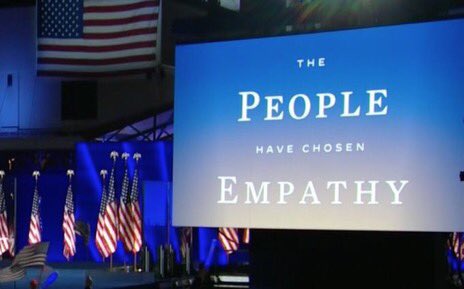
down and confirming or debunking an unsubstantiated report of empathy in the community and engaging in an on the air conversation in transforming human struggle and suffering into meaningful relationships, satisfying results and contribution to the community. When one is really listened to empathically and heard in one’s struggle and effort, then something shifts. Possibilities open up that were hidden in plain view. Action that makes a difference occurs so that empathy becomes less of a rumor and an expanded reality in your life and in the community. When all the philosophical arguments and psychological back-and-forth are over and done, in empathy, one is quite simply in the presence of another human being. Join Dr Lou for an empowering conversation in which empathy is made present.
Go to all A Rumor of Empathy podcast(s) on Audible by clicking here: [https://www.audible.com/pd/A-Rumor-of-Empathy-Podcast/B08K58LM19]
 Lou Agosta, Ph.D., Listening With Empathy
