Home » Empathy as the new love
Category Archives: Empathy as the new love

Registration now open: Empathy Lessons Training Seminar (ELTS) Registration, Syllabus, Agreements
Empathy is oxygen for the soul. Short of breath? Maybe one needs expanded empathy. Get some empathy and expand yours in this seminar. A rigorous and critical empathy says: I know what you feel because I feel it, too, as a vicarious experience, not a merger. It is not as if parents, teachers, doctors, therapists, friends, and neighbors, needed an expert to tell them what empathy is. Ask any parent, teacher, behavioral health professional, and they practice empathy every day, even if they may not always be able to say it out loud. This seminar brings forth what you already know about empathy – what you have already learned since you could not survive without empathy – and expands it with abundant tips, techniques, and real-world transformation in exercising empathy as a power and practice.
A detailed outline (syllabus) of the seminar, benefits you will obtain by participating, and agreements for participants follow inline.
Here is how to register: click below (ELTS):
Empathy Lessons Training Seminar Syllabus Outline – this is the outline of the seminar
Empathy Lessons Training Seminar (ELTS)
Empathy is oxygen for the soul. Short of breath? Maybe one needs expanded empathy. Get some in this seminar: I know what you feel because I feel it, too, as a vicarious experience, not a merger. It is not as if parents, teachers, doctors, therapists, friends, and neighbors, needed an expert to tell them what empathy is. Ask any parent, teacher, behavioral health professional, and they practice empathy every day, even if they may work on how explicitly to bring forth what they know. This seminar brings forth what you already know about empathy – and expands it with abundant tips, techniques, and real-world transformation in exercising empathy as a power and practice.
Schedule: Every Saturday for ten weeks Sept 12, 2026 thru Nov 21, 2026 at 11 am CDT – starts after Labor Day (USA) and ends before Thanksgiving (USA) via Zoom
Seminar Syllabus Outline:
Session One: The one-minute empathy training.
Talking points:
- Personal note: The beginning of my empathy training
- The multi-dimensional definition of empathy
- Empathic receptivity and vicarious experience
- Empathic understanding—understanding of possibility
- Where there is “mind reading” there is “mind misreading”
- The folk interpretation of empathy: Top-down empathy
- There is enough empathy to go around, even though it does not seem that way on most days. Why is that?
Session Two: Empathy and brain science – this is your brain on empathy
Talking points:
- Mirror neurons – what are those?
- Stress and inflammation: Some is good, too much is not
- Social stress enters the body through the immune system
- Connecting the dots: stress and inflammation
- Connecting the dots: anti-inflammation and empathy
- Empathy as a “Miracle drug”
- Empathy is a spa treatment for the soul
Session Three: Empathy breakdowns and introspection
Talking points:
- Emotional contagion is failed empathy
- The analogy of optical illusions with empathy breakdowns
- Empathic receptivity breaks down as emotional contagion
- Empathic understanding breaks down as conformity
- Empathic interpretation breaks down as projection
- Empathic response breaks down and gets “lost in translation”
- Introspection is the royal road to empathy; be introspective
Session Four: Resistance to empathy
Talking points:
- Overcome resistance to empathy, and empathy expands
- Train and develop empathy by overcoming the obstacles to empathy
- “Listen from possibility” rather than listening from a “position X”:
- Distinguish between what happened and what one made it mean
- Empathy is a tuner or dial, not an “on-off” switch
- Empathy is a method of data gathering about the other person:
- Be generous with acknowledgement
Session Five: The Secret underground history of empathy
Talking points:
The distinction “empathy” was a part of sympathy, fellow feeling, vicarious feeling, communicability of affect in aesthetics and art history, and storytelling is discussed through different methods of inquiry. The session includes short selections from the philosophers, phenomenologists, and psychoanalysts
- David Hume,
- Immanuel Kant,
- Theodor Lipps,
- Sigmund Freud,
- Heinz Kohut,
- Husserl/Edith Stein,
- Max Scheler
Session Six: Empathy and story telling
Talking points:
And, yes, we are going to tell some stories.
- The “Natural Empath”: Caught between nature and nurture
- The Good Samaritan meets the Natural Empath
Examples of empathy from World Literature including
- Toni Morrison
- George Eliot (Marion Evans)
- Thomas Mann
- Albert Camus
- Goethe
Session Seven: Empathy and boundary setting
Talking points:
- Get your power back through empathy
- Establish and maintain firm boundaries between the self and the Other in relating empathically – but do not forget to practice being inclusive
- Empathy deescalates anger and rage
- Empathy is the ultimate anti-bullying anti-dote –
- When (why) empathy doesn’t work with bullies, psychopaths, and the criminally insane – and what to do about it
- Empathy is closely related to humor
- Empathy lessons are everywhere
Session Eight: Review of the literature that empathy is good for one’s health and well being
Talking points:
- Empathy is trainable – practice, you get better at it
- The empathy exams
- What counts as evidence that empathy works?
- Evidence-based empathy
- Jumping out of an airplane – be sure to wear a parachute
- Common factor, empathy, in social healing practices
Session Nine: Speaking truth to power – rhetorical empathy in politics
Talking points:
- Truth versus politics
- The first instance of fake news—ever
- Empathic receptivity soothes anger and rage
- Empathic understanding discloses political vision
- Empathic interpretation engages intractable problems
- Rhetorical empathy: Empathic responsiveness
- Malcolm-X’s rhetorical empathy
- John Stuart Mill’s rhetorical empathy
- Governor Altgeld’s rhetorical empathy
- Ronald Regan’s rhetorical empathy
- Lincoln’s rhetorical empathy
Session Ten: Empathy is the new love – examining love through the lens of empathy
Talking points: So If empathy is the new love, what then was the old love?
- Defining Our Terms: Love and Empathy
- Empathy and love have characteristic breakdowns
- The unbearable lightness of empathy
- Design defects of the male brain
- Women and men want the same things—but differ in priority
- The desire of desire
- The Positive Aspects of Love as Empathic Relatedness
- From Death in Venice (a story) to Empathy in Venice
- Love as a boundary issue: Empathy as a soothing balm
Top Benefits of the Empathy Lessons Training Seminar – these are the benefits –
The answer is empathy – so what’s the question? Stress pushes people down into survival. People stress other people, being difficult to deal with at home, on the job, in school, or at leisure with friends. In the Empathy Lessons Training Seminar (ELTS) the participants get an opportunity to engage directly the obstacles that stopping them from getting the empathy. Participants acquire the empathic responsiveness needed to experience satisfaction in relationships of all kinds, personal and professional. Participants overcome the obstacles to effective relationships and shift out of survival mode and into empathic responsiveness in which fulfillment and satisfaction occur that did not previously seem possible.
The top benefits of the empathy lessons training seminar that the participant will receive include expanded empathy and –
1. reduced conflict in one’s life and one’s organization, reducing dignity violations, shame, and related anger and rage
2. expanded power and freedom in the face of resistance, no agreement, or bullying
3. reduced time to results in personal and professional projects, expanding teamwork
4. expanded listening one other individuals and to oneself
5. expanded results in personal relationships
6. reduced compassion fatigue, burnout, professional cynicism or denial
7. expanded cooperation in one’s personal and professional relations, increasing satisfaction with one’s individual and organizational goals
8. the ability to be with another person no matter how difficult an individual
9. the ability to distinguish what happened from what one made it mean
10. ability to like people and be with people regardless of background
11. distinguishing empathy effectively from compassion, altruism, and charity (they are not the same!)
12. the ability to recognize and acknowledge the humanness in oneself and others even in extreme situations
13. the ability to set boundaries in relatedness and navigate boundaries with finesse and skill – for example, in dealing with bullies
14. the ability to shift your empathy from being an “on off” switch to being a rheostat that dials empathy up and down as a filter
15. expanded humor, creativity, appreciation of art, and wisdom – all closely related to empathy – relationships, teamwork, and leadership
Also note:
Participants will get the most value from attending all the sessions. However, for those with scheduling challenges, it is not required to attend every session because every session (except the first) contains a short upfront review of terms and what the participant needs to know to get value from the work.
The Empathy Lessons Training Seminar [ELTS] may be delivered as a stand-alone ten session class for participants who register individually. Alternatively, the ELTS may be delivered as part of an empathy consulting engagement. The organization’s team members are separately interviewed, confidential feedback aggregated anonymously and presented to the leadership, and group work on problem solving, conflict resolutions, issue handling, proceeds in parallel with large group work and small group breakout sessions under the guidance of the organization’s leadership.
The benefits of the ELTS are most available to participants who attend all the sessions. People may selectively attend one or more session and still obtain significant benefit. Naturally, attending more sessions will result in expanded benefits. Whatever you do you are going to get empathy, and, no surprises here, you get out of it what you put into it.
Empathy Lessons Training Seminar (ELTS) Agreements
The Empathy Training Seminar (ELTS) is delivered through Alleingang, Inc., an Illinois Chapter C corporation, Lou Agosta, PhD, President, responsible for providing diverse services in education, consulting, and publishing. The trainer is Lou Agosta. The participants are the individuals who sign up, pay the fee, agreement to these agreements (hereafter: Agreements) and attend the training.
The ELTS is a ten session, structured conversation designed to expand empathy in the participant and in the community. The ELTS occurs as a two-hour session for ten weeks for a total of some twenty hours.
The ELTS training material distributed to the participants is copy-righted material and the conversations that occurs in the seminar are confidential and for the personal use of the participants. It may not be recorded, copied, taped or otherwise captured to electronic media. Any notes taken by the participants are only for the personal use of the participants and may not be published, sold, or otherwise redistributed under any circumstances.
The ELTS is committed to creating an environment where people have the freedom to express themselves and participate without restrictions. Therefore, the ELTS requests that you keep the names and details of what people say in the ELTS confidential. Participants will be separately asked to sign a document in which the person agrees to keep the names and details of what people say in the ELTS confidential, and such signature is a requirement for participating in the ELTS.
Further detailed agreements and background are specified in the online agreement document. The person considering participating is asked to review all these additional agreements carefully, let the trainer (LouAgosta@gmail.com) know of any questions or concerns, and agree to the agreements in completing the registration process.
Consistent with good business practices and current law, Alleingang, Inc. does not tolerate sexual harassment or other forms of harassment in any of our training programs or events. If you have any questions about our policies regarding sexual or other forms of harassment, please contact Lou Agosta (773-203-0269).
The participant hereby agrees to (in the following “I” – “my” – and so on refer to the participant):
- To be on time for my sessions as scheduled
- To discuss and say what is on my mind and what is going on in my life without editing or holding back – to just tell the truth
- Same idea as above – to be straight about what I am thinking and feeling – regardless of its significance or lack of significance to me or even if seems embarrassing or trivial
- If I have an emergency (for example, serious illness, life event, two feet of snow), then I will communicate as soon as I know about it
- If I have a complaint, concern, or issue with the empathy consultant or with the process of training, then I will come into my session and talk about it to resolve it
- I understand that on occasion empathy consulting requires me to consider and discuss confronting and difficult personal matters, including but not limited to my own behavior, blind spots, and thoughts
- To pay the fee agreed upon for the ELTS with the understanding that it is nonrefundable
- To pay the fee agreed upon for the ELTS with the understanding that it is nonrefundable, though in the event of an authentic emergency a reasonable effort will be made to include the participant in a similar (“substitute”) future session
- To be responsible for my health and well-being at all times, in participating in this work
I acknowledge that our conversation and the ELTS are confidential and have received this written statement of confidentiality. Exceptions to confidentiality include [but are not limited to] if the trainer believes the participant is hurting or plans to hurt her- or himself or another person, for example, requiring summoning emergency [911] services. Then confidentiality would not apply.
By entering one’s name and date and related identifying data on the separately published ELTS form, the participant agrees to the Agreements
Here is how to register: click below (ELTS):
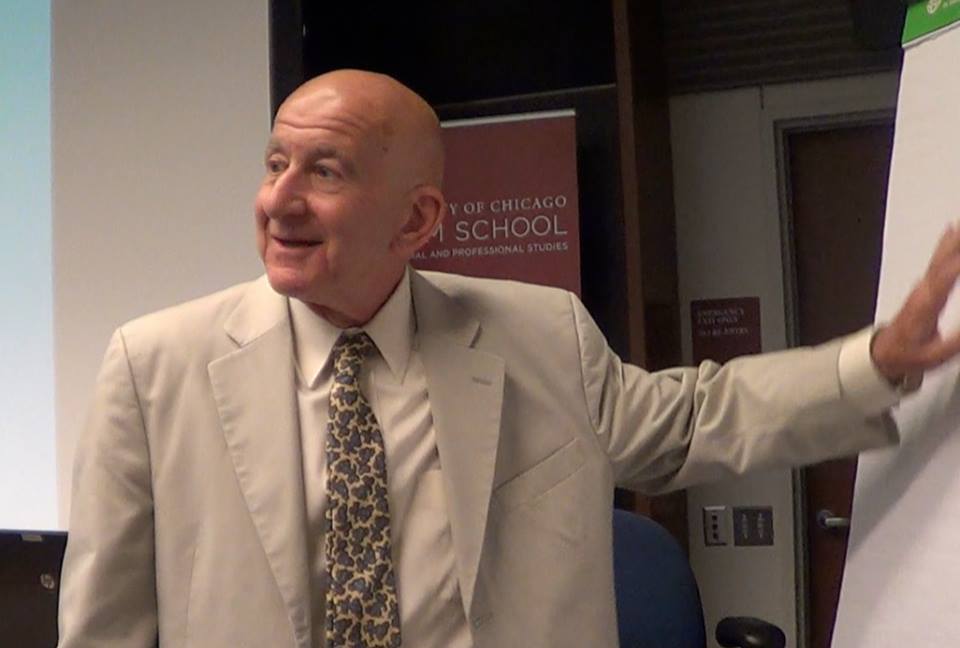
Image Credit: photo by Alex Zonis of Lou Agosta, PhD making a presentation on the Secret Underground History of Empathy on November 13, 2015 at a local Chicago adult education program.
(c) Lou Agosta, PhD and the Chicago Empathy Project

Empathy Lessons, 2nd Edition, is now available as an ebook…
The release of the ebook version of Empathy: Lessons ,2nd Edition, coincided with a major astronomical event – the total solar eclipse that traversed North America on Monday April 8, 2024. The gods are watching and winking at us humans to encourage expanding our empathic humanism!
Empathy is oxygen for the soul (see Chapter 6: Evidence-based empathy training). So, if you are short of breath due to life stress, get the expanded empathy delivered in this book. Just as the body needs oxygen to live physically, the soul needs empathy to live emotionally. Most people are naturally empathic, but the cynicism and denial needed to survive everyday life drives empathy away. Remove the obstacles to empathy and empathy naturally develops and grows. That is the empathy lesson in a nutshell without all the guidance and practice needed to succeed. Find out how to take your empathy to the next level.
In addition to all the features of the First Edition—a readiness assessment for empathy, tips on overcoming resistance to empathy, evidence-based empathy training, empathic techniques of stress reduction, applications to dealing with bullying, healthy well-being, and capitalism—the enlarged Second Edition includes new chapters on rhetorical empathy in politics, the limitations of empathy (and what to do about them), and an expanded chapter on empathy as a lens on love and romance. Not to be missed!
The empathy lessons include how—
To perform a readiness assessment; establish a set up for success in cleaning up inauthenticities that block empathy so that empathy can expand and flourish;
Empathy is not an “on–off” switch but a tuner (a dial) that expands or contracts in accessing the vicarious experience of the other person;
Empathy works as a method of data gathering about the other person, providing a vicarious experience of the other person without being flooded by the experience;
Introspection, vicarious experience, listening to one’s own “voice over” and radical acceptance are the royal road to empathic receptivity;
Empathic receptivity overcomes emotional contagion, creating a set up for clear communication of feelings and experiences;
Empathic understanding overcomes conformity and enables shifting out of stuckness into contribution, transformation, and leadership, including satisfying and flourishing relationships;
Empathic interpretation overcomes projection and is the folk definition of empathy, walking in another’s shoes, adding “top down” empathy to “bottom up,” empathic receptivity;
Empathic responsiveness drives out anger and rage, acting as a soothing balm to suffering and emotional upset, deescalating conflict and aggression;
Scientific, peer-reviewed, evidence-based research confirms that empathy reduces inflammation and stress;
Relationships get “weaponized” in bullying and, coming from empathy, how to overcome bullying, reestablishing boundaries: recommendations to students, teachers, administrators on how to stop bullying (including cyber-bullying) and promote empathy;
“Corporate empathy” is not a contradiction in terms, “CEO” now means “chief empathy officer,” and empathy is now the ultimate “capitalist tool”;
In rhetorical empathy, the speaker’s words address the listening of the audience in such a way as to leave the audience with the experience of having been heard. The speaker articulates the experience the audience is hiding harboring in their hearts yet have been unable to express.
To expand empathy, start with and stick with integrity and authenticity – start with creating a safe space of acceptance and toleration. Fake in; fake out. Empathy is based on integrity and being straight with the other person to and with whom one is trying to relate.
Decline the choice between empathy and compassion, between expanding empathy and fighting and reducing the empire of prejudice, imperialism, the pathologies of capitalism, and violence.
Some have tried to force a choice between compassion and empathy. The world needs both more compassion and expanded empathy.
My colleagues and friends are telling me, “Louis, you are sooo 20th Century – no one is reading hard copy books anymore! Electronic publishing is the way to go.” Following my own guidance about empathy, I have heard you, dear reader. The electronic versions of all three books, Empathy Lessons, 2nd Edition, Empathy: A Lazy Person’s Guide, and A Critical Review of a Philosophy of Empathy – drum roll please – are now available.
Feeling like you are thrown “under the bus” again and it’s getting crowded under there? Get the empathy you need to fight back and flourish in this book. Get expanded empathy here!
Order from author’s page: Empathy Lessons, 2nd Edition: https://tinyurl.com/29rd53nt
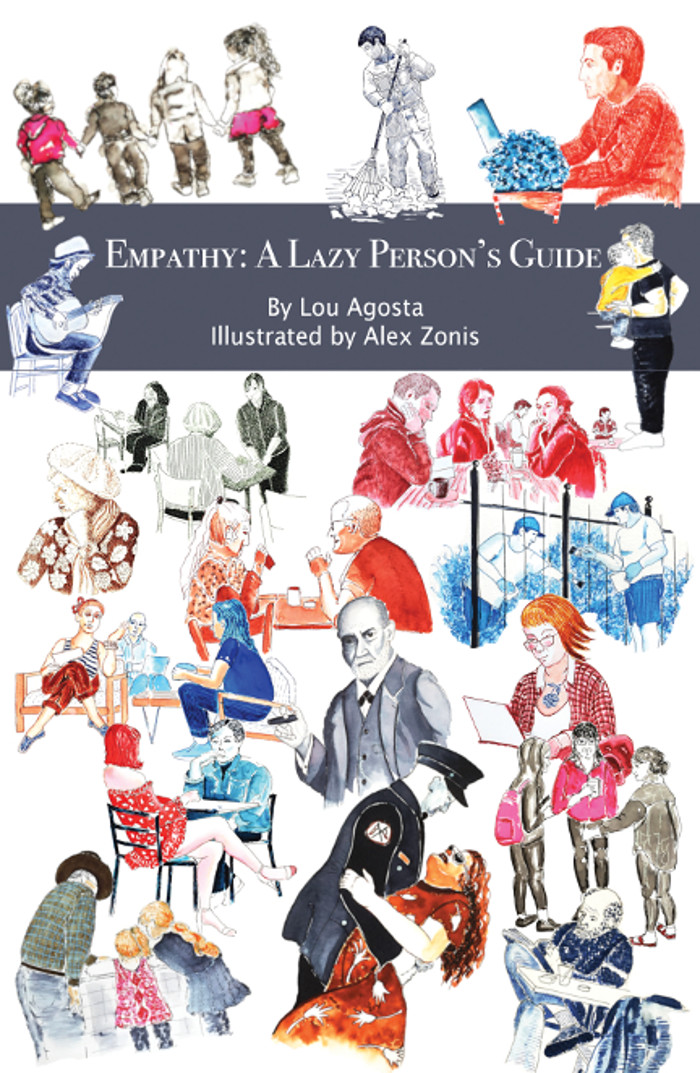
Order from author’s page: Empathy: A Lazy Person’s Guide: https://tinyurl.com/29rd53nt
Order from author’s page: A Critical Review of Philosophy of Empathy: https://tinyurl.com/29rd53nt
Read a review of the 1st edition of Empathy Lessons – note the list of the Top 30 Empathy Lessons is now (2024) expanded to the Top 40 Empathy Lessons: https://tinyurl.com/yvtwy2w6
Read a review of A Critical Review of a Philosophy of Empathy: https://tinyurl.com/49p6du8p

Above: Cover art: Empathy Lessons, 2nd Edition, illustration by Alex Zonis, original oil paint on board, entitled “Memory blocks: Shimon”
Order from author’s page: A Critical Review of a Philosophy of Empathy: https://tinyurl.com/mfb4xf4f

Above: Cover art: A Critical Review of a Philosophy of Empathy, illustration by Alex Zonis
In conclusion, let me again say a word on behalf of hard copy books – they too live and are handy to take to the beach where they can be read without the risk of sand getting into the hardware, screen glare, and your notes in the margin are easy to access. Is this a great country or what – your choice of pixels or paper!?!
(c) Lou Agosta, PhD and the Chicago Empathy Project

Review: How to Think More About Sex by Alain de Botton
Review: How to Think More About Sex by Alain de Botton. New York: Picador Press, 2012; 185 pp.
Alain de Botton is a modern-day version of Nietzsche as stand-up comic. He is a practitioner of the hermeneutics of suspicion and he manages to be funny in doing so. The title itself is funny, for sex is not something we usually want to think more about. Either we cannot stop thinking about it or we want to stop thinking and start performing it (the sex act, that is).
If one stops and considers the matter, for the most part, it is sex that is thinking us, not us actively thinking about it in a reflective way. However, the latter (think about sex in a reflective way) is precisely what de Botton proposes to do and he does an excellent job of it.
The first thought is some direct talk about managing expectations. The expectation that we live in a liberated age (which we do) and therefore we should be comfortable with sex (we are not) is an illusion. We human beings are not wired to be comfortable with sex. Sex is an enormously powerful force “all but incapable of being discretely integrated within civilized society” (p. 6). “Our best hope should be for a respectful accommodation with an anarchic and reckless power” (p. 7).
The pleasures of sex are explored in the initial chapters. In a description of an initial kiss that goes in the direction of soft-core porn and then becomes thoughtfully and alienatingly clinical, de Botton makes the point that what is great about a kiss “stems from the simple realization that someone else likes us quite a lot, a message that would enchant us even if it delivered via another medium” (p. 23). When sex goes just right it represents a reversal of the fall from paradise where Adam and Eve were punished by experiencing shame. The naked, loving couple have a breakthrough in the acceptance of themselves and each other than nakedness makes present.
Eroticism is defined as “the feeling of excitement we experience at finding another human being who shares our values and our sense of the meaning of existence” (p. 44). De Botton notes that sex usually does not last longer than two hours “about the length of the Catholic mass.” This is not quite accurate, but funny.
Regarding physical attraction (“sexiness”), the thinking gets going. We are not supposed to like people based on superficial appearances, but we do. Evolutionary psychology tells us that sexual attraction means we see a healthy parent for our children in the other person as a prospective mate. De Botton prefers Stendhal: “Beauty is the promise of happiness.” Then he imaginatively elaborates, associating physical features with personality states and traits. This person’s cheeks express determination; eyebrows, integrity; lips, intelligence.
For me, one of the high points of this work is de Botton’s invoking Empathy and Abstraction (1907) by Wilhelm Worringer, one of the defining works of the aesthetic application of empathy. The beautiful is that which we need to complete us, and we project aspects of our emotions and personality onto the environment as symbols of totality. We humans need both art and sex to make us whole (p 72).
Since this is not a softball review, I note that de Botton properly pushes back against the overly scrupulous conscience of the sexually inhibited (most of society) when he asserts: “It’s time for the need for love and the need for sex to be granted equal standing, without the need for moral gloss [judgment]” (p. 79). He is absolutely on point in asserting that neither sex nor love should require us to lie in order to get them. Definitely tell the truth – including to yourself. Yet the way sex and love (affection) fall apart is concerning. How does when bring them together?
Here is the debate: Freud pointed out in one of his most powerful and least well known essays (probably because of its obscure title) on “The Most Prevalent Form of Degradation in Erotic Life” (1912) that some men cannot love where/when they desire (sex) and cannot desire where/when the love. They are unable to bring together sexual desire and affection for the other as a person, which unification is a mark of being a psychologically mature adult.
This is the “whore / Madonna” complex (and mostly, but not exclusively, a guy issue) – that he says he loves the mother of his children, but she does not excite him sexually and he can get sexually excited over what is today called a [sexual] “hook up” with someone he does not know. As noted, today this is a phenomenon that is still mostly male but is expanding its occurrence among woman who aspire to use sex to get power in relationships. Note whether this tactic is effective is a further point of debate.
In the middle section under problems, de Botton covers some of the same ground as Ester Perel in Mating in Captivity (2006) including libido dampening circumstances: Marriage tends to involve “[…] the running of a household and the raising of children, tasks that often feel akin to the administration of a small business and that draw upon many of the same bureaucratic and procedural skills, including time management, self-discipline, the exercising of authority and the imposition of rules upon recalcitrant others” (p. 90). Here de Botton explicitly invokes the above-cited split between desire and affection: “Sex may sometimes be just too private an activity to engage in with someone we know well and have to see all the time” (p 92).
The recommendation? Since most people would not be comfortable getting a third party to have sex with the spouse while they watched – the idea literally to witness about the spouse what the other finds stimulating – de Botton recommends a stay at a fancy hotel. More substantially, the recommendation is there to do to the spouse what Manet did to a lowly bunch of asparagus – see the bundle in a new way, overlooking its commonness, and making it into a work of art. Love is sublimated sexuality; sex as art. As Bob Dylan wrote, love is another four-letter word. This is hormones all the way down.
As someone who has published extensively on empathy, this reviewer swallowed hard to read de Botton associate empathy with impotence: “Impotence had its origins in the increase in empathy attendant on the promotion of the Golden Rule (p. 109). “Impotence is at base, then, a symptom of respect, a fear of causing displeasure through the imposition of our own desires […]” (p. 111). The solution according to de Botton? Don’t be unempathic. Don’t be unkind. Employ a psychopharm intervention. Take the Viagra, even if you have furtively to swallow it in the bathroom. You can’t make this stuff up.
I have to acknowledge that the caveman approach to sex has significant limitations. For my part, de Botton, who rarely misses a beat, fails to mention that the real turn on is turning on one’s partner. We desire the other’s desire. I want you to want me. And for that one needs empathy.
If the molten cauldron of libido needed to have really great sex is siphoned off by kindness, for others, the opposite is the case. Partners hurt one another’s feelings in relatively minor ways, grievances and resentments, build up, of which the individuals are barely aware. People are aggrieved at not getting the recognition, acknowledgement, dignity, respect, or empathy they deserve. No empathy; no sex. Too much empathy? Not enough empathy? Sometimes we humans just can’t get a break. Finding a balance is challenging.
Therefore, I propose an alternative point of view to de Botton. You know how gray is the new black in fashion? Well, empathy is the new love. It is what people are really hungry for – another person who “gets you” as the possibility you authentically are. That is the ultimate turn on. Still, a wide spectrum exists between tenderness and Tarzan, between empathy and ejaculation. Therefore, if that involves putting on an animal skin loin cloth (only to take it off at the right time), definitely consider the possibility. Never was it truer, “when you’re hot, you’re hot; when you’re not, you’re not.”
The recommendation? “In a perfect world, all couples would be visited by a psychotherapist on a weekly basis […]” (p. 119). The therapy? Here we get to the title of How to Think More About Sex: “The idea persists that too much thinking might make it impossible for us to feel – as if it weren’t already quite plainly apparent that a large and constant amount of thinking may be the only thing that can keep us from destroying each other (p. 121).
And what indeed should we be thinking? “[…] Our culture locates the primary difficulty of relationships in finding the ‘right’ person rather than in knowing how to love a real – that is, a necessarily rather unright – human being” (p, 121).
De Botton raises the point that failure to have regular sex may not be pathological (p. 105). He Botton has little use for internet porn, and his position is clear. “The entire internet is in a sense pornographic, a deliverer of a constant excitement that we have no innate capacity to resist, a seducer that leads us down paths that for the most part do nothing to answer our real needs” (p. 133). He considers internet porn in the same category as alcohol and street drugs, undermining “our ability to endure certain kinds of suffering which we have to experience if we are to direct our lives properly” (p. 130).
Regarding adultery, de Botton tries to illuminate this blind spot of hypocrisy and broken word through a mixture of cynicism, resignation, and reverse psychology. In so many words, he says people who are able to be faithful over the long term should get a major award or at least a medal. It is a high bar, faithfulness, involving significant sacrifice for their love and for their children. Keeping one’s word is rarely easy. He does not mention that lack of real opportunity saves most people from slipping up. The fervent prayer “Lord, lead me into temptation” remains unanswered. He counsels forgiveness for those who stray from the path of faithfulness, also acknowledging how hard it can be to get to forgiveness.
Alain de Botton’s How to Think More About Sex is a concise book of a modest 179 pages, and a quick read. It is fully buzzword compliant, covering evolutionary psychology, which gets cited as accurate enough but not that helpful interpersonally, fetishes (with reference to Richard Krafft-Ebing Psychopathia Sexualis (1886)), evolutionary psychology, Michelangelo Caravaggio’s “Judith beheading Holofernes” (1599), Freud, Masters and Johnson on Human Sexual Inadequacy (1970) (with an illustration of a penis), and a draft of a deeply Schopenhauerian marriage contract (p. 162). (By the way, Schopenhauer never married.)
De Botton blames the bourgeois ideology that the best and only reason to get married is for love. And he counsels changing the vows: “I promise to be disappointed by you and you alone. I promise to make you the role repository of my regrets, rather than to distribute them widely through multiple affairs and a life of sexual Don Juanism [the male-centric perspective is hereby noted]. I have surveyed the different options for unhappiness, and it is you I have chosen to commit myself to” (p. 162). In case of the breakdown of adultery, the betrayed partner may justifiably complain: “I was relying on you to be loyal to the specific variety of disappointment that I represent” (p. 162). Finally, with Alain de Botton’s How to Think More about Sex, I did. I also both laughed and cried, and you will too.
(C) Lou Agosta, PhD and the Chicago Empathy Project

