Home » Posts tagged 'stress reduction and empathy'
Tag Archives: stress reduction and empathy
Part Two: Empathy: Spa Treatment for the Soul: Against Stress
This is Part Two of the series on how empathy relates to reducing stress as a “spa treatment for the soul.” In order to understand empathy as a kind of antidote to stress, it is important to know the enemy – in this case, stress. Therefore, this discussion lays out the distinctions that help us understand what makes stress, well – stressful. The third and final part (due out in about a week will then bring it all back home with the evidence-based research on the stress reducing and well-being promoting properties of empathy and a set of related practices.
Listen to Parts 1 and 2 of the blog posts as a podcast on Spotify –
(Note this is not a transcript but a different performance of the same context as the text.)
Stress and inflammation: Some is good, too much is not
As my Grandma Laura understood implicitly (and as detailed in Part 1), stress reduces the body’s immune defenses. The person becomes vulnerable to disease. What is less well understood is how the body responds to social stress; and what the heck is “social stress” anyway?
We will precisely define all kinds of stress in the next section, but, for the moment, social stress is stress related to competition and conflict between people, who are trying to live together in a human community.
The body responds with an immune response, because social stress seems to simulate the attack of something coming at the person and the person’s body from the outside such as an infectious agent like a virus or bacteria. The immune system response to the perceived stress results in inflammation, which, in turn, aggravates emotional and psychosomatic disorders. The challenge is to connect the dots between stress, inflammation, physical diseases, emotional disorders, and then intervene with empathy to interrupt this negative cycle.
“Social stress” is a feature of life for people who have to work and live with other people, which, excepting a few hermits, is all people. Social stress includes the struggle and effort that people confront in careers, relationships, finances, scheduling, and sustaining emotional equilibrium.Social stress occurs in divorces, misbehaving kids, unemployment, adultery, and bankruptcies. Social stress occurs in the competition and aggression between people and groups such as bullying, office politics, stranger danger on the streets, and a host of interpersonal conflicts and pressures too lengthy to list here.
We have been using the word “stress” as if we knew what it is; and we do know a lot about stress from first-hand experience. Stress is a distressing part of life. Stress is di-stressing. Literally. Chronic stress is a pervasive challenge. However, the complete absence of stress is not an option. The complete absence of stress means you are dead—or at least in a persisting vegetative state. Not good.
Social stress is a substantial issue in attaining and managing physical and emotional well-being. It is no surprise that empathy has a significant role to play in shifting out of the stress with which the person is stuck and struggling. Let’s define our terms.
Stress comes in five forms
We use the word “stress” too casually as something to be avoided at all costs. As noted, we forget that zero stress means you are dead, a situation one generally tries to avoid. Yet engaging with stress is, well, stressful. Let us define “stress” and do so precisely by enumerating its different forms.
Stress comes in at least five forms:
(1) Acute, time-limited stressor: For example, public speaking is “an acute, time-limited stressor.”[i] When asked “What do you fear the most?” death comes in second place on the list. Number one is public speaking. People for whom public speaking is a stressor feel better as soon as they are able to step down from the podium. In contrast, for those who train as speakers and performers, the stress of speaking can act as a positive stimulant. If a trained speaker does not feel a touch of “butter-flies” in the stomach, prior to a performance, that is considered a bad sign. Such people get worried if they do not experience some stress; because they know the stress will provide them with the extra energy they need to deliver a compelling performance. Thus, stress has a wholesome, healthy dimension when it gets people “on their best game.”
(2) A personal, life defining challenge: People facing a crucial, life defining examination, such as the Bar Exam in law or Medical Boards, experience acute stress. This is different than “stage fright” in that it is not public. Yet one is being tested, judged, and evaluated by those in authority. The risk is of not looking good or not acquiring the required professional license. Still, the stress is time limited. Once it is over, pending a favorable outcome, the stress is noticeably reduced. Once again, some stress in anticipating the exam is useful in providing an incentive to prepare.
(3) Naturalistic stressors: Different kinds of natural or social events such as death of a family member, loss of a job, or divorce are stressful. These can be highly stressful; yet in every case, a definite end point exists that one can try to imagine. Mourning lasts about a year. People find other jobs. People meet new partners.
Many of the rituals surrounding the death of a person to whom one is close are designed to facilitate the process of working through the stress. Wakes and funerals, when they function as designed, are calculated to evoke stories about the loved one, and the accompanying tears and laughter serve to process the loss. The storytelling itself is the empathic moment, making present a response in the form of acknowledgement and recognition of the life of the lost loved one.
(4) Trauma as such: An event in the past that “lives on” emotionally such as the experience of war or rape is stressful. Even if the trauma is separated from the present by a significant interval of time, the stressor may live on. The person may experience and re-experience the trauma as intrusive thoughts, recurring nightmares, blunted affect, amnesia, avoidance, an exaggerated startle response, and so on. In short, criteria for post trauma stress disorder (PTSD) are satisfied, whether or not they rise to a clinically relevant level. This is chronic stress that does not quit.
The treatment of choice for stressors related to traumatic events that keep coming back and live on is described as “exposure.” The survivor is supposed to do that which he is least inclined to do: expose himself to the trauma again (but now in a controlled and gradual way), redescribing the upset imaginatively or vicariously. In redescribing the experience in relevant detail, the unintegrated emotions and feelings are given a chance to be re-experienced and integrated. The trauma shrinks. Do this repeatedly and the trauma shrinks repeatedly, little-by-little, step-by-step. The trauma becomes manageable, which means it stops being traumatic.
One gets one’s power back in the face of the upset whereas previously the event was an intrusive, monster-like interruption that one was trying to escape without noticeable success. For example, in eye movement desensitization routine (EMDR), the focusing on the back-and-forth movement of the light sequence or the therapist moving a baton, binds the patient’s attention (and potential fear) while he recalls, talks about, gives an account of, sometimes merely thinks about, and re-experiences the trauma in a non-traumatic, or at least trauma reducing, way. An entire account of trauma and recovery is implied here, and for further details the interested reader is referred to the relevant literature on trauma. [ii]
This is where empathy comes into its own as an intervention. What is often overlooked in accounts of such exposure-directed interventions is that, unless the re-experiencing is undertaken in the context of an empathic relatedness, it is like dental work without Novocain. Some patients who are hurting enough and courageous enough may stick with it; but many will just make other arrangements (such as drinking alcohol to excess), not come back, and continue to struggle in stuckness. The empathic relatedness provides the survivor with the empathic connectedness needed to risk diving again back into the emotional dimension of the trauma (which has previously been held at arms’ length), knowing that he can reconnect empathically with the facilitator to regain his emotional equilibrium.
(5) Long term stressors: Long term stressors are ones with no defined or obvious end in sight. Examples of long term stress include caring for a loved one who has a progressive, degenerative disease such as Alzheimer’s; suffering from a life-threatening or serious chronic disease oneself; loss of one’s home, that is, becoming homeless; being employed significantly beneath one’s educational level on a long-term basis; financial ruin due to illness or criminal behavior (think of Bernard Madoff’s Ponzi scheme that financially destroyed many middle class lives); legal troubles; growing up being African American in states where racially motivated lynchings occurred (or arguably, growing up African American anywhere in America); being a refugee or immigrant and a stranger in a strange land.
For example, the United Nations estimates that between (Q3 2017) and Q4 2022 the number displaced persons, refugees, in the world has increased from 60 to 108.4 million. Refugees are under extreme stress. In all of these cases, the stress is chronic and long term. The symptoms may or may not rise to the level of clinical post-traumatic stress disorder (PTSD); or the person may find other ways of responding to the distress and expressing the suffering. Self-defeating behavior, behavioral disorders, substance abuse, promiscuous unprotected sex with different partners or other forms of acting out, allergies, chronic hard-to-diagnose intermittent headaches, backaches, asthma attacks, irritable bowl, hard-to-diagnose chronic pain, and so on, are common.
Relatively fewer extreme examples such as social isolation, long term loneliness, low socio-economic status (poverty), being the target of repeated bullying, are less immediately destructive of one’s humanity. Yet the cumulative stress entailed is substantial.
From a completely different perspective, the modern, relatively well-to-do family has to run the gauntlet of seemingly endless micro-stressors. While not comparable with war or rape, “micro-stressors” are the abundant small insults, injuries, frustrations, and misfortunes that occur on a daily basis in fast-paced, modern life. These are “first world problems,” that end up taking seven years off of one’s life expectancy. Getting the kids up at an early hour and delivering them to school prior to a challenging commute to work is stressful. The boss at work is not necessarily an example of empathic understanding. On the contrary, it’s “by the numbers,” “get your numbers,” and if you don’t get your numbers, your days are numbered. If you don’t have any numbers, that itself is a bad sign, and we will find some for you. Relations with coworkers and superiors can be Machiavellian—and conflict-laden.
As noted, and not for the last time, the things that make us good at business—compliance, dealing with competitive pressures, managing technology—do not expand the affection and affinity in our relationships. Cynicism and survival drive out empathy, intensifying stress. Then the reverse commute back home; chauffeuring the kids around to activities such as soccer or play dates, to which they are entitled and which they require in order to become well-rounded, successful human beings; strained relationships with these very kids over homework and with the spouse over the lack of satisfying relatedness much less a sex life, and the drum beat of micro-stressors goes on. The formula for wide-spread chronic stress is complete.
Social stress enters the body through the immune system
The body responds to common bacterial infections and to wounds by becoming inflamed. How this works—and does not work—becomes a tadtechnical, and I have to ask the reader’s patience in laying out the distinctions needed to connect the dots between stress, inflammation, and empathy.
How does stress get into the body? This is important, because, when stress “gets in,” it sets off a cascade of negative results that affect our physical and emotional well-being. To cut to the chase, scientists believe that stress gets into the body through the immune system. (See the article by Segerstrom and Miller (2004) cited above and listed as a reference below.) Once stress activates immune processes designed to fight infection, the dominoes start falling. Diverse systems of the body can be left in a state of chronic inflammation, which, if left untreated, result in life style disorders and diseases.
These disorders include conditions such as irritable bowel syndrome (IBS), metabolic disorders (obesity, type 2 diabetes, congestive heart failure, chronic pulmonary obstructive disease), migraines and lower back pain (notoriously difficult to diagnose), and numerous allergies (peanut, gluten, lactose, dust) with which many children (and adults) now find their vitality reduced. (This list is not complete.)
The human immune system was developed between 100,000 and a million years ago when our early proto-human ancestors emerged on the plains of present-day East Africa. Now one must be on guard against generating a “just so” story about what life was like in such an early environment of evolutionary origin.
Our ancestors faced a different set of challenges than we do. If they wanted to get somewhere, they had to walk. If they wanted to do detailed work such as sewing after sunset, they had to light a fire. If they got sick, they had a choice of naturally occurring purgatives, stimulants, or a sweat lodge to try to sweat out the toxins. They were exposed to physical hazards in chasing game such as rabbits or antelope for food through the bush. Injuries such as cuts and abrasions were common; and when such injuries to the skin occurred, the risk of infection was significant. Responding to tissue damage had a priority. If a wound became infected, the entire organism was at risk. Mini-clinics had not yet been invented.
What the sick person experiences as the disease is actually the beneficial side-effect of the defense mounted by the body’s immune system against disease. Our bodies developed their built-in ability to heal wounds and respond to infections in this physically demanding environment. We are the beneficiaries of millennia of natural selection to protect the organism against wounds and infections—and, in addition, we now have mini-clinics and antibiotics.
The sick person experiences the disease as the body’s defense
The wound temporarily becomes red—it is inflamed—and the body sometimes becomes feverish in an attempt to kill the intruder by “cooking” it. As part of this defensive response, the body engages in “sick behavior.” It tends to withdraw; wants to lie down in its bed; experiences low energy; and has an increased need to sleep. Such behavior makes perfect sense in terms of rallying the body’s resources to overcome the disease.
The body summons defensive biological agents to the location of the injury. These defensive agents include macrophages—literally “big eaters”—that attack the foreign invaders and encompass and digest (i.e., eat) them. The body’s immune system gets into action and sounds the alarm using messengers called “cytokines.” “Cytokines” have become famous because an entire theory of depression is named after them. More on that shortly.
These Big Eaters—macrophages—and cytokines congregate at the site of injury or infection, release toxic substances such as oxygen radicals that damage invaders, and break down the invaders and damaged tissue. These defenses have broad effects on the organism, including fever and inflammation, as they promote wound healing.
Now take this immune system, which was developed to defend against wounds and bacteria, and fast forward about half a million years to our own time. Modern humans no longer face hostile animals and the elements. It is true that parts of our modern cities have become urban jungles, in which people behave in aggressive ways towards their neighbors; but the majority of the population still manages to avoid such situations, granted that is little consolation to those trapped in social injustice (itself a source of social stress).
Today human beings face social stressors as well as biological ones. Such social stressors are symbolic in that they represent non-material entities such as status, power, a piece of paper or electronic bits called “money,” expectations about the future, access to resources based on educational opportunities (or lack thereof), and meaning making of the kind we explored in world class novels and narratives from George Eliot (May Ann Evans), Thomas Mann, Tennessee Williams, and Shakespeare. Social status is a symbolic good. For our proto-human ancestors, social status in the group translated into access to choose morsels of food and access to superior mating opportunities. Likewise, with us?
For us moderns the symbolic stress now has become chronic and unremitting. It is not that life as such was so much better when the vast majority of the population worked on a farm (or were hunter-gatherers). Let us not idealize the past. Days were long—from sunrise to sunset (since electricity had not been invented). Life was surely physically harder. Disease was not a symbolic threat; it was an ever-present danger and immediately present. Death was a daily companion and a near, not a remote, possibility.
Still, expectations were probably lower. Resignation and acceptance of one’s fate were embedded more deeply. People were too physically exhausted to worry about whether one’s child would get into a preschool program that would enable her to qualify for Harvard. Perhaps that itself provided relief from chronic stress.
If one lived even a hundred years ago, the likelihood was that, if one survived the hazards of childhood, an infectious disease such as influenza, tuberculosis, cholera, or pneumonia would eventually end one’s life. Childhood mortality and death in childbirth were major factors limiting life expectancy; though if one survived childhood, then one’s life expectancy as an adult might approach that which we enjoy today in developed countries with modern medicine.
The good news is sometimes also the less good news. Today thanks to antibiotics and vaccinations, the vast majority of the population in developed countries survives long enough to develop chronic disorders associated with social stress and life style responses to it.
In the final part of this series, we look in detail at the dots connecting the stress and inflammation reducing properties of empathy with improved well-being and evidence based outcomes in basic medicine. Stand by!
[i] Suzanne C. Segerstrom and Gregory E. Miller. (2004). Psychological stress and the human immune system: A meta-analytic study of 30 years of inquiry, Psychol Bulletin, 2004 July, 130(4): 601–630.
[ii] Bessel van der Kolk. (2014). The Body Keeps the Score: Mind, Brain and Body in the Trans- formation of Trauma. New York: Penguin Books.
Note: All the usual disclaimers apply. This is not intended to be, nor is it, medical advice or medical guidelines. Always consult with your medical doctor and other professional counselors about decisions affecting your health and well-being.
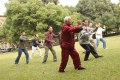
Image Credit: Group Tai Chi practice in a Shanghai park led by Grandmaster Xie Bingcan in 2011. Author: Seattletaijiquan This file is licensed under the Creative Commons Attribution-Share Alike 4.0 International license
(c) Lou Agosta, PhD and the Chicago Empathy Project

Empathy – a spa treatment for the soul
My first training in stress reduction through empathy came from my dear Grandma Laura. With Grandma Laura the force of empathy was strong. However, she came from a time and place, prior to the Internet, that did not require much formal education.
My Grandma Laura may actually have believed that getting caught in the rain caused upper respiratory infections such as the common cold. She was happy to make the chicken soup to sooth my sneezes and colds, and she endorsed chicken soup as the treatment of choice for the common cold.
Grandma was relying on common sense—and a wisdom that is all-too-rare in our own time. She noted that people who were physically stressed out by exposure to cold and wet weather succumbed to the common cold. She also observed that rest and warm, nourishing liquids—chicken soup—provided relief to the sneezing, sniffling, suffering survivor until the cold had run its natural course.
Listen to Parts 1 and 2 of the blog posts as a podcast on Spotify –
(Note this is not a transcript but a different performance of the same context as the text.)
I acknowledge the book Chicken Soup for the Soul. I stopped counting how many had been published in the series when the number hit eighteen. [i] Keep up the great work! The point here is that chicken soup, delivered in the proper context, reduces stress; and so it reduces the symptoms of inflammation (runny nose and so on) that occur when the immune system fights back against infection.
Thus, empathy is compared to chicken soup. It has also been compared to sinking back into a hot bath, and taking the “healing waters” as part of a spa treatment. We shall work with all these metaphors. We shall also continue the work begun in Chapter Four with evidence-based, peer-reviewed, scientific publications that the benefits of empathy for the recipient are closely related to stress reduction. First, some background.
My Grandma may not actually have had the distinction “immune system.” This distinction provides what we call the “confounding variable” in “Getting caught in the rain causes the common cold.” Of course, the rain does not cause the common cold. The rhino virus causes the common cold. What getting caught in the rain does is reduce the body’s immune system’s defense against viruses such as the rhino virus that already live in the body.
The sneezing, sniffling, and suffering are the inflammation that occur when the body’s immune system is mobilized and fights back against the virus by producing the bodily defenses called “antibodies,” sending them to the site of the infection (i.e., the nose) to disrupt the viral attack. Antibodies are doing battle against the attacking viruses, the antigens. The result, at thirty thousand feet, is that the person experiences all the annoying symptoms of a head cold.
In my case, Grandma was spot on in correlating getting wet and physically exhausted by the storm with coming down with a cold. We forgive her lack of scientific rigor. After all, she was a world class cook, even if an unsung one until now, not a immunologist.
A word of caution. The distinction between “body and mind” is already embedded into our modern science, our thinking, our way of relating to other people, and our way of relating to ourselves.
We are not going to undo centuries of distinguishing mind and body in this book. Still, we may usefully recall one philosopher’s (Ludwig Wittgenstein’s) anecdote: “The human body is the best picture of the soul.”[ii] Keep that in mind.
A small set of practices such as receiving empathy, meditation (mindfulness), Yoga, and Tai Chi Chuan, promote recovery and well-being in reducing inflammation. The solution then is a hot bath? A spa treatment? Don’t laugh. There are many less useful interventions available. The limitation of a spa treatment is that it provides symptom relief, not a long-term solution. After the benefits of the spa treatment wear off in a couple of weeks, the person is right back where she or he started. The difference between empathy and a hot bath—granted that both are relaxing—is that empathy provides for structural change to the person’s personality, expanding resilience, emotional stability, and relatedness. Advantage empathy: empathy is superior to a spa treatment for the soul. How is this so?
Today it is fashionable to say that whatever benefits a person, whether Prozac or mindfulness, rewires the brain. In plain English, practicing empathy, receiving empathy, being empathic, also rewires the brain, that is, it builds new habits.
Empathy builds new habits in relationships—in engaging in listening to the other person, in interacting across personal boundaries, in reducing conflict, in an expanding toleration of upsets in relatedness, and in building a community of engaged neighbors.
Expanding one’s empathy enhances one’s ability to deal with personal dynamics in friendships, intimate relationships, and in groups such as the workplace, school, and community.
Expanding empathy enhances a person’s stability, strength of character, and emotional equilibrium in the face of destabilizing upsets. It enables one to be with people and events that are difficult. Expanding one’s empathy enables one effectively to get results where previously one would have experienced failure and frustration—and the resulting stress.
With acknowledgement to Donald Hebb, “neurons that fire together wire together.” “Rewiring” is the new buzzword for “building habits.”
If the ideas in biology that we explore in this and the following posts are a tad technical, I am unapologetic.
Psychopharmacologists and practitioners of behavioral interventions such as cognitive behavioral therapy (CBT) have been less than charitable in engaging with the status of the evidence on behalf of empathy and empathy-related interventions. “Dismissive” is the word that comes to mind; and yet the evidence-based, peer-reviewed distinctions that are engaged in this engagement with empathy cannot be dismissed. Those with economic and territorial incentives to provide a complex and expensive solution do not necessarily welcome a less complex or less expensive one such as empathy.
The results are now in. Substantial evidence is available of what most people with common sense have appreciated all along, that empathy and being treated empathically are good for people’s health and well-being. Stress reduction works. Empathy works. The work we do in this chapter enables us to expand our understanding of why.
Stress reduction practices such as meditation, Yoga, and Tai Chi do not necessarily work in the same way as empathy. (Full disclosure: I practiced Tai Chi weekly for four years, but have limited experience with the others.)
I hypothesize that all these practices create a distance between one’s experience and one’s cognitive and emotional processes. This distance opens up a place for empathy to expand and authentic relatedness to occur.
When this “distance” between one’s experience and one’s cognitive and emotional responses becomes habitual—today we would say “encoded in the neurons”—then the change is structural and, thus, long lasting and enduring. How does this work?
The answer to the question awaits the next episode, the next post, in this series due out next week. Stand by for update!
Notes
[i] Jack Canfield, Sally Burbank, Terri Elders, and Amy Newmark. (2003). Chicken Soup for the Soul. New York: Soul Publishing (Simon and Shuster).
[ii] Ludwig Wittgenstein. (1951). Philosophical Investigations, tr. E. Anscombe. London: Basil Blackwell, 1968.Blackwell, 1968.
IMAGE CREDIT: Creative Commons Attribution: Logeshwaran Rajendran
(c) Lou Agosta, PhD and the Chicago Empathy Project

