Home » Posts tagged 'empathy' (Page 6)
Tag Archives: empathy

Three books on empathy reviewed: The good, the bad, and the ugly

The first empathy book reviewed here is very good indeed. William Miller’s Listening Well: The Art of Empathic Understanding (Wipf and Stock, 114pp,  ($18US)) is a short book. Admirably concise. My short review is that, as I am author of three academic and one “how to” book(s) on empathy, this is the book that I wish I had written.
Listening Well contains the distilled wisdom of Miller’s several decades of practicing listening as the royal road to expanding empathy. Listening Well is a “how to” book, but the author is adamant that such a skill lives and flourishes in the context of a commitment to being empathic. (I hasten to add that, though Miller’s is the book I wish I had written, my own publications on empathy are significant contributions, and I shamelessly urge the reader to get them on the short list, too.)
Being with the other person without judgments, labels, categories, diagnoses, evaluations, and so on, is what empathy is about most authentically. It is not that such assessments do not occur. They do, but they almost always get in the way. Listening Well is way too short to be a textbook, but I can see it as being useful in a workshop, seminar, or as exercises in a class.
In case you are unaware of William Miller’s background, he is the innovator behind Motivational Interviewing. Listening well – the practice, not just the title of the book – is at the heart of this approach. In turn, the practice of listening well is based on empathic understanding. Miller is explicit in invoking the work of Carl Rogers (1902 – 1987) Rogers was one of the founders of humanistic psychology, and Rogers’s person-centered psychotherapy provides the foundation for this results-oriented intervention.
Cris Beam is a would-be “bad girl,” who has written a very good book. In a world of constrained, limited empathy, the empathic person is a non-conformist. Beam is one of those, too, and succeeds in sustaining a nuanced skepticism about the alternating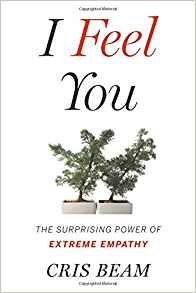 hype and over-valuation of empathy over against those who summarily dismiss it. Most ambivalently, she calls out the corporate infatuation with empathy. I paraphrase the corporate approach: Take a walk in the other person’s shoes in order to sell them another pair.
In Beam’s book I Feel You: The Surprising Power of Extreme Empathy (Houghton Mifflin, 251 pp. ($26 US$)), Cris Beam makes empathy present. She brings forth empathy her engagement with difficult cases that challenge our empathy, including her own conflicts. In the process of struggling with, against, and for empathy, she succeeds in bringing forth empathy and making empathy present for the reader. From an empathic point of view, I can think of no higher praise.
It gets personal. Beam reports that she is a survivor of a floridly psychotic mother and a father who, at least temporarily (and probably to save himself), abandoned Cris to her fate with that woman. As a teenager, Beam escapes to her father and his second marriage only to be rejected when she “comes out” as a lesbian some years later. Fast forward to Beam’s own second marriage [both to women].
Beam’s partner announces that the partner (at that time a “she”) is committed to transitioning to becoming a man. Beam decides to support her (becoming him) and sticks with it through the top surgery, administering the testosterone shots. The partner tells Beam: “I will love you always [regardless of my gender].” Beam decides to believe the partner. (See what I mean? You can’t make this stuff up.)
Nor is this a softball review, and I decisively disagree with Beam when she says that empathy is “mutual vulnerability” and approvingly quotes André Keet: “there are no neat boundaries between victim, perpetrators, beneficiaries, and bystanders …” (p. 191). While such a statement is descriptively accurate, once the father walks, leaving the psychotic mother and child behind, the commitment of empathy is to respect boundaries and (re)establish them when the boundaries have broken down or been violated.
Empathy is all about boundaries, and Beam, like so many of us, has her share of struggles with them. No easy answers here. But one final thought as my personal response to Beam’s thought provoking and inspiring work on empathy. We may usefully consider the poet Robert Frost: “Good fences make good neighbors.” I add: There is a gate in the fence, and over the gate is written the word “Empathy.”
The third empathy book, The Routledge Handbook of the Philosophy of Empathy (Routledge, 410pp, $245 US$), has a truly ugly hardcover price of $151 even after the Amazon discount as publishers continue to respond to economic pressures by

Cover Art: The Routledge Handbook of the Philosophy of Empathy
squeezing the life out of traditional print books that one can hold in one’s hand. The recommendation? Have the library order a copy (the paperback is $54.95, a better price, but nothing to write home about).
I have read, reviewed, and sometimes struggled, not only with the tangled history of empathy from David Hume to mindreading to mirror neurons, but with all thirty-three articles as a would-be empathic contribution for those who come after me. In many cases, I resonated empathically with the article. Bringing a rigorous and critical empathy to the article based on my life and experiences, sometimes the article “clicked,” i.e., worked for me. In other cases, I had to activate “top down” empathy, trying to create a context for a conversation, in which all I can otherwise see is an effort to maximize the number of stipulations that can be made to dance on the head of a pin—the pin being “empathy” (seems like about two dozen).
In every case, I try to be charitable; but in some cases the “empathy meter” goes in the direction of “tough love.” In one or two cases, I acknowledge my empathy breaks down completely in the face of academic over-intellectualization—an obvious occupational hazard in philosophy, but one that needs to be firmly contained in an engagement with a critical and rigorous empathy—and I simply recommend hitting the delete button—or a rewrite from scratch.
A “Handbook” promises to be a comprehensive engagement with the issues. So it is with deep regret, that I call out the fundamental incompletenesses. Nothing on education. Philosophers are not educators? Socrates was not a teacher? Mary Gordon’s program The Roots of Empathy (also the name of her book) includes bringing a baby into the grammar school classroom. Too developmental? Too psychological? The Philosophical Baby (Gopnik et al 2009)?
Also missing is the alternative point of view. The neurohype around mirror neurons is well represented; but what about the alternative point of view that such an entity as a mirror neuron does not even exist in humans and that the neurological infrastructure has a different configuration.[1]
The evolutionary context of empathy is considered; but missed are the role of the human mother-child matrix in the development of affective empathy, the empathizing effect of female sexual selection on male aggression, and the development of perspective taking in group selection in empathy as a “cheater detection system” and “empathic cruelty.” Empathy and morals are well represented; but little about social justice, overcoming prejudice, building bridges between disparate individuals and communities, or the tough related issues.
I am just getting warmed up here. Other incompletenesses are more fundamental—methodological. Empathy is not just the object of the inquiry, but it also needs to be the subject of the inquiry. We get our humanity from the other individual—and the other’s artistic expressions and social contributions.
This is subtle; so let me give an example. Expand your empathy: go to the art museum. Deepen your empathy: attend the symphony. Broaden your empathy: study a foreign culture or indigenous community. Stretch your empathy: read literary fiction. The engagement with aesthetics expands, trains, and develops our empathy; likewise, with the engagement with the other person. How does that work? The contributors seem not to have considered the possibility.
Instead empathy is on the defensive in too many places in the Handbook under review. Empathy is not represented as something of value that needs no apology and is worthy—along with (say) compassion and motherhood—of active promotion and expansion as a benefit to the community. Strangely enough, the breakdowns, failures, and misfirings of empathy—emotional contagion, conformity, projection, and communications lost in translation—are mistaken for empathy itself as if empathy could not misfire or go astray.
Nevertheless, bright spots appear. As Shoemaker points out in his article, the solution to a so-called parochial empathy that is limited to the “in group” is empathy itself – expanded empathy. Expand the boundaries of the community to be inclusive of those previously excluded. No doubt, easier said than done, but that is not a limitation of empathy itself, but of our need for expanded training and practice of empathy.
The battle is joined. Dan Zahavi, an otherwise impeccable and astute phenomenologist, enters into apologetic worrying about the conundrum: Can we really ever appreciate, understand, empathize with another person’s experience without having had a similar experience [or words to that effect]? Zahavi makes good use of Max Scheler to show that we can. With the exception of Jenefer Robinson (on “Empathy in music”), what is not called out (or even hinted at) is that the encounter with the other person, art, music, and literature enhances and expands our empathy.
In a world of limited empathy, the empathic person is a nonconformist. I wish I could write this Handbook is overflowing with nonconformists. Happily there are some and they produce several excellent articles—Zahavi, Gallagher, Ickes, Denham, Debes, Hollan, and John (Eileen); but it is otherwise filled with over-intellectualization, stipulations, neurohype, inaccurate phenomenological descriptions (mostly by the neuro-philosophers, not the phenomenologists), and tortured conceptual distinctions lacking in empathy. Seven out of thirty-three is a modest harvest.
One expects a Handbook on empathy would make empathy present for the reader. In the long, dreary march through 397 pages, thirty-three articles, I thirsted for it. Eileen John comes closest to doing so, and she is able to marshal the resources of empathy in the context of literature to help her get over what is admittedly a high bar. The scandal of this Handbook is that amid so many conceptual distinctions relating to empathy, empathy itself—empathy as a presence in the encounter with the reader—goes missing except in this one out of thirty-three articles.
What I am saying is that, with a few exceptions, largely concentrated in the contributions of Heidi Maibom and issues with her editing, there is nothing wrong with this Handbook; but there are so many things missing it is hard to know where to start with them. The practice of empathy is the source out of which emerge the ten thousand empathic distinctions in this Handbook. Key term: practice. Thinking and writing informed by the practice of empathy is the ultimate missing link.
Reviewing each of the thirty-three articles in the Handbook requires a book length treatment in itself. Therefore, I have provided one entitled A Critical Review of a Philosophy of Empathy (Two Pairs Press, 162pp. $10US (Amazon)), in which extensive background on the issues is also engaged. In short, this is a book about the book, and is the complete book review. Each of the articles is reviewed in detail with seven separate and substantial sections orienting the reader to the issues, pro and con, engaged under core problems, history, understanding (mindreading), morals, aesthetics, and cultural issues, all relating to empathy. The recommendation? Check out the review, priced to cover printing plus a latte and biscotti for the reviewer, prior to engaging with the Handbook. You may get 80% of the value in the review; and you will not be bored.
[1]For example, see Gregory Hickok. (2014). The Myth of Mirror Neurons. New York: W. W. Norton. For further debunking of the neurohype see Decety et al. 2013, Vul et al. 2009, and Satel and Lilienfeld 2013.
REFERENCES
Complete, expanded Review of William Miller’s Listening Well: The Art of Empathic Understanding: Review-of-William-Miller-Listening-Well
Complete, expanded Review of Cris Beam’s I Feel You: The Surprising Power of Extreme Empathy: Review-of-Cris-Beam-I-Feel-You-Extreme-Empathy
Completed, expanded Review of Lou Agosta’s A Critical Review of a Philosophy of Empathy: About-Lou-Agosta-A Critical-Review-of-a-Philosophy-of-Empathy
(c) Lou Agosta, PhD and the Chicago Empathy Project

Top Ten Trends in Empathy Lessons for 2019
Empaths can’t seem to get enough empathy – get some here!
10. Empathy versus bullying: in mud wrestling with a pig, everyone gets dirty – and the pig likes it. How to deal with bullying without becoming a bully? Set firm limits – set firm boundaries – thus far and no further! Being empathic does NOT mean giving up the right to self defense. It means listening carefully, and responding accordingly.
Empathy is the emotional equivalent of jujitsu – use the aggressor’s energy to send him flying the other way. Being empathic does not mean being nice, agreeable, or even being disagreeable. It means knowing what the other person is experiencing because one experiences it too as a sample or trace affect. By all means, try to be friends: “Courtesy don’t cost ya nothin’.” Make an extra effort – and go the extra mile. But do not surrender one’s integrity or basic human values. However, taking a walk in the other person’s shoes applies to the enemy too. It is called “Red Team” – think like the other side. Are they angry? Fearful? Sad? Enthusiastic? Empathy gives one access to what is going on “over there.”
Power and force are inversely proportional. As the bully’s power goes down, the risk of the use of force [violence] increases. Empathy is powerful, and if necessary it meets force with force. But then empathy is no longer empathy; it is empathy in the form of a breakdown of empathy. The “empathic” response to an attack is to “neutralize” the attack and be empathic with the survivors. You knew that, right? Empathy consists in restoring the boundaries and integrity to the situation.
9. There is enough empathy to go around. Granted, it does not seem that way. It seems that the world is experiencing a scarcity of empathy – and no one is saying the world is a sufficiently empathic place. Consider an analogy. You know how we can feed everyone on the planet? Thanks to agribusiness, “miracle” seeds, and green revolution, enough food is produced so that people do not have to go hungry? Yet people are starving. They are starving in Yemen, Africa, Asia – they are starving in Chicago, too.
Why? Politics in the pejorative sense of the word: bad behavior on the part of people, aggression, withholding, and violence. The food is badly distributed. Now apply the same idea to empathy.
There is enough empathy to go around – but it is badly distributed due to bad behavior and politics in the pejorative sense. Drive out the aggression, bullying, shaming, integrity outages, and so on, and empathy naturally comes forth. People are naturally empathic, and the empathy expands if one gives them space to let it expand.
8. Empathy is not an “on off” switch. Empathy is [like] a dimmer, a tuner. Dial it up or dial it down. We tend to think of empathy as an “on off” switch. Turn it on for friends, the home team, the in crowd; turn it off for opponents, the competition, the outsiders. However, empathy is a dial or tuner – turn it up or down gradually depending on the situation.
The surgeon has to turn his empathy way down in order to operate on the human body as a biological system; but the surgeon never forgets that the operation is occurring so that the patient can return to his or her family and friends as a whole human being. This “dialing up” or “dialing down” does not come naturally (whereas “on” or “off” seems to be the common reaction). That is why training and practice are needed.
If I can cross the street to avoid the homeless person and thereby regulate my empathy downward; and I can also cross the street in the other direction and buy Streetwise or give her a shrink-wrapped snack bar.
Approaching empathy as a tuner or dial that expands or contracts one’s openness to the experiences of the other person (rather than an “on-off” switch), shows the way to avoiding being overwhelmed by the other’s difficult experience and the accompanying burn out, “compassion fatigue,” or empathic distress. Dial down the exposure. Take a sample and a vicarious experience. Put one’s toe or ankle in the water rather than jump in up to one’s neck.
7. The poet Robert Frost wrote: Good fences make good neighbors. There is a gate in the fence [a fence, not a wall] and over the gate is the word “empathy.” Empathy is all about boundaries. Empathy is all about moving across the boundary between self and other.
The boundary is not a wall, but a semi-permeable membrane that allows communication of feelings, thoughts, intentions, and so on. As noted above, the poet Robert Frost asserts that good fences make good neighbors. But fences are not walls. Fences have gates in them. Over the gate is inscribed the word “empathy,” which invites visits across the boundary. In the business world, the gate is sometimes called a “service level agreement (SLA).”
6. Empathy reduces conflict, aggression, and rage. Getting a good listening calms, soothes, and de-escalates. Getting a good listening de-escalates, period. When a person does not get the dignity, respect, or empathy to which he feels he is entitled, then he becomes angry. Lack of empathy and dignity violations expand anger and rage.
In particular, overcoming resistance to empathy, expanding empathy, is on the critical path to eliminating or at least reducing organizational conflicts and dysfunctional behaviors. When staff, executives, stake-holders, and so on, expand their empathy for one another and for customers, they are able to deescalate confrontations and negativity; they avoid provocative and devaluing language; and they are able to head off dignity violations, all of which reduce the conflicts that literally suck the life out of organizations.
When employees appreciate the possibilities of empathy, they even try to replace office politics with professional behavior. Staff get more done because they can concentrate on doing their jobs, working smarter, and serving customers and coworkers rather than struggling with departmental politics.
In addition, expanding empathy—overcoming resistance to empathy—is on the critical path to building teams. Empathy is the foundation of community, and the team is nothing if not a community. In empathy, people practice giving acknowledgment and recognition for their contribution to the success of the team and the organization. Being inclusive does not always come naturally or easily to us humans, territorial creatures that we are. We oscillate between closeness and distance like a pendulum.
5. Empathy is a method of data gathering – sampling – about the experiences of the other person. Hold this point. Simply stated, empathic receptivity is a technique of data collection about the experiences of other people. This is not mental telepathy. Human beings are receptive to one another, open to one another experientially, but with some conditions and qualifications. You have to listen to the other person and talk with him or her. You have to interact with the person. The one individual gets a sample of the experience of the other person. The one individual gets a trace of the other individual’s experience (like in data sampling) without merging with the other.
Through its four phases, empathy is a method of gathering data about the experience of the person as the other person experiences his or her experience. This data (starting with vicarious experience) is processed further by empathic understanding of possibilities and empathic interpretation of perspectives in order to give back to the other person his or her own experience by means of empathic responsiveness in language or gesture in such a way that the other person recognizes the experience as the person’s own.
4. Empathy is distinct from compassion or even rational compassion. If you are experiencing compassion fatigue, maybe you are being too compassionate. I hasten to add this does not mean be hard-hearted, cold, mean-spirited, or indifferent. It means in the face of overwhelming suffering, tune down one’s empathic receptivity in order not to be emotionally neutralized. Tune up one’s cognitive empathy in order to understand what is going on and what are the options for making a positive difference in the face of the challenge at hand.
Engaging with the issues and sufferings with which people are struggling can leave the would-be empathizer (“empath”) vulnerable to burnout and “compassion fatigue.” As noted, the risk of compassion fatigue is a clue that empathy is distinct from compassion, and if one is suffering from compassion fatigue, then one’s would-be practice of empathy is off the rails, in breakdown. Maybe one is being too compassionate instead of practicing empathy. In empathy, the listener gets a vicarious experience of the other’s issue or problem, including their suffering, so the listener suffers vicariously, but without being flooded and overwhelmed by the other’s experience.
The world needs \ more compassion and expanded empathy; but in managing compassion fatigue one may usefully turn down one’s compassion and turn up one’s empathy. The power of well-practiced empathy is that it enables one to sample the experience of the other, including their suffering (which is the problematic experience), without being inundated by it. Instead of diving in head first, one puts one’s toe in the waters of the other person’s experiences. To extend the metaphor, one needs to get the entire ankle in the water to gauge its temperature accurately, but that is still a lot different than being up to one’s neck in it.
The bottom line? Empathy is distinct from compassion. Empathy is a method of data gathering about the experiences of the other person; compassion tells one what to do about it, based on one’s ethics and values.
3. Empathy lessons are available every moment of every day: They are available in every encounter with another person, every anticipated encounter, and every encounter that has just occurred. Whether struggling to survive and attempting just to get through the day or flourishing, consider the other person as one’s empathy trainer.
The other person trains one in empathy by being uncommunicative, difficult, shut down, fearful, angry, enraged, outraged (lots of rage), sad, high spirited, too withholding, too generous, disequilibrated, perfectly centered, stuck up, arrogant, passive aggressive, aggressively helpless, annoyingly right, “obviously” wrong, or otherwise struggling with something that is hard to express. Sometimes the message is loud and clear. Thus, the baby trains the parent in empathy with loud exclamations; the customer sometimes does exactly the same thing to the businessperson; the patient, the doctor; the consultant, the client, and so on. The empathy lesson is to listen with renewed receptivity, understanding, and responsiveness to your kids, customers, clients, neighbors, and fellow human beings.
Every human encounter is a potential empathy lesson in picking up on the affect of the other person; in processing what is possible for the other person in spite of the stuckness or difficulty; in taking a walk in the other’s shoes when one really is without a clue as to what is going on; in taking what one has gotten by way of a vicarious experience and giving it back to the other person in a way that the other person recognizes it as his own.
The baby, the student, the patient, the customer, the neighbor, are the ones who bring empathy into existence for the parent, the teacher, the business person, in turn. The former provide an opening, a “set up,” a clearing, for the possibility of empathy on the part of the latter.
If we needed to multiple the number of empathy lessons available in every moment, then we would make these tips into equations: cynicism down, empathy up; shame down, empathy up; egocentrism down, empathy up; opinions and meaning making down, empathy up; narcissism down, empathy up; stress down, empathy up, and so on.
One can also reverse these empathy lessons: cynicism up, empathy down, and so on. In addition, numerous things are positively correlated with empathy: Acknowledgment up, empathy up; humor up, empathy up; self-esteem up, empathy up; random acts of kindness up, empathy up; a gracious and generous listening up, empathy up.
If you work in an environment laced with cynicism, the opportunities for empathy are constantly present, albeit in a privative mode. Get in touch with your empathy, which is powerful in such a context, and express a positive possibility. Your life, your job, your relations, will never be the same.
2. Empathy expands its claim to be a key leadership competency. Empathic leadership is never more visible than when it is lacking. Empathic leaders provide governance from contribution, commitment, and communication, not fear, chaos, or bullying. Empathic leaders follow the money, but do not follow it off a cliff. Empathic leaders make integrity the foundation of workability. They respect boundaries, speak and act with integrity, and honor their word. Here “integrity” means “workability,” not moral judgments. So, for example, a square bicycle wheel lacks integrity. It does not work. Empathic leaders find the best person for the job, get the person’s input on what it’s gonna take, create a set up for success, let the person do the job, and follow up periodically.
1. Natural empaths get expanded empathy. Paradoxically, natural empaths suffer from a lack of empathy. Natural empaths are so sensitive to the pain and suffering of the world that they must isolate themselves, cutting themselves off from the emotional life sustaining recognition and support that people require to flourish and be fully human.
The Natural Empath falls into a double bind, and her suffering seems inevitable. She is swamped by too much openness to the suffering of the other person or overcome by guilt at not living up to her own standards of fellow-feeling and ethics.
But the suffering is not inevitable. Such statements imply that empathy cannot be regulated through training, albeit a training that goes in the opposite direction (from too much empathy in the moment to less empathy) than that required by the majority of people, who are out of touch with their feelings and need to “up regulate” their empathy.
The empathy lesson for the Natural Empath is to “tune down” her empathic receptivity and “tune up” her empathic understanding and interpretation, while being more flexible about her ethical standards. Here “flexible” does not mean be unethical, but rather allow for the possibility that one needs to work on the balance between one’s own well-being and that of others in helping others.
Now please do not jump to conclusions. That does not mean the Natural Empath should become hard-hearted or unkind. That would definitely not expand empathy. In order to overcome the breakdown of empathic receptivity, what does one actually do in order to expand or contract one’s empathic receptivity?
The empathy lesson for such individuals? Practice methods of “down regulating” one’s empathy. For example, focus on mentalizing, top down empathy, placing oneself in the other person’s shoes, rather than imaginatively evoking the vicarious emotions of the other person’s experiences. Perspective-taking exercises—imaginatively putting oneself in the other’s point of view—expand the participant’s empathy during training sessions. Perspective taking incidentally promotes helping, “pro social” behaviors when it indirectly activates pro-social emotions such as compassion.
Over-intellectualizing (often considered a defense mechanism) is also a proven method of inhibiting empathic receptivity. Compartmentalization, rationalization, and displacement are all methods of putting distance between oneself and another’s feelings. Though usually considered defenses against feelings, in the case of the Natural Empath, such defenses are just what are needed to get through a tough spot of over-stimulation or emotional flooding in the face of the difficult experiences of other persons.
Ours is a world in which pain and suffering are abundant. This does not make the would-be empath cold-hearted or the object of moral condemnation. Indeed such people might be more willing to engage in helping behaviors such as volunteering or donating money based on cognitive appreciation of the other person’s predicament rather than the experience of vicarious suffering. It means that the Natural Empath should practice taking distance from his own feeling in such a way that he gets a sample or trace of the other person’s feeling without being overwhelmed.
Expressed positively, if inhibition (or distance) were a medicine, the Natural Empath may usefully increase the dosage. Take more of it. But this is at best an imperfect analogy. Remember, inhibition is what enables the average person to be effective in a world that the person subsequently experiences as boring and dull precisely because inhibition is doing its job of down regulating the tidal wave of stimulations that potentially wash over the person; and likewise the Natural Empath, hypothetically lacking such a filter, needs to down-regulate her empathy through self-distraction and abstraction to sustain emotional equilibrium rather than over-stimulation.
This is surely a mixed blessing. The Natural Empath is a special case, and he may actually increase his good deeds in a particular situation by contracting his empathic receptivity, one particular part of empathy. If one can expand one’s empathy, one can also contract it.
The way out of this apparent impasse is to consider that the Natural Empath does indeed get empathic receptivity right in empathic openness to the other’s distress, but then the person’s empathy misfires. Whether the misfiring in question is over-identification, resulting in empathic distress, depends on the description and redescription. Standing on the sidelines and saying “Try harder!” is easy to do. Where is the training the person needs when they need it?
Instead of complaining about being an overly sensitive, Natural Empath (however accurate that may be) do the work of practicing empathy by “down regulating” one’s empathic receptivity in a given situation, transforming empathic distress into a vicarious experience. Do the work of “up regulating” empathic interpretation whereby one imaginatively puts oneself in the other person’s position and considers the experiences thereby inspired vicariously, reducing the “load” on the emotions. This is different than intellectualizing, compartmentalizing, or distinguishing in thought, but perhaps not different by much. The differences are nuanced, but of the essence.
The recommendation regarding empathy training? Most people need to expand their empathy; some people—Natural Empaths—need to contract (or inhibit) their empathy. Empathy regulation—learning to expand and contract empathy—is the imperative in either case.
(c) Lou Agosta, PhD and the Chicago Empathy Project
Review: The Empathy Effect by Helen Riess
The force of empathy is strong with Helen Riess, MD, and her team.
In The Empathy Effect: 7 Neuroscience-based Keys for Transforming the Way We Live, Love, Work, and Connect Across Differences(with Liz Neporent, Forward by Alan Alda (Sounds True publishing, 234pp, $22.95)) Riess lays out a program for training medical doctors (and the rest of us) to expand our empathy.
The most important point that Dr Riess makes in the concise opening three chapters is that empathy is learnable. Empathy can be taught. The empathic capabilities of the human being can be expanded by practice and training. This is the set up for the introduction and promotion of the proprietary empathy training program, “E.M.P.A.T.H.Y.”®, offered by the for profit enterprise, Empathetics, of which Riess is the CEO. The training based on intellectual property developed at Massachusetts General Hospital and Harvard University. More on that shortly.
The work contains many personal reflections amid a fully buzz-word compliant narrative on the psychology and neuroscience of empathy. Dr Riess lets slip that she was in second grade when the 1963 Community Mental Health Act set in train consequences, some planned, most unintentional, that resulted in the emptying out of the Psychiatric Institutions (“Asylums”) that served for the long-term incarceration of those diagnosed with severe mental disorders.
This means that Dr Riess was young enough to have benefited from the innovations in empathy of Carl Rogers, PhD, and Heinz Kohut, MD, who, prior to the second psychopharmacological revolution, were responsible for putting the term “empathy” on the treatment intervention map of humanistic and self psychology.
Though not explicitly discussed by Riess, for practical purposes, the “second psychopharmacological revolution” is dated from Peter Kramer’s Listening to Prozac(1993). It took the legs out from under virtually every form of talk therapy then in the market, including Cognitive Behavioral Therapy (CBT, however, has demonstrated staying power for many reasons, not the least of which is that insurers are willing to reimburse for a dozen (or so) sessions).
Riess is conversant with Paul Ekman’s innovative research in coding (and decoding) the micro-expressions of the human face, an emotional “hot spot,” to discern what a person is “really” experiencing and feeling. Though Ekman does not use the term “empathy,” his approach to micro-expressions implies a definition of empathy distinct from that of Riess’ proprietary approach, which, in turn, aligns with David Hume’s “delicacy of sympathy and taste” (1741). If one person literally perceives a micro-expression of which another is unaware, then the one person’s “delicacy of empathy” (my term, not Hume’s) is more expansive that the other’s.
Thus, Dr Riess calls out the contributions of Rogers and Kohut such as “unconditional positive regard” and “vicarious introspection,” respectively. She appreciates the deep history of empathy (“Einfühlung”) in German aesthetics, in which empathy emerged from the projection of human feelings onto beautiful nature and art, something we humans seem to be cognitively designed to be unable to stop doing.
Riess appreciates that the distinction “empathy” is significantly different than “compassion,” “sympathy,” or “projection,” and she helps the reader distinguish among them. She “gets it” that empathy, like so many phenomena, is on a spectrum and that some people are naturally endowed with less of the capacity (think: disorders of empathy such as autism or at another extreme psychopathy) and some people have more of it (think: the natural empathy, who is acutely sensitive). Riess understands that empathy can misfire or breakdown: empathy faces obstacles and roadblocks, which, paraphrasing now, extend from sentimentalism, spoiling, codependence, projection, all the way to burnout, compassion fatigue, and empathic distress.
In every case, practice and training can expand the empathic competence of the individual and the empathic response in the face of the challenges of unempathic people and circumstances. Riess refers to turning “the dial on … emotional empathy” (p. 19), which is why training is needed. Thus, empathy is more like a dial or tuner – turn it up or down – rather than an “on-off,” all-or-nothing switch.
This brings the discussion round to the details of Riess and Empathetics, Inc.’s innovative, proprietary empathy training. She begins by citing research that demonstrates medical doctors are often trying to deliver one message and their patient’s are getting another one or nothing at all. The antidote? “E.M.P.A.T.H.Y.”®!
It turns out there is a “secret sauce,” a proprietary application of biofeedback technology. I have a report that if you, as a hospital or medical group practice, actually pay the $50K [I am making this number up] to train your medical doctors en masseat Mass General, then patented biofeedback metrics are used to judge the arousal of the subject and, hence, the effectiveness of the empathy induction. Though I am not sure, it sounds like they put the little Velcro-cuff on one of your fingers to measure the galvanic skin response.
While galvanic skin response is a blunt instrument and does not distinguish between emotions such as fear, anger, sadness, high spirits, much less subtle states such as envy or indignation, it does provide a measure of physiological stimulus and arousal. Useful. Might be worth a try.
This add something to that old joke that when a therapist meets a new patient, there are two anxious people in the room; and it is the therapist’s job to be the least anxious. It adds something, but what? Still, it might be worth a try, especially given the emotional numbness of the survivors of the boot camp approach to medical school and the sleep deprivation regime of medical residency.
Meanwhile, the technology is wrappered in a conversational training that aims at expanding the empathic capabilities of the trainee. There are seven “keys” to empathy which, of course, occur simultaneously, but have to be presented in sequence for purposes of exposition.
The empathy training works on: (1) Eye contact: the eyes are the window to the soul. Look the other person in the eye to expand connectedness, but do not stare without blinking, which communicates aggression. Riess does not mention, but might usefully have done so, that Simon Baron-Cohen[1]calls out lack of eye contact as one of the indicators of a person being on the autistic spectrum.
Training in making eye contact to expand empathy leads naturally to including: (2) Facial expressions as a whole: the human face is an emotional “hot spot,” and while humans can fake many facial expression, there are some micro-expressions that are disclosive of an emotional depth that cannot be faked.
Here the decisive innovations and work of Paul Ekman and his team are critical path. Ekman spent some seven years mapping all the muscles of the face and their contribution to the expressions of emotions. The bottom line? People can consciously control many of these muscles – but not all of them. The muscle around the eyes participate in an authentic smile, and when they do not do so, the smile is perceived as off – as fake.
Riess says: “You don’t have to be an expert to pick up on the minute micro-expressions described by Ekman and others.” Actually you do. Significant practice and training is required, and even then one may know that the other person is not being entirely straight with you, but the micro expression does notprovide any insight into the underlying motive(s). Is the motive sinister or is the person suffering from shame, guilt, or post trauma upset? One has to have a conversation. The “M” is for “facial expression” – okay, actually “muscles” or “micro expressions” in the face.
The face, in turn, leads to: (3) Body language as a whole. Amy Cuddy’s “power pose” does not increase testosterone in the saliva, but significant anecdotal evidence indicates it does expand a person’s self-confidence. In short, look at how a person is standing or sitting and attend to one’s own posture. It can reveal a lot about how one is feeling. “P” is for “body language,” or, to be exact “posture.”
Riess acknowledges the distinction between cognitive and affective empathy – top down and bottom up empathic understanding and receptivity. A future version of this training might incorporate “perspective taking” or “point of view,” in the place of the “P,” the folk definition of empathy, which is otherwise missing from the list of keys. I make no representation as to how such a gesture would require adjustment or amendment to the intellectual property or whether it is even possible to claim as one’s own property something that is arguably the proper possession of all of humanity. One thinks of Kohut’s notion of empathy as oxygen for the soul. Who owns the oxygen? Presumably, humanity, not Harvard.
Next (4) empathy is all about “affect” and the communication of affect. People are not born knowing the names of their emotions. We have formal training in kindergarten in naming colors and numbers. It is not too late to practice experiencing one’s emotional experience and naming it.
In a separate section, Riess calls out the disorder of “alexithymia,” inability or extreme difficulty in naming and articulating feelings. This is different than “over intellectualization,” but sometimes not by much. This is an occupational hazard of anyone who spends years in graduate or medical training, but other people are seemly hardened against experiencing their feelings due to disposition or adverse life experiences.
(5) The “tone” of voice is richly communicative. If is a person is telling what should be a sad story of loss, injury, or set back, yet the person sounds happy, then something is going on beneath the surface that warrants further inquiry. The pace, rhythm, pitch, delivery, and prosody of a statement make a big difference in its reception and processing. Not to be overlooked: “A surgeon’s voice peppered with dominance and delivered with a lower register of concern was predictive of a malpractice claims history” (p. 54). But if one is only undertaking this training to stay out of legal trouble, that is itself an indication of trouble.
(6) Listening to the whole person is the point at which the training has to go beyond the tips and techniques that have dominated this list. This one is easier said than done and may require a deep engagement with spiritual disciplines of mindfulness, Tai Chi, or a couple of years of one’s own therapy in order to be available to the other person. “H” is for listening to the whole person – and hearinghim or her – presumably within the fifteen minute encounter that is budgeted for the initial medical inquiry.
(7) Empathy without responsiveness is like a tree that falls in the forest without anyone being there. It does not make a difference. Regarding empathic responsiveness, I would have appreciated an example of giving the other person’s experience back to her in a form of words that demonstrate that one “got it” without the exchange being so explicitly compassionate.
Recognition, acknowledgement, and alignment are ways of responding that do not require agreement or altruistic intervention. Yes, of course, it is helpful to be appreciated in one’s struggle and effort, and that is different than having someone jump in and actively provide compassionate support.
By all means, if someone is bleeding, apply a tourniquet while awaiting emergency services. But here one has actually to “dial down” one’s empathy in order to be effective. The point is that both empathy and compassion are often in short supply in the world and the world needs both more compassion and expanded empathy. However, empathy and compassion are distinct.
I may have misread Dr Riess if she wants to build into the human capacity for empathy, a compassionate response – whether her own proprietary version or empathy writ large. I offer this caveat because the vast majority of the examples of empathic response she gives are instances of pro-social helping, altruism, charity, or other aspects of being a Good Samaritan.
Once again, the world needs more Good Samaritans. The world needs both more compassion and expanded empathy; but the two are distinct. The exceptions in the text to examples of compassion are largely those of being over-whelmed or nearly over-whelmed by trauma and counting one’s breaths in order to stay centered in the face of hospital emergency room style dismemberment.
The irony of this book, which promotes linking empathy to its underlying neuroscience, is that the empathy is strong but the neuroscience, weak. Since this is not a “softball review,” a few examples will make this clear.
For example: “Scientists can see the electrical impulses spread through the brain using fMRI (functional magnetic resonance imaging) brain scanning technology” (p. 28). False.
The fMRI makes visible the blood oxygenation level data (BOLD) of between five thousand and fifty thousand neurons in its unit of measure, the voxel (depending on the variable size of the neuronal cells). The inference is: when the neurons get active, because the person is having an experience such as thinking a thought or attending to an event, then the neurons require more blood-rich oxygen to do their job.
In no way, does the fMRI monitor individual neurons or even a small number of them. The fMRI is a powerful tool for imaging soft tissue disorders, but it does not provide visibility down to the level of granularity of anything like individual neurons.
Perhaps Riess was thinking of the EEG: The spread of “electrical impulses through the brain” can indeed be monitored by an electro encephalogram (EEG), a fundamental tool for evaluating disorders of consciousness such as epilepsy and sleep disturbances, but even with an EEG the overall, high level activity of the brain is what is being monitored not individual or even small numbers of neurons.
A similar slip occurs early on: “Scientists first viewed the brains of their subjects in a brain scanner as the subjects had their fingers stuck by needle to determine the precise neurons involved in pain perception” (p. 17). Here “precise” would mean between five thousand and fifty thousand neurons, which is not my definition of “precise”. The level of granularity of the fMRI is an order of magnitude off from that required to “see” an individual neuron. Thus, fMRIs do not see or monitor mirror neurons (if they exist). Period. Once again, the fMRI does provide evidence that the parts of the brain that are busy processing experience receive enhanced blood oxygenation level data (BOLD), and that is the data captured by the fMRI.
Another problem item: “Mirror neurons are specialized brain cells in specific areas of the brain called the premotor cortex, known as the F5 area…” (p. 18). The problem is that the F5 area is part of the brain of the macaque monkey. There is no F5 area in the human brain. Thus, the battle is joined, whether mirror neurons even exist in human beings.
The neurohype around mirror neurons is well represented; but what about the alternative point of view that such an entity as a mirror neuron does not even exist in humans and that the neurological infrastructure has a different configuration and explanation?[2]
How do we advance from synchronization and mirroring (Riess’ big idea of “shared mind intelligence”) to understanding of another person or the person’s mindedness? There are several questions of representation and functional analysis between which scientists and researchers are still working to “connect the dots.” Riess represents this all as a “done deal” with the answer being “mirror neurons,” but she is oversold and fails to connect the dots.
Mirror neurons are one hypothetical explanation for such a phenomenon as “low level (empathic) affective resonance” in human beings. However, so are reflex-like mechanisms such as associations of actions, impressions, and ideas—known to the British empirical philosopher David Hume (1711–1776) as “habits” or “customary conjunctions.”
Macaque monkeys (the original subjects in the research done by Rizzolati, Gallese, and others (1996)) have a community and social order for which mirror neurons are sufficient to provide monkey interaction in the monkey community; buthuman behavior, action, and emotion involve more complex meanings, which human mirror neurons (if they exist) do notexplain—do not explain by means of language, social institutions, cultural practices, or tradition—because meaning is more than matching. As a mere mechanism of matching, mirror neurons struggle to explain the meaning created and deployed in minded actions and emotions.[3]
In humans and the human species, the macaque mirroring mechanism has been elaborated in evolutionary time into expanded behavioral, emotional, and cognitive capabilities useful for interrelating in significantly more complex human communities. Once prehistoric humans acquired language and used it to expand group solidarity in building communities with tools, art, stories, religious practices, social rituals, and the description of regularities in behavior of the stars and other human beings, diverse pathways opened up for creating and communicating meanings, emotions, projects, and thoughts between individuals.
The neurohype continues as the author moves from the neurologically misleading and false to the superficial. Using the example of addiction to alcohol: “New findings in Neuroscientific studies have redefined addiction from a condition of flawed character to a model of biology and disease. We now know that the brains of people who become addicted are different from those who do not” (p. 174). The brains of people who study French are different than those who do not, so we are on thin ice here in terms of a compelling analogy or contribution.
The good news? If a person has a disease such as pneumonia, modern medicine can cure him even if he is in a coma. That is not the case with the “disease” of addiction. In contrast, overcoming addiction requires the participation of heart and mind – and conscious commitment. The choice between a “moral flaw” and “neuroscience” is a false one once any physical dependency on the abused substance has been attenuated.
Riess recommends the empathic practice of perspective taking is key to shifting out of addictive stuckness – and gives a “shout out” to the program at the Hazelden Betty Ford Foundation; and, no doubt, getting a good listening is highly beneficial to any person, including addicts. However, the contribution of empathy is unwittingly weakened by making it seem like empathy is the answer to overcoming the conflict between the nucleus accumbens, a pleasure center in the brain, and the frontal lobe responsible for decision making.
This brings us to the mereological fallacy, which is pervasive in Riess as indeed in many works of this kind. The mereological fallacy attributes the function of the whole to the part (and vice versa). Brains are a part of a person; and neurons are a part of the brain. Brains are all about neurons; and, in so far as neurons are a necessary condition for the functioning of the embodied person, persons are neurons “all the way down.” But the neurons then start generating phenomena such as consciousness, meaning, language, intentions, joint intentionality, personality, community, and culture.
Thus, social neuroscience is born. Yet brains do notthink; people think. Brains do not express emotions; people express emotions. Brains do not intend this-or-that; people intend this-or-that. Brains do not become addicts; people become addicted. Brains do not empathize; people empathize. The mereological fallacy is a growth industry in social neuroscience. My brain made me do it? Hmmm. Human choice and commitment suggests your brain was definitely participating, but it is far from the whole narrative. The task is to avoid or contain the mereological fallacy, even while allowing social neuroscience to make its contributions in the areas of its strengths. This has not happened in this text.
Another problem? The number of variables changing simultaneously for a person lying still in a fMRI (functional magnetic resonance imaging) machine is large, very large. What worries me is that in an attempt to capture a response in the brain to interesting events experienced by the subject, the researchers, including Helen Riess, have created a brain in a vat. The vat is the fMRI.[4]
What then do brains do when viewed in an fMRI? They “light up.” They discharge neuro-correlates of consciousness (NCCs) in patterns of activation, as indicated in the form of blood oxygenation level data. The empathy circuit “lights up” when people lie back and view “empathy cues,” “empathy triggers,” or “empathy inducers.” We enjoy punishing cheaters—when apprehended and subjected to sanctions, the nucleus accumbens—a pleasure center of the brain—“lights up.” It gets busy. Empathic cruelty? Of course, there are many things that cause the nucleus accumbensto light up, implying the hazards of backwards inference. If it doesn’t light up, you are dead, or in serious neural trouble.
Nevertheless, in spite of weakness in the main selling point promoted in the subtitle and that of which the author is most proud – neuroscience – the force of empathy is strong in this text. If one can survive the neurohype of Part I, the reader is rewarded in Part II – presumably the nucleus accumbens is lighting up like a Christmas tree at this point (but so what?) – with applications of empathy to early child development, education, the hazards of social networking, art and literature as ways of expanding empathy, leadership and politics (and the lack of empathy in them), tough issues in mental illness, criminality, sexual identity, and so on, as well as the benefits of empathy for self-soothing, distress tolerance, and emotional regulation.
Now take matters up several levels from neurotransmitters to two human beings interacting in a conversation in a would-be community. Though Riess does not explicitly say it, the solution to the limited empathy of parochial, biased in-group thinking and behavior is straight-forward: expanded empathy. The person on the street thinks of empathy as an “on off” switch. “On” for the in-group. “Off” for everyone else – the “out group.”
However, practice and training enable a person to relate to empathy as a dial or tuner that can be adjusted to the situation. If I am experiencing empathic distress, dial empathy down. If I just do not “get” the other person, dial the empathy up. This does not come naturally to most people – so, once again, the case is made for practice and training, including Riess’ particular solution.
As a critical reader, I would have appreciated a statement that many ways are available to learn and practice empathy. Every mother, parent, teacher, business person with customers, doctor with patients, therapist with clients practices empathy on a good day and already knows a lot about what works and what doesn’t. Thus I imagine Riess saying: “While you, dear reader, do not need a psychiatrist to tell you about empathy [whose training regime since the early 1990s has overwhelmingly consisted in psychopharmacology], nevertheless let me tell you about the advantages of my proprietary way offered by my company Empathetics.” Perhaps Dr Riess thought such a statement was implied, and I can appreciate that point of view, but I still would have welcomed the clarification that it is not the only empathy game in town.
In a separate communication (10/31/2019), Helen Riess wrote to me: “…[P]art of empathy training is modeling respect for others in the field of empathy education, research ad [sic] training.” Agree. Respect, dignity, empathy, and related belong on a short list of phenomena, which, when the person does not believe she is receiving them, the person tends to get stressed, angry, even enraged. Sounds like the individual in question could use expanded empathy.
I hasten to add that, to her great and unconditional credit, Riess is decisively in action against the appalling scandal that empathy peaks in the third year of medical school (Hojat 2009; see also Halpern 2000) and that since the 1990s psychiatric training has overwhelming emphasized psychopharmacology. Meanwhile, the rate of the disabled mentally ill has doubled between 1987 and 2007 and is now six times the rate as in 1955.[5]Hmmm.
In the final ten pages of her work, Dr Riess calls out the “cytokine theory of depression” (and related mental disorders). I assert that she ought to have begun the book with it.
The cytokine theory of depression (see Maes 1995, 1999) is the approach that emerged in the mid 1990s – about the same time that Prozac was disrupting mourning and melancholy paradigms of mental illness with its serotonin chemaical imbalance theory of depression – that emphasizes the role of chronic social stress (divorce, finances, business travel, bullying bosses, misbehaving teenagers, and so on) in kindling long-term inflammation of major organ systems resulting in “sickness behavior.”
Such sickness behavior looks a lot like major depression yet, at least initially, it lacks the melancholic, negative self-talk. Riess highlights treatment options – and life style adjustments – such as mindfulness, yoga, Tai Chi, exercise, diet, alone and in combination, that emphasize stress reduction, self soothing, emotional regulation, and empathy for oneself.
Naturally, the brain participates in all these activities, but reducing stress and expanding distress tolerance through empathy is also a function of the adrenal-hormonal system. It’s just that neurology has the buzz this season, not endocrinology or psychotherapy. Never was it truer that empathy guides us in engaging with and treating the human being as a whole – not a mere amygdala hijack or frontal lobe disinhibition. So the stress reduction paradigm, which is at right angles to and arguably does not contradict the neurotransmitter imbalance paradigm, was pushed to the margins and hardly heard of again until recently (e.g., Segerstron and Miller 2004).
Perhaps after the boot-camp of medical school, the rigors of residency, and the corporate transformation of American medicine (relying as it does on “hitting the numbers”), empathy is at such a low water mark in the medical doctor’s consciousness that “tips and techniques” are the best we can do. Indeed the “H” stands for “listening to the whole person and hearingthe individual,” so the intention is present.
Yet using empathy to “dial down” stress, aggression, and narcissistic injuries, does not map in any obvious way to “E.M.P.A.T.H.Y.”®, which becomes a pair of golden hand-cuffs for the trainer. The ultimate irony is that the only obstacle in the way of expanding empathy – the distinction, not the propriety gimmick – is precisely “E.M.P.A.T.H.Y.”®.
References
Agosta, Lou. (2018). Empathy Lessons. Chicago: Two Pairs Press.
Decety, Jean, Chenyi Chen, Carla Harenski, and Kent A. Kiehl. (2013).An fMRI study of affective perspective taking in individuals with psychopathy: Imagining another in pain does not evoke empathy, Frontiers in Human Neuroscience, 2013; 7: 489; published online 2013 September 24. DOI: 10.3389/fnhum.2013.00489.
Halpern, Jodi. (2001). From Detached Concern to Empathy: Humanizing Medical Practice. Oxford: Oxford University Press.
Hojat, Mohammadreza, M. J. Vergate, K. Maxwell, G. Brainard, S.K. Herrine, and G. A. Isenberg. (2009). The devil is in the third year: A longitudinal study of erosion of empathy in medical school, Academic Medicine84 (9): 1182–1191.
____________________, Daniel Z. Louis, Fred W. Markham, Richard Wender, Carol Rabinowitz, and Joseph S. Gonnella. (2011), Physicians empathy and clinical outcomes for diabetic patients, Academic MedicineMar, 86(3): 359–64. DOI: 10.1097ACM.0b013e3182086fe1.
Hume, David. (1741). Of the delicacy of taste and passion in Of the Standard of Taste and Other Essays, Indianapolis: Bobbs-Merrill: 1965.
Hickok, Gregory. (2014). The Myth of Mirror Neurons. New York: W. W. Norton.
Maes, M. (1995). Evidence for an immune response in major depression: A review and hypothesis, Progress in Neuro-Psychopharmaclogy and Biological Psychiatry19: 11–38.
_______. (1999). Major depression and activation of the inflammatory response system, Advances in Experimental Medicine and Biology461: 25–46.
Riess, Helen. (2013). The power of empathy, TEDxMiddlebury: https://www.youtube .com /watch?v=baHrcC8B4WM [checked on 03/23/2017].
____________, John M. Kelley, Gordon Kraft-Todd, Lidia Schapira, and Joe Kossowsky. (2014). The influence of the patient-clinician relationship on healthcare outcomes: A systematic review and meta-analysis of randomized controlled trials, PLOS, Vol. 9, No. 4 | e94207: 1–7: https://doi.org/10. 1371/journal.pone.0094207.
____________, John M. Kelley, Robert W. Bailey, Emily J. Dunn and Margot Phillips. (2012). Empathy training for resident physicians: A randomized controlled trial of a neuroscience-informed curriculum,Journal General Internal Medicine, 2012 Oct; 27(10): 1280–1286. DOI: 10.1007/s11606-012-2063-z.
Rizzolatti, G., L. Fadiga, V. Gallese, and L. Fogassi. 1996. Premotor cortex and the recognition of motor actions, Cognitive Brain Research 3: 131–41.
Satel, Sally and Scott O. Lilienfeld. (2013). Brainwashed: The Seductive Appeal of Mindless Neuroscience. New York: Basic Books (Perseus).
Segerstrom, Suzanne C. and Gregory E. Miller. (2004). Psychological stress and the human immune system: A meta-analytic study of 30 years of inquiry, Psychol Bulletin. 2004 July; 130(4): 601–630.
FOOTNOTES
[1]Simon Baron-Cohen. (1995). Mindblindness. Cambridge, MA: MIT Press.
[2]For example, see Gregory Hickok. (2014). The Myth of Mirror Neurons. New York: W. W. Norton. For further debunking of the neurohype see Decety et al. 2013, Vul et al. 2009, and Satel and Lilienfeld 2013.
[3]The following paragraphs are adapted from the section “Your brain on empathy” in Lou Agosta 2018: 171–172.
[4]Presumably this is notwhat the late Hilary Putnam meant when he wrote his prescient article of the same name, since the fMRI had not yet been invented, but who knows for sure? See Hilary Putnam. (1981). Brains in a vat, in Hilary Putnam. (1981). Reason, Truth and History. Cambridge: Cambridge University Press: 1–21.
[5]Robert Whitaker, (2010), The Anatomy of an Epidemic. New York: Broadway Paperbacks (Random House), 2010: p. 7.
(c) Lou Agosta, PhD and the Chicago Empathy Project

Top 10 (and more) Empathy Lessons for Life, the book
This book contains some thirty (30) empathy lessons for life. A key empathy lesson that explicitly addresses empathy training: remove the resistance to empathy—obstacles such as cynicism, shame, guilt, aggression, narcissism, devaluing language, and so on—and empathy spontaneously shows up, comes forth, develops, and grows.
Most people are naturally empathic. This is the training in a nutshell. (To order the book click here: Empathy Lessons.) Read on for more details –
The empathy lessons in this book include how—
to perform a readiness assessment and establish a set up for success in cleaning up inauthenticities that block empathy so that empathy can expand and flourish (perhaps the most challenging part of this work);
empathy is not an “on–off” switch but a tuner (dial or dimmer) that expands or contracts in accessing the vicarious experience of the other person;
empathy breaks down in emotional contagion, empathic distress, “compassion fatigue” (in quotes because it is really about compassion, not empathy), burnout, conformity, projection, devaluing language, and, most significantly, how to overcome these break downs of empathy through multi-dimensional empathy;
empathy works as a method of data gathering in relating to the other person, providing a vicarious experience of the other person without being overwhelmed by the experience;
introspection, vicarious experience, listening to one’s own “voice over” and radical acceptance of one’s own experiences are the royal road to empathic receptivity;
empathic understanding overcomes conformity and creates possibilities of shifting out of stuckness into contribution, transformation, and leadership, including possibilities of engaging and attaining satisfying and flourishing relationships;
empathic interpretation is the folk definition of empathy, walking in another’s shoes, adding “top down” empathy to “bottom up,” empathic receptivity;
empathic responsiveness drives out anger and rage, acting as a soothing balm to suffering and emotional upset, deescalating conflict and aggression;
scientific, peer-reviewed, evidence-based research confirms that empathy (and a set of related interventions) reduce inflammation and stress, the five forms of stress, and connecting the dots between empathy, the reduction of inflammation, and stress reduction;
relationships get “weaponized” in bullying and, coming from empathy, how to overcome bullying, reestablishing boundaries: recommendations that promote empathy in students, teachers, administrators, and stop bullying (including cyber bullying);
“corporate empathy” is not a contradiction in terms, “CEO” now means “chief empathy officer,” and empathy is applied as the ultimate “capitalist tool”;
empathy is the “secret sauce” in sexual satisfaction within an authentic relationship, featuring the desire of desire, the “good parts,” and intimate engagements that are sustainable and last.
These empathy lessons put you back in touch with your empathy. Most people have quite a lot of empathy but are out of touch with it. Empathy lessons—not merely the formal title of this book, the actual practices—provide applications to tough cases. The applications give back to you your power in engaging and overcoming life’s social stresses and the need to expand well-being in the face of emotional upset, handling dynamic relationships, meeting business challenges in the corporate jungle and empathy desert, overcoming bullies and bullying, and applying and practicing empathy in sex and romance.
Our work together in this book is fully buzz word compliant including—
what is “mind reading”; how mind reading relates to empathy; the break down in empathy of “mind misreading”; and what is missing in mind reading, needed to bring it to fruition in empathic receptivity;
the ongoing debates about mirror neurons and the neurological basis of empathy (and an understandable explanation of their significance (and limits)); and the deeper truth that all human beings are related whether or not mirror neurons exist;
disorders of empathy such as Asperger’s and autism and (in a different context) the psychopathic person;
who or what is the “Natural Empath” and how this person, seemingly caught between nature and nurture, provides empathy lessons in abundance; and what happens when the Good Samaritan meets the Natural Empath;
social referencing and how we process the feelings of other people (and how that works);
evidence-based everything in which one would no more jump out of an airplane without a parachute or treat a bacterial infection without penicillin than engage with a human being without empathy (positively stated, start with empathy or one is headed for trouble);
and practical applications to tough, recalcitrant cases using literature, film, and story telling to teach empathy—deliver empathy lessons—and overcome the common breakdowns in the practice of empathy.
This work brings you step-by-step from what it takes to be present—fully present—with another human being, through the breakdowns and misfirings of empathic understanding to radical acceptance, which is profoundly different than mere agreement with someone’s opinion.
A bold statement of the obvious: I acknowledge that I am a proponent of empathy. Yet empathy has a dark side, too. Yes, compassion fatigue and burnout; but also Machiavellian and alienated empathy in business—appearing to be empathic while only being interested in closing the sale: walking in the other’s shoes to sell another pair to the other person. How to turn these risks, resistances, and breakdowns to advantage and even breakthroughs in satisfying and successful relationships in one’s personal life, career, business, and parenting, are canvassed in detail.
Every break down in empathy points the way to a potential breakthrough, if one knows how to listen, identify what’s missing, restore it, process, and respond.
In Chapter One, our empathy lessons introduce and clarify the multi-dimensional definition of empathy. The four dimensions of empathic receptivity, empathic understanding, empathic interpretation, and empathic responsiveness are defined, exemplified, clarified. These four aspects of the process of empathy are used throughout this work on empathy and applied to diverse examples, situations, cases, and stories.
In Chapter Two, our work uncovers the misfirings and failures of empathy including: empathy breakdowns in emotional contagion, burnout, empathic distress, “compassion fatigue,” conformity, projection such as egocentrism and narcissism, and devaluing talk that gets “lost in translation” in gossip, shaming, and bullying speech. The secret to expanding empathy is practicing overcoming these breakdowns.
In Chapter Three, the empathy lessons lead the reader from overcoming resistances to empathy to the breakthrough of empathy training and empathy as a method of data gathering that can be taught.
In Chapter Four, the data supporting evidence-based training in empathy is engaged and developed, as the Natural Empath meets the Good Samaritan, resulting in expanded control of the dial to tune empathy up and turn it down when one needs to do so.
In Chapter Five, empathy lessons directly engage the work of expanding the reader’s empathic receptivity in (1) the vicarious experience of the lives of others; (2) empathic understanding of possibilities of satisfaction in relatedness; (3) empathic interpretation in the folk definition of walking in the other person’s shoes to connect with difficult individuals you might not have been able to relate to previously; (4) empathic responsiveness that leaves one in the presence of fulfilling relationships with human beings without anything else added.
In the next four chapters, the multi-dimensional approach to empathy is applied to four challenging cases (each a chapter) including: stress reduction, featuring empathy as a spa treatment for the human soul, evidence-based medicine, and the contribution of empathy to emotional well-being (Chapter Six); what happens to people when relationships get “weaponized,” how empathy puts bullying in its place, including extensive recommendations for students, teachers, administrators on establishing boundaries (Chapter Seven); business in which empathy becomes a “capitalist tool” and ends up being good for business, too (Chapter Eight); sex and love and rock and roll in which “empathy is the new love”—what everyone really wants (Chapter Nine). This wide ranging, round-the-mountain romp through empathy lessons and the related recommendations are collected together in the final chapter on the top tips and techniques for expanding empathy (Chapter Ten).
As this intellectually rigorous but accessible and, I hope, intermittently humorous story of empathy unfolds, readers get empathy lessons on every page, pointing the way to success in expanding empathy in relationships, stress reduction, contribution to community, career, and romance. From time-to-time, I will pause for breath and remind the reader, like repeating a mantra, in order to drive the lesson down into the neurons through repetition: Empathy is oxygen for the soul. If you are short of breath due to life stress, get this book and expand your empathy through empathy lessons and applications. When all is said and done—when all the distinctions are deployed, arguments made, guidance provided, and recommendations completed—empathy means being in the presence of another human being.
A preface is the proper place for a personal reflection. Friends and colleagues have said to me, “Lou, nice work with the those other academic books on empathy you already published—great job!—but—how shall we put it delicately?—they are a tad too—too academic. What we really need now is something more readable, more accessible.”
Voila! This book aspires to address the everyday, educated reader, rather than the scholar or academic. I hasten to add that does not mean that I am sloppy about distinctions or intellectually lazy. However, I caution my academic friends, who are also inspired to engage with empathy, that, instead of using “journal speak,” I write casually and inspirationally. I use sentence fragments: “Likewise, with empathy.” I speak in the first person, which I have found effective in inducing empathy in the reader. I say “her or his.” Sometimes I even slip into using “they,” even though the subject is singular. So please do not say that I do not take risks. I try to be funny, but do not try too hard. I engage the reader personally.
What then is my guidance to you, dear reader? The reader can expect me (the author) to empower you to expand your empathy. I provide the distinctions needed to inquire into your own empathy in such a way that it develops, unfolds, grows, and expands. A simple yet powerful definition of empathy is developed and is then applied to opening up and resolving tough cases. This approach to empathy enables you to get in touch with your own empathic abilities through practicing a series of simple empathy lessons that, in turn, are engaging, confronting, humorous, and inspiring.
In the world of advice to the reader, the first five chapters are a sustained look at the definition, meaning, and explanation of how empathy works (and sometimes doesn’t work), delivering empathy lessons designed to make empathy present for the reader in the page-by-page progress of the work; the next four chapters are applications of empathy to four “tough cases”; and the final chapter is a summary in one place of tips and techniques encountered throughout the book with a modest amount of further analysis and explanation. This book was written as a coherent, integrated whole. Though modularly designed, the chapters were never separate papers, now cobbled together as an anthology. Nothing wrong with collections or anthologies as such; but this is not one of those.
The book’s approach to empathy gathers examples from life experience, story telling, literature, film, the author’s private empathy lessons, and his own biography and empathy consulting practice, to shift out of stuckness into expanded empathy. I provide examples of practices that have worked for me (and others) in expanding empathy in the real world. The anecdotes and vignettes are used with permission or are composites of experiences with identities changed to preserve anonymity. I am straight with you about practices that I believe work and practices that don’t work; what are the pitfalls and breakdowns; and how to avoid them or if they are unavoidable, how to reduce and manage them.
In exchange, I expect the reader, well, to read. I also ask the reader to examine and test her or his own feelings and experiences in the light of what is presented. Expect to be challenged. Expect to have your comfort zone stretched in a firm yet empathic way. The narrative loops back on itself so that distinctions relevant to empathy are introduced and sustained, while the context for applying, practicing, and mastering the distinctions is deepened and broadened. The narrative then cycles back at a higher level of engagement, forming an upward spiral (rather than a circle) so that the connections between aspects of empathy are strengthened. Ultimately, I strive to make empathy present, and, bring it forth in a conversation with the reader. The extent to which I succeed in actually doing so, the reader must judge. Okay, I’ve read enough. I want to order the book (click here to order Empathy Lessons).Hold on tight—the journey is about to begin.
Please note that Lou Agosta is available for individual or group empathy lessons, training, and conversation by appointment. Contact Lou at LouAgosta@gmail.com and mention this blog post.
(c) Lou Agosta, PhD and the Chicago Empathy Project
Empathy, Stress, Brain Science – the Movie!
Here is my short, half day course on Empathy, Stress (Reduction) and Neural Science delivered at the Joe Palombo Center for Neuroscience at the Institute for Clinical Social Work on December 03, 2016. The image depicted below is the punchline to a Richard Feynman joke about the cosmos – “It’s turtles all the way down” – in the case of neuroscience “It is neurons all the way down!” Granted that the joke is not funny if one has to explain it, the video provides all the background you need to laugh (one way or the other!) –
A famous person once said: “Empathy is oxygen for the soul.” So if one is feeling shortness of breath, maybe one needs expanded empathy! This course will connect the dots between empathy and neuroscience (“brain science”). For example, empathic responsiveness releases the compassion hormone oxytocin, which blocks the stress hormone cortisol. [This is an over-simplification, but a compelling one.] Reduced stress correlates to reduced risk of such life style disorders as cardiovascular disease, diabetes, weak immune system, depression, and the common cold.
The session engages each of the following modules in the discussion segment, including suggested readings. Except for the first two topics, we can take them in any order and the participants will get to select:
- This is your mind on neuroscience – mirror neurons: do they exist, and if not, so what?
- Sperry on the split brain: the information is in the system: how to get at it
- The neuroscience of trauma – and how empathy gives us access to it
- MRI research: as when Galileo looked through the telescope, a whole new world opens
Presenter: Lou Agosta, PhD, is the author of three scholarly, academic books on empathy, including A Rumor of Empathy: Resistance, Narrative, Recovery (Routledge 2015). He has taught empathy in history and systems of psychology at the Illinois School of Professional Psychology at Argosy University and offered a course in the Secret Underground Story of Empathy at the University of Chicago Graham School of Continuing Education. He is an empathy consultant in private practice in “on the forward edge in the Edgewater Community” in Chicago.
(c) Lou Agosta, PhD and the Chicago Empathy Project
Empathy, Stress (Reduction), and Brain Science – Fall Program
The image depicts a mirror neuron – the neurological basis for empathy – admiring itself in the mirror. But do mirror neurons even exist? If not, what is the underlying neural  implementation mechanism for empathy? At another level of analysis, how is empathy like oxygen for the soul, reducing stress and enabling possibility? Find out more here …
To register or for more info call Elizabeth Oller: 1-312-935-4245 or email: JosephPalomboCenter@icws.edu
Empathy, Stress Reduction, and Brain Science
A famous person once said: “Empathy is oxygen for the soul.” So if one is feeling shortness of breath, maybe one needs expanded empathy! This course will connect the dots between empathy and neuroscience (“brain science”). For example, empathic responsiveness releases the compassion hormone oxytocin, which blocks the stress hormone cortisol. Reduced stress correlates to reduced risk of such life style disorders as cardiovascular disease, diabetes, weak immune system, depression, and the common cold.
We will engage each of the following modules in the discussion segment, including suggested readings. Except for the first two topics, we can take them in any order and the participants will get to select:
- This is your mind on neuroscience – mirror neurons: do they exist, and if not, so what?
- Sperry on the split brain: the information is in the system: how to get at it
- The neuroscience of trauma – and how empathy gives us access to it
- MRI research: as when Galileo looked through the telescope, a whole new world opens
Presenter: Lou Agosta, PhD, is the author of three scholarly, academic books on empathy, including A Rumor of Empathy: Resistance, Narrative, Recovery (Routledge 2015). He has taught empathy in history and systems of psychology at the Illinois School of Professional Psychology at Argosy University and offered a course in the Secret Underground Story of Empathy at the University of Chicago Graham School of Continuing Education. He is a psychotherapist (and empathy consultant) in private practice in “on the forward edge in the Edgewater Community” in Chicago.
Date: Saturday December 03, 2016
Time: 9 AM – noon
Registration Fee: $35
Location: to be provided upon registration: at or near ICSW at 401 S. State St Chicago, IL
Registration: Call Elizabeth Oller: 312 935 4245 or email: JosephPalomboCenter@icsw.edu
Virtual Reality Goggles for Treating Phobias: A Rumor of Empathy at Psious
Virtual reality (VR) is coming to psychotherapy. Based on a briefing on July 08, 2016, a company named “Psious” provides VR technology. Psious’ collaboration agreement, available temporarily to Chicago-area mental health professionals, includes training for

An Actor Depicts a Confronting Situation [Therapist is present, but not shown]
The one thing that immediately occurred to me: Psychotherapy invokes a virtual reality all its own – even without goggles. This is especially the case with dynamic psychotherapy that activates forms of transference in which one relates to the therapist “as if” in conversations with a past or future person or reality. Indeed, with the exception of being careful not to step in front of a bus while crossing the street on the way to therapy, we are usually over-confident that we know the reality of how our relationship work or what people mean by their communications. This is less the case with certain forms of narrowly focused behavioral therapies, which are nevertheless still more ambiguous than is commonly recognized. Never was it truer that meaning – and fear – are generated in the mind of the beholder.
Positioning an intervention that exploits VR in any psychotherapy clinical practice raises numerous issues that must be engaged, and the economics of virtual reality mean the time is now. Flight simulators in which airplane pilots train still cost millions of dollars. The initial “one off” VR goggles used to cost hundreds of thousands of dollars. Psious brings the goggles, plus the necessary software subscription for a compelling price of $1299 a year not including the hardware (Samsung Gear VR goggles and Samsung Galaxy smartphone), the platform on which the software operates). Hardware bought on Amazon for about $700 is discounted to $259 with an annual subscription. The total cost is about $1558 a year for access and ownership of the hardware. At current rates for psychotherapy that is about ten session to break even.
The therapist has a display on his computer of what is being presented in the Goggles to the client. For example, in the scenario in which the patient is dealing with fear of public speaking, one is presented with a “speaker’s eye view” of an audience. Controls allow the therapist to incorporate the patient’s expectations and feedback on what he is ready to confront. The therapist controls different scenarios – a member of the audience gets up and walks out, members of the audience are audibly talking with one another and not listening to the speaker, applause, booing, questions are shouted out (e.g.) “What is the weakness in your proposal?” The list goes on. Close coordination is required between the therapist operating the controls and the subject of the therapy in order for this simulated speaking experience not to become re-traumatizing. Of course, even the latter could become a therapeutic opportunity if the patient is flooded but is enabled to recover his equilibrium thanks to an empowering conversation with the therapist at the moment of the upset.
Modules are currently available for fear of flying, needles, heights, public speaking, animals/insects, driving, claustrophobia, agoraphobia, social anxiety, and generalized anxiety. Given that as soon as one is confronted with fear the intervention also involves imagining or activating a “safe place” from which to function in the face of fear, positive modules are available that provide coaching in breathing exercise, mindfulness, and Jacobsen Relaxation (progressive muscle relaxation).
While the VR technology is innovative and disruptive in many ways, a moment’s reflection suggestion continuity between VR technology and the “virtual reality” of the transference in classic psychodynamic therapy. There is a strong sense in which the conversation between a client and a psychodynamic therapist already engages a virtual reality, even when the only “technology” being used in a conversation is English or other natural language. For example, when Sigmund Freud’s celebrated client, Little Hans, developed a phobia of horses, Freud’s interpretation to Hans’ father was that this symbolized Hans’ fear of his father’s dangerous masculinity in the face of Hans’ unacknowledged competitive hostility towards his much loved father. The open expression of hostility was unacceptable for so many reasons – Hans was dependent on his father to take care of him, Hans loved his father (though he “hated” him, too, in a way as a competitive for his mother’s affection), Hans was afraid of being punished by his father for being naughty – so the hostility was displaced onto a symbolic object. Hans’ symptoms (themselves a kind of indirect, virtual expression of suffering) actually gave Hans power, since the whole family was now literally running around trying to help and consulting The Professor (Freud) about what was going on. In short, the virtual reality made present in the case is that the horse is not only the horse but is a virtual stand-in for the father and aspects of the latter’s powerful masculinity. So add one virtual reality of an imagined symbolic relatedness onto another virtual reality of a simulated visual reality (VR) scenario, the latter contained in a headset and a smart phone.
Psious was founded in 2013 in Barcelona, Spain. It has operations in Barcelona, and is opening a branch in Chicago, which is where I met with Scott Lowe. Psious has about 50 employees worldwide and some 400 clients using the technology in a clinical or closely related setting.
Psious’ claim is that virtual reality based therapy (VRBT) is superior to CBT alone, when the latter uses merely the patient’s imagination [see references to peer-reviewed articles at the end]. For example, if one is so afraid of flying that one is unable to do one’s job because it requires travelling on an airplane for business, one is sitting there in the therapist’s office imagining boarding an airplane and taxiing towards the runway for takeoff. Instead of closing one’s eyes and imaging a trip to the airport, put on the VRBT goggles and find oneself sitting in a seat in coach. For someone seriously stressed by such a situation, the person’s pulse is accelerating, sweat is breaking out, fear is escalating faster than the airplane, and comfort is in free fall until one wants to jump up and run screaming down the aisle and try to open the emergency exit. Not good.
Presumably one would work with the therapist to adjust, adapt, and accommodate to the environment in small steps during which the client’s comfort level is monitored in an on-going conversation with the therapist (and the available biofeedback tool, a galvanic skin sensor). First, are you willing to put on the headset and sit in the airplane seat? Close the cabin door? Taxi towards the runway. Rev up the engines? Start rolling down the runway? Picking up speed? Nose wheel off the ground? Wheels up? Vibration in the cabin as the plane gains altitude? Shaking from side-to-side as the plane ascends through turbulence? Big bump as the plane picks up and enters the jet stream? While the headset provides compelling visual and sound clues, the seat does not vibrate. Still, up until now, if one wanted to confront one’s fear of flying (in an airplane), one had to charter an airplane, time in a flight simulator, or use one’s imagination. It’s a whole new world with Psious.
Let me say up front that I have gone to the demo for the fear of heights, heard the presentation, put on the headset, and I am inclined to say that this technology has legs. At the risk of paradox, virtual reality therapy is the real deal. However, as the Psious people make clear, it is not a replacement for a therapist, it is a tool that can augment the process of confronting and engaging one’s fears under the guidance of a therapist. Why? Because the virtual reality goggles put the client back in a simulated situation that is most calculated to arouse the anxiety that requires treatment. The conventional wisdom is that one cannot overcome one’s fear without engaging with it. However, the engagement must find a stretch to the client’s comfort zone, no matter how narrow, that does not result in retraumatization. In short, the kid gloves are on. The head set should not cause the patient to run screaming from the room as he or she did from the spider or public bathroom. This scenario motivates the need for fine-grained controls as well as training the therapist in how to use them and how to talk the client through an empowering – or at least survivable – experience with the fearful.
The knock against individual dynamic psychotherapy has been that it does not scale. It is highly individual, one size definitely does not fit all, and a third of the population would have to be therapists in order to treat all the members of the armed forces who are suffering from some significant measure of PTSD. If one could define a process that enabled the wounded warrior to bring CBT tips and techniques such as interrupting the pathogenic thought and going to his or her “safe place” while confronting the trauma, perhaps initially in a diminished presentation, then it just might make a scalable difference in treating significant numbers of clients using a method that really works (presumably as opposed to medications with substances that may be addictive).
The fear of horses that manifest itself in Little Hans’ fear of going out onto the street (due, in turn, to fear of encountering a horse) was actual fear. Hans was not faking. He was really terrified. However, his fear was inauthentic in that it masked his unexpressed hostility and ambivalence toward his father and his new baby sister. He was not afraid of horses; he was afraid of being punished for wishing to do away with his new sister. “The stork should take it back.” “Throw it down the drain (that is, the sister).” Remember has was only four years old. However, it is in the nature of an emotion such as fear to glom (“adhere”) onto an available object. This binds the fear to a specific target that may be able to be avoided or otherwise managed in a survival drill rather than have free-floating fear paralyze the entire organism, endangering the survival of the whole. There may even some objects such as spiders, snakes, and thorns that we humans are biologically and evolutionarily predisposed to experience as automatically and inevitably arouse fear. What then of the technology?
The Psious technology is still relevant to address the delta between one’s ordinary uneasiness towards a spider that allows one to take a napkin and remove it from the kitchen and someone else extreme distress that causes them to hyperventilate and, as noted, run screaming from the room. True, they may just have an intensified biological disposition, but they may also be adding expanded meaning based on their individual experience. As far as I can tell, the scenarios are useful in evoking the feared object regardless of the cause, but the therapy still has to intervene with a narrative to shift the fear in the direction of a manageable de-escalation of the fear. Whether the narrative is a CBT one that send the individual to his “safe place by the calming waters” or one that deconstructs the fear as a transference displacement from one’s reaction to one’s father’s scary masculinity, is independent of the technology. It remains a function of the therapeutic intervention.
I am excited by these developments for three reasons. First, the scenarios presented in the goggles are compelling. I have climbed mountains and I regularly fly on airplanes, but I still have a lurking fear of heights. When I put on the goggles and found myself near the glass bottomed sky deck, I was literally unable to step forward over the visual cliff. Amazingly enough, it did not even help when I closed my eyes – since I still vividly imagined being in the scenario. However, taking off the goggles worked just fine in interrupting the process. I do not know if the other scenarios are as compelling. However, I do not have a fear of any of the other things quite as visceral as my fear of heights, or more properly speaking, the visual cliff.
Second and more importantly, this technology may enable individuals who are unable to be helped any other way (“treatment resistant”) to get the treatment they require. We can debate whether or not it is the best treatment; but I am persuaded that if someone is suffering, then a treatment that works is one worth engaging. If a person is so confronted that they are unwilling or unable to imagine a scenario in which they encounter their fear, this technology gives the client an opportunity, with his permission, to puts himself in the fear arousing situation – which, if I am any judge, can be “tuned down” to a significant degree such that a gradual “on ramp” is available to client with the encounter.
Third, some individuals who need help but do not value a conversation for possibility with another person (such as a therapist) may be persuaded to engage by using the goggles as a kind of lever to open up access to their upset. The same people who are fascinated by the technology of the functional magnetic imaging (fMRI) apparatus that shows what area of the brain lights up as they are empathizing with the pain of another will be able to engage in a conversation with the therapist while in the process of using the goggles. Some may say it is a “gimmick”; but I say if this be gimmickry, make the most of it. The provisioning of a virtual reality platform provides an “on ramp” to the virtual reality of a transference conversation in which displacement, symbolization, and interpretation can be marshaled above and beyond the VR scenarios.
Frankly, the most engaging scenario is one that Psious does not have available. As the result of the wars in Afghanistan and Iraq, the US and its allies has many soldiers suffering from diverse forms of post traumatic stress disorder. Worse yet, the diagnosis of PTSD does not even encompass the forms of moral trauma (see further the work of John Mundt, Ph.D., Jesse Brown, VA Center, Chicago) from which many service men and women are suffering. For example, In Iraq a car with four occupants is speeding towards a check point containing multiple passage, ignoring warnings to stop, zig sagging around the barriers. A suicide bomber? The sergeant orders the gunner to fire. The family was rushing to the hospital with a pregnant woman giving birth. One of the now orphaned children survives. The gunner cannot forgive himself, but this does not qualify as PTSD under current rules unless all the criteria are satisfied. The VR technology offers rich possibilities for reenacting the scenario with diverse outcomes, enabling an empowering conversation about what the soldier experienced, what it meant to him, and how to work through his suffering and guilt. Note at this point this is all “brain storming” and “blue sky,” but the possibilities are significant and deserve the urgent attention of software innovators, Veteran Affairs decision makers, politicians, psychotherapists, and survivors alike.
Issues include whether in what sense the hardware is a medical device. What sense, if any, does it make to certify it as health insurance compliant? There are so many rules and regulations around health care that I am not even clear that I know how to ask the right questions. Does a therapist using this device as an adjunct or augmenter to CBT or dynamic psychotherapy need to call it out in her or his coding of the insurance claim, and what sense would it make to try to do so? Presumably Psious will be engaging with these issues over the next year.
References: A selection of publications:
Chapman, L. K., & DeLapp, R. C. (2013). Nine session treatment of a blood–injection–injury phobia with manualized cognitive behavioural therapy: An adult case example. Clinical Case Studies. Retrieved October 26, 2014, from http://ccs.sagepub.com/content/early/2013/10/28/1534650113509304
Wiederhold, B.K., Mendoza, M., Nakatani, T. Bulinger, A.H. & Wiederhold, M.D. (2005). VR for blood-injection-injury phobia. Annual Review of CyberTherapy and Telemedicine, 3, 109-116.
Botella, C., Osma, J., García-Palacios, A., Quero, S. & Baños, R.M. (2004). Treatment of Flying Phobia using Virtual Reality: Data from a 1-Year Follow-up using a Multiple Baseline Design. Clinical Psychology & Psychotherapy, 11(5), 311-323.
Da Costa, R.T., Sardinha, A. & Nardi, A.E. (2008). Virtual reality exposure in the treatment of fear of flying. Aviation, Space, and Environmental Medicine, 79(9), 899-903.
Wallach, H.S. & Bar-Zvi, M. (2007). Virtual-reality-assisted treatment of flight phobia. Israel Journal of Psychiatry and Related Sciences, 44(1), 29-32.
Emmelkamp, P., Krijn, M., Hulsbosch, A. M., De Vries, S., Schuemie, M. J. & Van der Mast, C. (2002). Virtual reality treatment versus exposure in vivo: A comparative evaluation in acrophobia. Behaviour Research and Therapy. Vol. 40, 509-516.
Botella, C., García-Palacios, A., Villa, H., Baños, R., Quero, S., Alcañiz, M., & Riva, G. (n.d.). Virtual Reality Exposure In The Treatment Of Panic Disorder And Agoraphobia: A Controlled Study. Clinical Psychology & Psychotherapy, 164-175.
Cárdenas, G., Muñoz, S., González, M., & Uribarren, G. (n.d.). Virtual Reality Applications to Agoraphobia: A Protocol. CyberPsychology & Behavior, 248-250.
J., C. (n.d.). A Randomized Controlled Study of Virtual Reality Exposure Therapy and Cognitive-Behaviour Therapy in Panic Disorder with Agoraphobia. Frontiers in Neuroengineering.
Anderson, P.L., Price, M., Edwards, S.M., Obasaju, M.A., Mayowa, A., Schmertz, S.K., Zimand, E. & Calamaras, M.R. (2013). Virtual reality exposure therapy for social anxiety disorder: A randomized controlled trial. Journal of Consulting and Clinical Psychology, 81(5), 751.760.
Moldovan, R. & David, D. (2014). One session treatment of cognitive and behavioral therapy and virtual reality for social and specific phobias. Preliminary results from a randomized clinical trial. Journal of Evidence-Based Psychotherapies, 14(1), 67-83.
Safir, M.P., Wallach, H.S. & Bar-Zvi, M. (2012). Virtual reality cognitive-behavior therapy for public speaking anxiety: One-year follow-Up. Behavior Modification, 36(2), 235-246.
Da Costa, R.T., de Carvalho, M.R. & Nardi, A.E. (2010). Virtual reality exposure therapy in the treatment of driving phobia. Psicologia: Teoria e Pesquisa, 26(1), 131-137.
Wald, J. & Taylor, S. (2000). Efficacy of virtual reality exposure therapy to treat driving phobia: A case study. Journal of Behaviour Therapy and Experimental Psychiatry, 31(3-4), 249-257.
Wald, J. & Taylor, S. (2003). Preliminary research on the efficacy of virtual reality exposure therapy to treat driving phobia. CyberPsychology & Behaviour, 6(5), 459-465.
Wald, J. (2004). Efficacy of virtual reality exposure therapy for driving phobia: A multiple baseline across-subjects design. Behaviour Therapy, 35(3), 621-635.
Botella, C.M., Juan, M.C., Baños, R.M., Alcañiz, M., Guillén, V. y Rey, B. (2005) Mixing Realities? An Application of Augmented Reality for the Treatment of Cockroach Phobia. Cyberpsychology and Behaviour, 8(2), 162-171.
Spira, J.L., Pyne, J.M., Wiederhold, B., Wiederhold, M., Graap, K. & Rizzo, A. (2006). Virtual reality and other experiential therapies for combat-related posttraumatic stress disorder. Primary Psychiatry, 13(3), 58-64. http://www.researchgate.net/profile/James_Spira/publication/228387636_Virtual_reality_and_other_experiential_therapies_for_combat-related_posttraumatic_stress_disorder/links/00463518c81d4ac9d1000000.pdf
(c) Lou Agosta, PhD

The Big Four Empathy Breakdowns and how to Transform Them into Breakthroughs…
Empathy breaks down into emotional contagion. Empathy breaks down in conformity and the closing off of possibilities for flourishing. Empathy breaks down in projection. Empathy breaks down in devaluing and cynical language, in which our humanity  literally gets lost in translation. These are not the only ways that empathy fails, but they are the Big Four. How to overcome them?
Break throughs in empathy arise from working through the breakdowns of empathy. Empathic receptivity breaks down into emotional contagion, suggestibility, and being over-stimulated by the inbound communication of the other person’s strong feelings. If one stops in the analysis of empathy with the mere communication of feelings, then empathy collapses into emotional contagion. This and the other breakdowns of empathy are summarized in Figure: How empathy fails, breaks down, misfires.
These breakdowns (and how to overcome them) are considered in detail in Chapter Two of the book Empathy Lessons. To order the book click here: Empathy Lessons.) Read on for more details –
If one takes emotional contagion—basically the communication of emotions, feelings, affects, and experiences—as input to further empathic processing, then emotional contagion (communicability of affect) makes a contribution to empathic understanding.
A vicarious experience of emotion differs from emotional contagion in that one knows that the other person is the source of the emotion. That makes all the difference. I feel anxious or sad or high spirits, because I am with another person who is having such an experience, and I “pick it up” from him. I can then process the vicarious experience, unpacking it for what is so and what is possible in the relationship. This returns empathy to the positive path of empathic understanding, enabling a break through in “getting” what the other person is experiencing. Then the one person can contribute to the other person regulating and mastering the experience.
Or instead of empathic understanding grasping possibility for flourishing and relatedness, empathic understanding can break down in conformity. Humans live and flourish in possibilities; and empathic understanding breaks down as “no possibility,” “stuckness,” and the suffering of “no exit” (one definition of hell in a famous play of the same name by Sartre). One follows the crowd; one does what “one does”; one validates feelings and attitudes according to what “they say”; and, with apologies to Thoreau, lives the life of “quiet desperation” of the “modern mass of men.”
Almost inevitably, when someone is stuck, experiencing shame, guilt, upset, emotional disequilibrium, and so on, the person is fooling himself—has a blind spot—about what is possible. This does not mean that it is easy to be in the person’s situation or for the person to see what is missing. Far from it. But we live in possibilities that we allow to define our constraints and limitations—for example, see the above-cited friend who was married and divorced three times. At the risk of being simple-minded, dear friend, have you considered the alternative—cohabitation? Though this might not be a “silver bullet,” it points to a break through in empathic understanding. If one acknowledges that the things that get in the way of our relatedness are the very rules we make up about our relationships and what is possible within them, then we get freedom to relate to the rules and possibilities precisely as possibilities, not absolute “shoulds.” We stop “shoulding” on ourselves.
For example, if cohabitation is unacceptable due to personal or community standards, then let’s have a conversation for possibility about that (and so on). This brings us to the next break down—the break down in empathic interpretation.
This is the aspect of empathy that corresponds most exactly to the folk definition of empathy—taking a walk in the other person’s shoes. But in the break down of empathic interpretation, one takes that walk with one’s own foot size. This is also called “projection.” Now that can sometimes tell you something useful, because human beings have many things in common; but most times—and especially with most of the tough cases—empathy is going to run off the path. Imaginatively elaborating the metaphor, the other person is literally flat footed, whereas I have a high arch on my foot; the other person is an amputee, a “blade runner” with a high tech prosthesis—a different kind of “feet.” I am a “duck” and have webbed, duck feet; the other person is a “rabbit” and has furry, rabbit feet.
The recommendation? Own your projections. Take back the attributions of your own inner conflicts onto other people. One gets one’s power back along with one’s projections. Stop making up meaning about what is going on with the other person; or, since one probably cannot stop, at least distinguish the meaning—split it off, quarantine it, take distance from it, so that its influence is limited. Absent a sustained conversation with the other person, be humble that you have any idea what is going on with the other person.
Having worked through vicarious experiences, possibilities for overcoming conformity and stuckness, and taken back one’s projections, one is ready to attempt to communicate to the other person one’s sense of their experience. One is going to try to say to the other what one gets from what they told you, giving back to the other one’s sense of their experience. And what happens? Sometimes it works; but other times something gets “lost in translation.”
The breakdown of empathic response occurs within language as one fails to express oneself satisfactorily. I believed that I empathized perfectly with the other person’s struggle and effort, but (in this example) I failed completely to communicate to the other person what I got from listening to her. My empathy remains a tree in the forest that falls without anyone being there. My empathy remains silent, inarticulate, uncommunicative. I get credit for a nice empathic try (assuming that I really have tried); but the relatedness between the persons is not an empathic one. If the other person is willing, then go back to the start and iterate. Learn from one’s mistakes. Try again.
The fact that one failed does not mean that the commitment to empathy is any less strong; just that one did not succeed this time; and one needs to keep trying. It takes practice. Empathy lessons are useful. The exchange in questions was one of them. Learn from one’s mistakes.
Often understanding emerges out of misunderstanding. What I say is clumsy and creates a misunderstanding (in a given context). But when the misunderstanding is clarified and cleaned up, then empathy occurs. In a world that is lacking in empathy, the empathic person is a non-conformist. Be a non-conformist. Break throughs in empathy emerge out of breakdowns. So whenever a breakdown in empathy shows up, do not be discouraged; rather be glad, for a break through is near.
Bibliography / Further Readings on Empathy by Lou Agosta
Click here to order: A Rumor of Empathy: Resistance, Narrative and Recovery in Psychotherapy
Those interested in the history of empathy – the distinction, not just the word – will want to check out:
Click here to order: A Rumor of Empathy: Rewriting Empathy in the Context of Philosophy
Those into a Heideggerian account of empathy with further work in Searle’s speech act approach, Husserl, and Kohut will want to check out:
Click here to order: Empathy in the Context of Philosophy
In empathy one person is quite simply in the presence of another human being. Empathy is supposedly like apple pie and motherhood. What’s not to like? Yet being empathic can be confronting and anxiety inspiring because one has to dispense with evaluations, filters, diagnostic labels, and egocentrism and be with the other person as a way of being. Empathy arouses subtle and pervasive resistances. A Rumor of Empathy engages such resistances to overcome them. People are naturally empathic and given half a chance empathy will come forth, but it is inhibited by limited natural endowment, individual deprivations, and organizational conformity. Classic interventions can themselves represent resistances to empathy, such as the unexamined life; over-medication, and the application of devaluing diagnostic labels to expressions of suffering. Agosta explores how empathy is distinguished as a unified multidimensional clinical engagement, encompassing receptivity, understanding, interpretation and narrative. When all the resistances have been engaged, defenses analyzed, diagnostic categories applied, prescriptions written, and interpretive circles spun out, in empathy one is quite simply in the presence of another human being.
Lou Agosta, Ph.D., is one of the premier empathy consultants, psychotherapists, and educators in the community. He is the author of three books on empathy including the book that is the subject of this announcement and A Rumor of Empathy: Rewriting Empathy in the Context of Philosophy (Palgrave 2014), a short history of empathy in Hume, Kant, Lipps, Freud, Scheler, and Husserl; Empathy in the Context of Philosophy (Palgrave 2010), a Heideggerian interpretation of empathy with follow on results in Searle, Husserl, and Kohut. For further details on empathy therapy, consulting, and education see www.aRumorOfEmpathy.com
(c) Lou Agosta, Ph.D. and the Chicago Empathy Project
What to look for in selecting a psychotherapist…
Three criteria are front and center in selecting a psychotherapist: cost, schedule, and empathy. These are not the only variables. For example, academic degrees and diplomas, professional certifications or equivalent publications and experience, insurance benefits, location, and Internet reputation (say, on Facebook or LinkedIn) are also criteria. Okay, I am just kidding about Facebook; but don’t laugh too hard, we are heading in that direction. In addition, it is increasingly common for psychotherapists to call out the therapeutic agreement explicitly, sometimes in writing, managing the expectations and defining the boundaries of the situation. In general, not a bad thing if it is handled with care – and empathy. The challenge faced by most prospective patients or clients, who are searching for a therapist, is that once they are in an emotional emergency, there is no time to interview several prospective psychotherapists to find a good fit. This is a case for having a periodic emotional check up just as one would have a physical check up in order to establish a relationship against a possible future crisis. However, this level of planning rarely occurs. From a negotiating perspective, the individual seeking help is “one down” in terms of leverage. Of course, reputable professionals will bend over backwards to be accommodating. In any case, the patient/client is still responsible for making his or her own best case and being a powerful self-advocate. Once again, no easy answer here if your issue is low self esteem and loss of power. Still, while acknowledging that the variables of negotiating flexibility, schedule, and cost are on the critical path, they are not the focus of this article. That leaves the criteria of empathy. Without empathy, nothing else works.
The short definition of empathy is that it is the capacity to know what an other individual is experiencing because (speaking in the first person for emphasis) I experience it too, not as a merger but as a trace affect or experience that samples the other’s experience. Thus, if one is overwhelmed by the other’s trauma and re-traumatized, one is not using one’s empathy properly. Simply stated, you are doing it wrong. Optimally, I experience a trace, a sample, a virtual vicarious representation of the other’s experience of suffering or joy or indifference so that I “get it” experientially and emotionally as well as cognitively. The boundary between self and other is firmly maintained, but the boundary is permeable in one limited sector, the communicability of affect, sensation, experience. In a larger context, empathy is the capacity that enables the other person to humanize the one by recognizing and acknowledging the possibilities for growth, transformation, and recovery in the one.
Empathy is different than interpersonal chemistry – that certain something = X that just clicks between two people such that they know they can work together. Yet empathy is the basis for this chemistry and fans out into multiple forms of relatedness and possibilities of understanding. As the author of three professional books on empathy, I work with behavioral (mental) health professionals on burnout, compassion fatigue, and related dis-orders of empathy in their lives and practices, and my own client interactions benefit from this depth of expertise and experience.
To cut to the chase, look for a psychotherapist that is genuine and authentic in relating, providing a gracious and generous – that is, empathic – listening. If the individual you are talking with does not provide the empathy you require, keep looking. Absent a warm, empathic listening, the process of psychotherapy is indistinguishable from dental work. It can be painful, granted that many individuals seeking a therapist are already suffering from significant emotional pain. Even in the best of situations, it is not that there are zero challenges even with empathy. The process does not work unless one goes up to the edge of one’s comfort zone and goes through the boundary, pressing beyond it. That takes courage – going forward in spite of being afraid (“anxious”).The more the therapist can be authentic in the relationship, the more powerful he (or she) can be in facilitating transformation in the direction of health and well-being on the part of the patient. This is true even when the attitudes that the therapist experiences are not ones that he would endorse if he lived up to all his ideals. A simple example: if I am approached for services by a person with self-esteem issue [low] who is also obese, my attitude towards the perceived extra weight is going to be front and center. Since the person struggling with low self-esteem and an (un)related weigh issue may not endorse such a view himself, it is important to recognize that there is nothing wrong with people coming in all shapes and sizes. Even if I would not endorse such an admittedly edgy slogan as “fat is beautiful”, it is still essential to be in touch with my own ambivalence (given that such exists). It is essential for the therapist to be intimately in touch with his own feelings and attitudes, generally as a result of his own work in psychotherapy or psychoanalysis as a patient. He must be willing to make the call – “the chemistry is just [not] right here and it is me” – otherwise, it just will not work out. The point is that none of this will work without a deep empathy for the experience of the world of the other individual.
What to look for is a therapist who can provide the kind of empathic relatedness that recognizes the humanity of the other, even amidst the effort and struggle of dealing with unattractive, challenging symptoms, not all of which the patient is even willing to share at first due to doubt, shame, or previous unhappy experiences and outcomes. Sometimes it is necessary for a prospective patient to “burn through” several therapists until he finds someone that he can trust. This doesn’t means that the other therapists were “wrong and bad,” though it might mean the mismatch between patient expectations and therapists’ services took awhile to converge on market availability. In short, look for a therapist who can provide the kind of relationship that the patient/client is able to use to overcome obstacles, jump start growth, and facilitate transformation in the direction of positive possibilities.
The key term here is actually “usability,” not in the sense of mis-use but in the proper and powerful sense of a means to guide the person back to naturally occurring development. The differentiator between use and mis-use is – you guessed it – empathy. The more the patient recognizes the therapist’s empathy, the more the patient will naturally restart the process of growth away from rigid, fixed, apathetic, shut down emotional functioning toward a way of being that is alive, vital, dynamic, full of feeling, engaged for better or worse with the issues that promise to provide satisfaction and fulfillment. Full disclosure: as I write this, I do so as someone who has been on both sides of the therapist/patient interface as well as the therapist/client one. It is going to sound a tad like bragging here at the backend but … additional qualifications for commenting on what to look for is that my works on empathy are footnotes in Goldberg, Wolf, and Basch (see bibliography below). This list of what to look for is not complete nor is my knowledge and experience; all the usual disclaimers apply; so your feedback, criticism, experiences, impertinent remarks, and comments are hereby requested. Please let me hear from you.
Bibliography
Agosta, Lou. (2010). Empathy in the Context of Philosophy.London: Palgrave/ Macmillan.
__________. (1984). “Empathy and intersubjectivity,” Empathy I, ed. J. Lichtenberg et al.Hillsdale,NJ: Lawrence Erlbaum Press.
__________. (1980). “The recovery of feelings in a folktale,” Journal of Religion and Health, Vol. 19, No. 4, Winter 1980: 287-97.
__________. (1976). “Intersecting language in psychoanalysis and philosophy,” International Journal of Psychoanalytic Psychotherapy, Vol. 5, 1976: 507-34.
Basch, Michael F. (1983). “Empathic understanding: a review of the concept and some theoretical considerations,” Journal of the American Psychoanalytic Association, Vol. 31, No. 1: 101-126. (See p. 114.) .
Gehrie, Mark (2011). “From archaic narcissism to empathy for the self: the evolution of new capacities in psychoanalysis,” Journal of the American Psychoanalytic Association, Vol. 59, No. 2: 313-333.
Goldberg, Arnold. (2011). “The enduring presence of Heinz Kohut: empathy and its vicissitudes,” Journal of the American Psychoanalytic Association, Vol. 59, No. 2: 289-311. (See pp. 296, 309.) .
Kohut, Heinz. (1984). How Does Analysis Cure? Chicago: University of Chicago Press.
Wolf, Ernest S. (1988). Treating the Self.New York: TheGuilford Press. (See pp. 17, 171.)
This post and all contents of this site (c) Lou Agosta, Ph.D. and the Chicago Empathy Project
 Lou Agosta, Ph.D., Listening With Empathy