Home » Posts tagged 'empathic receptivity'
Tag Archives: empathic receptivity

Noted in passing: Anna Ornstein (1927-2025)
Anna Ornstein, MD, psychiatrist, and psychoanalytic Self Psychologist, is remembered and honored as a Holocaust survivor, having been incarcerated in Auschwitz with her mother in 1944 when the Germans invaded Hungary. Her experiences are narrated in her book, My Mother’s Eyes: Holocaust Memories of Young Girl (2004). Both survived. Anna Ornstein passed away at her home in Brookline, MA at the age of 98 on July 3, 2025 after a rich, challenging, and dynamic life.
Trying to say anything about such searing experiences is perhaps foolish, yet Ornstein’s next major contribution provides the tool to do so in so far as it can be attempted at all. Ornstein is remembered and honored for making empathy central in her clinical practice of psychoanalytic psychotherapy and in her writings on the Self Psychology (more on which shortly). One of the things that empathy teaches us humans is to try to bring words to one’s experiences, no matter how challenging the experiences; try to find words to push back the boundaries of the inexpressible, that which is not to be comprehended. Cognitive understanding should never be underestimated; yet at times cognition is illusive and overrated whereas communication is not, empathy is not, family is not, community is not.

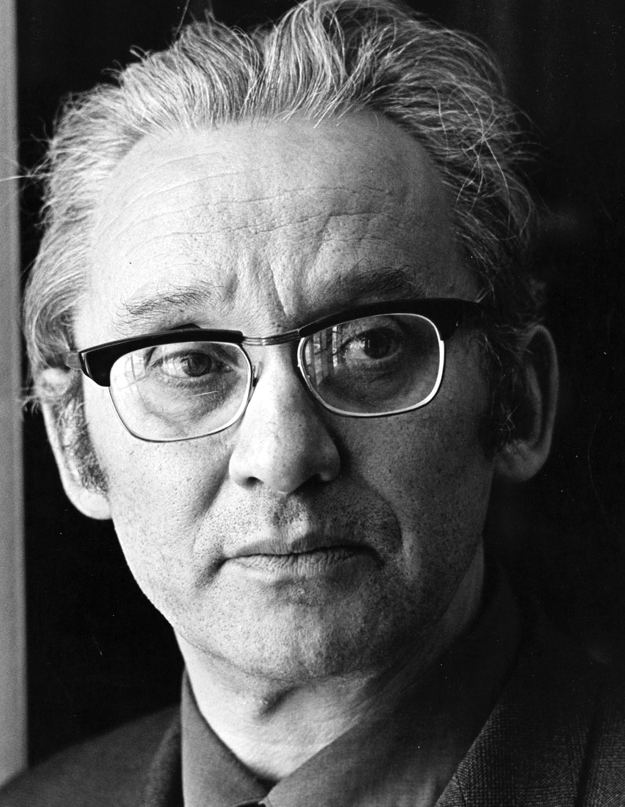
Image / photo credit: Dr. Ornstein in 2018, speaking to high school students in Massachusetts. Credit. Matthew J. Lee/The Boston Globe, via Getty Images
Though starting as a collection of anecdotes and narratives of survival, the title, My Mother’s Eyes, takes the account up a level. As a 17-year-old teenager, incarcerated with her mother and allowed to be together, the survival value of being able to change perspectives – the folk definition of empathy – was critical path to surviving the rigors – the horrors – of death camp life. Even under very challenging circumstances, people are able to support one another emotional regulation by literally being there for another as a comforting presence. The relationship in this extreme situation prefigures the notion of self object, making use of the other person mutually to regulate one another’s emotions. It is the other’s presence that, with a nod to D. W. Winnicott, provides a grounding in the radical possibility of going on being.
This essay is in the nature of an intellectual biography and personal anecdote, rather than an obituary proper. For those interested in how Anna née Brünn met Paul Ornstein and become Anna Ornstein, how all three of their children became psychiatrists, the New York Times articles provides the personal details and a happy, though by no means simple, ending to the catastrophe of the Holocaust and World War II.[1]
On a personal note, my path and that of Anna Ornstein intersected with what can best be described as an existential encounter in 2009. Something called “Self Psychology” was disrupting classic psychoanalysis and innovating around the constraints of Freudian ego psychology. The Self Psychology Conference was in Chicago that year (2009, the full title “International Assoc for Psychoanalytic Self Psychology”).[2] In any case, there were many high points to the Conference including Dr. Arnold Goldberg’s presentation and those of other Self Psychology innovators such as Ernest Wolf, Anna and Paul Ornstein, the Kohut Memorial Lecture, the many spirited exchanges.
The highest of the high points of the Conference came for me in having a one-on-one conversation with Anna Ornstein. There she was between presentations, and I introduced myself as working on a book about empathy, which did indeed get her attention. In a naïve, misguided attempt on my part to establish common ground, I mentioned that I had attended the lectures at the UChicago on the life of the mind by the political theorist Hannah Arendt. I also quoted Arendt to the effect that since the consequences of our human actions escape us, Jesus of Nazareth had innovated in the matter of forgiveness. Star struck, what was I thinking? This was clumsy and naïve on my part, and it got a reaction which was perhaps more than I had bargained for. In the course of the conversation, Ornstein took my hand animatedly and held it as she was making her point, basically that Arendt had gotten matters wrong, very wrong. When I say “took my hand,” I mean she grabbed it and shook it back and forth, not exactly like shaking hands, but like she would wrestle me to the ground. To be sure, it was good natured enough, but intense. The take-away? I got to hold hands with Anna Ornstein! Notwithstanding my clumsiness, that was special. I cherish the encounter.
Now in a short piece such as this, doing justice to Anna Ornstein’s innovations in self psychology (the method not the label), especially the treatment of children, is no simple task. People want to read about tips and technique, and many are available. However, context is required.
On background, Heinz Kohut, MD, was the innovator who put self psychology and empathy on the map starting in the early 1970s (though see Kohut 1959). Kohut was cautious about defining the self formally, implicitly characterizing the self as a comparative experience—a near experience psychoanalytic abstraction, that is central to all human experience since it contains the person’s nuclear ambitions and ideals which are amalgamated to the sense of continuity (Winnicott’s “going on being”), the well-being and cohesion of (our) body and mind (Ornstein 1976: 29ftnt).
Thus, the self oscillates dynamically between ideals and coherence, both of which are needed for a sense of aliveness, vitality, and an actual ability to be productive in contributing to community and relationships with others. Kohut’s (1959) definition of empathy as “vicarious introspection” adds significantly to the folk definition of taking a walk in the other person’s shoes, the better to appreciate the other’s struggles and successes as the person experiences them. (For further on Kohut’s innovation see the book (and chapter devoted to Kohut) to which I referred in my conversation with Ornstein in our encounter (Agosta 2010).)
While firmly founded in Freudian dynamics, Self Psychology called out how parenting environments that delivered unreliable empathy – not total lack of empathy, but unreliable, hit-or-miss empathy – resulted in structural deficits in self-esteem, self-confidence, productivity, feelings of emptiness, lack of aliveness and vitality, in children as well as the adults into which they grow. This was a deficit model rather than – or in addition to – a conflict model. Instead of conflicts between the conscience (superego) and sexual and aggressive drives, something was missing that left the person’s personality at a disadvantage in the face of which the person compensated with arrogance, superiority, coldness, withdrawal, empty depression (rather than melancholia), and poor productivity and superficial relations.
When the self experiences narcissistic injuries – did not get the dignity, respect, empathy – to which it was entitled or felt entitled (eventually a key distinction, but not at this point), then aggressive and sexually fragmented behavior was the result. In short, maladaptive sexual behavior and hostility are reactions to a stressed-out self rather than primary instinctual drives. So if you encounter a person who is enraged, ask yourself, who hurt that person’s feelings? Who did not give her or him the dignity, respect, empathy, they feel they deserve? Thus, self psychology does not so much reject Freud’s approach as re-describe and incorporate it.
Thus the New York Times article is accurate enough when it writes “Dr. Kohut disagreed with Freud’s theory that personality disorders were rooted in the unconscious mind, driven by guilt, sex and aggression” (Gabriel 2025), provided that one takes “rooted” and “unconscious” in the proper sense. In that sense, the dynamics of Freudian pathology becomes a special case of a fragmented self that has not received the empathy, which, as Kohut famously said, is oxygen for the soul: “The child that is to survive psychologically is born into an empathic-responsive human milieu [. . .] just as he [or she] is born into an atmosphere that contains an optimal amount of oxygen” (Kohut 1977: 85; see also 253). Just as the body goes into rapid decline and arrest without oxygen, so to the human psyche (the Greek word for soul) struggles and cannot sustain itself outside of a context of empathic relations at least somewhere in its life.
For example, the classic Freudian family drama of the child (son) who wants to “kill” the father and “marry” the mother, is redescribed as aggressive and sexual fragments of a self that has experienced unreliable empathy and been the recipient of seductive behavior on the part of the mother and aggressive (defensive) behavior on the part of the father. (For the inverse scenario of father daughter, which deserves attention, too, see Kulish and Holtzman 2008, which, strictly speaking is not self psychology but inspired thereby). In a healthy family dynamic, the father welcomes the young son’s competitiveness, knowing that he (the father) is not threatened by the youngster’s competitiveness. It is only when the father is himself insecure and narcissistically vulnerable that he retaliates punitively, giving way to a reactive hatred on the part of the offspring that Freud projected back into the primal scene as the death drive. For Kohut and Ornstein, aggression and hatred are not primary drives, as with Freud’s death drive, but aggressive and hatred live as reactions to failure of empathy, dignity, and respect. Likewise, the mother welcomes the young boy’s affection and ineffective childish romancing, knowing that the childish behavior is not a serious sexual advance. It is only when the mother, unsecure in herself and her own sexuality, behaves seductively towards the youngster that over arousal of sexuality, over stimulation, boundary issues, family drama, and emotional dis-equilibrium are risked. In the inverse scenario, the father welcomes the young daughter’s affection and childish romancing, appreciating and delighting in the child’s development and growth. This is not a serious seduction – unless the father has unresolved issues. When the father is insecure in his own sexuality and responds seductively to the pretend seduction that the risk of over arousal and real and imaginary boundary violation can occur. The complicating factor in the daughter-mother relationship is that the daughter needs the mother to take care of her – unlike with the son where the hostility between father and son is a purer example of competition – as well as wanting to replace her, resulting in an ongoing ambivalence and competitiveness that is not mirrored in the son’s simple desire to “cancel” the father.
Now shift this conversation in the direction of adult empathy with children, which happens to be the title of a famous article by Christine Olden (1956). When one is in the presence of a child, whether of tender age or teenager, one is present to, aware of, one’s own fate as a child. And since one’s own fate may have little or nothing to do with that which this particular child in this pace and time is experiencing and struggling, that is precisely the point at which expanding the parents’ empathy is on the critical path.
“The parent’s ability to become therapeutic may not have always been optimally utilized in the treatment of children. This is in large part due to a rather pervasive attitude among mental health professionals in which the parents are usually considered at fault, primarily for lacking sensitivity relative to their children’s developmental needs. Anger and depreciation for having failed their children precludes any effort on the therapist’s part to understand the reasons why the parents may not have been able to develop empathic capacities. The explanation for this can usually be found in the parents’ own backgrounds. In addition to the parent’s original difficulties to be in empathic tune with the child, the child’s current difficulties create guilt, anger, and disappointment in the parent(s) which further interfere with whatever parental empathy may have otherwise been available” (Ornstein 1976: 18).
In an example of what not to do, Ornstein cites the following case, in which the empathy toward both parent and child is conspicuous by its absence:
“A young mother had regularly taken her 6-yr-old son to bed with her after the sudden death of her husband. When the boy became enuretic she visited the clinic and was told that the boy had to get out of her bed-since this was the cause of his problem. The mother followed through on the recommendation which meant nightly tearful battles with the child. However, since her own affective state was not “treated,” she could not remove him from her bed without ambivalence. The enuresis continued, and in addition, mother and son became increasingly more irritable with each other. As the mother’s depression deepened, the child developed further symptoms; he had become provocative and inattentive at school” (Ornstein 1976; 18).
Given we have an example of what not to do, what is the recommendation of what one should do in this case? As Ornstein explains (1976: 18), recognize and acknowledge the mother’s grief for her husband and the longing for closeness with the boy. You do not have to lie back on a coach to talk about it, but one might consider doing so! The ability to tolerate the separation between mother and son may usefully have been expanded by a gradual, phased introduction of the separate sleeping arrangements. Having agreed to letting the boy in, summarily throwing him out is surely asking for trouble; yet the co-sleeping cannot continue. Don’t forget that applying common sense parenting is consistent with advanced training and credentials. Many parents have an in-bed “cuddle time” with children of tender age, including a bedtime story, prior to each retiring to his or her own respective nest. “Story time” – whether read or from life – is one possible empathic moment between parent and child in the context of an empathic relationship as the adventures and stresses of the day are empathic quiesced in a narrative before the passive overcoming of going to sleep.
By the way, in the world of behavioral interventions, wise parents know to set the clock for a 2 am trip to “go number one,” which will reduce the stress on child and parent, enabling them to address the underlying issues of loss and separation in a calmer, even if not stress free, context of relatedness.
Often when a therapist meets a family, the family is not on a slippery slope, they are at the bottom of it. The narcissistic slights, emotional injuries, blind spots, shame, guilt, boundary issues, and grievances present a tangle that represents a challenge even to the most astute and empathic therapist. People are motivated to reduce the suffering and struggle, and empathy includes many ways to de-escalate conflict. Ornstein points out:
“To enhance the parents’ therapeutic potentials does not mean to give recommendations as to how to interrupt or actively discourage the child’s disturbing behavior. Particularly destructive are recommendations which ask for changed parental behavior without an appreciation for the parents’ difficulty to comply; such recommendations are “grafted” onto the parents’ pathology. Finding themselves unable to follow the therapist’s recommendations, they become more guilty and less able to effect changes in themselves in relation to the child” (Ornstein 1976: 18).
In the world of tips and techniques, Ornstein did not say “treat the parent; the child gets better”; make bedtime stories an empathic encounter for children of tender age; get inside the world of the child for whom the tooth fairy and boogeyman are real, setting boundaries and soothing in tandem; but she strongly implied them (nor is that the complete solution since the child, too, requires treatment (1976: 18)). One can try and force an outcome; but it is not going to stick; and framing boundary setting in an empathic milieu of acceptance has a much greater probability of producing a positive outcome. This report is acknowledged to be incomplete and further reading can be found in the References.
One caveat must also be offered. It is the same world of limited empathy and human success and suffering today (Q3 2025) as when Anna Ornstein published her innovative work in 1976. However, ours is also a different world. Empathy is a key ingredient, and indeed the foundation, of individual well-being, mental health, and flourishing communities. Yet ours is a world in which we have gone from a President Obama who considered empathy a criterion for appointment to the US Supreme Court to one whose billionaire friends (or “frenemies”) consider empathy a defect of civilization. Empathy and its power should never be underestimated. Never. However, one has to be empathic in a context of acceptance and toleration. It does not work to make oneself empathically vulnerable in the presence of bullies, concentration camp guards, or wanton aggression. This is obvious, but a reminder is useful that in such predicaments empathy sets boundaries, defines limits, pushes back, and, if politically possible without getting deported, speaks truth to power using rhetorical empathy (which is not much engaged in therapeutic or psychiatric circles). Carrying forward the work of Anna Ornstein? An example of rhetorical empathy? “No human being is illegal.” However, that starts a new thread – an empathic one.
References
Lou Agosta. (2010). Chapter Six: Empathy as vicarious introspection in psychoanalysis. In Empathy in the Context of Philosophy, by Lou Agosta. London: Palgrave Macmillan.
Trip Gabriel (July 4, 2025), Anna Ornstein, Psychoanalyst who survived the Holocaust, dies at 98 New York Times obituary: https://www.nytimes.com/2025/07/04/health/anna-ornstein-dead.html?unlocked_article_code=1.Vk8.dfZz.8YyxtXebGoP1&smid=url-share
Heinz Kohut. (1959). Introspection, empathy, and psychoanalysis: An examination of the relationship between mode of observation and theory. Journal of the American Psychoanalytic Association, 7, 459–483. https://doi.org/10.1177/000306515900700304
Heinz Kohut. (1977). Restoration of the Self. New York: International Universities Press.
Nancy Kulish and Deanna Holtzman. (2008). A Story of Her Own: The Female Oedipus Complex Reexamined and Renamed. Lanham: Jason Aronson.
Olden, C. (1953). On Adult Empathy with Children. The Psychoanalytic Study of the Child, 8(1), 111–126. https://doi.org/10.1080/00797308.1953.11822764
Anna Ornstein. (2004). My Mother’s Eyes: Holocaust Memories of a Young Girl. Cincinnati, OH: Clarisy Press.
Anna Ornstein. (1976). Making contact with the inner world of the child. Toward a theory of psychoanalytic psychotherapy with children. Comprehensive Psychiatry. 1976 Jan-Feb;17(1):3-36. doi: 10.1016/0010-440x(76)90054-7. PMID: 1248241.
Sam Roberts. (Jan 31, 2017). Paul Ornstein, psychoanalyst and Holocaust survivor, dies. New York Times obituary: https://www.nytimes.com/2017/01/31/us/paul-ornstein-dead-self-psychologist.html
[1] Trip Gabriel (July 4, 2025), Anna Ornstein, Psychoanalyst who survived the Holocaust, dies at 98 New York Times obituary: https://www.nytimes.com/2025/07/04/health/anna-ornstein-dead.html?unlocked_article_code=1.Vk8.dfZz.8YyxtXebGoP1&smid=url-share
[2] I have found the “splash page” for the International Association of Psychoanalytic Self Psychology (IAPSP) Conference of 2009 in my archives (though not the complete program) whereas Google’s Artificial Intelligence bot says there was no such conference. In addition, I was there.
Image / photo credit: Dr. Ornstein in 2018, speaking to high school students in Massachusetts. Credit. Matthew J. Lee/The Boston Globe, via Getty Images
(c) Lou Agosta, PhD and the Chicago Empathy Project

Paul Ricoeur, Philosopher of Empathy
This article on Paul Ricoeur, empathy, and the hermeneutics of suspicion in literature will be engaging to students of Ricoeur and empathy alike. One can download the PDF directly from the journal Etudes Ricœeurienne / Ricoeur Studies website: http://ricoeur.pitt.edu/ojs/ricoeur/article/view/628
The article is in English and an abstract is cited below at the bottom. If the above link does not work for any reason, then scroll to the bottom, where one can download the PDF within this blog post.
Meanwhile, I offer a recollection of my personal encounter with Professor Ricœur starting when I was a third year undergraduate at the UChicago. (This is an excerpt from a pending manuscript on empathy in the context of literature.)
By the time I was an undergraduate in my junior year in college, Paul Ricoeur had just arrived at the University of Chicago. Professor Ricoeur had attempted to play a conciliatory role in listening to and addressing student grievances in the face of entrenched method of lecturing by ex cathedra by mandarin professors at the Sorbonne, Paris, France, and related schools in the system. Though Ricoeur did not use the word “empathy” in his role as administrator at the University of Nanterre, he was attempting to play a role in conflict mediation, during the strike of student and workers in Paris in May 1968, a role in which empathy is famously on the critical path.
[Photo: Paul Ricoeur, circa 1970 upon his arrival at the University of Chicago, looking for all the world like the Hollywood icon, James Dean. University of Chicago News office: Detailed photo credit below.]
Ricœur’s intervention in the dynamics of academic politics and expanding the community of scholars the way he had done in setting up a kind of philosophy university in the German prisoner of war camp for his fellow French prisoners in 1941 did not work as well as he had hoped. Though it would not be fair to anyone (or to be taken out of context), the Germans (at that moment) were less violent than the striking French students and Peugeot workers in 1968. The French students threw tomatoes at Ricœur and called him a “old clown”; whereas the University of Chicago “threw” at him a prestigious named professorship. He liked the latter better. Ricœur’s courses were open to undergraduates who got permission, too, so I signed up for two of them – Hermeneutics and The Religious Philosophies of Kant / Hegel. Insert here a mind-bending blur of hundreds of pages of reading interspersed with dynamic and engaging presentations of the material. After the somewhat softball oral exams, for which he charitably gave me a pass, my head was spinning, and I needed to take a year off from school to regroup. I am not making this up. I worked as a parking lot attendant selling parking passes, which was an ideal job, since I could read a lot—you know, German-English facing pagination of two separate philosophical texts. This interruption also gave me time to go out for theatre to work on overcoming my painful social awkwardness and try and get a date with a girl. This “therapy” worked well enough, though, like most socially inept undergraduates, I had no skill at small talk and tended to utter what I had to say out of the blue and without creating any context. When I returned to school the next year to finish up, I proposed doing a bachelor’s thesis on Kant’s Refutation of Idealism, and I went into Professor Ricoeur’s office to make my proposal. Ricoeur was team teaching “Myth and Symbolism” with Mircea Eliade, and the “Imagination and Kant’s Third Critique” with Ted Cohen. Without any introductory remarks—I don’t think I even said my name—I presented the idea for my bachelor’s thesis. Without further chit-chit, raising one finger in the air for emphasis and smiling broadly, the first thing he said to me was: “An internal temporal flux implies an external spatial permanence.” With the benefit of 20-20 hindsight, I consider this a suitably empathic response, albeit an unconventional one. My paper eventually got published in the proceedings of the Acts of the 5th International Kant Congress. Fast forward a couple of years, comprehensive written exams in philosophy, and I proposed to write a PhD dissertation in philosophy on empathy [Einfühlung] and interpretation. Max Scheler’s Essence and Forms of Feelings of Sympathy [Wesen und Formen der Sympathiegefühl] contains significant material on empathy, and is (arguably) an early version of C. Daniel Batson’s collection of empathically-related phenomena. I was reading it with Professor Ricœur. Meanwhile, a psychoanalysis named Heinz Kohut, MD, like so many, a refugee from the Nazis, was innovating in empathy in the context of what was to become Self Psychology. I told one of the faculty at the Chicago Institute for Psychoanalysis who was a mentor to me (and a colleague of Kohut), Arnold Goldberg, MD, about Ricœur’s Freud and Philosophy. Whether at my instigation or on Dr Goldberg’s own initiative (Ricoeur really needed no introduction from me), Dr Goldberg introduced Professor Ricoeur to the editors at the Journal of the American Psychoanalytic Association (JAPA) and the result was Ricœur’s publication “The Question of Proof In Freud’s Psychoanalytic Writings” in JAPA August 1977 [Volume 25, Issue 4 6517702500404]. Using graduate students as a good occasion for a conversation to build relationships, we all then had dinner at the Casbah, a middle eastern restaurant on Diversey near Seminary Avenues in Chicago’s Old Town.
It always seemed to me that Professor Ricoeur was a teacher of incomparable empathy, though he rarely used the word, at least until I started working on my dissertation on the subject of empathy and interpretation. I am pleased, indeed honored, to be able to elaborate the case here, while also defending Ricœur’s hermeneutics of suspicion from a misunderstanding that has shadowed the term since Toril Moi’s discussion (2017) of it at the University of Chicago colloquium on the topic shortly before the pandemic, the details of which are recounted in the article.
ricouerempathyinthecontextofsuspicionDownload
ABSTRACT: This essay defends Paul Ricoeur’s hermeneutics of suspicion against Toril Moi’s debunking of it as a misguided interpretation of the practice of critical inquiry, and we relate the practice of a rigorous and critical empathy to the hermeneutics of suspicion. For Ricoeur, empathy would not be a mere psychological mechanism by which one subject transiently identifies with another, but the ontological presence of the self with the Other as a way of being —listening as a human action that is a fundamental way of being with the Other in which “hermeneutics can stand on the authority of the resources of past ontologies.” In a rational reconstruction of what a Ricoeur-friendly approach to empathy would entail, a logical space can be made for empathy to avoid the epistemological paradoxes of Husserl and the ethical enthusiasms of Levinas. How this reconstruction of empathy would apply to empathic understanding, empathic responsiveness, empathic interpretation, and empathic receptivity is elaborated from a Ricoeurian perspective.
Photo credit: University of Chicago Photographic Archive, [apf digital item number, e.g., apf12345], Hanna Holborn Gray Special Collections Research Center, University of Chicago Library.
This blog post and web site (c) Lou Agosta, PhD and the Chicago Empathy Project

Beloved on Juneteenth in the context of empathy
I am catching up on my summer reading. I finished Toni Morrison’s transfiguring classic Beloved on Juneteenth. Since another week was required to write the review, a belated joyous Juneteenth to one and all! I hasten to publish before the 4th of July. For those who may require background on this new federal holiday, June 19th – Juneteenth – it was the date in 1865 that US Major General Gordon Granger proclaimed freedom for enslaved people in Texas some two and a half years after Lincoln’s Emancipation Proclamation. Later, the Thirteenth Amendment to the US Constitution definitively established this enshrining of freedom as the law of the land and, in addition, the 14th Amendment extended human rights to all people, especially formerly enslaved ones. This blog post is not so much a book review of Beloved as a further inquiry into the themes of survival, transformation, liberty, trauma – and empathy.
“Beloved” is the name of a person. Toni Morrison builds on the true story of Margaret Garner, an enslaved person, who escaped with her two children even while pregnant with a third, succeeding in reaching freedom across the Ohio River in 1854. However, shortly thereafter, slave catchers (“bounty hunters”) arrived with the local sheriff under the so-called fugitive slave act to return Margaret and her children to slavery. Rather than submit to re-enslavement, Margaret tried to kill the children, also planning then to kill herself. She succeeded in killing one, before being overpowered. The historical Margaret received support from the abolitionist movement, even becoming a cause celebre. The historical Margaret is named Sethe in the novel. The story grabs the reader by the throat – at first relatively gently but with steadily increasing compression – and then rips the reader’s guts out. The story is complex, powerful, and not for the faint of heart.
The risks to the reader’s emotional equilibrium of engaging with such a text should not be underestimated. G. H. Hartman is not intentionally describing the challenge encountered by the reader of Beloved in his widely-noted “Traumatic Knowledge and Literary Studies,” but he might have been:
The more we try to animate books, the more they reveal their resemblance to the dead who are made to address us in epitaphs or whom we address in thought or dream. Every time we read we are in danger of waking the dead, whose return can be ghoulish as well as comforting. It is, in any case, always the reader who is alive and the book that is dead, and must be resurrected by the reader (Hartman 1995: 548).
Though technically Morrison’s work has a gothic aspect – it is a ghost story – yet it is neither ghoulish nor sensational, and treats supernatural events rather the way Gabriel Garcia Marquez does – as a magical or miraculous realism. Credible deniability or redescription of the returned ghost as a slave who escaped from years-long sexual incarceration is maintained for a hundred pages (though ultimately just allowed to fade away). Morrison takes Margaret/Sethe’s narrative in a different direction than the historical facts, though the infanticide remains a central issue along how to recover the self after searing trauma and event even beyond trauma. The murdered infant had the single word “Beloved” chiseled on her tombstone, and even then the mother had to compensate the stone mason with non-consensual sex. An explanation is required. Let us take a step back.
Morrison is a master of conversational implicature. “Implicature” is an indirect speech act that suggests an idea, even though the thought is not literally expressed. Conversational implicature lets the empathy in – and out – to be expressed. Such implicature expands the power and provocation of communication precisely by not saying something explicitly but hinting at what happened. The information is incomplete and the reader is challenged to feel her/his way forward using the available micro-expressions, clues, and hints. Instead of saying “she was raped and the house was haunted by a ghost,” one must gather the implications. One reads: “Not only did she have to live out her years in a house palsied by the baby’s fury at having its throat cut, but those ten minutes she spent pressed up against dawn-colored stone studded with star chips, her knees wide open as the grave, were longer than life, more alive, more pulsating than the baby blood that soaked her fingers like oil” (Morrison 1987: 5 – 6). Then a causal conversation resumes about getting a different house as the reader tries to figure out what just happened. “Not a house in the country ain’t packed to its rafters with some dead Negro’s grief” (1987: 6). One of the effects is to get the reader to think about the network of implications in which are expressed the puzzles and provocations of what really matters at fundamental level. (For more on conversational implicature see Levinson 1983: 97 – 165.)
In a bold statement of the obvious, this reviewer agrees with the Nobel Committee, who awarded Morrison the Novel Prize in 1988 for this work. This review accepts the high literary qualities of the work and proposes to look at three things. These include: (1) how the traumatic violence, pain, suffering, and inhumanity as well as drama, heroics, and compassion of the of the events depicted, interact with trauma and transform into moral trauma; (2) how the text itself exemplifies empathy between the characters, bringing empathy forth and making it present for the reader’s apprehension; (3) the encounter of the reader with the trauma of the text transform and/or limit the practice of empathizing itself from standard empathy to radical empathy.
So far as I know, no one has brought Morrison’s work into connection with the action of the Jewish Zealots at Masada (73 CE). The latter, it may be recalled, committed what was in effect mass suicide rather than be sold into slavery by the Roman army. The 960 Zealots drew lots to kill one another and their wives and children, since suicide technically was against the Jewish religion. On brief background, after the fall of Jerusalem as the Emperor Titus put down the Jewish rebellion against Rome in 73 CE, a group of Jewish Zealots escaped to a nearly impregnable fortress at Masada on the top of a steep mountain. (Note Masade was a television miniseries starring Peter O’Toole (Sagal 1981).) Nevertheless, Roman engineers built a ramp and siege tower and eventually succeeding in breaching the walls. The next day the Roman soldiers entered the citadel and found the defenders and their wives and children all dead at their own hands. Josephus, the Jewish historian, reported that he received a detailed account of the siege from two Jewish women who survived by hiding in the vast drain/cistern that served as the fortress’ source of water.
The example of the Jewish resistance at Masada provides a template for those facing enslavement, but it does not solve the dilemma that killing one’s family and then committing suicide is a leap into the abyss at the bottom of which may lie oblivion or the molten center of the earth’s core. So all the necessary disclaimers apply. This reviewer does not claim to second guess the tough, indeed impossible, decisions that those in extreme situations have to make. One is up against all the debates and the arguments about suicide. Here is the casuistical consideration – when life is reduced from being a human being to being a slave who is treated as a beast of burden and whose orifices are routinely penetrated for the homo- and heteroerotic pleasure of the master, then one is faced with tough choices. No one is saying what the Zealots did was right – and two wrongs do not make a right – but it is also not obvious that what they did was wrong in the way killing an innocent person is wrong, who might otherwise have a life going about their business gardening, baking hallah bread, or fishing. This is the rock and the hard place, the devil and deep blue sea, the frying pan or the fire, the Trolley Car dilemma (see https://en.wikipedia.org/wiki/Trolley_problem). This is Field Marshal Erwin Rommel, the Desert Fox, who after the unsuccessful attempt in June 1944 to assassinate Hitler (of which Rommel apparently had knowledge but took no action), was allowed by the Nazi authorities to take the cyanide pill. This is Colonel Custer with one bullet left surrounded by angry Dakota warriors who would like to slow cook him over hot coals. Nor as far as I know is the case of Margaret Garner ever in the vast body of criticism brought into connection with the suicides of Cicero and Seneca (and other Roman Stoics) in the face of mad perpetrations of the mad Emperor Nero. This is a decision that no one should have to make; a decision that no one can make; and yet a decision that the individual in the dilemma has to make, for doing nothing is also a decision. In short, this is moral trauma.
A short Ted Talk on trauma theory is appropriate. Beloved is so dense with trauma that a sharp critical knife is needed to cut through it. In addition to standard trauma and complex trauma, Beloved points to a special kind of trauma, namely,moral trauma or as it sometimes also called moral injury, that has not been much recognized (though it is receiving increasing attention in the context of war veterans (e.g. Shay 2014)). Without pretending to do justice to the vast details and research, “trauma” is variously conceived as an event that threatens the person’s life and limb, making the individual feel he or she was going to die or be gravely injured (which would include rape). The blue roadside signs here in the USA that guide the ambulance to the “Trauma Center” (emergency department that has staff on call at all times), suggest an urgent emergency, in this case usually but not always, a physical injury. Cathy Caruth (1996) concisely defines trauma in terms of an experience that is registered but not experienced, a truth or reality that is not available to the survivor as a standard experience. The person (for example) was factually, objectively present when the head on collision occurred, but, even if the person has memories, and would acknowledge the event, paradoxically, the person does not experience it as something the person experienced. The survivor experiences dissociated, repetitive nightmares, flashbacks, and depersonalization. At the risk of oversimplification, Caruth’s work aligns with that of Bessel van der Kolk (2014). Van der Kolk emphasizes an account that redescribes in neuro-cognitive terms a traumatic event that gets registered in the body – burned into the neurons, so to speak, but remains sequestered from the person’s everyday sense of self. For both Caruth and van der Kolk, the survivor is suffering from an unintegrated experience of self-annihilating magnitude for which the treatment – whether working through, witnessing, or (note well) artistic expression – consists in reintegrating that which was split off because it was simply too much to bear.
For Dominick LaCapra (1999), the historian, “trauma” means the Holocaust or Apartheid (add: enslavement to the list). LaCapra engages with how to express in writing such confronting events that the words of historical writing and literature become inadequate, breakdown, fail, seem fake not matter how authentic. And yet the necessity of engaging with the events, inadequately described as “traumatic,” is compelling and unavoidable. Thus, LaCapra (1999: 700) notes: “Something of the past always remains, if only as a haunting presence or revenant.” Without intending to do so, this describes Beloved, where the infant of the infanticide is literally reincarnated, reborn, in the person named “Beloved.” For LaCapra, working through such traumatic events is necessary for the survivors (and the entire community) in order to get their power back over their lives and open up the possibility of a future of flourishing. This “working through” is key for it excludes denial, repression, suppression, and advocates for positive inquiry into the possibility of transformation in the service of life. Yet the working through of the experiences, memories, nightmares, and consequences of such traumatic events result in repetition, acting out, and “empathic unsettlement.” Key term: empathic unsettlement. The empathic unsettlement points to the possibility that the vicarious experience of the trauma on the part of the witness leaves the witness unwilling to complete the working through, lest it “betray” the survivor, invalidate the survivor’s suffering or accomplishment in surviving. “Those traumatized by extreme events as well as those empathizing with them, may resist working through because of what might almost be termed a fidelity to trauma, a feeling that one must somehow keep faith with it” (DeCapra 2001: 22). This “unsettlement” is a way that empathy may breakdown, misfire, go off the rails. It points to the need for standard empathy to become radical empathy in the face of extreme situations of trauma, granted what that all means requires further clarification.
For Ruth Leys (2000) the distinction “trauma” itself is inherently unstable oscillating between historical trauma – what really happened, which, however, is hard if not impossible to access accurately – and, paradoxically, historical and literary language bearing witness by a failure of witnessing. The trauma events are “performed” in being written up as history or made the subject of an literary artwork. But the words, however authentic, true, or artistic, often seem inadequate, even fake. The “trauma” as brought forth as a distinction in language is ultimately inadequate to the pain and suffering that the survivor has endured, (“the real”). Yet the literary or historical work is a performance that may give the survivor access to their experience. The traumatic experience is transformed – even “transfigured” – without necessarily being made intelligible or sensible by reenacting the experience in words that are historical writing or drawing a picture (visual art) or dancing or writing a poem or a literary masterpiece such as Beloved. The representational gesture – whether a history or a true story or fiction – starts the process of working through the trauma, enabling the survivor to reintegrate the trauma into life, getting power back over it, at least to the extent that s/he can go on being and becoming. In successful instances of working through, the reintegrated trauma becomes a resource to the survivor rather than a burden or (one might dare say) a cross to bear. To stay with the metaphor, the cross becomes an ornament hanging from a light chain on one’s neck rather than the site of one’s ongoing torture and execution. Much work and working through is required to arrive at the former.
Though Beloved has generated a vast amount of critical discussion, it has been little noted that the events in Belovedrapidly put the reader in the presence of moral trauma (also called “moral injury”). Two levels of trauma (and the resulting post-traumatic stress disorder (PTSD)) are concisely distinguished (for example by the Diagnositic and Statistical Manual(5th edition) of the American Psychiatric Association (2013). There is standard trauma – one survives a life changing railroad or auto accident and has nightmares and flashbacks (and a checklist of other symptoms of post-traumatic stress disorder (PTSD)). There is repeated trauma, trauma embedded in trauma, double-bind embedded in double bind. One is abused – and it happens multiple times over a course of months or years and, especially, it may happen before one has an abiding structure for cognition such as a stable acquisition of language (say to a two-year-old) or happens in such a way or such a degree that words are not available as the victim is blamed while being abused – resulting in complex trauma and the corresponding complex PTSD.
But this distinction, standard versus complex trauma (and the correlated PTSD), is inadequate in the case of moral trauma, where the person is both a survivor and a perpetrator. For example, in a Middle East War zone, the sergeant sees an auto racing towards the check point manned by US soldiers. The sergeant thinks the auto is loaded with explosives – a car bomb. The sergeant gives the order to fire at the auto. After the auto is stopped by the fusillade, it turns out to contain family rushing to the hospital because the wife is giving birth. The now orphaned children are treated for their grave injuries in a military hospital. The result may indeed be like standard PTSD – nightmares, flashback. The resulting loss of their parents may result in complex trauma and complex PTSD. Meanwhile, the private who pulled the trigger believed he was following a valid military order, which if he did not obey would result in he and his platoon being blown up by a car bomb (and a court marshal for disobeying a valid order), but in obeying the order has catastrophic consequences. The private is not physically injured. Yet he shuts down emotionally, and is dishonorably discharged. He ends up wordlessly abandoning his family, living on the street, and no one knows what is bothering him. The military authorities ask him, but he has no words. “Moral trauma.” With no time to gather additional data, the soldier was put in an impossible situation – a double-bind. So he decided to follow orders (why shouldn’t he? he was under attack) and deeply enshrouded in the fog of war on a clear day, technicaly speaking, he committed a war crime, killing innocent civilians. Little did he know in the moment of the classic, tragic double-bind, “damned if you do and damned if you don’t”; the rock and the hard place; the devil and the deep blue. The soldier is now damned – he is a perpetrator. He was forced to make a decision that no one should have to make; that no one can (really) make; and yet that he did make. This perpetrator is also a now a survivor. Moral trauma.
Another example of moral trauma? An escaped slave makes it to freedom. One Margaret Garner is pursued and about to be apprehended under the Fugitive Slave Act. She tries to kill herself and her children rather than be returned to slavey. She succeeds in killing one of the girls. Now this soldier’s choice is completely different than the choice faced by Margaret/Sethe, and rather like the inverse of it, dependent on not enough information rather than an all-too-knowledgeable acquaintance with the evils of enslaement. Yet the structural similarities are striking. One significant difference between the soldier and Sethe (and the Jewsih Zealots) is their answer to the question when human life ceases to be human. A clarification is in order. If human life is an unconditional good, then, when confronted with an irreversible loss of the humanness, life itself may not be an unconditional good. Life versus human life. The distinction dear to Stoic philosophy, that worse things exist than death, gets traction – slavery, cowardice in the face of death, betraying one’s core integrity. The solder is no stoic; Sethe is. Yet both are suffering humanity.
However, one may object, even if one’s own human life may be put into play, it is a flat out contradiction to improve the humanity of one’s children by ending their humanity. The events are so beyond making sense, yet one cannot stop oneself from trying to make sense. So far, we are engaged with the initial triggering event, the infanticide. No doubt a traumatic event; and arguably calling forth moral trauma. But what about trauma that is so traumatic, so pervasive, that it is the very form defining the person’s experiences. Trauma that it is not merely “unclaimed, split off” experience (as Caruth says). For example, the person who grows up in slavery – as did Sethe – has never known any other form of experience – this is just the way things are – things have always been that way – and one cannot imagine anything else (though some inevitably will and do). This is soul murder. So we have moral trauma in a context of soul murder. Soul murder is defined by Shengold (1989) as loss of the ability to love, though the individuals in Beloved retain that ability, however fragmented and imperfect it may be. Rather soul murder is defined as the loss of the power spontaneously to begin something new – the loss of the possibility of possibility of the self, leaving the self without boundaries and without aliveness, vitality, an emotional and practical Zombie. By the way, Shengold (1989) notes, “Soul murder is a crime, not a diagnosis.” Though Morrison does not say so, and though she might or might not agree, enslavement is soul murder.
Beloved contains actual murders. For example, the friend and slave Sixo is about to be burned alive by the local vigilantes, and he gets the perpetrators to shoot him (and kill him) by singing in a loud, happy, annoying voice. He fakes “not givin’ a damn,” taking away the perpetrators’ enjoyment of his misery. It works well enough in the moment. His last. Nor is it like one murder is better (or worse) than another. However, in a pervasive context of soul murder, Sethe’s infanticide is an action taken by a person whose ability to choose is compromised by extreme powerlessness. Yet in that moment of decision her power is uncompromised. Note one continues to try and justify or make sense out of what cannot have any sense. Sethe is presented with a choice (read it again – and again) that no one should have to make – that no one can make (even though the person makes the choice because doing nothing is also a choice). This is the same situation that the characters in classic Greek tragedy face, though a combination of information asymmetries, personal failings, and double-binds. Above all – double-binds. This is why tragedy was invented (which deserves further exploration, not engaged here).
Now bring empathy to moral trauma in the context of soul murder. Anyone out there in the reading audience experiencing “empathic unsettlement” (as LaCapra put it)? Anyone experiencing empathic distress? If the reader is not, then that itself is concerning. “Empathic unsettlement” is made present in the reader’s experience by the powerful artistry deployed by Beloved. Yet this may be an instance in which empathy is best described, not as an on-off switch, but as a dial that one can dial up or down in the face of one’s own limitations and humanness. This is tough stuff, which deserves to be read and discussed. If one is starting to break out in a sweat and thinking about putting the book down, rather than become hard-hearted, the coaching is temporarily to dial down one’s practice of empathy. While one is going to experience suffering and pain in reading about the suffering and pain of another, it should be a vicarious experience – a sample – a representation – a trace affect – not the overwhelming annihilation that would make one a survivor. Dial the empathy down in so far as a person can do that; don’t turn it off. Admittedly, this is easier said than done, but with practice, the practitioner gets expanded power over the practice of empathizing.
As noted, Morrison is a master of conversational implicature. Conversational implicature allows the empathy to get in – become present in the text and become present for the reader engaging with the text. The conversational implicature expresses and brings to presence the infanticide without describing the act itself by which the baby is killed. Less is more, though the matter is handled graphically enough. The results of the bloody deed are described – “a “woman holding a blood soaked child to her chest with one hand” (Morrison 1987: 124) – but not the bloody action of inflicting the fatal wound itself. “Writing the wound” sometimes dances artistically around expressing the wound, sometimes, not.
Returning to the story itself, the moment at which the authorities arrive to attempt to enforce the fugitive slave act is described: “When the four horsemen came – schoolteacher, one nephew, one slave catcher and a sheriff – the house on Bluestone Road was so quiet they thought they were too late” (Morrison 1987: 124). Conversational implicature meets intertextuality in the Book of Revelation of the New Testament. The four horsemen of the apocalypse herald the end of the world as we know it and that is what comes down on Sethe at this point. Perhaps not unlike the Zealots at Masade, she makes a fatal decision. Literally. As Hannah Arendt (1970) pointed out in a different political context, power and force (violence) stand in an inverse relation: when power is reduced to zero, then force – violence – comes forth. The slaves power is zero, if not a negative number. Though Sethe tries to kill all the children, she succeeds only in one instance. The boys recover from their injuries and, in the case of Denver (Sethe’s daughter named after Amy Denver, the white girl who helped Sethe), Sethe’s hand is stayed at the last moment.
Beloved is a text rich in empathy. This includes exemplifications of empathy in the text, which in turn call forth empathy in the reader. The following discussion now joins the standard four aspects of empathy – empathic receptivity, empathic understanding, empathic interpretation, and empathic responsiveness. The challenge to the practice of empathy is that with a text and topic such as this one, does the practice of standard empathy need to be expanded, modified, or transformed from standard to radical empathy? What would that even mean? Empathy is empathy. A short definition of radical empathy is proposed: Empathy is committed to empathizing in the face of empathic distress, even if the latter is incurred, and empathy, even in breakdown, acknowledges the commitment to expanding empathy in the individual and the community.
We start with a straightforward example of empathic receptivity – affect matching. Now radical empathy is required here. An example of standard empathic receptivity is provided in the text, and the dance between Denver and Beloved is performed (1987: 87 – 88):
“Beloved took Denver’s hand and place another on Denver’s shoulder. They danced then. Round and round the tiny room and it may have been dizziness, or feeling light and icy at once, that made Denver laugh so hard. A catching laugh that Beloved caught. The two of them, merry as kittens, swung to and fro, to and fro, until exhausted they sat on the floor. “
The contagious laughter is entry level empathic receptivity. Empathy degree zero, so to speak. This opening between the two leads to further intimate engagement with empathic possibility. But the possibility is blocked of further empathizing in the moment is blocked by a surprising discovery. At this point, Denver “gets it” – that Beloved is from the other side – she has died and come back – and Denver asks her, “What’s it like over there, where you were before?” But since she was killed as a baby, the answer is not very informative: “I’m small in that place. I’m like this here.” (1987: 88) Beloved is the age she would have been had she lived.
The narrative skips in no particular order from empathic receptivity to empathic understanding. “Understanding” is used in the extended sense of understanding of possibilities for being in the world (e.g., Heidegger 1927: 188 (H148); 192 (H151)): “In the projecting of the understanding, beings [such as human beings] are disclosed in their possibility.”Empathic understanding is the understanding of possibility. What does the reader’s empathy make present as possible for the person in her or his life and circumstance? What is possible in slavery is being a beast of burden, pain, suffering, and early death – the possibility of no possibility of human flourishing. In contrast, when Paul D makes his way to the house of Sethe and Denver (and, unknown to him, the ghost of the baby), the possibility of family comes forth. In the story, there’s a carnival in town and Paul D, who knew Sethe before both managed to escape from the plantation (Sweet Home), takes her and Denver to the carnival. “Having a life” means many things. One of them is family. The possibility of family is made present in the text and the reader
“They were not holding hands, but their shadows were. Sethe looked to her left and all three of them were gliding over the dust hold hands. May be he [Paul D] was right. A life. Watching their hand-holding shadows [. . . ] because she could do and survive things they believed she should neither do nor survive [. . . .] [A]ll the time the three shadows that shot out of their feet to the left held hands. Nobody noticed but Sethe and she stopped looking after she decided that it was a good sign. A life. Could be.” (Morrison 1987: 67)
Within the story, Sethe has her own has a justification for her deed. She is rendering her children safe and sending them on ahead to “the other side” where she will soon join them. “I took and put my babies where they’d be safe” (Morrison 1987: 193). The only problem with this argument, if there is a problem with it, is that it makes sense out of what she did. Most readers are likely to align with Pau D, who at first does not know about the infanticide. Paul D learns the details of Sethe’s act from Stamp Paid, the former underground rail road coordinator, who knows just about everything that goes on, because he was a hub for the exchange of all-manner of information. Stamp feels that Paul D ought to know, though he later regrets his decision. Stamp tells Paul D about the infanticide – showing him the newspaper clipping as evidence and explaining the words that Paul D (who is liberate) cannot read. Paul D is overwhelmed. He cannot handle it. He denies that the sketch (or photo) is Sethe, saying it does not look like her mouth. Stamp tries to convince Paul D: “She ain’t crazy. She love those children. She was trying to out hurt the hurter” (1987: 276). Paul D asks Sethe about the infanticide reported in the news clipping, and she provides her justification. Paul D is finally convinced that she did what she did, yet unconvinced it was the thing to do and a thunderhead of judgment issues the verdict: “You got two feet, Sethe, not four […] and right then a forest sprung up between them trackless and quiet” (1987: 194).[1] Paul D experiences something he cannot handle, whether it is empathic distress or choking on moral judgment or all of the above, and he moves out of the house where he was living with Sethe, Denver, and Beloved. In a breakdown of empathic receptivity, Paul D takes on Sethe’s shame, and instead of a decision to exit the relationship for cause, he runs away, makes an escape. Stamp blames himself for driving Paul D away by disclosing the infanticide to him (of which he had been unaware), and tries to go to explain it to Sethe. But the door is closed and locked against him.
At this point the isolation of the woman inspires a kind of mad scene – or at least a carnival of emotion. Empathic interpretation occurs as dynamic and shifting points of view. The rapid-fire changing of perspectives occurs in the three sections beginning, “Beloved, she my daughter”; “Beloved is my sister”; “I am Beloved and she is mine” (Morrison 1987: 236; 242; 248). These express the hunger for relatedness, healing, and family that each of the women experience. For the reader, encountering the voices has the rhythmic effect of Virginia Woolf’s The Waves. The voices are disembodied, though they address one another rather than the reader (as is often the case in Woolf). The first-person reflections slip and slide into a free verse poem of call and response. The rapid-fire, dynamic changing of perspectives results in the merger of the selves, which, strictly speaking, is a breakdown of empathic boundaries. There is no punctuation in the text of Beloved’s contribution to the back-and-forth, because Beloved is a phantom, albeit an embodied one, without the standard limits of boundaries in space/time.
In a flashback of empathic responsiveness: Sethe is on the run, having escaped enslavement at Sweet Home Plantation. She is far along in her pregnancy, alone, on foot, barefoot, and is nearly incapacitated by labor pains. A white girl comes along and they challenge one another. The white girl is named Amy Denver, though the reader does not learn that at first, and she is going to Boston (which becomes a running joke). These are two lost souls on the road of life if there ever were any. Amy is barely more safe or secure than Amy, though she has the distinct advantage that men with guns and dogs are not in hot pursuit of her. Sethe dissembles about her own name, telling Amy it is “Lu.” It is as if the Good Samaritan had also been waylaid by robbers, only not beaten as badly as the man going up to Jerusalem, who is rescured by the Samaritan. Amy is good with sick people, as she notes, and practices her arts on Sethe/Lu. Sethe/Lu is flat on her back and in attempt to help her stand up, Amy massages her feet. But Sethe/Lu’s back hurts. In a moment of empathic responsiveness, Amy describes to Sethe/Lu the state of her back, which has endured a whipping with a raw hide whip shortly before the plan to escape was executed. Amy tells her:
“It’s a tree, Lu. A chokecherry tree. See, here’s the tunk – it’s red and spit wide open, full of sap, and this here’s the parting for the branches. You go a mighty lot of branches. Leaves, too, look like, and dern if these ain’t blossoms. Tiny little cherry blossoms, just as white. Your back got a whole tree on it. In bloom. What god have in mind I wonder, I had me some whippings, but I don’t remember nothing like this” (1987: 93).
This satisfies the definition of empathic responsiveness – in Amy’s description to Lu of what Amy sees on Lu’s back, Amy gives to Lu her (Amy’s) experience of the state of Lu’s back. Amy’s response to her (Lu) allows / causes Lu to “get” that Amy has experienced what her (Lu’s) experience is. Lu (Sethe) of course cannot see her own back and the result of the rawhide whipping which is being described to her. On background, early in the story, Sethe tells Paul D: “Them boys found out I told on em. Schoolteacher [actually a teacher, but mostly a Simon Legre type slave owner, and the brother of Mrs Garner’s late husband] made one open up my back, and when it closed it made a tree. It grows there still” (1987:20). The reader wonders, What is she talking about? “Made a tree”? The conversational implicature – clear to the participants in the story, but less so to the reader – lets the suspense – and the empathy – come out. The “tree” finally becomes clear in the above-cited passage. Nothing is lacking from Morrison’s artistry, yet the description gave this reader a vicarious experience of nausea, empathic receptivity, especially with the white puss. Once again, not for the faint of heart. This a “transfiguring” of the traumatic.
A further reflection on “transfiguring” is required. If one takes the term literally – transforming the figure into another form without making it more or less meaningful, sensible, or significant, than one has a chance of escaping the aporias and paradoxes into a state of masterful and resonant ambiguity. For example, in another context, when the painter Caravaggio (1571 – 1610) makes two rondos of Medusa, the Gorgon with snakes for hair, whose sight turns the view to stone, was he not transfiguring something horrid and ugly into a work or art? The debate is joined. The inaccessible trauma – what happened cannot be accurately remembered, though it keeps appearing in nightmares and flashback – is the inaccessible real, like Kant’s thing in itself. The performing of the trauma, the work of art – Caravaggio’s self-portrait as the Medusa[2] or the encounter of Amy and Sethe/Lu or Morrison’s Beloved in its entirety – renders the trauma accessible, expressible, and so able to be worked through.
However, the myth of the Medusa itself suggests a solution, albeit a figurative one. In the face of soul murder embedded within moral trauma (and vice versa), the challenge to standard empathy is to expand, unfold, develop, into radical empathy. That does not add another feature to empathy in addition to receptivity, understanding, interpretation, and responsiveness, but it raises the bar (so to speak) on the practice of all of these. Radical empathy is committed to the practice of empathizing in the face of empathic distress. What does empathic distress look like? It looks like the reaction to the traumatic vision of the snake-haired Gorgon that turns to stone the people who encounter it. A clarification will be useful
The reader may recall that the hero Perseus succeeded in defeating this Medusa without looking at her. (Remember, had he seen the Medusa straight on, it would have turned him to stone too.) Perseus would have been traumatized by the traumatic image and rendered an emotional zombie – lacking in aliveness and vitality. Beyond empathic unsettlement and empathic distress, moral trauma (moral injury) and soul murder stop one dead – not necessarily literally but emotionally, cognitively and practically. Is there a method of continuing to practice empathizing in the face of such unsettlement? Recall that Perseus used a shield, which was also a magic reflective mirror, indirectly to see the Medusa as a reflection without being turned to stone and, thus, defeat her. The shield acted as a defense against the trauma represented by the Medusa, enabling him to get up close and personal without succumbing to the toxic affects and effects. There is no other way to put it – the artistic treatment of trauma is the shield of Perseus. It both provides access to the trauma and defends against the most negative consequences of engaging with it. The shield does not necessarily render the trauma sensible or meaningful in a way of words, yet the shield takes away the power of the Gorgon/trauma, rending it unable to turn one to stone. In the real-world practice of trauma therapy, this means rendering the trauma less powerful. The trauma no longer controls the survivor’s life. One gradually – by repeated working through – gets one’s power back as the trauma shrinks, gets smaller, without, however, completely disappearing.
The question for this inquiry into Beloved is what happens when one brings literary language, refined language, artistic language, beautiful language, to painful events, appalling events, ugly events, dehumanizing events, traumatic events? The literary language has to dance around the traumatic event, which is made precisely present with expanded power by avoiding being named, leaving an absence. The traumatic events that happened were such that the language of witnessing includes the breakdown of the language of witnessing. As Hartman notes in his widely quoted study:
It is interesting that in neoclassical aesthetic theory what Aristotle called the scene of pathos (a potentially traumatizing scene showing extreme suffering) was not allowed to be represented on stage. It could be introduced only through narration (as in the famous recits [narrative] of Racinian tragedy) (Hartman 1995: 560 ftnt 30).
Once again, less is more. The absence of the most violent defining moment increases its impact. Note this does not mean – avoid talking about it (the trauma). It means the engagement is not going to be a head on attack, but a flanking movement. In the context of narrative, this does not prevent the reader from engaging with the infanticide. On the contrary, it creates a suspense that hooks the reader like a fish with the rest of the narrative reeling in the reader. The absence makes the engagement a challenge, mobilizing the reader’s imagination to fill in the blank in such a way that it recreates the event as a palpable vicarious event. It is necessary to raise the ghost prior to exorcising it, and this does just that.
If this artistic engagement with trauma is not “writing trauma” in LaCapra’s sense, then I would not know it:
“Trauma indicates a shattering break or caesura in experience which has belated effects. Writing trauma would be one of those telling after-effects in what I termed traumatic and post-traumatic writing (or signifying practice in general). It involves processes of acting out, working over, and to some extent working through in analyzing and ‘giving voice’ to [it] [. . . ] – processes of coming to terms with traumatic ‘experiences,’ limit events, and their symptomatic effects that achieve articulation in different combinations and hybridized forms. Writing trauma is often seen in terms of enacting it, which may at times be equated with acting (or playing) it out in performative discourse or artistic practice” (LaCapra 2001: 186–187).
If the writing (and reading) of the traumatic events is a part of working through the pain and suffering of the survivors (and acknowledging the memory of the victims), then the result for the individual and the community is expanded well-being, expanded possibilities for aliveness, vitality, relatedness, and living a life of satisfaction and fulfillment. Instead of being ruled by intrusive flashbacks and nightmares, the survivor expands her/his power over the events that were survived. This especially includes the readers engaging with the text who are survivors of other related traumatic events, dealing with their own personal issues, which may be indistinguishable from those of fellow-travelers in trauma. That is the situation at the end of Beloved when Paul D returns to Sethe and Denver (Sethe’s daughter) after the community has exorcised the ghost of Beloved. It takes a village – a community – to bring up a child; it also takes a village to exorcise the ghost of one.
References
Anonymous. (2012). Trolley problem (The trolley dilemma). Wikipedia: https://en.wikipedia.org/wiki/Trolley_problem [checked on 2023-06-25]
Hannah Arendt. (1970). On Violence. New York: Harcourt, Brace, Jovanovich.
Caty Caruth. (1996). Unclaimed Experience: Trauma, Narrative, and History. Baltimore: John Hopkins University Press.
Geoffrey H Hartman. (1995). On Traumatic Knowledge and Literary Studies New Literary History , Summer, 1995, Vol. 26, No. 3, Higher Education (Summer, 1995): 537 – 563 .
Martin Heidegger. (1927). Being and Time, John Macquarrie and Edward Robinson (trs.). New York: Harper and Row, 1963.
Toni Morrison. (1987). Beloved. New York: Vintage Int.
Dominick LaCapra. (1999). Trauma, absence, loss. Critical Inquiry, Summer, 1999, Vol. 25, No. 4 (Summer, 1999): 696–727
Dominick LaCapra. (2001). Writing History, Writing Trauma. Baltimore, John Hopkins Unviersity Press.
Stephen Levinso. (1983). Pragmatics. Cambridge: Cambridge University Press.
Ruth Leys. (2000). Trauma: A Genealogy. Chicago: The University of Chicago Press.
Boris Sagal, Director. (1981). Masade. https://en.wikipedia.org/wiki/Masada_(miniseries) [checked on 2023-06-25).
J. Shay, (2014). Moral injury. Psychoanalytic Psychology, 31(2), 182-191. https://doi.org/10.1037/a0036090
Leonard Shengold. (1989). Soul Murder Revisited: Thoughts About Therapy, Hate, Love, and Memory. Hartford: Yale University Press.
Bessel van der Kolk. (2014). The Body Keeps the Score. New York: Penguin.
[1] For those readers wondering how Sethe regained her freedom after being arrested for murder (infanticide), Beloved provides no information as to the sequence. During the historical trial an argument was made that as a free woman, Margaret Garner should be tried and convicted of murder, so that the Abolitionist governor of Ohio could then pardon her, returning here to freedom. Something like that needs to be understood in the story, though it is a fiction. It is a fiction, since in real life, Garner and her children were indeed returned to slavery under the Fugitive Slave Act. Moral trauma within soul murder indeed.
[2] Caravaggio was a good looking fellow, and he uses himself as a model for the face of the Medusa. This does not decide anything. Arguably, Caravaggio was arguably memorializing – transfiguring – his own life traumas, which were many and often self-inflicted as befits a notorious manic-depressive.
© Lou Agosta, PhD and the Chicago Empathy Project

Rhetorical empathy – a primer
The relationship between empathy and rhetoric has not been much theorized. At first, empathy and rhetoric seem to be at cross purposes. The speaker who lacks empathy cannot expect to be effective or persuasive; and empathic responsiveness needs to find its voice to be effective in making a difference. With empathy one’s commitment is to listen to the other individual in a space of acceptance and tolerance to create a clearing for possibilities of overcoming and flourishing. With rhetoric, the approach is to bring forth a persuasive discourse in the interest of enabling the other to see a possibility for the her- or himself or the community. In the case of empathy, the initial direction of the communication is inbound, in the case of rhetoric, outbound. Yet the practices of empathy and rhetoric are not as far apart as may at first seem to be the case, and it would not be surprising if the apparent contrary directionality turned out to be a loop, and arts of empathy and rhetoric reciprocally enable different aspects of authentic relatedness, community building, and empowering communications. Both empathy and rhetoric are as much arts as theories, in which the theories emerge from the practice(s). In both cases, practice is a basic part of the theory and vice versa.
Let us take a step back and use as a springboard to catalyze further analysis Lisa Blankenship’s Changing the Subject: A Theory of Rhetorical Empathy (Utah State University Press, 2019). The present commentary is not a proper book review, but if it were, the short version would be “two thumbs up!” I learned much from this short text and so will any reader.
Blankenship’s book has a throat-grabbingly powerful beginning. It quotes Eudora Welty’s imaginary account in The New Yorker (see July 6, 1963) of the assassination in 1963 of civil right leader Medgar Evers, in Jackson, Mississippi – from the shooter’s point of view. Welty’s fictional narrative was so compelling and lifelike that many readers took it to be the first-person account of the shooter. This is rhetorical empathy. It takes the other’s point of view. In this case, Welty creates a receptivity to an experience of the hatred (prejudice, racism, etc.) that motivated the shooter, but does so in such a way that the reader has a vicarious experience of the hatred. The reader does not actually become a hater, but gets a taste – a sample – a vicarious experience – of what it is like. It creates an understanding of the possibility – and in this case, actuality – that someone could be so motivated. This may be mind expanding to some – and disconverting to others – or both. And the story itself is an empathic response to the appalling crime that expands the reader’s power to cope with and engage the horror with a view to transforming it.
Blankenship contributes here to one of my own interests in the intersection of empathy and fiction, the rhetorical embedding of a fictional account in a factual one. This is not without its challenges to the integrity of the narrator, for no way exists to know “for sure” what went on in the conscious mind of the shooter – and, arguably, not even the shooter knew what went on in his unconscious mind. Welty’s story is narrated within the frame of a fictional account “as if” she were the shooter. Yet skepticism is not an option – or even required. Courts of law, historical monographs, and therapeutic processes, all ask and engage with the motives of human beings both as specific historical individuals and the ideal type, “human actor.”
A rigorous and critical empathy knows that it can be wrong about the feelings and thoughts of others, and such empathy seeks to check the validity of its empathy in a conversation with the other. Granted in a case such as this, the conversation might include a police interrogation. In addition to be a short story, Welty’s account is a proposal as to what motivated the perpetrator. To validate the account, one would have to talk to the perpetrator – as noted, even interrogate him – or peruse his diary or other (un)published communications. Indeed Welty’s bait of falsehood catches a carp of truth (as Shakespeare’s Polonius famously noted in another context). Given a firm anchoring in the factual details of the case, the way is opened to such alethic – “disclosive” – truths as learning to live with uncertainty, the conflictual dynamics of the human psyche, and acknowledging not knowing what one does not know.
In another context, Blankenship provides a moving narrative of “coming out” queer in a family of evangelical Christians. This is not for the faint of heart. One can’t top it, and I am inspired by it. This cannot have been easy, and shows that she has “matriculated in the college of hard knocks.” She is a survivor, and, as is often the case, survivors are able to make good use of the difficult, even traumatic, experiences they had to endure to inform an expanded empathic sensibility to the radical differences in experiences that empathy is committed to bridging. Blankenship’s other cases are hard-hitting, politically and factually relevant political advocacy for exploited workers, marginalized groups (e.g., LGBTQ), and teaching composition to undergraduates, the career challenging possibilities of which should not be underestimated. By the way, Blankenship capitalizes Other and uses “otherizing” [making into an Other] in a way that resonates with my own thinking.
Blankenship’s work contains and insists on an important caution, which hereafter my own work is committed to acknowledging. When the privileged and powerful call for empathic vulnerability, they must lead by personal example, not call for the powerless to be even more empathically vulnerable. This is obvious to common sense, but our own fractured political and cultural battlefields have long left common sense behind. Therefore, it is necessary explicitly to call out such things. Rhetorical empathy as such is not mere talk, yet it reverses the direction of our traditional understanding of empathy as listening, empathic receptivity, from inbound to the outbound direction of communication (speaking). There is precedent for it, for example, as President Obama’s speaking (and rhetoric) powerfully articulated the value of empathy for the marginalized and under-privileged, calling on the powerful and privileged to be more inclusive. That such a shift is not easy to bring about and is still a work in progress, makes it all the more urgent to further the shift.
Blankenship properly calls out the fundamental acknowledgement that Heidegger gives to Aristotle’s treatment of pathos (emotion, affect, passion) in Book II of his (Aristotle’s) Rhetoric. Her analysis is on target and penetrating. Yet I have one point of disagreement. She attempts to line up “empathy” with some particular pathos in Aristotle such as elos (pity) or clemency. This will not do, and it goes beyond what Blankenship proposes.
Empathy – the phenomenon, not the word – is not a particular emotion, but the form of the receptivity to and understanding of all the emotions – any arbitrary emotion – everything from sadness, anger, fear, and high spirits to subtler emotions such as guilt, jealousy or righteous indignation; and there is no word for that in Aristotle. Aristotle’s use of the term “empatheateros” (εμπαθέστερος) occurs in his treatise On Dreams(460b).[1] In this text, the term and its use do not mean what the tradition understands by “empathy” or what we mean by it today. Rather it means being in a condition of being influenced by one’s emotions. When in a state of emotional excitement, sense-perception is more easily deceived by the imagination than is normally the case. When excited by the emotion of fear, the coward is more likely to think that his enemy is approaching (though it is only a distant figure); or when excited by love, the amorous individual believes it is the beloved one approaching from a distance. This suggests that empathy without adequate interpretation is blind. However, projection is also operating here. The individual perceives the situation in line with his or her pre-given emotional set, and attributes to the object what is merely a function of the individual’s own affective condition. The distortion of empathy emerges along with the possibility of empathy.
At this point, my discussion goes beyond what Blankenship writes, though I believe it is consistent with her position. This discussion is less concerned with the struggle for social justice causes, worthy though it be, than delivering on a neo-Aristotelian account of rhetorical empathy in a way that makes sense out of both empathy and rhetoric.
As one might expect, an Aristotelian account of what is entailed in capturing and responding to the emotions relies on an analysis in terms of what are designated as Aristotle’s “four causes” – formal, final, efficient, and material. With the possible exception of the material cause, what one calls the formal, efficient, and final causes are redescriptions of the same underlying phenomenon in nature according to different aspects of causality. Yet Aristotle lived in a profoundly different world than we inhabit today. Vision consisted of rays reaching out from the eyes to grasp the visible object. As the gypsy and savant Melquiades said, “Things have a life of their own; it is just a matter of waking up their souls.” This can be particularly puzzling if one thinks of causal relations between events in terms used by David Hume, for whom the causality by which one billiard ball impacts another and causes it to move is invisible.[2] One sees the first ball hit the other and the other immediately jumps forward. Nowhere is a separate causal relation to be perceived. In contrast with the modern conception of causality, for Aristotle the principles of change (“causes”) are visible. For Aristotle, only one event is transpiring—a change in a total field of potentiality in which motion is actualized. The carpenter is the efficient cause of the cabinet as is the sculpture of the statue. Objects such as billiard balls are sublunary objects empowered to move at their own level, and are not significant problems requiring attention.
Now shift this analysis in the direction of the emotions. It may be a function of our primitive understanding of the emotions or the subtlety and power of Aristotle’s analysis, but the Aristotelian account of the emotions is a strong contender. In the context of the emotions, for example, the anger aroused by an insult is not separate from that insult, but is part of the processing of the anger in context. In addition to the physiological concomitants (material cause), one elaborates the occasions that arouse the anger (efficient cause), what one is trying to accomplish in expressing anger (final cause), and the process of being angry and expressing the anger (formal cause). One is dealing with the totality of a human interaction and situation.
According to Aristotle, “Anger must be defined as a movement of a body, or of a part or faculty of a body, in a particular state roused by such a cause, with such an end in view” (On the Soul, 403a: 25).[3] The emotion of anger involves “a surging of blood and heat round the heart” (403b: 1) as the material cause. Being in a particular state of emotional upset involving “a craving for retaliation” (403a: 30) is the formal statement of the essence, though the retaliation itself might be redescribed as the final cause, the end in view. It is almost impossible to describe the primary principle of change (“efficient cause”) without falling into a modern, sense of disconnected events such as those described by David Hume when two billiard balls impact, the first being the cause of the second’s motion. Granted, there are certain things which arouse our anger—various insults, slights, disdain, frustration with things and people, spitefulness—Aristotle understands these as being part of the activity of being angry. Nevertheless, if one encounters an person angry, there is no better way than to appreciate the efficient cause – or trigger – of her anger than to ask, “Who perpetrated a dignity violation against the person?” From the perspective of the final cause – the purpose – one’s anger has a certain end in view, a target, which is usually an action directed against a person, that for the sake of which the activity is undertaken, retaliation (“pay back”). So at least one thing is plain: Aristotle makes it clear that the understanding of emotion involves more than knowing what the other person feels like “inside.” Emotion is a complex human activity involving the possibility of redescriptions of the phenomenon of emotionality from the four perspectives of Aristotelian causality.
Having laid out an account of the emotions, we turn to Aristotle’s Rhetoric. The power of the Rhetoric lies in recreating the listening of the audience in the oratorical performance of the speaker. “Recreating the listening of the audience” in the speaker means precisely that what the speaker utters expresses what the listener is experiencing, has experienced, or may usefully consider experiencing going forward. These are not necessarily consistent with one another, and some listeners are only willing to hear what they already believe or of which they are “certain”. That is whether rhetorical techniques and strategies – such as empathy – may be appropriate to persuade or get around defensive certainty to allow the communication to land in way that makes a difference.
Aristotle does not need to call out an explicit term for empathy because his method is informed by empathy from the start. The speaker’s character and how that character is shown in his speaking is responsible for how the speaker’s discourse is received – how the speaking “lands” – in the listening of the individual in the audience. Aristotle’s guidance to the empathic rhetorician is in effect to recreate the way in which the listener is listening to the speaking of the speaker.
© Lou Agosta, PhD and the Chicago Empathy Project
Being an empathic (“good”) orator depends on being a certain kind of person rather than possessing a body of knowledge (see also Eugene Garver, Aristotle’s Rhetoric: An Art of Character (1994)). Persuading the listener means being a certain kind of person – having the depth of character to demonstrate one’s integrity, wholeness, leadership by example – rather than rhetorically providing the best syllogism (though sound and valid reasoning is also important). Providing a gracious and generous response to the listener (audience), the orator forms a vicarious experience that is subject to further empathic processing. In order for the other to be in enrolled in the orator’s speaking, does the orator then have to demonstrate to the listener (audience) that the speaker has listened? The speaker (orator) has to become an empathic rhetorician in the sense that she demonstrates in her speaking to the other that the orator has gotten or captured or understood what is of utmost concern to the listener (audience). This is inevitably complicated by the possibility that the individuals in the audience themselves do not fully appreciate what is that possibility.
This account of the emotions comes into its own in the place where Aristotle gives his most complete account of the emotions, Book II of his Rhetoric.[4] Aristotle’s account of the emotions in other context (e.g., On the Soul) calls out bodily effects such as “blood surging” and accelerated physiological effects. If Aristotle had known of mirror neurons (or a biological mirroring system), then he might well have marshaled these as part of his account of the material cause. As things stand, Aristotle gives his analysis in terms of just three aspects of the emotions in his Rhetoric. He distinguishes the disposition or frame of mind of the emotion, the person with whom or towards whom one feels the emotion, and the occasions which give rise to the emotion (Rhetoric, 1378a: 9-10).
This rational reconstruction of the role of empathy in Aristotle, who did not use the word “empathy” here, is guided by the hypothesis that a speaker without empathy is not going to be effective, persuasive, or successful. Empathy is the reenactment or recreation of the audience’s listening in the orator’s speaking. The choice of arguments and facts to be persuasive must be guided by the speaker’s empathy with the audience. Who are they and what possibilities, potential and actual emotions, and reactions are present in their listening? The speaker who can answer these questions will be most powerful and persuasive.
The really Big Idea here is that the speaker gets his humanness from the audience. Rhetorical empathy invites the audience’s empathic receptivity to the speaker only to give it back to them (the audience) in an empathic responsiveness that validates the audience’s own experience. It is not just that the audience confers on the speaker his (or her) social role as orator but, in the sense that by his character and who he is as a speaker demonstrates empathically that the speaker is part of the community, persuasively carrying the day by an example of leadership.
Consider now an exercise. One may well want to take this Aristotelian analysis a step further and raise a question that did not occur to Aristotle, namely, “What are the four [Aristotelian] causes of empathy?” This did not even occur to Aristotle because, arguably, he lived in an understanding of empathy that was a fundamental part of the dynamics of emotions in practical deliberation and speaking. A brief outline of the answer is worth considering, as a rational reconstruction of what Aristotle might have argued, though it goes beyond Aristotle’s text.
As the material cause of empathy, one may usefully focus on the way in which the betrayal of feeling in another individual arouses corresponding feelings in oneself. So someone yawns. Pretty soon one feels like yawning too. Laughter and tears can frequently be induced in this way as one’s “laugh lines” and “grief muscles” are activated by a kind of contagion at the level of one’s physical organism. The evidence of mirror neuron as a “common coding” scheme at the level of the organism also warrants recognition.[5]
If by formal cause or essence one understands Aristotle’s interpretation in the Rhetoric as disposition or frame of mind, then the subject of empathy would be in a particular state of receptivity or openness. But open to what? Open to different possible ways of being in the relationship to the speaker and the matter being addressed in the speaking. In everyday terms where communications are enacted and delivered through language, the audience would be listening receptively. But this also extends to the speaker. The speaker would be recreating the listening of the audience in his/her own speaking by being responsible for how the message “landed.” Thus, if the speaker was giving a funeral oration, he would be responsible for speaking in such a way as to call forth the loss and sadness of the listener. When ML King iteratively calls out “I have a dream,” describing black and white children holding hands in a community free of racial prejudice (which children of all races generally do anyway unless adults “teach” them prejudice), King’s speaking calls forth in the listener the possibility of overcoming prejudice (and related injustice). Yes, there is art and perhaps even artifice involved, technically called “anaphora,” repeating the same phrase to heighten engagement towards an emotional peak. One may say this form of empathic receptivity is not empathy at all but emotional contagion or infectious feelings, and there is truth to that statement. However, what is missed is that the same underlying function is employed in empathy as in emotional contagion and that a rigorous and critical empathy sets a limit to the contagion, further processing the emotion in empathic understanding, interpretation, and responsiveness. In its rhetorical enactment, the empathic responsiveness, in addition to including acknowledgement and recognition of the listener’s struggle and humanity, usually includes a call to action. If one stops with emotional contagion, the result is unpredictable – one gets a riot. If one further processes the empathic receptivity, one creates a possibility – such as a peaceful demonstration, speaking truth to power, working on oneself and one’s own spiritual development, and so on.
Returning now to the traversal of the four causes, the final cause of empathy is the purpose or end in view of the speaker’s expression of emotion. For example, when Malcolm X, addressing a largely African American audience, says “We didn’t land on Plymouth Rock, the rock was landed on us!” – the applause, laughter, and exclamations of “Amen!” “Right, brother,” indicate the accuracy of the empathic gesture. (Malcolm used this line many time – one example: https://www.youtube.com/watch?v=3Aq2Z0i8D6A .) The final cause of rhetorical empathy is to build a community between the speaker and the listener(s). Another way of saying this in Aristotelian terms is the speaker’s empathic response recognizes the listener’s humanness and recognizes the listener’s struggle or accomplishment. Acknowledgement and recognition are the final causes of empathy in general and empathic rhetoric in particular.
Finally, the efficient cause of empathy would be what immediately releases one’s empathy. This forms a whole that is indistinguishable from the context of emotionality, though, as indicated above, we moderns represent separate, disconnected events. Aristotle’s practical wisdom (phronesis) of the virtuous individual enables the speaker to recognize details of the situation that are suited to the situation (Nichomachean Ethics VI.5). This requires taking the other’s perspective and assessing what is relevant; and doing so with the appropriate emotions. The empathic speaker deploys language to present a case that arouses a vicarious experience of the situation such that the listener is touched by it and is enrolled in – “buys into” – the request for action made by the speaker. The request may be “consider the possiblity,” “let go of prejudice,” “commit to acceptance and tolerance in human relations,” “find the defendant ‘not guilty’,” “buy the product,” “marry me,” “hire me as an employee,” “elect me your representative in the assembly,” and so on. In rhetorical empathy, one tries to imagine what would make one behave, feel, speak or otherwise respond the way the other is behaving or one wishes him to behave. If one’s empathy is not spontaneously released by the here and now, the speaker (or listener) will try to reconstruct the other’s situation imaginatively in order to further his empathy (and vice versa).
Rhetorical empathy is not empathy as traditionally understood. Indeed rhetorical empathy invites the possibility that effective but unethical speakers may misuse empathic methods to control or dominate. This too is a possibility of empathy, available already at the start. The devil may (and does!) quote scripture. The fact that rhetoric can be misused for purposes of manipulation should not blind us to the consequences which Aristotle’s account of the emotions has for empathetic receptivity. This opens up a whole conversation, which cannot be completed here. However, the position of this speaker is that “empathy tells one what the other individual experiencing; one’s morals and good upbringing tell one what to do about it.” One cannot expect one’s empathic receptivity to encompass the depths of another’s emotions unless one lets one’s empathy be informed by the occasion, the object, and the disposition of the person. In a way, the introduction of empathy into the context of rhetoric requires a transformation of the function of the rhetorical speaker into that of the listener. One not only strives to arouse and guide emotions, but rather permits one’s own emotions to be aroused by what the other (the audience) is experiencing, what one would like the audience to experience, what imaginatively one believes the audience is likely to be experiencing, and a rigorous and critical combination of all of these. It is a further challenge to manage or control a rigorous and critical empathy once it is explicitly called forth and that is – the art of rhetorical empathy.
[1] Aristotle, “On dreams” in Loeb Classical Library: Aristotle VIII: On the Soul, Parva Naturalia, On Breath, tr. W.S. Hett, Cambridge, MA: Harvard University Press, 1936: 348f.
[2] Jonathan Lear. (1988). Aristotle: The Desire to Understand, Cambridge, UK: Cambridge University Press, 1988: 31.
[3] Aristotle, “On dreams” in Loeb Classical Library: Aristotle VIII: On the Soul, Parva Naturalia, On Breath, tr. W.S. Hett, Cambridge, MA: Harvard University Press, 1936: 2f.
[4] Aristotle, “Art of Rhetoric” in Loeb Classical Library: Aristotle ‘Art’ of Rhetoric, tr. J. H. Freese. London & Cambridge, MA: William Heinemann &Harvard University Press, 1926: 169f.
[5] Philip L. Jackson, Andrew N. Meltzoff, and Jean Decety. (2005). “How do we perceive the pain of others? A window into the neural processes involved in empathy.” Neuroimage 24 (2005). See also J. Decety & P.L. Jackson. (2004). “The functional architecture of human empathy” in Behavioral and Cognitive Neuroscience Reviews, Vol 3, No. 2, June 2004, 71-100; V. Gallese. (2007). “The shared manifold hypothesis: Embodied simulation and its role in empathy and social cognition” in Empathy and Mental Illness, eds. T. Farrow and P. Woodruff, Cambridge, UK: Cambridge University Press, 2007: 452f. [Editorial note: this material duplicates that cited below in the context of Hume – one of the occurrences should be deleted, assuming the material on Aristotle goes forward.]
(c) Lou Agosta, PhD and the Chicago Empathy Project

Historical empathy, guns, and the strict construction of the US Constitution
I am sick at heart. This is hard stuff. All those kids. Teachers and principals, too, dying trying to defend the children. Everyone cute as button. Just as bad, I have to re-publish this article, since the needed breakthrough has not yet occurred. What to do about it? My proposal is to expand historical empathy. Really. Historical empathy is missing, and if we get some, expand it, something significant will shift.
Putting ourselves in the situation of people who lived years ago in a different historical place and time is a challenge to our empathy. It requires historical empathy. How do we get “our heads around” a world that was fundamentally different than our own? It is time – past time – to expand our historical empathy (Kohut 2020). For example …

Brown Bess, Single Shot Musket, standard with the British Army and American Colonies 1787
When the framers of the US Constitution developed the Bill of Rights, the “arms” named in the Second Amendment’s “right to keep and bear arms” referred to a single shot musket using black powder and lead ball as a bullet. The intention of the authors was to use such weapons for hunting, self-defense, arming the nascent US Armed Forces, and so on. No problem there. All the purposes are valid and lawful.
One thing is for sure and my historical empathy strongly indicates: Whatever the Founding Fathers intended with the Second Amendment, they did NOT intend: Sandy Hook. They did not intend Uvalde, Parkland, Columbine, Buffalo, NY, Tops Friendly. They did not intend some 119 school shootings since 2018. They did not intend a “a fair fight” between bad guys with automatic weapons and police with automatic weapons. The Founding Fathers did not intend wiping out a 4th grade class using automatic weapon(s). They did not intend heart breaking murder of innocent people, including children, everyone as cute as a button.
Now take a step back. I believe we should read the US Constitution literally on this point about the right to “keep and bear” a single shot musket using black powder and lead ball. The whole point of the “strict constructionist” approach – the approach of the distinguished, now late Supreme Court Justice Antonin Scalia, who passed away on Feb 13, 2016 – is to understand what the original framers of the Constitution had in mind at the time the document was drawn up and be true to that intention in so far as one can put oneself in their place. While this can be constraining, it can also be liberating.
Consider: No one in 1787 – or even 1950 – could have imagined that the fire power of an entire regiment would be placed in the hands of single individual with a single long gun able to deliver dozens of shots a minute with rapid reload ammo clips. (I will not debate semi-automatic versus automatic – the mass killer in LasVegas had an easy modification to turn a semi-automatic into an automatic.)
Unimaginable. Not even on the table.
This puts the “right” to “bear arms” in an entirely new context. You have got a right to a single shot musket, powder and ball. You have got a right to a single shot every two minutes, not ten rounds a second for minutes on end, or until the SWAT team arrives. The Founding Fathers did not intend the would-be killer being perversely self-expressed on social media to “out gun” school security staff who are equipped with a six shooter. Now the damage done by such a weapon as the Brown Bess should not be under-estimated. Yet the ability to cause mass casualties is strictly limited by the relatively slow process of reloading.
The Founding Fathers were in favor of self-defense, not in favor of causing mass casualties to make a point in the media. The intention of the Second Amendment is to be secure as one builds a farm in the western wilderness, not wipe out a 4th grade class. I think you can see where this is going.
Let us try a thought experiment. You know, how in Physics 101, you imagine taking a ride on a beam of light? I propose a thought experiment based on historical empathy: Issue every qualified citizen a brown bess musket, powder, and ball. What next?
Exactly what we are doing now! Okay, bang away guys. This is not funny – and yet, in a way, it is. A prospective SNL cold open? When the smoke clears, there is indeed damage, but it is orders of magnitude less than a single military style assault rifle weapon. When the smoke clears, all-too-often weapons are found to be in the hands of people who should not be allowed to touch them – the mentally unstable, those entangled in the criminal justice system, and those lacking in the training needed to use firearms safely.
More to the point, this argument needs to be better known in state legislatures, Congress, and the Supreme Court. All of a sudden the strict constructionists are sounding more “loose” and the “loose” constructionist, more strict. It would be a conversation worth having.
The larger question is what is the relationship between arbitrary advances in technology and the US Constitution. The short answer? Technology is supposed to be value neutral – one can use a hammer to build a house and take shelter from the elements or to bludgeon your innocent neighbor. However, technology also famously has unanticipated consequences. In the 1950s, nuclear power seemed like a good idea – “free” energy from splitting the atom. But then what to do with the radioactive waste whose half life makes the landscape uninhabitable by humans for 10,000 years? Hmmm – hadn’t thought about that. What to do about human error – Three Mile Island? And what to do about human stupidity – Chernobyl? What to do about unanticipated consequences? Mass casualty weapons in the hands of people intent on doing harm? But wait: guns do not kill people; people with guns kill people. Okay, fine.
There are many points to debate. For example, guns are a public health issue: getting shot is bad for a person’s health and well-being. Some citizens have a right to own guns; but all citizens have a right not to get shot. People who may hurt themselves or other people should be prevented from getting access to firearms. There are many public health – and mental health – implications, which will not be resolved here. There are a lot of gun murders in Chicago – including some using guns easily obtained in Texas and related geographies. The point is not to point fingers, though that may be inevitable. The guidance is: Do not ask what is wrong – rather ask what is missing, the availability of which would make a positive different. In this case, one important thing that is missing is historical empathy.
Because the consequences of human actions – including technological innovation – often escape from us, it is necessary to consider processes for managing the technology, providing oversight – in short, regulation. Regulation based on historical empathy. Gun regulation . Do it now.
That said, I am not serious about distributing a musket and powder and ball to every qualified citizen in place of (semi) automatic weapons – this is an argument called a “reduction to absurdity”; but I’ll bet the Founding Fathers would see merit in the approach. There’s a lot more to be said about this – and about historical empathy – but in the meantime, I see a varmint coming round the bend – pass me my brown bess!
Additional Reading
Thomas Kohut. (2020). Empathy and the Historical Understanding of the Human Past. London: Routledge.
PS Please send a copy of this editorial to your US Congressional representatives in the House and Sensate.

Review: Empathy, Embodiment, and the Person by James Jardine
The occasion for James Jardine’s engaging and complex book is the publication of the critical edition of Husserl’s drafts for Ideas II, edited (separately) by Edith Stein and Ludwig Landgrabe as Husserliana IV/V [Hua]. Jardine notes:
“I draw upon a forthcoming volume of Husserliana which, for the first time, presents the original manuscripts written by Husserl for the project of Ideen II (Hua IV/V), a now-finished editorial task which was carefully pursued for several years by Dirk Fonfara at the Husserl-Archiv in Köln” [Jardine 2022: 4].
For this substantial scholarly contribution, we, the academic reading public, are most deeply grateful. We are also grateful for James Jardine’s penetrating and dynamic engagement with the cluster of issues around empathy, ego, embodiment and community raised in Husserl’s Ideas II. This is also the place to note that like many academic books, the pricing is such that individuals will want to request that their college, university, or community library order the book rather than buy it retail.
Empathy is a rigorous and critical practice. The commitment is always to be charitable in reviewing another’s work, and this is especially so when the topic is empathy. An empathic review of a work on empathy requires – sustained and expanded empathy. Any yet is not a softball review and Jardine’s work presents challenges from logical, phenomenological and rational reconstruction perspectives. It is best to start by letting Jardine speak for himself and at some length:
“I motivate and explore in detail the claim that animate empathy involves the broadly perceptual givenness of another embodied subject as experientially engaged in a common perceptual world. Interpersonal empathy, which I regard as founded upon animate empathy, refers by contrast to the fully concrete variety of empathy at play when we advert to another human person within a concrete lifeworldly encounter” [Jardine: 5].
“ […] [O]nce we recognise that the constitution of a common perceptual world is already enabled by animate empathy—without an analysis of the latter being exhausted by our pointing out this function—this allows us to render thematic the specific forms of foreign subjectivity and interpersonal reality that are opened up by interpersonal empathy, which involves but goes far beyond animate empathy” [Jardine: 88].
The key distinction is clear: “animate empathy” is distinct from “interpersonal empathy.” This distinction is widely employed in empathy scholarship, even if not in these exact terms, with many varying nuances and shades of meaning. This distinction roughly corresponds to the distinctions between affective and cognitive empathy, between empathic receptivity and empathic understanding, and, most generically, between “top down” and “bottom up” empathy. Arguably, the distinction even corresponds to that between the neurological interpretation of empathy using mirror neurons (or a mirroring system just in case mirror neurons do not exist) and the folk definition of empathy as “taking a walk in the other person’s shoes (with the other’s personality)”.
I consider it an unconditionally positive feature of Jardine’s work that he does NOT mention mirror neurons, which are thoroughly covered elsewhere in the literature (e.g., V. Gallese, 2006, “Mirror Neurons and Intentional Attunement,” JAPA).
From a phenomenological point of view, Jardine succeeds in showing that Husserl is a philosopher of empathy – animate empathy. Even if Maurice Merleau-Ponty does carry the work of phenomenology further into neurology and psychology, having inherited Jean Piaget’s chair, Husserl is already the phenomenologist of the lived experience of the body. The human (and mammalian!) body that one encounters after every phenomenological bracketing and epoché is a source of animate expressions of life. A pathological act of over-intellectualization is required not to see the body as expressing life in the form of sensations, feelings, emotions, affects, and thoughts. There are dozens and dozens of pages and lengthy quotations devoted to this idea. Here are a couple of quotes by Husserl that make the point:
“We ‘see’ the other and not merely the living body of the other; the other itself is present for us, not only in body, but in mind: ‘in person’” (Hua IV/V 513/Hua IV 375, transl. modified [1917]).
“The unity of the human being permits parts to be distinguished, and these parts are animated or ensouled (beseelt) unities (Hua IV/V 582 [1916/1917])” [Jardine 2022: 78].
Animate empathy LIVES in Husserl’s Ideas II. In addition, the shared space of living physical bodies creates a clearing for the intersubjective perception of natural (physical) objects in the common world of things and events. In that sense, empathy is at the foundation of the shared intersubjective world of thing-objects (as Heidegger would say “present to hand”).
However, the big question – for Husserl, Jardine, and all of us who follow – is does Husserl’s version of empathy found the intersubjective world of conscious human beings with intentional perceptions, emotions, actions, and personal engagements?
After nearly three hundred pages of engaging, useful, and lengthy quotations from Landgreb’s and Stein’s drafts of Ideas II, closely related texts of Husserl, and Jardine’s penetrating and incisive commentary, this reviewer was still not sure. In addition to my own shorting-comings, there are significant other reasons and considerations.
Jardine’s work is an innovative train-wreck, rather like Leonardo’s fresco the “Last Supper” – even at the start, da Vinci’s masterpiece was a magnificent wreck as the underlying plaster of the fresco did not “set up” properly. In this case, the underlying plaster is Husserl’s “work in progress” of Ideas II. (I acknowledge “work in progress” is my description, not Jardine’s.)
As is well known, Husserl himself withheld the manuscript of Ideas II from publication. He was not satisfied with the results, having been accused of succumbing to the problematic philosophical dead-end of solipsism, the inability to escape from the isolated self, knowing only itself. Will empathy solve the problem?
It is a further issue (not mentioned by Jardine) that everything without exception that Husserl actually published in his life about empathy after he published Ideas I (1913), makes “empathy [Einfühlung]” nonfoundational in relation to the givenness of the other individual, displacing it “upstairs.” For example, Husserl writes in the Cartesian Meditations:
“The theory of experiencing someone else, the theory of so-called ‘empathy [Einfühlung],’ belongs in the first story above our ‘transcendental aesthetics’” [Husserl 1929/31: 146 (173); see also Agosta, 2010: 121].
Now strictly speaking, Jardine could reply that quoting Husserl’s Cartesian Meditations is out of scope for an engagement with Ideas II, and that is accurate enough as it stands; but what is not out of scope is the challenge of solipsism with which Husserl was wrestling philosophically throughout his career. As noted, at the level of the Cartesian Meditations (which Jardine does occasionally quote when it suits his purpose (but not the above-cited quote!)), empathy belongs to the first story upstairs above his “transcendental aesthetics,” as Husserl writes, quoting a Kantian distinction.
Thus, we engage with Jardine’s implicit reconstruction of Husserl’s repeated attempts to navigate the labyrinth of phenomenological experience, joining and separating the subject/self and other individual.
Jardine follows Husserl from the solipsistic frying pan into the fire by quoting Husserl accurately as saying the self and other are separated by an abyss:
“Husserl calls out a “series of appearances (…) are exchanged, while each subject yet remains ineluctably distinct from every other by means of an abyss, and no one can acquire identically the same appearances as those of another. Each has his stream of consciousness displaying a regularity (Regelung) that encompasses precisely all streams of consciousness, or rather, all animal subjects (die eben über alle Bewusstseinsströme bzw. Animalischen Subjekte übergreift)” (Hua IV/V 254–255/Hua IV 309, transl. modified [1913])” [Jardine: 134 (emphasis added)].
Husserl tries a reduction to absurdity to escape from the solipsistic world of this abyss between self and other, supposing the world really were mere semblances. One will eventually encounter a person who is a non-semblance. This other individual who transforms the mere semblance into actually appearance awakens one from the dream of solipsism If it could be shown or argued that this other individual is necessarily given/presented/encountered, then all one’s previous solipsistic experience would be like hallucinatory madness. With apologies to Hilary Putnam, this is Husserl’s “brain in a vat” moment [Jardine: 126]:
“…[A]ny intersubjective “apperceptive domain”, Husserl claims, it is conceivable that, in the solipsistic world, “I have the same manifolds of sensation and the same schematic manifolds,” and, in as much as functional relations hold between such manifolds, then it may be that “the ‘same’ real things, with the same features, appear to me and, if everything is in harmony, exhibit themselves as ‘actually being’” (Hua IV/V 295 [1915]; cf. Hua IV 80). And yet, if other human living bodies were to then “show up” and be “understood” as such, the feigned reality of our experienced ‘things’ would be called into question:
Now all of a sudden and for the first time human beings are there for me, with whom I can come to an understanding [. . . .] As I communicate to my companions my earlier lived-experiences an d they become aware of how much these conflict with their world, constituted intersubjectively and continuously exhibited by means of a harmonious exchange of experience, then I become for them an interesting pathological object, and they call my actuality, so beautifully manifest to me, the hallucination of someone who up to this point in time has been mentally ill (Hua IV/V 295–296/Hua IV 79–80, transl. modified [1915])” [Jardine: 126].
This is a remarkable passage from Husserl, and we are indebted to Jardine’s scholarship for calling it to our attention. The thing that is missing or must be rationally reconstructed in Husserl is the necessity of the givenness of the other; but then, of course, the hermeneutic circle closes and the problem of solipsism is undercut, does not arise, and the character of phenomenology shifts. As is often the case, the really interesting work gets done in a footnote:
“For Husserl, this insight, that a phenomenological treatment of the constitutive relation between subject and world would have to address the (co-)constitutive role played by intersubjectivity, raises issues which cannot be addressed by a single analysis, but which rather demand a rethinking of the entire project of phenomenology” [Jardine: 127 (footnote) (reviewer’s embolding)].
There is nothing wrong with Jardine’s argument, yet, as noted, since this is not a softball review, there is something missing. The distinction “reconstruction” or “rational reconstruction” may usefully be applied to Husserl’s description and/or analysis of empathy. Jardine attempts to cross the abyss by means of interpersonal empathy. To that purpose, Jardine marshals the resources of narrative and of Alex Honneth’s distinction of “elementary recognition.”
To his credit, Jardine holds open the possibility that Husserl’s use of “empathy” does provide the foundation, at the time of Ideas II (1915 – 1917 and intermittently in the 1920s as Stein and Landgrabe try to “fix” the manuscript). Yet Jardine pivots to Alex Honneth’s (1995) key distinction of recognition (“elementary recognition,” to be exact) to provide the missing piece that Husserl struggled to attain. I hasten to add that I think this works well enough, especially within the context of an implied rational reconstruction of empathy within Husserlian/Honnethian dynamics and Husserl’s verstickung in solipsism.
However, this move also shows that Husserl did not quite “get it” as regards empathy being the foundation of interpersonal relations or community. As noted, Husserl is quite explicit in his published remarks that empathy gets “kicked upstairs” and is not a part of the foundation but of the first story above immediate experience, which as those in Europe know well is really the second story in the USA.
As noted, Jardine makes the case for bringing in supplementary secondary, modern thinkers to complement the “work in progress” status of Ideas II as a “messy masterpiece” (Jardine’s description, p. 4). I hasten to add that I do not consider Edith Stein a secondary thinker as her own thinking is primarily and complexly intertwined with that of Husserl. Likewise, Dan Zahavi is an important thinking in Jardine’s subtext and background, whose (Zahavi’s) contributions on empathy and Husserlian intersubjectivity (Husserliana XIV – XV) align with my own (2010) and are not an explicit part of the surface structure of the Jardine’s text.
Relying on the good work that Jardine initiatives, the reconstruction of Husserl’s relationship to empathy can be done in three phases. Husserl first attempts straightaway to connect the subject/self and the other individual person using empathy in Ideas I (1913). This results in the accusation of solipsism. The accusation “has legs,” because arguably Husserl fails to clarify that the other is an essential part of the intentional structure of empathy, even if the noematic object is inadequate or unsatisfied in a given context. Husserl then tries different methods of crossing the “abyss,” including Ideas II and the animate empathic expressions of the lived body. Husserl himself is not happy with the result as it does not quite get to what Jardine properly calls “interpersonal empathy.” At the risk of over-simplification, “interpersonal empathy” what happens we when “get understood” by another person in the context of human emotions and motivations.
The engagement with the critical edition of the second and third volumes of Ideas, provides extensive evidence that for Husserl, the world of experience is dense with empathy. But at the level of Ideas II (and HuaIV/V), there is an ambivalence in Husserl whether he wants to make empathy a part of the superstructure or infrastructure of the shared, common intersubjective world (especially non-animate things in that world). This can be tricky because, as Jardine makes clear, animate empathy is enough to give us intersubjective access to a world of physical objects and things. However, that is still not intersubjectivity in the full sense of relating to other selves who are spontaneous separate centers of conscious emotional and intentional acts.
I have suggested, separately (Agosta 2010, 2014) that Husserl steps back in his published works from embracing the intentional structure of empathy (in all its aspects) as full out foundation of intersubjectivity. However, in the Nachlass, especially Hua XIV and XV, empathy is migrating – evolving – moving – from the periphery to the foundation of intersubjectivity in the full sense of a community of intentional subjects.
Meanwhile, Husserl attempts to constitute intersubjectivity along with empathy (the latter as not foundational) by reduction to a “sphere of ownness” in the Cartesian Meditations (1928/32). The debate continues and Husserl later elaborates the distinction lifeworld (Lebenswelt), arguably under the influence of Heidegger, Scheler, and others, which lifeworld, however, is applied to nature not social human community. Husserl’s Nachlass, especially volumes Hua XIV and Hua XV demonstrate in detail that Husserl was moving in a hermeneutic circle and empathy was evolving from the periphery to the foundation of intersubjectivity (Zahavi 2006; Agosta 2010, 2014).
In lengthy quotations for the Cartesian Meditations and Phenomenological Psychology, Jardine validates that Husserl engages with personal character in the sense of personality. Jardine is on thin ice here, for though Husserl calls out “autobiography” and “biography” – and what are these except “self writing” and “life writing,” yet that is a lot to justify that Husserl goes more than two words in the direction of narrative.
Of course, one can build a case for a rational reconstruction of Husserl’s subtext as a hermeneutic phenomenology of narrative or the other as oneself and vice versa. And it results in the work of – Paul Ricoeur! That Husserl is not Paul Ricoeur – or Levinas or Heidegger or Merleau-Ponty or Sartre or Hannah Arendt, or, for that matter, Donald Davidson – takes nothing away from the innovations contributed by Husserl. It is rather a function of Jardine’s noodling with the interesting connections between all these. Nothing wrong with that as such – yet there is something missing – Husserl!
Therefore, the guidance to the Jardine is to let Husserl be Husserl. The author really seems to be unable to do that. There is nothing wrong with what Jardine is doing – from sentence to sentence, the argument proceeds well enough. But the reader finds himself in a discussion of “narrative” in the same sentence as Husserl and Ideas II. I hasten to add that I appreciate narrative as a research agenda, and have seven courses by Paul Ricoeur on my college and graduate school transcripts. And yet, once again, there is something missing – one can read Husserl against himself and maybe Jardine thinks that is what he is doing – but it is rather like what The Salon said about the paintings of Cezanne – he paints with a pistol – paint is splattered all over the place – the approach is innovative – but we were expecting impressionism and get – Jackson Pollack! We were expecting phenomenology and got – Donald Davidson or P.F. Strawson or Honneth – all penetrating thinkers, everyone, without exception.
In reading Jardine, I imagined that the transition from animate to interpersonal empathy could be facilitated – without leaving the context of Husserl’s thinking – by the many passages in which Husserl describes the subject’s body as being the zero point and the other’s as being another zero point.
Allowing for an intentional act of reversing position with the other, does this not provide an ascent routine to the folk definition of [interpersonal] empathy of “taking a walk in the other’s person’s shoes” [or, what is the same thing, the other person’s zero point]? Unless I have overlooked something, I do not find this argument in Jardine, though it might have been made the basis of a rational reconstruction of interpersonal empathy sui generis in Husserl without appeal to other thinkers. Thus, Jardine describes the “here/there” dynamic in Husserl:
“Accordingly, we can say that for a subject to empathetically grasp another’s living body she must comprehend it as a foreign bodily “here” related to a foreign sphere of sense-things (to which foreign “theres” correspond), where these are recognised as transcending – but also, at least in the case of “normality,” as harmonious with – my own bodily “here” and the sense-things surrounding it [. . . . ] Husserl suggests that, when the materiality of the other’s body ‘over there’ coincides, in its “general type,” with my own lived body ‘here’ in its familiar self-presence, “then it is “seen” as a lived body, and the potential appearances, which I would have if I were transposed to the ‘there,’ are attributed to as currently actual; that is, an ego is acknowledged in empathy (einverstanden wird) as the subject of the living body, along with those appearances and the rest of the things that pertain to the ego, its lived experiences, acts, etc.” That is, alongside the perceptible similarity of my lived body and the other’s [. . . ], this empathetic apprehension of a foreign sphere of sense-things also rests upon a further structural feature of perceived space; namely, that each ‘there’ is necessarily recognised as a possible ‘here,’ a possibility whose actualisation would rest solely upon my freely executing the relevant course of movement’” [Jardine: 131].
Jardine performs engaging inferential and speculative gyrations to save Husserl from so much as a hint of the accusation of inconsistency instead of emphasizing that Husserl’s use and appreciation of empathy develops, evolves, is elaborated. Husserl gets more intellectual distance from and closeness to empathy as he learns of Max Scheler’s work on the forms of sympathy and Heidegger’s work on Mitsein (which, I hasten to add, are in Jardine’s extensive and excellent footnotes and references).
Another approach to crossing the abyss between self and other is a transcendental argument. This goes beyond anything Jardine writes, but if offered in the Husserlian spirit and if it helps to put his project in the broader context, then it warrants consideration.
The argument informally: The distinction between self and other is not a breakdown of empathy; the distinction is the transcendental requirement, the presupposition, for empathy. If I lose the distinction between self and other, then I get emotional contagion, conformity, projection (Lipps), or communications that get lost in translation. Only if the distinction between self and other stand firm, is it possible, invoking aspects of acts of empathic intentionality, to communicate feelings (sensation, emotion) across the boundary between self and other; relate to the other individual as the possibility of reciprocal humanity; take a walk in the other’s shoes with aspects of their personality; and respond empathically to the other with performative linguistic acts of recognition. We do not merely express recognition; we perform it, thereby, instituting mutual dignity.
Husserl’s blind spot in this area and – do I dare say it? – perhaps Jardine’s as well is a function of remaining at the level of a single subject phenomenology, at least until the elaboration of the distinction, life-world (Lebenswelt). Until we explicitly get to the lifeworld, what would a multisubject phenomenology look like? The short answer is Heidegger’s Mitsein, Levinas on the fact and face of The Other, Ricoeur on oneself as other, or Sartre on the gaze of the other bestowing individuality and identity on the one.
Along these lines, Jardine usefully identifies the text where Husserl credits the other with constituting the social self of the self. The other gives me my humanity and without the other’s constitutive activity, one does not get to be a human being. Here Husserl comes closest to acknowledging that the one individual gets her/his humanity from the other individual. This is Jardine directly quoting Husserl:
“I arrive at the construal of myself as a human being (in the sense of mind) by way of a comprehension of others, i.e., insofar as I comprehend them as centres not only for the rest of their surrounding world but also for my lived body, which is for them an object of their surrounding world. It is precisely thereby that I comprehend them as construing me similar to the way I construe them, thus as construing me as social human being, as comprehensive unity of living body and mind. Therein is rooted an identification between the ego that I encounter in direct inspection – as ego which has its lived body over and against it – and the ego of the other’s presentation of me, the ego that the other can understand and posit, at one with my living body as, for the other, present “externally,” in acts which I for my part attribute to the other. The comprehensive presentation others have, or can have, of me is of service to me as regards the construal of myself as social “human being,” hence the construal of myself totally different from the way I apprehend myself in direct inspection. By means of this construal, with its complicated structure, I fit myself into the human family (Menschheitsverband), or, rather, I create the constitutive possibility for the sense of this “family.” I can now say “we,” and then for the first time do I become “I” and the other precisely another” (Hua IV/V 218–219 [1913]; cf. Hua IV 325, 242)” [Jardine: 227].
This is one of the most innovative things Husserl ever wrote – too bad it is such a bad fit with a one-person phenomenology. As Husserl famously puts the point in the Cartesian Meditations, the verifiable accessibility of others, and with this their existential character for me, consists exactly in their original inaccessibility (Hua I: 144) [Jardine: 81]. Two steps forward; one backwards?
However, even within a one-person phenomenology, one can rationally reconstruct an extension of Husserl’s thinking, going beyond Husserl and Jardine here, that dialectically mediates original and nonoriginal experience as allowing a third term – vicarious experience.
Phenomenologically what is missing is the distinction “vicarious feeling” or “vicarious experience.” Max Scheler elaborated such a distinction as Nachfühlen or Nachleben, and Jardine notes Scheler in the footnotes without, however, making the phenomenological connection to an intermediate form of experience between originally owned and nonoriginal. A vicarious experience is my original experience of another person’s original experience. So is it original? My experience is by definition original, but the other’s original experience is nonoriginal to and for me. So, the distinction between original and nonoriginal breaks down and is mediated by vicarious experience, an experience of the other that is mine own without my being the other. Hidden in plain view? (For further details on Scheler see Agosta 2014a.)
Another path to intersubjectivity that Husserl calls out but that both Husserl and Jardine leave undeveloped is that of joint intentionality. Key term: joint intentionality. There is very little new under the sun, but Michael Tomasello (2008) and R. Peter Hobson (2005) have separately and innovatively elaborated this distinction, “joint intentionality.”
Consider an example. The placement of the parenthesis is key: “I see the cathedral.” “You see the cathedral.” “I see you (you see(ing) the cathedral).” Once my intentionality includes yours, we have a non-solipsitic relationship. Solipsism is undercut and cannot become a serious issue. My intentionality in relating to another can be inadequate or unsatisfied, but an inadequate or unsatisfied relatedness to an other is still relatedness.
We can misunderstand one another, which means we can clarify the misunderstanding and reach an understanding. This would give us what Jardine calls interpersonal empathy. Thus, Jardine identifies “joint intentionality” in Husserl (without, however, identifying it as such):
“As Husserl notes, if I am looking at a cathedral and I notice another standing by me, ‘his gaze directed at this cathedral, then I understand this without any further ado. His seeing, which I experience through empathy, is equally an immediate having-over-against: the object is immediately given’ (Hua IV/V 510–511/Hua IV 373, transl. modified [1917]). While we normally only take human others to see a cathedral as a cathedral—in that this sense is one generated and sustained by human experience and social praxis—Husserl’s claim that we would empathetically take the other to immediately see the ‘colossal black thing’ (which is a cathedral for us) surely holds with regard to some non-human animate others too” [Jardine: 140].
Once again, a powerful approach, if not a complete answer, is “hidden in plain view.” In a sense, it is a scandal that we still lack a thorough intentional analysis of empathy. So here it is: The other and the other’s intention are a fundamental part of the structure of empathy. Empathy aims at and includes the other. Without the other, empathy is not empathy. It is emotional contagion or conformity or projection or misunderstanding.
Another consideration. Is the distinction between animate and interpersonal empathy exhaustive? Is “sustained empathy” different than “interpersonal empathy”? This would be analogous to the difference between a snapshot – a single instance – and a video – a series of instances across time (for more on “sustained empathy” see Goldberg, 2015: 89 – 98). Like a video as opposed to a snapshot, sustained empathy opens up possibilities, emergent properties, and a depth of engagement, that is at a qualitatively different level than an isolated encounter. One has to listen to another person and respond to them empathically over a period of time and get to know them in order to appreciate not just that (for example) the person is angry and what triggered the anger, but the motivational, development, historical, emotional, and even the future context in depth. When interpersonal empathy is sustained across time and numerous encounters with the other person, then a network of empathic relatedness, empathic responsiveness, and authentic human relations based in empathy opens up.
Never underestimate Husserl. Never underestimate empathy. Never. Jardine quotes Husserl as describing sustained empathy (the term is not used). It remains unnamed, but, I submit, it is not reducible to animate and/or interpersonal empathy. This begins a new thread and perhaps a new book. It is best to let Husserl have the next to last word [Jardine: 266]:
“ …[W]e can now see why Husserl regards fully understanding another person as an infinite task, and maintains that reaching its ideal form would require me to relive the other’s personal live in extenso, and to comprehend the developmental contours of her personal character by situating them within an infinitely detailed narrative (Hua IV/V 458 [1916/1917]). A deep understanding of another person’s actions, emotions, and beliefs can always be informed by familiarising oneself with their personal character and the history of its coming-to-be, and on the other hand, such an understanding is exactly a way of acquiring and developing such a familiarity (Hua IV/V 579 [1916/17]; see also Hua IV/V 312 (HuaIV 104) [1915]). Consequently, our ability to envisage and understand the motivational context of another’s actions is best seen as embedded within ongoing personal relationships, in which our acquaintance with the other person’s character has gradually developed through repeated empathetic contact, as well as through communicative engagement and, more generally, through participating with the other in a common human world.”
Having urged “let Husserl be Husserl,” I have a final thought about what is missing from the entire discussion of empathy in Husserl, Jardine, and the philosophical handbooks of empathy, and this is so even if one includes “sustained empathy” as having been implicitly engaged (even though I would maintain that is not the case). When a person receives empathy, when a person “gets a good listening,” when a person is responded to empathically, when a person experiences authentic relatedness to another – regardless of the form – then the person often experiences an opening in what is possible in the person’s life, choice, and situation. The person is empowered by the empathy to inquire into what is available and accessible for him- or herself that goes beyond mere psychology into a fundamental inquiry that transforms possibilities of knowing and acting. Something in the person’s way of being and relating changes, shifts, transforms. The person shifts out of stuckness and into action that makes a profound and positive difference. How does that come about? Now that is something worthy of further inquiry.
References
Review: Empathy, Embodiment, and the Person: Husserlian Investigations of Social Experience and the Self by James Jardine. Chaum, Switzerland: Springer Nature. ISSN 0079-1350 ISSN 2215-0331 (electronic). ISBN 978-3-030-84462-2 ISBN 978-3-030-84463-9 (eBook). https://doi.org/10.1007/978-3-030-84463-9
Zahavi, D. (2005). Subjectivity and Selfhood: Investigating the First-Person Perspective. Cambridge, MA & London: The MIT Press.
Michael Tomasello. (2008). Origins of Human Communication. Cambridge, MA: MIT Press.
Arnold Goldberg. (2015). The Brain, the Mind and the Self. New York: 2015.
V. Gallese, 2006, “Mirror Neurons and Intentional Attunement,” Journal of the American Psychoanalytic Association.
R. Peter Hobson. (2005). What puts the jointness into joint attention. In Joint Attention: Communication and Other Minds, eds. Naomi Eilan et al Oxford, UK: Oxford (the Clarenon press): 185 – 204).
Edmund Husserl. (1929/31). Cartesian Meditations, tr. D. Cairns. The Hague: Martinus Nijhoff, 1970.
_________________. (1929/35). Husserliana XV. Zur Phänomenologie der Intersubjektivität. Texte aus dem Nachlass. Dritter Teil: 1929-1935. Ed. I. Kern. The Hague: Martinus Nijhoff, 1973
_________________ .(1921/28). Husserliana XIV. Zur Phänomenologie der Intersubjektivität. Texte aus dem Nachlass. Zweiter Teil: 1921-1928. Ed. I. Kern. The Hague: Martinus Nijhoff, 1973
_________________. (Forthcoming). Husserliana IV/V. Ideen zu einer reinen Phänomenologie und phänomenologischen Philosophie. Zweites Buch: Phänomenologische Untersuchungen zur
Konstitution und Wissenscahftstheorie. Ed. D. Fonfara. Cham: Springer.
Alex Honneth. (1995a). The Struggle for Recognition. The Moral Grammar of Social Conflicts, tr. J. Anderson. Cambridge: Polity Press.
Lou Agosta. (2010). Empathy in the Context of Philosophy. London: Macmillan (Palgrave).
_________. (2014a). Rewriting empathy in Max Scheler. In A Rumor of Empathy: Rewriting Empathy in the Context of Philosophy. New York: Palgrave Macmillan: 83 – 96. DOI:10.1057/978113746534.0009.
_________. (2014). Husserl’s rewriting of empathy in Husserl. In A Rumor of Empathy: Rewriting Empathy in the Context of Philosophy. New York: Palgrave Macmillan: 97 – 118. DOI:10.1057/978113746534.00010.
(c) Lou Agosta, PhD and the Chicago Empathy Project

Empathy versus bullying: Part 3: Recommendations for students, parents, teachers and administrators
Listen to podcast on Spotify (via Anchor): https://anchor.fm/lou-agosta-phd/episodes/Empathy-versus-Bullying-Part-3-Recommendations-for-students–parents–and-educators-e17j1ts
Bullying: Recommendations for students
If one is being bullied, some guidelines are useful.; though no single, easy answer is available.
[Note: even though these recommendations directly address the “student,” they are intended to provide guidance to the parent or responsible adult on how he or she is to address the student regarding bullying. They are intended to inform the grown up, adult’s speaking and listening in the matter of bullying as the grown up engages with their student.]
First, these recommendations are about getting back your power—or at least some of your power—in the face of bullying. Sometimes that looks like making a tactical retreat, much as one might dislike doing so, in order to reestablish boundaries and integrity. The idea is to de-escalate the potential confrontation. What de-escalation looks like is different according to the situation.
Second, this is not happening to you—the target of bullying—because you did anything wrong. Stop the negative self-talk (devaluing comments directed at oneself) about being to blame for the bad behavior of bullies. Such negative self-talk results in two problems, the bullying and your own negative self-talk.
Previously there was only one problem, the bullying. Now two problems exist, the bulling and the negative self-talk. Reduce the problems by 50%; stop the negative self-talk. If you cannot seem to stop the negative self-talk, then get help from a parent or professional with doing so.
Many different kinds of bullies exist—see the above typology—and it is not your job to be the bully’s therapist or policeman.
There is probably no reply to the bully that is so powerful that the bully cannot transform it by using a sing-song, condescending tone of voice.
Even if one says: “Thank you for respecting my privacy,” a statement that makes a great quotation in any subsequent police or administrative report, the risk is that the reply is going to come back at you like yet another confrontation. It might be worth a try, but no guarantees.
The bully is behaving the way he does to “get a rise” out of the target. The intention is to make the target upset. That is a “pay off” for the bully. That is not to say that one should not shout back if shouted at or push back if one is pushed. That is a judgment call based on the situation and one’s sense that fighting back—otherwise know as “self defense”—may make a positive difference in establishing or maintaining a boundary.
However, if one is out-numbered or the bully is physically larger and one’s power is diminished, engaging the bully in a back-and-forth exchange is not going to work. If one can maintain some measure of composure or equilibrium, then the process of escalation on the part of the bully may be short-circuited or at least moderated. The bully is “getting off” on upsetting the target, so, tactically speaking, being boring to the bully is a valid defense. You will be “less fun” for the bully, and he will move on to the next target.
Another thing that is done—and is potentially life saving—is to keep a “bully log,” noting in writing, once one escapes, the occasion on which one was bullied and what exactly was said or done. In the case of cyber bullying, this includes print outs, with URLs and time stamps, or screen shots of devaluing comments from email, Facebook, social media, or text messages.
I know, I know. The last thing that a kid stressed out by bullying wants to think about is documenting what is happening precisely so that one can escalate and get one’s power back. But that is what is required. One may prefer to forget about it all, but keeping a log with dates and times and names (or descriptions if one does not know the name) and what exactly was said or done, is going to be an important part of getting one’s power back in the face of bullying.
Civic and spiritual leaders such as Gandhi and Martin Luther King have famously pointed out that “no one can diminish you without your consent.” That remains true; and it is always a good reminder to oneself in the face of bullying. However, King and his followers actively trained and role-played non-violent resistance prior to engaging in demonstrations, civic actions, marches, protests, and sits-ins, in which they confronted bullying, hostility, and out-and-out violence.
Civil rights activists practiced with colleagues, who pretended to be racists, hurling insults and ketchup at the would-be demonstrators in role playing. In turn, the would-be demonstrators practiced not responding with counter-aggression; and all this prior to their actually engaging in anti-segregation sit ins, public protests, civil disobedience, and so on.
One should not have to undertake training in non-violent resistance in order to survive the ride on the bus to school or the school lunch room, and the fact that we are now discussing such a scenario means that something has already gone seriously off the rails. Attempting to transform a culture of segregation and colonialism as King and Gandhi did—or a culture of bullying—is not for the faint of heart.
A group of middle or high school kids are not the KKK or the British Empire (though they may seem like it at times), and such kids cannot be forced to include an “outsider” when they really decide not to be inclusive. Thus, the coaching to the outsider is to keep looking for a group that is welcoming. Once again, it takes courage—and a support system—and is always easier said than done.
People need friends, and, for people in middle and high school, relating to friends is an important part of the fun. It is a part of growing up and the non-academic learning that occurs. If you are with a group of people—also called one’s “peers”—and their behavior and speech towards you leaves you feeling “less than” or “upset,” then you may need to look at your understanding of what is a friend. If your inquiry to your “friends” as to what is really going on seems to elicit more of the same upsetting and “less than” behavior—then you need to re-examine their status as “friends.” I hope you will not shoot the messenger: it is time to move on and seek friendlier friends.
One bullied LGBT teen made a difference by trying to join a Gay-Straight Alliance group activity at his high school. But there was one catch. Before he could join the alliance, he had to create it. It became a significant project, and a path to engagement for him and numerous fellow students both gay and straight. Never underestimate the power of one person with the courage to stand up and say “Enough—there’s got to be a better way!”
Friends may argue. Friends may disagree. Friends may engage in drama over boy or girl friends. Friends may even decide to stop being friends and go their separate ways. But if one finds so-called “friends” treating one like an outsider, using de-valuing language towards one, or being mischievous in ways that are cruel, mean, or aggressive, then it is time to find new friends. If one’s peer group lets one down, then it is time to seek a new peer group. Once again, this is not easy to do when one is struggling against bullying. However, if one is unable to take action in the direction of finding new relationships because one is so paralyzed by the upset, then it may be because one is anxious or depressed, and the intervention of a caring third party is warranted. But where to turn?
If you have a good relationship with one or both parents, that is a good place to start. Here “good relationship” means that you can talk with him or her. It means the parent has the ability to empathize with your predicament and listen to your concerns. It also means you are not going to come away from the conversation feeling bullied. Older siblings can also be useful if one has a good relationship.
The idea is not to have a grown up “fix” the problem for you, but to find a “trusted advisor” to work with you on what can be done to get back your power—or at least some of it—in the face of bullying. Though the analogy is imperfect, this is a tad like getting tutoring in geometry or science. Do not expect the tutor to do your homework for you; but together you work to acquire the skills, so you can not only survive the lunchroom or school bus ride, but also even have fun and prosper.
If you do not have the kind of empathic relationship with a parent that makes you think the parent can help to improve the situation, then look for a trusted teacher at school with whom one has a relationship. (But see the caution below about teachers and staff being school-bullying-mandated reporters.) Once again, this should be someone who you believe will listen to you—use her or his empathy to appreciate you—and work with you to improve the situation. If neither your parents nor a trusted teacher at school can be mobilized to intervene, then you should look for someone in the community such as a coach at the art or sports center, a pastor at church, or coordinator of the LGBT group in the community with whom you enjoy a relationship of empathy and trust.
If you are being harassed online, request that the web site take down the content, since the harassing comments violent the rules of most web sites. If the site is Facebook, report the abuse immediately via the dropdown item “this picture is of me and I don’t like it” [or words to that effect]. Facebook says that it is committed to taking the word of the reporter (you) about harassing comments. Print out the cruel or mean content or make a screen shot. Put all such stuff in a folder. You need to show others in authority what is happening. It is almost never useful to respond to the perpetrator. If you find yourself compulsively checking back for mean content, take a time out. Power down. Pull the plug. It is not worth it. It might be better to give online activity a break and drop out for awhile. Good friends will be able to reach you by phone or in person.
Another word of caution is needed. If you approach someone in school—a teacher or member of the staff—then this person may be required by law to report the bullying to the school administration. This might be okay if the school has a program in place to deal with bullying. This is also where your written record detailing bullying that has occurred over the past period can be useful. I wish I could say that this would not result in further bullying with accusations of being a “snitch” occurring. But the risk of escalation is real and must be considered prior to taking action.
If the reputation of the school is one of having a culture that seems to permit a certain amount of aggression and discourtesy, whether towards teachers or one’s fellow students, then the risk expands. Retaliation on the part of bullies for complaints about their bullying can become as significant an issue as the bullying itself.
Once the school administration is involved, the process can take on a life of its own. The administration must (is mandated to) open an investigation, and the requirement to gather evidence of bullying can make you feel like you are inside the “hall of mirrors” at the carnival without, however, anyone having any fun.
Grown ups are notoriously unable to distinguish adolescent drama from out-and-out bullying. This is sometimes due to grown ups’ lack of empathy, but not always. If the tweens and adolescents cannot tell these apart, why should the grown ups necessarily be able to? What seemed open-and-shut to the target of bullying can take on disturbing nuances once people are interviewed “on the record.”
Trying to sort out a bullying report can become an exercise in forensic investigation with conflicting testimony full of “he said” and “she said.” Are witnesses denying an alleged episode of bullying—note the legalese “alleged” shows up—because they don’t want to be regarded as “snitches” or because the episode never occurred?
The school system itself—no matter how empathic and well-intentioned—can seem to work unwittingly to punish all participants—or at least use all the time and effort of all implicated in a given incident in filling out forms, processes, procedures, and attending meetings. The process of determining what happened = x has now become something to survive—a potential breakdown in empathy and a breakdown in community. Ready or not, one has matriculated in the “college of hard knocks.”
However, if the student is being physically assaulted or harassed to the point where the student’s school work is suffering (grades and so on), then it is best to “bite the bullet,” fill out the formal report—including the police report if appropriate—try to take charge of the escalation, share the suffering, and learn the lesson in community building.
No one should have to suffer in isolation in the face of bullying. Part of the abuse consists precisely in the bully’s attempt to isolate the target. So the best outcomes are those in which one is able to take action to break out of one’s isolation: finding new and welcoming friends, martial arts lessons, founding a gay-straight alliance at the school, chess or science club, and so on. Once again, this is easier said than done, but it must be both said and done.
If you are someone who is caught up in drama and you are tempted to bully someone, it is time to take a time out. Take a look at your own behavior. Do you really want to be known as someone who is mean or a bully? While “put downs” or “one liners” might seem like auditioning for a role in a reality television show, hit the pause button. There are better ways of getting into show business. Go out for theatre or sign up for an improvisation class. All the world is a stage, and an important part of the training for theatre—and for success in life—is role playing. Indeed acting is precisely role playing. Try taking a walk in the other person’s shoes. There are other, better shoes—and choices—than to bully or be bullied.
Bullying: Recommendations for parents
If your child comes to you with an upset about bullying or you see that she or he is upset about something and the story sounds like bullying, then what should a parent do?
This is where empathy goes a long way. Start by listening. Your job as a parent is to support your child and to help your child regulate the child’s feelings and behavior. Your job is to help the child regain an emotional equilibrium in the face of life’s vicissitudes, including bullying.
Parenting is about setting boundaries. Empathy is about navigating boundaries, and bullying about violating boundaries. Therefore, empathy is about restoring boundaries in the face of bullying.
Be empathically receptive and responsive: “That’s really gotta be a concern.” “Try to tell me exactly what happened.” “Then what happened?” “Say more about that.” “Okay, but help me understand.” “He said what?!” Ask about the details in a concerned, empathic way. “Johnny is a jerk” may be true; but it is an interpretation. That Johnny said “You are a loser” while pointing at his forehead with his fingers in the shape of an “L” is a report of a devaluing comment. Do not be dismissive. It’s not “nothing.” Note it. Be concerned. Avoid finger wagging or moralizing. Though you are obviously “on the side” of your child, do not assume she or he is an angel. Likewise, if the child is known to have a “devilish” streak, do not assume he or she is the devil. A single example is not bullying in itself, but repeated instances start to form a pattern of concern.
One word of caution to parents at this point. One issue that should not be overlooked is how the adult is inevitably confronted with his or her own fate as a child in the face of bullying. In short, if you had a bad experience in bullying that is still unintegrated as an adult, it is going to be there when your child comes to you. If you have unresolved issues around bullying in your own history, when your child comes to you about bullying, a challenging situation becomes all the more challenging for you. You have to distinguish the child’s problem from your own in order to do your job. As a parent, your priority is to solve the child’s problem, not your own.
Now this does not mean the parent has precipitously to go back into therapy (though nothing is wrong with that as such), but that one must be prepared to identify and use one’s own experiences around bullying as a resource. These experiences, long past, will come up. Promise. This is where parental peer support can be essential. Consult with other parents with whom you have a relationship of empathy and trust. It is crucial this be a person to whom one can relate without moralizing or finger pointing.
If one does have an unresolved issue around bullying, then acknowledge it, so that one can gain some distance and objectivity about bullying today. In a deep sense, bullying and human aggression have not changed, though they now have online technology at their disposal; but parenting norms, schools, school administrators, and community standards have shifted significantly since Baby Boomers and even Gen-Xers have struggled with bullying in a different world.
If, when you were a kid, the guidance from your parent was “just hit him back,” and it worked, then you are going to be inclined to provide such guidance. If, when you were a kid, you told his mom about his bullying behavior, and it worked (as unlikely as that may seem), then your initial inclination is going to be to provide such advice. Even if you wished that you had “just hit him back,” but were not able to do so, you are also going to be inclined to provide such guidance. You see the dilemma?
Our empathy for our children in the here and now is a function of our own fate as a child in what was (and is) not always the most empathic of worlds. If one is at a party for five year olds, tweens, or adolescents, then one is inevitably going to be present to one’s own experiences as a five year old, tween, or adolescent. That is a risk and an opportunity. Such experiences from one’s own childhood or teen years can be a useful resource and should not be overlooked. However, such experiences of surviving bullying are most likely to make a positive difference within the context of an empathic listening to the child currently being bullied, not the context the parent had to overcome long ago. [i]
The point is to appreciate the distinction between your own experiences and those of your child. An outgoing or extroverted parent may have a shy or introverted child—or vice versa. Yes, certain kinds of bullying are such that a child may properly be expected to handle them on his or her own. However, if the child who used to enjoy school now dreads it, if grades are suffering, or if a once flourishing child is now floundering, and it is not clear what is going on, then intervention is required.
A substantial part of the challenge for the parent is to re-create the context on the school bus, at school, in the lunchroom, or on the sports field. What seems at first to be an open-and-shut case of meanness or cruelty can turn out to be a complex example of drama, pseudo-sibling rivalry, or bad manners. Debates quickly emerge about “Who started it!?” or “he said” and “she said.” Try to determine who said what to whom and then what happened. You may quickly find yourself asking, “Is there a single fact here?” This, however, does not mean that bullying did not occur. As a parent, you want to document what you have learned, and you want to keep open the lines of communication with your child. Is there a pattern?
In order to be useful in supporting your child, you must have a thorough grasp of what is going on. Get the entire narrative. If what is happening really is bullying, you will want to be as specific as possible in order to make a report to the authorities if the problem persists.
This is where the difference between handing the child a fish and teaching him or her how to fish is the lesson. Even if the student is an adolescent, the student’s request may be to “fix” the problem and make the bully go away. Wouldn’t it be nice? Rarely is that practical. If the bullying is occurring on the way to or from school, and if one can take a different bus or route, by all means, do so. Band-Aids have their uses. Tourniquets are essential. Buy some time to figure out what is really happening.
The tough job of parenting occurs at four levels: (1) providing guidance to one’s student on how to fend for oneself; (2) providing explicit training in self-defense or assertiveness if the student can be enrolled in the value of doing so; (3) reaching out to the parents of the alleged bully if there is any chance they are responsive people, who are able to have a civil conversation; (4) intervening with school authorities (or law enforcement) as a last resort if no other solution can be found.
(1) Share with the student the above-cited coaching in “Recommendations for Students” about the dynamics of bullying. Even if you have reason to believe that your child has been provocative and is engaging in drama, begin by asking, “What happened?” “Who said what to whom?” “What happened next?“ Do not begin by asking, “What did you do to cause this?” That can seem like blaming the victim. Do not be dismissive. Trust—but verify empathically.
Providing empathy means that one should provide examples of proper behavior on the part of “friends” and peers; friends do not use devaluing, hurtful, bad language or engage in aggression against one another; and broach the difficult subject that maybe one needs to find new friends or a suitable, different, extra-curricular activity if one is being harassed. One should provide assurances to the child, who is blaming himself, that the child did not do anything to deserve such treatment.
(2) Time was when “bullying” meant physical aggression. “Sticks and stones may break my bones, but names will never hurt me.” We now know that devaluing names, too, are hurtful. This is especially so when the name calling occurs persistently across different environments—at school, on the bus, online after school, and so on. I know—I know. Why is it that parenting usually seems to require ever-increasing commitments rather than less? Yet intervention on the part of the grown ups is important., especially if the meanness is escalating.
If a student, who is being physically assaulted, sees value in boxing or Asian martial arts lessons, the parent may pick up the extra expense and effort of chauffeuring him or her. It may be worth it. Self defense remains a fundamental right.
However, if the individual is up against a group or the size differential is substantial, such lessons might be good for one’s self-esteem (and the value of such a contribution is not to be underestimated), but it is of limited practical value in surviving an altercation. For some shy or socially awkward kids explicit training in social assertiveness is useful.
(3) If one is part of a community where one has communications with other parents, then it may be worth the risk to reach out to the other parents. It is important to do so in a way that does not land like an incoming accusation or reproach. That such a conversation would initially be uncomfortable is no reason not to try.
If you can work with the other parents, it provides an example to all the children of how to resolve conflict in a mature, adult way that benefits all involved. Such a lesson is worth its weight in gold—or at least an associate’s degree in counseling. However, if the parent turns out to be troubled or a part of the problem, then one has perhaps discovered the source of the bully’s misbehavior. One has to move on. Encourage one’s child to leave alone a “friend” who is making his life miserable.
(4) If one has exhausted individual coaching to the child or outreach to other parents, and one still has concerns about the child’s safety or the impact of bullying on a child’s academic results, then it is necessary to approach the school authorities. Remember that these may be harried individuals.
School authorities already have a long list of academic, administrative, and educational responsibilities. The state legislature has just mandated compliance with rules that schools take on the task of managing and improving a situation in which 10% of a school population (say) of 1,000 students is either a bully or a target of bullying over a given period of time. A budget increase to support the mandate is still pending, meaning doing more with less is again demanded.
A parent may have a right to stand up in a school board meeting and express concern or even accuse officials of being indifferent to bullying.
However, it does put one in mind of Dale Carnegie’s dictum: if you want to gather honey, do not kick over the bee’s nest.
Rather identify an educator or administrator who has the empathy to hear your concern about your child’s emotional and academic well-being and its urgency. In a time sensitive situation, specific steps can be taken such as allowing the child to keep a cell phone with him at all times to call for help; a designated safe room (say next to the nurse’s office) that the child can go to in case he feels unsafe; a special hall pass or permission to arrive two minutes before class to avoid the bully; or assigning a grown up to accompany her or him through the hallway. It is important that all the relevant teachers and staff know about this or it will just become another breakdown, punishing the victim as the phone gets confiscated, and so on.
In the case of cyber-bullying of tweens, parents may appropriately have access to the online passwords. Parents may usefully know what sites the children are visiting. Even if one has a phobia for technology, it is imperative for the parents of kids using computers to have a minimum of computer literacy to supervise the kids’ involvement with electronic media. It is a tad stealthy—but I would not rule it out—to have the child train you with her email or Facebook account, and then use what you have learned to monitor theirs.
You would not simply give the kids the car keys and tell them, “Hey, keep in touch!” Funny. The Internet is different than the open road, but hazards and risks exist in abundance in cyberspace, too. Since no parent has enough time to monitor the totality of anyone’s online activity—it would be crazy to try—start out like the wise teacher who begins with strictness but eases up thereafter based on proper behavior and feedback.
Manage by exception. Trust but verify. If spending time engaging online becomes an upset to the child, then an empathic inquiry as to what is happening is needed. Expectations for online behavior should be made clear: Just as one would not use devaluing language, ethnic or racial insults in person, so too one should not do so online. If one is the target of such behavior, then it must be documented, monitored, and neutralized through appropriate interventions.
Why is it that people forget you can turn off the computer or not go to certain sites? Parents’ good examples of laying aside electronic devices and relating in person to other persons speak volumes to kids. So does any behavior that demonstrates a parent’s commitment to drama or using social media to drive personal conflicts. Business people and politicians now have a rule about email and comments on social networks (even if they do not always follow their own good guidance): Write every electronic comment or communication so that it could be published on the front page of the Wall Street Journal without creating an embarrassment. The reason? Because the communication will eventually migrate there! This is an essential rule of thumb going forward.
Such is especially the case after the US election of 2016 where a seemingly endless stream of hacked emails—containing ambiguous and devaluing comments about the sender’s colleagues—got published periodically. In some cases, no hacking was required, since the candidate published the comments intentionally using Twitter.
As this book is being published, reports are emerging that Russia—you know, the sovereign state or a clandestine unit thereof—has attempted to influence the US 2016 election by purchasing ads on social media that attempted to aggravate racial, social, and economic divisions, thereby driving voters towards one Presidential candidate rather than the other.[ii] A lesson for us all? The ability to think critically and for oneself has always been an essential foundation of any democracy or any middle school kid’s emotional well-being. Now more than ever.
There is also a rule—at the level of Sir Isaac Newton’s ironclad Laws of Motion—that naked or compromising photos taken by a person migrate inevitably in the direction of social media. So don’t take any; and delete any that might already exist now—before it’s too late!
The expectations of privacy are such that online communications can no longer reasonably be expected to be private. Perhaps they ought to be private. Perhaps the 4th Amendment to the US Constitution against unreasonable search and seizure still holds sway in courts and halls of justice in the USA. I hope it does. I believe it does. But cyberspace just does not work that way any more. Facebook is designed so that people are given incentives to broadcast their personal and private data. As Mark Zuckerberg, CEO of Facebook, is supposed to have said: “Privacy is no longer the norm,” implying rather that publicity is. Here take my personal data—please! Here—see what I am eating, who I am befriending, who I am dating, what I am wearing (or not), what I am reading, where I am checking in geographically, what I like, what I don’t like, what I am thinking—and at all times. [iii]
If you really need to have a private communication, send a letter by US Mail. It does put one in mind of Miranda Lambert’s country western song: “If you had something to say—you’d write it on a piece of paper—then you put a stamp on it—and they’d get it three days later—before everything became—automatic.” Words to live by.
This may sound a tad nostalgic; and I am not sure that I could explain it to an eleven year old. So, if your eleven year old is citing the 4th Amendment to you as reason for not handing over his password, congratulations! You have a Clarence Darrow for the defense in the making. I hope you can afford law school. But you then get to explain that “probable cause” creates an exception—and a parental search warrant. Hand the password over, buddy—or hand over the device!
Bullying: Recommendations for teachers and administrators
The media provide sensational, even tragic, reports about bullying, but they less frequently provide useful guidance or actionable information. We have to separate bullying from conflict and “drama” between peers of roughly equal power. Attention grabbing headlines have provided a “call to action” for educators in middle and high schools (and for state legislatures), who had been distracted by other priorities and looking the other way.
A few dramatic, high profile suicides, and many low profile emotional breakdowns, not to mention major litigation from outraged parents, have persuaded school administrators of the importance of intervening on behalf of the most vulnerable, bullied members of the community.
Yet it is also important to realize that grown ups are not the only source of relief from tween and adolescent bullying. In no way is it blaming the victim that the targets of bullying sometimes need to take crucial actions on their own behalf to improve the outcomes of unwanted assaults.
The first empathy lesson for administrators is that empathy is on a spectrum that extends from being firm about boundaries all the way to “tough love.” As every administrator knows, education is impossible if a school that is “out of control” surrounds the class room. A school is a system, and the hallways and class room must be calm in order for education to work. Before we turn to the details of how empathy plays in this context, some background is useful.
In December 1982 three elementary school students (10 to 14 years old) killed themselves near Tromsø, Norway. All three had been bullied. For example, one had been called a “leper” because of his measles scars, an insult, frankly, that I had not previously heard. These tragedies galvanized Norway.
Previously, bullying had been regarded as something that kids had to work out for themselves on the street. These tragedies provided evidence that the most vulnerable members of the community required intervention.
Dan Olweus, who had studied bullying extensively in nearby Sweden, but who was without popular support there for his research recommendations, was invited to come next door to Norway to help out. He surveyed 130,000 students. Some 15% were involved in bullying either as perpetrators or targets.[iv]
Olweus’ research challenged many assumptions. It challenged the assumptions that upper class high school students were less frequent bullies than their underclass peers or that urban kids were more likely to bully than their countryside fellows. Bullying was an equal opportunity issue. The targets of bullying were significantly weaker physically and more vulnerable to anxiety; but, for the most part, they did not look or dress significantly differently than others in the group. Space does not permit a comprehensive review of Olweus’ bullying prevention program; but its focus is on transforming the culture of the entire school, providing authoritative and positive role models, improved overall supervision, and intervention in individual cases. In the initial pilot, eight months after the program was introduced, there was 50% less bullying; but also significantly less vandalism and theft.
Olweus’ approach anticipated the crime fighting approach of reducing major crimes by fixing the broken windows in abandoned buildings and arresting the petty turn-style jumpers on public transit. These are individuals who might escalate to more serious offenses, if they are allowed to get away with mirror ones. They are halted early in the course of their boundary-violating careers. Their relatively minor criminal behaviors get cut short before they can advance to more serious misdeeds.
Norway devoted significant resources to the issue of bullying. Here in the USA legislative compliance mandates ordering schools to solve the problem of bullying without providing resources or money are taking the easy way out. And mandates to comply often do not work—precisely because a mandate without resources is at best a well-intentioned, but empty, gesture. To be sure, the indifference of some school administrators has been a cause for concern regardless of the (in)action of state legislatures. But the commitment of many, if not most, administrators is a cause for hope—and engagement.
Emily Bazelon reports on a case study—a school, Old Mill North, that had a reputation for roughness and was demonstrably spiraling downward. But it was pulled back from the brink and turned around by a program inspired by Olweus. This is not a one size fits all narrative, but numerous lessons exist that can be generalized.
No matter how inspiring or talented the individual teacher, education is impossible if a school that is out of control surrounds the class room. The hallways and class rooms must be calm in order for the process of education to get the traction it requires to produce educated students.
Bullies are put on notice that teachers and administrators are decidedly not happy about their behavior. Such individuals have been poorly socialized, and it is going to catch up with them. They need to get in touch with their inner jerk—have a conversation for possibility about recognizing one’s peers as peers—and learn how to respect boundaries. They can do better. If one can get the peer group to validate the language of respect for boundaries, courtesy, an optimum measure of toleration, and empathy, then their behavior eventually catches up with the rhetoric of respect and improves.
As noted, empathy is on a spectrum that extends from being firm about boundaries, but nice about it, all the way to “tough love.” Some students are not interested in respecting the boundaries that mark a commitment to education, and they really do not belong in school. Some 52 kids were expelled from Old Mill North. Likewise, the teachers were assessed. If they were not committed to transforming the culture of the school in the direction of excellence in education, they were encouraged to seek positions at other schools in the system. They were not expelled, but were counseled out. Some 22 out of 66 left the school.
How shall I put it delicately? This was no longer business as usual. At Old North, a significant minority of the student body was still more than a tad rough around the edges by the time they got to middle school. Some students literally did not know what to do when one student bumped into another student passing in the hallway. They needed to be taught to say, “Excuse me!” or “Pardon me,” instead of telling the other person, “Drop dead, loser!” Similarly, with common courtesy in the cafeteria. At Old North a broad intervention with the students provided explicit guidance in what was expected of them by way of behavior. Thus, the students were drilled in social skills such as acknowledging the feelings of others, making eye contact, and conflict management skills such as making a request, saying “no,” or agreeing to disagree. In short, they were trained in empathy.
Some bullies are indeed thugs, and need to be removed from the community to protect the community from them; but other bullies are themselves survivors of abusive situations (e.g., at home). They exhibit mental health issues, have a diagnosable cognitive impairment, and require intervention.
That is no excuse—there is never an excuse for bullying behavior. However, it does mean that to prevent repetition of the bullying after a suspension has been served, these individuals need guidance. Many need treatment. Whether such treatment is full-blown dynamic talk therapy or cognitive behavioral therapy, bullies may usefully undertake an inquiry into their own abusive behavior in order to shift out of a pattern that is creating misery around them. It is worth repeating: If it’s mean, intervene.
However, intervention is not the same as automatic discipline. Suspension and expulsion should be used only when the immediate concern is safety; and followed up with evaluation for the individual for depression, anxiety, conduct disorder, other emotional issues, or problems at home. Extrinsic motivation was also applied at Old North.
Using Positive Behavior-Based Interventions and Support (PBIS), along with the Pledge of Allegiance, the school day began with reciting the school commitment: “Be respectful, responsible, and on task.” That means: say “please” and “thank you”; do your homework; and participate in class.
An internal currency of courtesy was introduced. “Patriot passports” were blue slips that teachers handed out when students were identified as doing something well. The teacher meant it as a recognition and statement: “I liked the way you did that.”
A gimmick? Perhaps, but the underlying value was in building a positive relationship between student and teacher. Instead of handing out detention slips, getting into an adversarial role, teachers were in a friendly role of recognizing students for a job well done. Those teachers who used up all their blue slips got a gold star on their door—and more slips. The slips could be redeemed for PTA sponsored school supplies, ice cream at the social, a school movie, or getting to the head of the line in the cafeteria.
One word of caution. Peer mediation is not a good method for dealing with bullying. Peer mediation makes sense when the two kids are of roughly equal power. However, putting a bully and a target in the same room together is a bad idea. This is so even if a grown up is present to help mediate. Bullies are skilled at saying the right thing in the moment, and then retaliating later. If the students are roughly equal in power, and the infraction involved drama (not bullying), then peer mediation may perhaps make sense. But otherwise, it is just putting the fox to guard the chickens. Things are not going to go well.
Once a measure of calm was restored to the hallways at Old North, then those students who continued to be disrupters tended to stand out. They could be provided with the services they required to gain control over their behavior and emotions instead of missing even more academics by being sent to the principal’s office or suspended.
Instead of being given a suspension and sent home, the disrupters were given confidential psychological assessments for depression, anxiety, substance abuse, and self-esteem. They were required to watch videos about bullying, and consider their own behavior in relation to what they saw. Teachers who were chronic yellers were trained in other methods of de-escalating conflict with students who were disrespectful or difficult. This was not a two week effort.
Six years into the program, scores on standardized achievement tests had improved enough for the school to introduce the International Baccalaureate Program to further drive academic excellence. Reducing bullying is good for academics.
In summary, schools that support such efforts find that bullying of all kinds is reduced, not merely that directed at kids who are eccentric, socially awkward, new to the community, or LGBT. Of course, if the school’s grown ups are still struggling ineffectively with their own homophobic issues, then survivors must look for alternative communities outside of school. These alternatives outside of school run the gamut from sports to book clubs. It is not blaming the survivor to say, “Hey, it’s gonna take something from you, too, in building a community that works for everyone.” Martial arts and boxing are powerful compensatory activities for people who tend to be shy; but such people have to overcome their own introverted tendencies even to sign up. The very behavior that is stopping them is also part of the behavior that is leaving them vulnerable to bullying. The breakthrough is already present in stopping procrastinating and taking action to get such training.
In conclusion, the lesson is that empathy builds community; and communities demonstrate empathy by being inclusive. Yet rare is theindividual who transforms the authenticity and integrity of an entire community in order to join a community with integrity and authenticity. What would an anti-bullying club even look like? It might look like a LGBT alliance; but it might also look like a jogging, biking, or history club. Don’t just be “anti,” as proper as that is in the case of bullying; but be “pro” engagement, inclusion, and community.
As Daniel Burnham said in different context: “Make no small plans.” Empathy is the foundation of no small community.
[i] Christine Olden. (1953). On adult empathy with children, Psychoanalytic Study of the Child, 8: 111–126.
[ii] See “The Facebook Files: A Wall Street Journal Investigation,” https://www.wsj.com/articles/the-facebook-files-11631713039 [checked on Sept 27, 2021]; see also (now “ancient” history): Mike Isaac and Scott Shane. (2017). Facebook’s Russia-linked ads came in many disguises, The New York Times, Oct 2, 2017: https://www.nytimes.com/2017/10/02/technology/facebook-russia-ads-.html [checked on Oct 15, 2017].
[iii] Bernard E. Harcourt. (2015). Exposed: Desire and Disobedience in the Digital Age. Cambridge, MA: Harvard University Press: 90–93.
[iv] Olweus 1973/1993 in Bazelon 2012. Dan Olweus. (1973/1993). Bullying in School: What We Know and What We Can Do. London: Wiley/Blackwell; Emily Bazelon. (2012). Sticks and Stones: Defeating the Culture of Bullying and Rediscovering the Power of Character and Empathy. New York: Random House. This post and the corresponding chapter in Empathy Lessons rely significantly on Bazelon’s journalistic synthesis of the literature and her incisive interviews; see also James Garbarino and Ellen deLara. (2002). And Words Can Hurt Forever: How to Protect Adolescents from Bullying, Harassment, and Emotional Violence. New York: the Free Press (Simon and Shuster).
(c) Lou Agosta, PhD and the Chicago Empathy Project

Empathy versus bullying: The biggest bully in my life
[This is the first in a series on bullying and empathy.]
Listen to this podcast on Spotify (via Anchor): https://anchor.fm/lou-agosta-phd/episodes/Empathy-versus-bullying-The-biggest-bully-in-my-life-e16v57j
The biggest bully in my life
The biggest bully in my life was a member of my family, my father. Most of the time, he was a nice guy, a good neighbor with a lot of social skills. However, he had a nasty temper that would go off unpredictably.
Dad would lose his tempter in unpredictable times and unpredictable ways about three times a year, and then there was hell to pay. I would get hit, pushed, knocked down, and called devaluing names. Over a period of ten years, between seven and seventeen years old, that adds up. A bold statement of the obvious: it was unpleasant.
Persons (and therapists) who later heard about my struggles would ask: “Did he drink?” No, he just had a nasty temper that got triggered by what he (and apparently only he) perceived as narcissistic slights or injuries. His bad behavior satisfied the criteria of bullying in that it was verbal and physical aggression, occurring repeatedly, and in a context where the individuals were significantly unequal in power.
I have documented the recovery process without describing my father’s behavior explicitly as bullying in an earlier book, A Rumor of Empathy (2015). As part of my recovery, I even published a book chapter on empathy and the treatment of domestic violence.[i]
The new information disclosed here is that Dad’s behavior improved significantly when, at the age of seventeen, having finally grown up physically, I hit him back. Just one punch. Well placed, it gave him a bloody lip. A technical “knock out.” It had a calming effect on him, and I never got hit again. The fight was called in my favor, by mutual agreement. However, do not make too much of it. I was heading out the door and off to college, never to look back, with my academic scholarships.
Dad only bullied members of his own family. To the neighbors and his colleagues at work he was a friendly, even wonderful guy. In years of dynamic psychotherapy beginning when I escaped to college, I explored a process of treatment that included recovery from domestic violence.
I now believe that the triggers to Dad’s bullying outbursts were some slight provocations—real or imagined—to his narcissism. This means that he was not your typical school yard bully. The school bully may “go off” if one bumps into him in the play ground, but the school yard bully is both strategic and opportunistic in his aggression. With my Dad, he seemed to lack emotional regulation once his sense of self was knocked out of kilter—dis-equilibrated—by a real or imagined narcissistic injury. Dad was at the effect of his rage. He did not seem to be having fun. The people around him were definitely not having fun.
Dad had a narrative about teaching me a lesson as he lashed out and described me with devaluing names. This was a self-serving narrative at best. Whatever distorted lessons might have been intended, they were not empathy lessons. His bad behavior was in the service of venting his emotions and restoring his own equilibrium. Everyone else around him was dis-equilibrated. As a boy, I was trying not to cry any more in order not to be given more of “something to cry about.”
In those days, a college student on summer vacation could still get a relatively well paying job in a factory or working construction, and I never returned home. Dad and I patched things up years later. However, the years of misbehavior had taken their toll. There was neither a sentimental reconciliation nor a truth and reconciliation commission to frame the encounter between perpetrator and survivor. Dad never thought of asking for forgiveness and, near as I could tell, he never told the truth about how violently he had behaved. It seemed not to occur to him.
Forgiveness is over-rated, thought I, at the time; though I eventually came to endorse Desmond Tutu’s approach and bought Tutu’s book based on its title alone—No Future Without Forgiveness. It is about a formal truth and reconciliation commission. The perpetrators have to stand up, face the survivor(s), and tell the truth about what they did to the victims (who did not survive) and to the survivors (who did) in such a way that they agree it is the truth. The perpetrators have to acknowledge what happened in such a way that the survivors recognize it. The process creates a set up—provides a clearing—to build a case for forgiveness. The survivor then gets to say whether he or she accepts the representation of what happened and whether the survivor chooses to grant forgiveness.[ii]
Self-forgiveness is an entirely different matter. Sometimes the hasty forgiving of others is a clumsy way for survivors to get to self-forgiveness, which is a worthy goal. The survivor may usefully forgive himself for incorporating the devaluing descriptions of the bully into the survivor’s low self-esteem. This is an important step, which, speaking personally, years of therapy helped me to attain. The benefit is to empower the survivor to put the past back in the past and create a clearing for positive possibilities going forward into the future.
In comparison to Dad, any school bullies that I encountered were “boy scouts” (with apologies to the Boy Scouts). Any bullies that I encountered at school were more like jumping in reverse back from the fire into the relative coolness of the frying pan. They were physically bigger, but I had other sources of power including humor, a rapier wit, a sharp tongue, and, most importantly, an ability to run amazingly fast over short distances. It worked well enough.
I was still physically small in middle school; and I had potential as a target of bullying. However, I would speak out of turn in class, playing the class clown, so the tough kids were amused, even entertained.
The tough guys saw that I spoke truth to power—or at least was not afraid to get an occasional punishment exercise from the teacher for trying to be funny.
I gained a certain kind of reputation—not exactly popular, unless you consider the notorious outlaw Jesse James to have been popular. Think of “Wanted Dead or Alive” posters at the post office. So the tough kids—and there definitely were some in my pubic middle school—didn’t mess with me. By the time I got to high school proper, I was still below average in size for my age, but it was a private, all boys school. That was the main challenge.
Virtually without exception every kid at my high school was so afraid of the teachers, who were mostly Jesuits, that even the meanest of one’s fellow students seemed like an alter boy in comparison. There was no talking in the corridors between classes; and if one did talk, a teacher, who had been lurking quietly behind you out of sight, would suddenly emerge and bang your head against the lockers, which lined the hallways, making a formidable hollow sound. The locker, not the head, that is.
Most classes in my high school would begin with the Our Father (the prayer)—nothing wrong with that—but you knew that The Lord—along with big brother (those were the Jesuits who were not formally ordained as priests)—were watching. If the tactics were to put the fear of The Lord into everyone’s head, creating an atmosphere similar to boot camp in the armed forces, then it seemed to have worked. This raises the delicate question whether the teachers were actually the bullies; and I am sorry to report that, yes, some were.
Sadly, it was not empathy but a common oppressor (the teachers) that helped to build solidarity among the student body. I hasten to add that the majority of the teachers were humane and caring, indeed many were talented educators, creative and engaging. Many had a sense of humor, which sometimes extended to sadistic hijinks. Most would simply give one a week’s worth of detention for daring to talk out of turn.
The boot camp atmosphere had a tendency to displace the bullying from school itself onto the school bus or the athletic field. I did see a couple of kids bullied on the school bus, and I am ashamed to say, I was not enough in touch with my courage to intervene. Indeed at one point a couple of the mean boys seemed to notice me, and hurled a couple of insults in my direction. I was anticipating a rough time; but then, without explanation, the bus route was changed, and the bullies simply disappeared—to another bus.
Thinking back, I now believe that the rambunctious kids were motivated by the draconian atmosphere in the school to express their extra adolescent energies by participating in sports (which was perhaps the intention); or going home and raiding their well-to-do parents well-stocked liquor cabinets (not an option for me—Dad did not drink, he was just a bully); or seeking solace for their lack of social skills in their studies. The last was my favored approach. I did find someone to hang out with in the cafeteria—the food was so unpalatable that I further stunted my growth by not eating lunch for four years, though I ended up being an average height.
After reviewing the research on bullying in depth, I have reached the conclusion that if kids have enough time for interpersonal drama and conflict, the latter often as practice for out-and-out bullying, then the kids have too much time on their hands. They are not nearly busy enough. They would benefit from more homework and extra-curricular activities. Note, however, that this implies the school has the resources to offer the extra-curricular activities, which is not always the case. Unlike Hollywood films of the depression era with Mickey Rooney and Judy Garland, many schools do not have the resources or organizational skills to say “Hey, let’s put on a play to raise money for the orphanage!” The kids are already the “orphans.”
Empathy is the antithesis of bullying
Empathy is the antithesis of bullying. Where empathy lives, bullying is rare. Where empathy lives, bullying has no home.
In environments where empathy is taught and practiced, bullying does not get traction. Situations in which empathy is valued are situations in which bullying is devalued. One might say exactly the same thing about common courtesy.
In communities—whether middle school or high school or, for that matter, the US Armed Forces—where common courtesy gives way to disrespect in relationships, bullying expands and spreads; but where common courtesy holds sway in relationships, bullies head for the exit or at least hold their (lack of) peace.
The point? Empathy and courtesy have in common a careful treatment of boundaries in relationships. What empathy and common courtesy share is recognition and respect for the boundaries between individuals in relationships.
Another bold statement of the obvious: every bulling remark is a breakdown of courtesy—and of empathy. Every bullying gesture is some kind of a boundary violation. We have to be careful with words like “every,” “all,” or “never,” but in this instance they fit. “Please” and “thank you” and requesting permission are discarded. Pushing, shoving, and devaluing language are front and center.
Empathy is about moving back and forth across the boundary between self and other in relating to other persons, and doing so in such a way that the boundary is treated with integrity. In contrast, in bullying, the boundary between persons is violated, and, so are the space and integrity of the target of the bullying. In bullying, the boundary between persons is crushed, and so is the emotional integrity of the intended target.
The response of empathy to bullying is to engage in a process of reestablishing the boundary between persons in such a way that people are left authentic and whole. As we shall see, this is different than being nice or even trying to induce empathy in the bully.
Bullying defined
Before we say any more—and there is a lot more to be said—let us define our terms. We rely on the definition provided by the pioneer of bullying research, Dan Olweus, whose ground breaking studies in his homeland, Sweden (and Norway), have provided a rich source of further research.[iii] Olweus was thorough in his research interviewing some 1,000 children as well as their teachers and parents. He administered projective imaging tests (the “ink blot” Rorschach) to those he had identified as bullies or the targets of bullying.
Olweus defines bullying as (1) aggression (either verbal or physical abuse) towards a person; (2) that occurs towards the person more than once over time; and (3) is between persons of unequal power (whether physical or social rank or both). [iv] The special thing about bullying is that kids do it especially when the targets seem helpless. Kicking someone when they are down is precisely an identifying feature of bullying.
According to Olweus, what is most distressing about bullying to its targets is repeated domination to inflect pain. If the aggression happens only one time, it is aggression; and that is not good; but it is not bullying. If the people are of equal power or almost equal power, then the behavior is conflict, drama, or a fight, not bullying.
The distinction between bullying and drama (conflict) is not always easy to determine, so look at physical size (height and weight), formal rank in school or professional status, and job roles. When someone who has power, whether formal or physical, over another is treating the other in such as way as to violate their dignity, that is a strong candidate for bullying.
Olweus found that about 5% of the boys in his studies were bullies and about 5% were the targets of bullying, “whipping boys” as Olweus called them.
What the latter had in common was they were physically weaker and anxious. Olweus studied only boys. The discovery of the “mean girl” phenomena still lay in the future. We now know that among girls, physical strength is less of a factor, and girls have been known to bully by indirect means.
When relationships become weaponized
When cruelty relies on what one knows about the other person or can plausibly attribute to them, then it is as if the relationship itself becomes weaponized. Insults, injuries, slights, discourtesies, racial and ethnic slurs, are used to deliver pain and suffering to the target.
Since the bullying is a boundary violation, the way to reestablish empathy and order (where “order” means common courtesy) is to reestablish the boundary between persons.
A word of caution upfront. Let’s say one is the adult hall prefect at a high school, and an act of bullying is perpetrated in full view in one’s presence. It is tempting to attempt to induce empathy in the bully by asking: “How would you feel if that (aggression) were done to you?” Ultimately such an intervention may be useful, however, not here. If Jack is calling Jill “Fatso!” it is precisely to make her feel bad; it is likely that he knows it; and that is exactly why he is doing it.
One says to Jack in a loud voice: “Stop! I don’t like what you are doing.” Or “That behavior is unacceptable. Cut it out!” Jack replies: “But Jill doesn’t mind.” An obvious lie—or maybe Jill is so depressed that, in the moment, she is just numb. One clarifies: “I don’t care how Jill feels—I don’t like it. We do not talk to our fellow students that way. It is disrespectful.” Or words to that effect.
There are numerous scenarios here. If kids are whispering in the presence of another kid such that the target is supposed to imagine devaluing things are being said, the response is similar: “It is impolite to whisper in the presence of others—stop it—it is discourteous” (said in a loud, authoritative voice). The point is to reestablish the boundary in the relatedness, so that even if people do not want to be empathic, they can at least be courteous. It may sound paradoxical, but that is the most empathic response one can provide.
If the relationship between the bully and the intended target includes hurling insults, then the bystander establishes a “no fly zone” in one’s presence. The metaphor is telling. Stop the insults from flying around. Shoot them down.
The bullying approach to relating is de-weaponized—at least in one’s presence. The bully may also be better off, at least indirectly, since he (or she) may be trying to use bullying to regulate his own de-regulated emotions. Think of the intervention as regulating the dis-regulated emotions that the bully is experiencing, but which, if only the bully had some interpersonal skills, he would be able to regulate for himself. While there is no silver bullet here, the intervention itself provides the regulation—in the form of a firm boundary to help the bully contain himself and regain an emotional composure without hurting anyone.
If we use empathy as a method of data gathering about bullies, we may be surprised to learn that bullies are a diverse group of people:[v]
(1) The stereotypical bully: The stereotype really does capture features of the real world. Think of Bill Sikes (see Figure 5) from Dickens’ Oliver Twist. Bill Sikes beats his dog and his girl friend. The relationships of power are one-sided and physical violence is prominent.
Other examples of classic bullies include Carrie’s schoolmates in the revenge movie of the same name; Nelson in the Simpsons; Malfoy in Harry Potter.
One person who reports in great detail on bullying, Emily Bazelon, calls the stereotypical bullies “thugs in training.”[vi] These bullies rely on superior physical strength. They trip you in the corridor, and steal your lunch. They exemplify the descriptions that bullies do poorly academically (except perhaps for Malfoy, who is all the more sinister for being smart and psychopathic). These bullies habitually cause conflict with others, Bazelon reports, and are 4 times more likely to become criminals.

Figure 5: Bill Sikes from Oliver Twist, bullying his dog
According to Olweus, to whom Bazelon is indebted for the definition of bullying, 60% of childhood bullies have at least one conviction from breaking the law; 35% have three or more encounters with the police. These are the kids who may satisfy criteria for conduct disorder such as cruelty to animals, damage to property, casual disrespect in addressing others—along with bullying behavior.
Many of these kids, stereotypical bullies, feel miserable, and, are attempting to regulate their disregulated emotions by making others suffer. Yet these bullies would not necessarily agree or endorse the judgment that they are unhappy. This is because they are out of touch with their feelings. They would have to be taught how to feel their feelings prior to asking them, hypothetically, how they would feel if something similar was done to them. If they are out of touch with their own feelings, it is likely that they are unable to get in touch with the feeling of others. They are out of touch with the grain of empathy, which we generously attribute to them.
In most bullies, the bully’s conscience developmentally lags behind his age cohort. That is especially the case with these individuals. Even if they have a capacity for empathy, empathy is not effective in appealing to their conscience. The conscience is stunted or they dismiss its influence. They may have a trace or sense of empathy, even though undeveloped, but it is often misused to increase the suffering of the targets.
Instead of tactically trying to induce empathy, external surveillance and behavioral incentives are likely to be most effective in reducing their bullying behavior. If they could find a positive role model to admire and imitate—someone who is not a member of a street gang or “bad boy” rap star—then they could get guidance from him or her. Admiration for a role model would allow the person to acquire ideals and ambitions, contributing to their integration into the community. It just might save their lives.
(2) The clueless bully: The aggression of this kind of bully does plenty of damage. Yet, at another level, these bullies just don’t get it. He may be socially awkward, or even fall on the autistic spectrum. One kid who fell into this group called his targets “stupid.” He hurt the feelings of many, and, made some kids cry; but in the process he became extremely unpopular. If he thought bullying was a way to get ahead with his peers, it didn’t work. His status plummeted.
Our empathy suggests that the empty wagon makes the most noise, and this kind of bully is one of those. He is not filled with sadism and malice, but definitely lacking social skills. This is small consolation to those whose days he wrecked, yet it does give one pause. This is the kind of bullying for which the adult’s advice to “fight back” makes the most sense. This is not easy to do. Taking “assertiveness training” or “boxing lessons” assumes the target of bullying lacks skill in one of these areas, and has incentive to develop it.
The target has been selected precisely because this is someone who does not like to fight. The problem is that prior to assertiveness training, and so on, most targets of bullying are unable to act effectively on their own behalf—or assertively. Lack of experience and skill in dealing with hostility as well as out-and-out fear rarely improve the judgment of the person who is the target of bullying.
The target of bullying ends up being a deer in the headlights when it comes to fighting. When the power equation is out of balance and a hostile environment exists due to physical size or social conditions (e.g., apartheid (“legal” segregation), anti-Semitism, etc.), fighting back can become a suicidal gesture, literally if not emotionally. Rarely does any benefit exist in getting into a back-and-forth with the bully.
Still, this is precisely the scenario where the possibility of the would-be victim fighting back in self defense makes the most sense. In many bullying scenarios one may need to beat a tactical retreat or call for backup prior to engaging, since the power equation is so unfavorable. However, in this case, the idea of attempting to set one’s own boundaries by pushing back and confronting the clueless bully is potentially useful and self-empowering. No guarantees, but it might work.
(3) The bully who is also a target: These bullies are vulnerable to peer pressure. They succumb to peer pressure to abuse others. Nor are they good at protecting themselves from bullying. Unlike the first group, who may satisfy criteria for conduct disorders (which used to be called “juvenile delinquency”), these kids do not feel okay about themselves. They do not subscribe to the philosopher Socrates’ maxim that it is better to suffer injustice than to commit it. These kids experience the worst of both worlds, but it feels less bad to bully than to be bullied.
These bullies are relatively more in touch with their feelings than the first two groups, and here is a chance that an “empathy induction” might bear fruit. “How would you feel if this were done to you?” These kids are depressed or anxious or both. They experience a conflict between the fear of being bullied and the “easy way out” of succumbing to peer pressure and becoming a bully.
Instead of intervening with a suspension from school for the bully, punishment has to be supplemented with treatment, rehabilitation, or guidance. With treatment such as counseling or therapy a possibility exists of improving the behavior once the student returns to the school community after the suspension. A continuum of interventions from online training to individual counseling to working with parents can produce positive outcomes.
(4) The bully who is a “popular” kid: These individuals score high on social skills. They are good at reading the emotions of others. They have empathy skills, though often they lack the basic foundation of authenticity and integrity needed to use the skills to benefit others or build community. They find relating to other people is relatively easy, and they know how to say just the right things to make friends or placate the grown ups. If the reader is expecting me to say that they are secretly insecure or wracked by self-doubt, that is simply not so. On the contrary, these kids are popular and mostly happy with their lives. Often their parents are well off. The kids get gear and stuff. Yet something is amiss and missing.
Here bullying occurs as a play for power and social status. A pecking hierarchy exists in which the most popular kid gets a minion to perpetrate the “dirty work,” the bullying. This is the Machiavellian moment. It is best for the Prince—I mean, bully—to be loved; but it is essential to be feared. Likewise for the Princess. When perpetrating wrong doing, one should nevertheless be perceived as being gracious and generous. What is the point of having power or status unless one is able to exercise it?
Boys provide numerous examples of popular kids who can be mean—see McFly in the Back to the Future series of films—but this is where “mean girls” come into their own.[vii]
When relationships get “weaponized,” the discussion cuts across gender lines, though girls have provided the “poster child” for meanness in the popular press. While boys bully both boys and girls, girls mostly bully girls, bringing a sublimated aggression to the act.
Up until the age of four, girls grab toys, hit, push, play rough, and shout as much as boys do. At some point, social expectations from parents, extended family, biological programming, school teachers, and so on, drive such behavior underground.
Conforming to community standards, whether helpful or hurtful, about “sugar and spice and everything nice” requires that girls become stealthy in their aggression. Fisticuffs are out. Queen Bees are in. One definition of a “Queen Bee” is a popular girl, who collects various “minions” around her. The minions, in turn, conform to her expectations in behavior, dress, language, and bullying.
Girls use threats, blackmail, gossip, rumors, attacking reputations, whispering in provocative ways, the silent treatment, or non-verbal gesturing. Opening up in relationships can leave one vulnerable to aggression from those one has trusted. Following the bad example of the grown ups, cliques of kids will “vote someone off the island.” Nor is it progress that, in some subcultures, girls are becoming almost as ready to throw a punch as the boys.
This is where empathy may be misused to increase the misery of the target of bullying. Social skills enable the would-be bully to “get inside the heads” of their intended targets to inflict the maximum upset.
One can find many, diverse examples in which the bully takes the perspective of the intended target, thinks about what would be most shaming or hurtful, and goes about implementing it. The bully has a sense of what the target is experiencing through a refined empathic receptivity.
What one cannot find is an example in which calling someone devaluing names or giving them “the silent treatment” is an example of empathic responsiveness. While the point is controversial, I am calling this out as a breakdown, indeed a “pathology,” of empathic responsiveness.
The description of empathy is crucial here. For advocates of empathy as a fundamentally “pro social” attitude, simply “getting” someone else’s feelings and perspective and then using this verbally to bully them isn’t really empathy. An empathic individual would recognize and anticipate the potential hurt, and, therefore, would not respond to the other person in a devaluing way.
The empathy lessons developed in this work takes account of the possibility that empathic receptivity, empathic understanding, and empathic interpretation can be misused to hurt people. But empathy without empathic responsiveness falls short of the definition of full functioning empathy. Such an approach fails and breaks down when empathic responsiveness is tested. One does not give back to the other person that person’s own experience in such a way that he recognizes it as his own. Instead one bullies the other. So empathy must be informed by one’s good upbringing and ethics not to misuse empathic responsiveness to hurt others.
In conclusion, the recommendation and response of empathy to bullying – and in every case – is to set limits, establish boundaries, and get one’s power back in declining to take the bait of provocative gestures. Self-defense is always appropriate is one is the target of aggression, and so is retreating in the face of disproportionate unfavorable odds.
The challenges is to contain and disarming bullying without becoming an even bigger bully than the bully against whom one is struggling. The proposal is NOT to use empathy to get in touch with the bully’s suffering. Many bullies enjoy misbehaving and they get off on the conflict and making others suffer. Rather the recommendation is to use top down, cognitive empathy to put oneself in the place of there other person (the bully) in order to understand what might be motivating him so that one can deflect, defuse, or deescalate (including implementing a tactical retreat).
Even if the bully is the boss at work or members of the local police force who have a monopoly on violence, the recommendation is still the same: set boundaries, establish limits, and try to defuse the situation. Note well: this is not a suicide mission – one may have to retreat, call for backup, and find other methods of restoring boundaries and integrity such as civil disobedience, finding powerful allies, documenting and escalating to sympathetic authorities in the establishment (if there are any), or seeking a personal solution in another context. The devil – and the empathy – is in the details and in further podcasts in this series on empathy and bullying, additional guidance will be provided.
Notes
[i] Lou Agosta. (2015). A Rumor of Empathy: Resistance, Narrative, and Recovery in Psycho analysis and Psychotherapy. London: Routledge: 141–194.
[ii] “Forgive us our trespasses as we forgive those who trespass against us” requires telling the truth about what happened and what one made it mean. In asking forgiveness one is required to say for what one is asking forgiveness. I ask: If the perpetrator does not think to ask forgiveness is one obligated to make an unsolicited offer? Forgiveness is a possibility and a recommendation, not an entitlement?
[iii] Dan Olweus. (1973/1993). Bullying in School: What We Know and What We Can Do. London: Wiley/Blackwell.
[iv] Ibid.
[v] Emily Bazelon. (2012). Sticks and Stones: Defeating the Culture of Bullying and Rediscovering the Power of Character and Empathy. New York: Random House. This chapter relies significantly on Bazelon’s journalistic synthesis of the literature and her incisive interviews; see also James Garbarino and Ellen deLara, (2002), And Words Can Hurt Forever: How to Protect Adolescents from Bullying, Harassment, and Emotional Violence. New York: the Free Press (Simon and Shuster).
[vi] Ibid.
[vii] Rachel Simmons. (2002). Odd Girl Out: The Hidden Culture of Aggression in Girls. New York: Harvest (Harcourt).
(c) Lou Agosta, PhD, and the Chicago Empathy Project

Review: The Empathy Diaries: A Memoir by Sherry Turkle
The short review: the title, The Empathy Diaries: A Memoir (Sherry Turkle New York: Penguin Press, 2021, 357 pp.) reveals that empathy lives, comes forth, in empathy’s breakdowns and failings. Empathy often emerges in clarifying a lack of empathy. This work might have been entitled, less elegantly, “The Lack of Empathy Diaries.” I found the book to be compellingly written, even a page-turner at times, highly recommended. But, caution, this is not a “soft ball” review.”
Do not misunderstand me. Sherry Turkle’s mom (Harriet), Aunt Mildred, grand parents, and the extended Jewish family, growing up between Brooklyn and Rockaway, NY, were empathic enough. They were generous in their genteel poverty. They gloried in flirting with communism and emphasizing, in the USA, it was a federal offense to open anyone else’s mail. Privacy is one of the foundations of empathy – and democracy. Sherry’s folks talked back to the black and white TV, and struggled economically in the lower middle class, getting dressed up for Sabbath on High Holidays and shaking hands with the neighbors on the steps of the synagogue as if they could afford the seats, which they could not, then discretely disappearing.
As Tolstoy famously noted, all happy families are alike. What Tolstoy did not note was that many happy families are also unhappy ones. Figure that one out! Sherry’s answer to Tolstoy is her memoir.
Families have secrets, and one was imposed on the young Sherry. Her mother married Charles Zimmerman, which was her last name as he was the biological father. Within a noticeably short time, mom discovered a compelling reason to divorce Charles. The revelation of his “experiments” on the young Sherry form a suspenseful core to the narrative, about which more shortly.
Mom gets rid of Charles and within about another year marries Milton Turkle, which becomes Sherry’s name at home and the name preferred by her Mom for purposes of forming a family. There’s some weirdness with this guy, too, which eventually emerges; but he does have a penis and a younger brother and sister show up apace.
In our own age of blended families, trial marriages, and common divorce, many readers are, like, “What’s the issue?” The issues is that in the late 1950s and early 1960s, even as the sexual revolution and first feminist wave were exploding on the scene, in many communities, divorce was stigmatizing. Key term: stigma. Don’t talk about it. It is your dark secret.
The rule for Sherry of tender age was “you are really a Turkle at home and at the local deli; but at school you are a Zimmerman.” Once again, while that may be a concern, what’s the big deal? The issue is: Sherry, you are not allowed to talk about it. It is a secret. Magical thinking thrives. To young Sherry’s mind, she is wondering if it comes out will she perhaps no longer be a part of the family – abandoned, expelled, exiled. Even the siblings do not find out about the “name of the father” (a Lacanian allusion) until adulthood. A well kept secret indeed. Your books from school, Sherry, which have “Zimmerman” written in them, must be kept in a special locked cupboard.
How shall I put it delicately? Such grown up values and personal politics – and craziness – could get a kid of tender age off her game. This could get one confused or even a tad neurotic oneself. The details of how all these dynamics get worked out make for a page turner.
Fast forward. Sherry finds a way to escape from this craziness through education. Sherry is smart. Very smart. Her traditionally inclined elders tell her, “Read!” They won’t let her do chores. “Read!” Reading is a practice that expands one’s empathy. This being the early 1960s, her folks make sure she does not learn how to type. No way she is going to the typing pool to become some professors typist. She is going to be the professor! This, too, is the kind of empathy on the part of her family unit, who recognized who she was, even amidst the impingements and perpetrations.
Speaking personally, I felt a special kinship with this young person, because something similar happened to me. I escaped from a difficult family situation through education, though all the details are different – and I had to do a bunch of chores, too!
The path is winding and labyrinthine; but that’s what happened. Sherry gets a good scholarship to Radcliffe (women were not yet allowed to register at Harvard). She meets and is mentored by celebrity sociologist David Reisman (The Lonely Crowd) and other less famous but equally inspiring teachers.
She gets a grant to undertake a social psychological inquiry into the community of French psychoanalysis, an ethnographic study not of an indigenous tribe in Borneo but a kind of tribe nonetheless in the vicinity of Paris, France.
The notorious “bad boy” Jacque Lacan is disrupting all matters psychoanalytic. His innovations consist in fomenting rebellion in psychoanalytic thinking and in the community. “The name of the father” (Lacan’s idea about Oedipus) resonates with Turkle personally.
Lacan speaks truth to [psychoanalytic] power, resulting in one schism after another in the structure of psychoanalytic institutes and societies. Turkle intellectually dances around the hypocrisy, hidden in plain view, but ultimately calls it out: challenging authority is encouraged as long as the challenge is not directed at the charismatic leader, Lacan, himself. This is happening shortly after the students and workers form alliance in Paris May 1968, disrupting the values and authority of traditional bourgeois society. A Rashomon story indeed. Turkle’s working knowledge of the French language makes rapid advances.
Turkle, whose own psychoanalysis is performed by more conventional American analysts in the vicinity of Boston (see the book for further details), is befriended by Lacan. This is because Lacan wants her to write nice things about him. He is didactic, non enigmatic amid his enigmatic ciphers. Jaques is nice to her. I am telling you – you can’t make this stuff up. Turkle is perhaps the only – how shall I put it delicately – attractive woman academic that he does not try to seduce. Lacan “gets it” – even amid his own flawed empathy – you don’t mess with this one. Yet Lacan’s trip to Boston – Harvard and MIT – ends in disaster. This has nothing – okay, little – to do with Turkle – though her colleague are snarky. The reason? Simple: Lacan can’t stop being Lacan.
Turkle’s long and deep history of having to live with the “Zimmerman / Turkle” name of the father lie, hidden in plain view, leaves Turkle vulnerable in matters of the heart. She meets and is swept off her feet by Seymour Papert, named-chair professor at MIT, an innovator in computing technology and child psychology, the collaborator with Marvin Minsky, and author of Mindstorms: Children, Computers and Powerful Ideas.
Seymour ends up being easy to dislike in spite of his authentic personal charm, near manic enthusiasm, interestingness, and cognitive pyrotechnics. Warning signs include the surprising ways Sherry have to find out about his grown up daughter and second wife, who is actually the first one. Sherry is vulnerable to being lied to. The final straw is Seymour’s cohabitating with a woman in Paris over the summer, by this time married to Sherry. Game over; likewise, the marriage. To everyones credit, they remain friends.
Sherry’s academic career features penetrating and innovative inquiries into how smart phone, networked devices, and screens – especially screens – affect our attention and conversations. The research methods are powerful: she talks to people, notes what they say, and tries to understand their relationships with one another and with evocative objects, the latter not exactly Winnicott’s transitional objects, but perhaps close enough for purposes of a short review.
The reader can imagine her technology mesmerized colleagues at MIT not being thrilled by her critique of the less than humanizing aspects of all these interruptions, eruptions, and corruptions of and to our attention and ability to be fully present with other human beings.
After a struggle, finding a diplomatic way of speaking truth to power, Turkle gets her tenured professorship, reversing an initial denial (something that rarely happens). The denouement is complete. The finalè is at hand.
Sherry hires a private detective and reestablishes contact with her biological father, Charles. His “experiments” on Sherry that caused her mother to end the marriage, indeed flee from it, turn out to be an extreme version of the “blank face” attachment exercises pioneered by Mary Main, Mary Ainsworth and colleagues, based on John Bowlby’s attachment theory. The key word here is: extreme. I speculate that Charles was apparently also influenced by Harry Harlow’s “love studies” with rhesus monkeys, subjecting them to extreme maternal deprivation (and this is not in Turkle). It didn’t do the monkeys a lot of good, taking down their capacity to love, attachment, much less the ability to be empathic (a term noticeably missing from Harlow), leaving them, austic like emotional hulks, preferring clinging to surrogate cloth mothers to food. Not pretty. In short, Sherry’s mother comes home unexpectedly to find Sherry (of tender age) crying her eyes out in distress, all alone, with Charles in the next room. Charles offers mom co-authorship of the article to be published, confirming that he really doesn’t get it. Game over; likewise, the marriage.
On a personal note, I was engaged by Turkle’s account of her time at the University of Chicago. Scene change. She is sitting there in lecture room Social Science 122, which I myself frequented. Bruno Bettelheim comes in, puts a straight back chair in the middle of the low stage, and delivers a stimulating lecture without notes, debating controversial questions with students who were practicing speaking truth to power. It is a tad like batting practice – the student throws a fast ball, the Professor gives it a good whack. Whether the reply was a home run or a foul ball continues to be debated. I was in the same lecture, same Professor B, about two years later. Likewise with Professors Victor Turner, David Grene, and Saul Bellow of the Committee on Social Thought. My own mentors were Paul Ricoeur (Philosophy and Divinity) and Stephen Toulmin, who joined the Committee and Philosophy shortly after Turkle returned to MIT.
Full discourse: my dissertation on Empathy and Interpretation was in the philosophy department, but most of my friends were studying with the Committee, who organized the best parties. I never took Bellow’s class on the novel – my loss – because it was credibly reported that he said it rotted his mind to read student term papers; and I took that to mean he did not read them. But perhaps he actually read them, making the sacrifice. We will never know for certain. One thing we do know for sure is that empathy is no rumor in the work of Sherry Turkle. Empathy lives in her contribution.
(c) Lou Agosta, PhD, and the Chicago Empathy Project

Empathy and Gender
Biology is not destiny. As Simone de Beauvoir noted in The Second Sex, woman is not a mere womb. Likewise, I note: man is not mere testosterone. [Note: This post is an excerpt from the final section of Chapter Seven on my book: A Critical Review of a Philosophy of Empathy, available here: click here to examine complete book.]

Biology is important, but biology is not destiny. That was one of the key points of the feminist revolution. Raising children is a job – a big job; and so is being the CEO of IBM as was Virginia Rometty until earlier this year.
The matter is delicate. These human beings – we human beings – are an aggressive species. It is usually the men that are doing the aggressing. That is indeed a function of testosterone – as well as upbringing [child rearing practices], enculturation, and the evaluation of the species.
Common sense suggests that woman is the more nurturing gender, given her role in giving birth and keeping the home fires burning in agricultural, hunting, and traditional indigenous cultures. Women are keeping the home fires burning, so what are the men doing? Men are out systematically doing battle with saber-toothed tigers and hostile neighbors. If this seems like an over-simplification, it is. Yet it is a compelling one, given the evolution and history of the species.
This issue of empathy and gender becomes controversial. Claims have been made that a man’s brain is different than a woman’s. In particular, men are “wired” for systematizing; and women are “wired” for empathy – for relating, especially relating to children and other human beings in general. This research – usually credited to neuropsychologist Simon Baron Cohen but also to Frans de Waal – has for sometime now been debunked – shown to be limited, distorted, and flat out wrong.
When one looks at the methods and the data in detail, no consistent gender difference in empathy have been observed – read on!
I provide the reference point upfront. As noted, the research by Simon Baron Cohen that men’s brains are “wired” for systematizing and women’s for relating and relationships are questioned and indeed debunked in Robyn Blum’s article in Heidi L. Maibom, ed. (2017). (For Bluhm’s original article see The Routledge Handbook of the Philosophy of Empathy. London/New York: Routledge (Taylor and Francis): 396 pp. )
Robyn Bluhm’s article probes the research on the evidential basis of this nurturing role and inquires: does it extend to empathy and how far?
Early gender-empathy studies were vulnerable to self-report biases and gender stereotyping that pervasively depicted females in a biased way as the more empathic gender. According to Bluhm, these early studies simply do not stand up to critical scrutiny. Case closed on them. Dismissed. Enter Simon Baron-Cohen and his innovative research, renewing the debate and shifting it in the direction of neural science as opposed to social roles and their self-fulfilling stereotypes.
Bluhm points out in detail that as Baron-Cohen’s work gained exposure and traction in the academic market place of ideas subtle shifts occurred in his presentation of the results. At first Baron-Cohen highlighted measures that were supposed to assess both cognitive and affective empathy, but later the affective dimension fell out of the equation (and the research) and only cognitive empathy was the target of inquiry and was engaged (p. 381).
Though Baron-Cohen’s initial research described the “male brain” as having “spatial skills,” his later publications, once he became a celebrity academic (once again, my term, not Bluhm’s), redescribe the male brain as “hardwired for systematizing”; likewise, the “female-type” brain, initially credited with being better at “linguistic skills,” was redescribed as “hardwired for empathy.” The language shifts from being about “social skills.” Baron-Cohen speaks of “empathy” rather than “social skills,” so that the two distinctions are virtually synonymous (p. 384).
As the honest broker, Bluhm notes that, as with the earlier research in gender differences, Baron-Cohen’s research has been influential but controversial. Men and women have different routes to accessing and activating their empathy; they respond to different pressures to conform to (or rebel against) what the community defines as gender-appropriate behavior; and men and women even have different incentives for empathic performance.
For example, “…[M]en’s scores on an empathy task equaled women’s when a monetary reward for good performance was offered” (p. 384). Monetary rewards up; empathy up? Though Bluhm does not say so, I came away with the distinct impression of a much needed debunking of the neurohype—what we would now call “fake news”—a job well done.
Bluhm’s work is especially pertinent in constraining celebrity, executive consultants (once again, my term), running with the neuro-spin, and publishing in the Harvard Business Review, who assert that brain science shows we need more women executives on corporate boards to expand empathy.
I hasten to add that we do indeed need more women executives, but that is not something demonstrated by brain science, at least as of this date (Q2 2020). We need more women executives because it is demonstrated by statistics (just one of many sources of reasons other than brain science) that to devalue the contributions to innovation, service, and productivity of slightly more than half the population is bad business practice—foolish, inefficient, and wasteful. The challenge is that the practices that make one good at business—beating the competition, engaging technology problems, solving legal disputes—do not necessarily expand one’s empathy, regardless of gender.
[In a separate, informal email conversation (dated July 2, 2018), Bluhm calls out Cordelia Fine’s fine takedown of “The Myth of the Lehman Sisters” in the last chapter of Fine’s book (not otherwise a part of Bluhm’s review): Cordelia Fine, (2017), Testosterone Rex: Myths of Sex, Science and Society. New York: W. W. Norton. It is a bold statement of the obvious – that the part of basic anatomy that differs between men and women is definitely NOT the brain. But that is missed due to lack of empathy which is committed to responding to the whole person – not just the brain or the sex organs.]
In an expression of insightful and thunderous understatement, Bluhm concludes: “With the exception of studies that rely on participants’ self-reports or on other’s reports of their behavior [which are invalid for other reasons], no consistent gender differences in empathy have been observed. This raises the possibility that gender differences in empathy are in the eye of the beholder, and that the beholder is influenced by gender stereotypes…” (p. 386). Just so.
Okay, having debunked the myth that men’s brains are different – and in particular less empathic – what to do about the situation that many men (and women?) struggle to expand their empathy? The recommendation is not to treat empathy and an on-off switch. Empathy is rather a dial – to be tuned up or down based on the situation. That takes practice.
Some men – many men – may start out with an empathic disadvantage in experiencing their feelings after having been taught such stuff as “big boys don’t cry.” But if people, including men, practice getting in touch with their experience, then they get better at it – experiencing their experience. Likewise, with empathy. If you practice, you get better at it. For those interested in practicing, but not working too hard, may I recommend: Empathy: A Lazy Person’s Guide: click here to examine (and buy!) the book.
Further Reading
Ickes, William & Gesn, Paul & GRAHAM, TIFFANY. (2000). Gender differences in empathic accuracy: Differential ability or differential motivation?. Personal Relationships. 7. 95 – 109. 10.1111/j.1475-6811.2000.tb00006.x.

(c) Lou Agosta, PhD and The Chicago Empathy Project
 Lou Agosta, Ph.D., Listening With Empathy