Home » empathy
Category Archives: empathy

Top ten trends in empathy for 2025
The idea is to take a position from the perspective of empathy on current trends. What would the empathic response be to the trend in question, especially crises and breakdowns.
1. The world is filled with survivors who are perpetrators (and vice versa). Radical empathy is needed to relate to survivors who are also perpetrators. Radical empathy is the number one trend. What does that mean? The world is a more dangerous, broken place than it was a year ago. The challenge to empathy is that the dangers and breakdowns in the world have expanded dramatically over the long past year such. Standard empathy is no longer sufficient. Radical empathy is required.
Image credit: Jan Steen, 1665, As the old sing, so pipe the young

The short definition of radical empathy: the events that occur are so difficult, complex, and traumatic that standard empathy breaks down into empathic distress and fails. In contrast, with radical empathy, empathic distress occurs, but one’s commitment to the other person is such that one empathizes in the face of empathic distress. One’s empathic commitment to the survivor enables the survivor to recover her/his humanness, integrity, and relatedness. The work of radical empathy engages how the impact and cost of empathic distress affect the different aspects of empathic receptivity, empathic understanding, empathic interpretation, and empathic responsiveness, delivering a breakthrough and transformation in relating to the Other.
An example will be useful. A US soldier gets up in the morning. He is an ordinary GI Joe. He is manning a checkpoint. The sergeant, thinking the approaching car is a car bomb, gives what he believes is a valid military order to shoot at the car. The solider shoots. The car stops. But it was not a car bomb; it was a family rushing to the hospital because the would-be mother (now deceased) was in labor. The military debriefing of the events is perfunctory. Burdened by guilt, the soldier shuts down emotionally, and he stares vacantly ahead into space. Emotionally gutted, he does not respond to orders. He is shipped back to the States and dishonorably discharged. His marriage fails. He becomes homeless. The point? This person is now both a perpetrator and a survivor. The people who were shot experienced trauma by penetrating wounds. The soldier has moral trauma. Key term: moral trauma. He was put in an impossible situation; damned if he did and damned if he didn’t. Let his team be blown up? Disobey what seems to be a valid military order? Hurt people who did not need or deserve to get hurt? His ability to act, his agency, was compromised by being put in an impossible situation. That is why the ancient Greeks invented tragic theatre – except that the double binds happen every day. Radical empathy specializes in empathizing with those who are both survivors and perpetrators. And this is much more common than is generally realized.
Many examples of radical empathy can be found in literature (or in the New York Times), in which the hero or anti-hero of the story is caught in a double bind, damned if one does and damned if one doesn’t. Radical empathy and the literary artwork transfigure the face of trauma, overcoming empathic distress, and allowing radical empathy to enable the fragmented Other to recover her/his integrity. Persons require radical empathy to relate to, process, and overcome bad things happening to good people (for example: moral and physical trauma, double binds, soul murder, and behavior in extreme situations. For further reding on radical empathy, see the book of the same title in the References below.
2. No human being is illegal. Mass deportations pending. Empathy, whether standard or radical, is clear on this trend: no human being is illegal. At the same time, the empathy lesson is acknowledged that empathy is all about firm boundaries and limits between the self and other, while allowing for communications between the two. It is the breakdown of empathy at the US national border – which does not mean wide open borders – is one reason among several for the result of the 2024 election. What if ICE agents (the immigration authorities) show up? Empathy is all about setting boundaries: The empathic response: Let’s see your judicial warrant, officer, please? (See The New York Times, Dana Goldstein, Jan 7, 2025: https://www.nytimes.com/2025/01/07/us/immigration-deportations-ice-schools.html.)
An empathic response would look like a workable Guest Worker Program (such as exist in the European union) that allows essential agricultural and food services workers to earn and send money back home. Yet the proverbial devil is in the detail, and being accused of the crime of shop lifting a sandwich or tube of toothpaste is different than actually committing one. Thus, empathy also looks like Due Process, and an opportunity to face one’s accuser. If one is standing outside a Whole Foods or Trader Joe’s begging for food, it is not because one’s life is going so well. The gesture that any decent customer would make is to buy the person a sandwich. Of course, that is not going to scale up to address the estimated 37 million Americans (the majority not recent immigrants) living in poverty. Continued below under “5. The unworthy poor.”
3. Psychiatry gets empathy (ongoing). Relate to the human being in front of you, not the diagnosis. Empathy teaches de-escalation. Empathy’s coaching to psychiatry as a profession is to do precisely that which psychiatry is least inclined to do, namely, relate to the human being in front of you, not to a diagnosis.
Granted, the human being is a biological system. We are neurons all the way down. Yet emergent properties of our humanity (including empathy) come forth from the proper functioning of the neurons. The neurons generate consciousness, that subtle awareness of our environment that we humans share with other mammals. Consciousness generates relatedness to the environment and one another. Relatedness generates meaning. Meaning generates language. Language generates community, society, and culture. As Dorothy is reported to have said to Toto, “We are no longer in Kansas” – or psychiatry.
So what’s the recommendation from the point of view of empathy? Relate to the human being sitting in front of you not to a diagnosis. That is the empathic moment. To be sure, a diagnosis has its uses in technical communications with colleagues or payers, but as a standalone label, diagnoses are overrated.
Taking a step back, people get into psychiatry (and medicine in general) because they want to relieve pain and suffering, because they want to make a difference. Yet this aspiration is in stark contrast with the report at the American Psychiatric Association meeting that physical restraints were used some 44,000 times last year to constrain patients. (See Ellen Barry, May 21, 2024 In the house of psychiatry, a jarring tale of violence. Thus, The New York Times: https://www.nytimes.com/2024/05/21/health/psychiatric-restraint-forced-medication.html)
“Don’t hurt yourself (or anyone else!)!” is solid guidance; yet the particulars of the situation are challenging. The distance between fight and flight (fear) is narrow. Someone in the throes of an “amygdala hijack” is in an altered state of consciousness. This person literally cannot hear what is being said to him or her. This person is at risk of precipitating a bad outcome, especially if the psychiatrist or staff is also hijacked by an emotional reaction and emotional contagion. If as much effort were devoted to training staff in verbal escalation – talking someone back “off the ledge” – as in training them synch up straps, the outcomes would be less traumatic for all involved. Empathy in all its forms is a basic de-escalation skill that needs to receive expanded training and development.
It would not be fair to confront a psychiatrist with an either/or: “Are you relating to a biological system or to a human being?” because she (or he) is relating to both. Yet the pendulum does seem to have swung too far in the direction of biochemical mechanisms rather than interpersonal meaning, relations, and fulfilment. It is a fact that some 80% of people visit the medical doctor because they are in pain and hope to get medicine to cause them to feel better (and the other 20% have scheduled an annual checkup). That is well and good; and it is true that these psychopharm medicines change the neurons in your brain, but so does studying French and so do new and engaging life experiences; and, here’s the point, so does the committed application of empathy.
3. Violence against women continues to be a plague upon the land and a challenge to empathy.Standard empathy is not enough. This requires a level of radical empathy that has not been much appreciated. This is because many perpetrators are also survivors. (See the above example of the ordinary soldier who becomes both.)
I hasten to add that two wrongs do not make a right. Two wrongs make twice the wrong. Intervention is required to get the woman safe, and recovery from domestic violence begins once the person is secure in their safety. That is not a trivial matter, and Safety Plans and Hot Lines continue to be important resources. One can incarcerate a perpetrator to protect the community (and the women in it), but that does not make him better. He still needs treatment. What are the chances he is going to get it? To cut to the chase: many perpetrators and survivors do not know what a satisfying, healthy relationship looks like. Survivors and perpetrators alike have come up in environments where physical violence is common. Once again, this is not an excuse, and two wrongs do not make a right.
Regarding Peter Hegserth (Cabinet nominee for Defense Secretary): NBC News has reported that Mr. Hegseth’s heavy drinking concerned co-workers at Fox News and that two of them said they smelled alcohol on him more than a dozen times before he went on the air. The New Yorker reported: “A trail of documents, corroborated by the accounts of former colleagues, indicates that Hegseth was forced to step down by both of the two nonprofit advocacy groups that he ran — Veterans for Freedom and Concerned Veterans for America — in the face of serious allegations of financial mismanagement, sexual impropriety, and personal misconduct.” His managerial skills are nowhere near the challenge of running the Pentagon. Meanwhile, according to a 2018 email obtained by the New York Times, Mr. Hegseth’s own mother called him “an abuser of women” as he went through his second divorce. It is particularly concerning to see Senator Joni Ernst (R-Iowa) who had a check box on Domestic violence on her official site accept/excuse/embrace such behavior. Among the many women serving in the US Armed Forces, who can imagine that this candidate has their back? The esteemed Senator Ernst may usefully her from the concerned citizens.
The number one empathy lesson: a grownup man having temper tantrums (and worse) is not what a healthy relationship looks like! In a healthy relationship partners cooperate, help one another, respect boundaries, and if they disagree, they argue and “fight” fairly. Skills training belongs here. A major skill: setting boundaries, limits – pushing back on bullying in all its forms. (In addition, parents of diverse backgrounds and cultures have got to find better ways to set limits to and for their children than “whupping ‘em.”)
Woman have provided the leadership in this struggle for domestic tranquility and will continue to do so. From men’s perspective, this is a failure not only of standard empathy, but a failure of leadership. It calls for radical empathy to include survivors and perpetrates (once again, without making excuses for bad behavior). When powerful men – President Biden (now retiring), Elon Musk, Jeff Bezos, Senators and captains of industry – step up and say “Enough! What are you thinkin’, man?” then the issue will get transformed. These are conversations that are best had by men with men. Even if that sounds sexist, it makes a difference when a man tells another man that his behavior towards women or a woman is out of line and requires correction rather than when a woman says it (though it is equally true in both cases). Even though Jackson Katz’s video has been around for several years, it has never been better expressed: “Violence against women: It’s a men’s problem”: https://youtu.be/ElJxUVJ8blw?si=k8LG0ewnL6ZKlgt9. Please circulate widely.
4. “Abandon reality all ye who enter here!” is inscribed over the sign-in to Facebook. “Facts are overrated.” Yet a rigorous and critical empathy knows that it can be wrong so it is committed to distinguishing facts from fictions. Empathy was never particularly concerned with the reasons why you are in pain, but how to relieve that pain. The corporation Meta (owner of Facebook (FB)) decides to end fact checking regarding posts on its social networking site (https://www.nytimes.com/live/2025/01/07/business/meta-fact-checking). It is hard not to be cynical at this moment.
Many people know “empathy for everyone” is a pipe dream; yet there is no other way to bring it into the world than to work to make it real. The human imagination is a possibility engine, and it is the source of what is possible in the human relations defined by empathy. If the “crazy ideas” on Facebook (and elsewhere) were just that, crazy idea, they might actually be useful in terms of “brain storming.”. However, when non facts such as immigrants are stealing and eating your pets are represented as occurring events in the world, the damage to the community is significant.
This is when radical empathy as “Red Team! Red Team!” comes in (see the references Zenko 2015). Think like the opponent. Take the opponent’s point of view, not to agree or disagree with him; but to get one’s power back over delusional thinking. Prejudice against individuals and groups has many sources – largely projection of one’s own fears and blind spots onto the devalued Other. However, ultimately prejudice is a form of mental illness – delusional thinking – at the community level. From an empathic perspective, FB becomes a site of delusional thinking, noting that even a broken clock gives the correct time twice a day. By the way, the original Pizza-Gate conspirator, who, living in a persistent altered state of consciousness, claimed a popular local pizza parlor was really a nest of satanic pedophilia, was shot and killed by police on January 4, 2025 when he raised a gun during a police traffic stop. https://www.washingtonpost.com/dc-md-va/2025/01/09/edgar-maddison-welch-pizzagate-killed/ Case closed. He was the father of two daughters. Tragically misinformed. Unnecessary. Fact checking saves lives!
5. Help for the unworthy poor. Empathy says the worthy poor need help; but radical empathy asserts that the unworthy poor need even more help(and who is deciding who is “worthy” anyway? See above under “no human being is illegal”).
In a highly entertaining, albeit sexist retelling of the myth of Pygmalion, My Fair Lady – the alcoholic, unemployed father (Alfred) of Liza Doolittle confronts Professor Higgins with a request for money for his permission to subject his daughter to the enculturing “make over” of improving her language that is the main project of the plot. In a comic yet thought-provoking scene, the father notes that many people of means are making financial contributions to help the struggling, worthy impoverished (“the poor”); but who is helping the unworthy poor?! “I don’t deserve the handout. I am lazy and a drunk (in so many words); but give me ten pounds sterling anyway.” An admirably direct argument and not without a certain integrity. Yet if one grew up in poverty and even if the parent was not “whuppin’” everyone in sight or engaging with substances of abuse and neglecting basic education, then high probability one will satisfy the definition of “unworthy poor” – no (limited) motivation to pull oneself up by one’s bootstraps. Yes, by all means, government needs to expand its efficiency and effectiveness, but this might not be an efficient process. Line up and with help from a bureaucrat (which used to mean simply “helpful office holder,” not “unempathic jerk”) fill out the forms. However, one cannot give people money; or rather the risk of doing so is that it is not going to make a difference. Educational vouchers? Financial skills training? Parental training? Food vouchers? Rental vouchers? Food, rent, and education.
Guilt trip, anyone? The rich get richer; the poor get – older. The devil’s advocate says the poor should work harder to pull themselves up by their bootstraps. Empathy says that the devil already has too many advocates. A tax on billionaires’ net worth would generate enough funds in five years to reduce the number of people living in poverty (estimated to be some 37 million as of 2023) by 80%. Radical empathy is required!
6. Empathy is part of the mission of health insurance, not more monopoly rents to insurance corporations. The economics of health insurance are compelling – get everyone into the insurance pool and spread the risk. Risk that is spread is risk contained, managed, and conquered. It is a pathology of capitalism that competition does not function as designed in the matter of such common goods as clean water, clean air, and conditions necessary to health and well-being such as access to medical treatments Healthcare corporations are incented by competition to get rid of sick people (do not do business with them) since sick people reduce profits, even though sickness is why the insurance came into existence. This is madness! And this is why intervention of the federal authorities (and legislation) was needed to prevent corporations from excluding the pre-existing conditions (illnesses). Therefore, the trend is to make empathy a part of the mission of insuring healthcare.
For example, there is an innovative medicine to treat schizophrenia that does not have as many of the undesired, troubling, painful side effects such as tardive dyskinesis of current medicines. However, out of the gate, it costs $1800 a month, and for pharmaceutical companies properly to recoup the staggering costs of development – what are the chances that insurance companies will cover it? Don’t hold your breath. According to the FDA News release about 1% of Americans have this illness and it is responsible for some 20% of disability claims. Think of the benefits for suffering, struggling survivors of this disease. Think of the cost reducing impact of an effective treatment on the federal budget. (For further background see:
7. Radical empathy contradicts the delusional belief that people committed to a suicide mission are going to yield to threats of violence. This theme, which is ongoing from last year, is yet another case for “Red Team! Red Team!” Think like the opponent – which may include thinking like the enemy. This grim empathy lesson was expressed by Fionnuala D. Ní Aoláin (Oct 13, 2023) during Q&A in her talk, “The Triumph of Counter-Terrorism and the Despair of Human Rights” at the University of Chicago Law School. Professor Aoláin draws on the example of the sectarian violence in Northern Ireland, The Troubles, between 1960 and 1998’s Good Friday Agreement. On background, this had all the characteristics of intractable hatred, perpetrations and human rights violations, the British government making every imaginable mistake, the Jan 30, 1972 shooting of 26 unarmed civilians by elite British soldiers, internment without trail, members of the Royal Family (Louis Mountbatten, the Last Viceroy of India, and his teenage grandson (27 Aug 1979)) blown up by an IRA bomb, the IRA (Irish Republican Army) launching a mortar at 10 Downing Street (no politicians were hurt, only innocent by-standers), and many tit-for-tat acts of revenge killing of innocent civilians. It is hard, if not impossible, to generalize as every intractable conflict is its own version of hell—no one listens to the suffering humanity—but what was called The Peace Process got traction as all sides in the conflict became exhausted by the killing and committed to moving forward with negotiations in spite of interruptions of the pauses in fighting in order to attain a sustainable cease fire.
The relevance to ongoing events in the Middle East will be obvious. An organization widely designated in the West as “terrorist” changes the course of history in the Middle East. Hearts are hardened by the boundary violations, atrocities, and killings. The perpetrators lead their people off a cliff into the abyss, and the survivors of the attack defend themselves vigorously and properly, and then, under one plausible redescription, themselves become perpetrators, launching themselves off the cliff, following the perpetrators into the abyss, the bottom of which is not yet in sight. Survivors and perpetrators one and all call for and call forth radical empathy. Negotiate with the people who have killed your family. Empathize with that.
The response requires radical empathy: to empathize in the face of empathic distress, exhausted by all the killing. Though neither the didactic trial in Jerusalem (1961) of Holocaust architect Adolph Eichmann nor the South African Truth and Reconciliation Commission (1995) lived up to their full potentials, they formed parts of processes that presented alternatives to violence and extra judicial revenge killings. In this frame, the survivor is willing to judge if the perpetrator is speaking the truth and expressing what, if any, forgiveness is possible. The radical empathy that empathizes in the face of empathic distress acknowledges that moral trauma includes survivors who are also perpetrators (and vice versa). (See Tutu 1997 in the References for further details.) In a masterpiece of studied ambiguity, radical empathy teaches that two wrongs never make a right; they make at least twice the wrong; and one who sews the wind reaps the whirlwind.
8. Empathy and climate change: you better start swimming or you’ll sink like a stone. Scientists describe global warming as a “wicked problem,” in the sense that so many variables are changing across so many scenarios that it is wicked hard—if not impossible—to conduct a controlled experiment. The readers of this article “know” the planet is warming. This is not just information, but heatstroke, a hurricane blowing the roof off of one’s house, catastrophic fires encroaching on cities, and disastrous flooding. Parts of the planet are becoming uninhabitable by humans because of extreme heat, hurricanes, and rising seas, which are indeed data, but not merely data as these events are lethal to human life. If wetlands, reservoirs, agricultural lands, landfill, tundra, are releasing methane (one of the major “greenhouse gases” contributing to global warming) in rapidly accelerating volumes, faster than ever, one may argue, an even greater effort should be exerted to curb methane from the sources humans can control, like cows, agriculture and fossil fuels (Osaka 2024). Yet what seems obvious in New York City or Chicago does not even get a listening in the mountains of Idaho much less the overcrowded cities of China, India, or Russia. The probable almost certain future comes into view, and there is about as much chance of this trend spontaneously reversing itself as that the San-Ti are going to arrive at light speed from Alpha Centauri and tell earth people how to fix it. What is amazing is that Bob Dylan’s example of rhetorical empathy has been available in his poetry and song since 1965 when, coincidently and on background, President Lyndon Johnson signed the Voting Rights Act, Medicare, Medicaid, into law, and “surged” half a million US soldiers into DaNang, Vietnam. Transformation is at hand, though it requires further parsing. Thus, Dylan’s proposed rhetorical empathy (1965: 81):
Come gather ‘round people / Wherever you roam / And admit that the waters / Around you have grown / And accept it that soon / You’ll be drenched to the bone / If your time to you is worth savin’ / Then you better start swimmin’ or you’ll sink like a stone / For the times they are a-changin’
The relevance of empathy should never be underestimated, and empathy as such is not going to staunch this flood. Nor is empathy going to solve “highly polarized social and political world,” unless citizens of plural persuasions, parties, and global geographies, who have stopped listening to opposing points of view, are willing to start listening to one another again. Key term: willingness. Everyone can think of a person (in-person or on TV) whose opinions—whether cultural, political, or cinematic—really drives one to distraction? That’s the person one should be asking out for a cup of coffee—not to try to persuade her or him, but to listen. The situation is so bad, that most people no longer associate with people with whom they disagree, so they can’t follow this simple recommendation. How then, in the face of such, obstacles is one going to use empathic practices to move the dial (so to speak) in the direction of such reduced polarization and expanded community? This leads to the next trend.
9. Rhetorical empathy is trending: the relationship between empathy and rhetoric has not been much appreciated or discussed – until now! Empathy and rhetoric seem to be at cross purposes. With empathy one’s commitment is to listen to the other individual in a space of acceptance and tolerance to create a clearing for possibilities of overcoming and flourishing. With rhetoric, the approach is to bring forth a persuasive discourse in the interest of enabling the Other to see a possibility for the individual or the community. At the risk of over- simplification, empathy is supposed to be about listening, receiving the inbound message; whereas rhetoric is usually regarded as being about speaking, bringing forth, expressing, and communicating the outbound message. Once again, in the case of empathy, the initial direction of the communication is inbound, in the case of rhetoric, outbound. Yet the practices of empathy and rhetoric are not as far apart as may at first seem to be the case, and it would not be surprising if the apparent contrary directionality turned out to be a loop, in which the arts of empathy and rhetoric reciprocally enabled different aspects of authentic relatedness, community building, and empowering communications.
In rhetorical empathy, the speaker’s words address the listening of the audience in such a way as to leave the audience with the experience of having been heard. As noted, this must seem counter-intuitive since it is the audience that is doing the listening. The hidden variable is that the speaker knows the audience in the sense that she or he has walked a mile in their shoes (after having taken off her/his own), knows where the shoes pinch (so to speak), and can articulate the experience the audience is implicitly harboring in their hearts yet have been unable to express. The paradox is resolved as the distinction between the self and Other, the speaker and the listener, is bridged and a way of speaking that incorporates the Other’s listening into one’s speaking is brought forth and expressed. Rhetorical empathy is a way of speaking that incorporates the Other’s listening into one’s speaking in such a way that the Other is able to hear what is being said. (For further reading see Blankenship 2019; Agosta 2024b.)
10. Empathy becomes [already is] an essential aspect of critical thinking. Teach critical thinking. Critical thinking includes putting oneself in the place of one’s opponent—not necessarily to agree with the other individual—but to consider what advantages and disadvantages are included in the opponent’s position. Taking a walk in the Other’s shoes after having taken off one’s own (to avoid the risk of projection) shows one where the shoe pinches. This “pinching” —to stay with the metaphor—is not mere knowledge but a basic inquiry into what the other person considers possible based on how the other’s world is disclosed experientially. This points to critical thinking as an inquiry into possibility—possible for the individual, the Other, and the community. Critical thinking is a possibility pump designed to get people to start again listening to one another, allowing the empathic receptivity (listening) to come forth.
In our day and age of fake news, deep fake identity theft, not to mention common political propaganda, one arguably needs a course in critical thinking (e.g., Mill 1859; Haber 2020) to distinguish fact and fiction. Nevertheless, I boldly assert that most people, who are not suffering from delusional disorder or political pathologies of being The True Believer (Hoffer 1953)), are generally able to make this distinction. A rigorous and critical empathy creates a safe zone of acceptance and tolerance within which people can inquire into what is possible—debate and listen to a wide spectrum of ideas, positions, feelings, and expressions out of which new possibilities can come forth.
For example, empathy and critical thinking support maintaining firm boundaries and limits against actors who would misuse social media to amplify and distort communications. Much of what Jürgen Habermas (1984) says about the communicative distortions in mass media, television, and film applies with a multiplicative effect to the problematic, if not toxic, politics occurring on the Internet and social networking. The extension to issues of climate change follows immediately. Insofar as individuals skeptical of empathy are trying to force a decision between critical thinking and empathy, the choice must be declined. Both empathy and critical thinking are needed; hence, a rigorous and critical empathy is included in the definition of enlarged, critical thinking (and vice versa). (Note that “critical thinking” can mean a lot of things. Here key references include John Stuart Mill 1859; Haber 2020; “enlarged thinking” in Kant 1791/93 (AA 159); Arendt 1968: 9; Habermas 1984; Agosta 2024.)
In particular, critical thinking encompasses what the poet John Keats (1817) called “Negative Capability.” It enables one to dance in the chaos of the dynamic stresses, struggles, and successes one encounters: “I mean [. . .] when a man [person] is capable of being in uncertainties, mysteries, doubts, without any irritable reaching after fact and reason.” Such Negative Capability is a synonym of and a bridge to empathizing in the broad sense. Giving up certainty enables empathy and critical thinking to establish and maintain a safe zone of acceptance and tolerance for conversation, debate, self-expression. The sinking or swimming that the other poet, Dylan, proposes points to many things (including getting involved), yet it is most of all critical thinking. This is the space of inquiry—of asking what is possible—brainstorming—and calling forth projects and action. This results in a rigorous and critical empathy, nor going forward should any committed empathy advocate refer to empathy in any other way. (For further reading on Rhetorical Empathy see the article listed in the endnotes “Rhetorical empathy in the context of ontology.”)
The poet gets the last example of rhetorical empathy. One has to push off the shore of certainty and venture forth into the unknown possibilities of radical empathy. Bob Dylan (1965: 185) interrupted his climate change advocacy to become an empathy enthusiast. Dylan gets the last word: “I wish that for just one time / You could stand inside my shoes / And just for that one moment / I could be you” [.]
References
Agosta, Lou. (2024). Empathy Lessons. 2nd Edition. Chicago: Two Pears Press.
Arendt, Hannah. (1952/1958). The Origins of Totalitarianism, 2nd Edition. Cleveland and New York: Meridian (World) Publishing, 1958.
__________. (2024b) “Rhetorical empathy in the context of ontology,” Turning Toward Being: The Journal of Ontological Inquiry in Education: Vol. 2: Issue 1, Article 5.
Available at: https://rdw.rowan.edu/joie/vol2/iss1/5
__________. (due out May 2025). Radical Empathy in the Context of Literature. New York: Palgrave Publishing. https://books.google.com/books/about/Radical_Empathy_in_the_Context_of_Litera.html?id=qdDk0AEACAAJ The book does not merely tell the reader about radical empathy in the context of the literary art work; it delivers an experience of radical empathy in context in empathy’s receptivity, understanding, interpretation and responsiveness.
Arendt, Hannah. (1952/1958). The Origins of Totalitarianism, 2nd Edition. Cleveland and New York: Meridian (World) Publishing, 1958.
________________. (1968). Men in Dark Times. New York: Harvest Book (Harcourt Brace).
Blankenship, Lisa. (2019). Changing the Subject: A Theory of Rhetorical Empathy. Logan UT: Utah State University Press.
Dylan, Bob. (1965). Bob Dylan: The Lyrics: 1961–2012. New York: Simon and Schuster.
Haber, Jonathan. (2020). Critical Thinking. Cambridge, MA: The MIT Press.
Habermas, Jürgen. (1984). The Theory of Communicative Action, Vol 1, Thomas McCarthy (tr.). Boston: Beacon Press.
Kant, Immanuel. (1791/93). Critique of the Power of Judgment, Paul Guyer and Eric Matthews (trs.). Cambridge: Cambridge UP, 2013.
Keats, John. (1817). Letter to brothers of December 21, 1817: https://mason.gmu.edu/~rnanian/Keats-NegativeCapability.html [checked on 10/15/2024].
Mill, John Stuart. (1978: 1859). On Liberty, Indianapolis: Hackett Publishing.
Desmond, Tutu. (1997). No Future Without Forgiveness. New York: Random House.
Zenko, Micah. (2015). Red Team: How to Succeed by Thinking Like the Enemy. New York: Basic Books.
© Lou Agosta, PhD and the Chicago Empathy Project

Paul Ricoeur, Philosopher of Empathy
This article on Paul Ricoeur, empathy, and the hermeneutics of suspicion in literature will be engaging to students of Ricoeur and empathy alike. One can download the PDF directly from the journal Etudes Ricœeurienne / Ricoeur Studies website: http://ricoeur.pitt.edu/ojs/ricoeur/article/view/628
The article is in English and an abstract is cited below at the bottom. If the above link does not work for any reason, then scroll to the bottom, where one can download the PDF within this blog post.
Meanwhile, I offer a recollection of my personal encounter with Professor Ricœur starting when I was a third year undergraduate at the UChicago. (This is an excerpt from a pending manuscript on empathy in the context of literature.)
By the time I was an undergraduate in my junior year in college, Paul Ricoeur had just arrived at the University of Chicago. Professor Ricoeur had attempted to play a conciliatory role in listening to and addressing student grievances in the face of entrenched method of lecturing by ex cathedra by mandarin professors at the Sorbonne, Paris, France, and related schools in the system. Though Ricoeur did not use the word “empathy” in his role as administrator at the University of Nanterre, he was attempting to play a role in conflict mediation, during the strike of student and workers in Paris in May 1968, a role in which empathy is famously on the critical path.
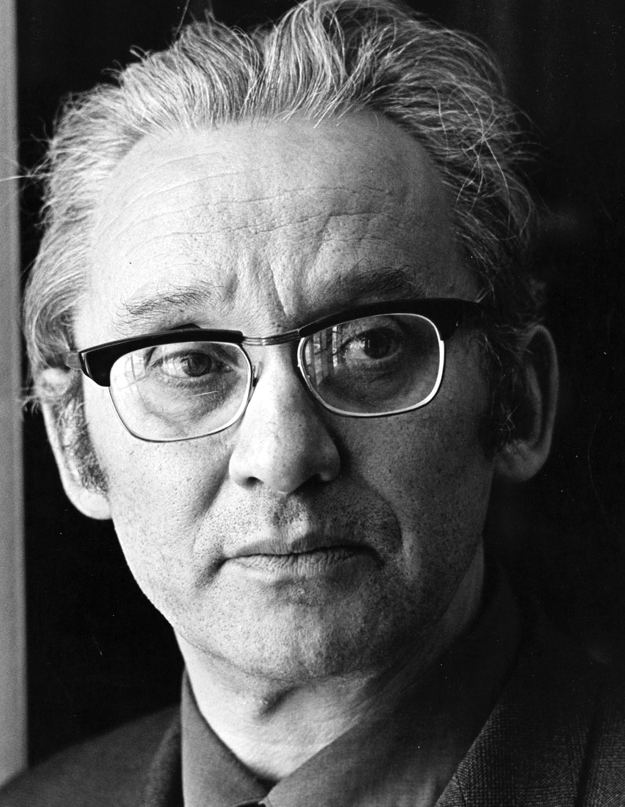
[Photo: Paul Ricoeur, circa 1970 upon his arrival at the University of Chicago, looking for all the world like the Hollywood icon, James Dean. University of Chicago News office: Detailed photo credit below.]
Ricœur’s intervention in the dynamics of academic politics and expanding the community of scholars the way he had done in setting up a kind of philosophy university in the German prisoner of war camp for his fellow French prisoners in 1941 did not work as well as he had hoped. Though it would not be fair to anyone (or to be taken out of context), the Germans (at that moment) were less violent than the striking French students and Peugeot workers in 1968. The French students threw tomatoes at Ricœur and called him a “old clown”; whereas the University of Chicago “threw” at him a prestigious named professorship. He liked the latter better. Ricœur’s courses were open to undergraduates who got permission, too, so I signed up for two of them – Hermeneutics and The Religious Philosophies of Kant / Hegel. Insert here a mind-bending blur of hundreds of pages of reading interspersed with dynamic and engaging presentations of the material. After the somewhat softball oral exams, for which he charitably gave me a pass, my head was spinning, and I needed to take a year off from school to regroup. I am not making this up. I worked as a parking lot attendant selling parking passes, which was an ideal job, since I could read a lot—you know, German-English facing pagination of two separate philosophical texts. This interruption also gave me time to go out for theatre to work on overcoming my painful social awkwardness and try and get a date with a girl. This “therapy” worked well enough, though, like most socially inept undergraduates, I had no skill at small talk and tended to utter what I had to say out of the blue and without creating any context. When I returned to school the next year to finish up, I proposed doing a bachelor’s thesis on Kant’s Refutation of Idealism, and I went into Professor Ricoeur’s office to make my proposal. Ricoeur was team teaching “Myth and Symbolism” with Mircea Eliade, and the “Imagination and Kant’s Third Critique” with Ted Cohen. Without any introductory remarks—I don’t think I even said my name—I presented the idea for my bachelor’s thesis. Without further chit-chit, raising one finger in the air for emphasis and smiling broadly, the first thing he said to me was: “An internal temporal flux implies an external spatial permanence.” With the benefit of 20-20 hindsight, I consider this a suitably empathic response, albeit an unconventional one. My paper eventually got published in the proceedings of the Acts of the 5th International Kant Congress. Fast forward a couple of years, comprehensive written exams in philosophy, and I proposed to write a PhD dissertation in philosophy on empathy [Einfühlung] and interpretation. Max Scheler’s Essence and Forms of Feelings of Sympathy [Wesen und Formen der Sympathiegefühl] contains significant material on empathy, and is (arguably) an early version of C. Daniel Batson’s collection of empathically-related phenomena. I was reading it with Professor Ricœur. Meanwhile, a psychoanalysis named Heinz Kohut, MD, like so many, a refugee from the Nazis, was innovating in empathy in the context of what was to become Self Psychology. I told one of the faculty at the Chicago Institute for Psychoanalysis who was a mentor to me (and a colleague of Kohut), Arnold Goldberg, MD, about Ricœur’s Freud and Philosophy. Whether at my instigation or on Dr Goldberg’s own initiative (Ricoeur really needed no introduction from me), Dr Goldberg introduced Professor Ricoeur to the editors at the Journal of the American Psychoanalytic Association (JAPA) and the result was Ricœur’s publication “The Question of Proof In Freud’s Psychoanalytic Writings” in JAPA August 1977 [Volume 25, Issue 4 6517702500404]. Using graduate students as a good occasion for a conversation to build relationships, we all then had dinner at the Casbah, a middle eastern restaurant on Diversey near Seminary Avenues in Chicago’s Old Town.
It always seemed to me that Professor Ricoeur was a teacher of incomparable empathy, though he rarely used the word, at least until I started working on my dissertation on the subject of empathy and interpretation. I am pleased, indeed honored, to be able to elaborate the case here, while also defending Ricœur’s hermeneutics of suspicion from a misunderstanding that has shadowed the term since Toril Moi’s discussion (2017) of it at the University of Chicago colloquium on the topic shortly before the pandemic, the details of which are recounted in the article.
ricouerempathyinthecontextofsuspicionDownload
ABSTRACT: This essay defends Paul Ricoeur’s hermeneutics of suspicion against Toril Moi’s debunking of it as a misguided interpretation of the practice of critical inquiry, and we relate the practice of a rigorous and critical empathy to the hermeneutics of suspicion. For Ricoeur, empathy would not be a mere psychological mechanism by which one subject transiently identifies with another, but the ontological presence of the self with the Other as a way of being —listening as a human action that is a fundamental way of being with the Other in which “hermeneutics can stand on the authority of the resources of past ontologies.” In a rational reconstruction of what a Ricoeur-friendly approach to empathy would entail, a logical space can be made for empathy to avoid the epistemological paradoxes of Husserl and the ethical enthusiasms of Levinas. How this reconstruction of empathy would apply to empathic understanding, empathic responsiveness, empathic interpretation, and empathic receptivity is elaborated from a Ricoeurian perspective.
Photo credit: University of Chicago Photographic Archive, [apf digital item number, e.g., apf12345], Hanna Holborn Gray Special Collections Research Center, University of Chicago Library.
This blog post and web site (c) Lou Agosta, PhD and the Chicago Empathy Project

Protected: In the beginning was the word – empathy!

Subscribe to continue reading
Subscribe to get access to the rest of this post and other subscriber-only content.

Historical empathy, guns, and the strict construction of the US Constitution
I am sick at heart. This is hard stuff. All those kids. Teachers and principals, too, dying trying to defend the children. Everyone cute as button. Just as bad, I have to re-publish this article, since the needed breakthrough has not yet occurred. What to do about it? My proposal is to expand historical empathy. Really. Historical empathy is missing, and if we get some, expand it, something significant will shift.
Putting ourselves in the situation of people who lived years ago in a different historical place and time is a challenge to our empathy. It requires historical empathy. How do we get “our heads around” a world that was fundamentally different than our own? It is time – past time – to expand our historical empathy (Kohut 2020). For example …

Brown Bess, Single Shot Musket, standard with the British Army and American Colonies 1787
When the framers of the US Constitution developed the Bill of Rights, the “arms” named in the Second Amendment’s “right to keep and bear arms” referred to a single shot musket using black powder and lead ball as a bullet. The intention of the authors was to use such weapons for hunting, self-defense, arming the nascent US Armed Forces, and so on. No problem there. All the purposes are valid and lawful.
One thing is for sure and my historical empathy strongly indicates: Whatever the Founding Fathers intended with the Second Amendment, they did NOT intend: Sandy Hook. They did not intend Uvalde, Parkland, Columbine, Buffalo, NY, Tops Friendly. They did not intend some 119 school shootings since 2018. They did not intend a “a fair fight” between bad guys with automatic weapons and police with automatic weapons. The Founding Fathers did not intend wiping out a 4th grade class using automatic weapon(s). They did not intend heart breaking murder of innocent people, including children, everyone as cute as a button.
Now take a step back. I believe we should read the US Constitution literally on this point about the right to “keep and bear” a single shot musket using black powder and lead ball. The whole point of the “strict constructionist” approach – the approach of the distinguished, now late Supreme Court Justice Antonin Scalia, who passed away on Feb 13, 2016 – is to understand what the original framers of the Constitution had in mind at the time the document was drawn up and be true to that intention in so far as one can put oneself in their place. While this can be constraining, it can also be liberating.
Consider: No one in 1787 – or even 1950 – could have imagined that the fire power of an entire regiment would be placed in the hands of single individual with a single long gun able to deliver dozens of shots a minute with rapid reload ammo clips. (I will not debate semi-automatic versus automatic – the mass killer in LasVegas had an easy modification to turn a semi-automatic into an automatic.)
Unimaginable. Not even on the table.
This puts the “right” to “bear arms” in an entirely new context. You have got a right to a single shot musket, powder and ball. You have got a right to a single shot every two minutes, not ten rounds a second for minutes on end, or until the SWAT team arrives. The Founding Fathers did not intend the would-be killer being perversely self-expressed on social media to “out gun” school security staff who are equipped with a six shooter. Now the damage done by such a weapon as the Brown Bess should not be under-estimated. Yet the ability to cause mass casualties is strictly limited by the relatively slow process of reloading.
The Founding Fathers were in favor of self-defense, not in favor of causing mass casualties to make a point in the media. The intention of the Second Amendment is to be secure as one builds a farm in the western wilderness, not wipe out a 4th grade class. I think you can see where this is going.
Let us try a thought experiment. You know, how in Physics 101, you imagine taking a ride on a beam of light? I propose a thought experiment based on historical empathy: Issue every qualified citizen a brown bess musket, powder, and ball. What next?
Exactly what we are doing now! Okay, bang away guys. This is not funny – and yet, in a way, it is. A prospective SNL cold open? When the smoke clears, there is indeed damage, but it is orders of magnitude less than a single military style assault rifle weapon. When the smoke clears, all-too-often weapons are found to be in the hands of people who should not be allowed to touch them – the mentally unstable, those entangled in the criminal justice system, and those lacking in the training needed to use firearms safely.
More to the point, this argument needs to be better known in state legislatures, Congress, and the Supreme Court. All of a sudden the strict constructionists are sounding more “loose” and the “loose” constructionist, more strict. It would be a conversation worth having.
The larger question is what is the relationship between arbitrary advances in technology and the US Constitution. The short answer? Technology is supposed to be value neutral – one can use a hammer to build a house and take shelter from the elements or to bludgeon your innocent neighbor. However, technology also famously has unanticipated consequences. In the 1950s, nuclear power seemed like a good idea – “free” energy from splitting the atom. But then what to do with the radioactive waste whose half life makes the landscape uninhabitable by humans for 10,000 years? Hmmm – hadn’t thought about that. What to do about human error – Three Mile Island? And what to do about human stupidity – Chernobyl? What to do about unanticipated consequences? Mass casualty weapons in the hands of people intent on doing harm? But wait: guns do not kill people; people with guns kill people. Okay, fine.
There are many points to debate. For example, guns are a public health issue: getting shot is bad for a person’s health and well-being. Some citizens have a right to own guns; but all citizens have a right not to get shot. People who may hurt themselves or other people should be prevented from getting access to firearms. There are many public health – and mental health – implications, which will not be resolved here. There are a lot of gun murders in Chicago – including some using guns easily obtained in Texas and related geographies. The point is not to point fingers, though that may be inevitable. The guidance is: Do not ask what is wrong – rather ask what is missing, the availability of which would make a positive different. In this case, one important thing that is missing is historical empathy.
Because the consequences of human actions – including technological innovation – often escape from us, it is necessary to consider processes for managing the technology, providing oversight – in short, regulation. Regulation based on historical empathy. Gun regulation . Do it now.
That said, I am not serious about distributing a musket and powder and ball to every qualified citizen in place of (semi) automatic weapons – this is an argument called a “reduction to absurdity”; but I’ll bet the Founding Fathers would see merit in the approach. There’s a lot more to be said about this – and about historical empathy – but in the meantime, I see a varmint coming round the bend – pass me my brown bess!
Additional Reading
Thomas Kohut. (2020). Empathy and the Historical Understanding of the Human Past. London: Routledge.
PS Please send a copy of this editorial to your US Congressional representatives in the House and Sensate.

A Critical Review of a Philosophy of Empathy (the book)
You don’t need a philosopher to tell you what empathy is; you need a philosopher to help you distinguish the hype and the over-intellectualization from a rigorous and critical empathy.
Every parent, teacher, health care worker, business person with customers, and professional with clients, knows what empathy is: Be open to the other person’s feelings,

Cover Art: A Critical Review of a Philosophy of Empathy
take a walk in their shoes, give them back their own experience in one’s own words such that they recognize it as theirs.
It is important to note that one may usefully take off your own shoes before trying on those of the other individual. This is perhaps implied in the folk definition of empathy, but overlooked in the over-intellectualization that occurs in academic treatments of the subject.
Okay – I’ve read enough – I want to order the book (compelling priced at $10 (US)): Order A Critical Review of a Philosophy of Empathy
So why is empathy in such short supply? Because we are mistaking the breakdowns of empathy – emotional contagion, conformity, projection, gossip, and getting lost in translation – for authentic empathy with one another in community. Drive out cynicism, shame, resignation, bullying, and empathy naturally shows up. There is enough empathy to go around. Get some here.
In this volume, Lou Agosta engages thirty three key articles from the great contributors to empathy studies such as William Ickes, Shaun Gallagher, and Dan Zahavi. Agosta distinguishes the hype from the substance, the wheat from the chafe, and the breakdowns of empathy from a rigorous and critical empathy itself as the foundation of community.
After debunking the prevailing scientism of empathy, this volume lays out a rigorous and critical empathy, leading the way forward with empathy studies that actually enable us to relate to one another.
rigorous and critical empathy itself as the foundation of community.
After debunking the prevailing scientism of empathy, this volume lays out a rigorous and critical empathy, leading the way forward with empathy studies that actually enable us to relate to one another.
Meanwhile, even more praise from the critics for A Critical Review of a Philosophy of Empathy by Lou Agosta
“Agosta’s book is at the right place and the right time. One of the most exciting things about emerging areas of academic study is when a dialogue can be enjoined among those with various insights. It is in this way that an understanding of the core subject matter (in this case empathy) can grow and be enriched. Lou Agosta’s latest book does just this. It begins with an artifact […] The Routledge Handbook of the Philosophy of Empathy (2017) and it engages with the various contributors individually and with some of the major themes in a multi-disciplinary way—such as social psychology and the phenomenology of empathy, and situates them into how empathy might be practiced. (Thus, it continues the practice-oriented methodology of Agosta’s Empathy Lessons that has been influential.)
“What makes A Review so successful is that we are presented with one mind (Agosta’s) in dialogue with many minds. This does two things: (a) it pulls together [the Handbook’s] vision; and (b) it extends the dialogue inviting other essays to be written to further enrich the dialogue. Both of these objectives creates space for the debate and discussion of empathy which has established itself as an important component of several disciplines, e.g., ethics, social/political philosophy, sociology, literary theory, and psychology. I predict that this influence will continue to grow. It is a great read for scholars and a crucial acquisition for university libraries.” Michael Boylan, professor of philosophy at Marymount University and author of Fictive Narrative Philosophy: How Literature can act as Philosophy,and the philosophical novel T-Rx: The History of a Radical Leader.
“In this, his fifth book, Lou Agosta cements his status as the preeminent expert on empathy. I, a psychologist and psychoanalyst, know of the view of empathy in my fields. Agosta here deftly acquainted me with the way empathy is seen by other disciplines, such as philosophy, cognitive science, neuroscience, anthropology, and aesthetics. With his lively mind and fluent, playful writing style, he enlightens and entertains the reader.” James W. Anderson, Clinical Professor of Psychiatry and Behavioral Sciences, Northwestern University, and President, Chicago Psychoanalytic Society (2017-2019)
“Lou Agosta calls it as he sees it. His distinct voice is both knowledgeable and radical in his advocacy of a conscious and deliberate embrace of empathy. He is passionate in putting forward that the understanding of empathy and its daily application is the essential element in improving the human condition in modern times.
“Lou Agosta’s most recent book in his series on empathy reviews the philosophical origins of empathy and current controversies. His tour de force reviews thirty three authors on empathy and makes a critical evaluation of both important contributions and limitations of the extensive literature regarding key concepts in the field of empathy studies. The book will appeal to those who believe empathy is critical in all aspects of interpersonal relatedness from psychotherapy to organizational culture.
“Topics covered include the core importance of empathy in human being. Empathy is reviewed from an historical perspective including philosophical, moral, aesthetic, cultural and clinical frames of exploration.
“Lou Agosta is a natural teacher and rare will be the reader who does not learn something significant from his new book.” Dennis Beedle, MD, former Chair, Department of Psychiatry, Saint Anthony Hospital, Chicago
Click here to order: Order A Critical Review of a Philosophy of Empathy
Short BIO: Lou Agosta, PhD, teaches and practices empathy at Ross University Medical School at Saint Anthony Hospital, Chicago, Il. He is the author of three peer-reviewed books in the series A Rumor of Empathyand the best selling, popular book, Empathy Lessons. His PhD is from the philosophy department of the University of Chicago and is entitled Empathy and Interpretation. He is an empathy consultant in private practice in Chicago, delivering empathy lessons, therapy, and life coaching, to individuals and organizations.
(c) Lou Agosta, PhD and the Chicago Empathy Project

Review: Empathy, Embodiment, and the Person by James Jardine
The occasion for James Jardine’s engaging and complex book is the publication of the critical edition of Husserl’s drafts for Ideas II, edited (separately) by Edith Stein and Ludwig Landgrabe as Husserliana IV/V [Hua]. Jardine notes:
“I draw upon a forthcoming volume of Husserliana which, for the first time, presents the original manuscripts written by Husserl for the project of Ideen II (Hua IV/V), a now-finished editorial task which was carefully pursued for several years by Dirk Fonfara at the Husserl-Archiv in Köln” [Jardine 2022: 4].
For this substantial scholarly contribution, we, the academic reading public, are most deeply grateful. We are also grateful for James Jardine’s penetrating and dynamic engagement with the cluster of issues around empathy, ego, embodiment and community raised in Husserl’s Ideas II. This is also the place to note that like many academic books, the pricing is such that individuals will want to request that their college, university, or community library order the book rather than buy it retail.
Empathy is a rigorous and critical practice. The commitment is always to be charitable in reviewing another’s work, and this is especially so when the topic is empathy. An empathic review of a work on empathy requires – sustained and expanded empathy. Any yet is not a softball review and Jardine’s work presents challenges from logical, phenomenological and rational reconstruction perspectives. It is best to start by letting Jardine speak for himself and at some length:
“I motivate and explore in detail the claim that animate empathy involves the broadly perceptual givenness of another embodied subject as experientially engaged in a common perceptual world. Interpersonal empathy, which I regard as founded upon animate empathy, refers by contrast to the fully concrete variety of empathy at play when we advert to another human person within a concrete lifeworldly encounter” [Jardine: 5].
“ […] [O]nce we recognise that the constitution of a common perceptual world is already enabled by animate empathy—without an analysis of the latter being exhausted by our pointing out this function—this allows us to render thematic the specific forms of foreign subjectivity and interpersonal reality that are opened up by interpersonal empathy, which involves but goes far beyond animate empathy” [Jardine: 88].
The key distinction is clear: “animate empathy” is distinct from “interpersonal empathy.” This distinction is widely employed in empathy scholarship, even if not in these exact terms, with many varying nuances and shades of meaning. This distinction roughly corresponds to the distinctions between affective and cognitive empathy, between empathic receptivity and empathic understanding, and, most generically, between “top down” and “bottom up” empathy. Arguably, the distinction even corresponds to that between the neurological interpretation of empathy using mirror neurons (or a mirroring system just in case mirror neurons do not exist) and the folk definition of empathy as “taking a walk in the other person’s shoes (with the other’s personality)”.
I consider it an unconditionally positive feature of Jardine’s work that he does NOT mention mirror neurons, which are thoroughly covered elsewhere in the literature (e.g., V. Gallese, 2006, “Mirror Neurons and Intentional Attunement,” JAPA).
From a phenomenological point of view, Jardine succeeds in showing that Husserl is a philosopher of empathy – animate empathy. Even if Maurice Merleau-Ponty does carry the work of phenomenology further into neurology and psychology, having inherited Jean Piaget’s chair, Husserl is already the phenomenologist of the lived experience of the body. The human (and mammalian!) body that one encounters after every phenomenological bracketing and epoché is a source of animate expressions of life. A pathological act of over-intellectualization is required not to see the body as expressing life in the form of sensations, feelings, emotions, affects, and thoughts. There are dozens and dozens of pages and lengthy quotations devoted to this idea. Here are a couple of quotes by Husserl that make the point:
“We ‘see’ the other and not merely the living body of the other; the other itself is present for us, not only in body, but in mind: ‘in person’” (Hua IV/V 513/Hua IV 375, transl. modified [1917]).
“The unity of the human being permits parts to be distinguished, and these parts are animated or ensouled (beseelt) unities (Hua IV/V 582 [1916/1917])” [Jardine 2022: 78].
Animate empathy LIVES in Husserl’s Ideas II. In addition, the shared space of living physical bodies creates a clearing for the intersubjective perception of natural (physical) objects in the common world of things and events. In that sense, empathy is at the foundation of the shared intersubjective world of thing-objects (as Heidegger would say “present to hand”).
However, the big question – for Husserl, Jardine, and all of us who follow – is does Husserl’s version of empathy found the intersubjective world of conscious human beings with intentional perceptions, emotions, actions, and personal engagements?
After nearly three hundred pages of engaging, useful, and lengthy quotations from Landgreb’s and Stein’s drafts of Ideas II, closely related texts of Husserl, and Jardine’s penetrating and incisive commentary, this reviewer was still not sure. In addition to my own shorting-comings, there are significant other reasons and considerations.
Jardine’s work is an innovative train-wreck, rather like Leonardo’s fresco the “Last Supper” – even at the start, da Vinci’s masterpiece was a magnificent wreck as the underlying plaster of the fresco did not “set up” properly. In this case, the underlying plaster is Husserl’s “work in progress” of Ideas II. (I acknowledge “work in progress” is my description, not Jardine’s.)
As is well known, Husserl himself withheld the manuscript of Ideas II from publication. He was not satisfied with the results, having been accused of succumbing to the problematic philosophical dead-end of solipsism, the inability to escape from the isolated self, knowing only itself. Will empathy solve the problem?
It is a further issue (not mentioned by Jardine) that everything without exception that Husserl actually published in his life about empathy after he published Ideas I (1913), makes “empathy [Einfühlung]” nonfoundational in relation to the givenness of the other individual, displacing it “upstairs.” For example, Husserl writes in the Cartesian Meditations:
“The theory of experiencing someone else, the theory of so-called ‘empathy [Einfühlung],’ belongs in the first story above our ‘transcendental aesthetics’” [Husserl 1929/31: 146 (173); see also Agosta, 2010: 121].
Now strictly speaking, Jardine could reply that quoting Husserl’s Cartesian Meditations is out of scope for an engagement with Ideas II, and that is accurate enough as it stands; but what is not out of scope is the challenge of solipsism with which Husserl was wrestling philosophically throughout his career. As noted, at the level of the Cartesian Meditations (which Jardine does occasionally quote when it suits his purpose (but not the above-cited quote!)), empathy belongs to the first story upstairs above his “transcendental aesthetics,” as Husserl writes, quoting a Kantian distinction.
Thus, we engage with Jardine’s implicit reconstruction of Husserl’s repeated attempts to navigate the labyrinth of phenomenological experience, joining and separating the subject/self and other individual.
Jardine follows Husserl from the solipsistic frying pan into the fire by quoting Husserl accurately as saying the self and other are separated by an abyss:
“Husserl calls out a “series of appearances (…) are exchanged, while each subject yet remains ineluctably distinct from every other by means of an abyss, and no one can acquire identically the same appearances as those of another. Each has his stream of consciousness displaying a regularity (Regelung) that encompasses precisely all streams of consciousness, or rather, all animal subjects (die eben über alle Bewusstseinsströme bzw. Animalischen Subjekte übergreift)” (Hua IV/V 254–255/Hua IV 309, transl. modified [1913])” [Jardine: 134 (emphasis added)].
Husserl tries a reduction to absurdity to escape from the solipsistic world of this abyss between self and other, supposing the world really were mere semblances. One will eventually encounter a person who is a non-semblance. This other individual who transforms the mere semblance into actually appearance awakens one from the dream of solipsism If it could be shown or argued that this other individual is necessarily given/presented/encountered, then all one’s previous solipsistic experience would be like hallucinatory madness. With apologies to Hilary Putnam, this is Husserl’s “brain in a vat” moment [Jardine: 126]:
“…[A]ny intersubjective “apperceptive domain”, Husserl claims, it is conceivable that, in the solipsistic world, “I have the same manifolds of sensation and the same schematic manifolds,” and, in as much as functional relations hold between such manifolds, then it may be that “the ‘same’ real things, with the same features, appear to me and, if everything is in harmony, exhibit themselves as ‘actually being’” (Hua IV/V 295 [1915]; cf. Hua IV 80). And yet, if other human living bodies were to then “show up” and be “understood” as such, the feigned reality of our experienced ‘things’ would be called into question:
Now all of a sudden and for the first time human beings are there for me, with whom I can come to an understanding [. . . .] As I communicate to my companions my earlier lived-experiences an d they become aware of how much these conflict with their world, constituted intersubjectively and continuously exhibited by means of a harmonious exchange of experience, then I become for them an interesting pathological object, and they call my actuality, so beautifully manifest to me, the hallucination of someone who up to this point in time has been mentally ill (Hua IV/V 295–296/Hua IV 79–80, transl. modified [1915])” [Jardine: 126].
This is a remarkable passage from Husserl, and we are indebted to Jardine’s scholarship for calling it to our attention. The thing that is missing or must be rationally reconstructed in Husserl is the necessity of the givenness of the other; but then, of course, the hermeneutic circle closes and the problem of solipsism is undercut, does not arise, and the character of phenomenology shifts. As is often the case, the really interesting work gets done in a footnote:
“For Husserl, this insight, that a phenomenological treatment of the constitutive relation between subject and world would have to address the (co-)constitutive role played by intersubjectivity, raises issues which cannot be addressed by a single analysis, but which rather demand a rethinking of the entire project of phenomenology” [Jardine: 127 (footnote) (reviewer’s embolding)].
There is nothing wrong with Jardine’s argument, yet, as noted, since this is not a softball review, there is something missing. The distinction “reconstruction” or “rational reconstruction” may usefully be applied to Husserl’s description and/or analysis of empathy. Jardine attempts to cross the abyss by means of interpersonal empathy. To that purpose, Jardine marshals the resources of narrative and of Alex Honneth’s distinction of “elementary recognition.”
To his credit, Jardine holds open the possibility that Husserl’s use of “empathy” does provide the foundation, at the time of Ideas II (1915 – 1917 and intermittently in the 1920s as Stein and Landgrabe try to “fix” the manuscript). Yet Jardine pivots to Alex Honneth’s (1995) key distinction of recognition (“elementary recognition,” to be exact) to provide the missing piece that Husserl struggled to attain. I hasten to add that I think this works well enough, especially within the context of an implied rational reconstruction of empathy within Husserlian/Honnethian dynamics and Husserl’s verstickung in solipsism.
However, this move also shows that Husserl did not quite “get it” as regards empathy being the foundation of interpersonal relations or community. As noted, Husserl is quite explicit in his published remarks that empathy gets “kicked upstairs” and is not a part of the foundation but of the first story above immediate experience, which as those in Europe know well is really the second story in the USA.
As noted, Jardine makes the case for bringing in supplementary secondary, modern thinkers to complement the “work in progress” status of Ideas II as a “messy masterpiece” (Jardine’s description, p. 4). I hasten to add that I do not consider Edith Stein a secondary thinker as her own thinking is primarily and complexly intertwined with that of Husserl. Likewise, Dan Zahavi is an important thinking in Jardine’s subtext and background, whose (Zahavi’s) contributions on empathy and Husserlian intersubjectivity (Husserliana XIV – XV) align with my own (2010) and are not an explicit part of the surface structure of the Jardine’s text.
Relying on the good work that Jardine initiatives, the reconstruction of Husserl’s relationship to empathy can be done in three phases. Husserl first attempts straightaway to connect the subject/self and the other individual person using empathy in Ideas I (1913). This results in the accusation of solipsism. The accusation “has legs,” because arguably Husserl fails to clarify that the other is an essential part of the intentional structure of empathy, even if the noematic object is inadequate or unsatisfied in a given context. Husserl then tries different methods of crossing the “abyss,” including Ideas II and the animate empathic expressions of the lived body. Husserl himself is not happy with the result as it does not quite get to what Jardine properly calls “interpersonal empathy.” At the risk of over-simplification, “interpersonal empathy” what happens we when “get understood” by another person in the context of human emotions and motivations.
The engagement with the critical edition of the second and third volumes of Ideas, provides extensive evidence that for Husserl, the world of experience is dense with empathy. But at the level of Ideas II (and HuaIV/V), there is an ambivalence in Husserl whether he wants to make empathy a part of the superstructure or infrastructure of the shared, common intersubjective world (especially non-animate things in that world). This can be tricky because, as Jardine makes clear, animate empathy is enough to give us intersubjective access to a world of physical objects and things. However, that is still not intersubjectivity in the full sense of relating to other selves who are spontaneous separate centers of conscious emotional and intentional acts.
I have suggested, separately (Agosta 2010, 2014) that Husserl steps back in his published works from embracing the intentional structure of empathy (in all its aspects) as full out foundation of intersubjectivity. However, in the Nachlass, especially Hua XIV and XV, empathy is migrating – evolving – moving – from the periphery to the foundation of intersubjectivity in the full sense of a community of intentional subjects.
Meanwhile, Husserl attempts to constitute intersubjectivity along with empathy (the latter as not foundational) by reduction to a “sphere of ownness” in the Cartesian Meditations (1928/32). The debate continues and Husserl later elaborates the distinction lifeworld (Lebenswelt), arguably under the influence of Heidegger, Scheler, and others, which lifeworld, however, is applied to nature not social human community. Husserl’s Nachlass, especially volumes Hua XIV and Hua XV demonstrate in detail that Husserl was moving in a hermeneutic circle and empathy was evolving from the periphery to the foundation of intersubjectivity (Zahavi 2006; Agosta 2010, 2014).
In lengthy quotations for the Cartesian Meditations and Phenomenological Psychology, Jardine validates that Husserl engages with personal character in the sense of personality. Jardine is on thin ice here, for though Husserl calls out “autobiography” and “biography” – and what are these except “self writing” and “life writing,” yet that is a lot to justify that Husserl goes more than two words in the direction of narrative.
Of course, one can build a case for a rational reconstruction of Husserl’s subtext as a hermeneutic phenomenology of narrative or the other as oneself and vice versa. And it results in the work of – Paul Ricoeur! That Husserl is not Paul Ricoeur – or Levinas or Heidegger or Merleau-Ponty or Sartre or Hannah Arendt, or, for that matter, Donald Davidson – takes nothing away from the innovations contributed by Husserl. It is rather a function of Jardine’s noodling with the interesting connections between all these. Nothing wrong with that as such – yet there is something missing – Husserl!
Therefore, the guidance to the Jardine is to let Husserl be Husserl. The author really seems to be unable to do that. There is nothing wrong with what Jardine is doing – from sentence to sentence, the argument proceeds well enough. But the reader finds himself in a discussion of “narrative” in the same sentence as Husserl and Ideas II. I hasten to add that I appreciate narrative as a research agenda, and have seven courses by Paul Ricoeur on my college and graduate school transcripts. And yet, once again, there is something missing – one can read Husserl against himself and maybe Jardine thinks that is what he is doing – but it is rather like what The Salon said about the paintings of Cezanne – he paints with a pistol – paint is splattered all over the place – the approach is innovative – but we were expecting impressionism and get – Jackson Pollack! We were expecting phenomenology and got – Donald Davidson or P.F. Strawson or Honneth – all penetrating thinkers, everyone, without exception.
In reading Jardine, I imagined that the transition from animate to interpersonal empathy could be facilitated – without leaving the context of Husserl’s thinking – by the many passages in which Husserl describes the subject’s body as being the zero point and the other’s as being another zero point.
Allowing for an intentional act of reversing position with the other, does this not provide an ascent routine to the folk definition of [interpersonal] empathy of “taking a walk in the other’s person’s shoes” [or, what is the same thing, the other person’s zero point]? Unless I have overlooked something, I do not find this argument in Jardine, though it might have been made the basis of a rational reconstruction of interpersonal empathy sui generis in Husserl without appeal to other thinkers. Thus, Jardine describes the “here/there” dynamic in Husserl:
“Accordingly, we can say that for a subject to empathetically grasp another’s living body she must comprehend it as a foreign bodily “here” related to a foreign sphere of sense-things (to which foreign “theres” correspond), where these are recognised as transcending – but also, at least in the case of “normality,” as harmonious with – my own bodily “here” and the sense-things surrounding it [. . . . ] Husserl suggests that, when the materiality of the other’s body ‘over there’ coincides, in its “general type,” with my own lived body ‘here’ in its familiar self-presence, “then it is “seen” as a lived body, and the potential appearances, which I would have if I were transposed to the ‘there,’ are attributed to as currently actual; that is, an ego is acknowledged in empathy (einverstanden wird) as the subject of the living body, along with those appearances and the rest of the things that pertain to the ego, its lived experiences, acts, etc.” That is, alongside the perceptible similarity of my lived body and the other’s [. . . ], this empathetic apprehension of a foreign sphere of sense-things also rests upon a further structural feature of perceived space; namely, that each ‘there’ is necessarily recognised as a possible ‘here,’ a possibility whose actualisation would rest solely upon my freely executing the relevant course of movement’” [Jardine: 131].
Jardine performs engaging inferential and speculative gyrations to save Husserl from so much as a hint of the accusation of inconsistency instead of emphasizing that Husserl’s use and appreciation of empathy develops, evolves, is elaborated. Husserl gets more intellectual distance from and closeness to empathy as he learns of Max Scheler’s work on the forms of sympathy and Heidegger’s work on Mitsein (which, I hasten to add, are in Jardine’s extensive and excellent footnotes and references).
Another approach to crossing the abyss between self and other is a transcendental argument. This goes beyond anything Jardine writes, but if offered in the Husserlian spirit and if it helps to put his project in the broader context, then it warrants consideration.
The argument informally: The distinction between self and other is not a breakdown of empathy; the distinction is the transcendental requirement, the presupposition, for empathy. If I lose the distinction between self and other, then I get emotional contagion, conformity, projection (Lipps), or communications that get lost in translation. Only if the distinction between self and other stand firm, is it possible, invoking aspects of acts of empathic intentionality, to communicate feelings (sensation, emotion) across the boundary between self and other; relate to the other individual as the possibility of reciprocal humanity; take a walk in the other’s shoes with aspects of their personality; and respond empathically to the other with performative linguistic acts of recognition. We do not merely express recognition; we perform it, thereby, instituting mutual dignity.
Husserl’s blind spot in this area and – do I dare say it? – perhaps Jardine’s as well is a function of remaining at the level of a single subject phenomenology, at least until the elaboration of the distinction, life-world (Lebenswelt). Until we explicitly get to the lifeworld, what would a multisubject phenomenology look like? The short answer is Heidegger’s Mitsein, Levinas on the fact and face of The Other, Ricoeur on oneself as other, or Sartre on the gaze of the other bestowing individuality and identity on the one.
Along these lines, Jardine usefully identifies the text where Husserl credits the other with constituting the social self of the self. The other gives me my humanity and without the other’s constitutive activity, one does not get to be a human being. Here Husserl comes closest to acknowledging that the one individual gets her/his humanity from the other individual. This is Jardine directly quoting Husserl:
“I arrive at the construal of myself as a human being (in the sense of mind) by way of a comprehension of others, i.e., insofar as I comprehend them as centres not only for the rest of their surrounding world but also for my lived body, which is for them an object of their surrounding world. It is precisely thereby that I comprehend them as construing me similar to the way I construe them, thus as construing me as social human being, as comprehensive unity of living body and mind. Therein is rooted an identification between the ego that I encounter in direct inspection – as ego which has its lived body over and against it – and the ego of the other’s presentation of me, the ego that the other can understand and posit, at one with my living body as, for the other, present “externally,” in acts which I for my part attribute to the other. The comprehensive presentation others have, or can have, of me is of service to me as regards the construal of myself as social “human being,” hence the construal of myself totally different from the way I apprehend myself in direct inspection. By means of this construal, with its complicated structure, I fit myself into the human family (Menschheitsverband), or, rather, I create the constitutive possibility for the sense of this “family.” I can now say “we,” and then for the first time do I become “I” and the other precisely another” (Hua IV/V 218–219 [1913]; cf. Hua IV 325, 242)” [Jardine: 227].
This is one of the most innovative things Husserl ever wrote – too bad it is such a bad fit with a one-person phenomenology. As Husserl famously puts the point in the Cartesian Meditations, the verifiable accessibility of others, and with this their existential character for me, consists exactly in their original inaccessibility (Hua I: 144) [Jardine: 81]. Two steps forward; one backwards?
However, even within a one-person phenomenology, one can rationally reconstruct an extension of Husserl’s thinking, going beyond Husserl and Jardine here, that dialectically mediates original and nonoriginal experience as allowing a third term – vicarious experience.
Phenomenologically what is missing is the distinction “vicarious feeling” or “vicarious experience.” Max Scheler elaborated such a distinction as Nachfühlen or Nachleben, and Jardine notes Scheler in the footnotes without, however, making the phenomenological connection to an intermediate form of experience between originally owned and nonoriginal. A vicarious experience is my original experience of another person’s original experience. So is it original? My experience is by definition original, but the other’s original experience is nonoriginal to and for me. So, the distinction between original and nonoriginal breaks down and is mediated by vicarious experience, an experience of the other that is mine own without my being the other. Hidden in plain view? (For further details on Scheler see Agosta 2014a.)
Another path to intersubjectivity that Husserl calls out but that both Husserl and Jardine leave undeveloped is that of joint intentionality. Key term: joint intentionality. There is very little new under the sun, but Michael Tomasello (2008) and R. Peter Hobson (2005) have separately and innovatively elaborated this distinction, “joint intentionality.”
Consider an example. The placement of the parenthesis is key: “I see the cathedral.” “You see the cathedral.” “I see you (you see(ing) the cathedral).” Once my intentionality includes yours, we have a non-solipsitic relationship. Solipsism is undercut and cannot become a serious issue. My intentionality in relating to another can be inadequate or unsatisfied, but an inadequate or unsatisfied relatedness to an other is still relatedness.
We can misunderstand one another, which means we can clarify the misunderstanding and reach an understanding. This would give us what Jardine calls interpersonal empathy. Thus, Jardine identifies “joint intentionality” in Husserl (without, however, identifying it as such):
“As Husserl notes, if I am looking at a cathedral and I notice another standing by me, ‘his gaze directed at this cathedral, then I understand this without any further ado. His seeing, which I experience through empathy, is equally an immediate having-over-against: the object is immediately given’ (Hua IV/V 510–511/Hua IV 373, transl. modified [1917]). While we normally only take human others to see a cathedral as a cathedral—in that this sense is one generated and sustained by human experience and social praxis—Husserl’s claim that we would empathetically take the other to immediately see the ‘colossal black thing’ (which is a cathedral for us) surely holds with regard to some non-human animate others too” [Jardine: 140].
Once again, a powerful approach, if not a complete answer, is “hidden in plain view.” In a sense, it is a scandal that we still lack a thorough intentional analysis of empathy. So here it is: The other and the other’s intention are a fundamental part of the structure of empathy. Empathy aims at and includes the other. Without the other, empathy is not empathy. It is emotional contagion or conformity or projection or misunderstanding.
Another consideration. Is the distinction between animate and interpersonal empathy exhaustive? Is “sustained empathy” different than “interpersonal empathy”? This would be analogous to the difference between a snapshot – a single instance – and a video – a series of instances across time (for more on “sustained empathy” see Goldberg, 2015: 89 – 98). Like a video as opposed to a snapshot, sustained empathy opens up possibilities, emergent properties, and a depth of engagement, that is at a qualitatively different level than an isolated encounter. One has to listen to another person and respond to them empathically over a period of time and get to know them in order to appreciate not just that (for example) the person is angry and what triggered the anger, but the motivational, development, historical, emotional, and even the future context in depth. When interpersonal empathy is sustained across time and numerous encounters with the other person, then a network of empathic relatedness, empathic responsiveness, and authentic human relations based in empathy opens up.
Never underestimate Husserl. Never underestimate empathy. Never. Jardine quotes Husserl as describing sustained empathy (the term is not used). It remains unnamed, but, I submit, it is not reducible to animate and/or interpersonal empathy. This begins a new thread and perhaps a new book. It is best to let Husserl have the next to last word [Jardine: 266]:
“ …[W]e can now see why Husserl regards fully understanding another person as an infinite task, and maintains that reaching its ideal form would require me to relive the other’s personal live in extenso, and to comprehend the developmental contours of her personal character by situating them within an infinitely detailed narrative (Hua IV/V 458 [1916/1917]). A deep understanding of another person’s actions, emotions, and beliefs can always be informed by familiarising oneself with their personal character and the history of its coming-to-be, and on the other hand, such an understanding is exactly a way of acquiring and developing such a familiarity (Hua IV/V 579 [1916/17]; see also Hua IV/V 312 (HuaIV 104) [1915]). Consequently, our ability to envisage and understand the motivational context of another’s actions is best seen as embedded within ongoing personal relationships, in which our acquaintance with the other person’s character has gradually developed through repeated empathetic contact, as well as through communicative engagement and, more generally, through participating with the other in a common human world.”
Having urged “let Husserl be Husserl,” I have a final thought about what is missing from the entire discussion of empathy in Husserl, Jardine, and the philosophical handbooks of empathy, and this is so even if one includes “sustained empathy” as having been implicitly engaged (even though I would maintain that is not the case). When a person receives empathy, when a person “gets a good listening,” when a person is responded to empathically, when a person experiences authentic relatedness to another – regardless of the form – then the person often experiences an opening in what is possible in the person’s life, choice, and situation. The person is empowered by the empathy to inquire into what is available and accessible for him- or herself that goes beyond mere psychology into a fundamental inquiry that transforms possibilities of knowing and acting. Something in the person’s way of being and relating changes, shifts, transforms. The person shifts out of stuckness and into action that makes a profound and positive difference. How does that come about? Now that is something worthy of further inquiry.
References
Review: Empathy, Embodiment, and the Person: Husserlian Investigations of Social Experience and the Self by James Jardine. Chaum, Switzerland: Springer Nature. ISSN 0079-1350 ISSN 2215-0331 (electronic). ISBN 978-3-030-84462-2 ISBN 978-3-030-84463-9 (eBook). https://doi.org/10.1007/978-3-030-84463-9
Zahavi, D. (2005). Subjectivity and Selfhood: Investigating the First-Person Perspective. Cambridge, MA & London: The MIT Press.
Michael Tomasello. (2008). Origins of Human Communication. Cambridge, MA: MIT Press.
Arnold Goldberg. (2015). The Brain, the Mind and the Self. New York: 2015.
V. Gallese, 2006, “Mirror Neurons and Intentional Attunement,” Journal of the American Psychoanalytic Association.
R. Peter Hobson. (2005). What puts the jointness into joint attention. In Joint Attention: Communication and Other Minds, eds. Naomi Eilan et al Oxford, UK: Oxford (the Clarenon press): 185 – 204).
Edmund Husserl. (1929/31). Cartesian Meditations, tr. D. Cairns. The Hague: Martinus Nijhoff, 1970.
_________________. (1929/35). Husserliana XV. Zur Phänomenologie der Intersubjektivität. Texte aus dem Nachlass. Dritter Teil: 1929-1935. Ed. I. Kern. The Hague: Martinus Nijhoff, 1973
_________________ .(1921/28). Husserliana XIV. Zur Phänomenologie der Intersubjektivität. Texte aus dem Nachlass. Zweiter Teil: 1921-1928. Ed. I. Kern. The Hague: Martinus Nijhoff, 1973
_________________. (Forthcoming). Husserliana IV/V. Ideen zu einer reinen Phänomenologie und phänomenologischen Philosophie. Zweites Buch: Phänomenologische Untersuchungen zur
Konstitution und Wissenscahftstheorie. Ed. D. Fonfara. Cham: Springer.
Alex Honneth. (1995a). The Struggle for Recognition. The Moral Grammar of Social Conflicts, tr. J. Anderson. Cambridge: Polity Press.
Lou Agosta. (2010). Empathy in the Context of Philosophy. London: Macmillan (Palgrave).
_________. (2014a). Rewriting empathy in Max Scheler. In A Rumor of Empathy: Rewriting Empathy in the Context of Philosophy. New York: Palgrave Macmillan: 83 – 96. DOI:10.1057/978113746534.0009.
_________. (2014). Husserl’s rewriting of empathy in Husserl. In A Rumor of Empathy: Rewriting Empathy in the Context of Philosophy. New York: Palgrave Macmillan: 97 – 118. DOI:10.1057/978113746534.00010.
(c) Lou Agosta, PhD and the Chicago Empathy Project

Empathy in Time of War – Red Team, Red Team!
Empathy in time of war means two words – Red Team.
In time of war or threat of war, the power of empathy consists in putting yourself in the shoes of the enemy, thinking like the enemy, and thereby anticipating and thwarting the enemy’s moves.
“Red Team” also happens to be the title of an eye opening, engaging book by Micah Zenko, Red Team: How to Succeed by Thinking Like the Enemy (New York: Basic Books, 2015: 298 pp.). Though it has been around for seven years, it is very timely – and, in many ways, a page turner. Time to catch up on our reading.
“Red Team” is a drill first developed by the US military to fight simulated war game battles in the Persian Gulf or western Europe during the Cold War. In the simulation, Blue Team is the US – “the good guys.”. Red Team is the other side. Zenko tells how the head of the Red Team really was named “Paul Van Riper.” He was.
Zenko narrates Van Riper’s assertiveness in questioning assumptions and how he brought forth the power of the Red Team in conducting asymmetrical battle, refusing to fight on the enemy’s terms, and acting unpredictably. Van Riper also spoke truth to power in calling out the improprieties of going outside the chain of command to “order” the Red Team not to shoot down the Blue Team aircraft. When the simulation was replayed with more equitable rules in place, the results were eye opening. Red Team was winning – decisively. The “authorities” decided to stop the simulation because the Red Team’s successes were getting to be embarrassing to the “good guys.”
Zenko provides engaging background on Red Team training and thinking at the University of Foreign Military and Cultural Studies (UFMCS). Instructors and participants are taught how to distinguish the traps of social conformity and the “mind guards” and “blockers” who enforce it. The idea is to find and shed a spotlight on one’s blind spots beforeencountering the enemy. Zenko writes:
Students are taught the basics of cultural empathy and semiotics (i.e., the philosophical study of signs and symbols), without which a red teamer cannot identify and understand the values and interest experienced by those within a targeted institution [in the simulation] [. . . .] The four pillars that UFMCS curricula are based upon are critical thinking, groupthink mitigation, cultural empathy and self-awareness (pp. 38. 39).
Each of these pillars maps to a dimension of empathy or a breakdown in empathy (my view, not Zenko’s). Critical thinking counters the breakdown in empathy described as emotional contagion. Groupthink is the above cited conformity that blocks empathic understanding of what is possible for the other group (“side”). Self-awareness is not specific to empathy and is always relevant to understanding others, enabling an empathic response based on the context, not preconceptions. Cultural empathy is precisely taking a walk in the other’s shoes with the cultural appreciation of differences.
Such top-down cognitive empathy is not limited to the military, but is highly relevant to business, sports, and any situation in which information asymmetries exist in a context of zero sum game competition. Business is an obvious application. Most executives think of themselves as intrinsically better than their rivals. Such commitment to being right is all-too-human and, in certain ways, may even contribute to success – for a while. Thus, we generally find it extremely difficult to understand or empathize with rivals (p. 168). Zenko writes some things that are not flattering to executives;
Virtually all of the research that has been conducted on business decision-making finds that executives are distinctly uncreative, deeply myopic, and overconfident both in themselves personally, and also in their company’s ability to beat its competitors (p 235).
While it is easier said than done, the recommendation to perform red teaming promotes the leader as a fearless skeptic with finesse and a willingness to hear bad news and act on it. As a leader, if you don’t mind problems but really hate surprises, then red teaming is the way forward. Another way of saying that is to have your surprises simulated in a Red Team exercise rather than on the battle field, in the market place, or while trying to land the airplane.
Let us take a step back because, with a title such “Empathy in Time of War,” the reader may expect calls “to bind up the […] wounds, to care for him who shall have borne the battle and for his widow and his orphan ~ to do all which may achieve and cherish a just and lasting peace.” And, to be sure, one can do worse than quote Lincoln’s second inaugural address delivered in 1865 at the end of the American Civil War. Still, this was delivered at the end of the war. The 600,000 were already deceased, and it would soon be 600,001 when Lincoln himself was assassinated.
Empathy has many dimensions, four to be exact, in both times of war and peace. Different dimensions of empathy come to the foreground in different situations. This discussion looks at all dimensions of empathy, but the one most relevant is that of putting oneself in the other’s shoes. This is the folk definition of empathy – perspective taking – with the other’s motives and context, insofar as one has access to them. Take a walk in the other’s shoes – in this case, the shoes of one who is out to do you no good – the enemy. (An enemy is defined as an individual or institution that is committed to behaving in such a way as to do, enact, or cause physical, emotional, moral, developmental, or spiritual harm to another person or group.)
Speaking personally, I cannot believe that anyone would try to force a choice between empathy and compassion. The world needs more of each. Why would that celebrity psycholinguist from Yale try to force a choice? (And if you do not know his name, you will not read it here.) Still, if as a thought experiment, one had to choose, go with empathy.
Let us consider a use case. The NY Times reports that Russia has a list of prominent Ukrainian intellectuals, journalists, business persons, politicians, and government officials to be killed or detained as Russian forces sweep across the country.[1] The Red Team empath who takes a walk in the opponent’s shoes knows what he is dealing with – mafia style totalitarianism. What do you do when assassination is central to your opponent’s business model? Don’t expect any mercy. Man the barricades! The compassionate person may still use the rational part of cognitive ability (and perspective shifting) to arrive at the same conclusion, but the compassionate Red Team decision maker doesn’t really know what to say, at least not from the perspective of compassion. The Russians love their children too (to quote Sting)? It is only a small segment of the Russian regime that proposes to kill everyone in sight? Even psychopaths have a soft spot for children and pets (except that they do not)? This is not a zero-sum game? Actually it is a zero sum contest if the Russian team is attempting to “de capitate” the Ukrainian government.
It is quite possible that compassion, rational or otherwise, is just not a good fit for certain types of conflicts unless one can rework the situation so it is not a zero-sum game. Once the first stone flies or the first bomb goes off, both compassion and empathy are a lot less useful. Yet never underestimate the power and pertinence of empathy. That is the point of the Red Team initiative – empathy helps one survive in a hostile environment into which one is thrown due to circumstance and live to fight another day.
It really does seem that Putin and his generals did not Red Team the invasion of the Ukraine, now in its third day (2/25/22) thing very well, which, of course, does not mean that the Russian forces cannot still flatten Kyiv with artillery barrages.
Let us consider another use case. Russia threatens to invade the Ukraine – this is prior to Russia’s actual invasion. The Ukrainian team conducts a war game playing both sides. Since the Ukrainians are outnumbered, out gunned, have limited air power, and limited air defense, they are not expected to win. This is of course the reverse of the war games conducted by the US Military where the “blue team” is the USA, and the other side is generally outgunned, which of course why it was so surprising when Paul Van Riper and his red team scored a knock out. In the war game, the Ukrainian Blue Team allows the Russians to enter the country, since they cannot stop them. Then the Ukrainians blow up the bridges behind the Russian Red Team. The explosives need to have been set in advance (which seems not to have occurred in real life).
The Russians resupply struggles and some of their units run out of gasoline. These are set upon by small units equipped with antitank weapons that were hiding out in decommissioned ICBM siloes. Note that Ukraine was briefly the world’s third largest nuclear power before surrendering their nuclear weapons in 1996 in exchange for security assurances from Russia and The West. (Big mistake. But that is another story.) However, the Ukrainians still have hardened infrastructure, including bunkers, and siloes, albeit empty of missiles. They use this infrastructure to allow the Russians to drive buy, then pop up from the rear and inflict damage. The Ukrainians are defending their homeland, their families, and their lives. Red teaming takes such factors into consideration. Of course, the Russians have elite special forces, but the Russians are also relying on conscripted twenty somethings who have been told that they are going for training but are actually being sent off to war. You can’t make this stuff up. Under this scenario, the Russians expected to accept the Ukrainians surrender in three days. The Russians have enough fuel and resupply for nine days. If the Ukrainians can hold out for ten days, they win.
Update: This just in (12:30 PM CDT 2-27-2022). Unconfirmed reports state that some teenage Russian conscripts (soldiers) are surrendering in tears. Ukrainian authorities are allowing them to borrow cell phones to call their mothers, who are reportedly already lobbying Putin to stop the madness. The power of mothers should not be underestimated! Stand by for update. Meanwhile,,,
Empathic interpretation is a redescription of cognitive, top-down empathy. Engaging the empathic process as cognitive empathy is especially usefully and powerful in the Red Team situation of thinking like the enemy. But do not stop there. Even if one does not have enemies, if one gets stuck and does not have a good feel affectively as to what is going on with the other person, say one’s best friend, then mobilizing an intellectual operation to shift perspective cognitively can free up one’s possibilities for relating and interacting. If I find another person distant or emotionally remote or “on the spectrum,” one may usefully consider what one knows about what the other person had to survive or the challenges the person is facing or what one knows about the person’s role or aspirations or history. All this become grist for the mill of “jump starting” empathic relatedness where relatedness is missing.
Earlier in the discussion, empathy was described as having four dimensions and the third dimension (3) of empathic interpretation, taking a walk in the other person’s shoes was called out. The other three dimensions include (1) empathic receptivity – be open the feelings and thoughts of the other as a vicarious experience that distinguishes self and other (2) empathic understanding – engage the other as a possibility in his shared humanity (4) empathic responsiveness – acknowledge the other in a form of language or gesture that recognizes the other’s struggle, contribution, or issue. One can easily appreciate how the “bottom up” aspects of affective empathy become less relevant or useful in the context of war. Less relevant, but not completely irrelevant, since, as Lincoln pointed out in the opening quote, even long wars eventually have an outcome and the healing properties of empathy (and compassion) return to the critical path.
This is highly relevant to psychotherapy, psychiatry, empathy consulting, and life coaching. Only here “the enemy” is not the client, but the person’s disorder, diagnosis, or blind spot. It is truly a “love the sinner but hate the sin” moment (to mix in a spiritual metaphor with the clinical one). Here one must work to form an alliance with the client against an aspect of himself that keeps him attached to his own suffering. Though the suffering is real, it can be sticky and becomes an uncomfortable comfort zone.
It is not appropriate to diagnose public figures based on their crazy statements and behavior, nor do I propose to do that here. Yet there is a concerning parallelism between delusional behavior and the political fabrications (i.e., lies) and fake news of demagogues, fanatics, and fellow travelers of the Big Lie. Politicians as a class have never been known for their rigorous integrity in honoring their word, yet the success that some demagogues have in persuading the people to follow them – often off a cliff – must give one pause.
Such influence often comes from the would-be charismatic “leader” believing his own lies and fakery. It does lend a force to the fanatic’s message and comes to resemble, without however being the same as, the delusional person’s self-delusion. Though there is too much suffering to bear between where the world is at right now (2/25/22) and some end point = x, the most likely outcome is Putin is finished. Putin is done – a shell of a human being, ravaged by the neurological consequences of power and Covid. We do not know how suicidal he is – think of Hitler in his bunker. Not a comforting thought. The question is whether Putin decides to take the rest of the world with him in a nuclear holocaust, and whether saner minds in the Kremlin can stop him. Red Team that!
[1] https://www.nytimes.com/2022/02/20/world/europe/us-russia-ukraine-kill-list.html

The holocaust of sex, entitled: The Right to Sex by Amin Srinivasan (Reviewed)
The Short Review: The holocaust of sex
[Amin Srinivasan, The Right to Sex: Feminism in the Twenty-First Century, New York: Farrar, Straus and Giroux, 2021, 277 pp.]
This is an important book – and a difficult one. Provocative and thought-provoking, one of its many strong points is that it invites further conversation, debate, and productive agreement – and disagreement – about important, difficult topics in what is often referred to as “sexual politics.”
It is also a hard book to review, because it requires that the reviewer get in touch with [in this case] his own thoughts, feelings, and would-be positions on difficult issues in sexual politics, feminism, men behaving badly, gun violence, involuntary celibacy [key term], mental health, community well-being, social justice, incarceration, sex work, and the possibility of life, liberty, and the pursuit of property – I mean, happiness.
Professor Srinivasan’s [Chichele Professor of Social and Political Theory at All Souls College, Oxford University]] book is not particularly confessional and the author remains fairly anonymous personally throughout. That is most proper in a scholarly collection – most people have uneventful lives that do not make a good memoir. However, a lot of things fell into place for me about her thought and writing when she acknowledged “offering a utopian feminist response to our current situation” (p. 121). Take a note – herein lie the strengths and limitations of utopian thinking – and this book.
While the author does not get personal, the reviewer must do so – or he risks being just another annoying crank (not to say that could not also occur). So get ready. There I was a seventeen-year-old kid, graduating from an all-boys college prep about to go to the University of Chicago. The really tasteless joke about it was that the squirrels on the quads were more aggressive than the boys but less hairy. Ouch! I was not so much celibate as, in plain English, “hard up.” I note as extenuating circumstance the lack of opportunity and the inhibition due to hell fire and damnation sermons from black-robed clerics about the spiritual dangers of masturbation. I started on the process of getting a lot of therapy and, mostly, it worked.
As part of my enthusiastic efforts to understand what girls were and really wanted – little did I realize this was an ontological inquiry – I saw this book at the Green Door Bookstore, The Second Sex. It had an out of focus picture of an attractive woman on the cover, naked, so I bought it. It turned out that most of the young women I was trying to date were not interested in discussing existential philosophy, which was one of the strong points of Simone de Beauvoir’s monumental study.
How was I supposed to know? Beauvoir’s presentation seemed like common sense to me – this is how things worked or ought to work. Human beings are pour soi, not en soi, conscious beings, not unfeeling things. Biology is not destiny. Woman is not a mere womb; man is not mere testosterone [I am adding the latter]. Human beings get socialized – oftentimes badly – and biological sex gets distorted into freedom limiting gender roles. Mutually consenting partners have interpersonal relationships, including sexual ones. Get a job. Get economic freedom. Set boundaries – consent or withhold it. Be spontaneous – be free! Seemed like a good idea to me.
Now bring that to the battlefield called dating. “I just want to be your friend and have a meaningful conversation with you about existentialism – naked in bed.” Hmmm. In that regard, my self-study did not work very well. Fortunately, many women are empathic and appreciate men of integrity, even if they are socially awkward, men who want to relate to them as a whole person, including a sexual one.
Maybe I am kidding myself. I looked at my own father’s bad behavior and committed that things would be different in my own life; and fortunately, I had the education and the resources to make it come out that way. It did not work perfectly but it worked well enough. (See also the above about the therapy process.) In a world in which the vast majority of men of integrity support equal wages and equal opportunity and sharing domestic chores and childcare, we are all feminists now.
After reading Amia Srinivasan, I now know that my conventional feminism is significantly different than radical feminism, which, in turn, is different than Marxist feminism is different than psychoanalytic feminism is different than skeptical feminism is different than utopian feminism and so on. Who would have thought? The devil – and the politics – is in the detail.
Fast forward to November 2021. I hear Amia Srinivasan interviewed on Ezra Klein’s New York Times podcast introducing this (to me) new distinction involuntary celibate (“incel”). Now I definitely need to get out more, but this was the first time I encountered it. Cherish the moment when one can bring a “beginner’s mind” to the conversation.
An “involuntary celibate” is defined by Srinivasan as “a certain kind of sexless man: the kind who is convinced he is owed sex, and is enraged by the women who deprive him of it” (p. 73). The most famous incel was Elliot Roger, who perpetrated a mass casualty event, published a 107,000 word incel rant (“manifesto”) “My Twisted World” (p. 74), and took his own life.
Srinivasan draws together all the young men shooters who reference this celebrity celibate (incel) killer, Elliot Rodger (p. 111). Srinivasan reports that in 2017, the online discussion forum Reddit took down its 40K member incel support group for glorifying and inciting violence. Tough reading.
Srinivasan cites case-after-case of individuals, lonely young men, who talked themselves into that twisted point of view. It seems to be trending, which is to say delusional thinking is trending. It is.
The incel seems to think “right” means the necessity of entitlement, not permission. Theirs is an error in modal logic. Srinivasan gives numerous examples of individuals who rehearse their grievances, real and imagined narcissistic injuries, and upsets about some aspect of man/woman relations and work themselves up into a towering rage. This individual is headed for trouble; and when he takes time out from playing single person shooter video games and gets an actual weapon, then the community is headed for trouble.
In the title article “The Right to Sex,” and including “The Politics of Desire,” Srinivasan make a list of young men who either self-identity as incels or invoke the name of “Roger Elliot” in the course of perpetrating mass shootings. To say the list is disturbingly long is an understatement.
While we are making lists of the slaughters of innocents, Srinivasan calls out the suffering of woman victims and survivors in domestic, intimate partner violence without explicitly citing patriarchy expanding manifestos. These include named individuals Jyoti Singh, Delta Meghwal, Devi Punita (wife of the executed “rapist”), Maggie Reese ((e.g.) pp. 12, 16), which make the narrative accounts of the crimes and perpetrations highly impactful.
If there is a writerly or rhetorical method to Srinivasan’s series of essays, it is to be matter of fact, objective, giving an account of what happened. The reader goes along, taking it all in as the account unfolds. It’s awful. It appalling. It’s devastating. It’s soul damaging, even. It gets inside you, then blows up. It is stressful. It requires recovery time – like after spending time in a sweat lodge or chewing peyote. These incels – and assorted other deviants, individual and institutional – are damaged goods, and the reader gets a strong sense of that too, because it bores its way under the skin. It works.
Just as I sometimes had to put down writings about the Holocaust, lynchings in the US South, and the Armenia Genocide, I also needed frequent breaks to catch my breath. I hasten to add that it is important not to shoot the messenger, and Srinivasan is not performing a body count (except in a few equally disturbing footnotes). And yet the steady drum beat of violence against women is like the sound in the background of the clubs hitting the heads of the Armenian victims.
Srinivasan’s book is the holocaust of sex. The fires of the “holocaust” in question are not ones of passion or desire, but rather of anger and rage. Note the small “h” this time since there is only one Holocaust with a capital “H”. This holocaust is filled with the suffering of innocents, widespread injustice, and an awful lot of violence. It accurately paints a picture so bleak that further consciousness raising will likely expand our consciousness of misery and pain, nor do I here want to debate the need for it.
Now I can hear the concerned interlocutor: But, Lou, can’t you take it? Do you want to bury your head in the sand like an ostrich with your rear end high in the air? The answer is direct: I can take it. But do I want to?
Though the Nazis worked faster and were methodical beyond method, they only had about eight years total to murder the six million. What if they had two thousand (or five thousand, depending how one counts) years on which the patriarchs have been working to exercise domination?
Go back in mythical time and compare this with the death of Clytemnestra and the vindication of Orestes in the Greek tragic play, the Eumenides (458 BCE), one of the founding justifications of The Patriarchy [the unfair devaluing of women and the domination, enforced by men’s violence], which, to be sure, was already in place.
Recall that Orestes was found innocent of the crime of murdering his mother, Clytemnestra, who Orestes really murdered, because she – the mother becomes “mother” – was just the vessel of his birth, the container, the nanny, there being really only one true parent, the father and his semen. You can’t make this stuff up; but you can connect the dots with the Sandy Hook mass shooting (2012) that began with one disturbed young man [an incel prior to the name?] shooting his mother – an act of domestic violence, a mom who bought him the gun and took him shooting prior to his killing her and all those teachers and children, everyone as cute as a button.
The long history of violence against women and the shallow, fake ideologies to support blatant power grabs by the patriarchs, enforced by violence. An angry response is motivated, valid, human, and, if you (the reader) are not upset by the narrative, in particular the first essay, then you are not neurotypical. There is a calculated rage, a quiet seething, scholarly rage behind this book; and there is nothing wrong with that. Indeed the response is all the more powerful for not being expressed in loud exclamations or denunciations or rants. None of that here.
Since this founding Patriarchal injustice [which does not come up in Srinivasan, but, arguably, is a background presence], more than two thousand years ago, the sheer numbers of women, including females in orphanages and on the street in China and South Asia (and everywhere), killed, tortured, destroyed emotionally (if not physically) by abuse at the hands of men, dwarfs the work of the Third Reich. This is not good news. There is no silver lining.
Our age is one “by the numbers” – so do the numbers, albeit of a kind on the back of an envelope. Patriarchy (and a close set of closely related misogynist movements and political identities such as incel-ism (if that is a word)) over the centuries has produced orders of magnitude of suffering pain, injustice, darkness, and evil. The reader’s head reels.
This is the annulling of relations between the sexes. The emotion overrides the impeccable logic and marshalling of case after case of gender-based violence. As far as I am concerned, “Justice” Brett Kavanaugh, Dan Turner, Amy Cony Barrett [does she really subscribe to the “woman as vessel” theory of Aeschylus?] belong “under the bus” with Weinstein, Ray Rice, Crosby, et al. Along with the incels, these people are easy to dislike. Nor am I saying we should like them. I am asking: Is there any hope – for relations between the sexes (like, you know, men and women)?
This book requires a truth and reconciliation commission between the sexes. This would be similar to that formulated by Desmond Tutu in South Africa for the perpetrators of apartheid to tell the truth about what they did to the victims and see if the survivors can find something to forgive. That would be a practical, albeit utopian response.
Such parties to such a Truth and Reconciliation process might be able, someday, to have lunch together at the mall, but it is unlikely they would ever be able to have sex (intimate physical relations). Neither will the oppositely gendered readers of this book. Blame patriarchy, not the book or its author. Yet it makes me sad. Maybe that’s bedrock. The work of mourning of so many loses.
The Long Review: Don’t Say What is Wrong, Say What is Missing
This is a book rich in empathy, deep compassion, and committed to building a more inclusive community over the course of the next five years. And if you believe that, I want to sell you the London Bridge. No doubt I missed something – how else to explain the lack of a single gesture in the direction of empathic relations between men and women? Note that the word “empathy” does occur twice towards the backend, but then only in the context of the breakdown of empathy (solidarity) between mainstream feminists, radical feminists, and skeptical feminists (pp. 161 – 162).
The possibility of empathy between men and women as men and women is not acknowledged. It is missing. I hypothesize the reason: The dystopia of Patriarchy (systematic unspoken sexism) crushes the empathy and compassion out of all of us. This is an issue for this reader because: in the face of so much violence, can we find or recover a shred of our humanity? I do not need to say “shared humanity,” because “unshared humanity” is not humanity.
Since this is not a softball review, I put this book down and wonder: All the happy couples, whether on their honeymoon, in their golden years, celebrating the birth of their first child or their third, are self-deceived, kidding themselves? If they are experiencing happiness, that is what they are experiencing. If one were to argue that all happy couples are also unhappy couples [an issue missed by Tolstoy], I would have to acknowledge the point. But that does not mean one should not enjoy the moment.
Even if Patriarchy is the ideology of male chauvinism and its corrupt power dys-dynamic, the attempt to step outside the conflict of ideologies and utopias, risks precipitating an authoritarian regime. How to manage the risk?
Is a shared framework of communication between men and women even possible? This is not changing the subject: One widely accepted approach to the philosophy of science according to Thomas Kuhn is that translating between paradigms involved a strong element of incommensurability. Something is lost in translations – usually the scientific theory. Aristotle and Galileo were talking scientific languages so different (because they were inhabiting world so different) that it made no sense to try to translate between their theories of motion and of nature. One had to undertake an apprenticeship from the ground up to learn from scratch by dwelling in the other paradigm. Rarely was that practical or possible.
“The Very Idea of a Conceptual Scheme” by Donald Davidson tried to show that the entire idea of a conceptual framework was flawed.[1] If one assumed diverging conceptual frameworks (as did Kuhn or in another context P.F. Strawson) and if one succeeded in translating between them, then one soon realized the frameworks were not that different; or not the sort of thig it made sense even to try to translate between – e.g., witchcraft / sorcery and biochemistry. These remain like Mayan Glyphs in comparison to Egyptian Hieroglyphics prior to the discovery of the Rosetta Stone. However, then it turns out they were all calendars after all! Vastly oversimplifying matters for this review, the metaconceptual framework itself is natural, ordinary language.
But what about that tribe of indigenous people where the adult men and women really do speak two mutually incomprehensible languages, diverging in both vocabulary and syntax?[2] Although Srinivasan’s book is extremely well-written, hard-hitting, compelling, and even a tad funny at times, I repeatedly came away thinking we really are speaking two mutually incomprehensible dialects, like the men and women in those tribes.
In the context of popular sex psychology, John Gray’s Men are From Mars, Women are From Venus (1992) series expresses the same idea, though with a large collection of tips and techniques for actually doing the translating. I can see Professor Srinivasan now quoting Nietzsche “Ekel! Ekel! Ekel [Disgust! Disgust! Disgust]” and making a corresponding gesture. No one can be faulted for not writing a tips and techniques book. But I wonder if blowing up the entire system and starting over is a workable, viable anything, not that she proposes such a gesture.
Here is the rub. In spite of Srinivasan saying she is NOT playing a zero-sum game (winners and losers are required), she is. She is scoring intellectual points against an opponent who is not interested in debating and in many cases not capable of it. Notwithstanding the impeccable logic and marshalling of data, the potential for self-deception LIVES in this work. It’s a hard hitting conceptual analysis. It really is. It is a hard-hitting political parsing of the different kinds of feminism and options available to them in the face of continuing bad behavior on the part of men and the institutions that men continue to dominate. The inauthenticity is this is a high-end academic treatise and it is nothing personal and one should not take it personally or make it personal. Any yet … And yet if sex is not personal, then I would not know what is. Maybe that is why there is no way else to be in the face of this mess we call “humanity” other than utopian. The better angels of our nature are in short supply here, which, once again, is not necessarily the author’s doing but still must be charged to her account (narrative).
This is how personal she gets: Srinivasan is a utopian feminist (p. 121). This is the strength and limitation of utopian thinking. The power of utopian thinking is the power of language – the power of the condition contrary to fact statement(s). Simone de Beauvoir expressed some of that in a vision of a society in which free women and men could encounter one another as equals, economically, politically, sexually, and humanly. It hasn’t worked out – at least not well enough, fast enough, or comprehensively enough. Patriarchy dies hard – especially if is joined with economic, hegemonic, racist, homophobic, antisemitic, antiimmigrant, ideologically distorted modes of discourse. However, utopian thinking can also become a refuge for the powerless and frustrated. It is hard to hit a moving target. Did I mention, this is the limitation of utopian thinking?
Now once a person picks up a weapon (or a date rape drug) to perpetrate violence against his [female] neighbor – whether he is an incel, a Don Juan, one of the Marx Brothers, or one of the Muppets – the matter is no longer psychological, political, or medical – it is a matter for law enforcement. Even if such individuals need therapy – the right to therapy? – they still must be incarcerated to protect the community from their boundary violations.
At the risk of a really bad pun, Srinivasan takes no prisoners. The carceral system – wide spread incarceration of young men of color and female sex workers – ignores the deep causes of most crime – poverty, racial prejudice, borders, and caste. Most mainstream feminists have little to say to incarcerated women “implicated as they themselves are in the carceral system” (p. 163). [Ouch!] Srinivasan innovates (for me) a new distinction – “immiseration,” expanding the oppression of the worse off woman in the short-sighted attempt to create a better long-term future, expanding criminalization of sex work and sex workers.
Insofar as Srinivasan writes things that upset radical feminists, mainstream feminists, and the confused masses in between, she is definitely on the right track. There may have been a brief radiant moment about the time that Simone de Beauvoir’s The Second Sex created a clearing for economic, political and sexual self-determination; but those days are history. The debate about whether women as a group represent an exploited class in the Marxian sense is still a bone of contention for radical and conventional feminists, but if there is any doubt about it read on.
Given that the Mississippi Attorney General Lynn Fitch [“powerful white woman”] questions whether abortion promotes equality for women, it is clear that some successful, establishment women are willing to throw their “sisters” of color under the abortion abolition ban bus. The devil may quote scripture in saying that more than half of high-end corporations surveyed offered some form of parental leave, including unpaid leave [Nicole Ault, Wall Street Journal, Nov 28, 2021]. White lies, damn lies, and statisticians? Srinivasan notes that abortion bans do not result in fewer abortions, but rather increase the number of women who die.
Perhaps we could/should turn our prisons into university-like facilities where professors from Oxford or the UChicago hold seminars with the incarcerated – the idea has merit – but better check with the professors first. Though Srinivasan does not say so – this would have been a specific utopian proposal – I think she would sign up to hold the seminar. I have my doubts about the other colleagues at Oxford or the UChicago. I am assuming that we could manage the risk of all this turning into Mao’s “reeducation camps” that flourished in the so-called cultural revolution.
The Unreview: After the tragedy comes – the comedy
Humor and empathy are closely related. In both practices one crosses the boundary between self and other. However, in the case of empathy one does so with a certain commitment to preserving the integrity and wholeness of the relatedness whereas with humor a large mixture of sexual and/or aggressive inuendo is perpetrated. We will start with empathy and work our way in the direction of a couple of really bad jokes.
Now purely as a thought experiment – you know, like in Physics 101 where we take a ride on a beam of light, knowing full well it is not technically possible at the moment – let us try a thought experiment with the incels.
After incarcerating or canceling or cognitive behavioral theraputizing the incel, let us try engaging him with – empathy. Key term: empathy. Let us take a walk in his shoes. Knowing full well that the incel is like a ticking bomb, let us engage with one prior to his picking up a weapon.
I cut to the chase. It is not just sexual frustration, though to be sure, that is a variable. There is also a power dynamic in play. This individual has no – or extremely limited – power in the face of the opposite sex. He is trying to force an outcome.
Here we invoke Hannah Arendt’s slim treatise On Violence. Power down, violence up. Whenever you see an individual (or government authority) get violent, you can be sure the individual (or institution) has lost power. The water cannon, warrior cops, and automatic weapons show up. (I could not find it or Arendt in the index or notes.)
The incel is powerless – okay, include a large dose of sexual frustration too – lacking in the key skill of swiping left /swiping right [on an online dating app] – in the face of human beings who are also women. The incel embraces his own frustration like Harlow’s deprived Macaque monkeys embraced their cloth surrogate mother, even though it lacked the nipple of the wire-framed one.[3]
From the inside, the incel is a deeply aggrieved person. He nourishes and rehearses his grievances. He waters the tree of his sorrow and anger – and naturally the tree grows. He has gotten his feelings hurt by woman or women or his fantasy about them – and wherever there are hurt feelings, can narcissistic rage be far away? Is he more attached to his grievance [about not getting (sexual) encounters] than to having a life, however imperfect that life may be? Apparently so.
Now I do not want to make light of anyone’s suffering. Srinivasan’s work presents us with a long narrative of suffering women, suffering humanity, presented objectively and without much rhetorical affect so that it may land all-the-more powerfully with full emotional impact. It does. And it is not appropriate to put the incel’s suffering in the same class or category as that of the victims or survivors. But that does not mean he is not suffering.
I repeat: I do not want to make light of anyone’s suffering; but that does not mean we cannot enjoy a lighter moment amidst this holocaust of sex. I don’t know – upon further reflection, enjoying a lighter moment does seem like an impossibly high bar. But I am going to try anyway. After the tragedy, we have the satyr play – like this review.
We can repurpose jokes about virgins and lawyers as “incel jokes”. An incel and a philosopher (female) walk into a bar. The bartender asks: Why would the incel rather date a lawyer than a philosopher? Give up? Because then he is sure to get screwed.
Remember the more tasteless and objectionable the joke, the funnier it is (until it isn’t):
The incel kidnaped this girl last night. Fearing for her life, she yelled: “Please – I don’t want to die a virgin!” The incel thinks: If that isn’t consent, I don’t know what is.
[Right – he still doesn’t get it.]
The incel’s dystopian life points to his utopia, which consists in two words: “Get laid.”
Here is a draft of a cold open for a Saturday Night Live (SNL) sketch between an incel and his new therapist. This work would really require about two years. You have two minutes.
Light, action, camera: We are now in session:
Therapist (T): Dude, it’s ladies’ choice these days – swipe left / swipe right.
Incel (I): Drop dead! I want it [sex] on my own terms or not at all.
T: Where’s your sense of humor? Women like guys who are considerate and funny.
I: I am happy having a satisfying relationship playing video games.
T: By the way, when is the last time you changed that t-shirt?
I: Who needs to waste time changing and showering. Personal hygiene is for losers – love me as I am, dude.
T: I really get it, man – showering is overrated – but how about showering with a consenting woman friend? Just saying…
I: [Insert an avalanche of devaluing language about women – not suitable for polite company]
T: Look it, man – you are just not in touch with your inner jerk. Key term: inner jerk.
I: Cut the psychobabble. [Additional devaluing language about women – and now about the therapist – not suitable for polite company]
T: This is tough stuff and I can see your suffering is significant – but are you aware you got a chip on your shoulder the size of the Great Pyramid of Giza?
I: Cut the travel brochure – I won’t get on an airplane to travel if I have to wear a mask.
T: Okay – the chip is only the size of the Washington Monument – women like guys who respond to them as a whole person – their interests outside the bedroom as well as in it.
I: Nobody gets me, man, they are just not in touch with my greatness. [Additional devaluing language about women – and about the therapist]
T: I get it – you are angry – you feel invisible – not acknowledged as a possibility – you are feeling frustrated – say more about that
I: [More devaluing language – but now more sexualized and seductive – includes actual and alleged narcissistic slights perpetrated by a girl he tried to ask out on a date years ago in 8th grade. ]
T: That must have hurt. It does sound like you have not been treated well – still sometimes she has to say “No” to establish a boundary before she can freely say “yes” and get intimate. And “no” does indeed mean “no” – but it is okay to check back in a week or two – unless she tells you not to do so.
I: [Additional devaluing language about women]
T: You know, it occurs to me [dangles foot with high heel] that you may be overthinking this whole sex thing.
I: I do think about sex a lot; but what I need is action.
T: Keep it simple. When you’re hot, you’re hot; when you’re not, you’re not. Desire happens. Arousal happens. Keep your powder dry, and plan on being around when it happens – to her.
I: I just can’t seem to score, man. [Breaks down and shares an instance of premature ejaculation or impotence or a same sex encounter or a boundary violation perpetrated by an adult member of his family on him when he was still of tender age (this list is not complete)]
T: I really get it – but sex with a willing adult partner is more like ordering a pizza than scoring points – each of you suggests a couple of toppings – and let the fun begin. Just a tip for beginners – don’t take off your clothes until you have had at least a couple of good make out sessions on the couch.
[Stage notes: Fade to black and break for a commercial – an online dating service where you meet your “soul mate.” At this point, the sketch is no longer funny – if it ever was.
Stage notes (continued): the therapist is a conventionally attractive woman, professionally dressed, with skirt that exposes the knees, legs crossed and high heels visible – one leg dangles seductively at key points in the conversation and is as expressive as the dialogue: think – the incel’s worst nightmare of the unavailable object: the nervous [male] energy will automatically be translated into laughter.]
Srinivasan’s book presents a spectrum of incompletenesses from which none escape – neither the incels, the Patriarchs, the Marxists, the radical utopians, the traditional feminists, the skeptical feminists, the psychoanalytic feminists. All we have are fragments of human beings. As Nietzsche (a misogynist if not an incel) wrote: nothing but fragments of human beings – not a whole human in sight. How do we make things whole?
For most people, the fulfillment of one’s project of becoming a complete human being requires relationships with both genders. Note this does not necessarily mean consummating sexual relations with both genders, but rather interacting in the symbolic and social realms. Therefore, a recommendation to the author for her next book, perhaps on feminisms and empathy: reach out to Jeremy Howick of the Oxford Empathy Programme. He’s in the neighborhood [https://www.philosophy.ox.ac.uk/oxford-empathy-programme ].
According to Alain de Botton, “We need both art and love to make us whole…” [How to Think More About Sex, p. 72]. I would add laughter and empathy.
[1] Davidson, Donald. “On the Very Idea of a Conceptual Scheme.” Proceedings and Addresses of the American Philosophical Association 47 (1973): 5–20. https://doi.org/10.2307/3129898.
[2] Richard Brooks (April 26, 2017),”Cultures Where Mean and Women Don’t Speak the Same Language,” https://www.k-international.com/blog/men-and-women-dont-speak-the-same-language/ [checked December 13, 2021]
[3] Harlow, H. F. (1958). The nature of love. American Psychologist, 13(12), 673–685. https://doi.org/10.1037/h0047884
(c) Lou Agosta, PhD and the Chicago Empathy Project

Empathy and the Novel by Suzanne Keen (Reviewed)
Suzanne Keen’s Empathy and the Novel (2007, Oxford University Press, 242 pp.) can be read as an introduction to empathy studies, fiction (novel studies), and reading in the enlarged sense of engaging with the Humanities. Keen’s approach to these intersecting discourses is nuanced, subtle, and not easily summarized. She provides a great springboard for further conversations, elaborations, and social psychology experiments.
The usual definitions of empathy are reviewed, especially: a vicarious, spontaneous sharing of affect (2007: 4). I would add: talking a walk in the other person’s shoes; transiently, temporarily, and selectively identifying with the other person; appreciating who the other person is being as a possibility; feeling and experiencing vicariously what the other person feels and experiences; being fully present with the other person in such a way as to acknowledge and respond to the other’s humanity. Keen’s book is fully buzzword compliant, including accounts of theory of mind, mirror neurons, and storytelling.
A significant aspect of the interest in relating empathy and the reading of fiction, especially novels as in Keen’s book, is to make the world a better place. Read some quality fiction; expand one’s empathy; and take action to improve the world. Wouldn’t it be nice?
Keen notes: an ideal type case is that of Harriet Beecher Stowe’s Uncle Tom’s Cabin (1852), which, in its time, was a run-away best seller, opening the eyes of contemporaries to the injustices and inhumanity of slavery, furthering the cause of abolition. Even if such a book as Stowe’s did not directly create a social movement, with the benefit of 20-20 hindsight, it is notable as representing a parallel and behind the scenes shift in the prevailing values of the community. (Sinclair’s The Jungle or Dickens’ Oliver Twist might be added to the list of influential works (2007: 118)). And yet the libraries are overflowing with novels that did not make a difference and are read by few.
Due to the importance of the empathy-altruism hypothesis developed by C. Daniel Batson, Suzanne Keen begins her book on Empathy and the Novel with Batson’s hypothesis and its relation to the practice of reading fiction.
At the risk of oversimplification, I gloss the subtleties and what the empathy-altruism hypothesis gets right: empathy creates a clearing for the prosocial, helping behaviors of altruistic behavior such as one finds in Good Samaritan scenarios. When read judiciously, this hypothesis neither reduces altruism to empathy, nor vice versa. Experimental subjects who are empathically “primed” find that their “empathy” understood as prosocial engagement spontaneously manifests itself in the direction of altruism when challenged to do so. Nevertheless, Batson’s work is a masterpiece of studied ambiguity when it comes to deciding where the boundary lies between empathy and altruism.
Keen’s approach privileges the novel, in which the fictional world brings forth a “safe space,” in which empathy can be applied without requiring that anyone take action: “…[F]ictional worlds provide a safe zone for readers’ feeling empathy without a resultant demand on real world action” (2007: 4). That is quite appropriate from the perspective of a professor of English literature. However, one might just as well reverse the equation. Empathy creates a clearing for acceptance and toleration within which the imagination performs its work of capturing experience as a narrative in which the empathic exchange of emotional and imaginative psychic contents occurs.
My position in the matter is: Empathy opens us to (“tells us”) what the other person is experiencing; our good upbringing, morals, ethics, and professional practices tell us what to do about it. This makes it sound like empathy is a mode of observation or perception, and it is indeed that. However, insofar as empathy is something that requires two people in interaction, the empathizer is required to perform an empathic response in order to complete the loop and validate the empathic interaction.
One key point of debate is whether reading novels expands a person’s empathy. Though Keen is inclined to favor this hypothesis, she marshals significant evidence on both sides of the debate and concludes that the jury is still out.
The literary career of empathy (Keen’s incisive phrase) extends from 18th century warnings by the clergy and other learned men that novel reading ranks among the incentives to the seduction of female readers (Keen, 2007: 37) all the way to the enlightenment philosophers such as David Hume and, finally, Percy Bysshe Shelley’s guidance to extend the sympathetic imagination to feel with others. “Sympathetic” because the word “empathy” had not yet been coined in the English language (which would happen in 1909 as E. B. Titchener’s translation of the German “Einfühlung”). Fast forward to James Joyce, Sam Beckett, and Berthold Brecht, who become anti-empaths, privileging defamiliarization and estrangement in narrative.
The moral peril of vicarious emotions to the innocence of girls becomes the emotional contagion that Brecht sees as subverting the consciousness raising of the workers and potential for revolutionary action of the working class by means of his Epic Theatre. None of this is full blown adult empathy, but it is on a spectrum of empathic relatedness that is wide and complex.
Arguably, the listening and receptivity of the community were ready to respond to the message of these books due to seismic shifts in social and productive relations; and the book provided concise language and a set of powerful images to make the point at hand. Though correlation is rarely causation, sometimes correlation is good enough.
No substitute is available for the “magic bullet” of identifying a specific replicateable cause, and such discoveries are rare. Though many people confuse cause and effect (nor am I saying that happens to Keen!), from the point of view of an alliance between empathy, fiction, and social action, it is almost as enlightening and effective to have the literary fiction represent the “signs and portends” of social dynamics that can then become the target of appropriate political action, fund raising, consciousness raising, and social influence. As Keen puts it, “…[reading literary fiction becomes] a sign of one’s empathy and commitment to human principles” (2007: 167). Reading literary fiction – presumably along with political editorials – would be a source and a method of consciousness raising. Still most readers do not look to reading literature as sources for social action in the real world – or at least the evidence-based studies that Keen sites do not show such a result. (2007: 118).
All the casual, easy generalization such as “altruism results in expanded empathy,” “empathy results in expanded altruism,” “reading quality fiction (novels) enhances empathy,” “empathy enhances appreciation of the novel” have significant qualifications, conditions, and counter-examples. Never was it truer, the devil is in the details; and Keen’s work contains a wealth of engaging examples and background on empathy studies. Incidentally, Keen ends her book with some twenty-seven proposals about narrative empathy (2007: 169 – 171).
In discussing the enhanced empathy of authors, who report that their characters come to life in their imaginations, Keen acknowledges the moral ambiguities of the possibilities of empathy for both good and evil. For example, Keen reports that William Pierce (pseudonym: Andrew MacDonald), founder of a white supremacist organization, published The Turner Diaries (1978), containing hateful depictions of blacks, Jews, and gay people. The novel was apparently written with some literary skill. Timothy McVeigh, the bomber of the Federal Building in Oklahoma City (1995), studied this book, and, based on the account in the novel, “emulated its protagonist by building a fertilizer bomb to explode a government building […] made and deployed in a small truck” (Keen 2007: 127).
True, it is highly improbable that the novel by Pierce (MacDonald) caused an upstanding citizen to become a mad bomber. McVeigh was already entangled with murderous levels of prejudice and deviance, and was therefore attracted to the novel. Do not confuse cause and effect; yet the evidence is that this white supremacist novel – and the bomb making parts of it – inspired McVeigh and made him a more dangerous deviant.
Another celebrated example of a novel having alleged causative effects, not mentioned by Keen, in the real world is Goethe’s The Sufferings of Young Werther, in which the broken-hearted hero commits suicide. There really was an epidemic of copycat suicides across Europe in which romantically devastated individuals would jump off of bridges with a copy on the novel in their respective pockets as a kind of suicide note. More good empathy gone bad? Can’t get no satisfaction – or empathy? More likely, individuals who were already suicidal found an expression of their suffering in literary form thanks to the dramatic finesse of Goethe.
I offer a bold statement of that which is hidden in plain view. The hidden variable is the practice of empathy itself. If I read a novel that enrolls me in the practicing prosocial empathic responsiveness to my neighbors, then empathy is expanded. If I read a novel that enrolls me in the practice of white supremacy, then the latter is expanded.
One could argue, though I will dispute the formidable ambiguities, that even white supremacists can be empathic towards other white supremacists. That is the critique of empathy that asserts empathy is too parochial, limited only to the in group, and, as such, a problematic “virtue,” if one at all. The answer is direct. In so far as the white supremacists [and so on] require one conform to a certain prejudiced, humanly devaluing ideology to qualify as the recipient of the practice of empathy, the empathy misfires and fails.
Thus, the debate is joined. The celebrated Self Psychologist and empathy innovator Heinz Kohut, MD, gives the example of the Nazis who equipped their dive bombers with sirens, the better to impart empathic distress in their victims, thus demonstrating their (the Nazis’) subtle “empathic” appreciation of their victims’ feelings. I am tempted to say, “The devil may quote scripture,” and Nazis may try to apply some subset of a description of “empathy.”
Note that Kohut speaks of “fiendish empathy” and the use of empathy for a “hostile purpose” while emphasizing his value neutral definition of empathy as “vicarious introspection” (1981: 529, 580). Nevertheless, the point is well taken that empathy is a powerful phenomenon in all its dimensions and requires careful handling. [For further details see: “On Empathy,” The Search for the Self: Volume 4: Selected Writings of Heinz Kohut 1978-1981, London: Karnac Books, 2011: 525 – 535].
The Nazi applies a kind of entry level emotional contagion or affective transmission of feelings, but the process breaks down at the point of empathic responsiveness. Empathic responsiveness requires a core of acknowledgement and recognition of the other person’s humanity.
But it is plainly evident that the would-be “empathy” of the Nazis (or the white supremacists) misfires and fails in a contradiction. It is a flat-out contradiction to relate authentically to another human being while dehumanizing him or her. Empathy doesn’t work that way. Empathic responsiveness simply does not admit of bombing people or disqualifying them as “less than” or other than human when they plainly are human.
One of the strongest points of Keen’s book is the final chapter on “Contesting Empathy,” in which she cites a long series of objections, qualifications, and doubts about empathy. Failed empathy, false empathy, fake empathy, breakdowns of empathy, and the social construction of the emotions are engaged and deconstructed. Empathy has to run a gauntlet of things that can go wrong with it, though I suggest it emerges out of the backend bruised but still in one piece.
This point is not well-understood in the empathy research literature where break downs of empathy are mischaracterized as features of empathy itself. To blame empathy for its misuse, breakdowns, and misapplications is rather like using the smoke alarm to decide when Thanksgiving turkey is done.
Keen is concerned that the empathy-altruism hypothesis with which she launches her project is left hanging by a thread. If the work of Kohut is to be credited (who, by the way, is not mentioned by Keen), the hypothesis is not likely ever to be validated. Yet if empathy is a practice, not a mere psychological mechanism, then by practicing it, we get better at it in using it to reinforce and expand our shared humanity. Empathy becomes a powerful force in creating a clearing to call forth “the better angels of our nature.” The empathy-altruism hypothesis as an aspirational project, not a social psychology given.
Thus, the really tough question is how does “empathy” as a psychological mechanism relate to “empathy” as a interpersonal process and “empathy” as a practice in relating to people. One starts out talking about empathy as a psychological mechanism, subsumed by a biological mirroring system (even if mirror neurons remain debatable) and invoking identification, projection, and introjection.
Almost immediately one has to give an example of two people having a conversation in which one is feeling and experiencing something that the person may or may not “get” or “understand.” Then one finds oneself immediately discussing the practical considerations of why, in the course of the personal interaction, the empathy succeeded or broke down in a misunderstanding, and how to improve one’s practice of empathy based on experience.
It makes a profound difference from which definition of empathy one begins, though ultimately one has a sense of traversing all the distinctions and simply coming back to enhanced relatedness and understanding of the other person.
One goes in a circle. Readers are attracted to the literary fiction that speaks to their hopes, possibilities, and fears, which, in turn, expands and reinforces their hopes, possibilities, and fears. Then, either by accident or diligent search, readers encounter new forms of writing that change their experiences and perceptions. The writing causes the readers to see existing social structures and ways of relating to other people in new ways. The hermeneutic circle of interpretation? The engaging thing about bringing the hermeneutic circle to empathy is that it provides a series of steps, phases, within which logically to organize the process. Even if ultimately such a hermeneutic circle of empathy falls short of a formal algorithm, one gets a coherent guide against which to succeed or fail and engage in a process of continuous improvement based on experience.
What if a rigorous and critical empathy gave us the data needed to grasp the way to the humanity enhancing actions that need to be taken? The application of empathy would become an imperative guiding our reading and relatedness along with the moral imperatives so important to Keen and Batson. Empathy has not usually functioned as a criteria of literary significance or greatness – until now.
REFERENCES and NOTES
Since Keen published her book in 2007, several peer-reviewed have appeared that support the hypothesis that reading literary fiction expands empathy. These are useful, but do not decisively determine the outcome of the debate; and, obviously, these researchers did not include Pierce (MacAndrews) on their list. A lot of work gets done here by the adjective “literary.” For example:
Bal, P. M , Veltkamp, M. (2013). How Does Fiction Reading Influence Empathy? An Experimental Investigation on the Role of Emotional Transportation. PLoS ONE 8(1): e55341, https://doi.org/10.1371/journal.pone.0055341;
David Comer Kidd, Emanuele Castano. (2013). Reading Literary Fiction Improves Theory of Mind, Science 18 October 2013, Vol. 342, Issue 6156, pp. 377–380, DOI: 10.1126/science.1239918;
Kelly Servick. (2013). Want to Read Minds? Read Good Bookshttps://www.science.org/content/article/want-read-minds-read-good-books [The page # is not available on the web version; but they are short articles.]
The reader may usefully review my blog post on these publications and “reading literary fiction expands empathy”: https://bit.ly/311A2G8
(c) Lou Agosta, PhD and the Chicago Empathy Project

Empathy: Capitalist Tool (Part 3): Let’s do the numbers
Listen to this post on Spotify: https://open.spotify.com/show/6nngUdemxAnCd2B2wfw6Q6
Empathy by the numbers
I have been known to say: “We don’t need more data; we need expanded empathy.” But truth be told, we need both.
In an April/May survey by the human resources company Businessolver of some 1,740 employees, including 140 CEOs and some 100 Human Resources (HR) professionals, respondents reported:
37% of employees believe that empathy is highly valued by their organizations and is demonstrated in what they do.
Of the other 63% of employees, nearly one in three employees believe their organization does not care about employees (29%).
One in 3 believe profit is all that matters to their organization (31%).
Nearly one in two believe their organization places higher value on traits other than empathy (48%).
The evidence supports a conclusion that a significant deficit exists between experience and expectations relating to empathy. On a positive note, 46% of employees believe that empathy should start at the top. This opens the way for business leaders to articulate the value of expanding business results through empathy. The same survey indicates that the three most important behaviors for employers to demonstrate empathy include:
listening to customer needs and feedback (80%);
having ethical business practices (78%);
treating employees well, including being concerned about their physical and mental well-being (83%).
Three behaviors that demonstrate empathy according to the Americans Businessolver Survey:
listening more than talking (79%);
being patient (71%);
making time to talk to you one-on-one (62%).
The five behaviors that demonstrate empathy in conversation include:
verbally acknowledging that you are listening (e.g. saying, “I understand”) (76%);
maintaining eye contact (72%);
showing emotion (70%);
asking questions (62%);
making physical contact appropriate for the situation (i.e. shaking hands) (62%).
All this is well and good. But is it good for business? The survey reports that 42% of the survey respondents say they have refused to buy products from organizations that are not empathetic; 42% of Americans say they have chosen to buy products from organizations that are empathetic; 40% of Americans say that they have recommended the company to a friend or colleague. The answer to “Is empathy good for business?” is “Yes it is!”
“Corporate empathy” is not a contradiction in terms
This section is inspired by Belinda Parmar’s article “corporate empathy is not an oxymoron.”[i] Belinda Parmar is one of those hard to define, engaging persons who are up to something. She is founder of the consultancy The Empathy Business. She is an executive, a self-branded “Lady Geek,” public thinker, woman entrepreneur evangelist, and business leader.
According to Parmar, her consultancy’s corporate Empathy Index is loosely based on the work of the celebrated neuropsychologist Simon Baron-Cohen’s account of empathy.[ii] Parmar states in the newly revised 2016 Empathy Index, “empathy” is defined as understanding our emotional impact on others and responding appropriately. How does one map this to the four dimensional definition in Figure 1 (see p. 41 above)?
This captures what our multi-dimensional definition of empathy has called “empathic interpretation.” Parmar’s definition also calls out both the aspects of “understanding” and “responding,” which nicely correspond to empathic understanding and responsiveness, respectively, but misses empathic receptivity. Thus, three out of four. Not bad. How these get applied is a point for additional discussion.
Parmar and company’s Empathy Index aims at measuring a company’s success in creating an empathic culture on the job. This is not just a spiritual exercise. Parmar reports that the top 10 companies in the 2015 Empathy Index increased in value more than twice as much as the bottom 10, and generated 50% more earnings according to market capitalization.[iii] Now that I have your attention, a few more details.
The Empathy Index reportedly decomposes empathy into three broad categories including customer, employee, and social media. These contain further distinctions such as ethics, leadership, company culture, brand perception, public messaging in social media, CEO approval rating from staff, ratio of women on boards, accounting infractions and scandals. Over a million qualitative comments on Twitter, Glassdoor, and Survation were classified and assessed as part of the process of ranking the companies. Impressive. There is also a “fudge factor.”
The Empathy Index used a panel selected from the World Economic Forum’s Young Global leaders, who were asked to rate the surveyed companies’ morality. Note that Belinda Parmar was herself one of these leaders at some point, though presumably not for purposes of her own survey. Further conditions and qualifications apply. The company must be publicly traded and have a market capitalization of at least a billion dollars. The companies were predominately companies in the US and UK, a few Indian and no Chinese (due to difficulty getting the data). All the companies on the index had large numbers of end-user consumers (see “The Most Empathetic Companies,” 2016, Harvard Business Review for further details on the methodology). [iv]
Presumably the absence of steel mill, oil service, and aero-space-defense companies is not a reflection on their empathy, but simply indicates the boundaries of the survey. The 2015 index is widely available publicly and will not be repeated here. Suffice to say that the top three companies in 2015 were LinkedIn, Microsoft, and Audi. Google was at 7; Amazon, 21; Unilever, 38; Uber, 59; Proctor & Gamble, 62; IBM Corp, 89; Twitter, 93; and 98, 99, and 100 were British Telecom Group, Ryanair, and Carphone Warehouse, respectively. Interesting. My sense is that being on the list at all and relative ranking on the list in comparison with companies in a similar industry is more important than any absolute value or the numeric score as such, though the absence of a intensely consumer-product-oriented company such as Nestlé does give one pause. It is a deeply cynical statement, but an accurate one, that you know the pioneers by the arrows in their backs.
The truth of this otherwise politically incorrect observation is that innovators do not get the product or service perfect the first time out, and competitors are strongly incented to criticize and try to improve on the original breakthrough. Therefore, I acknowledge the value of the Empathy Index, and I acknowledge Belinda Parmar’s contribution. Empathy is no rumor in the work Parmar and her team is doing. Empathy lives in the work she and her team are doing.
How shall I put it delicately? The challenge is distinguishing empathy from ethics, niceness, generosity, compassion, altruism, social responsibility, carbon footprint, education of girls (and boys), and a host of prosocial properties. As this list indicates, lots of things correlate with empathy. Lots of things are inversely correlated with empathy. Empathy is the source of the ten thousand distinctions in business, including correlation with improved revenue, and meanwhile empathy gets lost in the blender.
The Empathy Index is a brilliant idea—and I am green with envy in that I did not implement it. In a deep sense, the only thing missing in my life is that my name is not “Belinda Parmar.”
Yet the reduction to absurdity of corporate empathy progresses apace with the Empathy Index as carbon footprint, reputation on social media, and CEO approval rating get included.
This index was designed prior to the revelation that social networking systems had become a platform for a foreign power (Russia) to publish exaggerated, controversial positions designed to ferment social conflict over race, economics, and extremist politics in the USA. Presumably further checks and balances are needed prior to accepting the reputations culled from such networks, unless one wants to include the approval rating of Russian trolls. Nothing wrong with approval ratings as such, but I struggle to connect the dots with empathy. Empathy is now a popularity contest to drive reputation and, well, popularity.
An alternative perspective on corporate empathy
I acknowledge the engaging and powerful work being done by Belinda Parmer and associates to expand empathy in the corporate jungle. The challenges of engaging with empathy as a property of the complex system called a “corporation” should not be underestimated. However, I propose to elaborate an alternative point of view regarding corporate empathy.
Corporations are supposed to be treated as individuals under law, which makes sense if one restricts the context to having a single point of responsibility for the consequences of the corporation’s actions.
Thus, for example, the accounting department cannot say, “It’s not our fault; marketing made promises we were unable to honor while manufacturing cooked the books behind our back.” That is not going to work as an excuse. Whoever did it, the corporation is responsible. However, empathy in a corporate context is not additive in this way.
The empathy of the corporation is not the sum of the empathy of all the individuals. It is true that a single individual who becomes known as “unempathic” has the potential to “zero out” the empathy of the entire organization; but for empathic purposes, “corporate empathy” is the integral of the seemingly uncountable possibilities, interpretations, and responses of leaders, workers, stake-holders, across all the functions in the organization.
For example, when IBM says “everyone sells,” IBM does not mean that the geek in the software laboratory has a sales quota. That would be absurd. IBM means precisely that the geek in the lab sells by writing software code so great that it causes customers actually to call up the account (sales) representative and ask for it by name. This puts me in mind of Arthur C. Clarke’s science fiction saying: “Any sufficiently advanced technology is indistinguishable from magic.” Likewise, with empathy: the customer may not directly experience the empathy of the geek in the back office, but the commitment, functionality, and teamwork “back there” is so over-the-top, that the sales person’s empathy with the customer is empowered in ways that seem magical.
In this alternative perspective, a corporation is an individual that positions itself on the continuum between “empathy in abundance” and “empathy is missing” by enacting four practices: (1) listening (2) relating as a possibility (3) talking the other person’s perspective (4) demonstrating all of these—listening, relating as a possibility, and walking in the other’s shoes—such that the other person (customer, employee, stake-holder, general public) is given back the person’s own experience in relating to the corporation in a way that the person recognizes as the person’s own.
It has been awhile since the mantra of empathic receptivity, understanding, interpretation and response has been reiterated, so the reader is hereby reminded to check on Figures 1 and 3 in the previous chapters for a review as needed (see pp. 41, 89). Empathy is not something “owned” by the executive suite, marketing, human resources, or sales, to the exclusion of other roles. Everyone practices empathy.
Stake-holders may include the general public, whose well-being and livelihoods are impacted by corporate practices (or lack thereof). For example, the general public was profoundly affected (and not just by the price of gasoline) by the failure of an off-shore oil well in 2010 that sent some 205.8 million gallons of crude oil pollution into the Gulf of Mexico.
It is never good news when one’s corporate break down becomes a major motion picture—in particular, a disaster movie such as Deep Water Horizon. Note also this implies that empathy is not a method of waging a popularity campaign on social media.
If the corporation is British Petroleum (BP), then the empathic response might well be an acknowledgment that your experience of us is: “The only thing more foul than our reputation is the pollution perpetrated on the coastlines of Louisiana, Alabama, Mississippi, and Florida and the lives and livelihoods of the millions of people who live there.” And BP has to do this even while defending itself in court against major legal actions where anything one says can and will be used against you.
What does it mean for a corporation to listen? Ultimately customers, employees, stake-holders must decide if a corporation has been listening by the way the company’s representatives respond. At the corporate level, empathic receptivity (listening) and empathic responsiveness are directly linked.
“Empathically” means respond in such a way that boundaries between persons are respected and respectfully crossed, agreements with the other person (or community) are honored, the other is treated with dignity, the other’s point of view is acknowledged, and the other is responded to in such a way that the other person would agree, even if grudgingly, that its perspective had been “gotten.”
People test whether others have been listening by examining and validating their responsiveness. Responsiveness includes the questions that they ask and the comments that they make in response. Most importantly it includes follow up and follow through actions.
Once again, breakdowns point the way to breakthroughs. A less dramatic example than Deep Water Horizon? From a customer perspective, here is an example of an everyday breakdown: “Corporations to customers: Stop Calling! Go to the web instead. Fill out the form, and wait for a response”—usually in an undefined time. The experience is one of being left hanging.
Today many corporations prefer that the customer interact with them through their web site, because web sites are less expensive than call centers. Phone numbers are disappearing from web sites; and even when a phone number is present, it may not be the proper one. The phone number at the bottom of a press release causes the phone to ring in the marketing department, not customer service.
Even when a phone number is available, the wait time is long and the service representative, who is a fine human being, is poorly informed. What is the experience? No one is listening. That is not a clearing for success in building an empathic relationship.
What then is? An ability to assess quickly what is the break down, suggest a resolution, and have a defined process of escalation to open an inquiry into the problem. The breakthrough is when the customer call is acknowledged and the equivalent of the help desk trouble-shooter calls the customer back at the number provided to the automated system with the solution or proposed action. The technology to do this has existed ever since the call center was invented, but until Apple thought of it, no one configured it to work from outbound call center to customer.
From an employee perspective, an employee will experience the corporation as listening if the person who sets his or her assignments (“supervisor”) is a listener. That means creating a context in which a conversation between two human beings, who are both physically present, can occur. Given that one person may report to someone in a different city, teleconferencing has a great future as does a periodic in-person visit.
However, if the one person is multi-tasking, working on email while supposedly having a conversation with the other person, that is not listening. Eliminate distractions. Set aside emails. If one is awaiting an urgent update regarding an authentic emergency, then it is best to call that out at the start of the conversation. “I might have to interrupt to take a call from Peoria, where the processing plant has an emergency.”
An “open door” policy can mean different things, but I take it to mean that “anyone can talk to anyone” and not have to feel threatened with retaliation. An “open door” is a metaphor for “listen” or “be empathic.”
If an employee is having trouble focusing on the job, something is troubling her or him, and the listener demonstrates empathy by asking a relevant question or providing guidance that brings the trouble into the conversation: “Say more about that” or “Help me understand” can work wonders. As soon as the employee believes that someone is really listening, out come the details needed to engage in problem solving.
If we are engaging with what might be described as employee “personal issues” such as the ongoing need to care for a disabled parent or child, substance abuse, mental illness, corporations realize that managers are not therapists. Smart corporations marshal external resources that operate confidential crisis phone lines and referral services. It is not entirely clear what “confidential” means here, since if the employee is missing most people notice it; but presumably such an absence does not directly feed into the employee review process. Such personal assistance centers are able to make referrals to providers of medical, mental health, or legal services. The benefit for the corporation is that employee stress and distraction are reduced. The employee is able to continue contributing productively as an employee. It is an all around win-win.
Yet the employee and his crisis are predictably going to show up in the manager’s office at the end of the business day before a holiday weekend. This is perhaps the ultimate test of the manager’s empathy. He or she is now being addressed as a fellow human being by another human, all-too-human, human being.
This is an empathy test if there ever was one; and this is where practice and training can prepare the manager to respond appropriately by marshaling resources on short notice. In a crisis on Friday afternoon at 4 pm before a holiday weekend, managers can create loyalty for life in the commitment of the employee, who was assisted in a way that made a profound difference. “Above and beyond” recognition awards for the empathically responding manager are appropriate too.
Let us shift gears and take the conversation about corporate empathy up a level with a particular example. Nestlé has a portfolio of popular and even beloved brands that literally come tumbling out of the consumer’s pantry and refrigerator when one opens the door. Some 97% of US households purchase a Nestlé product, which extend from chocolate to beverages to prepared foods to baby food to frozen treats to pet products and beyond. You might not even know it, but Perrier, Lean Cuisine, Gerber, and Häagen Dazs are Nestlé brands. So are Purina pet products..
Nestlé is so committed to sustainability in nutrition, health, and wellness that it produces a separate annual report dedicated to identifying, measuring, and reporting on its progress against literally dozens of sustainability goals. After reviewing this material, as I did, the reader can hardly imagine that Nestlé has any commitments other than social responsibility, though Nestlé is a for profit enterprise and doing very well as one.
Sometimes our strengths are also our weaknesses. Nestlé is a strong contender to be the most empathic corporation on the planet, regardless of how one chooses to define empathy. Yet it did not even get on Belinda Parmar’s Empathy Index. What gives? A single blind spot in the 1970s, in which Nestlé leadership thought it saw a long term growth opportunity in infant (baby) formula, got in the way. Given the population growth in parts of Asia and Africa, Nestlé thought it could steal a march on the competition.
Nestlé had been a force in infant formula, especially for those babies whose mothers are unable to nurse due to illness or when it comes time to wean the infant. Yet it looks like corporate planners projected first world infrastructure onto the third world in an apparent breakdown in empathic understanding and interpretation. A world of good work and good will was destroyed or at least put at extreme risk.
Nestlé’s marketing of baby formula has created an enduring controversy. Starting in the 1970s Nestlé has been the target of a boycott based on the way that Nestlé marketed baby formula in the developing world.[i] From a public relations perspective, it has been a breakdown, if not a train wreck. The initial issue was supposedly that Nestlé was too aggressive in marketing baby formulation as a substitute for breast feeding. However, when one looks at the details, the issue really seems to be empathizing with the practice of breast feeding, given life in many third world countries. A breakdown in empathy?
The third world often lacks clean water, reliable power for sterilization of baby bottles, instruction labels in local languages that can be read and understood and followed by possibly illiterate or partially literate mothers. If the mother is healthy and lactating, breast feeding is a strong candidate to be the preferred method of infant feeding.
I have been known to say: “We don’t need more data, we need expanded empathy.” But, truth be told, both are required here.
Infant morbidity and mortality is reportedly three to six times greater for those infants using formula than for those who are breast fed.[ii]Nestlé responds—with a stance whose empathy is questionable—with a defensive conversation about compliance. Nestlé states that it fully complies with the 34th World Health Assembly code for marketing infant formula.
Nestlé’s Annual Review 2016 states with expanded empathy:
We support and promote breastfeeding as it is the best start a baby can have in life. In cases when breastfeeding is not possible due to medical or physical conditions, infant formula is the only breast-milk substitute recognised by the World Health Organisation. Nestlé Nutrition provides high-quality, innovative, science-proven nutrition for mothers and infants to help them start healthy and stay healthy during the critical first 1000 days.[iii]
But the matter is complex. IBFAN (the International Baby Formula Action Network) states that Nestlé distributes free formula in hospitals and maternity wards in the third world. This seems literally like manna from heaven; but the free formula lasts only long enough for lactation to stop (“lactation,” of course, being the naturally occurring production of breast milk after the woman gives birth).
After leaving the hospital, the formula is no longer free, but because lactation has ceased, the family must buy the formula. Gotcha?! IBFAN also asserts that Nestlé uses “humanitarian aid” to jump start markets and does not label its products in the language spoken in the country where the product is sold. “Humanitarian aid” is not marketing, but then again maybe such “aid” has similar, if unintended, consequences as “free samples” in marketing. Further, IBFAN asserts that Nestlé offers gifts and sponsorship to influence health workers to promote its products.
Nestlé denies these allegations, and states that it is responsive, and ongoing steps are being taken to remedy the situation.[iv] Never was it truer that empathic interpretation is a dynamic process.
One person’s empathic responsibility is another person’s unempathic irresponsibility. Note that the duck-rabbit (see Figure 4, cited above, p. 182) maps to a single continuous line on the page. It is the “objective” reality of the line itself that starts resonating, flipping back and forth, when it encounters the human perception system. Perhaps it was just too complicated and controversial to include Nestlé in the Empathy Index, formulated by Belinda Parmer’s process.
Any corporation that commits to practicing empathy will find its commitment challenged in ways that an Empathy Index (as currently defined) cannot imagine—or capture.
So popularity contests are likely to remain the preferred method of expanding empathy in marketing departments, especially among those who are—you guessed it—popular! The easy way out? Among those who decide to do the tough work of empathy, acknowledging inauthenticities and cleaning up integrity outages, a corporation can practice empathy at a high level and also have a reputation that is (in)distinguishable from the tar-like asphalt that randomly washes up on the beach after an oil spill.
Empathy in the corporate environment is “trending,” but remains a work-in-progress with many trade-offs and opportunities for debate. Still, the battle is joined.
The challenge is to see the empathic forest for the trees. Corporate empathy means many things. In corporate speak, “empathy” becomes a synonym for “employee benefits,” “social responsibility,” “executive ethics,” “favorable feedback from employees,” and “team building.” For example, input to Parmar’s Empathy Index includes “carbon footprint,” “number of women on the Board,” and reputation on social networking media. Carbon footprint?
Connecting the dots between empathy and carbon footprint is definitely a work-in-progress.
Follow the money. Definitely. But do not follow it off a cliff.
Stake-holders—people who buy stocks or bonds in a publically traded company—give money to the company. They want money back in turn—cash flow or profit or both. Don’t tell me about empathy; show me the money!
Although some investors are interested in social responsibility, most investors are interested in profit. They are not asking for empathy or even particularly interested in empathy, unless they decide it can make money for them. As Chris Janson, country western, singer says: “They say money can’t buy happiness. [Pause.] But it can buy me a boat—and a truck to pull it.” Funny. The suspicion is that the good ol’ boy doesn’t get enough empathy from the supervisor down at the saw mill, and needs to get away to go fishin’, which, in turn, simulates an experience like stress reduction, a major result of empathy.
Saying that the purpose of business is to make money is like saying the purpose of life is to breathe. Keep breathing—and make money—by all means. But the purpose of life is to find satisfaction in one’s work, raise a family, write the great American novel (it’s good work if you can get it!), experience one’s efforts as contributing to the community and making a difference.
Likewise with business. Business is about delivering human value and satisfying human demands and goals, whether nutrition, housing, transportation, communication, waste disposal, health, risk management, education, entertainment, and so on. Even luxury and conspicuous consumption are human values, which show up as market demands.
The customer with a complaint is an example of supply and demand. The customer is “demanding” a product or service that satisfies the real or implied service level agreement. What is often not appreciated is that the customer is also often demanding empathy as part of the service level agreement.
Which direction is the empathy travelling? From employee to customer? From supervisor to employee? From executive to stake-holder? The one who gets paid the money provides the empathy along with the produce or service. Even fairly abstract financial instruments such as insurance and hedging future prices in commodities such as wheat or oil have a valid function in risk management and so have an empathic core of managing hope and fear about the future. The one exception I can think of? Trading derivatives and derivatives of derivatives becomes a formal financial form of gambling. Absent empathy, some people find that gambling provides them with the stimulation they require to feel alive.
One may argue that transportation does not require a Lamborghini and that a Honda Civic will do quite well, thank you; but the debate is still about the experience of brand equity, which is a proxy for empathy like “carbon footprint.” The purpose is to create satisfied customers, suppliers, buyers, sellers, and partners. Review the above-cited quote from Jack Welch that “shareholder value is a result, not a strategy” (see p. 274 above). If one does these things well, addressing a demand in the market, the money shows up.
In conclusion, business people “get it”—empathy is good for business. Profit is a result of business strategy, implementation, and operations, not “the why” that motivates commercial enterprise. And if profit shows up that way (as the “the why”), then you can be sure that, with the possible exception of index derivative hedging, it is a caricature of business and a limiting factor. Business prospers or fails based on its value chain and commitment to delivering value for clients and consumers. However, as noted, some of the things that make people good at business make people relatively poor empathizers.
Business leaders lose contact with what clients and consumers are experiencing as the leaders get entangled in solving legal issues, reacting to the competition, or implementing the technologies required to sustain operations. Yet empathy is never needed more than when it seems there is no time or place for it. This is a challenge to be engaged and overcome.
What to do about it? Practice expanded empathy. Empathy is on the critical path to serving customers, segmenting markets, positioning products (and substitutes), psyching out the competition—not exactly empathy but close enough?—building teams and being a leader who actually has followers. Empathy makes the difference for contributors to the enterprise at all levels between banging on a rock with a hammer and building a cathedral. The motions are the same. When the application of empathy exposes and strengthens the foundation of community, then expanding empathy becomes synonymous with expanding the business.
Building customer communities, building stakeholder communities, building teams that work, are the basis for product innovation, brand loyalty, employee commitment, satisfied service level agreements, and sustained or growing market share. Can revenue be far behind? Sometimes leaders don’t need more data, leaders need expanded empathy, though ultimately both are on the path to satisfied buyers, employees, and stakeholders. If the product or service is wrappered in empathy, has an empathic component as part of the service level agreement, gets traction in the market, and beats the competition’s less empathic offering, then we have the ultimate validation of empathy. We do not just have empathy. We have empathy, capitalist tool.
[i] Belinda Parmar. (2016). Corporate empathy is not an oxymoron, Harvard Business Review: https://hbr.org/2015/01/corporate-empathy-is-not-an-oxymoron [checked on June 30, 2017]. This article includes the complete list of 100 companies.
[ii] Simon Baron-Cohen. (2011). The Science of Evil: On Empathy and the Origins of Cruelty. New York: Basic Books (Perseus).
[iii] Belinda Parmar. (2016). The most empathetic companies. 2016. Harvard Business Review, 12/20/2016: https://hbr.org/2016/12/the-most-and-least-empathetic-companies-2016 [checked on June 30, 2017].
[iv] Parmar 2016.
[i] Anonymous Contributors. (nd). Nestlé boycott, Wikipedia: https://en.wikipedia.org/wiki/Nestlé_boycott [checked on August 15, 2017].
[ii] Ibid., Nestlé boycott, Wikipedia
[iii] Nestlé Annual Review 2016: https://www.nestle.com/asset-library/documents/library/documents/an nual_reports/2016-annual-review-en.pdf: 20 [checked on 12/11/2017]. Note that Nestlé produces three (3) corporate annual reports every year. One for Nestlé International; one for Nestlé USA; and a third on Nestlé’s measurable commitments to social responsibility.
[iv] Op. cit.: Nestlé boycott, Wikipedia.
(c) Lou Agosta, PhD and the Chicago Empathy Project
 Lou Agosta, Ph.D., Listening With Empathy