Home » Articles posted by Lou Agosta (Page 3)
Author Archives: Lou Agosta

Review: The varieties of empathy in Richard Wright’s (1940) novel Native Son
Review: The varieties of empathy in Richard Wright’s (1940) novel Native Son(New York: Harper Perennial 504 pp + end matter)
The varieties of empathy and empathic experiences extend from authentic empathic receptivity, empathic understanding, and empathic responsiveness, all the way to fake empathy and mutilated empathy. Wright’s novel, Native Son, provides abundant examples of how empathy breaks down into emotional contagion, conformity, projection, and communications getting lost in translation. Of course, once empathy breaks down and fails, strictly speaking, it is no longer empathy and calls for a response to “clean up” the misunderstanding out of which a rigorous and critical empathy is restored and reestablished. Nevertheless, the varieties of empathically related phenomena that are constellated makes Wright’s classic work a study in empathy in all its diverse forms.
Native Son is as powerful and timely as it was when Richard Wright first published it in 1940. Though it has aspects of tragedy and traffics in ruin and wreck, in the final analysis, it has as much in common with Mary Shelley’s Frankenstein as it does with ancient Greek tragedy by Aeschylus, Sophocles, or Euripides.
The novel has not changed since 1940, but the world has – becoming both better and worse. To open up the reader’s historical empathy, a background report will be useful and is provided. This report also provides a chapter in African American history. The engagement with Native Son will be interspersed in this review with historical details that bring to life the power of the story in ways that might not be appreciated without a firm historical grounding. This is not a digression but of the essence, lest we forget how far we have come, and how far we still have to go to expand empathy and attain social justice.
The world has become better in that the US Supreme Court ruled in Brown versus the Board of Education (1954) that separate, segregated education in grammar and high schools is inherently
unequal. That is worth repeating: Separate but equal is inherently unequal. The world has become better in that the Civil Rights Act and the Voting Rights Act (1965/1965) were passed by a super majority of Congress. These outlawed segregation by law, also called “Jim Crow”; these enabled county and congressional districts in the South (or anywhere) with majority black populations to register to vote and elect black sheriffs and local officials. Why could they not do so previously? There were discriminatory poll taxes, which the impoverished people could not afford to pay; there were written tests (including trick questions) which people who lacked reading skills or merely had a grammar school education were unable to pass; there were other bureaucratic obstacles including the need to present state issued documents that were hard to obtain, putting the would-be voter in a double bind. One hastens to add that the struggle for social and political justice continues, with the US Supreme Court (2023) requiring Alabama and Georgia to redraw their gerrymandered congressional districts to allow for majority black districts. Under backward steps, the so-called “war on drugs” – espoused by Nancy Reagan and implemented by the Clinton administration, resulted in the incarceration (still ongoing) of a generation of young black men for relatively victimless crimes involving using crack cocaine.
Meanwhile, schools of all kinds continue to be under stress because of mass casualty gun violence. Teaching is a tough job, especially elementary and middle schools and it has gotten tougher; the bureaucratic requirements to present politically correct curriculum has pushed out fundamental skills of critical thinking along with skills such as the three R-s – reading, writing and (a)rithmetic. These have been replaced by the need for librarians and administrators to act in the role of surveillance state capitalism (see Zuboff 2018), overseeing whether some text refers to “gay,” “trans,” the name of a sex organ, and so on, and that someone – especially a parent – might be made to feel uncomfortable. To be sure, parents and educators need to be sensitive to the stages of child development and present material that fits the stage at which the growing child is maturing.
While Jim Crow is a historical reference and black empowerment is advancing, at times haltingly, the number of unarmed black people who end up dead after encounters with the local police has astonished everyone – everyone except black people who have known all about it all along. Today the number of black CEOs of major corporations is some 5.9 % out of an overall black population of 13.6% (US Census). That is progress since 1940 when Wright’s work was published, at which time the percentage was essentially zero. Johnson Publications, the publisher of Ebony magazine (among others), would not be founded until 1942. Yet a case can be made that, though many of the social and legal details are different, the need for struggle and protest is as powerful today as it was in 1940. We are not living in a post racial society, notwithstanding fact of having had a black president. All this and more may usefully inform our reading of Native Son.
Now to the narrative. The protagonist, Bigger Thomas (henceforth referred to as “BT”), completes the 8thgrade. He is too poor to continue school, nor is he motivated to do so. He experiences segregation and prejudice wherever he turns, as indeed do all black people. BT says, “Hell, it’s a Jim Crow army. All they want a black man for is to dig ditches. And in the navy, all I can do is wash dishes and scrub floors” (1940: 353). BT is not allowed to become a pilot or a tank driver or a professional. “I wanted to be an aviator once. But they wouldn’t let me go to the school where I was suppose’ to learn it. They built a big school and then drew a line around it and said that nobody could go to it but those who lived within the line. That kept all the colored boys out” (1940: 353). It is true there were a few exceptions – some black people go to college and become doctors, lawyers, or engineers, though how they pulled that off is not for the faint of heart.
However, basically, the form of life under segregation (Jim Crow) does not just lack possibility – the possibility of possibility itself is missing. Possibility is not even defined. What does that mean? For example, as soon as Barak Obama was elected US President, the media went to middle schools and interviewed black ten-year-old children about what they wanted to be when they grew up. They immediately knew they wanted to be President. Now this little different than wanting to be a cowboy or a fireman or a doctor, a child’s fantasy. The point is that prior to Obama’s election the possibility could not even be imagined by black children, excepting perhaps some weird science fiction scenario. That is what is meant by the possibility of possibility. BT lacks the possibility of possibility.
What happens in the narrative after BT serendipitously gets a “good job” as a chauffeur with a wealthy white family, shows that BT still does not “get” – understand or experience – the possibility of possibility. BT is so constantly in survival mode that, in trying to survive, he does the very thing that causes his tragic undoing. It is a well-known stereotype that whenever a black man is lynched or otherwise “taken down” socially, he is initially accused of assaulting or trying sexually to molest a white woman.
Who Is BT as a person and as a possibility at the start of the story? He is bully and a petty criminal. Malcolm Little, who became Malcolm X, was eleven years old when Wright began working on Native Son in 1936. Both BT and Malcolm, each in their own way, started out as petty criminals. Malcolm was arrested and went to prison. Malcom was the only person I ever heard of who said that prison made him better – indeed saved his life – because he met a follower of a version of strict Islam that enabled him to turn his life around, channeling his intelligence and leadership skills into black empowerment (though, ultimately, it also eventually led to his undoing in a tragedy of betrayal).
Meanwhile, in Native Son, Mary Dalton is the young adult daughter of the wealthy Henry Dalton, who has given some $5 million dollars to the NAACP (National Association for the Advancement of Colored People) while continuing to operate inner city slums overcrowded with blacks who are unable to rent or buy in other neighborhoods due to red lining and restrictive covenants (contracts) that prevent selling to black people. Moral ambiguities and flat-out hypocrisy are front and center. Henry’s wife is blind – she cannot see – and walks about the mansion dressed in white like a ghost. Everyone else in the novel – black and white – can see well enough – are visually unimpaired – but have blind-spots and unconscious biases sufficient to sink the Titanic. They do. Full speed ahead into the field of ice bergs!
Mary is an undergraduate at the local university near their mansion on Drexel Blvd. As a part of her late adolescent rebellion, she goes for the kind of boyfriends most calculated to shock her parents. She likes those “bad boys.” In this case, that would be the left wing radical and card carrying communist, Jan. On background, Nicola Sacco and Bartolomeo Vanzetti – Sacco and Vanzetti – were executed in the electric chair in 1927 for being anarchists, amid anti-Italian and anti-immigrant hysteria, not for the robbery and murder of which they were convicted and did not commit.
Wright was authoring at a time (circa 1936) when the Great Depression was still very much an economic reality. The Mayor was a machine boss, who would respond to crime waves by rounding up Communists and Negros. The Governor would call out the National Guard to put down workers who tried to form a union and go out on strike. The blacklisting of workers, both white and black (but mostly white because the blacks did not have jobs), who attempted to form unions was common, which meant they could not find work. Corporations stockpiled tear gas, vomit gas, ammunition and machine guns for armed strike breakers to use against railroad, steel, and manufacturing workers who dared to go out on strike. The National Labor Relations Board was not even validated by the US Supreme Court until 1937 in NLRB v. Jones and Laughlin Steel Corporation, 301 U.S. 1 (1937). The forty-hour work week did not become law until the Fair Labor Standards Act (29 U.S. Code Chapter 8) was first enacted in 1938 under President Roosevelt’s New Deal.
This was a different world from 2023 and being a “Communist” meant something different than it does today, when, in the wake of the success of the trade union movement, much of what the original movement sought to accomplish (such as the 40 hour work week, sick leave, paid overtime, etc.) is part of standard legal labor law practice, rendering The Party irrelevant. Nevertheless, Mary and her boyfriend, Jan, a committed Communist, saw a common cause between the oppressed workers and the oppressed black people, and in this they were accurate enough, but naïve and idealistic, even utopian, in what it was going to take to make a difference.
The road to hell is paved with good intentions – and fake empathy. The privileged daughter, Mary, of the wealthy real estate tycoon (Mr Dalton), wants something from her new chauffeur. Remember, BT has just got a new, good paying job as the chauffeur. Mary wants him (BT) to ignore orders from her father, BT’s employer, and drive her around town with her boyfriend instead of to the University. Mary uses him (BT) as she would any extension of her own self-interest. For Mary, BT is an extension of her narcissism. BT later reports on his first encounter with Mary:
“She acted and talked in a way that made me [BT] hate her [Mary]. She made me feel like a dog. I was so mad I wanted to cry [. . . .] Mr Max, we’re all split up. What you say is kind ain’t kind at all. I didn’t know nothing about that woman. All I knew was that they kill us for women like that. We live apart. And then she comes and acts like that to me” (1940: 35).
The “acted like that” is the fake empathy – it seems kind enough on the surface in that the language does not have any devaluing words; yet there is a subtext – a soft violence, a quiet aggression, a conversational implicature that wrappers the relationship in BT’s subordination. “Acted like that” may also have a seductive aspect to it in that “being nice” in a situation where “no contact” is the norm may easily be misinterpreted as romantic flirting. The latter is not explicit in the text, but one thing is clear: BT and Mary Dalton really are the moth and the flame. Naivete and innocence are abundant on all sides. The moth has an automatic, hypnotic-like attraction to the flame. Little does the moth know what awaits. Does the flame have empathy for the moth? No, the flame is just the flame, towards which the moth has a luminously-based incentive that is its incineration. On background, the US Supreme Court finally ruled in Loving v Virginia in 1967 that anti-miscegenation laws, prohibiting marriage between whites and blacks (among others), were unconstitutional.
BT has survived on the street among white people by saying “Yessum; it’s all right with me” (1940: 64) and doing as he is told, and (in effect) justifying it by saying he was following orders. Recall, this is 1938 and that statement will come to have a different meaning in 1963 as Hannah Arendt reports for The New Yorker magazine on the trial of one Adolph Eichmann, who said something similar regarding the Holocaust. “I was just following orders.” There is nothing wrong with a chauffeur following orders, yet, in this case, “following orders” from Mary because she is white is an integrity outage in relation to his employment agreement with Mr Dalton to drive Mary to school. BT’s relationship to his word is as “fast and loose” as a rabbit randomly zig-zagging to try to survive by escaping a predatory fox.
Mary tells him “After all, I’m on your side” (1940: 64), and BT was not even aware of the possibility that changing side was imaginable – that there was a gate in the wall between rich and poor, educated and uneducated, employed and unemployed – mostly white and black. BT is getting $25 dollars a week and a pound of pork chops costs 5 cents ($.05), so that is a good wage. BT is in touch with his own self-interest, which is to keep his job so he can help himself and his mother and siblings. Yet something is off:
“Now, what did that mean? She was on his side. What side was he on? Did she mean that she liked colored people? Well, he [BT] had heard that about her whole family. Was she really crazy? How much did her folks know of how she acted? But if she were really crazy, why did Mr Dalton let him drive her out? [….]
“She was an odd girl, all right. He [BT] felt something in her over and above the fear she inspired in him. She responded to him as if he were human, as if he lived in the same world as she. And he had never felt that before in a white person. But why? Was this some kind of a game? The guarded feeling of freedom he had while listening to her was tangled with the hard fact that she was white and rich, a part of the world of people who told him what he could and could not do” (1940: 64, 65).
If someone tells you something that is too good to be true, it probably is. The ancient Greeks besieging Troy give up, sail off, and leave behind a giant horse as a gift to the gods. Casandra throws a spear at it, and it makes a hollow sound – thwomp! “Beware of Greeks bearing gifts!” No one believes her. Things do not work out well for the Trojans. “After all, I’m on your side.” The blind Mrs Dalton, walking around the mansion in her ghostly white gown, is the ineffective prophet, representing the blindness of all the players.
“Fake empathy” is defined here as a form of empathic responsiveness in which the person(s) claiming to be empathic towards the Other believe their own BS (bunkum, baloney, balderdash), endorse their own malarky, and, in effect, are sincerely self-deceived about the conflict of interest in which they are engaged. In another context, “fake empathy” could mean being intentionally deceptive as when a used car salesman knows the auto is defective but represents it as being in excellent shape. In most cases, the problematic sales person believes his or her own lies and could pass a lie detector test, which, of course, does not detect lies, but merely physiological arousal due to the stress of trying to deceive.
Mary wants BT to hide the facts from her father (that she is not gong to night school but out on the town with her “bad boy” community friend Jan). This puts BT at risk of losing his job. Mary acts in such a way as to claim to be on BT’s side, which is accurate enough in that she endorses racial integration and rights for workers, while seemingly remaining uninformed about the monopoly rents collected from black people by her father’s South Side Real Estate Corporation. Yet how could she not know? Another blind spot. More deception and self-deception.
If a further example is needed, Mary’s fake empathy continues as an expression of naivete and projection:
“You know, Bigger [BT], I’ve long wanted to go into these houses,” she said, pointing to the tall, dark apartment buildings looming to either side of them, “and just see how your people live. You know what I mean? I’ve been to England, France and Mexico, but I don’t know how people live ten blocks from me. We know so little about each other. I just want to see. I want to know these people. Never in my life have I been inside of a Negro house. Yet they must live like we live. They’re human . . . . There are twelve million of them . . . ” (1940: 69–70; italics and ellipsis in the original)
In so far as Mary genuinely cares about her black neighbors, this is a first step, born of good, caring intentions. However, Mary’s privilege, naivete, and arrogance (this list is not complete) are obstacles to her empathy. Her empathy misfires as projection. Mary speaks to BT in the third person about the group of which he himself is a part. The condescension is so thick that BT’s street knife would not cut through it had he even thought to try. Mary says, “Yet they [black people] must live like we live,” and that is definitely not the case. BT lives with his mother and two younger siblings in a single room. The opening scene of the novel involves a battle with a large rat in the small single room. Thus, the building is rat infested. Mary lives in a mansion with multiple servants, including BT. Mary tries to take a walk in BT’s shoes, shifting points of view, but it does not work. She is unable to take off her own shoes, so to speak – she can only imagine a glamorous life of travel – and her empathic imagination is insufficient to have a vicarious experience of the grinding, dehumanizing, poverty of her black neighbors, which poverty lives in her blind spot.
In contrast to fake empathy, a rigorous and critical empathy examines its own blind spots, projections, and conflicts of interests. It knows that it can be inaccurate or misfire. By cleaning up its conflicts of interests, projections, emotional contagions, and/or messages lost in translation, empathy becomes critical and rigorous. Unfortunately, Mary does not live to have the opportunity to work through her fake empathy to a rigorous and critical one, and BT experiences this dawning realization as he awaits execution for killing her.
The reader may say, I want instant empathy. Like instant coffee, just add water and stir. Wouldn’t it be nice? Nor is anyone saying such a thing as “instant empathy” is impossible. It may work well enough in a pinch; but like instant coffee, the quality may not be on a par with that required by a more demanding or discriminating appreciation and taste.
Jan’s case is similar to Mary’s though more nuanced. Jan wants something from BT as does Mary, but Jan’s agenda is less individual and, as befits a Communist, guided by an analysis of class. Yet he is equally naïve and utopian. Driving along Chicago’s Lake Shore Drive, which offers a panoramic view of the tall buildings in the central city from the South Side, Jan remarks:
“We’ll own all that some day, Bigger,” Jan said with a wave of his hand. “After the revolution it’ll be ours. But we’ll have to fight for it. What a world to win, Bigger! And when that day comes, things’ll be different. There’ll be no white and no black; there’ll be no rich and no poor” (1940: 68).
Jan’s innocence can be measured in that he is not even a very good Communist – his economic analysis is badly flawed. Jan talks as if the Communist revolution will change ownership from the capitalist to the communists whereas any Communist will tell you that the revolution will bring about the abolition of private property. Yet even if he is not a good Communist, Jan is a good human being. His righteous indignation is functioning. Learning that BT’s father was killed in a riot (read “massacre”) targeting black people in the South, Jan says to BT:
“Listen, Bigger, that’s what we want to stop. That’s what we Communists are fighting. We want to stop people from treating others that way. I’m a member of the Party. Mary sympathizes. Don’t you think if we got together we could stop things like that?” [….] You’ve heard about the Scottsboro boys?” (1940: 75; quotations and italics in the original)
On back ground, in 1931 eight black young adults and one juvenile, The Scottsboro Boys, were falsely accused of raping two women. After examination by a medical doctor, no evidence of rape was found. None. The testimony of the women themselves was coerced in that they were involved in sketchy activities that might have opened them up to criminal charges. The young men were tried by an all-white male jury for rape and sentenced to death for it (except for the juvenile, who was sentenced to life in prison). The NAACP and the Communist Party provided legal assistance to the young men and stopped the State from executing them; but they had to endure long and unjust years in prison. The novel calls out the newspaper headline in bold type in referring to BT:
“AUTHORITIES HINT SEX CRIME. Those words excluded him [BT] utterly from the world. To hint that he had committed a sex crime was to pronounce the death sentence; it meant wiping out of his life even before he was capture; it meant death before death came, for the white men who read those words would at once kill him in their hearts” (1940: 243).
BT’s life unfolds in three phases. Phase 1 lasts until, BT puts a pillow over the face of an intoxicated Mary Dalston, in trying to keep Mary from crying out and giving away that he (a black man) is alone with a white woman, even more “incriminating,” in her bedroom. At best he will lose his job – before being lynched for “rape.” The latter is here defined as the white man’s projected fantasy of the black man’s sexual attraction to and on the part of the white woman, which fantasy must be eliminated by lynching the innocent black man. (See the appendix on the varieties of prejudice below.)
What actually happens when BT is left alone with Mary Dalton, who is completely drunk? Mary is sloppy drunk, and can barely stand. BT tries to help her to her bedroom – by supporting her up the stairs. Practically, he has to carry her. Mary’s blind mother, Mrs Dalton, an insomniac, is wandering about the mansion like a ghost. The reader can see trouble coming – suppose they are discovered together in the dark in or near the bedroom? BT tries to explain to his girlfriend Betsy what happened:
“I didn’t mean to kill her. I just pulled the pillow over her face and she died. Her ma came into the room and the girl was trying to say something and her ma had her hands stretched out, like this, see? [The mother, Mrs Dalton, is blind and could not see BT.] I was scared she was goin’ to touch me. I just sort of pushed the pillow hard over the girl’s face to keep her from yelling. He ma didn’t touch me; I got out of the way. But when she left I went to the bed and the girl … She … She was dead” (1940: 227; italics in the original).
This decisive event happens early on in the story. The reader can see it coming. Mary is drunk. BT is uncertain what to do. Mr Dalton did not clarify to the new chauffeur (who is an extension of the auto) that the “boss” is Mr Dalton, who seems to have a blind spot about his angelic daughter’s rebellious streak. The unconscious fantasy, the unconscious bias, is that a black man alone with a white woman, much less an intoxicated one, is the equivalent of statutory rape. Lies, damn lies, and total nonsense move the action forward. Every action that BT takes to avoid the false accusation advances the action in the direction of an even more tragic outcome. BT ends up smothering Mary in order to avoid being discovered with her and being falsely accused of rape (which, of course, will get one lynched). In BT’s conversation with his attorney, Mr Max, BT muses:
“They would say he had raped her and there would be no way to prove that he had not. That fact had not assumed important in his eyes until now. He stood up, his jaws tightening. Had he raped her? Yes, he had raped her [but, of course, not literally]. Every time he felt as he had felt that night, he raped. But rape was not what one did to women. Rape was what one felt when one’s back was against a well and one had to strike out, whether one wanted to or not, to keep the pack from killing one. He committed rape very time he looked into a white face. He was a long, taut piece of rubber which a thousand white hands had stretched to the snapping point, and when he snapped it was rape. But it was rape when he cried out in hate deep in his heart as he felt the strain of living day by day. That, too was rape.” (1940: 227 – 228)
BT’s lawyer (Mr Max) tells the judge at BT’s trial:
“…[T]hat night a white girl was present in a bed and a Negro was standing over he, fascinated with fear, hating her; a blind woman walked into the room and that Negro [BT] killed that girl to keep from being discovered in a position which he knew we claimed warrants the death penalty” (1940: 400).
The being present together in the bedroom of the black chauffeur and the drunken white college age daughter is in 1940 already a capital crime for all intents and purposes. Here” rape” becomes a cipher for all the boundary violations perpetrated by survivors of perpetrations of survivors of perpetrations, and so on, in a seemingly endless cycle back to the Atlantic slave trade (which does not come up in the novel). Two wrongs do not make a right, and yet it is BT’s ownership of the crime that gives him agency, even if that agency is mutilated by the crime that calls it forth.
In Phase 2, BT lives into the devaluing expectations that white people have of him – he becomes a kind of Frankenstein – not just a monster but one created by white society, which monster seeks to strike back for the perceived injustice but goes about it in all the wrong ways that indirectly validate the stereotypes that live in white fantasy. James Baldwin has criticized Wright for writing a protest novel in which black people are depicted as dangerous – sexually and aggressively – in a way that maps to white racist stereotypes. And there is truth to it, yet at every step, Wright’s exaggerated “black badness” calls forth the unexaggerated social and legal injustices of discrimination in the North and Jim Crow in the South. Once again, two wrongs do not make a right. Two wrong make a bad situation worse – and at least twice the wrong. Let he who is without guilt cast the first stone; and, in this case, shame does not stop the stones from flying. Once the stones start flying, no one is spared. Wright makes it clear that BT is caught in the double bind of his own untutored judgment and the incoming pervasive slow violence (and fast aggression) of white society’s segregationist limitations.
In Phase 2, BT descends into hell in a particular sense. It is a kind of mutilated journey of the hero (think of Joseph Campbell’s mythologizing (1990)) on the way to a rebirth of agency, however, with one key difference. BT had not yet been born as a responsible agent, so, instead of “rebirth,” it would be better to say “birth,” born for the first time ever. The definition of hell includes an abundance of pain and suffering, to be sure, but the real hell is that no one hears it – not even God. This is BT’s description:
“[…[T]here were screams and curses and yells of suffering and nobody hears them, for the walls were thick and darkness was everywhere” (1940: 361).
This is BT’s experience of hell as he is locked up in Cook County Jail awaiting his fate. There is no evidence that Wright ever read Thomas Mann’s Dr Faustus(or vice versa) or Mephistopheles’ description of hell contained in it. Wright was writing just as World War 2 was starting; Mann, perennially and a few years afterwards as Europe was a smoking ruin that still stank of the crematoriums of the Nazi concentration camps. Note well the above-cited quote is Wright not Mann, and it was written seven years before Mann penned his own description of hell. In a fine literary gesture, in {Mann’s) Mephistopheles’ description of Hell, words are used indirectly to describe the indescribable. In Hell –
“Every compassion, every grace, every sparing, every last trace of consideration for the incredulous, imploring objection ‘that you verily cannot do so unto a soul’: it is done, it happens, and indeed without being called to any reckoning in words; in soundless cellar, far down beneath God’s listening […]” (Mann 1947: 245).
The key aspect of hell – what makes a hell into Hell – is not the fire and ice – though, to be sure, that is not to be dismissed – but the hellish thing is that no one is listening, not even God, especially not God. BT’s fate indeed, though a spark of what might be called radical hope (Lear 2008) emerges when BT meets Mr Max. Mr Max is a “Clarence Darrow for the defense” type lawyer, who is retained for BT by the Communist Party. They are trying to find a common cause between exploited works and the black victims and survivors of racial prejudice, poverty, and social injustice.
In phase three, BT discovers his agency in taking ownership of the quasi-accidental killing of Mary. But this is a very qualified (re)birth in that agency is shot through-and-through with moral trauma. BT is asked to make a choice he should not have to make; that, strictly speaking, he cannot make; and that, in any case, he inevitably makes whether he takes action or not, since doing nothing is also an action. BT enters Mary’s room as a survivor of systematic racism and Jim Crow. He tries to survive the encounter with Mary’s blind mother. He takes an action to prevent being discovered alone with a drunken white woman, and in doing so he unwittingly smothers her with a pillow to prevent her from talking drunken nonsense. BT enters the room a survivor, and leaves it as a perpetrator. That is moral trauma (also called moral injury” (Shay 2014)).
In phase three, BT becomes a kind of Frankenstein and chooses the dark side (in the Star War’s sense – already the language is impossible). Recall that in the original Mary Shelley story, Victor Frankenstein rejects the creature that he assembled out of spare body parts and animated using electricity (electricity being a not-well-understood phenomenon at the time (1808) to which quasi-magical powers were attributed). Dr Frankenstein’s creature is lonely and wants a mate, in effect, a girl friend; but the “mad scientist” cannot countenance creating another such physically hideous creature, thereby, giving birth to an entire race of miscreants. At that point the creature has a kind of Richard III moment – “since I cannot prove a lover / To entertain these fair well-spoken days, / I am determined to prove a villain / and hate [. . . ]” Though it changes the meaning of the sentence to stop it mid-phrase, “hate” is the active ingredient here. He becomes a monster, exacting his revenges by murdering members of Victor Frankenstein’s family. Likewise with BT.
Though all the details are different, BT’s fate follows a parallel trajectory at this point with hatred simultaneously providing the dehumanizing and humanizing element. Hate is also the principle that animates BT’s emergence into agency, albeit a mutilated one, since it occurs on death row.
Until BT committed the first murder, he was little different than the biblical Cain before he slew Abel. Human history begins at the point at which that murder, born of envy, occurs. The murder creates agency. Likewise with BT:
But, after he murdered, he [BT] accepted the crime. And that’s the important thing. It was the first full act of his life; it was the most meaningful, exciting and stirring thing that had ever happened to him. He accepted it because it made him free, gave him the possibility of choice, of action, the opportunity to act and to feel that his actions carried weight [. . . .] It was an act of creation! (1940: 396, 400)
In the beginning was the word – murder. Murder results in one thing for sure – more murder. “The surest way to make certain that there will be more such murders is to kill this boy [BT]” (1940: 391).
Now one may well say, there’s gotta be a better way to get one’s agency, and that would be an accurate statement.
An argument can be made that Mr. Max’s rejection of sympathy in favor of empathy serves the reader well. But does it serve BT well? In terms of saving BT’s life, it would be better to question his agency, to make a play for sympathy, and to point to poverty, cognitive limitations, and a limited IQ. Insult BT, but save his life? Max asks:
“Is love possible to the life of a man I’ve described to this Court?” (1940: 401)
The ability to love, to experience empathy for an Other, has been negated, annulled, killed, by the systematic racism of the entire community – this is soul murder. The short definition of soul murder (a distinction arguably implicit in Wright) is that it is the systematic lack of empathy that destroys the possibility of love, that destroys the very possibility of possibility.
Max’s Jeremiad raises the text to the level of an early articulation of the key theses of the 1619 project (see Hannah-Jones 2019). Max argues to the court that BT is in so many double binds, that his agency is compromised, his empathy is mutilated, by soul murder. (For a sustained treatment of soul murder see Shengold 1989.)
“But in conquering they [the early American settlers] used others, used their lives. Like a miner using a pick or a carpenter using a saw, they bent the will of others to their own. Lives to them were tools and weapons to be wielded against a hostile land and climate.”
Given that BT was convicted by an all-white jury and the Governor, to whom an appeal for clemency was to be made, was a known racist, one might say Max was like Colonel Robert Gould Shaw and the 54th Massachusetts Infantry undertaking a full frontal assault on the Confederate Fort Wagner – it was a massacre:
“I do not say this in terms of moral condemnation. I do not say it to rouse pity in your for the black men who were slaves for two and one-half centuries [. . . .] It was the imperial dream of a feudal age that made men enslave others” (1940: 389)
Once again, Mr Max eloquently anticipates the 1619 project (Hannah-Jones 2019):
“If only ten or twenty Negroes had been put into slavery, we could call it injustice, but there were hundreds of thousands of them throughout the country [….] Injustice which lasts for three long centuries and which exists among millions of people over thousands of square miles of territory, is injustice no longer; it is an accomplished fact of life [….] What is happening here today is not injustice, but oppression, an attempt to throttle or stamp out a new form of life. And it is this new form of life that has grown up here in our midst” (1940: 391).
“Men once oppressed our forefathers to the extent that they viewed other men as material out of which to build a nation; we in turn have oppressed others to such a degree that they, fumblingly as yet, try to construct meaningful lives out of us!” (1940: 398).
“The hate and fear which we have inspired in him [BT], woven by our civilization into the very structure of his consciousness, into his blood and bones, into the hourly functioning of his personality, have become the justification of his existence” (1940: 400).
This is again an early version and invocation of the ideas that would become the 1619 project. One result of systematic oppression, not just the loss of possibility, but the loss of the possibility of possibility. If one cannot get a job, then that is the loss of possibility; but if one needs and cannot get a work permit, then that is the loss of the possibility of possibility.
Max does not ask for sympathy for BT. Sympathy results in guilt, and people hate those who make them feel guilty, enacting aggression against them. Max asks for empathy, without, however, using the word, which, if granted, would result in community, in belonging, in relatedness. As Dostoyevsky pointed out, people will kill that which evoked in them the condemning sense of guilt (1940: 390) and sympathy does precisely that. Max address the court:
“If I should say that he [BT] is a victim of injustice, then I would be asking by implication for sympathy; and if one insists upon looking at this boy as a victim of injustice, he will be swamped by a feeling of guilt so strong as to be indistinguishable from hate.”
[Max continues] “Of all things, men to not like to feel that they are guilty of wrong, and if you make them feel guilt, they will try desperately to justify it on any grounds; but failing that […] they will kill that which evoked in them the condemning sense of guilt (1940: 389–390)
BT’s act of murder becomes a cause célèbre in the narrative. The NAACP and the Communist Party get BT a powerful attorney, Mr Max, who resembles the historical Clarence Darrow, taking on unpopular causes.
On background, the reader recognizes historical aspects of the Leopold/Loeb (1924) trial in which two wealthy, privileged University of Chicago students engage in a “thrill killing” of 14-year-old Bobby Franks for no good reason other than the killing itself. The perpetrators had near-delusional fantasies of über-man cognitive superiority and committing the perfect crime. Things do not go well. Leopold drops his reading glasses at the location where the victim’s body is dumped, connecting him to the crime scene. The dumbest mistake possible – and just possibly a “Freudian” slip. So much for cognitive superiority. Their defense attorney, Clarence Darrow, engages in a 12-hour presentation at the sentencing hearing, in which, with a penetrating critique of capital punishment, Darrow successfully saves the 18- and 19-year-old murderers from the death penalty (Stone 1971). Darrow’s arguments are still used to today to defend teenage offenders. On background, Loeb was murdered in prison in 1936. Leopold was paroled in 1958.
Less well known is the case of Robert Nixon, who in May 1938 was arrested for murdering a woman with a brick in the course of robbing her apartment (1940: 504; 455 line 17). Nixon was poor and black – was not defended by Clarence Darrow, and was executed in August 1939.
Mr Max talks to BT like a Mensch, like a fellow human being, asking about what he (BT) thought had happened. Max asks a lot of questions, trying to get a sense of what BT had to survive and what motivated him to do what he did.
“Bigger [BT] knew that Max was trying to make him feel that he accepted the way he looked at things and it made him as self-conscious as when Jan had taken his hand and shaken it that night in the car. It made him live again in that hard and sharp consciousness of his color and feel the shame and fear that went with it, and at the same time it made him hate himself for feeling it. He trusted Max” (1940: 346–347)
BT gets in touch with his feelings. Max asks him if he raped Mary. The answer:
“Naw. But everybody’ll say I did. What’s the use? I’m black. They say black men do that. So it don’t matter if I did or if I didn’t” [ . . . .] Mr Max, when folks says things like that about you, you whipped before you born. What’s the use? Yeah; I reckon I was feeling that way [hating Mary] when I was in the room with her. They say we do things like that and they say it to kill us. They draw a line and say for you to stay on your side of the line. They don’t care if there’s no bread over on your side. They don’t care if you die. And they say things like that about you and when you try to come from behind your line they kill you” (1940: 349, 351).
BT is coming from a life of no possibility – no personal space, no (limited) education, no career, no respect from the community, no self-respect – and living into an imminent future of capital punishment, the electric chair: “Over and over he [BT] had tried to create a world to live in, and over and over he had failed” (1940: 345).
“He [BT] breathed softly, wondering about the cool breath of peace that hovered in his body. It was as though he was trying to listen to the beat of his own heart. All around him was darkness and there were no sounds. He could not remember when he had felt as relaxed as this before. He has not thought of it or felt it while Max was speaking to him; it was not until after Max had gone that he discovered that he had spoken to Max as he had never spoken to anyone in his life; not even to himself. And this talking had eased from his shoulders a heavy burden. [….] Max had not compelled him to talk; he had talked of his own accord […] by a curiosity about his own feelings. Max had only sat and listened, had only asked questions” (1940: 359 – 360).
Max gives BT a good listening – gives him empathy – and BT feels “better” – the “heavy burden” is lifted from his shoulders.. His hatred gets dialed down, though not completely extinguished. His inner conflict and hatred are lessened, even as he knows he is not going to get out alive from his self-made predicament:
Max validates BT’s perspective of “no possibility” in a description that also validates how whites are also entangled in systematic racism that lives in unconscious bias, albeit with less harmful effects on whites than blacks:
“And I know that almost every white face you’ve met in your life had it in for you, even when that white face didn’t know it. Every white man considered it his duty to make a black man keep his distance. He doesn’t know why most of the time, but he acts that way” (1940: 346).
In acknowledging how hopeless is the situation, something shifts in BT.
So far BT gets empathic receptivity – another person, Max, is able to take his point of view and have a vicarious experience of how he (BT) feels. In conversation with Max, BT comes to appreciate a new possibility – an empathic possibility. The Other – in this case Max – brings forth the BT’s own humanness, mutilated though it is, by taking the Other’s perspective.
“He [BT] stood up in the middle of the cell floor and tried to see himself in relation to other men, and thing he had always feared to try to do, so deeply stained was his own mind with the hate of others for him. With this new sense of the value of himself gained from Max’s talk, a sense fleeting and obscure, he tried to feel that if Max had been able to see the man in him beneath those wild and cruel acts of his, acts of fear and hate and murder and flight and despair, then he too would have, if he were they, just as now he was hating them and they were hating him. For the first time in his life he felt ground beneath his feet [. . .]” (1940: 361).
BT experiences the emerging ability to “see himself in relation to other men [persons].” Being related to others requires the distinction “self-Other,” open up the possibility of the Other taking a point of view on oneself. This is what Max did for BT in seeing “the man in him [BT] beneath those wild and cruel acts of fear and hate.” If Max can be related to BT, it demonstrates to BT that he can do that for himself and for and with Others, too.
“If he [BT] reached out with his hands, and if his hands were electric wires, and if his heart were a battery giving life and fire to those hands, and if he reached out with his hands and touched other people, reached out through those stone walls and felt other hands connected with other heart – if he did that, would there be a reply, a shock? Not that he wanted those hearts to turn their warmth to him; he was not wanting that much. But just to know that they were there and warm! [. . . .] And in that touch, response of recognition, there would be union, identity’ there would be a supporting oneness, a wholeness which had been denied him all this life” (1940: 362).
What makes the hands come alive in this image of electrical connection and the shock of the human is precisely “the response of recognition,” which brings strength, energy, and vitality to the human heart. This is the empathic moment for BT, which, however, arrives late in the day as he awaits almost certain execution for his crimes.
Thus, the accusation of early critics (and James Baldwin) against Wright of didacticism and protest literature. Perhaps in our own time, but before the racist jury, judge, mayor, and governor, Max makes the best of a bad situation. The result?
BT gets his vitality and aliveness from the Other, in this case Max. Max is able to “see the man in him” and BT, in turn, is able to see that Max sees the man in him (BT), and that grounds him (BT). The Other brings forth empathy for the one, who, in this example, is trying to see himself in relation to other men. A new possibility opens up – the possibility of possibility – relatedness, connectedness – empathy.
Appendix: A Short “Ted Talk” on the Varieties of Prejudice
One may say, prejudice is prejudice and all prejudices are alike, and there would be truth to saying that. Yet when one looks at the dynamics of prejudice, one cannot simply substitute the underlying dynamics of racism against black people for antisemitism or sexism or for homophobia. A short “Ted Talk” on prejudice will again inform our historical empathy.
The fantasy of black hyper masculinity is repressed as a source of anxiety challenging the white male’s (imagined) inadequate sexual potency. It then gets reversed and projected onto the devalued other, who comes at the white man as white woman’s desire for the stereotyped hyper sexed black man. Elisabeth Young-Breuhl (1996: 367) writes in The Anatomy of Prejudices:
The white male’s mythological contractions of black male sexuality – the images of Negro phallic power, animal lust, and rapaciousness – signal the jealousy and resentment over the black’s defilement pleasure, and they also reflect the white male’s anxiety that white women really desire the black’s aggressive sexuality.
In contrast to the hysterical fantasy of the over-dramatized black male, the Jewish person is made the target of an obsessional paranoid over-intellectualization – the totally fictional worldwide conspiracy of the Protocol of the Elders of Zion. Lies, damn lies, and total nonsense. The nonsense continues: In the case of homophobia, one stays with the dynamic of difference for one has to project that, in a certain sense, the boy finds other boys attractive, in that special sexual way, and must defend against being a “fag” by perpetrating acts of aggression. Nor should the sexism and misogyny be overlooked, for BT kills two women – Mary and Bessie – in the one case quasi-accidently and in the other in a cowardly fear of betrayal. In the case of the prejudices of racism (in the narrow sense against blacks) and antisemitism the devalued, despised Other becomes the target of projections one of own inner black and jew in every imaginable positive and negative sense. The differences collapse – inwardly I am the despised Other and get rid of the negative value by externalizing it. In sexism, the dynamic changes, and the anatomical difference between the sexes is such that the difference is impossible to deny, so the Other must be denied, deleted, “killed,” in order to reestablish integrity of the self. In the prejudices stereotype, the Other – the woman in this case – is hated for being inferior cognitively, physically, and so, even as the male harbors an unconscious fantasy of superiority, the power to create life, womb envy.
References
Joseph Campbell. (1990). The Hero’s Journey. Novato, CA: The New World Library.
Nicole Hannah-Jones. (2019). The 1619 Project. New York: One World (NYT Magazine).
Jonathan Lear. (2008). Radical Hope. Cambridge, MA: Harvard UP.
Thomas Mann. (1947). Doctor Faustus: The Life of the German Composer Adrian Leverkühn as Told by a Friend. Tr. H.T. Lowe-Porter. New York: Vintage Books, 1949.
J. Shay, (2014). Moral injury. Psychoanalytic Psychology, 31(2), 182-191. https://doi.org/10.1037/a0036090
Leonard Shengold. (1989). Soul Murder Revisited: Thoughts About Therapy, Hate, Love, and Memory. Hartford: Yale University Press.
Irving Stone (1971). Clarence Darrow for the Defense. Signet.
Richard Wright. (1940). Native Son. New York: Harper Perenniel, 1998.
Elisabeth Young-Breuhl. (1996). The Anatomy of Prejudices. Harvard UP
Shoshona Zuboff. (2018). The Age of Surveillance Capitalism. London: Profile Books.
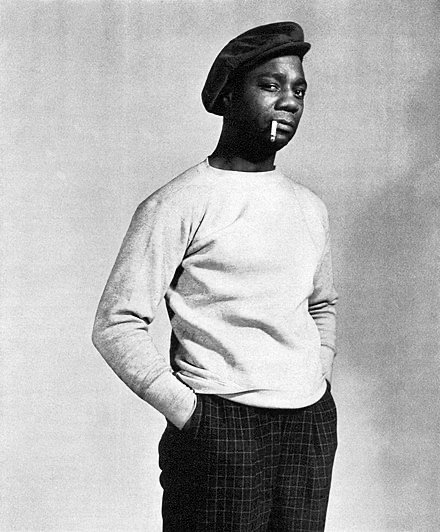
Photo image credit: Canada Lee as Bigger Thomas in the original Broadway production of Native Son (1941), photographed by Carl Van Vechten.
(c) Lou Agosta, PhD and the Chicago Empathy Project

Fake empathy in Black for a Day by Alisha Gaines (Reviewed)
Book Review: Fake Empathy in Black for a Day: White Fantasies of Race and Empathy by Alisha Gaines (University of North Carolina Press, 2017: 212 pp)
This reviewer is inclined to compare Black for a Day to Leonardo da Vinci’s masterpiece “The Last Supper.” Leonardo’s painting was a fresco, which is made by applying paint to wet plaster. The plaster for Leonardo’s fresco did not dry properly and the painting began to peel almost immediately. The painting has had to be continuously patched up ever since then. Leonardo’s masterpiece “The Last Supper” has, therefore, been called “a magnificent wreck.” So is this book, Black for a Day.
Black for a Day paints an engaging and indeed fascinating picture of individuals (most but not exclusively white) who try to masquerade, to “pass as,” to impersonate, black people. It is a page-turner and eye-opening. Parts of it are confronting, and definitely not for the faint of heart. The short review: if one begins with pretense, deception, and inauthenticity as input, then one gets pretence, deception, inauthenticity—and fake empathy—as output. Black for a Day, as indicated, includes a fascinating account of what amounts to social psychology experiments gone bad. White people putting on the equivalent of black face, pretending to be black, is a bold experiment, which, however engaging as a kind of misguided role playing, does not work as designed or intended. Yet, such a mixed result no more invalidates a rigorous and critical empathy than that Roman soldiers hammered nails into the limbs of the people they were crucifying invalidates carpentry. The entire matter is nuanced and complex and the longer review follows.
Alisha Gaines, professor of English at Florida State University, begins with a personal reflection on her participation her high school’s production of the Broadway hit musical Finian’s Rainbow in 1996. Now Finian’s Rainbow was a Broadway musical first produced with considerable success in 1947. It is a fairy tale, including a pot of gold, a leprechaun, and a mythic creature with green skin. I acknowledge that I need to get out more, and I thank Professor Gaines for calling Finian’s Rainbow to my attention.
Finian’s Rainbow was made into a major motion picture in 1968 directed by Francis Ford Coppola staring Petula Clark (her hit song “Downtown” was a “hit”) and Keenan Wynn. The main action occurs when a racist US Senator modeled on the historical Theodore G. Bilbo, but reminding me of Jesse Helms, another notorious racist in the US Senate, is magically turned into a black person. This magically transformed Senator gets to walk in the shoes of the despised, devalued Other, presumably while singing various Broadway hit show tunes. As Black for a Day properly points out the empathy is “painted on.” Furthermore, if the empathy lessons were so well learned by the racist senator, then why was he so eager to be transformed back into a white person (which he is as part of a happy ending)? Unconscious biases, white fantasies, and prejudice, strike again! They continue to do so in the remaining, non-fictional, chapters.
One may say, prejudice is prejudice and all prejudices are alike, and there would be truth to that. Yet when one looks at the dynamics of prejudice, one cannot simply substitute the underlying dynamics of racism against black people for antisemitism or sexism or for homophobia.
The fantasy of black hyper masculinity is repressed as a source of anxiety challenging the white male’s (imagined) inadequate sexual potency. It then gets reversed and projected onto the devalued Other, who comes at the white man as white woman’s desire for the stereotyped hyper sexed black man
For example, Elisabeth Young-Breuhl. (1996). The Anatomy of Prejudices: page 367:
“The white male’s mythological contractions of black male sexuality – the images of Negro phallic power, animal lust, and rapaciousness – signal the jealousy and resentment over the black’s defilement pleasure, and they also reflect the white male’s anxiety that white women really desire the black’s aggressive sexuality.”
In contrast to the hysterical fantasy of the over-dramatized black male, the Jewish person is made the target of an obsessional paranoid over-intellectualization – the totally fictional worldwide conspiracy of the Protocol of the Elders of Zion. In the case of homophobia, one stays with the dynamic of difference for one has to project that, in a certain sense, the boy finds other boys attractive, in that special sexual way, and must defend against being a “fag” be perpetrating acts of aggression. Nor should the sexism and misogyny be overlooked. In the case of the prejudices of racism (in the narrow sense against blacks) and antisemitism the devalued, despised Other becomes the target of projections one of own inner black and jew in every imaginable positive and negative sense. The differences collapse – inwardly I am the despised Other and get rid of the negative value by externalizing it. In the sexism, the anatomical difference between the sexes is such that the difference is impossible to deny, so the Other must be denied, deleted, “killed,” in order to reestablish integrity of the self. In the prejudices stereotype, the Other – the woman in this case – is hated for being inferior cognitively, physically, and so, even as the male harbors a certain womb envy. One should try to keep these complex, simultaneously changing variables in mind in confronting, deconstructing, and debunking prejudices of all kinds (see Young-Breuhl 1996 for a magisterial account). Meanwhile –
The main action of Black for a Day leaves the Finian fairy tale behind, in order to engage with confronting racial stereotypes—the “white fantasies of race” called out in the book’s subtitle—such as the stereotype of the hyper-sexed black Mandingo male and the morally loose black woman, fantasies everyone. However, the main fantasy that “racial impersonation” brings forth is empathy. The narrative of Black for a Day consists in critically reviewing several non-fiction narratives of individuals, born Caucasian, who go “under cover,” changing the color of their skin cosmetically and chemically from white to black, in order to “pass” as African American while travelling in the American south (or, in one case, Harlem) in the late 1940s and 1950s. Ray Sprigle, John Howard Graham, Grace Halsell, the cast of a Fox Reality TV show called Black.White (the latter show bring an exception in premiering in the year 2006) engage in what may be described as a bold, though misguided, experiment in social psychology (my terms, not Gaines’). This is supposed to produce empathy between the races and/or in white people for black people, but what it actually produces is fake empathy. Key term: fake empathy (once again, my term, not Gaines’).
On background, the reader may usefully recall that Finian’s Rainbow is a Broadway musical written in 1947. The Civil Rights Act was passed in 1964, making Jim Crow laws illegal. The Voting Rights Act was passed in 1965, giving counties with majority black populations the ability to register to vote and elect their own sheriffs, a much-needed step in the direction of obtaining social, political, and criminal justice. The importance of this step should not be under-estimated, even as much work remains to be done today (2023), and as the US Supreme Court orders appointing a Special Master to redraw Alabama’s racially gerrymandered Congressional districts. Nor should one overlook that Wikipedia reports that one of the last lynchings occurred in Mobile, Alabama, on March 21, 1981 of Michael Donald. One perpetrator Henry Hays was executed by electric chair for the crime in 1997, one year after Gaines’ high school production of the fairy tale. Tough stuff, and not for the faint of heart. Nevertheless, this is on background and is not mentioned, though arguably implicated, in Black for a Day.
The motives of Sprigle, Graham, Halsell, and so on, were as diverse as the individuals themselves. Ray Sprigle was a Pulitzer Prize (1938) winning journalist, whose muck-raking writing tended to be sensationalist, emphasizing what Black for a Day describes as “Dixie-terror” against blacks while ignoring discrimination in the North. Gaines properly points out that Sprigle had a blind spot around the fact that black people were the victims of discrimination even in Northern States. In that context, however, this reviewer finds Black for a Dayproblematically asserting: “Although Sprigle’s original motivation was his career, he does his part to fulfill Myrdal’s dogma,” referring to Gunnar Myrdal’s An America Dilemma: The Negro Problem and Modern Democracy (1944 (2 vols)).
The reader may usefully recall that Myrdal’s work was originally published in 1944, and Sprigle had started his experiment in 1947. Readers had little time to engaged the 1500 pages much less make it into a dogma in those three years. Myrdal’s two volume work cannot be summarized here, but one important challenge that it made to its readers was to stop being hypocrites, pretending to “all men (persons) are created equal,” while perpetrating Jim Crow laws, lynchings, and other forms of oppression and prejudice. That Myrdal’s work has become accepted “dogma,” notwithstanding its historical limitations in the eighty years since it was published is not an entirely bad thing. If this be dogma, stop being hypocritical, then make the most of it. Finally, to imply that the journalist, Sprigle, had some sort of career conflict of interest for wanting to win another Pulitzer Prize is concerning. This is not a conflict of interest – this is a journalist trying to do his job. The extent of his success is, of course, an open question.
Meanwhile, Myrdal needs no defense from me (nor am I capable of one here), but Myrdal does need one from Black for a Day, which charges him, accurately enough, with not having innovated in the matter of African-American History and/or Academics (p. 43), and, less charitably, of appealing to the consciences of the white people (p. 10) with his accusation of hypocrisy instead of advocating for Black Power (my use of the term at this point, not Gaines’) through economic, politics, and legislation. However, while I might be mistaken, a cursory find function using the Internet Archive of Mydral’s work disclosed hits on W. E. B. Du Bois, Ralph Bunche, and E. Franklin Frazier, the “erasure” of whose academic labor Black for a Day accuses Myrdal of having enacted (2017: 43; Myrdal 1944 passim). No pass on that one. The references were already there in the 1944 edition. It is hard not to be cynical – 1500 pages and still not enough footnotes, nor does Myrdal have the distinction “Critical Race Theory”!
Myrdal maintained that northern whites were, in effect, living in their all-white enclaves, ignorant of the struggles of Negro citizens and would-be citizens. With that in mind, the flurry of journalist activity exemplified in Black for a Day by Sprigle, Graham, Halsell, etc., might usefully be redescribed as attempting to address informatively the white ignorance, the depths of which we have still not exhausted, with their respective journalistic reportage and social psychology undercover work. Black for a Day makes it sound like one has to decide between morality and empathy versus economics and legislative action. Why would someone force a choice like that? Don’t we need all of the above?
By the way, a search of Myrdal using the find function does not disclose a single occurrence of “empathy” or “cross racial empathy” or “cross-racial empathy” (note the hyphen), though the word “segregation” does get 592 matches and “Southern” over a thousand. So, Myrdal was fighting a different battle. Or was he? As noted, in Q2 2023 the Alabama State legislation had its gerrymander voting districts declared invalid by Supreme Court – again. Presumably a federal judge will be appointing a Special Master to complete redistricting to allow for another black-majority Congressional District. It is not only microaggressions, which Gaines calls out as having endured, that are troubling (though they are surely that). Macroaggressions are concerning, too.
Still, it is never simple to distinguish cause and effect, and the informal social psychology experiments of “passing,” going under-cover, and assuming a false identity, present a tangle of issues. Black for a Day tries to disentangle them by committing to the position that such impersonations resulted in false consciousness – the illusion of racial understanding. Disagree. On the contrary, this reviewer allows for the likelihood that, especially between 1947 and 1965, a significant number of white folks, including some of my grandparents’ and parents’ generations, found their appreciation of the struggles for social justice and against racial prejudice to be expanded by these journalist “exposés,” notwithstanding their limitations. As for causes, the passing of the Voting Rights Act was caused, in the strict sense, by the fact that the Democratic Party had a super majority in the US Congress and were able to surmount the filibuster of the Southern Segregationists. That was the cause. Full stop. The rest is speculation. It turned out that President Johnson (LBJ) was a closet progressive (but, unfortunately, not on foreign policy).
Meanwhile, John Howard Graham was a Saint of Empathy (my term, not Gaines’). Graham escaped from genteel Southern privilege in north Texas to study in France at the age of fifteen, going on to study psychiatry in France. According to Gaines, after studying psychiatry, Graham helped to rescue Jewish children from the Nazis by pretending they were mentally ill and sending them abroad. In the US Army in World War II, Graham was knocked head-over-heels unconscious by a near miss of an artillery explosion. The head trauma left him blind. Graham spent ten years learning to function as a blind person before seemingly miraculously regaining his sight.
As near as I can understand the story, Graham’s project of studying racial prejudice led him to send out a questionnaire as part of what amounted to a seat-of-the-pants social psychology experiment on what it was like to be black. Most of the response were blank – arguably an expression of contempt – but a few black responders insisted he would not understand what black people were experiencing without “getting inside the skin” of the black person. Even if it was a “hair-brained” idea to try to change his racial identity, on my reading, Graham was a man of integrity with a lot of social scientific (and psychiatric) curiosity and no more unconscious bias than the population as a whole.
Never was it truer, correlation is not causation. Meanwhile, John Howard Graham’s memoire was made into a move Black Like Me in 1964, staring the well-known actor James Whitmore. As Black for a Day points out, Whitmore’s make-up looked fake – Gaines’ text has photos – as if he had escaped from a minstrel show in black face. However, the outrages depicted in his encounters with segregation and racism, even though clumsily enacted, were real enough and helped stoke the outrage of the audiences against injustices, social, political, and legal.
In every case, Springle, Graham, Sewell, and the Fox reality TV show Black.White, appear to this reviewer like social psychology experiments that go off the rails, even as they become eye-opening paradigms of the apartheid-like status of black people in 1947, including the unconscious bias of both the investigators and their subjects, and the near delusional fantasies of the families on the Fox Reality TV show Black.White (2006). (Note “Black.White TV” is also a pun since TV was broadcast only in black and white until color TV because common around 1966 in the States.) There is a long history in social psychology of experiments “blowing up” and failing, albeit in ways that are more engaging than most standard social psychology outcomes that differentiate some obscure distinction by a percentage or two.
As regards social psychology experiments that go off the rails, the reader may recall Philip Zimbardo’s 1971 Stanford Prison experiment. Severely criticized for ethical and scientific lapses, this experiment divided research subjects into Prisoners and Jailers and then took extensive notes on what happened. The experiment had to be stopped as the jailers became sadistic, abused their power, and the prisoners were getting ready to revolt violently.
In another experiment that was not stopped, but some wish it had been, Stanley Milgram (1963) gives the research subjects a device to deliver electric shocks if the remoted learner in the other room gives the wrong answer. The electric shocks are fake. There were no real shocks administered and the supposed learner subjects were “confederates,” part of the research staff. However, the willingness to follow orders was shocking (no pun intended) as people obeyed commands from the white-lab-coat-wearing authority in charge to deliver voltages that would have gravely injured or killed a person if actually administered as the confederate shouted in fake agony, pounding on the walls in fake distress from the next room.
Milgram’s experiments did not have to be stopped, since no one was shocked, but the results are deeply disturbing. We learn that people are obedient to authority to an extent that seems to entail an altered state of consciousness such as a hypnotic trance, perhaps like the concertation camp guards and other perpetrators of suicide bombings or war crimes. Though not quoted by Black for a Day, Lord Acton comes to mind: Power corrupts and absolute power corrupts absolutely. So, much precedent exists for social psychology experiments that fail spectacularly, and yet disclose disturbing results in spite of their limitations about people’s aggression, sheep-like obedience, out-and-out thoughtlessness, seeming incapacity for critical thinking – and racial prejudices; likewise with Gaines’ work?
Gaines does not make such a connection with social psychology, nor does she necessarily need to do so. A number of responses from black people suggested to Graham that he could never know the black person’s struggle without literally getting inside the skin of a black person. But that was his commitment – so that is what he tried to do. Remember, Graham person rescued Jewish children from the Nazis by pretending they were mentally ill and sending them abroad – a righteous use of deception if I have ever heard of one. Still, it turns out that changing one’s exterior color and working for a few weeks on changing the interior conversation makes great headlines, but does not work in establishing empathic relatedness. How could it?
Empathy is based on being authentic about who one is in relating to another person. Empathy is based on integrity and being straight with the other person to and with whom one is trying to relate. So the idea of starting off by pretending to be someone who one is not – impersonating a person one is not – is not going to produce empathy. One cannot start out by being a fake and expect to produce an authentic relationship. Hence, the idea of an empathic impersonation is a contradiction in terms.
Staring with the integrity outage of impersonation does not create integrity – or empathy. It does not make a difference if one adds “race” to the mix. Empathic racial impersonation still results in fake relatedness and fake empathy. Now one may still learn a lot by going “under cover” and seeing how other people behave when they think you belong to the “in group” (in this case the “in group” of Southern segregationists or Northern racists), but one is going to get a complex, morally ambiguous integrity outage rather than an authentic relationship.
In short, the muck-raking, memoires and experiments, of Sprigle, Graham, Halsell are social psychology experiment that go “off the rails.” The same can be said of the consistently devaluing assessment of these works in Black for a Day. These experiments, including Gaines’, provide engaging adventures and misadventures the demonstrate that when one starts out by faking solidarity, integrity, relatedness, and empathy as input, then one gets fake solidarity, fake integrity, fake relatedness, and fake empathy. This is not surprising. Fake in; fake out. The author calls this “empathic racial impersonation.”
Along the same lines, one might rewrite Black for a Day to leverage Frantz Fanon, whose thought does get referenced but not really developed, to invalidate Sprigle, Graham, Halsell, etc., along the following lines: Fanon’s Black Skins, White Masks notes a certain blind spot – one might say false consciousness – in survivors of colonialism, black people who pretend or fake white mannerisms, customs, styles, etc., for so many reasons, including in order to survive in a hostile, racist community. Now we have white people (Sprigle, Graham, Halsell, etc.) pretending (faking) being black. So, by the transitive property of logic, these white people are pretending to be black pretending to be white – that is, they are white, pretending to be white. Of course, this is a reduction to absurdity, and an over-simplification, but it might have shortened Gaines’ book and argument. Still, it devalues the possibility and application of empathy to promote racial understanding.
So does Black for a Day. Gaines (2017: 8, 171) claims to get her definition of empathy from Leslie Jamison and bell hooks. First, following up on bell hooks’ Black Looks: Race and Representation (1992), there is much about the relation to the Other and Otherness that resonates with my own interests. Speaking in the first person for emphasis, I get my humanness from the Other. In a strategic reversal, the infant humanizes / creates empathy in the parent; the student humanizes / creates empathy in the teacher; the patient, in the doctor; the customer, in the business person. The infant, in her lack of socialization, calls forth empathy in the parent to relate socially. The problem is that in bell hooks the Other relates to the one (and vice versa) in colonization, domination, subordination, imperialization, exploitation, manipulation. Nor do I dispute that these ways of relating are all-too-common. One reader finds a critique of empathy in bell hooks, whereas I find a critique of white supremacist capitalist patriarchy, which indeed deserves debunking. Her (bell hooks’) book uses the word “empathy” four times in the standard way without defining it. Arguably hooks’ essay “Eating the Other” (1992) is an implied definition of empathy – though a diligent search does not turn up the word “empathy” in the essay.
The challenge is that empathy is not “eating the other,” either literally or metaphorically. If anyone wishes to cite hooks’ magisterial authority, then the alternative point of view is that “eating the other” is the breakdown of empathy into merger, not the respectful distinction that maintains the integrity of the self and Other in the practice of a rigorous and critical empathy. If one starts by eating the Other (in any sense), one does not get to empathy. Eating the Other is a mutilation of the Other and a mutilation of empathy. If one arrives at eating the Other (in any sense), one has not gotten there via empathy. One gets empathy mutilated by emotional contagion, projection, conformity, and so on. One gets various fragments of humanness and human beings that are the breakdown products of empathy under capitalism, patriarchy, imperialism, oral aggression, and so on. However, above all else – one gets indigestion.
Second, Leslie Jamison’s “Empathy Exams” (2014) is credited with the strategic ambiguity between the gift of empathy and invasion of the Other (though I would argue that falls short of a proper definition). Here are the facts. Ms Jamison is a struggling writer, and she gets a job as a medical actor. She is given a script in which she plays the role – pretends to be – impersonates – someone who has a major mental illness. This is part of medical training and the medical students know the medical actor is not a real patient. The medical student must question the “patient” and interact with the “patient” to establish the best diagnosis of the disorder. Speaking personally, I teach a class at Ross University Medical School that uses films with medical actors doing just that – and the students are challenged to get the best diagnosis. As far as I know, Jamison is not in any of the films. Furthermore, the “patient” then provides feedback to the student and the medical authorities on how empathic the MD-in-training was in questioning and relating to the “patient.” That is the empathy exam.
This must be emphasized – and empathized – the integrity of the situation is intact – no one is pretending to be really ill when they are not, or black when they are white, and so on, and people understand the exercise as training; thus, Jamison’s penetrating and engaging and amusing account of her misadventures as a medical actor. In any case, the medical actor does not pretend to be mentally ill the way the Sprigle, etc. pretended to be black. The medical actor and the student MDs know the actors are acting. All the world is a stage, but the audience does not jump up on it to try and rescue the innocent orphan from the villain.
The experiments of Sprigle, Graham, Halsell, etc. provide strong evidence, and I believe Gaines would agree, that when one attempts to take a walk in the other person’s shoes, it is harder to take off one’s own shoes than it might at first seem. Sprigle and company are trying to put the Other’s shoes on, but they cannot quite get their own off. They struggle mightily and I give them more credit for the effort than Gaines.
Staring with the integrity outage of impersonation does not create integrity – or empathy. I hasten to add it may expose the hypocrisies of Southern segregationists who claims that black people are happy with their subordinate roles (yet another white fantasy); or it may expose the unconscious biases (not explicitly invoked but ever present) of Northerners or the microaggressions of white liberals (and many others), who after all still struggle with racial stereotypes and the “white fantasies” of the subtitle of the stereotypes of the hyper-sexed black male or promiscuous black females. However, that is the thing about fantasies. There is nothing that prevents black people from having them too, though based on different experiences and in a different register than their white neighbors. The really tough question is whether Black for a Day believes that the possibility of racial cooperation and/or harmony – whether as an exemplary cooperative rainbow coalition or peaceful coexistence – is itself a mere fantasy – and so unlikely of realization. The steady drum beat in Black for a Day which calls out “empathic racial impersonation” sixty-five times in some 171 pages provides evidence that this is the main fantasy being debunked.
Back covers of books are famously misleading, but after reading Black for a Day line-by-line, cover-to-cover, I believe the cover accurately represents the author’s position. I am not aware that anyone, black or white, has ever said – as does the back cover of Black for a Day – that “empathy is all that white Americans need” (my italics) to racially navigate social relations. With the exception of the second to last paragraph of Black for a Day, the reader does not find a single statement in this book that is positive about the practice of empathy. None. One does not find a single example in the text of a rigorous and critical empathy that works to produce healthy empathic relatedness. If empathy is not “all” that is needed, what then is needed? Someone may usefully ask – because the author has not done so: what then is needed?
The list of what is need is long, but it starts with a small set of related skills such as critical thinking, showing respect, acknowledgement, dignity, rigorous examination of one’s own implicit biases, and, of course, the practice of a rigorous and critical empathy. A case can also be made for reparations for survivors of slavery, such as a college education, but to get there is a whole issue in itself, and that cannot be pursued here. Okay, be charitable and attribute the “all” to the marketing department. However, once again, whatever the source, this “all” – as in “all you need is empathy” – is a nice example of an uncharitable argument, setting up a strawman – not in the sense of the Good Samaritan – but in the sense of engaging with the weakest, distorted, watered-down version of an argument, not the strongest. As noted, positively expressed, the scholarly standard is to try to make the opponent’s argument work.
On background, the point is to be cooperative – “charitable” in Donald Davidson sense (1973: 136–137) – try to make the opponent’s argument work. Though it does not come up even to be summarily dismissed in Black for a Day, a case could be made that the journalist and social scientific experiments made a significant contribution to expanding the consciousness of the struggle against Jim Crow laws, the struggle for civil rights, and social justice, between 1947 and the passing of the Voting Rights Act in 1965. (The “opponent” in this case is the journalist or social psychology experimenter, not the racist, whose argument has been examined and is invalid and full of defects. If Black for a Day tries to make the argument in favor of empathy work, it does not try very hard.)
How shall I put it delicately? Empathy doesn’t work on or with those suffering from psychopathic personality disorder, delusional disorders, certain forms of childhood autism, or lynch mobs. IF you encounter any of these, especially the latter, dial 911 and call for backup such as the FBI and the FBI hostage negotiation team, who do actually practice a kind of Red Team empathy to take a walk in the shoes of one’s opponents (such as the racist sheriff or white supremacist, survivalist hostage taker).
In contrast, the practice of empathy in the class room, therapy, coaching, clinical practice, and medical training (see Jamison above on the “Empathy Exams”), requires the creation of a safe space in in which people can be self-expressed, open about who they are authentically, and emotionally vulnerable without being bullied or subject to microaggressions. Indeed that is the one-minute empathy training – drive out bullying, aggression, prejudice (there are so many kinds!), cynicism, resignation, judgment, evaluation, politics in the negative sense, then empathy naturally and spontaneously comes forth. People want to be empathic, if given half a chance.
In all of these difficult situations of dealing with difficult and even hostile people, the empathic practice consists in setting boundaries, establishing limits, and all necessary measures of self-defense. There is the practice of a kind of radical empathy in nonviolent civil disobedience as taught by Gandhi and King, which powerfully appeals to the conscience of the racist sheriff by accepting the punishment of the fine or two weeks in jail. Note that implies there is a community, however broken, because the racist sheriff is credited with having enough conscience to think “something is wrong with a system that punishes someone for trying to come in through the front door and sit in for lunch at the local diner” Nor is this relevant only in 1947 for in Q2 2023 the Alabama State legislation had its gerrymander voting districts declared invalid by the Supreme Court again in Q2 2023. As noted, it is not only microaggressions that are so troubling.
Hindsight is 20-20 and Gaines’ work is rich in it – the last lynching was supposedly in 1981 (see Wikipedia article cited below), but the cop’s knee on George Floyd’s neck occurred in 2020. In July 2022, Derek Chauvin was sentenced to 21 years in prison (where Chauvin is today) for violating Floyd’s civil rights. An example of an uncharitable argument would be to charge the author with not acknowledging this ongoing macroaggression – more problematic is that one can and should oppose both microaggression and such macroaggressions as the risks of wide spread disenfranchisement of minorities, militarized police behavior that does not protect minority communities while profiling them for super-surveillance, and the effective banning of teaching African American history in HS’s in Florida where, coincidently, the author teaches college. It is easy to be cynical and resigned and propose “empathic racial impersonation” as another sixty-five bricks in the cynical wall of interracial relations. The hard work consists in driving out cynicism and resignation and allowing empathy to expand in the individual and community.
And while we are elaborating fantasies, all the times that empathic connections were being attacked, invalidated, faked, and impersonated, I am deeply ashamed to acknowledge that I had the fantasy that empathy was being lynched, lynched as retributive justice for not making a difference during all those body and soul murdering lynchings that occurred and are still occurring during encounters with unprofessional police. If you encounter any of these, then take action to set boundaries, reestablish limits, and recover safety and security. However, the misfiring and breakdown of empathy into fake empathy does not invalid empathy as such or its ability to make a profound difference in conflict resolution when deployed by a skillful partitioner. As I like to note, empathy should never be under-estimated, but, once again, empathy does not work with psychopaths, certain kinds of autism, most bullies, and lynch mobs. I am skeptical after Gandhi, King, and Malcolm, to add race relations to the list, notwithstanding that Black for a Day has tried to make a case for doing so.
Black for a Day may object that the critique of empathy only applies to the limited and unconsciously biased practices of Sprigle, Graham, Halsell, and so on. However, Black for a Day has at least one significant blind spot of its own. In 171 pages of adventures and misadventures there are sixty-fives uses of “empathic racial impersonation,” which I determined in a line-by-line reading as the distinction is not in the index. In every case without exception as the impersonator tries to reach an understanding between the races, the interaction fails, misfires, and devolves into false consciousness of “empathic racial impersonation.” No good comes of it. White people can’t be anything but white (see above). There is not a single instance of a successful practice of empathy or clearly attained understanding between two individuals of different colors resulting in authentic empathic relatedness. Not one in 171 pages. Except for the second to last paragraph of the book, the practice of empathy is dismissed and devalued. In this one instance of a near miss of interracial empathy, with Carmen and Rose, mother and daughter (white pretending to be black), they are ever-so-close to reaching an expanded appreciation of the struggles of black people, but their experiences are invalidated. Gaines writes: “Both Rose and Carmen come away from this project with a profound sense of alienation. They feel a wall – one built by history, suspicion, paranoia, stereotype, and assumptions they conclude are nearly impossible to either penetrate or scale” (2017: 155).
This reviewer protests. I repeat with urgency: Why is it that in 171 pages of penetrating and incisive and dense description, there is not a single instance of successful empathy? Why is there not one example of what a healthy example of successful empathic relatedness would look like so that one could identify it if one happened to run across it? Possibly the author has never seen or experienced one, but I do not accept that as the author is a sensitive, intelligent, empathic human being. My hypothesis is that the author has a grievance about the microaggressions – the dignity violations – to which she was unempathically and disrespectfully subjected; and one must agree that there are many things exist about which to be aggrieved. This results in the possibility of a rigorous and critical empathy – authentic empathy – being lost in the mistranslation of “empathic racial impersonation.” “Racial impersonation,” yes – but fake empathy is not empathy. Fake empathy has little or nothing to do with empathy, which remains unclarified by this work or its subtitle.
At every turn – I counted them – sixty-five times, we get “empathic racial impersonation,” and the steady drum beat of invalidation. Empathy goes off the rails as projection, conformity, bad faith, conscious and unconscious bias, communications lost in translation. Indeed, empathy is a most imperfect practice, nor are these struggling and misguided impersonators given the benefit of the doubt. Black for a Day does not engage with the strongest version of the argument that empathy is valuable. Empathy is the weakest, watered-down, or distorted one – “eating the other” or being a fake medical actor. Hmmm. Positively expressed, the scholarly standard is to try to make the opponent’s argument work rather than engaging with a distorted, strawman version of it. The one possible exception is if an author wishes to write a polemical piece. For example, Nietzsche explicitly subtitles his Genealogy of Morals “A Polemic.” If that is the author’s intention here, it is nowhere expressed, for example, in the preface.
Absent engaging in polemics, the point is to be cooperative – “charitable” in Donald Davidson’s sense (1973: 136–137) – try to make the opponent’s argument work. Though a whole essay is be required to explain “charity” in this argumentative sense, a short version of a charitable position might argue that, through the efforts of Sprigle, Graham, Halsell, ”reality” Black.White TV, and so on, were clumsy and ultimately flawed, the consciousnesses of poorly informed (and prejudiced) white people were expanded in being exposed to the injustices with which black people were struggling, and going forward black people can be counted on to take economic and legislative action on their own behalf.
As Malcolm-X said to his black audience, “You didn’t’ land on Plymouth Rock; Plymouth Rock landed on you.” The “opponent” in this case is the social psychology experimenter, who is seeking interracial understanding, not the racist or white supremacist, whose argument has been tested and is invalid, full of defects. Malcolm-X: The white man (person) has behaved like the very devil – indeed is the devil – and if the black person is waiting around for help from the white person, it is going to be a long wait. That is agency: Get to work, which arguably Gaines has done, attacking every empathic connection she could find. Nevertheless, Malcolm modified his view when he encountered white Europeans, Middle Easterners, and especially Islamic people of good will, who championed the causes of social justice and black economic progress in the US.
Though the contributions of Sprigle, Graham, Halsell are flawed – deeply flawed – in the time of Jim Crow, before the passage of the Civil Rights and Voting Rights Acts in 1964/65, these pioneers contributed to rousing the conscience of the nation against the injustices of segregation in the south and alternative forms of discrimination in the north. What they did not do is invent or promote Black Power – black agency – in calling forth economic, political, and legislative action to improve black lives. What they did not do is address the problem of microaggressions, dignity violation and insults that cumulatively add up to significant narcissistic injury. Such insults, subtle meanness, and narcissistic slights have existed from time immemorial, but the distinction “microaggression” as such was first articulated in 1970 Harvard University psychiatrist Chester Piece (according to D. W. Sue 2010).
An example from Black for a Day? The author’s seventh grade history teacher – tin-eared, hypocritical, racist, or just having had the class read Incidents in the Life of a Slave Girl (1861) by Harriet Jacobs, or all of the above – asks the young Gaines to explain to her classmates what slavey was really like (2017: 2) – as if Alisha had been a slave?! Such a dignity violation is exemplary of what sounded like – but I am guessing – a difficult if not hostile and unempathic environment (and that is matter for the author’s memoire, not this text). It is no wonder that the author is aggrieved. Even enraged. But why against empathy?
One may argue back: No, no, Lou, you just don’t get it – the grievance is against “empathic racial impersonation.” Okay fine. I assert that I got that. Here is the problem with that: when one starts out with impersonation to deceive the Other, then one is going to be prevented from relating to that Other authentically as is required by and with empathy. “Empathic impersonation” is fake empathy. So, coming from impersonation, the attempt to practice empathy based on an integrity outage is not going to work.
Never under-estimate the power of empathy, yet empathy is not going to work coming from an integrity outage. Now impersonation might produce credible undercover journalism; it might produce legally admissible undercover police work; it might produce engaging war games at the Pentagon where the Red Team takes a walk in the Blue Team’s opponent’s shoes to sink their ships in an imaginary Persian Gulf scenario; it might even produce an engaging social psychology experiment in which “confederates” of the experimenter pretend to be who they are not to disclose unconscious bias. However, what such impersonation is not going to produce is empathy. “Empathic impersonation,” as noted, is a contradiction, and blows itself up. It is not going to produce authentic person-to-person understanding of who the other person is as a possibility of relating with openness and integrity. One does not get to integrity and openness by being closed off and deceptive. Well and good. Gaines and I are in agreement about the problematic nature of impersonation; where I take strong exception to Black for a Day, is the claim that this is a valid critique of empathy.
I comment on Black for a Day as the author of three peer-reviewed books on empathy (2010, 2014, 2015). I grew up in Chicago, so the Jesuits who taught me world history and US history included liberation theology and significant elements of what was then called “Black History,” but I am no authority on either of the latter. However, regarding empathy, I have done my homework, though in a deep sense I am no more or less empathic than any parent with children, doctor with patients, business person with customers, or teacher with students. Empathy is a high bar. On a good day, I get there; on other days, I struggle like everyone else.
What my empathy suggests to me is that the author is aggrieved about something – maybe a lot of things – possibly microaggressions – and I am inclined to say, “It sounds like you could use some empathy – please count on mine!” However, based on the text, she is not asking for it – empathy – does not see value in it – and seems to find satisfaction in attacking every possibility of empathic connection that comes forth. When it comes to empathy, Gaines does not “get it” – in just about every sense. Gaines fails a readiness assessment for the practice of a rigorous and critical empathy – does not commit to or try to create a safe space in which a debate or empathic listening could occur. One could argue back – one is human, therefore, ready or not, here comes empathy; and one is ready for empathy whether one likes it or not, and the point must be acknowledged – there is an unwillingness to engage with the strongest version of a rigorous and critical empathy rather than a watered-down weird “eat the other.” In short, the rumor of empathy remains a rumor in the case of Black for a Day; the rumor is not confirmed; and empathy does not live in this work. It is where empathy goes to become fake empathy. Don’t go there.
References
Authors of Wikipedia. The lynching of Michael Donald: https://en.wikipedia.org/wiki/Lynching_of_Michael_Donald [checked on 2023-09-24]
Donald Davidson. (1973). Radical interpretation. In Inquiries into Truth and Interpretation. Oxford: The Clarendon Press, 2001: 125–139.
Milgram, Stanley (1963). “Behavioral Study of Obedience”. Journal of Abnormal and Social Psychology. 67 (4): 371–8.
Gunnar Myrdal. (1944). An American Dilemma: The Negro Problem and Modern Democracy, 2 Vols, 2ndEdition (1965). New York: Harper and Row”
https://archive.org/stream/AmericanDilemmaTheNegroProblemAndModernDemocracy/AmericanDelemmaVersion2_djvu.txt[checked on 2023-0925]
D. Wing Sue. (2010). Microaggressions in Everyday Life: Race, Gender, and Sexual Orientation. New York: Wiley.
Elisabeth Young-Breuhl. (1996). The Anatomy of Prejudices. Cambridge, MA: Harvard University Press.
Philip Zimbardo. (2008). The Lucifer Effect: Understanding How Good People Turn Evil. New York: Random House.
(c) Lou Agosta, PhD and the Chicago Empathy Project

Mutilated empathy in MIGRANT AESTHETICS by Glenda Carpio
Review: Mutilated empathy in spite of itself in Migrant Aesthetics: Contemporary Fiction, Global Migration, and the Limits of Empathy by Glenda Carpio (New York: Columbia University Press, 223, 285pp.)
Glenda R. Carpio is well-known for her work Laughing Fit to Kill: Black Humor in the Fictions of Slavery (Oxford 2008). This work succeeds in a high-wire balancing act in transforming racial stereotypes meant to devalue into humor that liberates, humanizes, and transfigures as only the artform of jokes can do.
There is almost nothing that can be said about making jokes about race that cannot be distorted or misunderstood. The entire field of humor is fraught, and the more edgy and confrontational the joke or skit, the funnier it is—until it isn’t. Someone gets their feelings hurt and the potential laughter mutates into rage. Therefore, I am not going to tell a joke. I am going to make a generalization, which is definitely not as much fun. Acknowledging that reasonable people may disagree, I note the close relationship between humor/jokes and empathy.
For purposes of this review, the folk definition of empathy will suffice—take a walk in the Other’s shoes after first taking off one’s own to guard against the misfiring of empathy as projection. In empathy one navigates the firm boundary between self and Other with dignity, respect, recognition, and acknowledgement, in creating a community of self and Other. A rigorous and critical empathy maintains firm boundaries between self and Other, guarding against merger, emotional contagion, projection, and other common ways that empathic relating can misfire or go astray. Good fences make good neighbors, as the poet said, but there is a gate in the fence, and over the gate is inscribed the word “empathy.” In contrast with empathy, in joking one crosses the boundary between self and Other with aggression, insulting remarks, sexual suggestions or other violations of community standards—but it is all okay—why?—because it is a joke! Pause for laughter. One jumps over the wall—takes a prat fall backwards over the boundary between self and Other, and if joke works, then the speech act of the joke creates a community in the shared laughter. (On the joke as a speech act that creates community see Cohen 1999; one may say the same thing, it creates community, about storytelling as the speech act corresponding to empathic receptivity Agosta 2010; also of note Wisse 2013.)
The connection of empathy with Carpio’s next work is evident in the title: Migrant Aesthetics: Contemporary Fiction, Global Migration, and the Limits of Empathy (Columbia UP 2023, 285 pp.). Now it is a bold statement of the obvious that empathy has its limits. A naïve merger with victimhood results in pity and sentimentality rather than taking a stand for social justice and positive politics in a productive sense. Nothing wrong as such with having a good cry, but that is already arguably a breakdown of would-be empathy. On the other hand, if one’s eyes get a bit moist that is another matter. Empathy is so fundamental an aspect of one’s being human, that lack of empathy can be seen as being inhuman (e.g., Keen 2008: 6; Blankenship 2019: 38).
The short review of Migrant Aesthetics is that it sets up an either/or choice between ending empire (e.g., colonialism, imperialism, racism, and so on) and expanding a rigorous and critical empathy. Then mutilates empathy by confusing it with projection, emotional contagion, conformity, and other forms of miscommunication. Not surprising, the result is some 285 pages of penetrating analysis in which the reader does not get a single example of the practice of empathy resulting in a successful empathic relatedness in literary fiction. The forced choice between expanding empathy and ending (or limiting) empire must be refused. Both results are needed. More on that shortly.
Meanwhile, the longer review: the practice of a rigorous and critical empathy knows that it can be wrong and can break down, misfire or go astray, flat out fail, as projection, emotional contagion, conformity, or communications getting lost in translation. It is precisely in engaging with and overcoming these obstacles and resistances to empathy that empathic relatedness and community are brought forth. Like with most powerful methods, skills, or interventions, practice makes the master. As a successful and popular teacher, Carpio knows the value of empathy, nor is mention of the word itself required. The good news is that empathy works whether one names it or not, whether one believes in it or not.
As noted, the issue is that in 285 pages of penetrating, incisive analysis of migrant aesthetics (the category, not the title), there is not a single example of what an effective example of successful empathy. The reader is not given a single example of what healthy empathic relatedness would look like, so that one could identify it if one happened to encounter it. This bears repeating: in some 285 pages of summary and analysis of the literary fictions of Dinaw Mengestu, Teju Cole, Aleksandar Hemon, Valeria Luiselli, Julie Otsuka, Junot Diaz, and some nonfiction of others, Migrant Aesthetics does not cite a single example of empathy that works right or functions as designed. Granted that empathy does not always succeed, the reader does not learn what a healthy, rigorous and critical empathy might look like if, rare as it may be, one happened to encounter empathy. None. Not one single example of what empathy looks like when it succeeds in producing empathic relatedness. This must give the reader pause. We take a step back—but not too far back.
If truth is the first casualty of war—try substituting one of Carpio’s key words “empire” for “war”—then empathy is a close second. In an astute and penetrating analysis, consistently engaging and controversial, Migrant Aesthetics periodically pauses to “foreclose empathy” or the possibility of an empathic response. The steady drumbeat of foreclosing, undercutting, invalidating, or dismissing empathy occurs like a recurring rhythm that, to this reviewer, suggests an editorial decision or personal commitment or both.
Now I might be wrong but I understand “foreclose” as used in Migrant Aesthetics, not the Lacanian/Hegelian sense of “aufgehoben,” cancel and preserve, but what one does when one can’t pay the mortgage—hand over the property, abandoning it in lieu of payment. You wouldn’t want to be aufgehoben would you? In any case, the term is used in a devaluing way—like it is a bad thing to empathize at the point of foreclosure.
There are many things about which to be aggrieved in a world inheriting the violent outcomes (still ongoing) of colonialism, imperialism, prejudice, summarized as “empire,” but Migrant Aesthetics’ main grievance is reserved for empathy. I hasten to add that I am against pain and suffering of all kinds including that caused by empire, imperialism, colonialism, and prejudice. I do not carry water for the pathologies of capitalism and call out the distortions of empathy under capitalism. The boss is “empathic” towards the wage slaves in their cubicles—in order to expand productivity. Happy workers work harder and are more productive. The salesman takes a walk in the shoes of the customer—in order to sell him or her another pair!
Granted, Michael Jordan reportedly said that even Republicans (people in the political party) buy athletic sneakers (see also Adams 2016), implying he was happy to sell them while disagreeing politically. Under empire one gets mutilated empathy.
That empathy can be distorted, misused, and pathologized—mutilated—no more invalidates empathy than that Roman soldiers drove spikes into the limbs of the people they were crucifying invalidates carpentry. Admittedly an extreme example, but it does make the point that carpentry is a wholesome and useful practice – and so is empathizing.
In Migrant Aesthetics, the problems of empire are so complex, messy, intractable, one has to blame something—let’s blame empathy—for example, instead of pointing to human aggression as a variable hidden in plain view. Empathy did not and does not succeed in solving these problems, though empathy is a proven method of deescalating violence in situations of conflict. However, note well, there is a readiness assessment for empathy—the parties must be willing to try.
The critique of empire, colonialism, prejudice, and so on, is indispensably committed to empathy for another reason that does not seem to occur to Migrant Aesthetics. Whenever a great injustice is about to be perpetrated, the first step is to deny, suspend, cancel, the empathy of the proposed devalued Other, the soon-to-be-victim. Thus, the comparison of about-to-be-victims to insects, with whom we humans notoriously have trouble empathizing; and thus, the required wearing of the yellow star prior to deportation; and parallel methods of alienation. The perpetrators apply mutilated empathy to the intended victims. No good comes of it.
Migrant Aesthetics does not “get it” regarding empathy, and, strangely enough, risks incurring the aesthetic reeducation that gives comfort to certain forms of fascist thinking that begin by driving out critical thinking, empathy, and, above all, a rigorous and critical empathy. We shall recur frequently to the empathic blind spots of the mutilated empathy of migrant aesthetics (the category, not merely the book) in this review. I hasten to add, this review is long, and engaging with this book has been vexing, albeit an empathic labor of love, but the review is still a lot shorter than the book, thereby sparing you, dear reader, who will not need further to engage after this thorough discussion.
Meanwhile, at the risk of being cynical, consistency is over-rated: Migrant Aesthetics makes significant use of standard empathy, though unacknowledged. The simplest narrative would be unintelligible and would read like the railroad schedule unless one brings empathy to the narrative. One can engage in producing “impassable” distances “between the reader and the text” (p. 39) and a “forceful rejection of readerly empathy” (p. 148), but, having done so, one should not be surprised that the narrative is drained of vitality, strength, energy, and aliveness. And sometimes that is the point as in Ronald Barthes (1953) “writing degree zero,” a “colorless writing, freed from all bondage to a pre-ordained state of language.” Less is more. (For example, see the rediscovery of “writing degree zero” without acknowledging the phrase (Carpio: 11).)
In addition, though reasonable people may disagree, Barthes asserts that in writing degree zero the author is collective and group-oriented. The distinction “choral” as used in Migrant Aesthetics had not been invented yet, but the idea is the various authors “pass around” the manifesto, literary artwork, or press release on which they are working. The sun sets on the individual author’s voice, who, even if she is not dead, joins the FBI witness protection program and goes underground (Barthes 1968).
My assertion is that empathy is indispensable even when employing distancing methods of alienation (think of Berthold Brecht’s Epic Theatre). Perspective taking, taking a walk in the Other’s shoes after first taking off one’s own (the folk definition of empathy), is a necessary condition for making sense out of the story as the occurrence of human events. Indeed a minimalist approach often lets the empathy emerge more forcefully, for example, in Virginia Woolf,’s Nathalie Sarraute’s, or Albert Camus’ writings. Of Migrant Aesthetics’ favorite authors, Teju Cole, Julie Otsuka and Valeria Luiselli are towards the top of the “less is more” in writing list.
A possible way forward (not called out by Migrant Aesthetics), in which, in spite of the resistances and obstacles of empire, empathy and literary fiction intersect productively, is invoking the speech act of conversational implicative. This, as noted, brings forth the didactic alienation effect of Brecht’s epic theatre. “Conversational implicature” is an indirect speech act that suggests an idea or thought, even though the thought is not literally expressed. Conversational implicature creates distance between the reader and the text, which is more like a tenuous suspension bridge of rope over the river rapids in the jungle than a highway on the interstate. Conversation implicature lets the empathy in—and out—to be expressed without the psychological mechanisms of emotional contagion, projection, conformity, and so on, which result in mutilated empathy. Such implicature expands the power and provocation of empathy precisely by not saying something explicitly but hinting at what happened. This distinction (conversational implicature) seems to live in the empathic blind spot of migrant aesthetics. The information is incomplete, the context unclarified, and the reader is challenged to feel her/his way forward using the available micro-expressions, clues, and hints. Instead of saying “she was raped and the house was haunted by a ghost,” one must gather the implications. In an example, not in Carpio, from Toni Morrison’s Beloved, one reads:
Not only did she have to live out her years in a house palsied by the baby’s fury at having its throat cut, but those ten minutes she spent pressed up against dawn-colored stone studded with star chips, her knees wide open as the grave, were longer than life, more alive, more pulsating than the baby blood that soaked her fingers like oil (Morrison 1987: 5–6).
The reader does a double-take. What just happened? Then the casual conversation resumes about getting a different place to live, which one had been having when this erupted, as the reader tries to integrate what just happened into a semi-coherent narrative. Yet why should a narrative of incomprehensibly inhumane events make more sense than the events themselves? When the event are inhumane perhaps the empathic receptivity consists precisely in being with their inhumanity without doing something “human” like weeping or rending one’s garments. No good reason – except that humans inevitably try to make sense of the incomprehensible. “Not a house in the country ain’t packed to its rafters with some dead Negro’s grief” (1987: 6). One of the effects and empathy lessons is to get the reader to think about the network of implications in which are expressed the puzzles and provocations of what really matters at fundamental level. (For more on conversational implicature see Levinson 1983: 9 –165.)
For example, at the end of Berthold Brecht’s Mother Courage, all her children are dead—but she continues to follow the soldiers, selling them gun powder and provisions, more dedicated to her commercial (read: “capitalist”) enterprises than to her children. No catharsis of pity and fear here, and the viewer’s empathy is not mutilated by emotional upset, projection, conformity, and so on. The viewer’s empathy is left with pent up emotional upset that may usefully be directed into changing the social and economic conditions that allow such a possibility. Any maybe that is the point. However, even in this case the distancing does not work without a “top down,” cognitive empathy that gets one to think.
There is nothing wrong as such with Migrant Aesthetics. But there is something missing. The reader (audience) does not find out what a healthy relationship looks like. As for Morrison, she discovers the hope of wholeness and integrity elsewhere in the text, pointing to an example of one as the shadows of the characters are holding hands, indicating the possibility of family (Morrison 1987: 67). Otherwise, migrant aesthetics is littered with limbs and fragments of human beings—both the bones of dead refugees in the desert and emotional trauma—not a whole person in sight anyway. The author may argue back: “You have now got the point—thus, the consequences of empire!” Point taken, yet—the issue is that one is not on the slippery slope to the aestheticization (and anesthetization) of violence, trauma porn, and moral trauma, one is at the bottom of it. The empathy is as mutilated by projection, emotional contagion, conformity, and so on, as the desperate lives of the migrants wandering in the wilderness of empire. Heavens knows, empathy has its limitations, but not one single example of a healthy, robust, effective application of empathy?
As an exercise, the reader is invited to find an example of an empathic relationship in the writings of Dinaw Mengestu, Teju Cole, Junot Diaz, exemplified in Migrant Aesthetics. Once again, there is nothing wrong as such with the roll call of traumatic outrages perpetrated by bad actors and the survivors themselves—yet one must be a tad masochistic to engage with the outcomes of so much toxicity, violence, and aggressive masculinity—so much empire. Tragedy—the artform, not merely today’s news—is rich in examples of survivors who become perpetrators (and vice versa (e.g., 9, 19, 30, 43, 167)) but, without empathy, the result is just catastrophe, wreck, and ruin.
The choice between expanding empathy and ending empire is a false choice. It must be declined. Both are worthy objectives. In two cases, the migrant authors with whom Migrant Aesthetics is engaging get close to a successful application of empathy, but then fall short. The short coming (I assert) is not in Edwidge Danticat or in Karla Carnejo Villavicencio, but in Migrant Aesthetics’ misreadings of their contribution to a rigorous and critical empathy, a misreading that seems designed uncharitably to make sure that empathy is not credited with making a difference.
First, in the case of Edwidge Danticat’s Brother, I’m Dying (which, however, is a memoir not fiction), the author comes close to endorsing the use of Danticat’s work empathically to train U.S. custom officers and immigration workers, directly quoting Danticat: “[…] [F]or if ‘they can only remember that they are dealing with human beings at possibly the worst moments of their lives and not mere numbers or so-called ‘aliens,’ then they would do a better job” (Carpio 2023: 218). But then Migrant Aesthetics pulls back and forcloses the empathy as providing a handbook for welcoming migrants instead of part of systemic empire, for example, that aligns the U.S. imperialism of the invasion of Haiti with the invasion of Iraq. What I can’t figure out is why one has to choose between welcoming those migrants, whether using an empathic “handbook” or not, and further debunking the by now well-known and appalling mistakes of the so-called war on terrorism? Doesn’t the world need both expanded empathy and political action against the abuses of the war on terrorism and imperialism?
Second, Carpio credits Karla Cornejo Villavicencio with being motivated by the belief that literature can create productive empathy, or at least compassion (Carpio: 234), quoting Karla:
Art allows us to feel for the pain of others who have or will experience pain we cannot imagine or cannot ever happen to us. Even if we cannot feel it, or imagine it, that’s just human limitation. A failure of imagination can be compensated by the construction of a sturdy enough bridge of artistic articulation of that pain, and if it’s honest enough, we may not feel it—though in some cases we may—but we will feel for our fellow humans, and that is the job of the artist (Carpio: 234)
However, then Migrant Aesthetics undercuts this quote by detecting “ambivalence” in Villavicencio. Heavens to Murgatroyd! If Villavicencio were not ambivalent about vicariously feeling the pain of Others, one would have to dismiss her as being unempathic. And Migrant Aesthetics actually does something like that as it again tries to force a choice where none is warranted between struggling human beings, the unnamed migrants over whose graves no one has prayed, and contingent forces (including empire, etc.) that force them to migrate and become refugees. Migrant Aesthetics devalues Villavicencio’s empathy for struggling humanity—she almost gets there—but then she does not—and ends on a note of haunting and shame. This steady drum beat of the devaluing of empathy must give one pause. There’s another agenda here with the constant rhythm of dozens of mentions of various forms of empathy, and not a positive productive application of empathy in sight. What’s going on here?
Caprio asserts: “…[W]hat has been my centra argument in this work: that the history of empire is key in understanding the roots of migration at a scale appropriate to its global dimensions (Carpio: 228).” That to be forced from one’s home and become a refuse of the road is surely a source of enormous pain and suffering. Here the connection is direct—cause (routed from one’s home by aggression, starvation, etc.) and effect (pain, suffering). At the risk of over-simplification, yet a compelling one, white Europeans with cannons and machine guns go to Africa and Asia and exploit the natural resources and enslave or dominate the locals. A small subset of the locals is coopted—analogous to the concentration camp capos, both perpetrators and survivors (until they are not) being chosen from the prisoners—to make the job of the ruling class easier. Even the prisoners then become perpetrators as one starving persons “steals” bread or water from another or lies to save his own skin, thereby endangering another. And some of those locals migrant back to headquarters, whether London, Paris, Amsterdam, Berlin, London, New York or Paris.
Now if anyone seriously believes that empathy is going to solve the problems created by empire, colonialism, imperialism, and so, then—how shall I put it delicately?—empathy is being “over sold.” This is usually the first step in setting up empathy as a “strawman” to be blamed for not fixing the many challenges facing civilized human beings committed to building a community that works for all persons.
There are at least two hidden variables behind the problematic causal analysis of empire that would help connect the dots: Human aggression and human hunger (hunger for many things, but here for food). These human beings are an aggressive species—and biologically omnivores. People can be kind and compassionate and empathic, but they also can behave aggressively and violently. Even if committed vegetarians, people also need to eat quite regularly, if not exactly three times a day.
To say, as Migrant Aesthetics does, that the arrival of the white European conquistador and their horses in the new world in 1492 was a catastrophe for the original inhabitants gets the measure of the event about right. In a way, the displacement of the Cherokee Nation from Georgia to Oklahoma is a kind of migration; but not really. It is a death march with strong aspects of genocide.
By all means denounce empire, but a more useful approach consistent with it might be to elaborate an analysis of human aggression, territoriality, lack of education, lack of critical thinking, the disturbing tendency of many human beings fanatically to follow authoritarian figures off a cliff. In that context, empathy is a proven way of deescalating violence and aggression.
Unfortunately, once a “policeman” is kneeling on your neck or someone throws a bomb, it is too late for empathy. The perpetrator fails the readiness assessment for empathy and it is necessary to invoke self-defense. And remember the best defense is a good offense—provided that it is proportionate to the incoming violence (which is notoriously hard to determine). Self-defense, setting limits, establishing boundaries are what is needed. There is a readiness assessment for empathy, and it requires that one be relatively safe and secure in one’s own person. Empathy 101 teaches that empathy does not work an active battlefield, if one is starving to death, or hanging upside down in a torture chamber. Never underestimate the power of empathy—never—but empathy in such extreme situations ends up looking like what the FBI Hostage Negotiating team uses to open communication with the hostage takers, or looking like “Red Team, Red Team!”—think like the opponent in a war game (e.g., Zenko 2015). As it stands, Migrant Aesthetics misunderstands empathy, mutilates it, and then blames empathy because empathy can be misapplied by migrant authors, some of the male members of which are both perpetrators and survivors, for calling attention to their plight and that of the devalued Other within us all.
The dialectic of unanticipated consequences marches on. The “classic” traditional migrant fictions of Willa Cather’s My Ántonia (1918) and Upton Sinclair’s The Jungle (1906) are noticeably absent in streets paved with gold, though one recurring, invariable constant among immigrants, refugees, and migrants is that they all express motivation to make a better life for their children. The Lithuanian migrants in The Jungle claw their way to a conclusion in which they are learning to speak socialist truth to power, having adopted a progressive socialist program that is today considered unradical because it is the law of the land. Sinclair joked: “I aimed at the public’s heart and by accident I hit it in the stomach” as citizens insisted on the Meat Inspection Act the Pure Food and Drug act. The folks in My Ántonia are trying to grow crops in Nebraska, which in the first map of North American was designed as “the great American desert.” In Ole Edvart Rolvaag’s Giants in the Earth(1927), set in South Dakota, also part of the Great American Desert, no mention is made of the original inhabitants, who have already been buried at Wounded Knee, and the main action is the battle against a ferocious climate: snow storms, locusts who ravage the crops, hunger, isolation, cultural alienation of the children, and the stereotypical mad scene of the heroine prior to a Christian-based recovery of spirituality. Though the sustainability of the Ogalala Aquifer continues to be a concern, the migrants succeed in getting the desert to bloom.
The other hidden variable is that these humans are a hungry species. At the risk of over-simplification, long since incurred, the development of Cyrus McCormick’s combine-wheat-reaper, and the follow-on agribusiness technology, allow some 2% of the population to grow enough food to feed the entire planet; and this in spite of the fact that human choices made under aggression continue to use food as a weapon of starvation. Prior to the Green Revolution, the other 98% of the population had to work twelve to sixteen hours a day to grow enough food to avoid slow death by starvation. As noted, the migrant classics, admittedly shot through with empire, of Willa Cather and Ole Edvart Rolvaag, in which hunger is an ever-present specter, pending a successful harvest. Meanwhile, apparently large dairy herds really do contribute to greenhouse gases.
It is hard not to be a tad cynical: quit one’s day job as a Mandarin professor pronouncing ex cathedra or a highly compensated empathy consultant and spend twelve hours a day growing one’s own food. “We are star dust, we are billion-year-old carbon – get back to the land and get your soul free”? The melting of the polar ice cap at the north pole and the opening of the long-sought “northwest passage” is evidence of global warming that, absent delusional thinking, is hard-to-dispute. Nor is it a contradiction that both human-made greenhouses gases the earth’s procession of the equinox work together multiplicatively toward the trend of global warming. On background, the procession of the equinoxes is the tilt of the planet earth that causes an arrow pointing upward from the north pole towards the North Star to spin around the North Star rather than directly at it in a 25K year cycle, resulting in a regular measurable tilt toward and away from the sun that arguably is enough to contribute significantly to global cycles of warming and cooling. Splitting—either human’s hunger for meat versus the continency of a wobbly planet—offers a false choice and must be declined.
The grievance against empathy continues: Migrant Aesthetics writes (p. 4): “More broadly, the genre of immigrant literature depends on a model of reading founded on empathy—a model that my book takes to task. Literature promotes empathy, we are told, but empathy can easily slip into a projection of readers’ feelings and even into outright condescension.” As a reviewer, I am holding my head in my hands and rocking back-and-forth quasi-catatonically. I am in disbelief at the lack of common sense, lack of critical thinking, and absence of argumentative charity in confusing empathy and projection. Projection is a breakdown of empathy. Projection is a misfiring and/or going off the rails of empathy. Projection is a “getting lost in translation” of empathy. Now attribute these to empathy and dismiss empathy. Hmmm.
As regards “a model of reading founded on empathy,” please stop right there. Reading the story would not work—would not make any sense—would, strictly speaking, be unintelligible without empathy. The story would sound like reading the bus schedule when the public transit was on strike. Nonsense. Mumbo-jumbo. Without the empathic ability to translate the thoughts and feedings enacted in the story into actions and conditions that matter to the reader, the story would be empty and meaningless, lacking vitality, energy, strength or aliveness. Without empathy, the actions and contingencies, the struggles and high spirits, setbacks and successes, that are represented in the story would be strange sounds and gestures appearing to an anthropologist on Mars or on her first day in an alien culture, prior to marshalling her empathic skills. Never underestimate the power of storytelling, but absent empathy, it does not get traction. All reading is founded on empathy.
Migrant Aesthetics “forecloses” (rejects) empathy, then immediately lets it back in, because empathy is indispensable. Carpio (p. 8): “[…] [T]he writers I examine reject empathy as the main mode of rationality, opting instead for what Hannah Arendt called “representative thinking” that is, they urge reader to think, as themselves, from the position of another person and thus to call into question their own preconceptions and actions.” Thus, Migrant Aesthetics rejects empathy while calling out including “the position of another person,” which is precisely the folk definition of empathy.
Arendt’s reference here is of course to a single line in Kant’s Third Critique (1791/93 (AA 158)) about “enlarged thinking” [erweiterten…Denkungart] that is, to think from the perspective of the Other. Sounds like the folk definition of empathy to me. This cipher of “enlarged thinking”, which remains unintegrated in Kant, became the inspiration for Arendt’s incomplete third volume of the life of the mind on political judgment. Once again, it is the folk definition of empathy.
The fan out is challenging at this point. This single quote from Arendt plays such a significant role in Migrant Aesthetics that there is no avoiding a dive into Arendt scholarship. By invoking the formidable name and work of Hannah Arendt, who was herself a migrant refugee (note well!), a Jewish person fleeing from the Nazis, a whole new thread is started.
Arendt rarely uses the word “empathy,” though “animal pity” gets called out in the context of Himmler’s fake empathy (Arendt 1971: 105–106; Agosta 2010: 73). Arendt is not thought of as an advocate for empathy, though, in its own Kantian way, her work is rich in empathic understanding. In one of her few uses of the word “empathy” itself, the otherwise astute Arendt claims that “empathy” requires becoming the Other in a kind of merger, which, of course, is the breakdown of empathy into emotional contagion. Other than this terminological slip up, Arendt’s analysis is an incisive application of empathy to politics in “Truth and Politics” in Between Past and Future (1968: 9):
I form an opinion by considering a given issue from different viewpoints, by making present to my mind the standpoints of those who are absent; that is, I represent them. This process of representation does not blindly adopt the actual views of those who stand somewhere else, and hence look upon the world from a different perspective; this is a question neither of empathy, as though I tried to be or to feel like somebody else, nor of counting noses and joining a majority but of being and thinking in my own identity where actually I am not. The more people’s standpoints I have present in my mind while I am pondering a given issue, and the better I can imagine how I would feel and think if I were in their place, the stronger will be my capacity for representative thinking and the more valid my final conclusions… The very process of opinion formation is determined by those in whose places somebody thinks and uses his own mind, and the only condition for this exertion of the imagination is disinterestedness, the liberation from one’s own private interests (Arendt 1968: 9; italics added).
The word “empathy” is in principle dispensable here, and Arendt’s lovely phrase “one trains one’s imagination to go visiting [the Other]” is an exact description of empathic understanding, though not empathic receptivity of the Other’s feelings/emotions. One does not blindly adopt the Other’s point of view—one takes off one’s own shoes before trying on the Other’s. Even in a thoughtless moment, more thinking occurs in Arendt’s casual, throw-away use of a word, than in most people’s entire dictionaries. If necessary, Arendt may be read against herself, for the simple introduction of the distinction “vicarious experience” of an Other’s experience is sufficient to contain all the puzzling cases about being or becoming someone else. As a good Kantian, Arendt would appreciate in a universalizing moment that Kant’s sensus communus [“common sense” as an instrument of judgment] is what enables people to judge by means of feelings as well as concepts, but that it is a false splitting to force a choice between feeling and thinking—both are required to have a complete experience of the Other.
Regarding Arendt’s use of the word “empathy” [Einfühlung] itself, it is likely she encountered it in Martin Heidegger’s Being and Time (1927: H125 [pagination of the German Niemeyer edition]), which she studied carefully. There Heidegger undercuts Max Scheler’s use of the term in criticizing Theodor LIpps, who uses of the term in his (Lipps’) Aesthetics (1903; see also Lipps 1909), in which Lipps defines empathy [Einfühlung] as a kind of aesthetic projection of the subject’s feelings onto art and nature (and the Other). The examples of an angry storm at sea or the melancholy weeping willow trees or the smiling clouds and cheerful sunrise come to mind. The matter is a tangle, which I disentangle in Agosta (2014).
The controversy continues to fan out as Migrant Aesthetics marshals the authority of Namwali Serpall’s “The Banality of Empathy” (2019). Nice title. This is a reference to Arendt’s book Eichmann in Jerusalem: A Report on the Banality of Evil (1971), about which it is hard to say just a little. I shall try. One of Arendt’s recurring themes is that evil is a consequence of thoughtlessness. Eichmann was a simpleton, a “Hans Wurst” from the folktale, who did not think and just followed orders. The wanted-dead-or-alive poster for Thoughlessness has Eichmann’s photo on it. The result of thoughtlessness was catastrophe. Indeed. Of course, Eichmann had many fellow travelers in genocide.
If one empathizes thoughtlessly, the banality of empathy of Serpall’s title, then one is at risk of empathy misfiring as projection, emotional contagion, conformity, and so on. Just so. A rigorous and critical empathy is required to guard against these risks, and Arendt, no advocate for sloppy anything, much less sloppy empathy, is halfway, but not all-the-way, there with her invocation of Kant’s rigorous and critical method. The above-cited quotation from Arendt and my analysis of terms must count towards a clarification of the nuances of the matter.
Serpall’s article then raises the question about narrative art “If witnessing suffering firsthand doesn’t spark good deeds, why do we think art about suffering will?” Though this may have been intended as a rhetorical question, the answer requires an empirical, fact-based inquiry. Some witnessing of suffering does indeed spark good deeds. The typical Samaritan becomes the Good Samaritan when he stops to help the survivor of the robbery thereby creating neighborliness and community; whereas the Levite and Priest succumb to empathic distress and cross the road, thereby expanding indifference and alienation. These events get “narrativized” in the Parable of the same name, which, in turn, inspires some to good deeds, though others are left paralyzed by empathic distress.
As Suzanne Keen (2007) points out, some stories such as Harriet Beecher Stowe’s Uncle Tom’s Cabin have an outsized effect on positive politics, rallying people to the cause of the abolition of slavery; whereas other novels such as The Turner Diaries may arguably have given comfort to white supremacy and provided bomb-making instructions to domestic terrorists. The answer to Serpall’s (or the editor’s) question is direct: we think art will inspire good deeds because we find examples of art’s doing so, albeit with conditions and qualifications. The evidence isthat’s what happened. The more important issue is to distinguish how art can transfigure the pain and suffering of the migrant (and suffering humanity at large), overcoming trauma, or how such attempts risk devolving into what is sometimes called “trauma porn,” engaging the graphical description of trauma without the “disinterestedness of art,” resulting in a kind of indulgent “orgasm” of aggressive violent fantasies. (As a benchmark, and acknowledging that reasonable people may disagree, an example of trauma porn (other than snuff videos on the dark web) would be Mel Gibson’s film (2004), The Passion of the Christ.)
Arendt is sometimes accused, I believe unfairly, of being tin-eared in her statements about US race relations and desegregation, especially in Little Rock, AK in 1957. When the 13-year-old Arendt was subjected to antisemitic comments by her teacher at school in the late 1920s, her mother withdrew her under protocol and protest and home-schooled Hannah. You have to get the picture here: the young Hannah reading the leather-bound Kantian First Critique in her late father’s vast library. Seemingly following the recommendation that Migrant Aesthetics (pp. 8, 13, 201) attributes to Arendt, she adopts a position, not a person, regarding US race relations (circa 1957!). “Positions not persons” is a fine slogan. It doesn’t work. Another false choice? The young black children in Little Rock, Arkansas, in 1957 needed to get into the classroom to actually get books from the school library as some black families did not own a single book other than the bible (which, in a pinch, is an excellent choice, nevertheless…). That Arendt’s empathy misfires no more means that she lacks empathy or that empathy is invalid than that a driver who forgets to use her turn signal does not know how to drive (though she may get a citation!).
What is rarely noted by Arendt scholars is Arendt’s own strategic use of empathy in escaping from the Nazis. Having been arrested for Zionist “propaganda” activity by the Nazis, she builds an empathic rapport with the Gestapo prosecuting attorney, who is interviewing her in the same basement from which other Jewish people are deported to Buchenwald or Dachau. The result was not predictable. Arendt was released on her own recognizance, and, of course, she had immediately to flee across the border illegally. Now while we will never know all the nuances—in the interview (1964) she makes it sound like part of her tactic to save her own life was that she bats her eyelashes at the young naïve Gestapo prosecutor, who has just been transferred from the criminal to the political division—more grim humor—but, don’t laugh, it worked. Never underestimate the power of empathy. (See Arendt’s interview with English subtitles “Hannah Arendt: Im Gespräch mit Günter Gaus” (1964).[1]
Resuming the main line of the argument, Migrant Aesthetics continues the devaluation of empathy. It is choral. Migrant Aesthetics paraphrases the novelist, professor, and celebrity migrant [Viet Thanh] Nguyen (p. 31): “Nguyen argues that empathy, while being necessary for human connection, cannot be relied upon as the basis of political action because it is selective and unstable; it can easily morph into solipsism and escapism.” Wait a minute! Empathy “being necessary for human connection,” please stop right there! Take away empathy, the requirement for human connection is cancelled and—solipsism and escapism are the result. How shall I put it delicately? By their own words, they shall be exposed; looks like a solid case of the emperor’s new clothes, to quote the late Sinéad O’Connor. Once again, I am sitting here holding my head in my hands, rocking back and forth semi-catatonically, amazed that the breakdown of connectedness such as solipsism and escapism should be made an essential part of empathy’s defining features. Take away human connection, which empathy brings forth, pathological forms of domination occur such as “the structural inequities of a settler colonial state.” Ouch! It is like invalidating carpentry because an apprentice carpenter hits his thumb with the hammer (we will leave that other example behind for now). It is a problem that empathy is sometimes selective (parochial) and unstable like the human beings who try to apply it. The solution is expanded empathy. Unstable indeed. So far, the only thing stable about Migrant Aesthetics’ argument is its devaluing of empathy.
Nor is this necessarily an accurate representation of Nguyen position, who (I suggest) sees himself as an educator not a political infighter. Two wrongs do not make a right. The commitment to human rights is worth sustaining even in the face of the inhumanity of empire, which presents false choices between empathy and conformity. Human beings are a kind and empathic species, as noted, and they are also an aggressive and hungry one. Nguyen: “Art is one of the things that can keep our minds and hearts open, that can help us see beyond the hatred of war, that can make us understand that we cannot be divided into the human versus the inhuman because we are, all of us, human and inhuman at the same time” (quoted in Goldberg 2023). Nor is this to endorse the inhumane behavior of many humans. Once again, Nguyen knows one does not have to choose between ending empire and expanding empathy.
To compete the discussion of Arendt (1955/68: 153–206), she wrote a short intellectual biography of Walter Benjamin (1892–1940) in Men in Dark Times. Separately, Benjamin warned that the aestheticization of politics risks turning artistic expression into fascism. The theatrical (“artistic”) spectacle of a torch light parades at Nurnberg, Germany, (1933–1938) by masses of brown shirt storm troopers around a bonfire burning the canonical novels of western civilization is a mutilation of empathy into the emotional contagion of crowds as well as a mutilation of that civilization itself. Once again, it is hard to say just a little bit about this, nor is this review going to solve the problem of the relation between the aesthetic and the political. It is a disappointment that Arendt did not live long enough to complete more than a single sentence of her deep dive into the relation between Kant’s Critique of (Aesthetic) Judgment and politics; nor is it likely that such a project would have produced what Hegel produced when he undertook such a deep dive: The Philosophy of Right (1921), which read superficially gives the authority of The State a leading role in political life: “It is the way of God in the world, that there should be a state” according to Walter Kaufman’s translation. Migrant aesthetics politicizes aesthetics with an anti-fascist, anti-imperialist, anti-empire-ist commitments, rhetoric (in the classical sense), and expressions, without necessarily making practical recommendations for political action. Migrant Aesthetics expels empathy from the garden of artistic achievement, because empathy does not provide a stable basis for political action. Never underestimate the relevance of Immanuel Kant, yet if one wants measurable results from political action, apply Saul Alinsky’s Rules for Radicals (1971) or analysis based on Eric Hoffer’s The True Believer (1951), not Kant’s Third Critique. Hoffer calls out the mutilated logic of totalitarian thinking; and Alinsky knew quite a lot about building communities, and though he did not use the word “empathy,” empathy lives in building community.
Migrant Aesthetics cites the eight definitions of empathy, or, more exactly, empathically-relevant phenomena, starting from C. Daniel Batson (2012). Migrant Aesthetics is also conversant with Susan Lanzoni’s (2018) magisterial account Empathy: A History, which includes many more definitions. Martha Nussbaum’s (and other’s) argument is cited that “the belief that reading fiction improves individuals’ empathic power” (Carpio: 11). However, on the latter position, see Suzanne Keen’s above-cited point about this requiring an empirical, fact-based inquiry. Those who bring an ounce of empathy to quality literature, often come away with a pound of empathy; but bad actors who, for example, bring white supremacy to their reading come away with further bad actions. If a slave owner had read Uncle Tom’s Cabin, it is probable that he would have come away saying, as regards the beating death, “That slave had it comin!’ Was exactly what he deserved!” The reader missed the point. And on that grim note we turn to the survivor/perpetrators, who form a large part of the “data,” the literary narratives, in Migrant Aesthetics.
The first fictional witness is Dinaw Mengestu’s protagonist Isaac from All Our Names (2014). Fleeing from war in Ethiopia to Uganda, he goes from the frying pan to the fire. His mentor perpetrates mass murder. Isaac is forced to cover up the crimes by burying the victims in a mass grave. Isaac is coopted into delivering arms to young boys—child soldiers—who perpetrate their own outrages before perishing. Isaac survives, smuggling himself to the States in a small trunk in a scene reminiscent of the animation Aladdin with the Genie who has to spend 10,000 years in the bottle, but it is not nearly as funny. The entire story is told from two points of view, that of Isaac, who has survived the atrocities of the unnamed but Ida-Amin-like authoritarian monster; and that of the mild-mannered white social worker, Helen, assigned to Isaac to help with his recovery—as it were, the poster child for empathy. The differences in their respective experiences are a powerful setup to challenge anyone’s empathy—but especially Helen’s and the reader’s.
The social worker, Helen, strives to map the scope and limits of her empathy, but her empathy is tin-eared, ineffective, and misfires. The client, Isaac, needs a lot of things that Helen can’t give him—fluency in English, a good paying job, a relationship with a romantic partner who appreciates him as a possibility (and vice versa). The one thing Helen is most able to do—give Isaac a good listening—give him empathic receptivity—she fails at—badly. In a clumsy social psychology experiment, Helen tries to overcome the de facto segregation of her small town’s local diner by having dinner there with Isaac. This role playing results in a kind of fake empathy, the projection of a stereotype onto Isaac, not the building of community. In a perfect storm of projection, emotional contagion, and the breakdown of empathic boundaries into sentimentality, Helen gets over involved.
Once again, how shall I put it delicately? Pretending to address the fictional heroine, the therapy does not work, Helen, if you sleep with the client. She does. Predictably this blows up any possibility of a rigorous and critical empathy, restoration of wholeness, or overcoming trauma. This is not to say that the sex was not satisfying. Empathy makes for great sex between mutually consenting partners, but regardless of the details, Helen perpetrates a boundary violation. Certainly unethical, possibly illegal, the power differential between therapist and patient is such that the client cannot give consent, even if he initiates the “seduction.” He is a powerful actor in escaping from civil war and so on; but his agency is compromised, and he cannot escape from bad therapy. It is neither empathy nor pity; it is a boundary violation and should not be represented otherwise. Granted, it makes for a great melodrama and a great screen play such as Netflix’s “In session.” Just that the breakdown of boundaries between self and Other in the context of therapy forecloses the client’s, Isaac’s, recovery. Fortunately, his aspirations as a writer—perhaps the shadow cast by Mengestu over his character, Isaac, – showing the latter the way forward. The survivor/perpetrator creates some empathy, however incomplete and tentative, for himself in his art.
The cultural difference, language difference, difference in experience, and Isaac’s traditional devaluation of woman’s power, are all obstacle to empathy. This is supposed to invalidate empathy? Drive out the obstacles and resistances and empathy naturally comes forth. When the obstacles and resistance are human aggression and empire, that is going to be a big job, though not impossible as the client and therapist are caught in a double bind. Isaac is already a perpetrator and a survivor. Helen becomes one too. The result is the double bind of moral trauma (a distinction missing from Migrant Aesthetics), to which we shall return momentarily. The relationship between Helen and Isaac fails as tragedy because it delivers wreck and ruin instead of recovery form trauma (whether standard or moral) or artistic transfiguration. However, that does not mean that empathy caused xenophobia. The narrow-minded parochialism of projection causes xenophobia; and the solution to parochialism is expanded empathy.
In another story, migrant aesthetics’ mutilated empathy is painfully on display. Migrant Aesthetics writes (p. 7): “The narrator, now known as Jonas, struggles to come to terms both with himself and with his father’s silence about his migration and his physical abuse of the narrator’s mother. One might even argue that the narrator instrumentalizes Yosef’s migration story to explain his own abusive impulses toward his girldfriend.” How shall I put it delicately? Intimate partner physical abuse is not an “instrumentalization”—whatever that is—it is a crime, and should never be represented any other way. Is it not the reader’s empathy—and perhaps the author’s—that is precisely at stake here? This does not mean I am in favor of empire. I am against empire, colonialism, and so on, as well as using them as excuses for people rich with possibility behaving badly.
The next witness to the many mutilations of empathy is Teju Cole’s anti-hero, Juilus, in Open City (2011). Information asymmetries in fiction are at least as old as Oedipus’ not knowing his biological parents—oh boy, did that create some mischief. Arguably Oedipus was the original refugee, seeing as how he was abandoned to die by his biological parents and rescued by poor people from the neighboring country, Thebes.
In addition to information asymmetries, moral ambiguities are key ways of creating engaging narratives. For example, Stephen Boccho’s cop show Hill Street Blues (1981–1987) innovated in popularizing moral ambiguities. A protagonist is introduced sympathetically, inviting the identification, if not the empathy, of the audience, then he or she does something appalling. The good cop is the bad cop (and vice versa). The viewer’s (reader’s) emotional conflict is guaranteed—and the audience is hooked. Highly derivative, but no less engaging for all that, the mild-manner medical student/resident in psychiatry, Julius, is burdened with an altered mental state, a fugue state not exacty epilepsy and resembling multiple personality disorder, in which the “alters” do not know about one another. The issues comes out like a slap to the reader at the end of the story, as Julius is credibly accused of having perpetrated a rape, however, also credibly without remembering it. Gustav Flaubert’s flaneur meets Robert Louis Stevenson’s Dr Jerkel and Mr Hyde, thankfully without the Jack the Ripper gore.
Migrant Aesthetics is explicitly dismissive of trauma studies (e.g., pp. 10, 20), which are essential to surviving empire and fighting back. Without empathy, empire gets the last laugh, as nothing is available but fragments of broken human beings and drying bones in the desert, mutilated empathy and mutilated humans.
While migrant aesthetics (the category not merely the title) “calls out” the distinctions that survivors can also be perpetrators (and vice versa) as well as the distinctions trauma and complex trauma, it stumbles in applying them. More problematically, Migrant Aesthetics misses the distinction moral trauma, which is an unfortunate oversight. It might have saved Migrant Aesthetics from simplistic splitting and trying to force a choice between feeling and thinking, positions and persons, truth and empathy.
Though determining the truth remains challenging, even illusive—especially for survivors of violence, war, and trauma—empathy cannot be sustained without a commitment to truth. Thus, the “take down” of war novels that are critical of war (Carpio: 30) misses the moral trauma of soldiers, who are both survivors and perpetrators. Nor is this justification for war crime(s). Some soldiers are put in an impossible situation—they are given a valid military order and innocent people end up getting killed. The solider is now a perpetrator and a survivor. One cannot practice a rigorous and critical empathy without integrity, commitment to truth, commitment to critical thinking, and fact-based inquiry (granted that “facts” are slippery).
On background, trauma is medically defined at that which causes the person to experience or believe they are in imminent risk of dying or being gravely injured. Rape is on the list of grave injuries. Moral trauma is also on the list and includes such things as the Trolley Car Dilemma; “I will kill you if you do not kill this other person” (different than the Trolley Car); double binds such as those occurring to Isaac and Helen; soul murder such as occurs to Winston at the end of Orwell’s 1984; and seemingly valid military orders that result in unintentional harm to innocent people. In moral trauma people can be both perpetrators and survivors, and become just atht when someone gets hurt who did not need to get hurt.
Here radical empathy comes into its own. A person is asked to make a decision that no one should have to make. A person is asked to make a decision that no one is entitled to make. A person is asked to make a decision that no one is able to make—and yet the person makes the decision anyway, even if the person does nothing, since doing nothing is a decision. The result is moral trauma—the person is both a perpetrator and a survivor. Now empathize with that. No one said it would be easy.
When one is hanging by a frayed rope with one’s face to the side of the mountain, every mountain looks pretty much the same, granite gray and cold and like one is going to die or be gravely injured (the definition of trauma). Strictly speaking, the challenge is not only that the would-be empathizer was not with the surviving Other when the survivor experienced the life-threatening trauma, but the survivor her- or himself was there and did not have the experience in such a way as to experience it whole and completely. That may sound strange that the survivor did not experience the experience. That is the definition of “unclaimed” experience (Caruth 1996). The traumatic experience is not the kind of overwhelming, fragmenting experience that one would ever want to experience, so neuro-biological mechanisms were deployed by the mind-body-self to split off, numb, and defend against experiencing the experience. Isaac, Julius, and Yunior have more than their fair share of that.
Thus trauma survivors report out of body experiences or watching themselves at a distance as the crash occurs or the perpetrator enacts the boundary violation. Or the survivors do not remember what happened or important aspects of it. One is abandoned. Help is not coming—no one is listening. Yet the experience = x keeps coming back in the survivor’s nightmares, flashbacks, or as consciousness flooding anxiety. It comes back as a sense of suffocation, an undifferentiated blackness, or diffuse and flooding fear. The trauma remains split off from the survivor. Yunior’s “The Curse”? The treatment or therapy consists of the survivor re-experiencing the trauma vicariously from a place of safety. In doing so the trauma loses its power and when it returns (as it inevitably does), it does so with less force, eventually becoming a distant unhappy and painful but not overwhelming memory. (See van der Kolk 2014; LaCapra 2001; Leys 2000; Caruth 1995, 1996; Freud 1920.)
It is precisely the nature of trauma for a person to go through the trauma and yet not be able to grasp, comprehend, or integrate the trauma in their other life experiences. Extreme situations—that threaten death or dismemberment—call forth radical empathy. Standard empathy is challenged by extreme situations out of remote, hard-to-grasp experiences to become radical empathy. As noted, some remote, hard to grasp situations are remote and hard to grasp even for the people who go through the situations and survive them. That the experience is unintegrated and sequestered in a split off part of the personality and corresponding neurological sector is precisely what makes the experience a trauma (van der Kolk 2014; LaCapra 2001; Leys 2000; Caruth 1995, 1996; Freud 1920). Hence, the need for radical empathy.
Radical empathy is called forth by extreme situations, with which migrant literature is dense, in which radical translation is the bridge between self and Other. Ultimately, radical empathy consists in being fully present with the survivor, acknowledging the survivor’s humanity, and if there are no survivors, as a special case, then radical empathy is with the memory of the victim in the shocked and suffering community – those bones in the Arizona desert over which no one prayed or reflected. Radical empathy acknowledges, witnesses, recognizes, that the survivor will be able to “move on” with life when what had to be survived = x becomes a resource for her or him, in which “resource” means a source of empathy, in which the person is able to be contributed to Others. As regards the victims, those who do not survive, their remembrance becomes the resource, the source of empathy that contributes to the community of Others.
Thus, the third witness is Junot Diaz. “The Curse”—a major distinction in Diaz—is that one cannot have a standard, “normal” relationship in a history bounded by slavery, exploitation, and ongoing abuse. Survivors of domestic violence can be burdened with Stockholm Syndrome, identification with the aggressor, and related derealization phenomena. Recovery, whether in the form of formal therapy or writerly artistic transfiguration of the trauma—requires that the survivor be relatively safe and not entangled in ongoing perpetrations. The challenge to Diaz and anyone who wants to write criticism about his work is that, as noted, we lack a picture of what a healthy relationship looks like. As an exercise, the reader may try to find an example of a healthy relationship that allows for empathic relatedness in this work.
With Diaz, migrant aesthetics moves from minimalist writing degree zero to a chorus of voices in one’s head that is Joycean and near manic in its intensity: “Yunior’s hyperbolic and promiscuous narrative style—mixing everything from Dominican Spanish to African American slang to ‘tropical magic realism […] hip-hop machismo, [and] post-modern pyrotechnics’—yields a certain interpretive flexibility in defining the Curse” (Carpio: 165). The reader gets a sense of the toxic gangster rap which the protagonist had to survive and which, to an extent, still obsessively lives on in the practices and performances in his thinking and relating. The voices in his head are a bad neighborhood, and it is tempting to urge, “Don’t go there! You’re gonna get mugged!” Lots of violence. This is trauma writing.
The following is not the truth and consider the possibility (and it applies not only to Diaz): Diaz’s “The Curse” is Medusa’s snake-haired Gorgon—it turns one to stone—literally in the story and emotionally if one is in the audience. It is trauma, complex trauma, moral trauma. Historically it is violence, sexual violence, all kinds of violence, and soul murder, murdering the capacity for empathy. An argument can be made that Diaz, however clumsily and ineptly, is trying to use his art like the mythical Perseus’ magic shield to reflect and refract the complex moral trauma in such a way that it can be mitigated and contained and soothed, even if not disappeared or completely healed. And, in its own way, that is the high art of empathy.
Migrant Aesthetics (Carpio: 171): “Becoming and falling for Trujillo-like goons are sure signs of the Curse for Dominicans, and Diaz leaves no doubt about its [wide] range …” Examples of intimate partner violence, abuse (domestic violence), and “toxic masculinity,” are called out as that with which the protagonist struggles. On background, Trujillo was the local dictator of the Dominican Republic (1930–1961), who was sustained by US imperialism and corporate money from banana plantations and mining. Hence, the origin of the expression “banana republic.”
Migrant Aesthetics writes of the protagonist (p. 173): “Yunior identifies his Dominicanness with his experience of the Curse, and that his compulsive promiscuity is a legacy of a long history of colonial misogyny and violence [….] culminates with the story “A cheater’s guide to love.” As noted, Yunior has probably never seen an example of a healthy relationship nor will the reader find one here in Diaz—though obviously Migrant Aesthetics condemns the violence, misogyny, and so on.
Migrant Aesthetics is at risk. It is fascinated and needs Diaz for the academic distinction “migrant aesthetics.” In its own way, Migrant Aesthetics becomes another sparrow among sparrows—Ana, Ybón, Lola, La Inca—to the hypnotic attraction of the gangsta snake. These are vulnerable, abused women who are candidates to be trafficked. Such women are in an altered mental status, semi-permanently conditioned by trauma from a young age, and they seem to go for those “bad boys.” No good comes of it. Nor is this necessarily to blame the snake. Even Dale Carnegie, of winning friends and influencing people fame, acknowledges that if your parents were snakes, then you would be a snake too. The snake may have to be quarantined to protect the community, but that does not mean the perpetrator does not need treatment. He does, though he all-too-rarely gets it.
In summary, it is not a choice between expanding empathy and ending/reducing empire, and an engagement with both is needed. Survivors ask for empathy. When survivors are asked, “What do you want—what would make it better? What would soothe the trauma?” then rarely do they say punish the perpetrator (though sometimes they do). Mostly they ask for acknowledgement, to be heard and believed, to hear the truth about what happened, for apology, accountability, restitution, rehabilitation, prevention of further wrong (see Herman 2023). Rarely do survivors make forgiveness a goal if that would require further interaction with the perpetrator (though self-forgiveness should not be dismissed). It bears repeating: survivors ask for empathy, not an end to empire, though, once again, both are needed. Thus, the utopian false consciousness of survivors and migrant aesthetics?
The final witness in this review is Julie Otsuka’s When the Emperor Was Divine (2002). I was about to write that the internment of over 127K Japanese citizens during World War II was “extra judicial,” but then a colleague pointed out to me that the US Supreme Court upheld the constitutionality of the internment camps in the December 1944 Korematsu v. United States decision. This disgraceful decision was rebuked and finally overturned in 2018. Reparations were finally approved in 1988 by the Civil Liberties Act and enacted into law. In spite of its inadequacy to the injustice some forty years later, such a gesture may have created a space in which recognition of wrong, apology, recovery, and healing were imaginable.
In the face of this disgraceful internment of Japanese citizens during World War II by the US government, Julie Otsuka writes: “I didn’t write this book with an angry screed, and I didn’t want it to be a moralizing book. I just wanted it to be a book people and what they had gone through. I hope it’s an experience that the reader can enter” (cited in Caprio: 135). Sounds like a request for empathy. Amidst the anger and moralizing, which require a committed empathic effort to limit stop from making a bad situation worse, Otsuka’s commitment to empathy shines through. Without empathy, the family’s anger, grief, despair, and longing would read like a railroad time table (when the trains were on strike!). The minimalist language powerfully marshalled by Otsuka—see the above about “writing degree zero”—lets the empathy land powerfully as a gut punch to any reader who has been paying attention. Pets are not allowed in the internment camp, and the mother kills the family dog (p. 135), which it to say the mother kills childhood, innocence, decency, love, kindness, hope, relatedness—and, above all, empathy. Over the entrance to the internment camp is written: “Abandon empathy, all ye who enter here,” which does not mean the narrative lacks empathy or is not about empathy. One is never hungrier for empathy than when it is missing. As noted at the start of this review, empathy is so fundamental an aspect of one’s being human, that lack of empathy can be seen as being inhuman (e.g., Keen 2008: 6; Blankenship 2019: 38).
Notwithstanding the powerful rhetorical empathy marshalled by Otsuka, migrant aesthetics asserts that “stylistic restraint” short-circuits empathy ( Carpio: 135 (regarding “rhetorical empathy” see Blankenship 2019)). Migrant aesthetics aligns empathy with fake “sentimentality” (another name for “empathy” (Carpio: 147)). That does not mean that empathy is not relevant; it means without empathy, humans are physically, emotionally, morally, and spiritually dismembered into fragments of human beings.
In short, the rumor of empathy remains a rumor in the case of Migrant Aesthetics; the rumor is not confirmed; and empathy does not live in this work. It is where empathy goes to become projection, emotional contagion, and fake empathy. It is where empathy goes to become mutilated empathy like mutilated fragments of human bones in the desert. Don’t go there.
References
Tristam Vivian Adams. (2016). The Psychopath Factory: How Capitalism Organises Empathy. London: Repeater Books.
Lou Agosta. (2010). Empathy in the Context of Philosophy. London: Palgrave Macmillan.
_________. (2014b). From a rumor of empathy to a scandal of empathy in Lipps. In A Rumor of Empathy: Rewriting Empathy in the Context of Philosophy. New York: Palgrave Pivot: 53–65. DOI: 10.1057/978113746534.0007.
Hannah Arendt. (1964). Im Gespräch mit Günter Gaus (1964): Youtube: https://www.youtube.com/watch?v=dVSRJC4KAiE [checked on 10/20/1950]
_____________.. (1968). Between Past and Future. New York: Viking Press.
_____________. (1971). Eichmann in Jerusalem: Report on the Banality of Evil. New York: Viking Press.
Roland Barthes. (1953). Writing Degree Zero. Annette Lavers and Colin Smith (trs.). London: Jonathan Cape, 1967.
________________. (1968). The death of the author, Stephen Heath (tr.). In Image – Music – Text. London: Fontana Press (HarperCollins): 142–148.
C. Daniel Batson. (2012). The empathy-altruism hypothesis: Issues and implications. In Empathy: From bench to Bedside, Jean Decety (ed.). Cambridge, MA: The MIT Press: 41–54.
Lisa Blankenship. (2019). Changing the Subject: A Theory of Rhetorical Empathy. Logan UT: Utah State University Press.
Cathy Caruth (ed.). (1995). Trauma: Explorations in Memory. Baltimore: John Hopkins.
Cathy Caruth. (1996). Unclaimed Experience: Trauma, Narrative, and History. Baltimore: John Hopkins.
Ted Cohen. (1999) Jokes: Philosophical Thoughts on Joking Matters. Chicago: University of Chicago Press.
Sigmund Freud. (1920). Beyond the Pleasure Principle. The Standard Edition of the Psychological Writings of Freud, Vol 18: 1–64.
Michelle Goldberg. (2023). With war in Israel, the cancel culture comes full circle. October 23, 2023. The New York Times: https://www.nytimes.com/2023/10/23/opinion/israel-cancel-culture-debate.html [checked on 10/24/2023]
Martin Heidegger. (1927). Being and Time, John Macquarrie and Edward Robinson (trs.). New York: Harper and Row, 1963.
Eric Hoffer. (1951). The True Believer. New York: Random.
Suzanne Keen. (2007). Empathy and the Novel. Oxford: Oxford University Press.
Dominick LaCapra. (1999). Trauma, absence, loss. Critical Inquiry, Summer, 1999, Vol. 25, No. 4 (Summer, 1999): 696–727
Dominick LaCapra. (2001). Writing History, Writing Trauma. Baltimore: John Hopkins.
Susan Lanzoni. (2018). Empathy: A History. New Haven: Yale University Press.
Stephen Levinson. (1983). Pragmatics. Cambridge: Cambridge University Press.
Ruth Leys. (2000). Trauma: A Genealogy. Chicago: University of Chicago Press.
Theodor Lipps. (1903). Aesthetik. Volume I. Hamburg: Leopold Voss.
_____________. (1909). Leitfaden der Psychologie. Leipzig: Wilhelm Engelman Verlag.
Toni Morrison. (1987). Beloved. New York: Vintage Int.
Namwali Serpall. (2019). The banality of empathy. The New York Review: https://www.nybooks.com/online/2019/03/02/the-banality-of-empathy/?lp_txn_id=1496946 [checked on 10/20/2023].
(Bessel) van der Kolk. (2014). The Body Keeps the Score. New York: Viking Press.
Ruth R. Wisse. (2013). No Joke: Making Jewish Humor. Princeton and Oxford: Princeton University Press.
Micah Zenko. (2015). Red Team: How to Succeed by Thinking Like the Enemy. New York: Basic Books.
[1] See https://www.youtube.com/watch?v=dVSRJC4KAiE ; see also Agosta 2010: 70–77.
© Lou Agosta, PhD and the Chicago Empathy Project

Empathy is hard in the patriarchy
So far, the two-ton elephant in the room is “Maybe men and women really do have different brains – or a combination of brains and early experiences that produce different results from the same input.” Note this applies either in or outside a patriarchal context, though the action items diverge depending on which. Note also that if their neurological givens are not divergent, then the variable of the biooegicay given falls out of the equation, though that does not eliminate the variables of experiences of exploitation and privilege. In short, the evidence of gender research is compelling masterpiece of studied ambiguity.
One researcher who has proposed that men’s and women’s brains are different – nurturing versus systematicity – is Simon Baron-Cohen (2003). As relating to empathy, a fine debunking of Baron-Cohen is provided by Robyn Blum (2017) in her article “Gender and Empathy” (2017).[1]
Common sense suggests that woman is the more nurturing gender, given her role in giving birth and keeping the home fires burning in agricultural, hunting, and traditional indigenous cultures as the men are out hunting food and systematically doing battle with saber-toothed tigers and hostile neighbors. [2] As noted, Simone de Beauvoir asserted, biology is not destiny. Woman is not a mere womb; man is not mere testosterone. Robyn Bluhm’s article probes the research on the evidential basis of this nurturing role and inquires: does it extend to empathy and how far?
Early gender-empathy studies were vulnerable to self-report biases and gender stereotyping that pervasively depicted females in a biased way as the more empathic gender, according to Bluhm. These early studies simply do not stand up to critical scrutiny. Enter Simon Baron-Cohen (2003) and his innovative research, renewing the debate about empathy as a mindedness module subtending empathy and shifting the debate in the direction of neural science as opposed to social roles and their self-fulfilling stereotypes.
Bluhm points out in detail that, as Baron-Cohen’s work gained exposure and traction in the academic market place of ideas, the presentation of his ideas, and the results reported shifted in small but significant ways. At first, Baron-Cohen highlighted measures that were supposed to assess both cognitive and affective empathy, but later the affective dimension fell out of the equation (and the research) and only cognitive empathy was engaged as the target of the research (Bluhm 2017: 381).
Though Baron-Cohen’s initial research described the “male brain” as having “spatial skills,” his later publications, once he became a celebrity academic (once again, my term, not Bluhm’s), redescribe the male brain as “hardwired for systematizing”; likewise, the “female-type” brain, initially credited with being better at “linguistic skills,” was redescribed as “hardwired for empathy.” The language shifts from being about “social skills,” and Baron-Cohen speaks of “empathy” rather than “social skills,” so that the two distinctions are virtually synonymous (Bluhm 2017: 384).
As the honest broker, Bluhm notes that, as with the early research in gender differences, Baron-Cohen’s research has been influential but controversial. Men and women have different routes to accessing and activating their empathy; they respond to different pressures to conform to (or push back against) what the community defines as conforming to gender-appropriate behavior; and men and women even have different incentives for empathic performance.
For example, “…[M]en’s scores on an empathy task equaled women’s when a monetary reward for good performance was offered” (Bluhm 2017: 384). Monetary rewards up; empathy up? Though Bluhm does not say so, the author came away with the distinct impression of a much needed debunking of the neurohype—what we would now call “alternative facts”—a job well done.
Bluhm’s work is especially pertinent in constraining celebrity, executive consultants (once again, my term), running with the neuro-spin, and publishing in the Harvard Business Review, who assert that brain science shows one needs more women executives on corporate boards to expand empathy.
I hasten to add that we do indeed need more women executives, but that is not something demonstrated by brain science, at least as of this date (Q1 2023). We need more women executives because it is demonstrated by statistics (just one of many sources of reasons other than brain science) that to devalue the contributions to innovation, service, and productivity of slightly more than half the population is a highly problematic business practice—foolish, inefficient, and wasteful. The challenge is that the practices that make one good at business—beating the competition, engaging technology problems, solving legal disputes—do not necessarily expand one’s empathy, regardless of gender.
In an expression of insightful and thunderous understatement, Bluhm concludes: “With the exception of studies that rely on participants’ self-reports or on other’s reports of their behavior [which are invalid for other reasons], no consistent gender difference in empathy have been observed. This raises the possibility that gender differences in empathy are in the eye of the beholder, and that the beholder is influenced by gender stereotypes…” (Bluhm 2017: 386). Just so.
Still, Blum does not address the feminist case from the perspective of radical empathy. Though the evidence is anecdotal, not systematic, one can easily imagine women, especially care-takers, laying down the challenge: “We have empathy. We practice empathy everyday in distinguishing the wet cry of an unchanged diaper from the hungry cry of growing infant. Let men bring their empathy game up a couple of levels to match our commitment.” Ultimately, standard empathic receptivity and understanding may be good enough, but where the gendered empathy breaks down is at the point of taking that walk in the Other’s shoes. Men don’t get pregnant, endure morning sickness, months of gestation, significant physical transformations, and give birth to new human beings. That is perhaps the defining paradigm of radical empathy or its breakdown between the sexes, and, as with any experience that one is unable ever to have, one is thrown back on the fictional resources of the imagination.
This is an important point about the call for radical empathy in any context. Radical empathy renews the commitment of standard empathy to be empathic with extreme situations, in the face of empathic distress, in the face of making decisions that no one should have to make, that no one has the right to make but that one makes anyway. Physical trauma, moral trauma, and soul murder are on the list of challenges to the imagination of the witness and the victim, the violator and the one violated, the perpetrator and the survivor, especially when they are the same person. This is not for the faint of heart. When the privileged and powerful call for radical empathy, they must lead by their example, be the change they want to see, not call for the powerless to be even more empathically vulnerable. The powerful must expand their empathy for the less powerful and advantaged, not the other way around. There is precedent for it, for example, as President Obama powerfully articulated the value of empathy for the marginalized and under-privileged, calling on the powerful and privileged to be more inclusive. Wouldn’t it be nice? This is easier said than done, but it must be both said and done! (See Blankenship 2019.)
Meanwhile, with a certain grim, black humor, Isadora Duncan compared childbirth to the “interrogation” of the Spanish Inquisition, and asserted that the latter was not as bad (cited in de Beauvoir 1949: 477). Hence, the “joke,” since Duncan had not been interrogated by the Inquisition whereas she was a mother. Karen Horney argued that men suffer from “womb envy” (Horney 1967). To envy something, one has to have a sense of what it is and what it could be and do for one, even though one does not have direct and original experience of it firsthand. That does not mean that one’s empathy is a failure, yet one’s empathy is definitely challenged.
The ultimate test of the applicability of radical empathy is as follows: one takes off one’s own shoes and tries on the Other’s. Of course, the Other’s do not fit exactly and they almost never will; but, working within the metaphor, one at least “gets” that it is a human foot and one can learn something about where it pinches or chafes the Other. In radical empathy, the shoe pinches so badly that one has to take it off, or, alternatively, one gets the sense that it is not even a human shoe. One has fins or webbed feet. Perhaps not a very radical example, yet one goes to shake hands, and the other person is an amputee. The radical and empathic “hand shake” consists in acknowledging the Other’s courage in the face of adversity. This is perhaps where one’s tongue gets even more teeth marks in it, yet this is the power of being with the other person – really being with the individual without anything else added – comes into its own.
The lesson that radical empathy is trying to teach one here is that part of the definition of being human is that humans have experiences that other humans never have exactly as the other humans have them, but that privileged access is not exclusive access and a vicarious experience is quite good enough to satisfy the requirements of getting started with empathy. To continue the practice of empathy then requires creating a space of acceptance and tolerance within which the speaker and listener can exchange experiences and attempt to translate experiences into terms comprehensible by the Other, even if imperfectly so.
In the case of childbirth, when men try to “take a walk in the Other’s shoes,” using the imaginative tools of empathic interpretation and fiction, the result is botched, if not butchered, as in the so-called “savage tradition” illustrated by Emil Zola’s La Terre (1887), discussed in detail two paragraphs below. One reaches for incomparable and incommensurable experiences. It is impossible for most people to walk on the moon, trek to the South Pole, or summit Mount Everest. Still, it seems problematic to put childbirth in the same sentence as having endured or survived the Holocaust, a totalitarian state torture chamber, diverse crimes and boundary violations involving the human body, living in a war zone, or apartheid in South Africa or Israel, and so on. Yet once pain reaches a certain threshold, the body in pain unmakes the person, and the person is overwhelmed and isolated, dehumanized (Scarry 1985). One could argue back the comparison mixes a generally common experience, giving birth, which determines significant aspects of the life of half the population, with rare and exceptional ones, extreme exploration or extreme violence. There is a hierarchy of “otherizing” experiences, with presumably the most extreme being the least normal and with childbirth being the most extreme common experience. Might the same thing might be said of an Other’s tooth ache, whose pain is isolating and de-normalizing? Well, no, not quite. The vicarious experience of pain is a basic feature of empathic receptivity, though the generalization of pain to childbirth is a limited part of the process of giving birth, albeit a salient one. Arguably childbirth is a remote, hard-to-describe experience, for which qualitatively adequate words and in the right quantity are hard to find, even for women who directly experience it by giving birth, though, to be sure, mothers have more data to work with as embodied enactors of the process.
Empathy is challenged by radical translation out of remote, hard-to-grasp experience to become radical empathy. Radical empathy is called forth by extreme situations in which radical translation is the bridge between self and Other. Radical empathy deploys the same four minimal essential aspects of standard empathy – receptivity, understanding, interpretation, and responsiveness. The differences from standard empathy map to these dimensions. The listener is aware that this trauma or tragedy is indeed a trauma or tragedy, but, for example, the listener is not on the Titanic, but watching the movie. (Key term: vicarious experience.) The empathic understanding of possibility is radicalized in the sense that possibilities of the experience of pain, suffering, or high spirits exist that the listener’s imagination cannot necessarily grasp in advance.
The debate continues. Notwithstanding the mixed evidence of biology, cultural studies, politics, consider the possibility: men of good will are open to and want to expand their empathy, standard or extreme, for women and their concerns and issues. Suppose men of good will come to their senses. They see the continuation of patriarchy as disgraceful, disadvantaging everyone, its various forms as a function of their own lack of leadership, and like F. W. de Klerk in South Africa in 1992, propose to do their best to “step down,” relinquishing power and privilege in its diverse forms, and in areas where they actually have such, starting, for example, with implementing the US Equal Rights Amendment and related initiatives?
How would one even know if empathy was expanded? The suggestion is that features such as dignity and respect would be expanded, boundaries would be acknowledged and respected. It is not that conflicts would not occur. Of course, conflicts, disagreements, and competition for limited resources would occur; but the disputes would be engaged and compromises reached using such empathic skills as committed active listening, critical thinking, putting oneself in the other’s shoes (after taking off one’s own), and acknowledging differences when they seem un-overcomeable.
Empathy research and reflections are constantly challenged by the protest: “You can’t possibly know what I am going through!” The repetition with which this protest is asserted leaves one suspicious that an intense skeptical demon and resistance to empathy lies behind such an assertion. Yet skepticism is an intellectually healthy skill that belongs in the tool chest of critical thinking. One method of both respecting a healthy skepticism and undercutting it (since infinitely iterated skepticism is a trap that is nearly impossible to refute) is to radicalize the skepticism. In effect, give the skeptic logical rope with which to hang himself. If one can, at the same time, put in its place, steps to expand the practice of a rigorous and critical empathy to dissolves honest misunderstandings, related fallacies, and idols of the academic marketplace, so much the better.
References
Lou Agosta. (2018). A Critical Review of a Philosophy of Empathy. Chicago: Two Pears Press.
Simon Baron-Cohen. (1995). Mindblindness: An Essay on Autism and Theory of Mind. Cambridge, MA: Bradford Books (MIT Press), 1997.
______________________. (2003). The Essential Difference: Males, Females, and the Truth about Autism. New York: Basic Books.
______________________. (2014). Zero degrees of empathy. RSA [Renaissance Society of America] Video Presentation: https://youtu.be/Aq_nCTGSfWE [checked on 2023-02-26]
Simone de Beauvoir. (1949). The Second Sex, H. M. Parshley (tr.). New York: Bantam Books, 1961.
Lisa Blankenship. (2019). Changing the Subject: A Theory of Rhetorical Empathy. Logan UT: Utah State University Press.
Robyn Blum. (2017). Gender and empathy. In (2017). The Routledge Handbook of the philosophy of Empathy. Heidi Maibom (ed.). London/New York: Routledge (Taylor and Francis).
[1] In addition to Blum’s article this Routledge Handbook on the Philosophy of Empathy (Blum (ed.) 2017) contains several excellent articles by Zahavi, Ickes, Robinson, Shoemaker, and Gallagher (some six out of twenty-seven). However, in other respects, the Handbook is so limited, constrained, and inadequate in its treatment of empathy that in order charitably to review it, I decided to write an entire book (Agosta, (2018), A Critical Review of a Philosophy of Empathy).
[2] In a separate, informal email conversation (dated July 2, 2018), Bluhm calls out Cordelia Fine’s “takedown of The Myth of the Lehman Sisters” in the last chapter of Fine’s book (not otherwise a part of Bluhm’s review): Cordelia Fine, (2017), Testosterone Rex: Myths of Sex, Science and Society.New York: W. W. Norton.
IMAGE CREDIT: Picasso, Woman with green hat (1947), photo is cropped, Albertina Museum, Vienna, Austria
(c) Lou gosta, PhD and the Chicago Empathy Project

My empathy lessons – in the beginning
My empathy lessons started when I was about four years old. My Mom would tell me bedtime stories. Right before bed, she would weave a narrative out of the significant events of a day in the life of an “on the go,” four-year-old boy. She would make a whole out of my experiences by telling me a story about this imaginary boy—his name was “Doodle Bug.”
For example, in a favorite story, Doodle Bug would ride his tricycle, and he would go through the park to visit the Indian Chief. He would make a treaty with the Chief. Then he would ride to the bakery. At the bakery he would sample a selection of cookies and cakes. Always the talented young man, Doodle Bug would “stand on his noodle for apple strudel.”
In the moment, as a four-year-old, this was hilariously funny. I had no idea what apple strudel was, and when I found out a little later, I did not particularly like it. To me, the suspense in the story was palpable. Would the Indian Chief (surely a father figure) be open to a treaty or would hostilities break out as in the cowboy movies that were popular at the time? The rhyme with which the story ended released the suspense in the narrative. It was funny, provoking a laugh, and it brought the story to a satisfying, dramatic close, clearing the way for a soothing transition to sleep.
This was my Mom’s empathic response to a busy, on the go, growing boy. I acknowledge her for it; and my emotional life and future were richer thanks to her. She took my experiences on a given day, wove them into a nuanced narrative, and gave them back to me as a bedtime story. I recognized the experiences as my own. I recognized that she got who I was for her. Brilliant. I was mesmerized. I was spell bound. I was soothed. I was comforted. I was stimulated (but not too much). This was the empathic moment.
Mom was tuning down the day as she was tuning up the empathy for me. She was calming down the day as she was also tuning up my empathy for myself. I was empathically transitioned from a busy day to a state of restfulness and readiness for sleep without the anxieties that can sometimes accompany a child at bedtime.
This was not to say that my childhood was all rainbows and balloons. There were plenty of upsets, too. It is not that I never had anxieties, but, in this case, they were over shadowed by the good stuff. This is a fine example of things going just right for a change; and how empathic responsiveness made a positive difference in one young boy’s life.
Story time—narrative—gives back to the other person his own experience in a way that he can recognize and integrate it. In this case, Mom wove a narrative out of the events of the day, helping her child integrate his experiences. When the other person recognizes his own experience in the story, as I did, then the empathic loop is complete. I got empathy at the end of the day.
Note that, in this and similar situations, a lot of work has to occur prior to the story. The narrator (Mom, in this case) must have access to the events being woven into the story. Her empathic receptivity, empathic understanding, and empathic interpretation were activated and engaged. I hasten to add that the distinction “empathy” was not made explicit. This was just Mom being Mom—a parent doing here job and getting it just right.
Therefore, advice to parents: if you want to expand your empathy with your child, and your child’s empathy for her- or himself, have a bed time story. Bring the day to a close in an orderly way. If you can make up a story, so much the better. But not everyone is a natural born storyteller, as my Mom seems to have been. If you want to read a story, that is good, too. Pick something that you think will resonate with the child, or let the child decide what she or he wants. In the case of my daughter, after awhile, I read her whatever she requested. The genius of the “out there” and wholesome sense of humor of Richard Scarry for children of tender age also deserves honorable mention. The point is to have that time together—that, too, is the empathic moment.
Then when tough times occurred—I do not go into the details since my now grown-up daughter will read this—emerging adults learning how to handle things (and sometimes mishandling things), I went down to dorm and said, “Okay, get your stuff—you are coming home for awhile.” And, low and behold, she listened! She knew I was concerned about her and had her well-being in mind and she listened; and then she got a job for awhile and went back to school a year later. Now flourishing and working on flourishing in ways that were not visible at the time, this is not a fairy tale ending, but is perhaps good enough in this world of helicopter parents, absent parents, and failures to launch.
For those who would like a further inquiry into how empathy is defined – storytelling shows up in many contexts, but when it builds an empathic relationship, storytelling falls under “empathic responsiveness” –
Empathy consists of four parts or dimensions, which, in turn, form the integral whole of authentic relatedness between individuals in community. These four dimensions are receptivity, understanding, interpretation, and responsiveness:
- Empathic receptivity is the dimension of empathy that consists in being open to the other person’s feelings and experiences. It often presents as a vicarious experience.
- Empathic understanding is the dimension of empathy that engages the other person as possibility in his or her humanity. It often presents as possibilities of accomplishment, fulfillment, flourishing.
- Empathic interpretation is the dimension of empathy that takes a walk “in the other’s shoes,” the part corresponding to the folk definition of empathy. It often presents as shifts in perspective or points of view.
- Empathic responsiveness is that dimension of empathy that provides a gracious and generous listening as the source of a response that offers the other person her or his own experience back in a gesture, statement, story, or narrative. It often presents as a short narrative (“micro narrative”) or story, also called “rhetorical empathy.”
These four dimensions of a rigorous and critical empathy go around, but not exactly in a circle. One does not end up exactly where one started; one makes progress—progress up the winding and twisting hairpin curves of the mountain of human understanding. One goes “round the mountain,” ending up at the same coordinates at which one started, but higher up the mountain. Different perspectives open up as one goes up.
Those in the empathic relationship have advanced upward, coming back to where they started, but at a higher level, forming an upward spiral, round the mountain of empathic understanding of other human beings. (See Figure 1.)

Figure 1: How empathy works: The four dimensions of empathy
One can start at any point with any one of these dimensions and, as noted, go “round the mountain,” engaging the other three dimensions, forming the integrated whole that we call “empathy.” One has a different perspective on the relationship, one’s own contribution to it, and the other person’s role. One key empathy lesson that drives this work forward and gets repeated at important points is: the four dimensions of empathy are a coherent whole. All four dimensions of empathy (empathic receptivity, empathic understanding, empathic interpretation, and empathic responsiveness) link to one another in a round trip extending from receptivity to understanding, from understanding to interpretation, from interpretation to response, and back. One can start anywhere in the cycle, and go around covering all the bases and end up back with the distinction with which one started, albeit at a “higher” level. You start with empathy and end up with empathy, expanded and (to shift the directional metaphor) “deepened” empathy in relating to the other person and to the community made up of other persons.
References
This post is an except from –
Lou Agosta. (2018). Empathy Lessons. Chicago: Two Pears Press: pp. 38 – 42.
(c) Lou Agosta, PhD and the Chicago Empathy Project

Summer Reading: The Song of Our Scars by Haider Warraich
I have been catching up on my summer reading: Haider Warraich. (2023). The Song of Our Scars: The Untold Story of Pain. New York: Basic Books, 309 pp.
Haider Warraich, MD, has provided an account of our relationship with pain and suffering that is a “physician heal thyself” moment and narrative. Warraich’s work is a powerful combination memoire and biological-clinical briefing on the distinction between acute and chronic pain. Now an assistant professor at Harvard Medical School, the author experienced a life altering back injury while he was in medical school. Suffice to say, the results were an entire encyclopedia of pains, extending from acute to chronic and back, and providing the reader with a compelling narrative of what medical science does not know about pain. Warraich has a way with words and catchy phrases. For example, regarding pain, “The human brain is not just staffing the ticketing booth as the [pain] circus – it is the ringleader” (p. 10). Just so.
Warraich argues: “To course-correct our approach to pain, we need to change the story of chronic pain – pushing back on the voices attempting to convince us all pain is catastrophic and life threatening and needs immediate attention over everything else right now” (p. 253). And yet the good doctor acknowledges that pain puts the person in pain in prison (p. 78). Chronic pain mirrors incarceration (p. 78); and, as for acute pain, the house is on fire and the patient is in it. Summon emergency services!? Elaine Scarry’s The Body in Pain (pp. 232 – 233) is quoted approvingly as additional reading demonstrating that pain presents as requiring urgent attention. Pain resists language, and, when inflicted, for example, in torture, can destroy one’s humanity and integrity and world, requiring long, arduous, and doubtful recovery.
Warraich provides a series of engaging briefings on aspects of pain. The reader gets three basic distinctions differentiating: acute from chronic pain; pain as such versus painful emotions such as fear (e.g., pp. 54, 65), which this reviewer would gloss as “suffering”; and pain in the context of the relationship between mind and body.
Acute pain is exemplified by such experiences as an appendicitis, a broken bone, closing the car door on one’s finger, or dropping a brick on one’s toe. Ouch! In contrast, chronic pain is morning body ache and other intermittent and recurring aches, cramping from irritable bowel syndrome, osteoarthritis, hard-to-describe headaches, or the consequences of multiple back surgeries to the spine. Chronic stress – the boss is a bully, the kids are misbehaving, the spouse is having a midlife crisis,the commute back to the office is unavoidable, the toilet is clogged – results in chronic pain (p. 177). “When people become trapped in the clutches of chronic pain and chronic stress, their lives become engulfed in an eternal, inextinguishable fire – a fire as ferocious as the one that drives the hunger for profit that fuels many modern pharmaceutical giants” (p. 179). Thanks to neuro-plasticity (a key distinction further defined below), chronic pain reorganizes the nervous system. The body expresses the imbalance, the dis-equilibrium, of the mind and its emotions (the latter, admittedly, not distinctions covered in medical school in any detail). Chronic pain stops being a symptom of an injury and it takes on a life of its own, presenting as if the pain were a disease in itself instead of a signal of an underlying or related bodily injury. Chronic pain leads to suffering, a term that Warraich mentions but does not explicitly elaborate. For example, if pain is the dentist hitting an exposed nerve, suffering is being in the waiting room anticipating the dentist hitting the nerve.
According to Warraich, medicine is very good at anesthetizing the mammalian nervous system against such acute pain, but the use of the same anesthetics and analgesics against suffering is a deal with the devil. It might work in the short term; but be sure to read the fine print. The road to hell is paved with such agreements, which, it turns out, is a redescription of the opioid epidemic. In the following, Warraich writes “pain”, but it would be more accurate to say he means “suffering”: “The confluence of advances in medicine and a barrage of pharmaceutical companies marketing directing to doctors and patients birth a movement that deemed suffering unacceptable. As spiritual voids gaped inside those economically left behind and loneliness became a way of life, people in pain [i.e., suffering] kept being sent exclusively to doctors’ offices and pharmacies [for opioids to numb the pain]” (p.147). Loneliness is indeed painful, and poverty is definitely bad for one’s health, but not in the same way as a toothache or appendicitis – loneliness and poverty are chronic and make a person cry real tears of frustration, isolation, neglect, and anger. Yet the suffering is not localized like a toothache or peripheral injury, but seems to pervade the head and chest, calling forward a sense of being burdened by something imponderable and diffuse throughout one’s upper body. In chronic pain and the suffering brought forth by chronic pain, instead of the injured organism telling the brain of the peripheral injury in the limb by means of a pain signal upward to the brain, the brain (or, to be exact, the thoughts in it) are sending the signal in the other direction – downward – telling the organism to hurt. This may be specific, if there is a specific injury able to express the suffering, but more likely the pain points are diffuse and mobile – hard to define lower back pain (e.g., Warraich’s injuries), headaches, irritable bowel syndrome, autoimmune disorders. In short, acute pain is the organism telling the brain it (the skin or peripheral limb) is hurting; whereas chronic pain is the brain telling the organism it is hurting. However, the message is highly susceptible of distortion. In some ways, chronic pain can become the memory of pain, which may or may not indicate a current injury. Chronic pain can become the fear of pain itself, expanding into pain in the here and now. In short, opioids are effective in treating acute pain but are ineffective and harmful – I would say “a deal with the devil” – in treating chronic pain (p. 174).
The poster child that not all pains are created equal is phantom limb pain. Documented as early as the American Civil War by Silas Weir Mitchell, individuals who had undergone amputation, felt the nonexistent, missing limb to itch or cramp or hurt. The individuals experienced the nonexistent tendons of the missing limb as cramping and even awakening the person from the most profound sleep due to pain (pp. 110 – 111).
Fast forward to modern times and Ron Melzack’s gate control theory of pain marshals such phantom limb pain as compelling evidence that the nervous system contains a map of the body and its pains point, which map has not yet been updated to reflect the absence of the lost limb. In effect, the brain is telling the individual that his limb is hurting using an obsolete map of the body – the memory of pain. Thus, the pain is in one’s head, but not in the sense that the pain is unreal or merely imaginary. The pain is real – as real as the brain that is indeed in one’s head and signaling (“telling”) one that one is in pain.
One question that has not been much asked is whether it is possible to have something similar to phantom limb pain even though the person still has the limb functionally attached to the body. For example, the high school football player who needs the football scholarship to go to college because he is weak academically but actually hates football. He really incurs a painful soft tissue sports injury, which gets elaborated emotionally and psychologically, leaving him on crutches for far-too-long and both physically and symbolically unable to move forward in his life. Thus, due to the inherent delays in neuroplasticity – the update to the map is not instantaneous and one does not have new experiences with a nonexistent limb – pain takes on a life of its own. That is the experience of chronic pain – pain has a life of its own – pain becomes the dis-ease (literally), not the symptom. What then is the treatment, doctor?
Warraich radicalizes the issue of pain that takes on a life of its own before suggesting a solution. After providing a short history of opium and morphine and opioids, culminating “in the most prestigious medical school on earth, from the best teachers and physicians, we [medical students] were unknowingly taught meticulously designed lies” (p. 185), that is, prescribe opioids for chronic pain. The reader wonders, where do we go from here? To be sure opioids have a role in hospice care and the week after surgery, but one thing is for certain, the way forward does not consist in prescribing opioids for chronic pain.
After reviewing numerous approaches to integrated pain management extending from cognitive behavioral therapy and acceptance and commitment therapy (ACT) to valium, cannabis and Ketamine – and calling out hypnosis (hypnotherapy) as a greatly undervalued approach (no exteranl chemicals are required, but the issue of susceptibility to hypnotic suggestibility is fraught) – Dr Warraich recovers from his own life changing back injury in a truly “physician heal thyself” moment thanks to dedicated PT, physical therapy (p. 238). If this seems stunningly anti-climactic, it is boring enough to have the ring of truth earned in the college of hard knocks, but it is a personal solution (and I do so like a happy ending!), not the resolution of the double bind in which the entire medical profession finds itself (pp. 188 – 189). The way forward for the community as a whole requires a different, though modest, proposal.
Let us allow Dr Warraich to speak for himself: “I have come to believe a good doctor has an almost magical quality to feel what their patients feels – to see how they view the world, understand where they have been and what they’ve have seen all in an instant – as well as the knowledge and expertise to respond ethically to what they see from the other side. This superpower has a name: empathy” (p. 238). Never underestimate the power of a good listening. “’Mental distress may be perhaps the most intractable pain of all,’ she [Cicely Sanders] wrote, and the answer to it was not always more drugs, because for some ‘the greatest need is for a listener’” (p. 159).
Putting pain in the context of the relationship between soul and body, the body in pain expresses the suffering of the soul. While psychiatry and neurology do not even believe in the soul, they do begrudgingly allow that there is such a thing as “mental status,” which, for example, can be compromised by the hormonal imbalance of puberty, existential anxiety, jet lag, alcohol, delirium, or other insults to the organism such as blunt trauma, which, in turn, implies a conscious mind to have such a mental status. Here’s the issue: humans are neurons “all the way down,” but then the neurons start to generate consciousness – consciousness generates meaning – meaning generates language and relatedness, language and relatedness generates community, culture, art, literature, science, and humanity. However, there are numerous details that need to be filled in here, which are still the target of inquiry and ongoing research, and you won’t learn or be allowed to study them in medical school. I hasten to add that if you are experiencing a compromised mental status due to delirium, don’t call a hippie or professor of comparative literature – you need a medical doctor!
Notwithstanding my whole-hearted endorsement of Dr Warraich’s contribution – get multiple copies of this book and give it to your friends to read – this is not a softball review. Three criticisms come to mind.
First, Warraich rightly criticizes Rene Descartes’ (1596 – 1650) abstraction of the mind (including consciousness and consciousness of pain) from the body. Having divided the unity of the human being into two parts, mind (soul) and body, Descartes then needed a way to explain the communication between them. The mind obviously does not direct the body the way the pilot of a boat steers the craft. Absent neuro-pathology, the mind and the body are a near perfect unity. The body is the perfect servant of the mind – it prepares a cup of tea without my having to communicate the desire as if to a separate entity. It just knows and starts boiling the water. Descartes solution was to propose the pineal gland as the seat of the soul in the body. Warraich does Descartes one better by developing an entire narrative about the brain’s posterior insular cortex and anterior insula, identifying a novel kind of neuron, a von Economo neuron (p 63), from which pain emerges as an emotion generated by a physical sensation. An ingenious solution, which, however, is still a category mistake. What is missing – and here it is not Warraich’s issue but a general shortcoming of philosophy of science – is an account of emergent properties such as, for example, how mental states come forth from physical processes and, just as importantly, how mental states cause physical ones (as when one literally worries oneself sick).
Second, as regards the personal parts of the author’s narrative, pick a story and stick to it. The personal narrative starts out that the potentially life changing back injury is described as tissue damage (p. 5) – the painful consequences of which should never be underestimated. But by page 91 this is redescribed as a “broken back.” Literally? The value here is in describing how the patient’s relationship to pain influences his life and how Warriach has to transform his relationship to pain in order to recover his life as a medical doctor and his contribution to healing. Of course, one could have both tissue damage and a broken back. Here highly recommended reading, in comparison to which Warraich is a modest contribution, is Arthur Kleinman’s The Illness Narratives. Stories about how chronic pain transforms one’s life, including (for example) how repeated surgeries result in a “failed back” (which technically is different than a “broken back”). Such narratives are bound to give the reader pause that medical science (or even comparative literature) understands the relation between mind and body.
Finally, regarding the magical quality of empathy, I am a strong advocate of empathy, having published extensively on its applications. Never underestimate the power of empathy, and Warraich properly calls out the “empathy gap” in medicine (p. 244). But Warraich gives empathy a bad name in that he leaves empathy vulnerable to the critique that the above-cited magical power of empathy leads to compassion fatigue, empathic distress, and burn out. It can and does. This requires treatment too. Human beings are a complex species. They can be kind, generous, and empathic; but, as painfully demonstrated by the opioid epidemic, they can also be greedy, grasping, aggressive, territorial, bullying, experts in know-it-all-ism that obstructs listening, and exploiters of politics in the negative sense. The short empathy training is to drive out all these negatives, and empathy naturally and spontaneously comes forth. People (i.e., doctors) want to be empathic and will be so if given half a chance. The challenge is that the healing professions are constantly exposed to pain, suffering, trauma, and patients who can be difficult and unempathic precisely because they are in pain – or because they were difficult people prior to getting sick or hurt. A rigorous and critical empathy knows it can be wrong, breakdown, or misfire, so such an empathy also knows it can be validated. This reviewer believes Warraich’s compelling narrative may usefully have begun where it ends – with empathy and how empathy made a difference in his recovery and his daily life in the world of corporate medicine and at the Veteran’s Administration (VA). The VA has been criticized – “taken heat” – for not addressing post-traumatic stress disorder (PTSD) until it is dismissed and returns as substance abuse, but, based on Warriaich’s reports (p. 248), the VA is doing breakthrough work in integrated pain management, meditation and hypnotherapy, ACT, reduction in prescribing opioids, and they may become a model for other providers. Dr Warraich’s matriculation in the college of hard knocks of chronic back pain gives him standing to elaborate such an empathic approach, and perhaps he will do so in a follow up publication.
Additional Reading
Lou Agosta. (2018). Empathy Lessons. Chicago: Two Pairs Press.
Arthur Kleinman. (1988). The Illness Narratives. New York: Basic Books.
Elaine Scarry. (1985). The Body in Pain. Oxford: Oxford University Press.
(c) Lou Agosta, PhD, and the Chicago Empathy Project

Beloved on Juneteenth in the context of empathy
I am catching up on my summer reading. I finished Toni Morrison’s transfiguring classic Beloved on Juneteenth. Since another week was required to write the review, a belated joyous Juneteenth to one and all! I hasten to publish before the 4th of July. For those who may require background on this new federal holiday, June 19th – Juneteenth – it was the date in 1865 that US Major General Gordon Granger proclaimed freedom for enslaved people in Texas some two and a half years after Lincoln’s Emancipation Proclamation. Later, the Thirteenth Amendment to the US Constitution definitively established this enshrining of freedom as the law of the land and, in addition, the 14th Amendment extended human rights to all people, especially formerly enslaved ones. This blog post is not so much a book review of Beloved as a further inquiry into the themes of survival, transformation, liberty, trauma – and empathy.
“Beloved” is the name of a person. Toni Morrison builds on the true story of Margaret Garner, an enslaved person, who escaped with her two children even while pregnant with a third, succeeding in reaching freedom across the Ohio River in 1854. However, shortly thereafter, slave catchers (“bounty hunters”) arrived with the local sheriff under the so-called fugitive slave act to return Margaret and her children to slavery. Rather than submit to re-enslavement, Margaret tried to kill the children, also planning then to kill herself. She succeeded in killing one, before being overpowered. The historical Margaret received support from the abolitionist movement, even becoming a cause celebre. The historical Margaret is named Sethe in the novel. The story grabs the reader by the throat – at first relatively gently but with steadily increasing compression – and then rips the reader’s guts out. The story is complex, powerful, and not for the faint of heart.
The risks to the reader’s emotional equilibrium of engaging with such a text should not be underestimated. G. H. Hartman is not intentionally describing the challenge encountered by the reader of Beloved in his widely-noted “Traumatic Knowledge and Literary Studies,” but he might have been:
The more we try to animate books, the more they reveal their resemblance to the dead who are made to address us in epitaphs or whom we address in thought or dream. Every time we read we are in danger of waking the dead, whose return can be ghoulish as well as comforting. It is, in any case, always the reader who is alive and the book that is dead, and must be resurrected by the reader (Hartman 1995: 548).
Though technically Morrison’s work has a gothic aspect – it is a ghost story – yet it is neither ghoulish nor sensational, and treats supernatural events rather the way Gabriel Garcia Marquez does – as a magical or miraculous realism. Credible deniability or redescription of the returned ghost as a slave who escaped from years-long sexual incarceration is maintained for a hundred pages (though ultimately just allowed to fade away). Morrison takes Margaret/Sethe’s narrative in a different direction than the historical facts, though the infanticide remains a central issue along how to recover the self after searing trauma and event even beyond trauma. The murdered infant had the single word “Beloved” chiseled on her tombstone, and even then the mother had to compensate the stone mason with non-consensual sex. An explanation is required. Let us take a step back.
Morrison is a master of conversational implicature. “Implicature” is an indirect speech act that suggests an idea, even though the thought is not literally expressed. Conversational implicature lets the empathy in – and out – to be expressed. Such implicature expands the power and provocation of communication precisely by not saying something explicitly but hinting at what happened. The information is incomplete and the reader is challenged to feel her/his way forward using the available micro-expressions, clues, and hints. Instead of saying “she was raped and the house was haunted by a ghost,” one must gather the implications. One reads: “Not only did she have to live out her years in a house palsied by the baby’s fury at having its throat cut, but those ten minutes she spent pressed up against dawn-colored stone studded with star chips, her knees wide open as the grave, were longer than life, more alive, more pulsating than the baby blood that soaked her fingers like oil” (Morrison 1987: 5 – 6). Then a causal conversation resumes about getting a different house as the reader tries to figure out what just happened. “Not a house in the country ain’t packed to its rafters with some dead Negro’s grief” (1987: 6). One of the effects is to get the reader to think about the network of implications in which are expressed the puzzles and provocations of what really matters at fundamental level. (For more on conversational implicature see Levinson 1983: 97 – 165.)
In a bold statement of the obvious, this reviewer agrees with the Nobel Committee, who awarded Morrison the Novel Prize in 1988 for this work. This review accepts the high literary qualities of the work and proposes to look at three things. These include: (1) how the traumatic violence, pain, suffering, and inhumanity as well as drama, heroics, and compassion of the of the events depicted, interact with trauma and transform into moral trauma; (2) how the text itself exemplifies empathy between the characters, bringing empathy forth and making it present for the reader’s apprehension; (3) the encounter of the reader with the trauma of the text transform and/or limit the practice of empathizing itself from standard empathy to radical empathy.
So far as I know, no one has brought Morrison’s work into connection with the action of the Jewish Zealots at Masada (73 CE). The latter, it may be recalled, committed what was in effect mass suicide rather than be sold into slavery by the Roman army. The 960 Zealots drew lots to kill one another and their wives and children, since suicide technically was against the Jewish religion. On brief background, after the fall of Jerusalem as the Emperor Titus put down the Jewish rebellion against Rome in 73 CE, a group of Jewish Zealots escaped to a nearly impregnable fortress at Masada on the top of a steep mountain. (Note Masade was a television miniseries starring Peter O’Toole (Sagal 1981).) Nevertheless, Roman engineers built a ramp and siege tower and eventually succeeding in breaching the walls. The next day the Roman soldiers entered the citadel and found the defenders and their wives and children all dead at their own hands. Josephus, the Jewish historian, reported that he received a detailed account of the siege from two Jewish women who survived by hiding in the vast drain/cistern that served as the fortress’ source of water.
The example of the Jewish resistance at Masada provides a template for those facing enslavement, but it does not solve the dilemma that killing one’s family and then committing suicide is a leap into the abyss at the bottom of which may lie oblivion or the molten center of the earth’s core. So all the necessary disclaimers apply. This reviewer does not claim to second guess the tough, indeed impossible, decisions that those in extreme situations have to make. One is up against all the debates and the arguments about suicide. Here is the casuistical consideration – when life is reduced from being a human being to being a slave who is treated as a beast of burden and whose orifices are routinely penetrated for the homo- and heteroerotic pleasure of the master, then one is faced with tough choices. No one is saying what the Zealots did was right – and two wrongs do not make a right – but it is also not obvious that what they did was wrong in the way killing an innocent person is wrong, who might otherwise have a life going about their business gardening, baking hallah bread, or fishing. This is the rock and the hard place, the devil and deep blue sea, the frying pan or the fire, the Trolley Car dilemma (see https://en.wikipedia.org/wiki/Trolley_problem). This is Field Marshal Erwin Rommel, the Desert Fox, who after the unsuccessful attempt in June 1944 to assassinate Hitler (of which Rommel apparently had knowledge but took no action), was allowed by the Nazi authorities to take the cyanide pill. This is Colonel Custer with one bullet left surrounded by angry Dakota warriors who would like to slow cook him over hot coals. Nor as far as I know is the case of Margaret Garner ever in the vast body of criticism brought into connection with the suicides of Cicero and Seneca (and other Roman Stoics) in the face of mad perpetrations of the mad Emperor Nero. This is a decision that no one should have to make; a decision that no one can make; and yet a decision that the individual in the dilemma has to make, for doing nothing is also a decision. In short, this is moral trauma.
A short Ted Talk on trauma theory is appropriate. Beloved is so dense with trauma that a sharp critical knife is needed to cut through it. In addition to standard trauma and complex trauma, Beloved points to a special kind of trauma, namely,moral trauma or as it sometimes also called moral injury, that has not been much recognized (though it is receiving increasing attention in the context of war veterans (e.g. Shay 2014)). Without pretending to do justice to the vast details and research, “trauma” is variously conceived as an event that threatens the person’s life and limb, making the individual feel he or she was going to die or be gravely injured (which would include rape). The blue roadside signs here in the USA that guide the ambulance to the “Trauma Center” (emergency department that has staff on call at all times), suggest an urgent emergency, in this case usually but not always, a physical injury. Cathy Caruth (1996) concisely defines trauma in terms of an experience that is registered but not experienced, a truth or reality that is not available to the survivor as a standard experience. The person (for example) was factually, objectively present when the head on collision occurred, but, even if the person has memories, and would acknowledge the event, paradoxically, the person does not experience it as something the person experienced. The survivor experiences dissociated, repetitive nightmares, flashbacks, and depersonalization. At the risk of oversimplification, Caruth’s work aligns with that of Bessel van der Kolk (2014). Van der Kolk emphasizes an account that redescribes in neuro-cognitive terms a traumatic event that gets registered in the body – burned into the neurons, so to speak, but remains sequestered from the person’s everyday sense of self. For both Caruth and van der Kolk, the survivor is suffering from an unintegrated experience of self-annihilating magnitude for which the treatment – whether working through, witnessing, or (note well) artistic expression – consists in reintegrating that which was split off because it was simply too much to bear.
For Dominick LaCapra (1999), the historian, “trauma” means the Holocaust or Apartheid (add: enslavement to the list). LaCapra engages with how to express in writing such confronting events that the words of historical writing and literature become inadequate, breakdown, fail, seem fake not matter how authentic. And yet the necessity of engaging with the events, inadequately described as “traumatic,” is compelling and unavoidable. Thus, LaCapra (1999: 700) notes: “Something of the past always remains, if only as a haunting presence or revenant.” Without intending to do so, this describes Beloved, where the infant of the infanticide is literally reincarnated, reborn, in the person named “Beloved.” For LaCapra, working through such traumatic events is necessary for the survivors (and the entire community) in order to get their power back over their lives and open up the possibility of a future of flourishing. This “working through” is key for it excludes denial, repression, suppression, and advocates for positive inquiry into the possibility of transformation in the service of life. Yet the working through of the experiences, memories, nightmares, and consequences of such traumatic events result in repetition, acting out, and “empathic unsettlement.” Key term: empathic unsettlement. The empathic unsettlement points to the possibility that the vicarious experience of the trauma on the part of the witness leaves the witness unwilling to complete the working through, lest it “betray” the survivor, invalidate the survivor’s suffering or accomplishment in surviving. “Those traumatized by extreme events as well as those empathizing with them, may resist working through because of what might almost be termed a fidelity to trauma, a feeling that one must somehow keep faith with it” (DeCapra 2001: 22). This “unsettlement” is a way that empathy may breakdown, misfire, go off the rails. It points to the need for standard empathy to become radical empathy in the face of extreme situations of trauma, granted what that all means requires further clarification.
For Ruth Leys (2000) the distinction “trauma” itself is inherently unstable oscillating between historical trauma – what really happened, which, however, is hard if not impossible to access accurately – and, paradoxically, historical and literary language bearing witness by a failure of witnessing. The trauma events are “performed” in being written up as history or made the subject of an literary artwork. But the words, however authentic, true, or artistic, often seem inadequate, even fake. The “trauma” as brought forth as a distinction in language is ultimately inadequate to the pain and suffering that the survivor has endured, (“the real”). Yet the literary or historical work is a performance that may give the survivor access to their experience. The traumatic experience is transformed – even “transfigured” – without necessarily being made intelligible or sensible by reenacting the experience in words that are historical writing or drawing a picture (visual art) or dancing or writing a poem or a literary masterpiece such as Beloved. The representational gesture – whether a history or a true story or fiction – starts the process of working through the trauma, enabling the survivor to reintegrate the trauma into life, getting power back over it, at least to the extent that s/he can go on being and becoming. In successful instances of working through, the reintegrated trauma becomes a resource to the survivor rather than a burden or (one might dare say) a cross to bear. To stay with the metaphor, the cross becomes an ornament hanging from a light chain on one’s neck rather than the site of one’s ongoing torture and execution. Much work and working through is required to arrive at the former.
Though Beloved has generated a vast amount of critical discussion, it has been little noted that the events in Belovedrapidly put the reader in the presence of moral trauma (also called “moral injury”). Two levels of trauma (and the resulting post-traumatic stress disorder (PTSD)) are concisely distinguished (for example by the Diagnositic and Statistical Manual(5th edition) of the American Psychiatric Association (2013). There is standard trauma – one survives a life changing railroad or auto accident and has nightmares and flashbacks (and a checklist of other symptoms of post-traumatic stress disorder (PTSD)). There is repeated trauma, trauma embedded in trauma, double-bind embedded in double bind. One is abused – and it happens multiple times over a course of months or years and, especially, it may happen before one has an abiding structure for cognition such as a stable acquisition of language (say to a two-year-old) or happens in such a way or such a degree that words are not available as the victim is blamed while being abused – resulting in complex trauma and the corresponding complex PTSD.
But this distinction, standard versus complex trauma (and the correlated PTSD), is inadequate in the case of moral trauma, where the person is both a survivor and a perpetrator. For example, in a Middle East War zone, the sergeant sees an auto racing towards the check point manned by US soldiers. The sergeant thinks the auto is loaded with explosives – a car bomb. The sergeant gives the order to fire at the auto. After the auto is stopped by the fusillade, it turns out to contain family rushing to the hospital because the wife is giving birth. The now orphaned children are treated for their grave injuries in a military hospital. The result may indeed be like standard PTSD – nightmares, flashback. The resulting loss of their parents may result in complex trauma and complex PTSD. Meanwhile, the private who pulled the trigger believed he was following a valid military order, which if he did not obey would result in he and his platoon being blown up by a car bomb (and a court marshal for disobeying a valid order), but in obeying the order has catastrophic consequences. The private is not physically injured. Yet he shuts down emotionally, and is dishonorably discharged. He ends up wordlessly abandoning his family, living on the street, and no one knows what is bothering him. The military authorities ask him, but he has no words. “Moral trauma.” With no time to gather additional data, the soldier was put in an impossible situation – a double-bind. So he decided to follow orders (why shouldn’t he? he was under attack) and deeply enshrouded in the fog of war on a clear day, technicaly speaking, he committed a war crime, killing innocent civilians. Little did he know in the moment of the classic, tragic double-bind, “damned if you do and damned if you don’t”; the rock and the hard place; the devil and the deep blue. The soldier is now damned – he is a perpetrator. He was forced to make a decision that no one should have to make; that no one can (really) make; and yet that he did make. This perpetrator is also a now a survivor. Moral trauma.
Another example of moral trauma? An escaped slave makes it to freedom. One Margaret Garner is pursued and about to be apprehended under the Fugitive Slave Act. She tries to kill herself and her children rather than be returned to slavey. She succeeds in killing one of the girls. Now this soldier’s choice is completely different than the choice faced by Margaret/Sethe, and rather like the inverse of it, dependent on not enough information rather than an all-too-knowledgeable acquaintance with the evils of enslaement. Yet the structural similarities are striking. One significant difference between the soldier and Sethe (and the Jewsih Zealots) is their answer to the question when human life ceases to be human. A clarification is in order. If human life is an unconditional good, then, when confronted with an irreversible loss of the humanness, life itself may not be an unconditional good. Life versus human life. The distinction dear to Stoic philosophy, that worse things exist than death, gets traction – slavery, cowardice in the face of death, betraying one’s core integrity. The solder is no stoic; Sethe is. Yet both are suffering humanity.
However, one may object, even if one’s own human life may be put into play, it is a flat out contradiction to improve the humanity of one’s children by ending their humanity. The events are so beyond making sense, yet one cannot stop oneself from trying to make sense. So far, we are engaged with the initial triggering event, the infanticide. No doubt a traumatic event; and arguably calling forth moral trauma. But what about trauma that is so traumatic, so pervasive, that it is the very form defining the person’s experiences. Trauma that it is not merely “unclaimed, split off” experience (as Caruth says). For example, the person who grows up in slavery – as did Sethe – has never known any other form of experience – this is just the way things are – things have always been that way – and one cannot imagine anything else (though some inevitably will and do). This is soul murder. So we have moral trauma in a context of soul murder. Soul murder is defined by Shengold (1989) as loss of the ability to love, though the individuals in Beloved retain that ability, however fragmented and imperfect it may be. Rather soul murder is defined as the loss of the power spontaneously to begin something new – the loss of the possibility of possibility of the self, leaving the self without boundaries and without aliveness, vitality, an emotional and practical Zombie. By the way, Shengold (1989) notes, “Soul murder is a crime, not a diagnosis.” Though Morrison does not say so, and though she might or might not agree, enslavement is soul murder.
Beloved contains actual murders. For example, the friend and slave Sixo is about to be burned alive by the local vigilantes, and he gets the perpetrators to shoot him (and kill him) by singing in a loud, happy, annoying voice. He fakes “not givin’ a damn,” taking away the perpetrators’ enjoyment of his misery. It works well enough in the moment. His last. Nor is it like one murder is better (or worse) than another. However, in a pervasive context of soul murder, Sethe’s infanticide is an action taken by a person whose ability to choose is compromised by extreme powerlessness. Yet in that moment of decision her power is uncompromised. Note one continues to try and justify or make sense out of what cannot have any sense. Sethe is presented with a choice (read it again – and again) that no one should have to make – that no one can make (even though the person makes the choice because doing nothing is also a choice). This is the same situation that the characters in classic Greek tragedy face, though a combination of information asymmetries, personal failings, and double-binds. Above all – double-binds. This is why tragedy was invented (which deserves further exploration, not engaged here).
Now bring empathy to moral trauma in the context of soul murder. Anyone out there in the reading audience experiencing “empathic unsettlement” (as LaCapra put it)? Anyone experiencing empathic distress? If the reader is not, then that itself is concerning. “Empathic unsettlement” is made present in the reader’s experience by the powerful artistry deployed by Beloved. Yet this may be an instance in which empathy is best described, not as an on-off switch, but as a dial that one can dial up or down in the face of one’s own limitations and humanness. This is tough stuff, which deserves to be read and discussed. If one is starting to break out in a sweat and thinking about putting the book down, rather than become hard-hearted, the coaching is temporarily to dial down one’s practice of empathy. While one is going to experience suffering and pain in reading about the suffering and pain of another, it should be a vicarious experience – a sample – a representation – a trace affect – not the overwhelming annihilation that would make one a survivor. Dial the empathy down in so far as a person can do that; don’t turn it off. Admittedly, this is easier said than done, but with practice, the practitioner gets expanded power over the practice of empathizing.
As noted, Morrison is a master of conversational implicature. Conversational implicature allows the empathy to get in – become present in the text and become present for the reader engaging with the text. The conversational implicature expresses and brings to presence the infanticide without describing the act itself by which the baby is killed. Less is more, though the matter is handled graphically enough. The results of the bloody deed are described – “a “woman holding a blood soaked child to her chest with one hand” (Morrison 1987: 124) – but not the bloody action of inflicting the fatal wound itself. “Writing the wound” sometimes dances artistically around expressing the wound, sometimes, not.
Returning to the story itself, the moment at which the authorities arrive to attempt to enforce the fugitive slave act is described: “When the four horsemen came – schoolteacher, one nephew, one slave catcher and a sheriff – the house on Bluestone Road was so quiet they thought they were too late” (Morrison 1987: 124). Conversational implicature meets intertextuality in the Book of Revelation of the New Testament. The four horsemen of the apocalypse herald the end of the world as we know it and that is what comes down on Sethe at this point. Perhaps not unlike the Zealots at Masade, she makes a fatal decision. Literally. As Hannah Arendt (1970) pointed out in a different political context, power and force (violence) stand in an inverse relation: when power is reduced to zero, then force – violence – comes forth. The slaves power is zero, if not a negative number. Though Sethe tries to kill all the children, she succeeds only in one instance. The boys recover from their injuries and, in the case of Denver (Sethe’s daughter named after Amy Denver, the white girl who helped Sethe), Sethe’s hand is stayed at the last moment.
Beloved is a text rich in empathy. This includes exemplifications of empathy in the text, which in turn call forth empathy in the reader. The following discussion now joins the standard four aspects of empathy – empathic receptivity, empathic understanding, empathic interpretation, and empathic responsiveness. The challenge to the practice of empathy is that with a text and topic such as this one, does the practice of standard empathy need to be expanded, modified, or transformed from standard to radical empathy? What would that even mean? Empathy is empathy. A short definition of radical empathy is proposed: Empathy is committed to empathizing in the face of empathic distress, even if the latter is incurred, and empathy, even in breakdown, acknowledges the commitment to expanding empathy in the individual and the community.
We start with a straightforward example of empathic receptivity – affect matching. Now radical empathy is required here. An example of standard empathic receptivity is provided in the text, and the dance between Denver and Beloved is performed (1987: 87 – 88):
“Beloved took Denver’s hand and place another on Denver’s shoulder. They danced then. Round and round the tiny room and it may have been dizziness, or feeling light and icy at once, that made Denver laugh so hard. A catching laugh that Beloved caught. The two of them, merry as kittens, swung to and fro, to and fro, until exhausted they sat on the floor. “
The contagious laughter is entry level empathic receptivity. Empathy degree zero, so to speak. This opening between the two leads to further intimate engagement with empathic possibility. But the possibility is blocked of further empathizing in the moment is blocked by a surprising discovery. At this point, Denver “gets it” – that Beloved is from the other side – she has died and come back – and Denver asks her, “What’s it like over there, where you were before?” But since she was killed as a baby, the answer is not very informative: “I’m small in that place. I’m like this here.” (1987: 88) Beloved is the age she would have been had she lived.
The narrative skips in no particular order from empathic receptivity to empathic understanding. “Understanding” is used in the extended sense of understanding of possibilities for being in the world (e.g., Heidegger 1927: 188 (H148); 192 (H151)): “In the projecting of the understanding, beings [such as human beings] are disclosed in their possibility.”Empathic understanding is the understanding of possibility. What does the reader’s empathy make present as possible for the person in her or his life and circumstance? What is possible in slavery is being a beast of burden, pain, suffering, and early death – the possibility of no possibility of human flourishing. In contrast, when Paul D makes his way to the house of Sethe and Denver (and, unknown to him, the ghost of the baby), the possibility of family comes forth. In the story, there’s a carnival in town and Paul D, who knew Sethe before both managed to escape from the plantation (Sweet Home), takes her and Denver to the carnival. “Having a life” means many things. One of them is family. The possibility of family is made present in the text and the reader
“They were not holding hands, but their shadows were. Sethe looked to her left and all three of them were gliding over the dust hold hands. May be he [Paul D] was right. A life. Watching their hand-holding shadows [. . . ] because she could do and survive things they believed she should neither do nor survive [. . . .] [A]ll the time the three shadows that shot out of their feet to the left held hands. Nobody noticed but Sethe and she stopped looking after she decided that it was a good sign. A life. Could be.” (Morrison 1987: 67)
Within the story, Sethe has her own has a justification for her deed. She is rendering her children safe and sending them on ahead to “the other side” where she will soon join them. “I took and put my babies where they’d be safe” (Morrison 1987: 193). The only problem with this argument, if there is a problem with it, is that it makes sense out of what she did. Most readers are likely to align with Pau D, who at first does not know about the infanticide. Paul D learns the details of Sethe’s act from Stamp Paid, the former underground rail road coordinator, who knows just about everything that goes on, because he was a hub for the exchange of all-manner of information. Stamp feels that Paul D ought to know, though he later regrets his decision. Stamp tells Paul D about the infanticide – showing him the newspaper clipping as evidence and explaining the words that Paul D (who is liberate) cannot read. Paul D is overwhelmed. He cannot handle it. He denies that the sketch (or photo) is Sethe, saying it does not look like her mouth. Stamp tries to convince Paul D: “She ain’t crazy. She love those children. She was trying to out hurt the hurter” (1987: 276). Paul D asks Sethe about the infanticide reported in the news clipping, and she provides her justification. Paul D is finally convinced that she did what she did, yet unconvinced it was the thing to do and a thunderhead of judgment issues the verdict: “You got two feet, Sethe, not four […] and right then a forest sprung up between them trackless and quiet” (1987: 194).[1] Paul D experiences something he cannot handle, whether it is empathic distress or choking on moral judgment or all of the above, and he moves out of the house where he was living with Sethe, Denver, and Beloved. In a breakdown of empathic receptivity, Paul D takes on Sethe’s shame, and instead of a decision to exit the relationship for cause, he runs away, makes an escape. Stamp blames himself for driving Paul D away by disclosing the infanticide to him (of which he had been unaware), and tries to go to explain it to Sethe. But the door is closed and locked against him.
At this point the isolation of the woman inspires a kind of mad scene – or at least a carnival of emotion. Empathic interpretation occurs as dynamic and shifting points of view. The rapid-fire changing of perspectives occurs in the three sections beginning, “Beloved, she my daughter”; “Beloved is my sister”; “I am Beloved and she is mine” (Morrison 1987: 236; 242; 248). These express the hunger for relatedness, healing, and family that each of the women experience. For the reader, encountering the voices has the rhythmic effect of Virginia Woolf’s The Waves. The voices are disembodied, though they address one another rather than the reader (as is often the case in Woolf). The first-person reflections slip and slide into a free verse poem of call and response. The rapid-fire, dynamic changing of perspectives results in the merger of the selves, which, strictly speaking, is a breakdown of empathic boundaries. There is no punctuation in the text of Beloved’s contribution to the back-and-forth, because Beloved is a phantom, albeit an embodied one, without the standard limits of boundaries in space/time.
In a flashback of empathic responsiveness: Sethe is on the run, having escaped enslavement at Sweet Home Plantation. She is far along in her pregnancy, alone, on foot, barefoot, and is nearly incapacitated by labor pains. A white girl comes along and they challenge one another. The white girl is named Amy Denver, though the reader does not learn that at first, and she is going to Boston (which becomes a running joke). These are two lost souls on the road of life if there ever were any. Amy is barely more safe or secure than Amy, though she has the distinct advantage that men with guns and dogs are not in hot pursuit of her. Sethe dissembles about her own name, telling Amy it is “Lu.” It is as if the Good Samaritan had also been waylaid by robbers, only not beaten as badly as the man going up to Jerusalem, who is rescured by the Samaritan. Amy is good with sick people, as she notes, and practices her arts on Sethe/Lu. Sethe/Lu is flat on her back and in attempt to help her stand up, Amy massages her feet. But Sethe/Lu’s back hurts. In a moment of empathic responsiveness, Amy describes to Sethe/Lu the state of her back, which has endured a whipping with a raw hide whip shortly before the plan to escape was executed. Amy tells her:
“It’s a tree, Lu. A chokecherry tree. See, here’s the tunk – it’s red and spit wide open, full of sap, and this here’s the parting for the branches. You go a mighty lot of branches. Leaves, too, look like, and dern if these ain’t blossoms. Tiny little cherry blossoms, just as white. Your back got a whole tree on it. In bloom. What god have in mind I wonder, I had me some whippings, but I don’t remember nothing like this” (1987: 93).
This satisfies the definition of empathic responsiveness – in Amy’s description to Lu of what Amy sees on Lu’s back, Amy gives to Lu her (Amy’s) experience of the state of Lu’s back. Amy’s response to her (Lu) allows / causes Lu to “get” that Amy has experienced what her (Lu’s) experience is. Lu (Sethe) of course cannot see her own back and the result of the rawhide whipping which is being described to her. On background, early in the story, Sethe tells Paul D: “Them boys found out I told on em. Schoolteacher [actually a teacher, but mostly a Simon Legre type slave owner, and the brother of Mrs Garner’s late husband] made one open up my back, and when it closed it made a tree. It grows there still” (1987:20). The reader wonders, What is she talking about? “Made a tree”? The conversational implicature – clear to the participants in the story, but less so to the reader – lets the suspense – and the empathy – come out. The “tree” finally becomes clear in the above-cited passage. Nothing is lacking from Morrison’s artistry, yet the description gave this reader a vicarious experience of nausea, empathic receptivity, especially with the white puss. Once again, not for the faint of heart. This a “transfiguring” of the traumatic.
A further reflection on “transfiguring” is required. If one takes the term literally – transforming the figure into another form without making it more or less meaningful, sensible, or significant, than one has a chance of escaping the aporias and paradoxes into a state of masterful and resonant ambiguity. For example, in another context, when the painter Caravaggio (1571 – 1610) makes two rondos of Medusa, the Gorgon with snakes for hair, whose sight turns the view to stone, was he not transfiguring something horrid and ugly into a work or art? The debate is joined. The inaccessible trauma – what happened cannot be accurately remembered, though it keeps appearing in nightmares and flashback – is the inaccessible real, like Kant’s thing in itself. The performing of the trauma, the work of art – Caravaggio’s self-portrait as the Medusa[2] or the encounter of Amy and Sethe/Lu or Morrison’s Beloved in its entirety – renders the trauma accessible, expressible, and so able to be worked through.
However, the myth of the Medusa itself suggests a solution, albeit a figurative one. In the face of soul murder embedded within moral trauma (and vice versa), the challenge to standard empathy is to expand, unfold, develop, into radical empathy. That does not add another feature to empathy in addition to receptivity, understanding, interpretation, and responsiveness, but it raises the bar (so to speak) on the practice of all of these. Radical empathy is committed to the practice of empathizing in the face of empathic distress. What does empathic distress look like? It looks like the reaction to the traumatic vision of the snake-haired Gorgon that turns to stone the people who encounter it. A clarification will be useful
The reader may recall that the hero Perseus succeeded in defeating this Medusa without looking at her. (Remember, had he seen the Medusa straight on, it would have turned him to stone too.) Perseus would have been traumatized by the traumatic image and rendered an emotional zombie – lacking in aliveness and vitality. Beyond empathic unsettlement and empathic distress, moral trauma (moral injury) and soul murder stop one dead – not necessarily literally but emotionally, cognitively and practically. Is there a method of continuing to practice empathizing in the face of such unsettlement? Recall that Perseus used a shield, which was also a magic reflective mirror, indirectly to see the Medusa as a reflection without being turned to stone and, thus, defeat her. The shield acted as a defense against the trauma represented by the Medusa, enabling him to get up close and personal without succumbing to the toxic affects and effects. There is no other way to put it – the artistic treatment of trauma is the shield of Perseus. It both provides access to the trauma and defends against the most negative consequences of engaging with it. The shield does not necessarily render the trauma sensible or meaningful in a way of words, yet the shield takes away the power of the Gorgon/trauma, rending it unable to turn one to stone. In the real-world practice of trauma therapy, this means rendering the trauma less powerful. The trauma no longer controls the survivor’s life. One gradually – by repeated working through – gets one’s power back as the trauma shrinks, gets smaller, without, however, completely disappearing.
The question for this inquiry into Beloved is what happens when one brings literary language, refined language, artistic language, beautiful language, to painful events, appalling events, ugly events, dehumanizing events, traumatic events? The literary language has to dance around the traumatic event, which is made precisely present with expanded power by avoiding being named, leaving an absence. The traumatic events that happened were such that the language of witnessing includes the breakdown of the language of witnessing. As Hartman notes in his widely quoted study:
It is interesting that in neoclassical aesthetic theory what Aristotle called the scene of pathos (a potentially traumatizing scene showing extreme suffering) was not allowed to be represented on stage. It could be introduced only through narration (as in the famous recits [narrative] of Racinian tragedy) (Hartman 1995: 560 ftnt 30).
Once again, less is more. The absence of the most violent defining moment increases its impact. Note this does not mean – avoid talking about it (the trauma). It means the engagement is not going to be a head on attack, but a flanking movement. In the context of narrative, this does not prevent the reader from engaging with the infanticide. On the contrary, it creates a suspense that hooks the reader like a fish with the rest of the narrative reeling in the reader. The absence makes the engagement a challenge, mobilizing the reader’s imagination to fill in the blank in such a way that it recreates the event as a palpable vicarious event. It is necessary to raise the ghost prior to exorcising it, and this does just that.
If this artistic engagement with trauma is not “writing trauma” in LaCapra’s sense, then I would not know it:
“Trauma indicates a shattering break or caesura in experience which has belated effects. Writing trauma would be one of those telling after-effects in what I termed traumatic and post-traumatic writing (or signifying practice in general). It involves processes of acting out, working over, and to some extent working through in analyzing and ‘giving voice’ to [it] [. . . ] – processes of coming to terms with traumatic ‘experiences,’ limit events, and their symptomatic effects that achieve articulation in different combinations and hybridized forms. Writing trauma is often seen in terms of enacting it, which may at times be equated with acting (or playing) it out in performative discourse or artistic practice” (LaCapra 2001: 186–187).
If the writing (and reading) of the traumatic events is a part of working through the pain and suffering of the survivors (and acknowledging the memory of the victims), then the result for the individual and the community is expanded well-being, expanded possibilities for aliveness, vitality, relatedness, and living a life of satisfaction and fulfillment. Instead of being ruled by intrusive flashbacks and nightmares, the survivor expands her/his power over the events that were survived. This especially includes the readers engaging with the text who are survivors of other related traumatic events, dealing with their own personal issues, which may be indistinguishable from those of fellow-travelers in trauma. That is the situation at the end of Beloved when Paul D returns to Sethe and Denver (Sethe’s daughter) after the community has exorcised the ghost of Beloved. It takes a village – a community – to bring up a child; it also takes a village to exorcise the ghost of one.
References
Anonymous. (2012). Trolley problem (The trolley dilemma). Wikipedia: https://en.wikipedia.org/wiki/Trolley_problem [checked on 2023-06-25]
Hannah Arendt. (1970). On Violence. New York: Harcourt, Brace, Jovanovich.
Caty Caruth. (1996). Unclaimed Experience: Trauma, Narrative, and History. Baltimore: John Hopkins University Press.
Geoffrey H Hartman. (1995). On Traumatic Knowledge and Literary Studies New Literary History , Summer, 1995, Vol. 26, No. 3, Higher Education (Summer, 1995): 537 – 563 .
Martin Heidegger. (1927). Being and Time, John Macquarrie and Edward Robinson (trs.). New York: Harper and Row, 1963.
Toni Morrison. (1987). Beloved. New York: Vintage Int.
Dominick LaCapra. (1999). Trauma, absence, loss. Critical Inquiry, Summer, 1999, Vol. 25, No. 4 (Summer, 1999): 696–727
Dominick LaCapra. (2001). Writing History, Writing Trauma. Baltimore, John Hopkins Unviersity Press.
Stephen Levinso. (1983). Pragmatics. Cambridge: Cambridge University Press.
Ruth Leys. (2000). Trauma: A Genealogy. Chicago: The University of Chicago Press.
Boris Sagal, Director. (1981). Masade. https://en.wikipedia.org/wiki/Masada_(miniseries) [checked on 2023-06-25).
J. Shay, (2014). Moral injury. Psychoanalytic Psychology, 31(2), 182-191. https://doi.org/10.1037/a0036090
Leonard Shengold. (1989). Soul Murder Revisited: Thoughts About Therapy, Hate, Love, and Memory. Hartford: Yale University Press.
Bessel van der Kolk. (2014). The Body Keeps the Score. New York: Penguin.
[1] For those readers wondering how Sethe regained her freedom after being arrested for murder (infanticide), Beloved provides no information as to the sequence. During the historical trial an argument was made that as a free woman, Margaret Garner should be tried and convicted of murder, so that the Abolitionist governor of Ohio could then pardon her, returning here to freedom. Something like that needs to be understood in the story, though it is a fiction. It is a fiction, since in real life, Garner and her children were indeed returned to slavery under the Fugitive Slave Act. Moral trauma within soul murder indeed.
[2] Caravaggio was a good looking fellow, and he uses himself as a model for the face of the Medusa. This does not decide anything. Arguably, Caravaggio was arguably memorializing – transfiguring – his own life traumas, which were many and often self-inflicted as befits a notorious manic-depressive.
© Lou Agosta, PhD and the Chicago Empathy Project

Protected: In the beginning was the word – empathy!

Subscribe to continue reading
Subscribe to get access to the rest of this post and other subscriber-only content.

Rhetorical empathy – a primer
The relationship between empathy and rhetoric has not been much theorized. At first, empathy and rhetoric seem to be at cross purposes. The speaker who lacks empathy cannot expect to be effective or persuasive; and empathic responsiveness needs to find its voice to be effective in making a difference. With empathy one’s commitment is to listen to the other individual in a space of acceptance and tolerance to create a clearing for possibilities of overcoming and flourishing. With rhetoric, the approach is to bring forth a persuasive discourse in the interest of enabling the other to see a possibility for the her- or himself or the community. In the case of empathy, the initial direction of the communication is inbound, in the case of rhetoric, outbound. Yet the practices of empathy and rhetoric are not as far apart as may at first seem to be the case, and it would not be surprising if the apparent contrary directionality turned out to be a loop, and arts of empathy and rhetoric reciprocally enable different aspects of authentic relatedness, community building, and empowering communications. Both empathy and rhetoric are as much arts as theories, in which the theories emerge from the practice(s). In both cases, practice is a basic part of the theory and vice versa.
Let us take a step back and use as a springboard to catalyze further analysis Lisa Blankenship’s Changing the Subject: A Theory of Rhetorical Empathy (Utah State University Press, 2019). The present commentary is not a proper book review, but if it were, the short version would be “two thumbs up!” I learned much from this short text and so will any reader.
Blankenship’s book has a throat-grabbingly powerful beginning. It quotes Eudora Welty’s imaginary account in The New Yorker (see July 6, 1963) of the assassination in 1963 of civil right leader Medgar Evers, in Jackson, Mississippi – from the shooter’s point of view. Welty’s fictional narrative was so compelling and lifelike that many readers took it to be the first-person account of the shooter. This is rhetorical empathy. It takes the other’s point of view. In this case, Welty creates a receptivity to an experience of the hatred (prejudice, racism, etc.) that motivated the shooter, but does so in such a way that the reader has a vicarious experience of the hatred. The reader does not actually become a hater, but gets a taste – a sample – a vicarious experience – of what it is like. It creates an understanding of the possibility – and in this case, actuality – that someone could be so motivated. This may be mind expanding to some – and disconverting to others – or both. And the story itself is an empathic response to the appalling crime that expands the reader’s power to cope with and engage the horror with a view to transforming it.
Blankenship contributes here to one of my own interests in the intersection of empathy and fiction, the rhetorical embedding of a fictional account in a factual one. This is not without its challenges to the integrity of the narrator, for no way exists to know “for sure” what went on in the conscious mind of the shooter – and, arguably, not even the shooter knew what went on in his unconscious mind. Welty’s story is narrated within the frame of a fictional account “as if” she were the shooter. Yet skepticism is not an option – or even required. Courts of law, historical monographs, and therapeutic processes, all ask and engage with the motives of human beings both as specific historical individuals and the ideal type, “human actor.”
A rigorous and critical empathy knows that it can be wrong about the feelings and thoughts of others, and such empathy seeks to check the validity of its empathy in a conversation with the other. Granted in a case such as this, the conversation might include a police interrogation. In addition to be a short story, Welty’s account is a proposal as to what motivated the perpetrator. To validate the account, one would have to talk to the perpetrator – as noted, even interrogate him – or peruse his diary or other (un)published communications. Indeed Welty’s bait of falsehood catches a carp of truth (as Shakespeare’s Polonius famously noted in another context). Given a firm anchoring in the factual details of the case, the way is opened to such alethic – “disclosive” – truths as learning to live with uncertainty, the conflictual dynamics of the human psyche, and acknowledging not knowing what one does not know.
In another context, Blankenship provides a moving narrative of “coming out” queer in a family of evangelical Christians. This is not for the faint of heart. One can’t top it, and I am inspired by it. This cannot have been easy, and shows that she has “matriculated in the college of hard knocks.” She is a survivor, and, as is often the case, survivors are able to make good use of the difficult, even traumatic, experiences they had to endure to inform an expanded empathic sensibility to the radical differences in experiences that empathy is committed to bridging. Blankenship’s other cases are hard-hitting, politically and factually relevant political advocacy for exploited workers, marginalized groups (e.g., LGBTQ), and teaching composition to undergraduates, the career challenging possibilities of which should not be underestimated. By the way, Blankenship capitalizes Other and uses “otherizing” [making into an Other] in a way that resonates with my own thinking.
Blankenship’s work contains and insists on an important caution, which hereafter my own work is committed to acknowledging. When the privileged and powerful call for empathic vulnerability, they must lead by personal example, not call for the powerless to be even more empathically vulnerable. This is obvious to common sense, but our own fractured political and cultural battlefields have long left common sense behind. Therefore, it is necessary explicitly to call out such things. Rhetorical empathy as such is not mere talk, yet it reverses the direction of our traditional understanding of empathy as listening, empathic receptivity, from inbound to the outbound direction of communication (speaking). There is precedent for it, for example, as President Obama’s speaking (and rhetoric) powerfully articulated the value of empathy for the marginalized and under-privileged, calling on the powerful and privileged to be more inclusive. That such a shift is not easy to bring about and is still a work in progress, makes it all the more urgent to further the shift.
Blankenship properly calls out the fundamental acknowledgement that Heidegger gives to Aristotle’s treatment of pathos (emotion, affect, passion) in Book II of his (Aristotle’s) Rhetoric. Her analysis is on target and penetrating. Yet I have one point of disagreement. She attempts to line up “empathy” with some particular pathos in Aristotle such as elos (pity) or clemency. This will not do, and it goes beyond what Blankenship proposes.
Empathy – the phenomenon, not the word – is not a particular emotion, but the form of the receptivity to and understanding of all the emotions – any arbitrary emotion – everything from sadness, anger, fear, and high spirits to subtler emotions such as guilt, jealousy or righteous indignation; and there is no word for that in Aristotle. Aristotle’s use of the term “empatheateros” (εμπαθέστερος) occurs in his treatise On Dreams(460b).[1] In this text, the term and its use do not mean what the tradition understands by “empathy” or what we mean by it today. Rather it means being in a condition of being influenced by one’s emotions. When in a state of emotional excitement, sense-perception is more easily deceived by the imagination than is normally the case. When excited by the emotion of fear, the coward is more likely to think that his enemy is approaching (though it is only a distant figure); or when excited by love, the amorous individual believes it is the beloved one approaching from a distance. This suggests that empathy without adequate interpretation is blind. However, projection is also operating here. The individual perceives the situation in line with his or her pre-given emotional set, and attributes to the object what is merely a function of the individual’s own affective condition. The distortion of empathy emerges along with the possibility of empathy.
At this point, my discussion goes beyond what Blankenship writes, though I believe it is consistent with her position. This discussion is less concerned with the struggle for social justice causes, worthy though it be, than delivering on a neo-Aristotelian account of rhetorical empathy in a way that makes sense out of both empathy and rhetoric.
As one might expect, an Aristotelian account of what is entailed in capturing and responding to the emotions relies on an analysis in terms of what are designated as Aristotle’s “four causes” – formal, final, efficient, and material. With the possible exception of the material cause, what one calls the formal, efficient, and final causes are redescriptions of the same underlying phenomenon in nature according to different aspects of causality. Yet Aristotle lived in a profoundly different world than we inhabit today. Vision consisted of rays reaching out from the eyes to grasp the visible object. As the gypsy and savant Melquiades said, “Things have a life of their own; it is just a matter of waking up their souls.” This can be particularly puzzling if one thinks of causal relations between events in terms used by David Hume, for whom the causality by which one billiard ball impacts another and causes it to move is invisible.[2] One sees the first ball hit the other and the other immediately jumps forward. Nowhere is a separate causal relation to be perceived. In contrast with the modern conception of causality, for Aristotle the principles of change (“causes”) are visible. For Aristotle, only one event is transpiring—a change in a total field of potentiality in which motion is actualized. The carpenter is the efficient cause of the cabinet as is the sculpture of the statue. Objects such as billiard balls are sublunary objects empowered to move at their own level, and are not significant problems requiring attention.
Now shift this analysis in the direction of the emotions. It may be a function of our primitive understanding of the emotions or the subtlety and power of Aristotle’s analysis, but the Aristotelian account of the emotions is a strong contender. In the context of the emotions, for example, the anger aroused by an insult is not separate from that insult, but is part of the processing of the anger in context. In addition to the physiological concomitants (material cause), one elaborates the occasions that arouse the anger (efficient cause), what one is trying to accomplish in expressing anger (final cause), and the process of being angry and expressing the anger (formal cause). One is dealing with the totality of a human interaction and situation.
According to Aristotle, “Anger must be defined as a movement of a body, or of a part or faculty of a body, in a particular state roused by such a cause, with such an end in view” (On the Soul, 403a: 25).[3] The emotion of anger involves “a surging of blood and heat round the heart” (403b: 1) as the material cause. Being in a particular state of emotional upset involving “a craving for retaliation” (403a: 30) is the formal statement of the essence, though the retaliation itself might be redescribed as the final cause, the end in view. It is almost impossible to describe the primary principle of change (“efficient cause”) without falling into a modern, sense of disconnected events such as those described by David Hume when two billiard balls impact, the first being the cause of the second’s motion. Granted, there are certain things which arouse our anger—various insults, slights, disdain, frustration with things and people, spitefulness—Aristotle understands these as being part of the activity of being angry. Nevertheless, if one encounters an person angry, there is no better way than to appreciate the efficient cause – or trigger – of her anger than to ask, “Who perpetrated a dignity violation against the person?” From the perspective of the final cause – the purpose – one’s anger has a certain end in view, a target, which is usually an action directed against a person, that for the sake of which the activity is undertaken, retaliation (“pay back”). So at least one thing is plain: Aristotle makes it clear that the understanding of emotion involves more than knowing what the other person feels like “inside.” Emotion is a complex human activity involving the possibility of redescriptions of the phenomenon of emotionality from the four perspectives of Aristotelian causality.
Having laid out an account of the emotions, we turn to Aristotle’s Rhetoric. The power of the Rhetoric lies in recreating the listening of the audience in the oratorical performance of the speaker. “Recreating the listening of the audience” in the speaker means precisely that what the speaker utters expresses what the listener is experiencing, has experienced, or may usefully consider experiencing going forward. These are not necessarily consistent with one another, and some listeners are only willing to hear what they already believe or of which they are “certain”. That is whether rhetorical techniques and strategies – such as empathy – may be appropriate to persuade or get around defensive certainty to allow the communication to land in way that makes a difference.
Aristotle does not need to call out an explicit term for empathy because his method is informed by empathy from the start. The speaker’s character and how that character is shown in his speaking is responsible for how the speaker’s discourse is received – how the speaking “lands” – in the listening of the individual in the audience. Aristotle’s guidance to the empathic rhetorician is in effect to recreate the way in which the listener is listening to the speaking of the speaker.
© Lou Agosta, PhD and the Chicago Empathy Project
Being an empathic (“good”) orator depends on being a certain kind of person rather than possessing a body of knowledge (see also Eugene Garver, Aristotle’s Rhetoric: An Art of Character (1994)). Persuading the listener means being a certain kind of person – having the depth of character to demonstrate one’s integrity, wholeness, leadership by example – rather than rhetorically providing the best syllogism (though sound and valid reasoning is also important). Providing a gracious and generous response to the listener (audience), the orator forms a vicarious experience that is subject to further empathic processing. In order for the other to be in enrolled in the orator’s speaking, does the orator then have to demonstrate to the listener (audience) that the speaker has listened? The speaker (orator) has to become an empathic rhetorician in the sense that she demonstrates in her speaking to the other that the orator has gotten or captured or understood what is of utmost concern to the listener (audience). This is inevitably complicated by the possibility that the individuals in the audience themselves do not fully appreciate what is that possibility.
This account of the emotions comes into its own in the place where Aristotle gives his most complete account of the emotions, Book II of his Rhetoric.[4] Aristotle’s account of the emotions in other context (e.g., On the Soul) calls out bodily effects such as “blood surging” and accelerated physiological effects. If Aristotle had known of mirror neurons (or a biological mirroring system), then he might well have marshaled these as part of his account of the material cause. As things stand, Aristotle gives his analysis in terms of just three aspects of the emotions in his Rhetoric. He distinguishes the disposition or frame of mind of the emotion, the person with whom or towards whom one feels the emotion, and the occasions which give rise to the emotion (Rhetoric, 1378a: 9-10).
This rational reconstruction of the role of empathy in Aristotle, who did not use the word “empathy” here, is guided by the hypothesis that a speaker without empathy is not going to be effective, persuasive, or successful. Empathy is the reenactment or recreation of the audience’s listening in the orator’s speaking. The choice of arguments and facts to be persuasive must be guided by the speaker’s empathy with the audience. Who are they and what possibilities, potential and actual emotions, and reactions are present in their listening? The speaker who can answer these questions will be most powerful and persuasive.
The really Big Idea here is that the speaker gets his humanness from the audience. Rhetorical empathy invites the audience’s empathic receptivity to the speaker only to give it back to them (the audience) in an empathic responsiveness that validates the audience’s own experience. It is not just that the audience confers on the speaker his (or her) social role as orator but, in the sense that by his character and who he is as a speaker demonstrates empathically that the speaker is part of the community, persuasively carrying the day by an example of leadership.
Consider now an exercise. One may well want to take this Aristotelian analysis a step further and raise a question that did not occur to Aristotle, namely, “What are the four [Aristotelian] causes of empathy?” This did not even occur to Aristotle because, arguably, he lived in an understanding of empathy that was a fundamental part of the dynamics of emotions in practical deliberation and speaking. A brief outline of the answer is worth considering, as a rational reconstruction of what Aristotle might have argued, though it goes beyond Aristotle’s text.
As the material cause of empathy, one may usefully focus on the way in which the betrayal of feeling in another individual arouses corresponding feelings in oneself. So someone yawns. Pretty soon one feels like yawning too. Laughter and tears can frequently be induced in this way as one’s “laugh lines” and “grief muscles” are activated by a kind of contagion at the level of one’s physical organism. The evidence of mirror neuron as a “common coding” scheme at the level of the organism also warrants recognition.[5]
If by formal cause or essence one understands Aristotle’s interpretation in the Rhetoric as disposition or frame of mind, then the subject of empathy would be in a particular state of receptivity or openness. But open to what? Open to different possible ways of being in the relationship to the speaker and the matter being addressed in the speaking. In everyday terms where communications are enacted and delivered through language, the audience would be listening receptively. But this also extends to the speaker. The speaker would be recreating the listening of the audience in his/her own speaking by being responsible for how the message “landed.” Thus, if the speaker was giving a funeral oration, he would be responsible for speaking in such a way as to call forth the loss and sadness of the listener. When ML King iteratively calls out “I have a dream,” describing black and white children holding hands in a community free of racial prejudice (which children of all races generally do anyway unless adults “teach” them prejudice), King’s speaking calls forth in the listener the possibility of overcoming prejudice (and related injustice). Yes, there is art and perhaps even artifice involved, technically called “anaphora,” repeating the same phrase to heighten engagement towards an emotional peak. One may say this form of empathic receptivity is not empathy at all but emotional contagion or infectious feelings, and there is truth to that statement. However, what is missed is that the same underlying function is employed in empathy as in emotional contagion and that a rigorous and critical empathy sets a limit to the contagion, further processing the emotion in empathic understanding, interpretation, and responsiveness. In its rhetorical enactment, the empathic responsiveness, in addition to including acknowledgement and recognition of the listener’s struggle and humanity, usually includes a call to action. If one stops with emotional contagion, the result is unpredictable – one gets a riot. If one further processes the empathic receptivity, one creates a possibility – such as a peaceful demonstration, speaking truth to power, working on oneself and one’s own spiritual development, and so on.
Returning now to the traversal of the four causes, the final cause of empathy is the purpose or end in view of the speaker’s expression of emotion. For example, when Malcolm X, addressing a largely African American audience, says “We didn’t land on Plymouth Rock, the rock was landed on us!” – the applause, laughter, and exclamations of “Amen!” “Right, brother,” indicate the accuracy of the empathic gesture. (Malcolm used this line many time – one example: https://www.youtube.com/watch?v=3Aq2Z0i8D6A .) The final cause of rhetorical empathy is to build a community between the speaker and the listener(s). Another way of saying this in Aristotelian terms is the speaker’s empathic response recognizes the listener’s humanness and recognizes the listener’s struggle or accomplishment. Acknowledgement and recognition are the final causes of empathy in general and empathic rhetoric in particular.
Finally, the efficient cause of empathy would be what immediately releases one’s empathy. This forms a whole that is indistinguishable from the context of emotionality, though, as indicated above, we moderns represent separate, disconnected events. Aristotle’s practical wisdom (phronesis) of the virtuous individual enables the speaker to recognize details of the situation that are suited to the situation (Nichomachean Ethics VI.5). This requires taking the other’s perspective and assessing what is relevant; and doing so with the appropriate emotions. The empathic speaker deploys language to present a case that arouses a vicarious experience of the situation such that the listener is touched by it and is enrolled in – “buys into” – the request for action made by the speaker. The request may be “consider the possiblity,” “let go of prejudice,” “commit to acceptance and tolerance in human relations,” “find the defendant ‘not guilty’,” “buy the product,” “marry me,” “hire me as an employee,” “elect me your representative in the assembly,” and so on. In rhetorical empathy, one tries to imagine what would make one behave, feel, speak or otherwise respond the way the other is behaving or one wishes him to behave. If one’s empathy is not spontaneously released by the here and now, the speaker (or listener) will try to reconstruct the other’s situation imaginatively in order to further his empathy (and vice versa).
Rhetorical empathy is not empathy as traditionally understood. Indeed rhetorical empathy invites the possibility that effective but unethical speakers may misuse empathic methods to control or dominate. This too is a possibility of empathy, available already at the start. The devil may (and does!) quote scripture. The fact that rhetoric can be misused for purposes of manipulation should not blind us to the consequences which Aristotle’s account of the emotions has for empathetic receptivity. This opens up a whole conversation, which cannot be completed here. However, the position of this speaker is that “empathy tells one what the other individual experiencing; one’s morals and good upbringing tell one what to do about it.” One cannot expect one’s empathic receptivity to encompass the depths of another’s emotions unless one lets one’s empathy be informed by the occasion, the object, and the disposition of the person. In a way, the introduction of empathy into the context of rhetoric requires a transformation of the function of the rhetorical speaker into that of the listener. One not only strives to arouse and guide emotions, but rather permits one’s own emotions to be aroused by what the other (the audience) is experiencing, what one would like the audience to experience, what imaginatively one believes the audience is likely to be experiencing, and a rigorous and critical combination of all of these. It is a further challenge to manage or control a rigorous and critical empathy once it is explicitly called forth and that is – the art of rhetorical empathy.
[1] Aristotle, “On dreams” in Loeb Classical Library: Aristotle VIII: On the Soul, Parva Naturalia, On Breath, tr. W.S. Hett, Cambridge, MA: Harvard University Press, 1936: 348f.
[2] Jonathan Lear. (1988). Aristotle: The Desire to Understand, Cambridge, UK: Cambridge University Press, 1988: 31.
[3] Aristotle, “On dreams” in Loeb Classical Library: Aristotle VIII: On the Soul, Parva Naturalia, On Breath, tr. W.S. Hett, Cambridge, MA: Harvard University Press, 1936: 2f.
[4] Aristotle, “Art of Rhetoric” in Loeb Classical Library: Aristotle ‘Art’ of Rhetoric, tr. J. H. Freese. London & Cambridge, MA: William Heinemann &Harvard University Press, 1926: 169f.
[5] Philip L. Jackson, Andrew N. Meltzoff, and Jean Decety. (2005). “How do we perceive the pain of others? A window into the neural processes involved in empathy.” Neuroimage 24 (2005). See also J. Decety & P.L. Jackson. (2004). “The functional architecture of human empathy” in Behavioral and Cognitive Neuroscience Reviews, Vol 3, No. 2, June 2004, 71-100; V. Gallese. (2007). “The shared manifold hypothesis: Embodied simulation and its role in empathy and social cognition” in Empathy and Mental Illness, eds. T. Farrow and P. Woodruff, Cambridge, UK: Cambridge University Press, 2007: 452f. [Editorial note: this material duplicates that cited below in the context of Hume – one of the occurrences should be deleted, assuming the material on Aristotle goes forward.]
(c) Lou Agosta, PhD and the Chicago Empathy Project

Historical empathy, guns, and the strict construction of the US Constitution
I am sick at heart. This is hard stuff. All those kids. Teachers and principals, too, dying trying to defend the children. Everyone cute as button. Just as bad, I have to re-publish this article, since the needed breakthrough has not yet occurred. What to do about it? My proposal is to expand historical empathy. Really. Historical empathy is missing, and if we get some, expand it, something significant will shift.
Putting ourselves in the situation of people who lived years ago in a different historical place and time is a challenge to our empathy. It requires historical empathy. How do we get “our heads around” a world that was fundamentally different than our own? It is time – past time – to expand our historical empathy (Kohut 2020). For example …

Brown Bess, Single Shot Musket, standard with the British Army and American Colonies 1787
When the framers of the US Constitution developed the Bill of Rights, the “arms” named in the Second Amendment’s “right to keep and bear arms” referred to a single shot musket using black powder and lead ball as a bullet. The intention of the authors was to use such weapons for hunting, self-defense, arming the nascent US Armed Forces, and so on. No problem there. All the purposes are valid and lawful.
One thing is for sure and my historical empathy strongly indicates: Whatever the Founding Fathers intended with the Second Amendment, they did NOT intend: Sandy Hook. They did not intend Uvalde, Parkland, Columbine, Buffalo, NY, Tops Friendly. They did not intend some 119 school shootings since 2018. They did not intend a “a fair fight” between bad guys with automatic weapons and police with automatic weapons. The Founding Fathers did not intend wiping out a 4th grade class using automatic weapon(s). They did not intend heart breaking murder of innocent people, including children, everyone as cute as a button.
Now take a step back. I believe we should read the US Constitution literally on this point about the right to “keep and bear” a single shot musket using black powder and lead ball. The whole point of the “strict constructionist” approach – the approach of the distinguished, now late Supreme Court Justice Antonin Scalia, who passed away on Feb 13, 2016 – is to understand what the original framers of the Constitution had in mind at the time the document was drawn up and be true to that intention in so far as one can put oneself in their place. While this can be constraining, it can also be liberating.
Consider: No one in 1787 – or even 1950 – could have imagined that the fire power of an entire regiment would be placed in the hands of single individual with a single long gun able to deliver dozens of shots a minute with rapid reload ammo clips. (I will not debate semi-automatic versus automatic – the mass killer in LasVegas had an easy modification to turn a semi-automatic into an automatic.)
Unimaginable. Not even on the table.
This puts the “right” to “bear arms” in an entirely new context. You have got a right to a single shot musket, powder and ball. You have got a right to a single shot every two minutes, not ten rounds a second for minutes on end, or until the SWAT team arrives. The Founding Fathers did not intend the would-be killer being perversely self-expressed on social media to “out gun” school security staff who are equipped with a six shooter. Now the damage done by such a weapon as the Brown Bess should not be under-estimated. Yet the ability to cause mass casualties is strictly limited by the relatively slow process of reloading.
The Founding Fathers were in favor of self-defense, not in favor of causing mass casualties to make a point in the media. The intention of the Second Amendment is to be secure as one builds a farm in the western wilderness, not wipe out a 4th grade class. I think you can see where this is going.
Let us try a thought experiment. You know, how in Physics 101, you imagine taking a ride on a beam of light? I propose a thought experiment based on historical empathy: Issue every qualified citizen a brown bess musket, powder, and ball. What next?
Exactly what we are doing now! Okay, bang away guys. This is not funny – and yet, in a way, it is. A prospective SNL cold open? When the smoke clears, there is indeed damage, but it is orders of magnitude less than a single military style assault rifle weapon. When the smoke clears, all-too-often weapons are found to be in the hands of people who should not be allowed to touch them – the mentally unstable, those entangled in the criminal justice system, and those lacking in the training needed to use firearms safely.
More to the point, this argument needs to be better known in state legislatures, Congress, and the Supreme Court. All of a sudden the strict constructionists are sounding more “loose” and the “loose” constructionist, more strict. It would be a conversation worth having.
The larger question is what is the relationship between arbitrary advances in technology and the US Constitution. The short answer? Technology is supposed to be value neutral – one can use a hammer to build a house and take shelter from the elements or to bludgeon your innocent neighbor. However, technology also famously has unanticipated consequences. In the 1950s, nuclear power seemed like a good idea – “free” energy from splitting the atom. But then what to do with the radioactive waste whose half life makes the landscape uninhabitable by humans for 10,000 years? Hmmm – hadn’t thought about that. What to do about human error – Three Mile Island? And what to do about human stupidity – Chernobyl? What to do about unanticipated consequences? Mass casualty weapons in the hands of people intent on doing harm? But wait: guns do not kill people; people with guns kill people. Okay, fine.
There are many points to debate. For example, guns are a public health issue: getting shot is bad for a person’s health and well-being. Some citizens have a right to own guns; but all citizens have a right not to get shot. People who may hurt themselves or other people should be prevented from getting access to firearms. There are many public health – and mental health – implications, which will not be resolved here. There are a lot of gun murders in Chicago – including some using guns easily obtained in Texas and related geographies. The point is not to point fingers, though that may be inevitable. The guidance is: Do not ask what is wrong – rather ask what is missing, the availability of which would make a positive different. In this case, one important thing that is missing is historical empathy.
Because the consequences of human actions – including technological innovation – often escape from us, it is necessary to consider processes for managing the technology, providing oversight – in short, regulation. Regulation based on historical empathy. Gun regulation . Do it now.
That said, I am not serious about distributing a musket and powder and ball to every qualified citizen in place of (semi) automatic weapons – this is an argument called a “reduction to absurdity”; but I’ll bet the Founding Fathers would see merit in the approach. There’s a lot more to be said about this – and about historical empathy – but in the meantime, I see a varmint coming round the bend – pass me my brown bess!
Additional Reading
Thomas Kohut. (2020). Empathy and the Historical Understanding of the Human Past. London: Routledge.
PS Please send a copy of this editorial to your US Congressional representatives in the House and Sensate.
 Lou Agosta, Ph.D., Listening With Empathy