Home » Articles posted by Lou Agosta (Page 13)
Author Archives: Lou Agosta

Poverty is bad for your health: Review of Ansell’s The Death Gap: How Inequality Kills
Poverty is bad for your health. Inequality causes poverty. In turn, poverty causes illness and death. Therefore, inequality kills. The evidence is extensive. The data is compelling. The logic is impeccable. But is this not just correlation, not causation?
A causal account comes into view. When the evidence is vast and deep enough, we can

The Death Gap: How Inequality Kills
connect the dots between the correlated items – in this case, poverty, inequality, and bad healthcare outcomes (i.e., death) – and provide a causal account.
While it remains true that correlation is not causation, a flood of evidence is available – and overwhelming: The high correlation between poverty and ill health points to numerous causes intimately related to low socioeconomic standing, being poor. For example, poverty is stressful. Extremely stressful: “People who are exposed to constant high levels of stress do have biological reactions that can shorten their lives [….] [E]xposure to chronic environmental stress causes biological changes within the body that predispose individuals to develop premature disease” (pp. 66 – 67).
For instance, a person at risk for Type II Diabetes benefits from regular exercise and a balanced, healthy diet, high in protein, fruits, vegetables, and low in “bad fat.” Living in a high crime zip code likely also means they live in a “food desert.” Not only is there no Whole Foods or other high-end grocer available but “convenience stores” are long on junk foods and short on fruits and vegetables. When someone gets hungry, unhealthy calories are a likely outcome – nothing wrong with a Twinkie once in a while, but there is a reason the term “junk food” was invented. The person cannot go out for a vigorous, healthy walk because that results assault by local criminals. This is not a problem that can be fixed by the good advice of a medical doctor in an office visit, beneficial though that advice may be. It requires social change and a confrontation with values that privilege profit and cost reduction over people and their well-being.
This leads the author, David Ansell, MD, to a key distinction, which is itself controversial and unavoidable: structural violence. “It is the cumulative impact of laws and social and economic policies and practices that render some Americans less able to access resources and opportunities than others. This inequality of advantage is not a result of the individual’s personal abilities but is built into the systems that govern society” (p. 8).
Ansell gives a powerful example of one of his patient’s, Windora, who eventually suffers but survives a life-changing stroke that costs her the ability to speak. Ansell becomes her voice in this work.
Windora has a “good job” in the school system but not one that pays enough for her to move out of her impoverished zip code. She has hypertension and would benefit from a vigorous walk everyday, but she can’t go out because the neighbor is unsafe. Joining a gym is too expensive, and there is no YMCA within miles. She would benefit from a healthy diet of fruits and vegetables, but she lives in a food desert with a lot of convenience stores selling junk foods. A double bind? Blame the victim? After a certain point, no amount of personal initiative can overcome the obstacles. But a rental voucher might help.
Part of the “back story” for creating areas of overwhelming poverty, educational disadvantage, and social stress were “racially restricted covenants” in real estate. Even after the US Supreme Court outlawed such real estate deeds in 1947, billions of dollars continued to be spent in building public housing in or near impoverished areas. This virtually guaranteed segregated housing, resulting in de facto segregation in schools, and the resulting loss of upwardly mobile educational opportunities for (mostly) black or underprivileged children. The cycle continues. The examples of stable integrated neighborhoods such as Oak Park or stable black communities such as Chatham were overwhelmed by the unethical, fear inspiring but profitable practices of “block busting,” based on distorted, negative racial stereotypes. (For details on the back-story here see Polikoff’s Waiting for Gautreaux: A Story of Segregation, Housing, and the Black Ghetto (2).)
The media share responsibility for perpetuating stereotypes. In the wake of Hurricane Katrina, white people wading through chest high water, carrying groceries from abandoned food stores are described as survivors “finding” the food they needed in order not to starve whereas people of color doing exactly the same thing with the same bags in the same chest high flood waters are described as “looters” (p. 87). Hmmm.
In addition to structural violence, there is actual violence. Ansell writes: “Between 2007 and 2012, Chicago police shot over four hundred people. There were seventy police fatalities during that period, the most in the nation. Between 2004 and 2014, the cash-strapped city dished out $662 million in police brutality settlements” (p. 164).
Ansell imagines all the good things that could be done with that money for school and health-care. I would add to the list: expanded police training. I do not mean target practice or armored cars. I mean training in conflict de-escalation, community relations, courtesy and conversation. Just because deadly force can be used, does not mean it must be used. Empathy is distinct from compassion (though the world needs more of each). Empathy is a method of data sampling, telling a person what the other person is experiencing. In a police context, this would include whether the other is afraid or angry and, most importantly, is at risk of escalating to an aggressive response. No guarantees, but the widows and orphans of fallen heroes are looking for alternatives to shoot first and ask questions later (my phrase, not Ansell’s).
Meanwhile, Dr Ansell’s recommendation to fellow doctors? A bold statement of the obvious: Follow the Hippocratic oath (Ansell cites the modern version called “the Declaration of Geneva, Physicians Oath”). This action may be more confronting and difficult than most physicians imagine. The language about “consecrating one’s life to the service of humanity” and the first consideration being the health of one’s patients is the critical path. This extends beyond the walls of the office or hospital to personal advocacy.
For example, Ansell cites Paul Farmer reporting that when patients living in poverty took their tuberculosis medication, they got better, but they also got very hungry. The TB actually eliminated their hunger. They were too sick to feel hungry – a well disguised “blessing” indeed – so they stopped taking the medication because they were overwhelmed with hunger. The solution was not to call the patient’s “stupid” for not complying with their doctor’s orders. Once food was delivered with the medications, the patients became adherent with the treatment regime. Is the doctor then responsible to feed the hungry? Well, he who wills the end (health) wills the indispensably necessary means to the end (food + TB medicine).
Ansell makes a powerful case that any doctor refusing to treat a patient who presents with symptoms is violating the Hippocratic oath. Health care is an inalienable human right, along side life, liberty, and the pursuit of happiness (except that it has been alienated to enable monopoly rents to insurance companies, Big Pharma, and the corporate transformation of American medicine). “Health care” is a component of the “life” part of the enumeration of rights with which the Declaration begins.
However, the point is not to force an outcome. No one can force anyone to do something that they do not want to do. (For detailed background on the role of profit in the bio-psychiatry of major mental disorders and “Big Pharma” (a once devaluing term that is now accepted), a vexing trend that Ansell does not engage, see Robert Whitaker (3).)
The point is not to force doctors to make excuses for not treating the poor, which risks impacting the doctors’ livelihood and revenue model. The point is advocacy: to mobilize doctors to take on a system that treats health care as an economic transaction. The point is to mobilize doctors to push back against a system that rations scare resources such that the system, in spite of complex algorithms to determine fairness (see The National Organ Transplant Act (1984)), frequently results in the transplants being allocated to middle-aged white males. It is a disturbing statistic that the poor and people of color are frequently the organ donors while rarely being the recipient of life-saving transplants. Once again, there is something very wrong with this picture.
I hasten to add that Ansell reports a compelling example of community activism resulting in Illinois enacting legislation allowing the undocumented to receive kidney transplants and lifetime medications with State financial support “in part because we listened and tried to help” (pp. 107, 108).
Now I have read Ansell’s book cover-to-cover, including the extensive footnotes as well as the back cover. The one, flat out error I have found is on the back cover. Contra to the back cover, nowhere does Dr Ansell write “Inequality is a disease” or that it must be treated as a disease.
Ansell does indeed argue at length that inequality causes poverty and that poverty and inequality (and a host of related social injustices) set off a sequence of events that, like the falling dominoes, create a death gap, causing poor people, especially people of color, to die prematurely. For example, carbon monoxide can kill you, too, but carbon monoxide is not a disease (my example, not Ansell’s). It is a substance that the human beings cannot process. It is inimical to life. An environment of poverty is like carbon monoxide for the human body and soul. It chokes the life out of the person, albeit slowly, preventing binding with life-giving resources that the person needs to survive and flourish.
As noted, neither poverty, starvation, arsenic, lead, nor similar phenomena are diseases. Structural violence is not a disease; it creates a negative clearing for disease in the context of social injustice.
Contra the back cover, Ansell’s point is precisely that no medical treatment in itself will cure poverty, prevent the resulting fatalities, or undo the death gap. Reducing and eliminating the death gap requires advocacy: structural reforms and political engagement to combat structural violence. It requires honoring one’s commitment to social justice in the community. It requires a redistribution of sometimes scare resources – health care, education, jobs, law enforcement – from the wealthiest and most privileged on the Gold Coast a couple of miles west and south to neighbor whose numbers read like they were from the third world. It seems the editors of the back cover were blinded by privilege, too.
Ansell has recommendations. Practical proposals are forthcoming: “[Concentrated reinvestment in impoverished communities] will require a redistribution of wealth through taxation from the affluent back to the poor in the form of living wages, access to higher education, health care, and safe housing” (p. 54). “These structural reforms could take many forms, from tax and job policy to the ending of mass incarceration. From the perspective of health reform, the adoption of a single-payer health care system is the only way to create equity in health care. Single-payer health care will be vigorously opposed by the profit-driven private health insurers and by those who will insist it is too costly or not feasible” (p. 182). Speaking personally, I am at a loss as to why certain politicians and parties seem unwilling for people to get health insurance and health care at a cost that also enables them to pay rent, eat, and so on.
One final thought. Today evidence-based medicine is the dominant paradigm and with good reason. Evidence is superior to guess work. In peer-reviewed article after article we can read about a 3% improvement of one pharmacological, procedure, or laparoscopic intervention versus another. Well and good. Empathy and compassion are in short supply in the world, and, in any case, are not enough. Leadership is also required, and Ansell provides that here.
If this book, Ansell’s work, dense with evidence, data, facts and figures that support the subtitle (“Inequality Kills”), does not become the conscience of the medical community and a blue print for transformation and reform, then not only am I a monkey’s uncle, but the collective blind spot of the medical community is the size of the dark side of the moon.
We end where Ansell ‘s book begins. Ansell’s opening quote from Martin Luther King is as true today as it was in 1964: “History will have to record that the great tragedy of this period of social transition was not the strident clamor of the bad people, but the appalling silence of the good people” (p. vii). This book is addressed to the good people. Drop what you are doing and get the book: read it, honor your commitments, follow the recommendations.
References
(1) David A. Ansell, MD, (2017), The Death Gap: How Inequality Kills. Chicago: The University of Chicago Press.
(2) Alexander Polikoff, (2006), Waiting for Gautreaux: A Story of Segregation, Housing, and the Black Ghetto. Evanston, IL: Northwestern University Press.
(3) Robert Whitaker, (2010), Anatomy of an Epidemic. New York: Broadway Paperbacks (Random House).
(c) Lou Agosta, PhD and the Chicago Empathy Project

REVIEW: Surviving the Borderline Mother
I am catching up on my reading. Christine Ann Lawson’s Understanding the Borderline Mother is a classic in its field, with a whopping 396 Amazon reviews (Q1 2019), enjoying a rating of 4.7 out of 5.0. Impressive. (See the bottom of this review for bibliographic information on the book [1].)
Numerous readers have remarked that this book opened their eyes to what they had to survive growing up. These survivors were not bad,

Review: Understanding the Borderline Mother by Christine Lawson
crazy, or broken in the way they were led to believe by what was fundamentally an invalidating child-rearing environment. The vignettes and analyses in Lawson’s book provided them with a transformational “Ah ha!” moment. For many survivors this was a tad like Saul becoming Saint Paul on the road to Damascus – a bolt of lightening out of the blue. They then could begin the hard work of incremental change needed to restore the self-soothing, emotional regulation, and distress tolerance capabilities needed to feel like whole persons again – or for the first time ever.
So up front and considering this is not a “soft ball” review, I acknowledge the importance of Lawson’s contribution and recognize that her work made a profound difference for many survivors. It is especially important to keep that in mind, given that I express significant reservations and criticisms.
The technical details? The borderline personality disorder (BPD) gets precisely defined as a psychiatric entity in 1980, entering the third version of the Diagnostic and Statistical Manual (DSM-III). However, long before that signal event “borderline” was understood to be a person whose personality structure (or lack thereof) is characterized by a compensatory but problematic defensive structure that guards against a psychotic breakdown.
Here “psychotic” means “out of touch with everyday reality.” The implication was that such borderline individuals were at risk of completing losing contact with the world of everyday life, decompensating into a full-blown psychotic breakdown. In particular, if the borderline person were treated with psychoanalytic methods, itself encouraging a mild form of regression back to the childhood fixations, whether real or imagined, the risk was of causing the borderline treatment to “go off the rails” into explicit mental illness. In a different, allegedly humorous context, the description “borderline” has come to mean that the patient is hard to work with, difficult, or simply “the therapist doesn’t like the patient.”
A bit more background will be useful. Innovations in treating personality disorders by Heinz Kohut, MD, including new forms of transference such as self-object transference, made narcissistic personality disorders (NPD), arguably on a continuum with borderline personality in a pre-1980 sense, accessible to psychoanalytic methods. (See footnote [2] below.) However, NPD remains distinct from BPD. The treatment of NPD is relevant here since the children of BPD parents do not necessarily acquire BPD themselves, but sometimes suffer from a pervasive narcissistic vulnerability.
In contrast with Kohut’s deficit model of the narcissistic self, Otto Kernberg, MD, developed a formulation that posited actual defects in the structure of the borderline personality – aspects that were not merely missing but broken. The resulting borderline behaviors need to be confronted and rooted out by a kind of “tough love” on the part of the therapist.
Meanwhile, Marsha Linehan, PhD, a self-styled radical behaviorist, is the innovator who created a treatment approach called “Dialectical Behavioral Therapy” (DBT) that often is effective in treating BPD while other approaches have been [are] less successful. No short description of Linehan’s program is available, but a suitable over-simplification may be useful: DBT combines cognitive behavioral therapy (CBT) within a framework that emphasizes mindfulness, empathic listening, and validation of the grain of truth in even the BPD person’s most perplexing distortions to restore the BPD individual’s capabilities for emotional regulation, distress tolerance, self-soothing, interpersonal skills, and self-esteem. DBT is not for the faint of heart and requires an entire team, including both one-on-one counseling and extensive work in groups. It is different than boot camp, but sometimes not by much. Substantial evidence-based, peer-reviewed publications support the effectiveness and validity of the approach.[3]
Lawson, gets matters right with her use of Marsha Linehan, Heinz Kohut, Otto Kernberg, and Ernest Wolf, even when these innovators are not specifically addressing borderline personality disorder (DPB). As noted, Kohut and Wolf have done a deep dive on narcissistic personality disorders. In comparison to BPD, though related, neither the symptoms nor the treatments options are the same. This points to the hazards of broad-brush stroke labeling segments of suffering humanity, albeit with the worthy end of expanding our empathy and understanding for the survivors.
Lawson gets the Diagnostic and Statistical Manual(DSM) criteria right in terms of the BPD person’s fear of abandonment [“I hate you – don’t leave me!”], volatility of relationships, volatility of emotions, volatility of self-image, self-injurious (para suicidal) behavior, impulsivity and acting out, and physiological symptoms. People have different ways of expressing their suffering and the suffering of the BPD person can be intense, so engaging with them is not for the faint of heart.
One strong point. Lawson’s is perceptive in the use of Christina Crawford’s searing memoire, Mommy Dearest, about Christina’s Academy Award winning movie star mother, Joan Crawford (1905 – 1977). This paints a convincing picture of growing up with and surviving the BPD mother (in this case, Joan Crawford). Once again, such material is not for the faint of heart. It turns out that many Hollywood movie starts are good actors both in front of the camera on stage and off of it. “Acting” is different than “faking,” but to a child of tender age the distinction is not always clear. “All the world is a stage,” but when one is a child of tender age, one cannot simply walk out of the show if one does not like it or is being traumatized by it. The lives of the rich and famous are as susceptible to mental and emotional disorders as anyone.
The criticism? To generalize from the example of the tortured genius of Joan Crawford to the run-of-the-mill perpetrations, self-deceptions and manipulations of the standard, working class BPD mother is to go from the sublime to the ridiculous or at least to tear a passion to tatters. It makes for bad theatre, but then again so does real life. I would have liked to hear more about how Christina and her brother dealt with the worst of the perpetrations and escaped the disorder themselves, even if it did leave them with a pervasive narcissistic vulnerability.
Christina describes an invalidating environment, one of the principle causes of BPD. Yet she retained powers of self-expression and freedom that allowed her to overcome [some of] the worst consequences of her environment. This is not to say she did not suffer. She did. What made a difference? What enabled her to compensate – acquiring the distress tolerance, emotional regulation, and self-soothing skills in which mother was so dramatically lacking? Strange to say, maybe Christina got these life saving skills from the nuns at the religious boarding school where she was sent. No doubt the matter is more complex.
Thus, the help promised in the subtitle “Helping her children transcend the intense, unpredictable, and volatile relationship” is mostly targeted at the grown ups who have survived childhood with a BPD mother. It is not clear what such help would look like for a child of tender age other than to turn to the other parent, relative, or mentor-like friend of the family for the mirroring and recognition needed to acquire skills in emotional regulation, distress tolerance, and self-soothing. In some cases cited by Lawson, the abuses rises to a level at which intervention by the state (Children and Family Services) would be appropriate, though such is sometimes like going from the frying pan into the fire.
For example, Lawson’s examples of the mother who drowned her two children, strapped into their car seats in her SUV (Susan Smith (1994)), and the mother who shot her three children at close range (Diane Downs (1983)). These examples result in the reader feeling vicariously traumatized. I am not saying these are not horrific examples of criminality, insanity, or both. They are. I am saying these examples in the book are symptomatic of Lawson’s rhetorically “over the top” approach.
DBP is properly distinguished from manic depression (Bipolar I), post partum depression that reaches psychotic proportions, psychopathy, or paranoid schizophrenia. My concern is that Lawson gathers wide-ranging and provocative examples of trauma, deceptions, perpetrations, manipulations, lies, dangerous half-truths, and total nonsense – and attributes them to BPD. BPD is characterized by boundary issues – and violations – and so are the distinctions in this book.
In short, BPD mother is straight out of Grimm’s fairy tales – now the waif, now the hermit, now the queen, now the wicked witch. Well and good. This is not a treatise on fairy tales; yet Lawson misses the point about the uses of enchantment. To the child who is being weaned, the loving (not BPD!) mother who is temporarily withholding the breast in favor of a Sippy-cup, this standard mother suddenly seems like the devouring witch. She is now and will be the loving caretaker again once the crisis of weaning has passed, but with an enriched personality that includes both positive and negative aspects instead of the splitting and extremes of early childhood. In short, there is nothing wrong – but something is missing – empathy.
For example, Lawson does a nice job marshaling a nightmare and candidate BPD mother from the ancient Greeks, Euripides’ Medea. When Medea’s faithless husband, Jason, proposes to leave Medea for another woman, the gates of chaos are opened. In revenge, Media kills her children and the other woman. This is perhaps the literary origin of the expression “hell hath no fury like a woman scorned.” From another perspective, a common place exists that when people do not get the empathy or dignity that they feel they deserved, they become enraged. But this takes rage to new, heretofore unprecedented levels. Medea “acts out” her revenge with chilling effectiveness. Medea’s pending loss gets transformed into psychopathic, psychotic, criminally insane rage. Does anyone besides me think that to attribute such perpetrations to BPD would be overstating the case?
One of Lawson’s commitments is to expand the reader’s empathy for the child of a BPD mother. Of course, to the child it is not BPD. It is just behavior that leaves the child bewildered, confused, in semi-shock, or even traumatized. By definition, the diagnosis of BPD cannot be applied to anyone younger than adolescence. Personality disorders usually show up in puberty or adolescence.
The BPD person’s behavior is a study in invalidation, misuse, abuse, emotional disregulation, boundary issues, boundary violations, lack of empathy, lack of recognition, lack of mirroring, lack of response to the child as a whole person, and inconsistent, intermittent, low quality parenting. When the environment is sufficiently invalidating and the child lacks resilience or another sane adult model to help compensate, then the result can indeed be a perpetration of generational BPD.
Ultimately Lawson shocks, shifts, and shakes our complacency about BPD. She may even leave some vicariously traumatized by her narratives of child abuse and boundary issues. However, she fails to enhance our empathy with the BPD person by sensationalizing and “demonizing” the worst excesses of BPD.
I hasten to add that BPD can be described as lying a spectrum with demonic behavior. This is especially so if one is describing BPD from the perspective of the child of tender age. But, once again, that is the issue. The devouring witch of Hansel and Gretel is a representation of the standard mother who is withholding the breast from the child as the latter is being weaned. But the standard mother is usually not suffering from BPD.
The fairy tale narrative informs our empathy with the child. Within the story, the story teller inspires empathy with the children (Hansel and Gretel) such that it seems to them alternatively like a death sentence by starvation, leaving a hunger big enough to eat a house (which is how the children first encounter the gingerbread house). It is of course neither of these, but the narrative enables the grown up empathically to get inside the child’s experience.
The issue with Lawson’s book is that it does not distinguish between BPD, child abuse, and criminality. Yes, BPD mothers’ relationships with their children sometimes cross the boundary between “mere” BPD and even more severe forms of loss of reality testing, psychosis, and sheer insanity. However, BPD is distinct from narcissistic exploitation, manipulation, and criminality. It takes more than BPD to produce the kinds of horrific results that occur when a parent murders her child, but we only hear about BPD as if it were the only “cause.”
No one is endorsing using a child as a narcissistic extension of the parent’s defective grandiosity. The mental health consequences of the latter are severe, especially when occurring habitually. No one is endorsing everyday, run-of-the-mill bad parenting. There is not a lot of good news here. However, all these failings are different than child abuse and criminality.
Lawson rides the slippery slope from perpetrations and emotionally traumatizing behavior all the way down to dehumanization and homicide. Granted it may seem to the survivor of a BPD mother as if she or he were a Holocaust survivor – nor should anyone devalue the suffering of what anyone else had to survive, including the Holocaust – but a significant difference between the two still exists.
Lawson’s best guidance for surviving the BPD mother, whether as a child of tender age or a grown up survivor, may be summarized: set limits, deploy different ways of setting limits to inbound aggression, insist on respect for boundaries, drain the emotion out of emotionally fraught situations, deconstruct upsets, do not personalize accusations, call out “crazy making” behavior. These are all ways of managing manipulation, bullying, emotional perpetration, and so on. All are easier said than done.
The most critical remark I can think of? Lawson deploys the main psychological mechanism underlying BPD, splitting, resulting in a black and white representation of the BPD mother – only there is no white. In short, the BPD mother is literally described as a “witch” (as well as a queen, waif, and hermit). This satisfies the definition of “demonization,” both literally and metaphorically.
I am just getting warmed up here. Granted Lawson does not aspire to evidence-based peer-reviewed research. Her argument is narratively and rhetorically strong. However, how is Lawson’s argument that the BPD mother is the cause of the child’s suffering any different than that the “ice box” mother (usually attributed to Bruno Bettelheim (but the matter is debatable)) is the cause of childhood autism?
In both cases, as the mother enters the narrative – or the room – the audience expresses its negative opinion of the mother by breaking out in hisses and boos. Well and good. You have got to blame someone. Blame the mother?! Still, as usual, correlation is not causation; and the correlation is indeed compelling in the case of BPD in the ways that escape the “ice box” mother description.
Lawson documents that the BPD mother enacts a long list of behaviors that are manipulative, perpetrating, and out-and-out boundary violations. This is not disputed. Unacceptable. From the perspective of the child of tender age, the behaviors are particularly appalling.
What Lawson may usefully have acknowledged is people have different way of expressing their suffering. The BPD person’s dramatic, para suicidal behavior – cutting, substance abuse, acting out – inevitably gets our attention. That is the effect of the behavior – it gets our attention. But that is not the reason why the person misbehaves in this way.
The BPD person is trying to regulate her emotions, deal with the distress she is experiencing, or sooth herself. The person is trying to survive her life – survive the distress of the moment. That one can attain emotional equilibrium in an emotional emergency by carving up one’s upper arm with an Exacto knife is hard for the non mental health professional to get one’s head around. Indeed it is hard for anyone to get their head around it; but that is what needs to happen to understand the BPD person.
Lawson properly directs such empathy as is available in the conversation at what the children have to survive. I am not proposing at this late point that Lawson needs to have expanded her empathy for the BPD mother. Rhetorically and narratively that is not in the cards. However, this may be a moment to hate the sin and “love” – or at least provide treatment for – the sinner. That someone ends up in jail for child abuse does not mean that the perpetrator does not need treatment. She does – as does the child.
By the time the survivor of the BPD mother shows up at the door of Lawson’s clinic, it is too late for early intervention. It is too late for empathy lessons in child development. It is too late to teach parenting skills. It is too late. Period.
Still, I came away persuaded, identifying and devaluing the BPD mother as the cause of the survivor’s suffering, too – fully enrolled in Lawson’s project and interpretation. However, what did not happen was creating a space of validation, toleration and acceptance in order to engage the tough issues of recovery, transformation, change, and mourning one’s losses.
Borderline personality disorder remains stigmatized even today. Lawson’s account does nothing to remove the stigma, and, in several ways, reinforces it with devaluing labels such as “witch.” Once again, I hasten to add there is no excuse for bad behavior on the part of anyone, including BPD persons or those committed to treating them.
Truth and reconciliation commissions are in short supply in the political world; and, likewise, such is the case in the milieu of psychotherapeutic treatment. Rare is the instance in which a BPD mother says, “I did it – I was the perpetrator – no excuses – I was a shit. This is what happened [….]” And the survivor then gets to say whether or not she accepts that as the truth and can go forward on that basis. However, I would have appreciated Lawson’s at least calling out the value of such interventions in the context of community mental health – prior to referring the subjects and survivors to Dialectical Behavioral Therapy.
REFERENCES
[1] Christine Ann Lawson, (2004), Understanding the Borderline Mother: Helping Her Children Transcend the Intense, Unpredictable, and Volatile Relationship. New York: Rowan and Littlefield. 330 pp. $46.92 [“free” Audiobook with (Amazon) Audible Subscription].
[2] Heinz Kohut, (1971), The Analysis of the Self. New York: International Universities Press.
[3] Marsha M. Linehan, (1993), Cognitive-Behavioral Treatment of Borderline Personality Disorder. New York: Guilford Press.
© Lou Agosta, PhD and the Chicago Empathy Project

Empaths don’t get enough empathy

[Note: the podcast and the blog post are both about the natural empath and the challenges faced by the natural empath; but they do not map one-to-one, and podcast is not the book review, so you may want to start there.]
Empaths don’t get enough empathy.
An empath is a person who is naturally endowed with an overabundance of empathy. As I understand the term, a “natural empath” (my term, not Orloff’s) is an individual who is  naturally endowed from birth or genetically “loaded” with a deep and extensive empathy, a hypersensitivity to the experiences of others.
This gift of empathy shows up as a mixed blessing, since the natural empath experiences the pains and sufferings of the world more intensely and deeply than do other individuals. Less charitable people redescribe the “natural empath” as someone who is “irritable” or “overly sensitive.”
Granted, the natural empath brings a deep sensitivity to the experience of human suffering and joy, the natural empath also lives through the nuances and delicate details of the experiences intensely. Too intensely?
Granted that the empath seems to be protesting, at least sometimes, that her empathy is working overtime and causing suffering—a breakdown—a book such as Judith Orloff’s The Empathy’s Survival Guide is a timely antidote. [1]
Such empaths seem to be challenged—lack skill—in tuning down their empathy. Indeed they often do not think of the possibility of such skillful tuning. They do not acknowledge such a possibility. There is nothing wrong, but there seems to be something missing. Hence, the need for Orloff’s guidance. Granted, individuals are born a certain way, and that, no doubt, can represent a challenge, but being born a certain way does not mean one always has to stay that way.
Meanwhile, the empath is experiencing a breakdown in empathic receptivity (my term, not Orloff’s). According to Orloff, instead of a well-rounded, mature, developed empathy, the empathy of the natural empath breaks down into emotional contagion (at least on a bad day). The suffering of the other person floods her or his empathy; indeed the suffering of the world inundates the individual. But that is not all, and the dominoes start falling.
Orloff gets into the details. Overwhelmed and under stress, the natural empath engages in defensive gestures that ultimately are self-defeating. These include isolating oneself, turning to alcohol or street drugs in an attempt to self-medicate, enacting other addictive behaviors (over-eating, restricting., sexual acting out), and so on. Furthermore, the chronic social stress experienced by the natural empath is a source of inflammatory disorders such as autoimmune diseases, allergies, clinical anxiety, depression, and so on, to which we are all susceptible, but the empath especially so. The result is a form of emotional burnout, compassion fatigue, empathic distress, emotional contagion, not empathy.
The empath is just being what she or he calls “empathic”; but it is not working for the individual in question. Why not? Orloff explains that due to natural endowment and/or adverse childhood experiences, the empath lacksexperiential filters and sensory inhibition. The glass is both half empty and half full. The empath is endowed with intuitive abilities that may be exceptional. However, the trouble is that the empath’s empathy lacks inhibition. He is too open to the pain and suffering of the world. Heck, even a succession of sunny days can become burdensome, though in a different way.
In contrast to the natural empath, most people are too inhibited, including being inhibited as regards their empathy. Most of us are not sufficiently in touch with our feelings and experiences in relationships.
Not so, the natural empath. The natural empath endures too much “in touchness” with feelings and experiences of the pain and suffering of others. In this one respect, empathy, the natural empath is too uninhibited. In this one particular area of openness to the suffering and pain of other people, the natural empath may usefully increase her inhibition. Consider the example of Dr Brecht in Thomas Mann’s celebrated novel Buddenbrooks, a dentist who deeply experiences the pain of his dental patients, so that he has to sit down, exhausted by the suffering of his patient, and wipe his brow after each procedure. Dentistry – perhaps not the best choice of profession for a natural empath.
A sound scientific basis exists for this a predicament. (We will shortly get to the scientifically debatable aspects of Orloff’s work.) People who are “natural empaths” have an acute sensitivity to in-bound sensations and perceptions. The function of what physiologists call “lateral inhibition” of sensory perception seems to be “lazy” and under-performing in these people. Lateral inhibition enables the nervous system to filter out the distracting background noise and intensify the relevant, salient sensations in the environment.[i]
That does not mean the natural empath should become hard-hearted or unkind, though paradoxically that is sometimes the sad result of burnout, compassion fatigue, or empathic distress. In order to overcome the breakdown of empathy, what does one actually doin order to expand or contract one’s empathic receptivity?
Orloff’s work is rich in tips and techniques for the struggling empath. Many of her best tips can be summarized in one phrase. Set firm limits and boundaries. The empathy lesson for such individuals consists in: Practice methods of “down regulating” one’s empathy. State a request; and use humor (p. 122). Remember that “No” is a complete sentence (p. 222). “Don’t try to fix others” (p. 230).
In a different category of tips and techniques are a long list of self-soothing, distress tolerance, and emotional regulation skills. Since this is self-help book, expect to encounter numerous recommendations about proper nutrition, regular exercise, sleep hygiene, and so on. All good recommendations, every one, but not specific to empathy as such. More problematic is the writing heavily weighted in the direction of “new age” interventions such as burning incense, holding healing gems, telepathic communication with plants and animals, and Epsom salt baths.
I hasten to add that I am a big advocate of Epsom salt soaking, especially in the form of sensory deprivation, though it tends to expand openness and sensitivity. More on the other “new age” interventions shortly. Empathy works to create a space of acceptance and toleration, so if the practice in question helps one regulate one’s emotions, do it.
The empath definitely can feel like he needs a survival guide – and Orloff’s work is a good place to start for the magical thinking free spirit. However, from the perspective of a rigorous and critical empathy, some real problems and issues are going to get in the way of a serious appropriation of this book, outside the confines of a weekend retreat on telepathy and intuitive energy healing.
There are more things on heaven and earth than are dreamt of in our philosophies – and Orloff points at many of them. How shall I put it delicately?, Orloff’s discussion proceeds as if subtle communications are undisputed medico-scientific-therapeutic facts not compelling puzzles that should alert us to a depth of our emotions and thoughts that may usefully be plumbed in a rigorous and critical empathy.
For example, in 1779 the Viennese physician Anton Mesmer published a treatise on animal magnetism, describing a subtle physical “magnetic” fluid – analogous to but different than Newtonian gravity – that permeates the universe, connecting, men, the earth, and the heavens. The imbalance of this hypothesized fluid in the body is responsible for such emotional disorders as hysteria and obsessive-compulsive behavior. Mesmer conducted “magnetic banquets” that provided the nobles and aristocracy with substantial relief from their physical and psychosomatic symptoms.
At about the same time, one of Mesmer’s students, Viscount Jacques Maxime de Castenet de Puységur, differentiated “magnetic sleep,” which we would today call “hypnotic suggestion” and seemed to offer relief, not to the nobles, but to soldiers, workers, and peasants. The word “hypnosis” does not occur in the text, but I speculate that many of Orloff’s tips and techniques are forms of self-hypnosis. Might be worth a try.
Animal magnetism, psychic energy, libido, the energetic Chi practiced in Tai Chi, the instincts or vasanasliberated in Yogi, the mystical heat generated by the Shaman, emotional contagion, and so on, are not grounded in any conventional scientific theory or practice. So such energy work is not exactly an objective fact, and yet it is not a fiction.
Speaking in the first person plural, since Orloff has diagnosed herself as an empath, she writes: “Since everything is made of subtle energy, including emotions and physical sensation, we energetically internalize the feelings, pain, and various physical sensations of others [….] [and] are even able to connect with animals, nature, and their inner guides” (p. 6).
Any one who owns a dog or cat knows from experience that we communicate with animals – exchanging feelings and experiences. But what Orloff has in mind is much more specific and goes well beyond provocative metaphors to questionable material instantiation.
Orloff is captured by the materialist fallacy and forgets that factual reality itself is permeated with fictions and fantasies. Ignoring the power of fiction, she wants to make a compelling linguistic locution such as “psychic energy” into a fact, thereby losing its power to enable us to describe and transform feelings and behavior. As demonstrated by many of Orloff’s imaginative and ”out there” statements, an idea does not need physical or factual reality to be effective – it just has to be expressed in a performative language.
There is a fancy name for Orloff’s main fallacy – reification – making into a thing that which is otherwise an abstraction. The idea of psychic energy is a compelling one, and it does have many applications in describing the mental status, awareness, or ability to be present in a conversation, of a person in a would-be empathic relationship. But it is the name of a problem and a deep issue, not a physical reality.
For example, neurology assures us that the brain – and indeed the body – gives off an electro-magnetic field. But this is a blunt instrument enabling us to tell whether an individual is conscious or in a coma, aware of his surrounding or experiencing an epileptic seizure. Orloff does not say that perhaps someday the granularity and specificity will improve. This is not a “some day” survival guide. No, she is claiming to have that skill now in her practice and workshops – and perhaps you can get it, too, if you work with her and follow her guidance .
Ironically, Orloff’s empathy is off. Empath’s are also naturally endowed with intuition, and Orloff consistently confuses intuition and empathy. Intuition and empathy are closely related, but they are inverselyrelated. More intuition often occasions less empathy, and vice versa. Intuition is the ability to make inferences, educated guesses, based on nuanced clues that are often barely over the threshold of perception. It is the kind of thing at which Sherlock Holmes excelled, and he was a notoriously hard case.
In contrast, empathy is the ability to take a vicarious experience, based on sustained listening to another person, and process it further cognitively, resulting in an empathic response. The properly empathic empath uses his empathic receptivity as to who the other person is as a possibility. The empath takes a walk in the other’s shoes with the other’s foot size, giving back and responding to the other individual her experience in a form of language such that the other person recognizes it as her own. As the empath learns to set firm boundaries and limits, her intuition is transformed into sustainable, usable empathy in the full sense from which both she and the community benefit.
Ours is a world in which pain and suffering are abundant. This does not make the would-be empath cold-hearted or the object of moral condemnation. Indeed such people might be more willing to engage in helping behaviors such as volunteering or donating money based on cognitive appreciation of the other person’s predicament rather than the experience of vicarious suffering. It means that the natural empath should practice taking distance from his own feeling in such a way that he gets a sample or trace of the other person’s feeling without being overwhelmed.
Expressed positively, if distance (or inhibition) were a medical drug, the natural empath may usefully increase the dosage. Take more of it. However, this is at best an imperfect analogy. Recall that inhibition is what enables the average person to get results in a world that the individual subsequently experiences as causing boredom precisely because inhibition is doing such a good job of down regulating the wave of stimulations that potentially wash over the person; and likewise the natural empath, hypothetically lacking such a filter, needs to down-regulate her empathy through self-distraction and abstraction to sustain emotional equilibrium rather than over-stimulation. The natural empath is an important and engaging case, and he may actually increase his good deeds in a particular situation by contracting his empathic receptivity, one particular part of empathy.
Note that Orloff considers herself an empath. She shares childhood experiences that indicate this was so as long as she can remember. I consider myself to be one of those “neuro typical” individuals, who used simply to be called “normal” (except that we no longer know what is “normal’). I hasten to add that I have expanded my empathic capabilities through extensive practice and training discussed elsewhere.[2]
Being an empath is surely a mixed blessing – as is this book. If one can expand one’s empathy, one can also contract it. The power of the empath – and the ordinary person – consists in doing both in their proper time and place. That is an important point from the perspective of a rigorous and critical empathy, about which Orloff may usefully be more explicit. Empathy in all its forms works to create a space of acceptance and toleration, so I acknowledge Orloff’s commitment to empathy.
REFERENCES
[1]Judith Orloff, MD, 2018, The Empathy’s Survival Guide: Life Strategies forSensitive People. Boulder, CO: Sounds True, Inc.; 263pp, $17.95.
[2]Lou Agosta, (2018), Empathy Lessons. Chicago: Two Pairs Press.
[i]Georg von Bekesy. (1975). Sensory Inhibition. Princeton, NJ: Princeton University Press. Von Bekesy was awarded the Nobel Prize for his work in physiology and medicine.
(c) Lou Agosta, PhD and the Chicago Empathy Project

Top Ten Trends in Empathy Lessons for 2019
Empaths can’t seem to get enough empathy – get some here!
10. Empathy versus bullying: in mud wrestling with a pig, everyone gets dirty – and the pig likes it. How to deal with bullying without becoming a bully? Set firm limits – set firm boundaries – thus far and no further! Being empathic does NOT mean giving up the right to self defense. It means listening carefully, and responding accordingly.
Empathy is the emotional equivalent of jujitsu – use the aggressor’s energy to send him flying the other way. Being empathic does not mean being nice, agreeable, or even being disagreeable. It means knowing what the other person is experiencing because one experiences it too as a sample or trace affect. By all means, try to be friends: “Courtesy don’t cost ya nothin’.” Make an extra effort – and go the extra mile. But do not surrender one’s integrity or basic human values. However, taking a walk in the other person’s shoes applies to the enemy too. It is called “Red Team” – think like the other side. Are they angry? Fearful? Sad? Enthusiastic? Empathy gives one access to what is going on “over there.”
Power and force are inversely proportional. As the bully’s power goes down, the risk of the use of force [violence] increases. Empathy is powerful, and if necessary it meets force with force. But then empathy is no longer empathy; it is empathy in the form of a breakdown of empathy. The “empathic” response to an attack is to “neutralize” the attack and be empathic with the survivors. You knew that, right? Empathy consists in restoring the boundaries and integrity to the situation.
9. There is enough empathy to go around. Granted, it does not seem that way. It seems that the world is experiencing a scarcity of empathy – and no one is saying the world is a sufficiently empathic place. Consider an analogy. You know how we can feed everyone on the planet? Thanks to agribusiness, “miracle” seeds, and green revolution, enough food is produced so that people do not have to go hungry? Yet people are starving. They are starving in Yemen, Africa, Asia – they are starving in Chicago, too.
Why? Politics in the pejorative sense of the word: bad behavior on the part of people, aggression, withholding, and violence. The food is badly distributed. Now apply the same idea to empathy.
There is enough empathy to go around – but it is badly distributed due to bad behavior and politics in the pejorative sense. Drive out the aggression, bullying, shaming, integrity outages, and so on, and empathy naturally comes forth. People are naturally empathic, and the empathy expands if one gives them space to let it expand.
8. Empathy is not an “on off” switch. Empathy is [like] a dimmer, a tuner. Dial it up or dial it down. We tend to think of empathy as an “on off” switch. Turn it on for friends, the home team, the in crowd; turn it off for opponents, the competition, the outsiders. However, empathy is a dial or tuner – turn it up or down gradually depending on the situation.
The surgeon has to turn his empathy way down in order to operate on the human body as a biological system; but the surgeon never forgets that the operation is occurring so that the patient can return to his or her family and friends as a whole human being. This “dialing up” or “dialing down” does not come naturally (whereas “on” or “off” seems to be the common reaction). That is why training and practice are needed.
If I can cross the street to avoid the homeless person and thereby regulate my empathy downward; and I can also cross the street in the other direction and buy Streetwise or give her a shrink-wrapped snack bar.
Approaching empathy as a tuner or dial that expands or contracts one’s openness to the experiences of the other person (rather than an “on-off” switch), shows the way to avoiding being overwhelmed by the other’s difficult experience and the accompanying burn out, “compassion fatigue,” or empathic distress. Dial down the exposure. Take a sample and a vicarious experience. Put one’s toe or ankle in the water rather than jump in up to one’s neck.
7. The poet Robert Frost wrote: Good fences make good neighbors. There is a gate in the fence [a fence, not a wall] and over the gate is the word “empathy.” Empathy is all about boundaries. Empathy is all about moving across the boundary between self and other.
The boundary is not a wall, but a semi-permeable membrane that allows communication of feelings, thoughts, intentions, and so on. As noted above, the poet Robert Frost asserts that good fences make good neighbors. But fences are not walls. Fences have gates in them. Over the gate is inscribed the word “empathy,” which invites visits across the boundary. In the business world, the gate is sometimes called a “service level agreement (SLA).”
6. Empathy reduces conflict, aggression, and rage. Getting a good listening calms, soothes, and de-escalates. Getting a good listening de-escalates, period. When a person does not get the dignity, respect, or empathy to which he feels he is entitled, then he becomes angry. Lack of empathy and dignity violations expand anger and rage.
In particular, overcoming resistance to empathy, expanding empathy, is on the critical path to eliminating or at least reducing organizational conflicts and dysfunctional behaviors. When staff, executives, stake-holders, and so on, expand their empathy for one another and for customers, they are able to deescalate confrontations and negativity; they avoid provocative and devaluing language; and they are able to head off dignity violations, all of which reduce the conflicts that literally suck the life out of organizations.
When employees appreciate the possibilities of empathy, they even try to replace office politics with professional behavior. Staff get more done because they can concentrate on doing their jobs, working smarter, and serving customers and coworkers rather than struggling with departmental politics.
In addition, expanding empathy—overcoming resistance to empathy—is on the critical path to building teams. Empathy is the foundation of community, and the team is nothing if not a community. In empathy, people practice giving acknowledgment and recognition for their contribution to the success of the team and the organization. Being inclusive does not always come naturally or easily to us humans, territorial creatures that we are. We oscillate between closeness and distance like a pendulum.
5. Empathy is a method of data gathering – sampling – about the experiences of the other person. Hold this point. Simply stated, empathic receptivity is a technique of data collection about the experiences of other people. This is not mental telepathy. Human beings are receptive to one another, open to one another experientially, but with some conditions and qualifications. You have to listen to the other person and talk with him or her. You have to interact with the person. The one individual gets a sample of the experience of the other person. The one individual gets a trace of the other individual’s experience (like in data sampling) without merging with the other.
Through its four phases, empathy is a method of gathering data about the experience of the person as the other person experiences his or her experience. This data (starting with vicarious experience) is processed further by empathic understanding of possibilities and empathic interpretation of perspectives in order to give back to the other person his or her own experience by means of empathic responsiveness in language or gesture in such a way that the other person recognizes the experience as the person’s own.
4. Empathy is distinct from compassion or even rational compassion. If you are experiencing compassion fatigue, maybe you are being too compassionate. I hasten to add this does not mean be hard-hearted, cold, mean-spirited, or indifferent. It means in the face of overwhelming suffering, tune down one’s empathic receptivity in order not to be emotionally neutralized. Tune up one’s cognitive empathy in order to understand what is going on and what are the options for making a positive difference in the face of the challenge at hand.
Engaging with the issues and sufferings with which people are struggling can leave the would-be empathizer (“empath”) vulnerable to burnout and “compassion fatigue.” As noted, the risk of compassion fatigue is a clue that empathy is distinct from compassion, and if one is suffering from compassion fatigue, then one’s would-be practice of empathy is off the rails, in breakdown. Maybe one is being too compassionate instead of practicing empathy. In empathy, the listener gets a vicarious experience of the other’s issue or problem, including their suffering, so the listener suffers vicariously, but without being flooded and overwhelmed by the other’s experience.
The world needs \ more compassion and expanded empathy; but in managing compassion fatigue one may usefully turn down one’s compassion and turn up one’s empathy. The power of well-practiced empathy is that it enables one to sample the experience of the other, including their suffering (which is the problematic experience), without being inundated by it. Instead of diving in head first, one puts one’s toe in the waters of the other person’s experiences. To extend the metaphor, one needs to get the entire ankle in the water to gauge its temperature accurately, but that is still a lot different than being up to one’s neck in it.
The bottom line? Empathy is distinct from compassion. Empathy is a method of data gathering about the experiences of the other person; compassion tells one what to do about it, based on one’s ethics and values.
3. Empathy lessons are available every moment of every day: They are available in every encounter with another person, every anticipated encounter, and every encounter that has just occurred. Whether struggling to survive and attempting just to get through the day or flourishing, consider the other person as one’s empathy trainer.
The other person trains one in empathy by being uncommunicative, difficult, shut down, fearful, angry, enraged, outraged (lots of rage), sad, high spirited, too withholding, too generous, disequilibrated, perfectly centered, stuck up, arrogant, passive aggressive, aggressively helpless, annoyingly right, “obviously” wrong, or otherwise struggling with something that is hard to express. Sometimes the message is loud and clear. Thus, the baby trains the parent in empathy with loud exclamations; the customer sometimes does exactly the same thing to the businessperson; the patient, the doctor; the consultant, the client, and so on. The empathy lesson is to listen with renewed receptivity, understanding, and responsiveness to your kids, customers, clients, neighbors, and fellow human beings.
Every human encounter is a potential empathy lesson in picking up on the affect of the other person; in processing what is possible for the other person in spite of the stuckness or difficulty; in taking a walk in the other’s shoes when one really is without a clue as to what is going on; in taking what one has gotten by way of a vicarious experience and giving it back to the other person in a way that the other person recognizes it as his own.
The baby, the student, the patient, the customer, the neighbor, are the ones who bring empathy into existence for the parent, the teacher, the business person, in turn. The former provide an opening, a “set up,” a clearing, for the possibility of empathy on the part of the latter.
If we needed to multiple the number of empathy lessons available in every moment, then we would make these tips into equations: cynicism down, empathy up; shame down, empathy up; egocentrism down, empathy up; opinions and meaning making down, empathy up; narcissism down, empathy up; stress down, empathy up, and so on.
One can also reverse these empathy lessons: cynicism up, empathy down, and so on. In addition, numerous things are positively correlated with empathy: Acknowledgment up, empathy up; humor up, empathy up; self-esteem up, empathy up; random acts of kindness up, empathy up; a gracious and generous listening up, empathy up.
If you work in an environment laced with cynicism, the opportunities for empathy are constantly present, albeit in a privative mode. Get in touch with your empathy, which is powerful in such a context, and express a positive possibility. Your life, your job, your relations, will never be the same.
2. Empathy expands its claim to be a key leadership competency. Empathic leadership is never more visible than when it is lacking. Empathic leaders provide governance from contribution, commitment, and communication, not fear, chaos, or bullying. Empathic leaders follow the money, but do not follow it off a cliff. Empathic leaders make integrity the foundation of workability. They respect boundaries, speak and act with integrity, and honor their word. Here “integrity” means “workability,” not moral judgments. So, for example, a square bicycle wheel lacks integrity. It does not work. Empathic leaders find the best person for the job, get the person’s input on what it’s gonna take, create a set up for success, let the person do the job, and follow up periodically.
1. Natural empaths get expanded empathy. Paradoxically, natural empaths suffer from a lack of empathy. Natural empaths are so sensitive to the pain and suffering of the world that they must isolate themselves, cutting themselves off from the emotional life sustaining recognition and support that people require to flourish and be fully human.
The Natural Empath falls into a double bind, and her suffering seems inevitable. She is swamped by too much openness to the suffering of the other person or overcome by guilt at not living up to her own standards of fellow-feeling and ethics.
But the suffering is not inevitable. Such statements imply that empathy cannot be regulated through training, albeit a training that goes in the opposite direction (from too much empathy in the moment to less empathy) than that required by the majority of people, who are out of touch with their feelings and need to “up regulate” their empathy.
The empathy lesson for the Natural Empath is to “tune down” her empathic receptivity and “tune up” her empathic understanding and interpretation, while being more flexible about her ethical standards. Here “flexible” does not mean be unethical, but rather allow for the possibility that one needs to work on the balance between one’s own well-being and that of others in helping others.
Now please do not jump to conclusions. That does not mean the Natural Empath should become hard-hearted or unkind. That would definitely not expand empathy. In order to overcome the breakdown of empathic receptivity, what does one actually do in order to expand or contract one’s empathic receptivity?
The empathy lesson for such individuals? Practice methods of “down regulating” one’s empathy. For example, focus on mentalizing, top down empathy, placing oneself in the other person’s shoes, rather than imaginatively evoking the vicarious emotions of the other person’s experiences. Perspective-taking exercises—imaginatively putting oneself in the other’s point of view—expand the participant’s empathy during training sessions. Perspective taking incidentally promotes helping, “pro social” behaviors when it indirectly activates pro-social emotions such as compassion.
Over-intellectualizing (often considered a defense mechanism) is also a proven method of inhibiting empathic receptivity. Compartmentalization, rationalization, and displacement are all methods of putting distance between oneself and another’s feelings. Though usually considered defenses against feelings, in the case of the Natural Empath, such defenses are just what are needed to get through a tough spot of over-stimulation or emotional flooding in the face of the difficult experiences of other persons.
Ours is a world in which pain and suffering are abundant. This does not make the would-be empath cold-hearted or the object of moral condemnation. Indeed such people might be more willing to engage in helping behaviors such as volunteering or donating money based on cognitive appreciation of the other person’s predicament rather than the experience of vicarious suffering. It means that the Natural Empath should practice taking distance from his own feeling in such a way that he gets a sample or trace of the other person’s feeling without being overwhelmed.
Expressed positively, if inhibition (or distance) were a medicine, the Natural Empath may usefully increase the dosage. Take more of it. But this is at best an imperfect analogy. Remember, inhibition is what enables the average person to be effective in a world that the person subsequently experiences as boring and dull precisely because inhibition is doing its job of down regulating the tidal wave of stimulations that potentially wash over the person; and likewise the Natural Empath, hypothetically lacking such a filter, needs to down-regulate her empathy through self-distraction and abstraction to sustain emotional equilibrium rather than over-stimulation.
This is surely a mixed blessing. The Natural Empath is a special case, and he may actually increase his good deeds in a particular situation by contracting his empathic receptivity, one particular part of empathy. If one can expand one’s empathy, one can also contract it.
The way out of this apparent impasse is to consider that the Natural Empath does indeed get empathic receptivity right in empathic openness to the other’s distress, but then the person’s empathy misfires. Whether the misfiring in question is over-identification, resulting in empathic distress, depends on the description and redescription. Standing on the sidelines and saying “Try harder!” is easy to do. Where is the training the person needs when they need it?
Instead of complaining about being an overly sensitive, Natural Empath (however accurate that may be) do the work of practicing empathy by “down regulating” one’s empathic receptivity in a given situation, transforming empathic distress into a vicarious experience. Do the work of “up regulating” empathic interpretation whereby one imaginatively puts oneself in the other person’s position and considers the experiences thereby inspired vicariously, reducing the “load” on the emotions. This is different than intellectualizing, compartmentalizing, or distinguishing in thought, but perhaps not different by much. The differences are nuanced, but of the essence.
The recommendation regarding empathy training? Most people need to expand their empathy; some people—Natural Empaths—need to contract (or inhibit) their empathy. Empathy regulation—learning to expand and contract empathy—is the imperative in either case.
(c) Lou Agosta, PhD and the Chicago Empathy Project
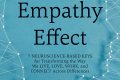
Review: The Empathy Effect by Helen Riess
The force of empathy is strong with Helen Riess, MD, and her team.
In The Empathy Effect: 7 Neuroscience-based Keys for Transforming the Way We Live, Love, Work, and Connect Across Differences(with Liz Neporent, Forward by Alan Alda (Sounds True publishing, 234pp, $22.95)) Riess lays out a program for training medical doctors (and the rest of us) to expand our empathy.
The most important point that Dr Riess makes in the concise opening three chapters is that empathy is learnable. Empathy can be taught. The empathic capabilities of the human being can be expanded by practice and training. This is the set up for the introduction and promotion of the proprietary empathy training program, “E.M.P.A.T.H.Y.”®, offered by the for profit enterprise, Empathetics, of which Riess is the CEO. The training based on intellectual property developed at Massachusetts General Hospital and Harvard University. More on that shortly.
The work contains many personal reflections amid a fully buzz-word compliant narrative on the psychology and neuroscience of empathy. Dr Riess lets slip that she was in second grade when the 1963 Community Mental Health Act set in train consequences, some planned, most unintentional, that resulted in the emptying out of the Psychiatric Institutions (“Asylums”) that served for the long-term incarceration of those diagnosed with severe mental disorders.
This means that Dr Riess was young enough to have benefited from the innovations in empathy of Carl Rogers, PhD, and Heinz Kohut, MD, who, prior to the second psychopharmacological revolution, were responsible for putting the term “empathy” on the treatment intervention map of humanistic and self psychology.
Though not explicitly discussed by Riess, for practical purposes, the “second psychopharmacological revolution” is dated from Peter Kramer’s Listening to Prozac(1993). It took the legs out from under virtually every form of talk therapy then in the market, including Cognitive Behavioral Therapy (CBT, however, has demonstrated staying power for many reasons, not the least of which is that insurers are willing to reimburse for a dozen (or so) sessions).
Riess is conversant with Paul Ekman’s innovative research in coding (and decoding) the micro-expressions of the human face, an emotional “hot spot,” to discern what a person is “really” experiencing and feeling. Though Ekman does not use the term “empathy,” his approach to micro-expressions implies a definition of empathy distinct from that of Riess’ proprietary approach, which, in turn, aligns with David Hume’s “delicacy of sympathy and taste” (1741). If one person literally perceives a micro-expression of which another is unaware, then the one person’s “delicacy of empathy” (my term, not Hume’s) is more expansive that the other’s.
Thus, Dr Riess calls out the contributions of Rogers and Kohut such as “unconditional positive regard” and “vicarious introspection,” respectively. She appreciates the deep history of empathy (“Einfühlung”) in German aesthetics, in which empathy emerged from the projection of human feelings onto beautiful nature and art, something we humans seem to be cognitively designed to be unable to stop doing.
Riess appreciates that the distinction “empathy” is significantly different than “compassion,” “sympathy,” or “projection,” and she helps the reader distinguish among them. She “gets it” that empathy, like so many phenomena, is on a spectrum and that some people are naturally endowed with less of the capacity (think: disorders of empathy such as autism or at another extreme psychopathy) and some people have more of it (think: the natural empathy, who is acutely sensitive). Riess understands that empathy can misfire or breakdown: empathy faces obstacles and roadblocks, which, paraphrasing now, extend from sentimentalism, spoiling, codependence, projection, all the way to burnout, compassion fatigue, and empathic distress.
In every case, practice and training can expand the empathic competence of the individual and the empathic response in the face of the challenges of unempathic people and circumstances. Riess refers to turning “the dial on … emotional empathy” (p. 19), which is why training is needed. Thus, empathy is more like a dial or tuner – turn it up or down – rather than an “on-off,” all-or-nothing switch.
This brings the discussion round to the details of Riess and Empathetics, Inc.’s innovative, proprietary empathy training. She begins by citing research that demonstrates medical doctors are often trying to deliver one message and their patient’s are getting another one or nothing at all. The antidote? “E.M.P.A.T.H.Y.”®!
It turns out there is a “secret sauce,” a proprietary application of biofeedback technology. I have a report that if you, as a hospital or medical group practice, actually pay the $50K [I am making this number up] to train your medical doctors en masseat Mass General, then patented biofeedback metrics are used to judge the arousal of the subject and, hence, the effectiveness of the empathy induction. Though I am not sure, it sounds like they put the little Velcro-cuff on one of your fingers to measure the galvanic skin response.
While galvanic skin response is a blunt instrument and does not distinguish between emotions such as fear, anger, sadness, high spirits, much less subtle states such as envy or indignation, it does provide a measure of physiological stimulus and arousal. Useful. Might be worth a try.
This add something to that old joke that when a therapist meets a new patient, there are two anxious people in the room; and it is the therapist’s job to be the least anxious. It adds something, but what? Still, it might be worth a try, especially given the emotional numbness of the survivors of the boot camp approach to medical school and the sleep deprivation regime of medical residency.
Meanwhile, the technology is wrappered in a conversational training that aims at expanding the empathic capabilities of the trainee. There are seven “keys” to empathy which, of course, occur simultaneously, but have to be presented in sequence for purposes of exposition.
The empathy training works on: (1) Eye contact: the eyes are the window to the soul. Look the other person in the eye to expand connectedness, but do not stare without blinking, which communicates aggression. Riess does not mention, but might usefully have done so, that Simon Baron-Cohen[1]calls out lack of eye contact as one of the indicators of a person being on the autistic spectrum.
Training in making eye contact to expand empathy leads naturally to including: (2) Facial expressions as a whole: the human face is an emotional “hot spot,” and while humans can fake many facial expression, there are some micro-expressions that are disclosive of an emotional depth that cannot be faked.
Here the decisive innovations and work of Paul Ekman and his team are critical path. Ekman spent some seven years mapping all the muscles of the face and their contribution to the expressions of emotions. The bottom line? People can consciously control many of these muscles – but not all of them. The muscle around the eyes participate in an authentic smile, and when they do not do so, the smile is perceived as off – as fake.
Riess says: “You don’t have to be an expert to pick up on the minute micro-expressions described by Ekman and others.” Actually you do. Significant practice and training is required, and even then one may know that the other person is not being entirely straight with you, but the micro expression does notprovide any insight into the underlying motive(s). Is the motive sinister or is the person suffering from shame, guilt, or post trauma upset? One has to have a conversation. The “M” is for “facial expression” – okay, actually “muscles” or “micro expressions” in the face.
The face, in turn, leads to: (3) Body language as a whole. Amy Cuddy’s “power pose” does not increase testosterone in the saliva, but significant anecdotal evidence indicates it does expand a person’s self-confidence. In short, look at how a person is standing or sitting and attend to one’s own posture. It can reveal a lot about how one is feeling. “P” is for “body language,” or, to be exact “posture.”
Riess acknowledges the distinction between cognitive and affective empathy – top down and bottom up empathic understanding and receptivity. A future version of this training might incorporate “perspective taking” or “point of view,” in the place of the “P,” the folk definition of empathy, which is otherwise missing from the list of keys. I make no representation as to how such a gesture would require adjustment or amendment to the intellectual property or whether it is even possible to claim as one’s own property something that is arguably the proper possession of all of humanity. One thinks of Kohut’s notion of empathy as oxygen for the soul. Who owns the oxygen? Presumably, humanity, not Harvard.
Next (4) empathy is all about “affect” and the communication of affect. People are not born knowing the names of their emotions. We have formal training in kindergarten in naming colors and numbers. It is not too late to practice experiencing one’s emotional experience and naming it.
In a separate section, Riess calls out the disorder of “alexithymia,” inability or extreme difficulty in naming and articulating feelings. This is different than “over intellectualization,” but sometimes not by much. This is an occupational hazard of anyone who spends years in graduate or medical training, but other people are seemly hardened against experiencing their feelings due to disposition or adverse life experiences.
(5) The “tone” of voice is richly communicative. If is a person is telling what should be a sad story of loss, injury, or set back, yet the person sounds happy, then something is going on beneath the surface that warrants further inquiry. The pace, rhythm, pitch, delivery, and prosody of a statement make a big difference in its reception and processing. Not to be overlooked: “A surgeon’s voice peppered with dominance and delivered with a lower register of concern was predictive of a malpractice claims history” (p. 54). But if one is only undertaking this training to stay out of legal trouble, that is itself an indication of trouble.
(6) Listening to the whole person is the point at which the training has to go beyond the tips and techniques that have dominated this list. This one is easier said than done and may require a deep engagement with spiritual disciplines of mindfulness, Tai Chi, or a couple of years of one’s own therapy in order to be available to the other person. “H” is for listening to the whole person – and hearinghim or her – presumably within the fifteen minute encounter that is budgeted for the initial medical inquiry.
(7) Empathy without responsiveness is like a tree that falls in the forest without anyone being there. It does not make a difference. Regarding empathic responsiveness, I would have appreciated an example of giving the other person’s experience back to her in a form of words that demonstrate that one “got it” without the exchange being so explicitly compassionate.
Recognition, acknowledgement, and alignment are ways of responding that do not require agreement or altruistic intervention. Yes, of course, it is helpful to be appreciated in one’s struggle and effort, and that is different than having someone jump in and actively provide compassionate support.
By all means, if someone is bleeding, apply a tourniquet while awaiting emergency services. But here one has actually to “dial down” one’s empathy in order to be effective. The point is that both empathy and compassion are often in short supply in the world and the world needs both more compassion and expanded empathy. However, empathy and compassion are distinct.
I may have misread Dr Riess if she wants to build into the human capacity for empathy, a compassionate response – whether her own proprietary version or empathy writ large. I offer this caveat because the vast majority of the examples of empathic response she gives are instances of pro-social helping, altruism, charity, or other aspects of being a Good Samaritan.
Once again, the world needs more Good Samaritans. The world needs both more compassion and expanded empathy; but the two are distinct. The exceptions in the text to examples of compassion are largely those of being over-whelmed or nearly over-whelmed by trauma and counting one’s breaths in order to stay centered in the face of hospital emergency room style dismemberment.
The irony of this book, which promotes linking empathy to its underlying neuroscience, is that the empathy is strong but the neuroscience, weak. Since this is not a “softball review,” a few examples will make this clear.
For example: “Scientists can see the electrical impulses spread through the brain using fMRI (functional magnetic resonance imaging) brain scanning technology” (p. 28). False.
The fMRI makes visible the blood oxygenation level data (BOLD) of between five thousand and fifty thousand neurons in its unit of measure, the voxel (depending on the variable size of the neuronal cells). The inference is: when the neurons get active, because the person is having an experience such as thinking a thought or attending to an event, then the neurons require more blood-rich oxygen to do their job.
In no way, does the fMRI monitor individual neurons or even a small number of them. The fMRI is a powerful tool for imaging soft tissue disorders, but it does not provide visibility down to the level of granularity of anything like individual neurons.
Perhaps Riess was thinking of the EEG: The spread of “electrical impulses through the brain” can indeed be monitored by an electro encephalogram (EEG), a fundamental tool for evaluating disorders of consciousness such as epilepsy and sleep disturbances, but even with an EEG the overall, high level activity of the brain is what is being monitored not individual or even small numbers of neurons.
A similar slip occurs early on: “Scientists first viewed the brains of their subjects in a brain scanner as the subjects had their fingers stuck by needle to determine the precise neurons involved in pain perception” (p. 17). Here “precise” would mean between five thousand and fifty thousand neurons, which is not my definition of “precise”. The level of granularity of the fMRI is an order of magnitude off from that required to “see” an individual neuron. Thus, fMRIs do not see or monitor mirror neurons (if they exist). Period. Once again, the fMRI does provide evidence that the parts of the brain that are busy processing experience receive enhanced blood oxygenation level data (BOLD), and that is the data captured by the fMRI.
Another problem item: “Mirror neurons are specialized brain cells in specific areas of the brain called the premotor cortex, known as the F5 area…” (p. 18). The problem is that the F5 area is part of the brain of the macaque monkey. There is no F5 area in the human brain. Thus, the battle is joined, whether mirror neurons even exist in human beings.
The neurohype around mirror neurons is well represented; but what about the alternative point of view that such an entity as a mirror neuron does not even exist in humans and that the neurological infrastructure has a different configuration and explanation?[2]
How do we advance from synchronization and mirroring (Riess’ big idea of “shared mind intelligence”) to understanding of another person or the person’s mindedness? There are several questions of representation and functional analysis between which scientists and researchers are still working to “connect the dots.” Riess represents this all as a “done deal” with the answer being “mirror neurons,” but she is oversold and fails to connect the dots.
Mirror neurons are one hypothetical explanation for such a phenomenon as “low level (empathic) affective resonance” in human beings. However, so are reflex-like mechanisms such as associations of actions, impressions, and ideas—known to the British empirical philosopher David Hume (1711–1776) as “habits” or “customary conjunctions.”
Macaque monkeys (the original subjects in the research done by Rizzolati, Gallese, and others (1996)) have a community and social order for which mirror neurons are sufficient to provide monkey interaction in the monkey community; buthuman behavior, action, and emotion involve more complex meanings, which human mirror neurons (if they exist) do notexplain—do not explain by means of language, social institutions, cultural practices, or tradition—because meaning is more than matching. As a mere mechanism of matching, mirror neurons struggle to explain the meaning created and deployed in minded actions and emotions.[3]
In humans and the human species, the macaque mirroring mechanism has been elaborated in evolutionary time into expanded behavioral, emotional, and cognitive capabilities useful for interrelating in significantly more complex human communities. Once prehistoric humans acquired language and used it to expand group solidarity in building communities with tools, art, stories, religious practices, social rituals, and the description of regularities in behavior of the stars and other human beings, diverse pathways opened up for creating and communicating meanings, emotions, projects, and thoughts between individuals.
The neurohype continues as the author moves from the neurologically misleading and false to the superficial. Using the example of addiction to alcohol: “New findings in Neuroscientific studies have redefined addiction from a condition of flawed character to a model of biology and disease. We now know that the brains of people who become addicted are different from those who do not” (p. 174). The brains of people who study French are different than those who do not, so we are on thin ice here in terms of a compelling analogy or contribution.
The good news? If a person has a disease such as pneumonia, modern medicine can cure him even if he is in a coma. That is not the case with the “disease” of addiction. In contrast, overcoming addiction requires the participation of heart and mind – and conscious commitment. The choice between a “moral flaw” and “neuroscience” is a false one once any physical dependency on the abused substance has been attenuated.
Riess recommends the empathic practice of perspective taking is key to shifting out of addictive stuckness – and gives a “shout out” to the program at the Hazelden Betty Ford Foundation; and, no doubt, getting a good listening is highly beneficial to any person, including addicts. However, the contribution of empathy is unwittingly weakened by making it seem like empathy is the answer to overcoming the conflict between the nucleus accumbens, a pleasure center in the brain, and the frontal lobe responsible for decision making.
This brings us to the mereological fallacy, which is pervasive in Riess as indeed in many works of this kind. The mereological fallacy attributes the function of the whole to the part (and vice versa). Brains are a part of a person; and neurons are a part of the brain. Brains are all about neurons; and, in so far as neurons are a necessary condition for the functioning of the embodied person, persons are neurons “all the way down.” But the neurons then start generating phenomena such as consciousness, meaning, language, intentions, joint intentionality, personality, community, and culture.
Thus, social neuroscience is born. Yet brains do notthink; people think. Brains do not express emotions; people express emotions. Brains do not intend this-or-that; people intend this-or-that. Brains do not become addicts; people become addicted. Brains do not empathize; people empathize. The mereological fallacy is a growth industry in social neuroscience. My brain made me do it? Hmmm. Human choice and commitment suggests your brain was definitely participating, but it is far from the whole narrative. The task is to avoid or contain the mereological fallacy, even while allowing social neuroscience to make its contributions in the areas of its strengths. This has not happened in this text.
Another problem? The number of variables changing simultaneously for a person lying still in a fMRI (functional magnetic resonance imaging) machine is large, very large. What worries me is that in an attempt to capture a response in the brain to interesting events experienced by the subject, the researchers, including Helen Riess, have created a brain in a vat. The vat is the fMRI.[4]
What then do brains do when viewed in an fMRI? They “light up.” They discharge neuro-correlates of consciousness (NCCs) in patterns of activation, as indicated in the form of blood oxygenation level data. The empathy circuit “lights up” when people lie back and view “empathy cues,” “empathy triggers,” or “empathy inducers.” We enjoy punishing cheaters—when apprehended and subjected to sanctions, the nucleus accumbens—a pleasure center of the brain—“lights up.” It gets busy. Empathic cruelty? Of course, there are many things that cause the nucleus accumbensto light up, implying the hazards of backwards inference. If it doesn’t light up, you are dead, or in serious neural trouble.
Nevertheless, in spite of weakness in the main selling point promoted in the subtitle and that of which the author is most proud – neuroscience – the force of empathy is strong in this text. If one can survive the neurohype of Part I, the reader is rewarded in Part II – presumably the nucleus accumbens is lighting up like a Christmas tree at this point (but so what?) – with applications of empathy to early child development, education, the hazards of social networking, art and literature as ways of expanding empathy, leadership and politics (and the lack of empathy in them), tough issues in mental illness, criminality, sexual identity, and so on, as well as the benefits of empathy for self-soothing, distress tolerance, and emotional regulation.
Now take matters up several levels from neurotransmitters to two human beings interacting in a conversation in a would-be community. Though Riess does not explicitly say it, the solution to the limited empathy of parochial, biased in-group thinking and behavior is straight-forward: expanded empathy. The person on the street thinks of empathy as an “on off” switch. “On” for the in-group. “Off” for everyone else – the “out group.”
However, practice and training enable a person to relate to empathy as a dial or tuner that can be adjusted to the situation. If I am experiencing empathic distress, dial empathy down. If I just do not “get” the other person, dial the empathy up. This does not come naturally to most people – so, once again, the case is made for practice and training, including Riess’ particular solution.
As a critical reader, I would have appreciated a statement that many ways are available to learn and practice empathy. Every mother, parent, teacher, business person with customers, doctor with patients, therapist with clients practices empathy on a good day and already knows a lot about what works and what doesn’t. Thus I imagine Riess saying: “While you, dear reader, do not need a psychiatrist to tell you about empathy [whose training regime since the early 1990s has overwhelmingly consisted in psychopharmacology], nevertheless let me tell you about the advantages of my proprietary way offered by my company Empathetics.” Perhaps Dr Riess thought such a statement was implied, and I can appreciate that point of view, but I still would have welcomed the clarification that it is not the only empathy game in town.
In a separate communication (10/31/2019), Helen Riess wrote to me: “…[P]art of empathy training is modeling respect for others in the field of empathy education, research ad [sic] training.” Agree. Respect, dignity, empathy, and related belong on a short list of phenomena, which, when the person does not believe she is receiving them, the person tends to get stressed, angry, even enraged. Sounds like the individual in question could use expanded empathy.
I hasten to add that, to her great and unconditional credit, Riess is decisively in action against the appalling scandal that empathy peaks in the third year of medical school (Hojat 2009; see also Halpern 2000) and that since the 1990s psychiatric training has overwhelming emphasized psychopharmacology. Meanwhile, the rate of the disabled mentally ill has doubled between 1987 and 2007 and is now six times the rate as in 1955.[5]Hmmm.
In the final ten pages of her work, Dr Riess calls out the “cytokine theory of depression” (and related mental disorders). I assert that she ought to have begun the book with it.
The cytokine theory of depression (see Maes 1995, 1999) is the approach that emerged in the mid 1990s – about the same time that Prozac was disrupting mourning and melancholy paradigms of mental illness with its serotonin chemaical imbalance theory of depression – that emphasizes the role of chronic social stress (divorce, finances, business travel, bullying bosses, misbehaving teenagers, and so on) in kindling long-term inflammation of major organ systems resulting in “sickness behavior.”
Such sickness behavior looks a lot like major depression yet, at least initially, it lacks the melancholic, negative self-talk. Riess highlights treatment options – and life style adjustments – such as mindfulness, yoga, Tai Chi, exercise, diet, alone and in combination, that emphasize stress reduction, self soothing, emotional regulation, and empathy for oneself.
Naturally, the brain participates in all these activities, but reducing stress and expanding distress tolerance through empathy is also a function of the adrenal-hormonal system. It’s just that neurology has the buzz this season, not endocrinology or psychotherapy. Never was it truer that empathy guides us in engaging with and treating the human being as a whole – not a mere amygdala hijack or frontal lobe disinhibition. So the stress reduction paradigm, which is at right angles to and arguably does not contradict the neurotransmitter imbalance paradigm, was pushed to the margins and hardly heard of again until recently (e.g., Segerstron and Miller 2004).
Perhaps after the boot-camp of medical school, the rigors of residency, and the corporate transformation of American medicine (relying as it does on “hitting the numbers”), empathy is at such a low water mark in the medical doctor’s consciousness that “tips and techniques” are the best we can do. Indeed the “H” stands for “listening to the whole person and hearingthe individual,” so the intention is present.
Yet using empathy to “dial down” stress, aggression, and narcissistic injuries, does not map in any obvious way to “E.M.P.A.T.H.Y.”®, which becomes a pair of golden hand-cuffs for the trainer. The ultimate irony is that the only obstacle in the way of expanding empathy – the distinction, not the propriety gimmick – is precisely “E.M.P.A.T.H.Y.”®.
References
Agosta, Lou. (2018). Empathy Lessons. Chicago: Two Pairs Press.
Decety, Jean, Chenyi Chen, Carla Harenski, and Kent A. Kiehl. (2013).An fMRI study of affective perspective taking in individuals with psychopathy: Imagining another in pain does not evoke empathy, Frontiers in Human Neuroscience, 2013; 7: 489; published online 2013 September 24. DOI: 10.3389/fnhum.2013.00489.
Halpern, Jodi. (2001). From Detached Concern to Empathy: Humanizing Medical Practice. Oxford: Oxford University Press.
Hojat, Mohammadreza, M. J. Vergate, K. Maxwell, G. Brainard, S.K. Herrine, and G. A. Isenberg. (2009). The devil is in the third year: A longitudinal study of erosion of empathy in medical school, Academic Medicine84 (9): 1182–1191.
____________________, Daniel Z. Louis, Fred W. Markham, Richard Wender, Carol Rabinowitz, and Joseph S. Gonnella. (2011), Physicians empathy and clinical outcomes for diabetic patients, Academic MedicineMar, 86(3): 359–64. DOI: 10.1097ACM.0b013e3182086fe1.
Hume, David. (1741). Of the delicacy of taste and passion in Of the Standard of Taste and Other Essays, Indianapolis: Bobbs-Merrill: 1965.
Hickok, Gregory. (2014). The Myth of Mirror Neurons. New York: W. W. Norton.
Maes, M. (1995). Evidence for an immune response in major depression: A review and hypothesis, Progress in Neuro-Psychopharmaclogy and Biological Psychiatry19: 11–38.
_______. (1999). Major depression and activation of the inflammatory response system, Advances in Experimental Medicine and Biology461: 25–46.
Riess, Helen. (2013). The power of empathy, TEDxMiddlebury: https://www.youtube .com /watch?v=baHrcC8B4WM [checked on 03/23/2017].
____________, John M. Kelley, Gordon Kraft-Todd, Lidia Schapira, and Joe Kossowsky. (2014). The influence of the patient-clinician relationship on healthcare outcomes: A systematic review and meta-analysis of randomized controlled trials, PLOS, Vol. 9, No. 4 | e94207: 1–7: https://doi.org/10. 1371/journal.pone.0094207.
____________, John M. Kelley, Robert W. Bailey, Emily J. Dunn and Margot Phillips. (2012). Empathy training for resident physicians: A randomized controlled trial of a neuroscience-informed curriculum,Journal General Internal Medicine, 2012 Oct; 27(10): 1280–1286. DOI: 10.1007/s11606-012-2063-z.
Rizzolatti, G., L. Fadiga, V. Gallese, and L. Fogassi. 1996. Premotor cortex and the recognition of motor actions, Cognitive Brain Research 3: 131–41.
Satel, Sally and Scott O. Lilienfeld. (2013). Brainwashed: The Seductive Appeal of Mindless Neuroscience. New York: Basic Books (Perseus).
Segerstrom, Suzanne C. and Gregory E. Miller. (2004). Psychological stress and the human immune system: A meta-analytic study of 30 years of inquiry, Psychol Bulletin. 2004 July; 130(4): 601–630.
FOOTNOTES
[1]Simon Baron-Cohen. (1995). Mindblindness. Cambridge, MA: MIT Press.
[2]For example, see Gregory Hickok. (2014). The Myth of Mirror Neurons. New York: W. W. Norton. For further debunking of the neurohype see Decety et al. 2013, Vul et al. 2009, and Satel and Lilienfeld 2013.
[3]The following paragraphs are adapted from the section “Your brain on empathy” in Lou Agosta 2018: 171–172.
[4]Presumably this is notwhat the late Hilary Putnam meant when he wrote his prescient article of the same name, since the fMRI had not yet been invented, but who knows for sure? See Hilary Putnam. (1981). Brains in a vat, in Hilary Putnam. (1981). Reason, Truth and History. Cambridge: Cambridge University Press: 1–21.
[5]Robert Whitaker, (2010), The Anatomy of an Epidemic. New York: Broadway Paperbacks (Random House), 2010: p. 7.
(c) Lou Agosta, PhD and the Chicago Empathy Project

Top 10 (and more) Empathy Lessons for Life, the book
This book contains some thirty (30) empathy lessons for life. A key empathy lesson that explicitly addresses empathy training: remove the resistance to empathy—obstacles such as cynicism, shame, guilt, aggression, narcissism, devaluing language, and so on—and empathy spontaneously shows up, comes forth, develops, and grows.
Most people are naturally empathic. This is the training in a nutshell. (To order the book click here: Empathy Lessons.) Read on for more details –
The empathy lessons in this book include how—
to perform a readiness assessment and establish a set up for success in cleaning up inauthenticities that block empathy so that empathy can expand and flourish (perhaps the most challenging part of this work);
empathy is not an “on–off” switch but a tuner (dial or dimmer) that expands or contracts in accessing the vicarious experience of the other person;
empathy breaks down in emotional contagion, empathic distress, “compassion fatigue” (in quotes because it is really about compassion, not empathy), burnout, conformity, projection, devaluing language, and, most significantly, how to overcome these break downs of empathy through multi-dimensional empathy;
empathy works as a method of data gathering in relating to the other person, providing a vicarious experience of the other person without being overwhelmed by the experience;
introspection, vicarious experience, listening to one’s own “voice over” and radical acceptance of one’s own experiences are the royal road to empathic receptivity;
empathic understanding overcomes conformity and creates possibilities of shifting out of stuckness into contribution, transformation, and leadership, including possibilities of engaging and attaining satisfying and flourishing relationships;
empathic interpretation is the folk definition of empathy, walking in another’s shoes, adding “top down” empathy to “bottom up,” empathic receptivity;
empathic responsiveness drives out anger and rage, acting as a soothing balm to suffering and emotional upset, deescalating conflict and aggression;
scientific, peer-reviewed, evidence-based research confirms that empathy (and a set of related interventions) reduce inflammation and stress, the five forms of stress, and connecting the dots between empathy, the reduction of inflammation, and stress reduction;
relationships get “weaponized” in bullying and, coming from empathy, how to overcome bullying, reestablishing boundaries: recommendations that promote empathy in students, teachers, administrators, and stop bullying (including cyber bullying);
“corporate empathy” is not a contradiction in terms, “CEO” now means “chief empathy officer,” and empathy is applied as the ultimate “capitalist tool”;
empathy is the “secret sauce” in sexual satisfaction within an authentic relationship, featuring the desire of desire, the “good parts,” and intimate engagements that are sustainable and last.
These empathy lessons put you back in touch with your empathy. Most people have quite a lot of empathy but are out of touch with it. Empathy lessons—not merely the formal title of this book, the actual practices—provide applications to tough cases. The applications give back to you your power in engaging and overcoming life’s social stresses and the need to expand well-being in the face of emotional upset, handling dynamic relationships, meeting business challenges in the corporate jungle and empathy desert, overcoming bullies and bullying, and applying and practicing empathy in sex and romance.
Our work together in this book is fully buzz word compliant including—
what is “mind reading”; how mind reading relates to empathy; the break down in empathy of “mind misreading”; and what is missing in mind reading, needed to bring it to fruition in empathic receptivity;
the ongoing debates about mirror neurons and the neurological basis of empathy (and an understandable explanation of their significance (and limits)); and the deeper truth that all human beings are related whether or not mirror neurons exist;
disorders of empathy such as Asperger’s and autism and (in a different context) the psychopathic person;
who or what is the “Natural Empath” and how this person, seemingly caught between nature and nurture, provides empathy lessons in abundance; and what happens when the Good Samaritan meets the Natural Empath;
social referencing and how we process the feelings of other people (and how that works);
evidence-based everything in which one would no more jump out of an airplane without a parachute or treat a bacterial infection without penicillin than engage with a human being without empathy (positively stated, start with empathy or one is headed for trouble);
and practical applications to tough, recalcitrant cases using literature, film, and story telling to teach empathy—deliver empathy lessons—and overcome the common breakdowns in the practice of empathy.
This work brings you step-by-step from what it takes to be present—fully present—with another human being, through the breakdowns and misfirings of empathic understanding to radical acceptance, which is profoundly different than mere agreement with someone’s opinion.
A bold statement of the obvious: I acknowledge that I am a proponent of empathy. Yet empathy has a dark side, too. Yes, compassion fatigue and burnout; but also Machiavellian and alienated empathy in business—appearing to be empathic while only being interested in closing the sale: walking in the other’s shoes to sell another pair to the other person. How to turn these risks, resistances, and breakdowns to advantage and even breakthroughs in satisfying and successful relationships in one’s personal life, career, business, and parenting, are canvassed in detail.
Every break down in empathy points the way to a potential breakthrough, if one knows how to listen, identify what’s missing, restore it, process, and respond.
In Chapter One, our empathy lessons introduce and clarify the multi-dimensional definition of empathy. The four dimensions of empathic receptivity, empathic understanding, empathic interpretation, and empathic responsiveness are defined, exemplified, clarified. These four aspects of the process of empathy are used throughout this work on empathy and applied to diverse examples, situations, cases, and stories.
In Chapter Two, our work uncovers the misfirings and failures of empathy including: empathy breakdowns in emotional contagion, burnout, empathic distress, “compassion fatigue,” conformity, projection such as egocentrism and narcissism, and devaluing talk that gets “lost in translation” in gossip, shaming, and bullying speech. The secret to expanding empathy is practicing overcoming these breakdowns.
In Chapter Three, the empathy lessons lead the reader from overcoming resistances to empathy to the breakthrough of empathy training and empathy as a method of data gathering that can be taught.
In Chapter Four, the data supporting evidence-based training in empathy is engaged and developed, as the Natural Empath meets the Good Samaritan, resulting in expanded control of the dial to tune empathy up and turn it down when one needs to do so.
In Chapter Five, empathy lessons directly engage the work of expanding the reader’s empathic receptivity in (1) the vicarious experience of the lives of others; (2) empathic understanding of possibilities of satisfaction in relatedness; (3) empathic interpretation in the folk definition of walking in the other person’s shoes to connect with difficult individuals you might not have been able to relate to previously; (4) empathic responsiveness that leaves one in the presence of fulfilling relationships with human beings without anything else added.
In the next four chapters, the multi-dimensional approach to empathy is applied to four challenging cases (each a chapter) including: stress reduction, featuring empathy as a spa treatment for the human soul, evidence-based medicine, and the contribution of empathy to emotional well-being (Chapter Six); what happens to people when relationships get “weaponized,” how empathy puts bullying in its place, including extensive recommendations for students, teachers, administrators on establishing boundaries (Chapter Seven); business in which empathy becomes a “capitalist tool” and ends up being good for business, too (Chapter Eight); sex and love and rock and roll in which “empathy is the new love”—what everyone really wants (Chapter Nine). This wide ranging, round-the-mountain romp through empathy lessons and the related recommendations are collected together in the final chapter on the top tips and techniques for expanding empathy (Chapter Ten).
As this intellectually rigorous but accessible and, I hope, intermittently humorous story of empathy unfolds, readers get empathy lessons on every page, pointing the way to success in expanding empathy in relationships, stress reduction, contribution to community, career, and romance. From time-to-time, I will pause for breath and remind the reader, like repeating a mantra, in order to drive the lesson down into the neurons through repetition: Empathy is oxygen for the soul. If you are short of breath due to life stress, get this book and expand your empathy through empathy lessons and applications. When all is said and done—when all the distinctions are deployed, arguments made, guidance provided, and recommendations completed—empathy means being in the presence of another human being.
A preface is the proper place for a personal reflection. Friends and colleagues have said to me, “Lou, nice work with the those other academic books on empathy you already published—great job!—but—how shall we put it delicately?—they are a tad too—too academic. What we really need now is something more readable, more accessible.”
Voila! This book aspires to address the everyday, educated reader, rather than the scholar or academic. I hasten to add that does not mean that I am sloppy about distinctions or intellectually lazy. However, I caution my academic friends, who are also inspired to engage with empathy, that, instead of using “journal speak,” I write casually and inspirationally. I use sentence fragments: “Likewise, with empathy.” I speak in the first person, which I have found effective in inducing empathy in the reader. I say “her or his.” Sometimes I even slip into using “they,” even though the subject is singular. So please do not say that I do not take risks. I try to be funny, but do not try too hard. I engage the reader personally.
What then is my guidance to you, dear reader? The reader can expect me (the author) to empower you to expand your empathy. I provide the distinctions needed to inquire into your own empathy in such a way that it develops, unfolds, grows, and expands. A simple yet powerful definition of empathy is developed and is then applied to opening up and resolving tough cases. This approach to empathy enables you to get in touch with your own empathic abilities through practicing a series of simple empathy lessons that, in turn, are engaging, confronting, humorous, and inspiring.
In the world of advice to the reader, the first five chapters are a sustained look at the definition, meaning, and explanation of how empathy works (and sometimes doesn’t work), delivering empathy lessons designed to make empathy present for the reader in the page-by-page progress of the work; the next four chapters are applications of empathy to four “tough cases”; and the final chapter is a summary in one place of tips and techniques encountered throughout the book with a modest amount of further analysis and explanation. This book was written as a coherent, integrated whole. Though modularly designed, the chapters were never separate papers, now cobbled together as an anthology. Nothing wrong with collections or anthologies as such; but this is not one of those.
The book’s approach to empathy gathers examples from life experience, story telling, literature, film, the author’s private empathy lessons, and his own biography and empathy consulting practice, to shift out of stuckness into expanded empathy. I provide examples of practices that have worked for me (and others) in expanding empathy in the real world. The anecdotes and vignettes are used with permission or are composites of experiences with identities changed to preserve anonymity. I am straight with you about practices that I believe work and practices that don’t work; what are the pitfalls and breakdowns; and how to avoid them or if they are unavoidable, how to reduce and manage them.
In exchange, I expect the reader, well, to read. I also ask the reader to examine and test her or his own feelings and experiences in the light of what is presented. Expect to be challenged. Expect to have your comfort zone stretched in a firm yet empathic way. The narrative loops back on itself so that distinctions relevant to empathy are introduced and sustained, while the context for applying, practicing, and mastering the distinctions is deepened and broadened. The narrative then cycles back at a higher level of engagement, forming an upward spiral (rather than a circle) so that the connections between aspects of empathy are strengthened. Ultimately, I strive to make empathy present, and, bring it forth in a conversation with the reader. The extent to which I succeed in actually doing so, the reader must judge. Okay, I’ve read enough. I want to order the book (click here to order Empathy Lessons).Hold on tight—the journey is about to begin.
Please note that Lou Agosta is available for individual or group empathy lessons, training, and conversation by appointment. Contact Lou at LouAgosta@gmail.com and mention this blog post.
(c) Lou Agosta, PhD and the Chicago Empathy Project

Top Ten Empathy Lessons: Trends for the New Year 2018
Here are Empathy Lessons for the New Year ahead. You know what would really interest me? To hear from you (dear reader) what is your empathy lesson?  Whether inspired by this list or your own experience over the winter holiday or living into the future: what is your empathy lesson? (My contact data is at the bottom of this post. Let me hear form you.) Meanwhile, my top ten (10) trends in empathy lessons for the New Year 2018—this is a count down list (think: Letterman)—are as follows:
- Empathy deserts grow; empathy lessons struggle to get traction: Under late modern digital global capitalism, empathy is a means, not an end. Capitalism organizes empathy along with workers and production processes. Yet many workplaces are empathy deserts in spite of the appearance of mangers with published “open door” policies.[i] Key term: empathy desert.
One’s humanity withers in the desert. So if you find yourself feeling dehumanized by your job, maybe you work in one of those, regardless of the prevailing rhetoric.
Instead of the industrial supervisor shouting orders to his workers, who curse under their breath and conform, managers employ therapeutic strategies to create a convivial environment of trust, relatedness, sociality, loyalty, and care. Happy people sell. Happy people write more software code with fewer bugs. Happy people who happen to be medical doctors see more patients an hour for more hours. Happy people deliver projects on time, on budget. Value creation in the late capitalist economy is a function of the exchange of emotion and empathy.[ii]
Yet the boss is not necessarily a paragon of empathic understanding. On the contrary, it’s “by the numbers,” “get your numbers,” and if you don’t get your numbers, your days are numbered. And if you don’t have any numbers, that itself is a bad sign, and we will find some for you. Relations with coworkers and superiors can be Machiavellian—and conflict-laden. The guy who said, “We don’t need more data; we need expanded empathy” was counseled out. Truth be told, successful business requires data and empathy; and both have their uses.
Today empathy is trending. Everyone is “talking the talk” of empathy. What could be better than empathy? But “walking the walk” of empathy arouses resistances, which are a major point of engagement in a similarly titled chapter.
The empathy lesson? Coming from empathic understanding—identify upsets and breakdowns. Do so in the spirit of expanding relatedness and community. Identify the unfulfilled expectation, thwarted commitment, or undelivered communication. Restore what is missing, especially if it is empathy, to complete the expectation, commitment, or communication.
In other words, clean up your own act: if you owe something to another person—whether money, an overdue library book, a promised email response, or a borrowed lawn mower—arrange to pay it back. If you have lied, acknowledge the lack of integrity to the other person; and take action to repair the damage done. Asking forgiveness does not just mean the slate is wiped clean and the perpetrator is free to commit boundary violations again. It means the person asking forgiveness tells the truth about what he (or she) did. It means being prepared to deal with the cost and impact of one’s inauthenticities and integrity outages.
This creates a clearing for success with empathy by cleaning up inauthenticities: Take action assertively to repair disruptions in relatedness and communication by acknowledging your contribution to the disruption. A person cannot relate authentically—that is, empathically—to people while being inauthentic in other areas of his or her life. People have to compartmentalize in order to survive the day; but empathy is the one area where compartmentalization is least effective. The inauthenticity around empathy in one particular area tends insidiously to spread to other areas.
Challenging as it may be, creating a foundation of authenticity is actually the first step in recovering and expanding one’s empathy, one’s power in relation to empathy, and the authentic relatedness that empathy makes possible.
Absent such a foundation, a person is simply not ready to engage empathically. Even if readiness was established up front, it can be lost along the way. Go back to step one. Those who are unwilling to do so may drop off at this point. Empathy is simply too hard; but any other approach is built on sand. No matter how good the following recommendations may be, if one does not establish a foundation of authenticity for empathy, a clearing for success, one is putting buttercream frosting on a mud pie.
- Empathy, capitalist tool: “CEO” now means “Chief Empathy Officer”: You heard it here first, and not for the last time. One can already hear the push back. This conversation shows up like another responsibility with which the head of the organization is tasked. As if she did not already have enough alligators snapping at various parts of her anatomy, now “CEO” no longer means “Chief Executive Officer,” but “Chief Empathy Officer.”
The things that cause people to excel at getting business results (beating the competition, solving technical problems, dealing with legal issues) do not necessarily expand one’s empathy.
Never is empathy needed more in business than when it seems there is no time for it. Building a business, growing a market, innovating in products and services, are all about building teams, networks of people, and communities. Empathy is at the foundation of community. Therefore, empathy is the foundation of business. Though business leaders hate to be tasked with yet another job, empathy has to start at the top if it has any hope of percolating up from the bottom. “CEO” now means “chief empathy officer.”
When I ask executives what is the budget in the organization for empathy training and empathy consulting, they usually look at me with a blank stare or just say “zero.” However, when I ask what is the budget to reduce conflict, enhance teamwork, innovate and improve productivity, then they see possibility and make it a priority to obtain a budget.
At the risk of over-simplification, empathy training consists in surfacing the resistances to empathy, the pervasive fear and cynicism (and so on) in the organization that lurks just beneath the surface. Interpret the resistance: “It is perfectly understandable that you would be cynical, given what you have been through, but that is not who you (we) authentically are.”
- Empathy’s “dark side” strikes back: “Machiavellian empathy” emerges as a growing threat to empathic empathy. When those in the executive suite are surveyed, some 60% of executives believe that their organizations are empathic, whereas 24% of their employees agree.[iii] An empathy deficit?
Niccolò Machiavelli (1469–1527) was famous for saying that it would be best if the leader—the Prince, in his day—was loved, but it is essential that he be feared. Machiavelli never actually said that the ruling Prince must be perceived to be empathic, even as he ruthlessly wields power behind the scenes. But that is what he implied.
In the context of politics, Machiavellian empathy refers to business people and politicians who present themselves as being empathic while manipulating, spinning alternative facts, and double dealing behind the scenes. Machiavellian empathy shows up in business, too. If managers are not in touch with their empathic abilities, they are counseled to “fake it till you make it.” Most never “make it” and continue “faking it.”
Whether or not one authentically understands the experience of the other person is less relevant to the Machiavellian empath than scoring points on a check list of concerned behavior.
If the corporation were a machine, which is a well-worn but all-too-accurate metaphor, empathy would be the lubricant that keeps the various parts working together without overheating. The number of corporations that are “over heating” and “going up in flames,” with dramatic news hitting the global media, is one index of those experiencing the most severe empathy breakdowns.
The explicit symptom is predictably a revenue shortfall, but behind the headlines lurk dysfunctional relationships, cynicism, a culture of bullying and shaming, loss of authenticity, lack of leadership, and lack of empathy.
Even the cynical sales person understands the value of taking a walk in the customer’s shoes, if only to sell him another pair. The wise (and empathic) sales person understands that in any business that allows for product differentiation or distinctions in service level agreements, building a relationship with the customer is the royal road to solution selling.
Strictly speaking, Machiavellian empathy takes nothing away from empathy’s intrinsic benefits and uses. Even if one wants to present the appearance of being empathic for propaganda purposes while continuing to operate with dubious business practices the behind the scenes, reality has a way of catching up with appearances.
It is not entirely fair, but when a person with psychopathic tendencies—once again, wanton lack of respect for boundaries, cruelty to animals, and a willingness, even eagerness, to inflict pain on others—grows up in poverty, the person often runs afoul of the criminal justice system. The person ends up in prison.
In contrast, when such a person grows up in affluence and gets an education in business, the person often becomes a hard-charging, “type A personality,” and a successful executive. The person ends up in the corner office. When psychopaths go to work, or get elected to political office, the result is sometimes snakes in suits (the title of a book cited in the endnote).[iv] We observe, and not for the last time, that the things that create success in business, do not always expand our empathy.
Amazon said it was a wonderful place to work. Then the New York Times got some employees to comment on the record about “mean” behavior.[v] Uber was disrupting the disrupters and creating the Gig Economy, which supposedly set us free. Then the CEO, Travis Kapernick, got unwittingly interviewed on camera by a driver.[vi] Bullying is not just for high school kids anymore; it has always lived in the business world, too. Still, there is no guarantee that the Machiavellian empath will slip up and document his or her own inauthenticity; but it just might happen.
Is this then the ultimate cynical moment? Is this the reduction to absurdity of empathy? If empathy is about setting boundaries, where is the boundary? The limit to Machiavellian empathy is Lincoln’s famous saying, “You can’t fool all the people all the time.” Ask Travis Kapernick. Ask Bernie Madoff and Michael Milken.[vii]
- Empathic response is an act of imagination, not agreement: Positively expressed, empathic response means giving the other person back his experience in such a way that he recognizes his humanity in the experience. However, agreement is often what people want in expressing their unhappiness or describing the setbacks in life that they have experienced.
After giving an account of some dramatic encounter, the one person turns to the other with a significant pause in order for the other person to respond with a heartfelt, if not empathic, agreement and approval. One often turns to the other person to get validation that the experience conforms to one’s own preferred interpretation. One uses the spontaneous response of the other to guide how one really feels about what occurred. This does not rule out that one person is often looking in advance for a particular reaction and to “get a rise” out of the other.
The scenario is complex; and the “get a rise” is not necessarily what a gracious empathic understanding or receptivity is going to provide. “Tough love” shows the other what he does not necessarily want to confront. Sometimes so does “a rigorous and critical empathy,” specially when the latter is framed in a way that recognizes and respects the other’s struggle.
The bridge between the cynical present and an impossible-to-envision future is empathy. The empathic moment is the act of imaging a different world, a future world of expanded empathy, in which the community expands inclusively.
Different viewpoints are available with regard to one’s action, including the perspective of one’s adversaries. One forms an opinion by engaging the issue from different perspectives. One makes present to the mind the perspectives of those who are absent or even opposed. That is, one represents them. This process of representation adopts the points of view of those who have different standpoints.
Thus, empathy is closely related to what one can imagine about the other person in relationship to oneself. An empathy that does not include the other fails the definition of empathy. This especially applies when the other is at odds with oneself. It may seem like a dream; but the dream lives. The empathic response is an act of imagination.
- If you have “compassion fatigue,” maybe you are not empathic enough: It is no accident that the word “compassion” occurs in “compassion fatigue.” Could it be that people who are experiencing compassion fatigue, but claim to be in a break down of empathy, are actually in a break down of compassion?
If one is trying to be empathic, but one is experiencing compassion fatigue, maybe one is doing it wrong. Maybe one is practicing empathy “wrongly,” with inadequate skill, precision, completeness, or finesse; and one needs a tune up for one’s empathy.
One reason that empathy training programs have not worked or have had mixed results is that they train the participants in compassion, being nice, conflict resolution, baby and child care, and a number of worthy and related tasks. This is all excellent, and the use of empathic methods is making the world a better place in all these situations. So keep it up. There is nothing wrong with being nice and so on: do not be “unnice”! But paradoxically something is missing—empathy.
The empathy lesson “not more empathy, expanded empathy” indicates that if one subtracts empathy from compassion, then one gets sympathy, reaction, burnout, compassion fatigue, which end up giving empathy a bad name. Now I do not wish to give anyone a bad name, who is committed to empathy, compassion, or making a difference is overcoming human pain and suffering. On the contrary, I acknowledge and honor one and all. The battle is joined; we are all on the same side; but we want to deploy our limited resources wisely.
Expanding one’s empathy requires an engagement with one’s own inauthenticities around empathy.
Expanding one’s empathy requires engaging with one’s own resistance to empathy. Until we engage with our own resistance to empathy we will remain stuck in our blind spots, breakdowns, burnouts, and compassion fatigue. In order to expand one’s empathy, one needs to engage with applications of empathy in the tough cases—stress and well being, bullying, business, and gender and romance. Engaging with these implementations is essential to consolidating the mastery of one’s practice of empathy—practice, practice, practice.
- Empathy and humor are closely related, and converge even further: Both empathy and humor create and expand community. Both empathy and humor cross the boundary between self and other. However, empathy crosses the boundary between individuals with respect, recognition, appreciation, and acknowledgement, whereas humor does so with aggression, sexuality, or a testing of community standards.
Here “aggression” includes language that people would find insulting. Therefore, be careful. The aggression or sexuality in question is usually presented in such a way that it creates a tension by violating social standards, morals, or conventions to a degree that causes stress short of eliciting a counter-aggression against the teller of the joke.
Substituting humor for empathy can work in some situations, but in others it can create a breakdown in the would-be relationship. You know how the more objectionable the joke, the funnier it is?
The result is either the release of tension through laughter or a failed joke and a shameful, if not scandalous, situation on the part of the joker. Indeed when the violation of the social convention, moral, or standard is such that the target of the joke experiences a dignity violation, then the joke arouses anger or even rage, not laughter. The caution flag is out.
Ground zero of cynicism and humor is Scott Adam’s Dilbert cartoon. It is wickedly funny because it expresses more than a grain of truth about dysfunctional, anti-empathic organizations.
In one classic example, the pointy-haired boss says that the organization will assign job functions based on the Myers-Briggs Personality Test. For those readers who may not know, the MBPT is the famous test that distinguishes introversion and extroversion, thinking and feeling, and related categories. The boss continues: “For those of you who do not have a personality, one will be assigned by the human resources department.”[viii] I must say that I am deeply ashamed of myself; I can’t stop laughing.
In humor, stress and psychological tension are created by violating a standard—in this case against insulting the lack of personality of the corporate cog—and then the stress is released in laughter by the mechanism of the joke such as a pun, double meaning, or violation of expectations.
The more objectionable the joke is, the funnier it is. The put down, “If you do not have a personality, one will be assigned by HR” is indeed wickedly funny; but it is also deeply debunking of the corporate world (and shaming of the individual), in which people come to feel like a gear in an inhuman mechanism.
After a day at the office, people often feel as if their personality had been erased.
So a trace of empathy for the long suffering inhabitants of corporate cubicles does come to the surface after all. That is what Scott Adam’s Dilbert longs to express. It is a common place in the corporate world that people function as replaceable cogs in a well-oiled machine. Therefore, in this case, the cartoon is an example of how not to expand empathy. Cynicism and shame drive out empathy; and driving out cynicism and shame create a space into which empathy can expand spontaneously.
How then does one drive out cynicism, shame, denial, and so on? The short answer is by calling it out, acknowledging it, interpreting it, and offering an alternative point of view. Not “alternative facts,” which have come to mean “spin” and “deception”; but an alternative perspective. It is cynicism versus empathy.
Empathy is the foundation of community in a very deep way, for without empathy we would be unable to relate to other people. In being empathic with another person, one creates a community with the other person; likewise, with humor. Humor creates a community among the audience and joke teller as the tension is dispelled in the laughter. For more on creating community through jokes, I recommend Ted Cohen’s Jokes: Philosophical Thoughts on Joking Matters, which also contains some really funny jokes.[ix]
- Train and develop empathy by overcoming the obstacles to empathy: People want to know: Can empathy be taught? People complain and authentically struggle. People say, “I just don’t get it—or have it.” The short answer is: Yes, empathy can be taught.
What happens is that people are taught to suppress their empathy. People are taught to conform, follow instructions, do as they are told. We are taught in first grade to sit our seats and raise our hand to be called on and speak. And there is nothing wrong with that. It is good and useful at the time.
No one is saying, “Jump up and run around screaming” (unless it is recess!). But compliance and conformity are a growth industry and arguably the pendulum has swung too far from the empathy required for communities to work effectively for everyone, not just the elite and privileged at the top of the pyramid. The lesson? If a person can contract his or her empathy, the person can also expand it.
Now do not misunderstand this: people are born empathic, but they are also born needing to learn manners, respect for boundaries, and toilet training. Put the mess in the designated place or the community suffers from diseases. People also need to learn how to read and do math and communicate in writing. But there is a genuine sense in which learning to conform and follow all the rules does not expand our empathy or our community. It does not help that rule-making and the drum beat of compliance seem to be growing by leaps and bounds.
Teaching empathy consists in overcoming the obstacles to empathy that people have acquired. When the resistances are overcome, then empathy spontaneously develops, grows, comes forth, and expands. That is the training minus all the hard work.
The hard work? Remove obstacles to empathy such as dignity violations, devaluing language, gossip, shame, guilt, egocentrism, narcissism, lack of integrity, inauthenticity, hypocrisy, making excuses, finger pointing, jealousy, envy, put downs, being righteous, stress, burnout, compassion fatigue, cynicism, denial, competing to be the biggest victim, and injuries to self-esteem—and empathy spontaneously expands, comes forth, develops, blossoms. Yes, empathy can be taught.
- Health insurers promise empathy, do not deliver, and continue to collect monopoly rents. The empathy gap widens. Health insurers maintain a firm grip on the market for empathy-related “behavioral health” services without actually providing any. This is the only candidate trend from the last two years that I am repeating, since it is still accurate but a work in progress—and, unfortunately, picking up even more speed, going in the wrong direction. The Affordable Health Care Act (“Obamacare”)—reportedly to be terminated with extreme prejudice at any moment—promised to equalize benefits for medical benefits such as annual physical health checkup (including $800 worth of blood work) with mental health services such as psychotherapy. At the risk of being cynical, I don’t know if the reader has tried to collect lately or services rendered. The war stories, pretexts for nonpayment, and simple violations of their own rules—e.g., timely response—by insurers continue to mount. One feels a certain dissatisfaction with the lack of solutions. What to do about it? In spite of claims to the contrary, the recommendation from insurers seems to be: “But your majesty, the people have no mental health benefits. Then let them pay cash! And then let them eat cake.”
 2. Empathy is the secret sauce in sexual satisfaction: Empathy is the new love. It is what people fundamentally desire – to be gotten for who they authentically are. When one person’s desire aims at the other person’s desire, then desire begets desire. The desire of the other’s desire is precisely the empathic moment. Sex goes better with empathy, providing access to the kind of kindling that transports the couple into a raging conflagration. The empathy lesson is that one takes off one’s inhibitions with one’s clothes, undressing one another.
While love is a many splendid thing, empathy is what is required to get off with another person. The “secret sauce” is when one partner gives permission to be turned on, and the other partner is inspired to accommodate. Then the Hollywood cinema cliché of sky rockets and fire works fits the moment. The recipe is about facilitating and sustaining such a state to create a peak experience . The secret sauce is empathy.
Desire unleashes a runaway process of desire between the partners that works something like the Dutch tulip craze of the 1630s, only in sexual favors. Like a speculative market bubble, desire becomes desirable because it is desired. But does such “irrational exuberance” in desire then threaten the entire relationship between the partners the way the housing bubble threatened the world economy? Certainly there are risks to the relationship in unleashing a sexual inferno. It requires a certain ego strength to let go and be vulnerable. In the case of sexuality versus economic bubbles, organism and ultimately pregnancy tend to moderate the runaway process. Meanwhile, the partners are willing to try to read the clues and do what the other wants the partner to do to the other person. A synchronization of desires occurs. The other can see through one to one’s desire. One can see through the other to the other’s desire. That’s the empathy lesson. This is starting to sound a lot like empathy.
And THE number one empathy lesson trending in 2018 (drum roll, please):
- Empathy is the ultimate anti-bullying antidote: Bullying is abroad in the land. Bullying is all about violating the boundaries between the bully and the target—personal, physical, emotion; empathy is all about establishing and reestablishing boundaries between self and other. Empathy is the antithesis of bullying. Wherever empathy lives, bullying has no place. When you think about it for two seconds, so is parenting, teaching, and being a traffic cop—all about setting boundaries.
At least initially, establishing boundaries is not about having empathy for the bully; it is about being firm about damage control and containing the bullying. Ultimately the bully benefits even as the community is protected from his perpetrations; but more in the manner of a three year old child, who, having a tempter tantrum, benefits from being given a time-out in such a way that he cannot hurt himself or others.
Kids in middle school have usually developed some empathy for those on the “inside” of their peer group. The developmental milestone for them is to be expand their definition of “inside” and widen the circle of caring, making more of “them” into “us.” The many different kinds of bullies, bullying, and possible responses on the part of children, students, teachers, parents, and administrators will not be repeated here. Suffice to say: if it’s mean, intervene.
Empathy versus bullying is receiving much needed attention in middle and high schools; but it is also a significant factor in business and politics.
Bullying is not just for high school “bad boys” anymore. In politics, Mr. T. returns tit for tat in a verbal salvo against “Little Rocket Man [LRM].” LRM man remains true to his name and fires a real missile test across Japan in the direction of the central pacific. Under a future scenario that is not hard to envision, a miscalculation leads to a fail safe situation, which does not fail safely. A nuclear exchange escalates, resulting in burning cities that put enough particulate matter into the upper atmosphere to create a twenty-five year long “nuclear winter,” causing a species extinction. The human species ends; it was just a bad idea anyway. Come on, guys, we can do better than that. This is not an inevitable outcome.
However, a word of caution: it seems really to be the case that LRM would rather see the people of the North eat grass rather than give up the nuclear weapons. These people might have something to say about that at some point, or maybe not. But if shooting starts, head for the bomb shelter, it will be too late for empathy to make a difference, except perhaps much later on for the survivors, if there are any.
Meanwhile, the empathy lesson: empathy deescalates anger and rage: When people do not get the empathy to which they feel entitled, they start to suffocate emotionally. They thrash about emotionally. Then they get enraged. The response? De-escalate rage by acknowledging the break down—it seems you really have not been treated well—clean up the misunderstanding, and restore the empathic relatedness. Empathy does many things well. One of the best is that empathy deescalates anger and rage.
Without empathy, people lose the feeling being alive. They tend to “act out”—misbehave—in an attempt to regain the feeling of vitality that they have lost. Absent an empathic environment, people lose the feeling that life has meaning. When people lose the feeling of meaning, vitality, aliveness, dignity, things “go off the rails.” Sometime pain and suffering seem better than emptiness and meaninglessness, but not by much. People then can behave in self-defeating ways in a misguided attempt to awaken a sense of aliveness.
“Empathy is oxygen for the soul” is a metaphor. But a telling one. When people do not get empathy—and a short list of related things such as dignity, common courtesy, respect, fairness, humanity—they feel that they are suffocating—emotionally.
People act out in self-defeating ways in order to get back a sense of emotional stability, wholeness and well-being—and, of course, acting out in self-defeating way does not work. Things get even worse. One requires expanded empathy. Pause for breath, take a deep one, hold it in briefly while counting to four, exhale, listen, speak from possibility.
The empathy lesson? Set boundaries. Look for balance. Be responsible. Own it. Empathic parenting is about boundary setting. With older children, “first you do your homework, then you go to the mall (or play a computer game).” Just maybe there is a lesson here for international relations too. A good fence makes for good neighbors. But there is a gate in the fence. And over the gate is a sign that says “Empathy.”
NOTES / REFERENCES / CONTACT DATA / COPYRIGHT
[i] Roman Krznaric. (2104), quoted in Belinda Parmar.(2014). The Empathy Era: Woman, Business and the New Pathway to Profit, London: Lady Geek: 91. Parmar does not cite a page in Krznaric, and I have not been able to find it so far.
[ii] Tristam Vivian Adams. (2016). The Psychopath Factory: How Capitalism Organises Empathy. London: Repeater Books: 56–77.
[iii] William Gentry. (2016). Rewards multiply with workplace empathy, Businessolver: http:// www.washingtonpost.com/ sf/brandconnect/businessolver/ rewards-multiply-with-workplace-empathy/ [checked on 03/31/2017].
[iv] Ibid.
[v] Jodi Kantor and David Streitfeld. (2015). Inside Amazon: Wrestling big ideas in a bruising workplace: The company is conducting an experiment in how far it can push white-collar workers to get them to achieve its ever-expanding ambitions. The New York Times, August 15, 2015: https://nyti.ms/1TFqcOG [checked on June 30, 2017].
[vi] Alynia Selyuk. (2017). Uber CEO apologizes over video of dispute with Uber driver. National Public Radio (NPR) All Things Considered: http://www.npr.org/2017/03/01/5179 88142/uber-ceo-apologizes-over-video-of-dispute-with-driver [checked on July 2, 2017].
[vii] According to Forbes: Milken made his billions in leveraged buyouts in the 1980′s, only to be sent to prison in 1989. He pleaded guilty to securities fraud after the government agreed to drop criminal charges against his younger brother, Lowell, and then served 22 months. The one-time Drexel Burnham Lambert executive has charted an entirely different course ever since and is a well known philanthropist.: https://www.forbes.com/sites/luisakroll/2012/10/26/billionaires-and-former-billionaires-who-have-spent-time-behind-bars/#6b7b75 b32107. Meanwhile, more breaking news, as this article is being written, some 49 men stand accused of sexual misconduct in various workplaces extending from Harvey Weinstein’s Hollywood production company (from which he was fired) through venture capital firms to restaurant businesses: https://www.nytimes.com/ interactive/2017/11/10/us/men-accused-sexual-misconduct-weinstein.html?_r=0. The problem is that, while it is good that this abuse is finally coming out, it has been hidden in plain for years and years. See Harry Markopolis’ (2010) statement in a different context above, “no one would listen” [also the title of his book]. Where is Lord Acton when we need him? He is the one who said: “Power corrupts; and absolute power corrupts absolutely.”
[viii] Scott Adams. (1996). The Dilbert Principle. New York: Harper Business.
[ix] Ted Cohen. (1999). Jokes: Philosophical Thoughts on Joking Matters. Chicago: University of Chicago Press.
Contact data: LouAgosta@gmail.com
© Lou Agosta, PhD and the Chicago Empathy Project, this post and all posts and content of this site

Empathy Lesson One: Empathy is different than compassion
Most people believe that empathy is compassion. I routinely ask the people in my empathy training classes to ask five of their acquaintances, “How do you define empathy?” and to do this without saying what they think empathy is. The respondents

The world definitely needs more compassion, but compassion is distinct from empathy
routinely report back with a story about altruism, charity, niceness, and prosocial behavior. “Prosocial behavior” is an action or intervention that helps one’s neighbors in deeds and words. And, heavens knows, the world needs more compassion. However, compassion is distinct from empathy. This series of posts will say how.
Most people regard empathy as something like a switch that one can turn on or off. One has it or one hasn’t. Even books that promise to train you in empathy say that the book is going to tell you how to get it. Note this implies you haven’t got it. This is not a good way to regard your prospective audience or client. This series proposes an alternative perspective on the matter. Empathy is more like a dimmer – a dial that one can tune up or down – depending on the situation. This is not easy to do, which is why training and practice are needed.
You know how we can feed everyone on the planet, so that there should be no need for people to get sick and die due to starvation? Thanks to the Green Revolution, miracle seeds, and the economies of scale of agri-business enough food exists to provide everyone with at least a minimum level of nutrition? Yet people are starving. People are starving in the Middle East, Africa, and even in desperate parts of the inner city in the USA. People are starving because of politics (in the negative sense), aggression, prejudice, break downs in social justice, and break downs in community. There is enough food to go around, but it is badly distributed. Likewise, with empathy. There is enough empathy to go around; but it is badly distributed. Organizational politics, human aggression and narcissism, stress and burnout, attempts to control and dominate, all result in empathy “going off the rails.”
Therefore, I and the proponents of empathy with whom I align do not call for “more” empathy, but rather for “expanded” empathy. The difference is subtle. Saying “we need more empathy here,” implies the person lacks empathy and that is an insult. In the extreme cases – serial killers, psychopaths, people on the autistic spectrum – they do in fact lack empathy in a technical, diagnosable sense. However, in most cases, people have a significant empathic ability with which the individual may be out of touch at a given moment or in a particular situation. Their empathy is implicit and is waiting to be expanded. Therefore, the call goes out for expanded empathy – to leverage that grain of sand of empathy that already exists and develop it, if not into a mountain, at least into large hill of empathy. Experience indicates that calls for “more empathy” result in a breakdown of empathy because the call is experienced as a dignity violation. “Are you saying that I lack empathy? How insulting. Humpf!” Well, not exactly. I am saying that expanded empathy would make a difference in getting unstuck, reestablishing relatedness, and overcoming the challenges at hand. This may seem like a rhetorical flourish, and perhaps at some level it is that too; but it is really an accurate description of the subtlety of the human situation in which people assume their own point of view is right – and, therefore, is the empathic one. With that in mind, we acknowledge this is going to take some work.
One reason that empathy training programs have not worked or have had mixed results is that they train the participants in compassion, being nice, conflict resolution, baby and child care, and a number of worthy and related tasks. This is all excellent, and the use of empathic methods in these areas is making the world a better place, so keep it up. There is nothing wrong with being nice and so on. Pardon the double negative: don’t not be nice. But something is missing – empathy. Expanding one’s empathy requires an engagement with one’s own inauthenticities around empathy. Most people would rather not look at their own blind spots about empathy. Most people would rather not look at how their own empathy breaks down and fails. Expanding one’s empathy requires engaging with one’s own resistance to empathy. Until we engage with our own resistance to empathy we will remain stuck in our blind posts, break downs, burn outs, and compassion fatigue.
The courageous person knows fear but is not stopped by it. The empathic person also knows fear – fear of being vulnerable, fear of resistance, fear of rejection, fear of compassion fatigue. This introduction acknowledges the empathy of the readers – your courage in taking on the issues that you need to engage in order to expand your empathy and that of the community. “Courage” does not mean not being afraid or experiencing fear. It means being afraid and going forward in spite of one’s fear. Likewise, with empathy. The empathic person goes forward into authentic relationships individually and in the community in spite of fear.
The challenge up front is to get access to the foundation of empathy. The architect building a structure knows that the building has to be based on bedrock. You have to go down to what is stable and abides. If the foundation does not go down to bedrock, the structure can be magnificent, beautiful, and elegant; but it will inevitably crack, lean over like the leaning Tower of Pisa, and then fall over due to a faulty foundation. If human relations are the building and empathy is the foundation of the building., then we first have to explore what is bedrock on which the foundation is supported. And if one regards empathy as the foundation of human relatedness, we are in effect asking – what is the bedrock of bedrock? On what is empathy itself founded? The answer is surprisingly straightforward: Authenticity. Authenticity is basic to empathy. Without authenticity, nothing works. Not even empathy.
For those who simply cannot stand the suspense of knowing that empathy is not compassion and wanting then to have a definition of empathy, here is the proposal that will be developed in this series. Empathy is the form of authentic human relatedness in which one person is receptive in a vicarious experience to the experience of the other person in which this vicarious experience is processed further in understanding of the other person as a possibility [empathic understanding], appreciates the perspective of the other person from the other’s point of view [the folk definition of empathy as talking a walk in the other’s shoes], and responds in such a way that the other person gets her or his own experience back from the listener in a form that is recognized as one’s own. It will take some work to unpack these four dimensions of empathic receptivity, empathic understanding, empathic interpretation, and empathic responsiveness. That is why this is a series. Stand by for the next exciting episode.
(c) Lou Agosta, PhD

10 Top Empathy Trends for 2017
This work aims to be educational in a brain-storming way about the role of empathy in the community and the market for empathy services. Hanna Holborn Gray has said that “education should not be intended to make people comfortable, it is meant to make them think.” I hereby also add: The intention of education is to expand one’s empathy. Amazingly enough that is not as comfortable as many people might imagine, which brings up to the first trend – resistance to empathy.
10. Resistance to empathy grows and is acknowledged. I may be a tad late with this one, since it is actually front section news in the New York Times, but just in case you have been living in a cave: Empathy is supposed to be like motherhood, apple pie, and puppies. What’s not to like? Yet people can be difficult – very difficult – why should empathizing with them be easy? Yet most of the things that are cited as reasons for criticizing and dismissing empathy – emotional contagion, projection, misinterpretation, gossip and devaluing language – are actually breakdowns of empathy. With practice and training, one’s empathy expands to shift breakdowns in empathy to breakthroughs in understanding and building community.
9. Empathy is not an on-off switch; it is rather a dimmer or rheostat (and the public debate acknowledges this). Engaging with the issues and sufferings with which people are struggling can leave the would-be empathizer (“empath”) vulnerable to burnout and compassion fatigue. The risk of compassion fatigue is a clue that empathy is distinct from compassion, and if one is suffering from compassion fatigue, then one is doing it wrong. The listener may get a vicarious experience of the other’s issue or problem, including their suffering, so the listener suffers vicariously, but, strange as it may sound, not too much. As noted, if one is over-whelmed by suffering, one is doing it wrong, and one needs to increase the granularity of one’s empathic receptivity. Empathy is like a dimmer – tune it up or tune it down. Empathy is like a filter – increase the granularity and get more of the other’s experience or decrease the granularity (i.e., open the pores) and get less. That is the whole point of a vicarious experience – and training one’s vicarious experiences as distinct from merger or over-identification – to get a sample or trace of the other’s experience without being overwhelmed by it. Empathy is not so much an on-off switch as it is a dimmer or rheostat to gradually turn the lights up or down – gradually expand or contract the granularity of one’s empathic receptivity. This point is completely missed in the otherwise engaging and spirited public debate feature in the New York Times where Hamid Zaki identifies empathy with compassion – and – how shall I put it delicately? – it is a conversation of deaf persons about the importance of listening from that point onwards[see http://tinyurl.com/gwmfpxp%5D. The recommendation? Listen, interpret the resistance and apply conflict resolution principles – identify and express grievances, invite self-expression, apply the soothing salve of empathy to the narcissistic injuries, elicit requests/demands, propose compromises / action items, iterate – until resolution.
8. Empathy is too important to be left to the psychologists. For psychologists empathy is by definition a psychological mechanism. For example, identification or transient identification or projection plus introjection (or visa versa) or mirroring or mirroring plus recognition of the other or inner imitation or motor mimicry. (This list goes on and this is not complete.) And while there is nothing wrong with psychological mechanisms or neuropsychological narratives built around their operation in the cerebral neural cortex and basal ganglia, there is something missing – empathy. So what then is empathy? Very short definition: It is being in the presence of another human as a human being with nothing else added. This [big word trigger alert] is the ontology of empathy – being in the presence of the other individual without anything else added. (This is called “ontology” – the study of being and ways of being, and it is definitely not psychology.) For example, Heinz Kohut, a psychiatrist from a time when psychologists were either psychoanalysts (or behaviorists), had a definition of empathy as vicarious introspection. This has an key ontological dimension as Kohut says “the idea of an inner life of man and thus of a psychology of complex mental states, is unthinkable without our ability to know via vicarious introspection – my definition of empathy […] what the inner life of man is, what we ourselves and what others think and feel life of the other individual would be inconceivable without empathy” (Kohut 1977: 304). The point is that empathy is both deeper and broader than a psychological mechanism – it is the basis for relatedness between individuals. Without empathy, no relatedness. Empathy grants being to relatedness. This matter of being with the other individual, in turn, becomes the foundation for community in an expanding circle of inclusion. As soon as one adds diagnostic categories, labels, arguments – which, admittedly, can be required in some contexts – empathy mis-fires, relatedness goes missing, and resistance to empathy expands. Thus, an empathic conversation is frequently challenged to find the equilibrium between using categories and distinctions to access the experience of the other individual while being with the other and being receptive to the vicarious experience of their suffering (or joy) as another human being.
7. Life coaching gets traction as empathy consulting. Empathy and life coaching intersect (again). The reason an Olympic athlete has a coach is not because she is not good at what she does. Positively expressed, people get a coach when they want to take their game – their performance – to the next level. Many people are already good at what they do and are committed to expanding their results in one area or another such as career, relationships, physical well-being, contribution to community, or peace of mind, in which their experience indicates something is missing. People get a therapist when they want a diagnosis or when they are pushed into survival and need to find a way out. Nothing wrong with that – indeed it can be critical path to transforming suffering into productive results. However, there is good news here – many people are not suffering but have an area in their lives that needs work to provide the results to which they are committed. This is where empathy is oxygen for the soul and can facilitate breathing easier in climbing the stairs to self-satisfaction in accomplishment. Yes, performance may usefully be measured “by the numbers” with meaningful data, but you don’t just need data, expanded empathy is required too.
6. “Hug a stranger” becomes an empathy trend. I am not making this up – well, okay, in a way, I am. The human body is the best picture of the human soul. So hugging another person is not just an emotional and physical but also a spiritual gesture. In this case, hugging and the “space of hugging” starts a journey of discovery that gives us access and reveals that there are far fewer strangers in the world – possibly none – then we at first imagined. I learned about this trend from Stone Kraushaar who distinguishes the physical embrace – the hug [with permission] – between two people from the “space of hugging,” which (on a good day) opens up a whole universe of empathy, sharing, transforming, building community, and being with mutual humanity. While acknowledging that hugging is not empathy, in the context of Stone’s work (and pending book), it is – in the deep sense of being in the presence of another human being without anything extraneous being added or subtracted. So if you see people walking down the street stopping for conversation, asking permission, breaking out in spontaneously hugging one another, you will know they have been engaging with Stone’s provocative proposal. You just might see yourself and encounter your own humanity in another in a new way you had not previously imagined. The empathic point is that you start by thinking these other people “out there” are strangers but when you get to know them well enough to be comfortable with a hug, you and they belong to the same community – you are not strangers after all.
5. Health insurers promise empathy, do not deliver, and continue to collect monopoly rents. The empathy gap widens. Health insurers maintain a firm grip on the market for empathy-related “behavioral health” services without actually providing any. This is the only candidate trend from last year that I am repeating, since it is still accurate but a work in progress – and, unfortunately, picking up speed, going in the wrong direction. The Affordable Health Care Act (“Obamacare”) – reportedly to be terminated with extreme prejudice as this piece is about to be posted – promised to equalize benefits for medical benefits such as annual physical health checkup (including $800 worth of blood work) with mental health services such as psychotherapy. At the risk of being cynical, I don’t know if the reader has tried to collect lately or services rendered. The war stories, pretexts for nonpayment, and simple violations of their own rules – e.g., timely response – by insurers continue to mount. One feels a certain dissatisfaction with the lack of solutions. What to do about it? In spite of claims to the contrary, the recommendation from insurers seems to be: “But your majesty, the people have no mental health benefits. Then let them pay cash! And then let them eat cake.”
4. Medical doctors “get it” – empathy is good for your health. Empathy gets traction as an evidence-based intervention. “Evidence-based everything” is the gold standard in medical and so-called “behavioral health” interventions; and that is as it should be (Jeremy Howick, (2011)). The “gold standard” of the “gold standard” is double-blind testing, which works especially well in the cases of drugs in which one can indeed “double-blind” the test so that neither the researcher nor the recipient knows who is getting what pill. While judgments based on clinical practice, tacit knowledge, and deep life experience will continue to have a role, these need to be qualified by the best available evidence. But here is the issue: There are some interventions such as penicillin and using a parachute when jumping out of an airplane that seem to limit or even defy the gold standard. It would be unethical not to give someone penicillin if they were infected with an infection serious enough to require such treatment, since it is a matter of historical accident that penicillin was invented prior to the “evidence based” paradigm shift. And, as regards using a parachute, that case is the reduction to absurdity of not using common sense as a criteria in deciding what counts as evidence. What is going on here? The answer: The effect size is so large that it outweights and overwhelms any hidden confounding factors and so rises to the level of evidence (without quotation marks) [Howick: 5, 11]. The :effect size” is a function of the the fact – the evidence – that there are so many examples and so much experience that penicillin works – that parachutes – work that the risk of one’s over-looking some other confounding variable is vanishingly small. It really was the penicillin, not (say) the effects of the alignmnet of the planets hidden behind the penicillin. Likewise, with empathy. The trend here is that research will emerge that puts the use of empathy in human relations as demonstrably so effective in the medical and behavioral health contexts in question that not to apply empathy would be like not prescribing antibiotics against a bacterial infection. Empathy has been effective in shifting the suffering and transforming the psychic pain throughout history. The criticism of empathy has usually been that it results in burnout, compassion fatigue. But penicillin, too, has to be properly dosed or the results will be unpredictable. Regarding empathy, see the discussion above about empathy not being an on-off switch but a rheostat that requires training to get just right. Examples of peer-reviewed publications exist in which empathy was shown to be effective (in comparison with less empathy) in correlating with favorable outcomes in diabetes, cholesterol, and the common cold (?!) and are cited in the bibliography (see M. Hojat et al, (2011), John M. Kelley, Helen Riess et al, (2014), David P. Rakel et al, (2009)). Expect this work to expand and gain traction in other areas such as psychiatry and cognitive behavioral therapy. In short, not to begin with empathy would be like jumping out of the airplane without a parachute or not providing penicillin when the infection was bacterial. Curiously enough, among medical doctors, psychiatrics are alleged to be “lagging adopters”; among psychologists, those specializing in cognitive behavioral therapy are – note that Arthur Ciaramicoli claims to have it both ways (in a book (2016) that I wish I had written).
3. The culture of empathy taps into the power of empathy. Empathy gets in touch with its own power and becomes self-aware as being powerful. This is (and would be) completely unpredictable. At least initially that looks like the culture of empathy partnering with assertiveness training, fair fighting, and being self-expressed. The culture of empathy gets traction in conflict resolution, building community, setting limits to the anti-empathic methods of bullies; and this trend gets the attention that it so richly deserves. The CultureOfEmpathy [one word] is the web site and brain child of Edwin Rutsch, whose has literally interviewed dozens of empathy scholars and researchers (including myself) and is one of the most inclusive people I have ever met. Here is the issue: in fighting off bullies how does one do so in such a way that one does not become a bully oneself? The recommendation is direct: empathy is about setting boundaries between self and other and crossing boundaries between self and other in a way that enhances mutual understanding and community. No one was ever required by empathy to be a door matt. Since empathy works best and seems to require that people relate as equals in the matter of their humanity, the relation between empathy and power has always been fraught. It requires work. When the power relations as too asymmetrical or when force (violence) is being used to coerce an outcome, then a level playing field has to be reestablished for empathy to get traction. Then the empathic thing to do is fight back – self-defense is its own justification. Simple as that (though, as usual, the devil is in the details). Bullying – and related forms of aggression are the contrary of empathy – crossing boundaries in ways that generate misunderstanding and the dehumanizing aspects of shame and humiliation. Set firm boundaries.
2. Empathy becomes known as reducing inflammation and restoring homeostatic equilibrium to the body according to evidence based research along with mindfulness (a form of meditation), Yoga, Tai Chi, sensory deprivation and certain naturally occurring steroids (Antoni MH, Lutgendorf SK, Blomberg B et al. (2011), David Black, Steve Cole, Michael Irwin et al, (2013), Michael R Irwin and Richard Olmstead, (2012)). Although an over-simplification, when the human body is attacked by bacteria, it mounts an inflammatory defense that sends macrophages to the site of the attack and causes “sick behavior” in the person. The infected person takes to bed, sleeps either too much or too little, has no appetite (or too much appetite), experiences low energy, possibly has a fever, including the “blahs,” body aches, and flu-like symptoms. This response has evolved over millions of years and is basically healthy as the body fights off the infection using its natural immune response. However, fast forward to modern times. This natural response did not imagine the stresses of modern life back when we were short proto-humanoids inhabiting the Serengeti plain and fending off large predators. Basically, the body responds in the same way to the chronic stress of modern life – the boss at work is a bully, the mortgage is over-due, the children are acting out, the spouse is having a midlife crisis – and the result is “sickness behavior” – many of the symptoms of which resemble clinical depression – but there is no infection. The inflammation become chronic and the body loses its sensitivity to naturally occurring anti-inflammatory hormones, which would ordinarily kick in to down regulate the inflammation after a few days. Peer reviewed papers demonstrate that interventions such as those indicated above reduce biological markers of inflammation and restore equilibrium. This is also a metaphor for when an angry [“inflamed”] person is listened to empathically, they [often] calm down and regain their equilibrium. The trend here is that empathy migrates onto the short list. Now for something completely different …
1. A definable market for empathy software and business services emerges. Virtual reality (VR) software meets and expands empathic understanding. A company named Psious [psious.com] has developed a diverse set of applications for virtual reality goggles to simulate situations that psychotherapy clients may find anxiety inspiring such as flying on a commercial jet, public speaking, shots (e.g., with needles) at doctor visits and many more (see my Blog post on Psious (http://tinyurl.com/jyuxedq)). Two other companies that are a software initiative relating to empathy include Affectiva [affective.com], which automates Paul Ekman’s facial action coding scheme (see my blog post (http://tinyurl.com/hymj3mj)), and Empathetics [empathetics.com], not yet reviewed. From admittedly incomplete reports, the engaging thing about Empathetics is that its value proposition is to train medical doctors in empathy using biofeedback under a program licensing intellectual property developed at Massachusetts General Hospital in Boston. In addition, this medical initiative is distinct from but related to two companies (Business Solver and Maru/VCR) which call out “empathy” explicitly as a key differentiator in what they offer their business clients. Business Solver is branding an empathy monitor for business success in a human resources platform and related services. This includes the disturbing data point that some 61% if business leaders see their firms as being empathic whereas only 24% of employees do. What to do about it constitutes the bulk of the engagement. Maru/VCR has a database based on the Vision Critical Research platform that enables its clients to build customer communities and get access to breakthrough innovations and insights in market research.
0. Businesses “get it” – empathy is good for business. Profit is a result of business operations, not “the why” that motivates commercial enterprise. And if profit shows up that way (as the “the why”), then you can be sure that, with the possible exception of commodities hedging, it is a caricature of business and a limiting factor. Business prospers or fails based on its value chain and commitment to delivering value for clients and consumers. However, some of the things that make people good at business make them relatively poor empathizers. Business leaders lose contact with what clients and consumers are experiencing as the leaders get entangled in solving legal issues, reacting to the competition, or implementing the technologies required to sustain operations. Yet empathy is on the critical path for serving customers, segmenting markets, positioning products (and substitutes), psyching out the competition [not exactly empathy but close enough?], building teams and being a leader who actually has followers. When the ontology of empathy exposes it as the foundation of community, then expanding empathy becomes nearly synonymous with expanding business. For example, building customer communities, building stakeholder communities, team building, are the basis for brand loyalty, employee commitment, and sustained or growing market share. Can revenue be far behind? Sometimes leaders don’t need more data, we need expanded empathy, though ultimately both are on the path to satisfied buyers, employees, and stakeholders. Specific firms that have emerged – albeit in the context of an early market – to address these aspects of empathy in business and are called out in trend #2 above.
[These ten top trends in empathy for 2017 should be read in connection with the score for those from last year (2016) [see http://tinyurl.com/gub7pew]. And, yes, I know that there are actually eleven this year – bonus!?]
Bibliography
Antoni MH, Lutgendorf SK, Blomberg B et al. (2011), Cognitive-Behavioral Stress Management Reverses Anxiety-Related Leukocyte Transcriptional Dynamics. Biological Psychiatry, 2011; 15: 366-372.
David Black, Steve Cole, Michael Irwin et al, (2013), Yogic meditation reverses NF-kB and IRF-related transcriptome dynamics in leukocytes of family dementia caregivers in a randomized controlled trail. Psychoneuroendocrinology, 2013 March 38(3): 348 – 355.
Arthur Ciaramicoli, (2016), The Stress Solution. New York: New World Library.
Jodi Halpern, (2013), “What is Clinical Empathy?” J Gen Intern Med 2003 Aug: 18(8): 670 – 674.
Hojat et al, (2011), Physicians empathy and clinical outcomes for diabetic patients, ACAD MED MAR; 86(3): 359 – 64: doi: 10.1097ACM.0b013e3182086fe1
Jeremy Howick, (2011). The Philosophy of Evidence-Based Medicine, Wiley-Blackwell, 2011.
Michael R Irwin and Richard Olmstead, (2012). Mitigating Cellular Inflammation in Older Adults: A Randomized Controlled Trial of Tai Chi Chih. American Journal of Geriatric Psychiatry. 2012 September; 20(9): 764 – 722.
John M. Kelley, Helen Riess et al, (2014), The Influence of the Patient-Clinician Relationship on Healthcare Outcomes: A Systematic Review and Meta-Analysis of Randomized Controlled Trials, PLOS ONE [Public Library of Science], April 2014, Vol. 9, Issue 4.
Heinz Kohut, (1977). The Restoration of the Self. New York: International Universities Press.
David P. Rakel et al, (2009),”Practitioner Empathy and the Duration of the common Cold, Fam Med 41(7): 494 – 501.
Lou Agosta, (2015). A Rumor of Empathy: Resistance, Narrative, and Recovery. London: Routledge.
_________ (2014). A Rumor of Empathy: Rewriting Empathy in the Context of Philosophy. New York: Palgrave Pivot.
__________ (2010). Empathy in the Context of Philosophy. London: Palgrave Macmillan.
(c) Lou Agosta, PhD, and the Chicago Empathy Project
Empathy, Stress, Brain Science – the Movie!
Here is my short, half day course on Empathy, Stress (Reduction) and Neural Science delivered at the Joe Palombo Center for Neuroscience at the Institute for Clinical Social Work on December 03, 2016. The image depicted below is the punchline to a Richard Feynman joke about the cosmos – “It’s turtles all the way down” – in the case of neuroscience “It is neurons all the way down!” Granted that the joke is not funny if one has to explain it, the video provides all the background you need to laugh (one way or the other!) –
A famous person once said: “Empathy is oxygen for the soul.” So if one is feeling shortness of breath, maybe one needs expanded empathy! This course will connect the dots between empathy and neuroscience (“brain science”). For example, empathic responsiveness releases the compassion hormone oxytocin, which blocks the stress hormone cortisol. [This is an over-simplification, but a compelling one.] Reduced stress correlates to reduced risk of such life style disorders as cardiovascular disease, diabetes, weak immune system, depression, and the common cold.
The session engages each of the following modules in the discussion segment, including suggested readings. Except for the first two topics, we can take them in any order and the participants will get to select:
- This is your mind on neuroscience – mirror neurons: do they exist, and if not, so what?
- Sperry on the split brain: the information is in the system: how to get at it
- The neuroscience of trauma – and how empathy gives us access to it
- MRI research: as when Galileo looked through the telescope, a whole new world opens
Presenter: Lou Agosta, PhD, is the author of three scholarly, academic books on empathy, including A Rumor of Empathy: Resistance, Narrative, Recovery (Routledge 2015). He has taught empathy in history and systems of psychology at the Illinois School of Professional Psychology at Argosy University and offered a course in the Secret Underground Story of Empathy at the University of Chicago Graham School of Continuing Education. He is an empathy consultant in private practice in “on the forward edge in the Edgewater Community” in Chicago.
(c) Lou Agosta, PhD and the Chicago Empathy Project

